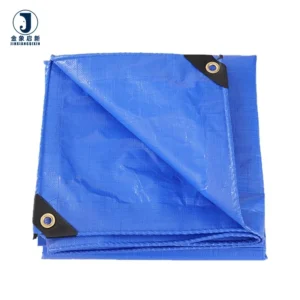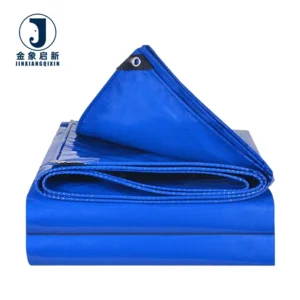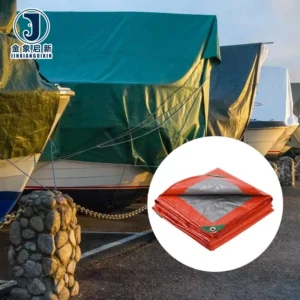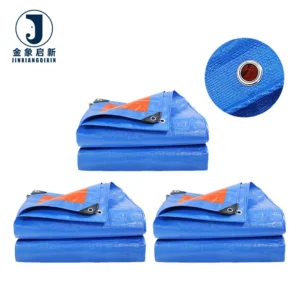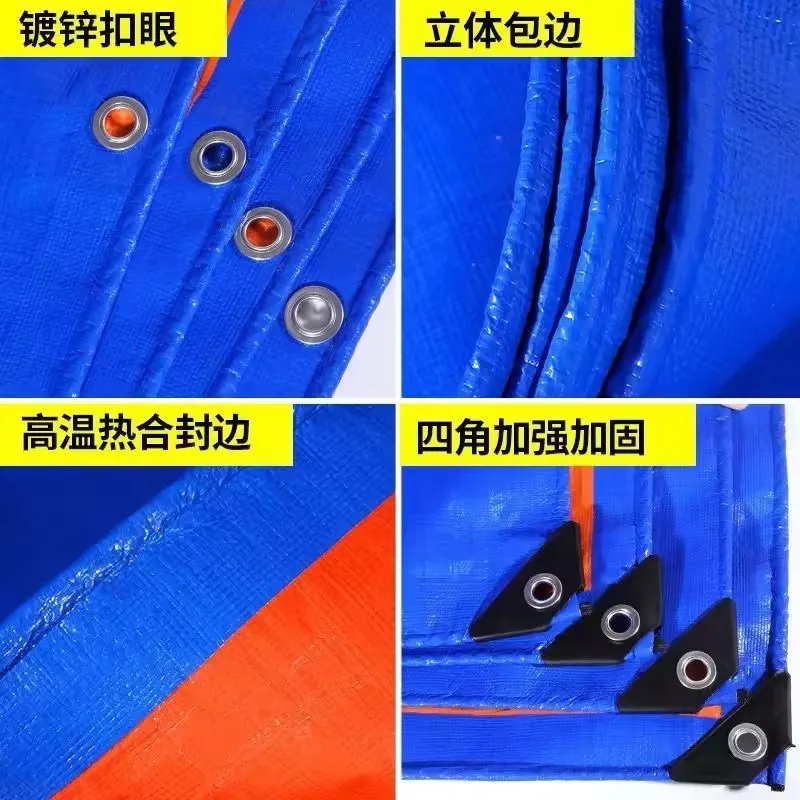
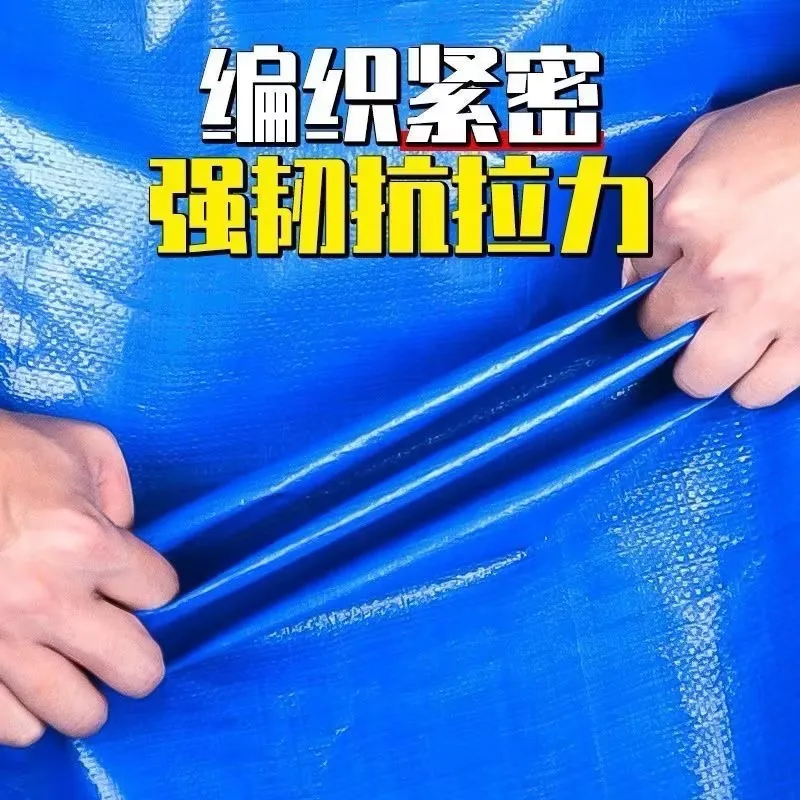
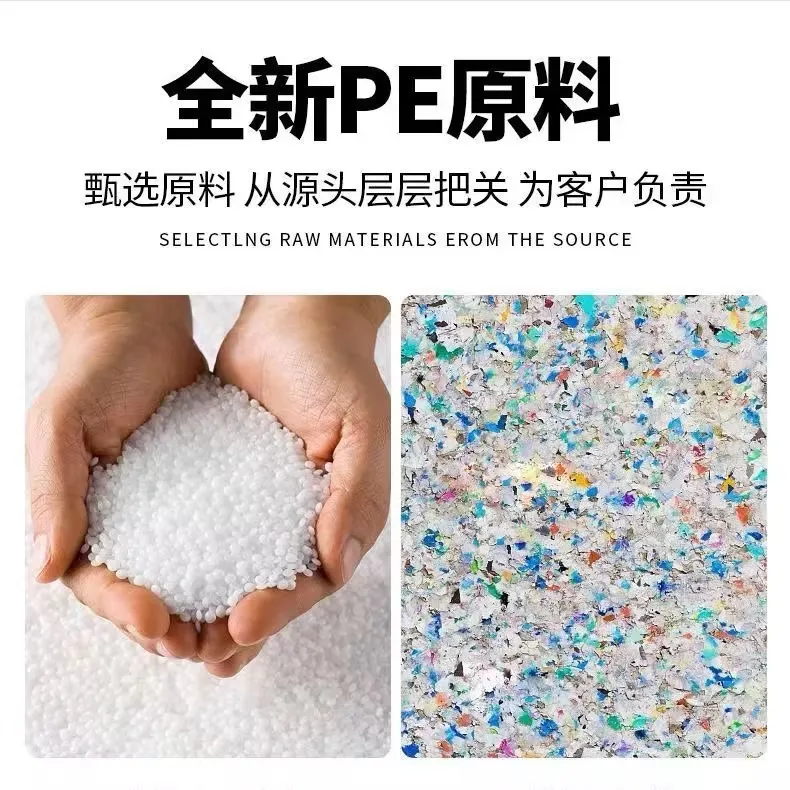
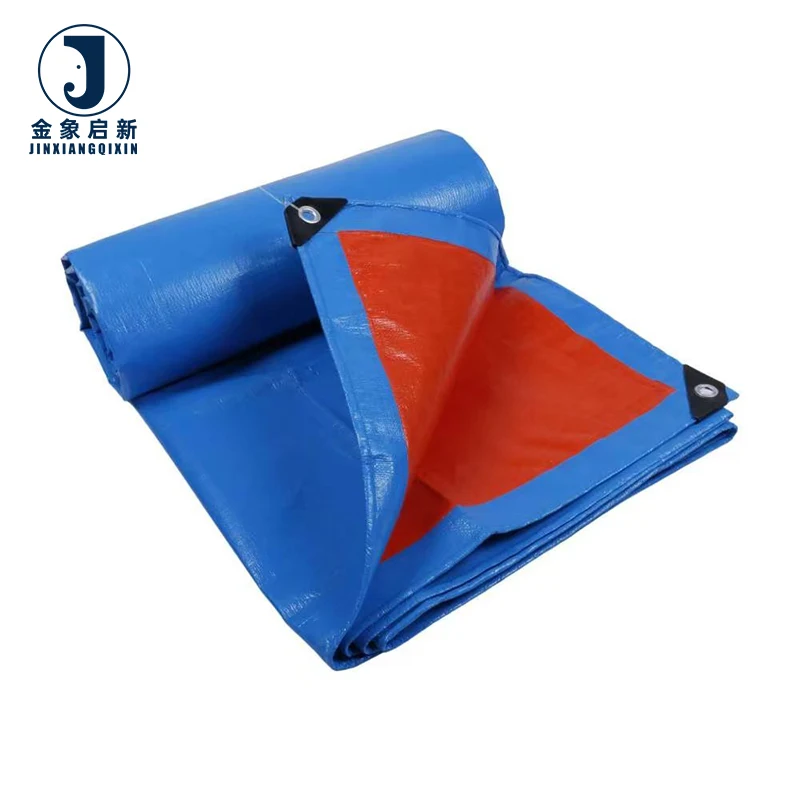
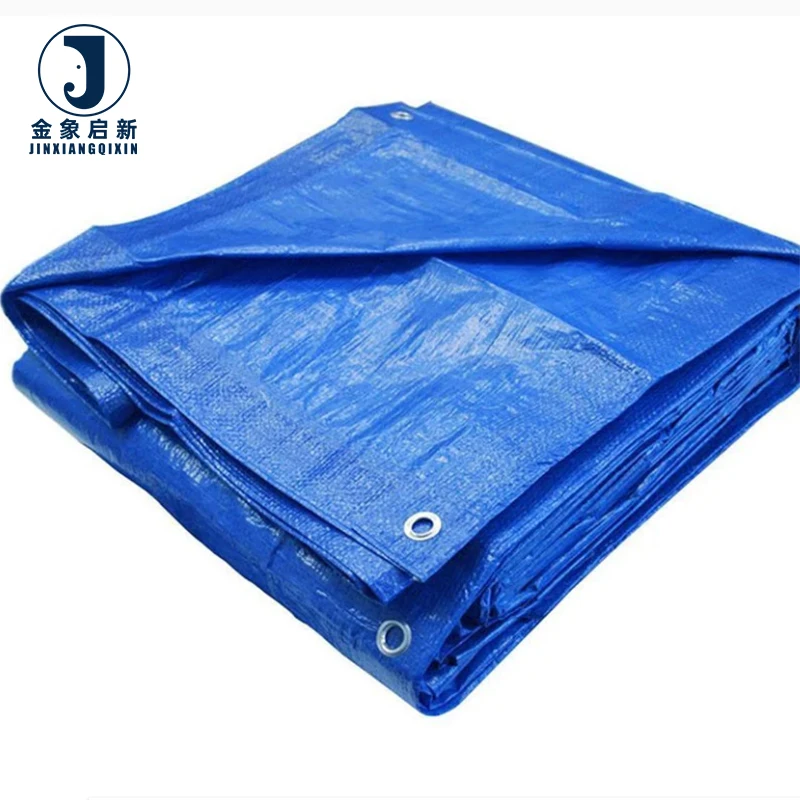
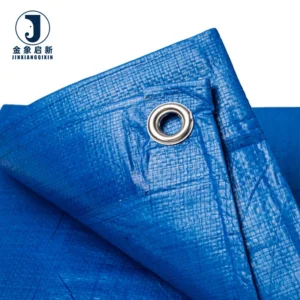
PE Woven Tarpaulin with Waterproof, UV Resistant & Mildew-Proof Treatment — heavy-duty PE fabric engineered for long-term outdoor exposure across transport, construction and aquaculture applications.
- PE woven base delivers tear resistance and structural stability under load
- Waterproof coating combined with UV treatment prevents moisture ingress and sun degradation
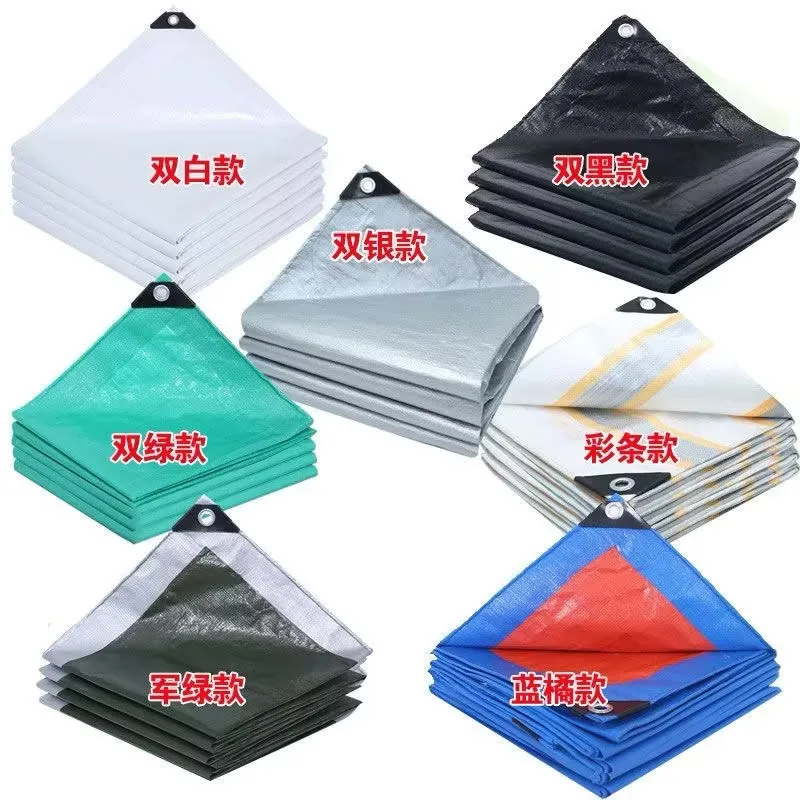
- Customizable sizes and colors available for project-specific requirements
Supported by nearly 30 years of coated fabric expertise, full QA at every production stage, and 100% pre-shipment inspection.
Description
Deep Process Control Over Coating Weight — Jinan Jinxiang verifies every roll of PE woven tarpaulin against the quoted GSM with pre-shipment inspection records, ensuring the material you receive matches the specification you approved.
Technical Specifications
| Parameter | Value |
|---|---|
| Product Type | PE Tarpaulin |
| Material | PE (Polyethylene) woven fabric |
| Weave Style | Plain |
| Waterproof | Yes |
| UV Resistant | Yes (test basis not stated in source) |
| Mildew-Proof | Yes |
| Construction | Heavyweight |
| Customizable Sizes | Available |
| Customizable Colors | Available |
Application Suitability
| Application | Exposure & Requirement |
|---|---|
| Tent and canopy covers | Prolonged sun exposure, rainfall, wind loading, frequent assembly and teardown |
| Car and vehicle covers | UV degradation, moisture ingress, dust accumulation, surface abrasion from contact |
| Outdoor event shelters | Temporary structural loads, weather variability, crowd safety compliance |
| Agricultural stock covering | Humidity, organic matter contact, mildew risk, seasonal temperature swings |
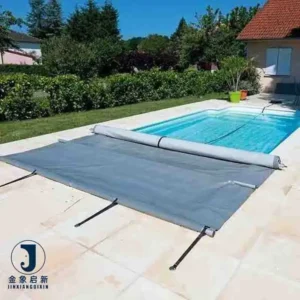
| Pond and reservoir lining | Continuous water immersion, soil chemistry, puncture from substrate |
| Trailer and cargo covering | Road vibration, wind flap, tie-down stress at edges, UV and rain exposure |
Why Specified Weight and Delivered Weight Often Do Not Match on PE Tarpaulin Orders
A quoted GSM means nothing without roll-by-roll verification before the material leaves the factory.
Buyers sourcing PE Tarpaulin from overseas frequently receive rolls that measure lighter than the specification on the proforma invoice. The discrepancy may be small per square metre, but across a container load it represents a material shortfall that compromises tensile performance and service life. In many cases, the fabric is not deliberately underweight — the coating line simply ran at the lower boundary of tolerance, and no one checked. [NEED_CITE: tensile and tear test methods for coated fabrics per ISO 1421]
Full Customisation Across Size, Colour and Finish
Jinan Jinxiang operates three full production lines with 36 sets of professional equipment, supporting PE Tarpaulin orders in custom widths, lengths and colours without the extended lead times typically associated with non-stock specifications. The 10-person R&D team develops samples within days, allowing buyers to confirm colour match, hand feel and weight before committing to a production run. This capability matters for tent manufacturers and event contractors who need consistent appearance across multiple panels installed side by side.
Waterproof and Mildew-Proof Performance for Extended Outdoor Exposure
The PE woven base fabric receives a coating treatment that provides a continuous moisture barrier, preventing water penetration through the weave. Combined with mildew-proof treatment, the material maintains structural integrity in humid environments where organic growth would otherwise degrade untreated fabrics. This combination is particularly relevant for aquaculture pond lining and agricultural stock covering, where the material remains in contact with moisture and biological matter for extended periods. [NEED_CITE: standard test methods for mildew resistance of textile materials]
How Plain-Weave Construction Influences Tear Behaviour and Load Distribution
The plain-weave structure of this PE Tarpaulin creates a balanced warp-and-weft interlacing that distributes load evenly across both axes. Unlike twill or ripstop constructions, plain weave does not concentrate stress along diagonal lines, which makes the fabric predictable when cut and welded into rectangular panels for tent roofs or truck covers. The heavyweight construction adds yarn density to the base fabric, increasing the force required to initiate and propagate a tear. When evaluating PE woven tarpaulin, buyers should request both GSM and base fabric denier, because weight alone does not reveal whether the coating or the yarn is carrying the structural load.
What Happens When Roll-to-Roll Consistency Is Not Verified
A common failure pattern in bulk PE Tarpaulin orders is colour variation between rolls that were supposed to be identical. The difference is invisible in the warehouse but becomes obvious once panels are installed adjacent to one another on a tent or canopy. Similarly, if coating weight drifts between rolls, weld parameters that worked on the first roll may produce weak seams on the next, causing the welded joint to fail before the fabric itself reaches its load limit. [NEED_CITE: coating weight consistency and its effect on heat-weld seam strength] These are not manufacturing defects in the conventional sense — they are the result of insufficient in-process quality control across a long production run.
Why Buyers Source This PE Tarpaulin from Jinan Jinxiang
Three full production lines with 36 sets of equipment provide the capacity to fulfil container-volume orders while maintaining scheduling reliability. The 10-person R&D team handles material selection, custom sizing and sample development, reducing the time from inquiry to approved specification. Every production stage includes dedicated QA/QC with 100 percent inspection before shipment, meaning each roll is weighed and measured against the purchase specification. Nearly 30 years of focused experience in coated fabric production has produced deep process control over coating weight and adhesion. ISO and CE certified production ensures that export documentation meets the compliance requirements of North American, European and Asian markets.
Documentation & Verification
- Material specification sheet stating GSM, base fabric denier and PE coating type for every order
- Pre-shipment inspection record with roll-by-roll weight verification against quoted specification
- UV resistance and mildew-proof treatment test documentation available upon confirmation of required standard
- ISO and CE certificates supporting customs clearance in destination markets
- Certificate of origin and full customs documentation package included with each dispatch
Fabrication, Handling & Storage
- Heat-weld parameters should be adjusted to the specific heavyweight PE coating thickness to avoid seam delamination
- Store rolls horizontally on pallets to prevent permanent creasing in the PE woven base fabric
- Avoid dragging cut panels across abrasive surfaces that could score the waterproof PE coating layer
- Clean with mild detergent only; solvents may degrade the mildew-proof treatment on the fabric surface
- Allow rolls to acclimatise to ambient temperature before unrolling in cold conditions to prevent stiffness-related cracking
What to Include in Your PE Tarpaulin Inquiry
Provide the intended application and the environmental exposure conditions the material will face, including whether UV resistance certification to a specific standard is required by your local regulations. Specify the roll width and cut sizes needed, along with the annual volume so that production can be scheduled accordingly. If colour consistency across multiple rolls is critical for your installation, state the colour reference and request a pre-production sample for approval before the full order runs.
Frequently Asked Questions
Q: How is PE tarpaulin GSM verified before shipment?
A: Every roll is individually weighed and measured during the pre-shipment inspection. The inspection record documents the actual GSM of each roll against the specification stated on your purchase order. This record is included with the shipping documentation so you can verify the material on arrival.
Q: What size and color customization options are available for PE tarpaulin orders?
A: Custom widths, lengths and colours are available through the R&D team, which develops samples within days for buyer approval. Stock grades are also available for immediate dispatch. Specify your colour reference and required dimensions when inquiring to receive a lead time and production schedule.
Q: How does plain-weave PE fabric compare to PVC-coated alternatives for tent applications?
A: Plain-weave PE Tarpaulin offers a lighter weight alternative with balanced tensile performance in both warp and weft directions. It suits temporary and semi-permanent tent structures where the reduced weight simplifies handling and installation. PVC-coated fabrics typically provide higher tensile values for permanent installations requiring greater structural load capacity.
Q: What UV resistance testing is available, and what documentation is provided?
A: UV-resistant formulation is included in the material specification. The specific test standard applied should be confirmed based on your destination market requirements. Request the applicable test report during the inquiry stage so that the correct treatment grade is specified for your compliance needs.
Q: What is the sample lead time and MOQ for custom PE tarpaulin orders?
A: Samples for custom sizes and colours are developed within days by the R&D team. Minimum order quantities depend on the specification and whether the order requires a dedicated production run or can be combined with scheduled output. Confirm your required dimensions and volume to receive a precise MOQ and lead time quotation.
Related products
-
JX Tear-Resistant PE Coated Polyethylene Eco-Friendly Tarpaulin Waterproof Blackout Organic with Eyelets
¥1.31 Select options This product has multiple variants. The options may be chosen on the product page -
Woven Coated Plain Anti-UV Waterproof PE Tarpaulin Roll Customized for Car Outdoor Tent Awning Truck & Industrial Cover
¥0.29 Select options This product has multiple variants. The options may be chosen on the product page -
Waterproof Coated Organic Blackout Polyethylene Tarpaulin Sheets for Outdoor Garden Greenhouses and Tents
¥0.59 Select options This product has multiple variants. The options may be chosen on the product page -
Waterproof PE Tarpaulin Fabric 100-300gsm Anti-Uv Outdoor Use for Boys & Girls Activity Ponds
¥0.31 Select options This product has multiple variants. The options may be chosen on the product page