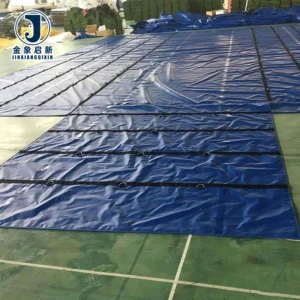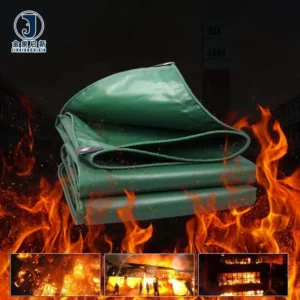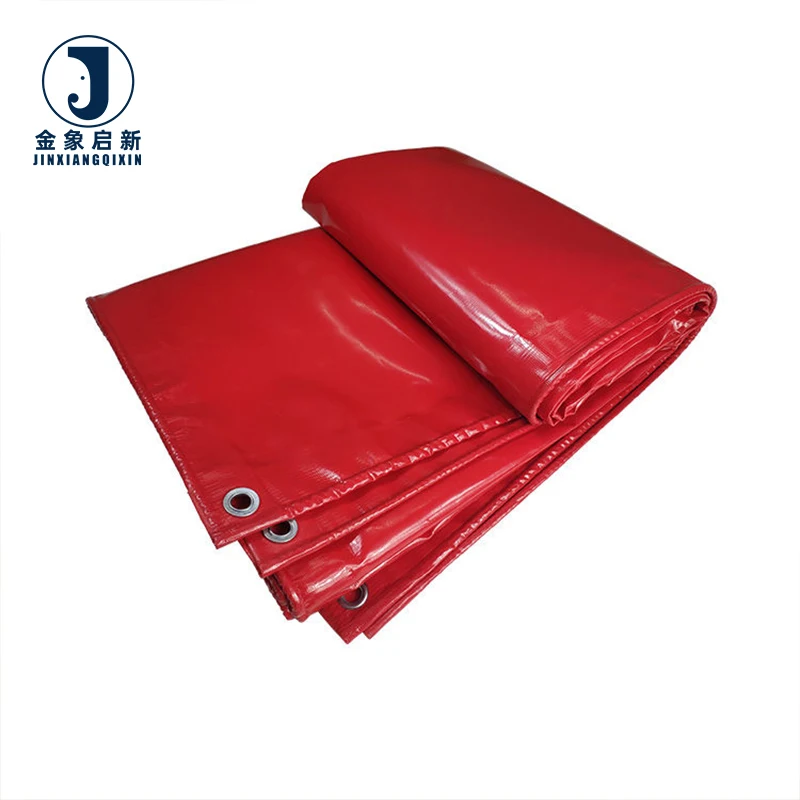
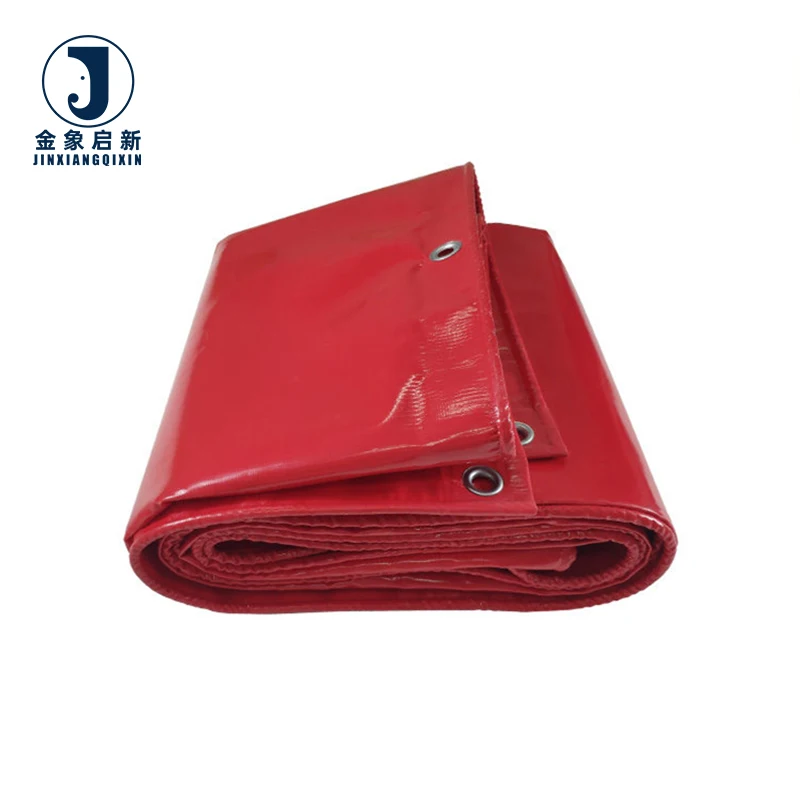
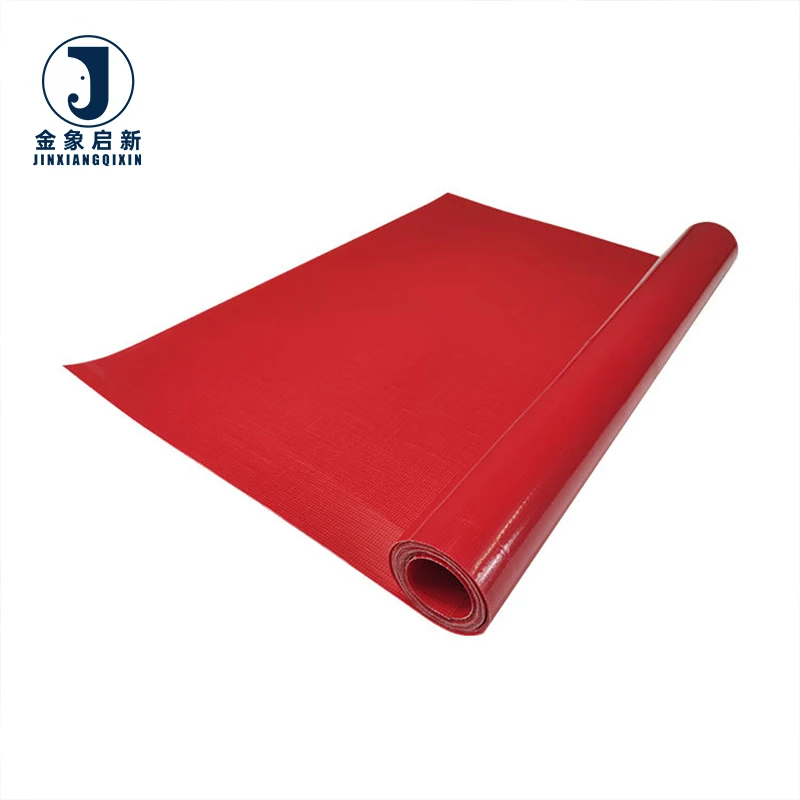
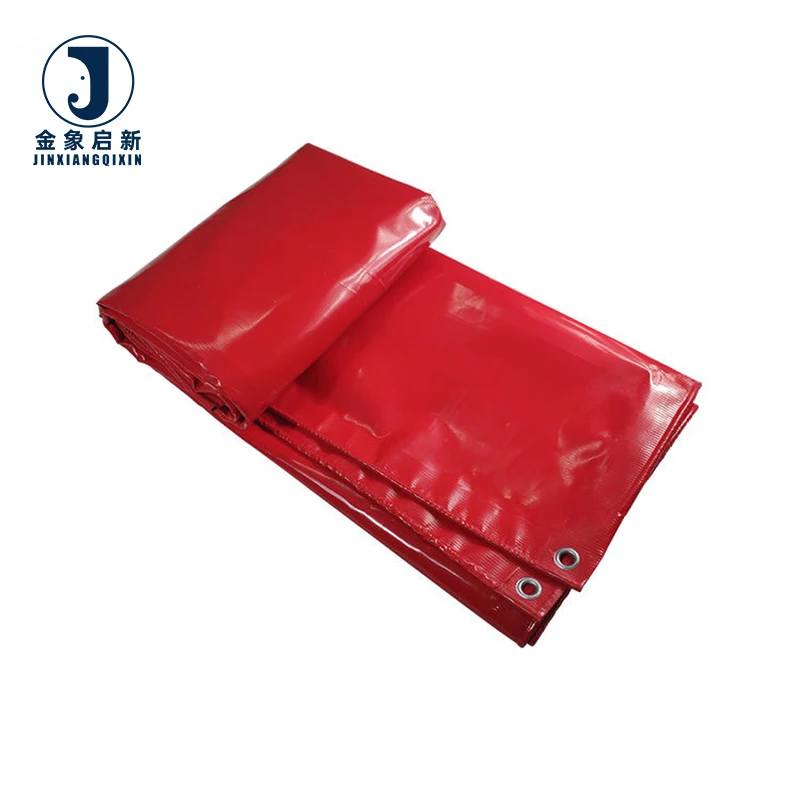
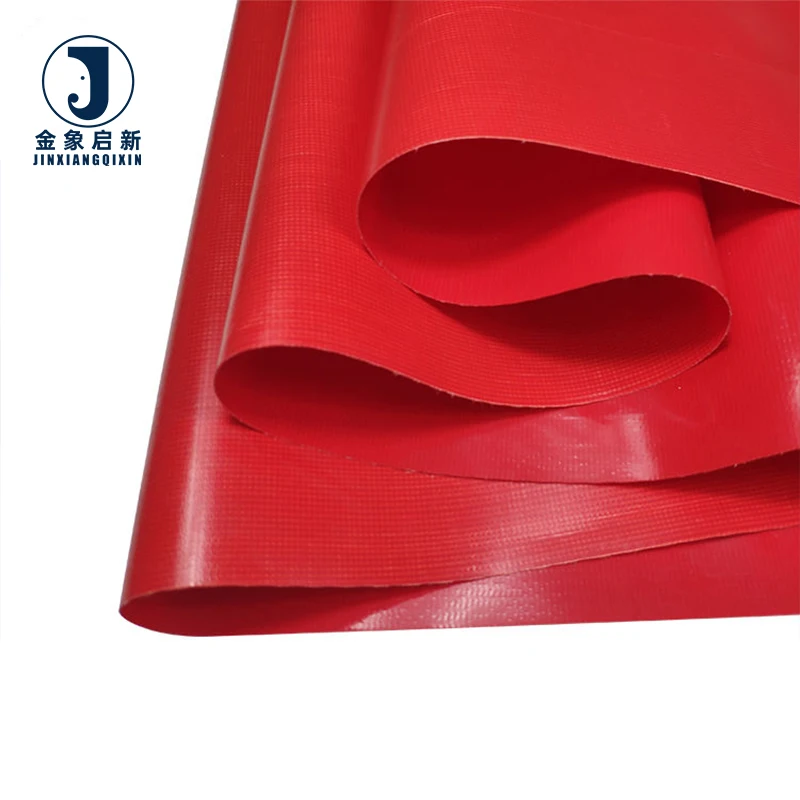
PVC Coated Tarpaulin for Farming, 500-1000gsm weight range with anti-UV, fire retardant, and anti-mildew treatments — available in custom sizes with heat-sealed edge wrapping.
- Selecting the right base fabric denier and weave density ensures tensile performance matches your farming cover application, not just a higher GSM alone
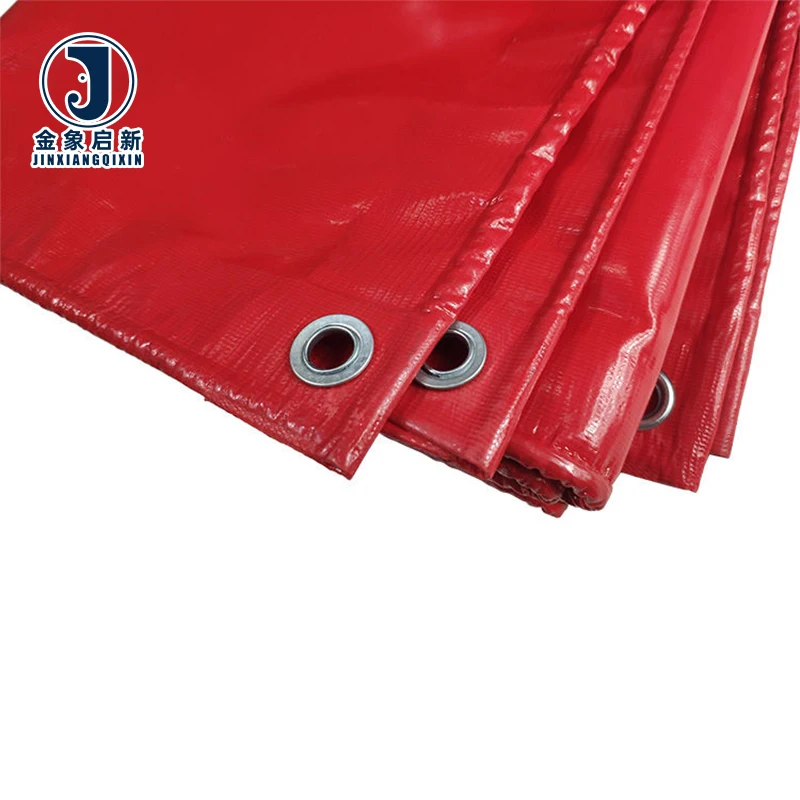
- 5mm spliced rope edges and 3cm reinforced aluminum eyelets distribute load stress at flex and tie-down points
Supported by 3 full production lines with 100% pre-shipment inspection and in-house sample development within days for custom sizing and treatment combinations.
Description
Precision-Coated Agricultural Fabric — Every roll weighed against its stated GSM with in-process QA, ensuring the farming cover you specify is the one you receive.
Technical Specifications
| Parameter | Value |
|---|---|
| Product Type | PVC Coated Tarpaulin |
| Weight Range | 350 GSM, 400 GSM, 420 GSM, 500 GSM, 600 GSM, 650 GSM, 750 GSM, 900 GSM |
| Base Fabric Denier | 500D×840D / 500D×1000D / 1000D×1000D / 1000D×1300D / 1300D×1300D / 1000D×2000D |
| Mesh Count | 30×19 / 20×20 / 30×15 |
| Coating Material | PVC |
| Total Thickness | 0.29 mm / 0.32 mm / 0.38 mm / 0.44 mm / 0.46 mm / 0.55 mm / 0.65 mm |
| Tensile Strength (Warp/Weft) | 1650/1600 N (350 GSM); 1800/1700 N (400 GSM); 2050/1900 N (500 GSM); 2500/2200 N (600 GSM); 2750/2850 N (750 GSM); 3900/3500 N (900 GSM) |
| Tensile Strength (MPa) | 50–80 MPa |
| Density | 1.15–2.00 g/cm³ |
| Brittle Temperature | ≤ -50 to -60 °C |
| Softening Temperature | ≥ 80 °C |
| Melting Point | 212 °C |
| Joining Methods | High frequency hot melt, hot air welding, sewing |
| Edge & Eyelet Construction | 5 mm rope without splicing, heat-sealed seamless edge wrapping, 3 cm aluminium alloy buttonhole, reinforced corners |
| Key Features | Waterproof, fire retardant (grade not stated — confirm required grade), anti-UV (test basis not stated), heavy metal free, anti-mildew, flexible, heavy duty, self-clean |
| Printing | Printable, customised |
| Standards | ISO and CE certified facility |
Application Suitability
| Application | Exposure & Requirement |
|---|---|
| Succulent plant rain shelter | Continuous rain and condensation, UV exposure, lightweight handling with frequent removal |
| Greenhouse and stock cover | Soil contact, abrasion from livestock movement, prolonged outdoor weathering |
| Pond and reservoir liner | Permanent water immersion, soil chemistry, puncture risk from substrate |
| Garden furniture and pergola cover | UV and rain cycle, wind uplift on large spans, aesthetic colour consistency |
| Balcony and window rain barrier | Residential exposure, repeated folding and storage, wind-driven rain |
| Outdoor car and equipment cover | Direct sunlight, thermal cycling, dust and debris abrasion |
Why Stated GSM Does Not Guarantee Fabric Performance on the Farm
A quoted 650 GSM means nothing if the coating-to-base-fabric ratio is wrong or the roll arrives underweight.
Farming operations depend on PVC coated tarpaulin to protect livestock, crops and equipment through seasons of rain, sun and mechanical stress. Buyers routinely specify a GSM grade based on past experience, only to find the delivered material feels thinner and tears at the hem within months. The gap between what the quotation says and what arrives on site is a sourcing failure that costs time and replacement budget. [NEED_CITE: common causes of tarpaulin field failure in agricultural settings]
This PVC coated tarpaulin custom manufacturer addresses that gap through dedicated QA checkpoints at every production stage, including roll-by-roll weight verification before dispatch.
Base Fabric Denier and Mesh Count: The Real Drivers of Field Durability
Selecting the correct PVC coated tarpaulin for farming starts with matching the base fabric denier to the mechanical stress your installation will face. A 500D×840D construction at 350 GSM suits lightweight rain shelters for succulent beds, while 1000D×2000D at 900 GSM handles heavy-duty stock covers that must resist livestock abrasion and wind uplift across wide spans. The mesh count — whether 30×19, 20×20 or 30×15 — controls how tightly the yarns interlock, directly influencing tear propagation resistance.
Coating Weight Versus Total GSM: What the Numbers Actually Mean
Total GSM is the sum of base fabric weight and PVC coating weight, and two rolls with identical GSM can perform very differently depending on how that mass is distributed. A heavier coating layer improves waterproof sealing and self-clean behaviour but adds stiffness that complicates folding and on-site handling. A heavier base fabric contributes tensile and tear strength at the yarn level. The specification table above lists thickness alongside each GSM grade so buyers can cross-reference the coating-to-fabric ratio that suits their application. [NEED_CITE: relationship between coating thickness and tensile performance in PVC coated fabrics per ISO 1421]
Reading the Specification Table for Agricultural Decisions
The tensile strength values in the warp and weft directions reveal how the fabric will behave under asymmetric loads — a common scenario when a farming cover is tensioned across a frame or anchored at uneven intervals. At 750 GSM, the 1300D×1300D base delivers 2750 N warp and 2850 N weft, indicating balanced strength suitable for structures that experience multidirectional wind loading. The brittle temperature of -50 to -60 °C confirms the material remains flexible in cold-season storage, while the softening threshold at 80 °C defines the upper boundary for installations near heat sources or in direct summer sun against dark surfaces. Coating density ranging from 1.15 to 2.00 g/cm³ reflects formulation options from standard to heavy-metal-free grades, relevant for operations where runoff contacts soil or livestock.
The Cost of Choosing the Wrong Grade for the Job
Overspecifying wastes budget and creates handling problems — a 900 GSM cover on a small balcony pergola is unnecessarily heavy and difficult to fold for seasonal storage. Underspecifying is worse: a 350 GSM material used as a pond liner will puncture against gravel substrate and fail at the seams under sustained water pressure. Colour variance between rolls in a multi-roll farming order becomes visible when covers are installed side by side across a greenhouse complex, forcing either acceptance of an inconsistent appearance or a costly replacement. [NEED_CITE: batch colour consistency standards in coated fabric production]
What Makes This PVC Coated Tarpaulin Custom Manufacturer Different for Farm Buyers
Nearly 30 years of focused coated fabric production gives the team deep process control over coating weight and adhesion consistency across agricultural grades. Three full production lines and 36 sets of professional equipment support bulk roll orders with reliable on-time delivery for seasonal planting and harvest schedules. A 10-person R&D team handles custom sizing, colour matching and sample development so that a trial roll arrives within days rather than weeks. Dedicated QA at every production stage with 100% pre-shipment inspection means the GSM, colour and treatment you approved on the sample is what ships in the container.
Documentation & Verification
- Material specification sheet stating exact GSM, base fabric denier, coating weight and colour reference for each farming grade
- Test reports for anti-UV and fire retardant grades where applicable — supplied with the shipment, not on request
- Pre-shipment inspection record with roll-by-roll weight verification against the quoted GSM
- Packing list detailing roll count, dimensions and net weight for customs and warehouse receiving
- ISO and CE certificates and certificate of origin for import compliance
Fabrication, Handling & Storage
- High frequency hot melt welding recommended for 600 GSM and above to achieve seam strength matching the base fabric
- Heat-sealed seamless edge wrapping prevents fraying on cut sizes exposed to wind uplift on open farmland
- Store rolls vertically on pallets to prevent permanent creasing across the PVC coating layer
- Clean with mild detergent only — solvent-based cleaners degrade the anti-mildew and self-clean surface treatment
- 3 cm aluminium alloy buttonholes with reinforced corners distribute tie-down loads across the 5 mm rope hem
- Allow material to acclimatise before unfolding in cold weather to avoid stress cracking near the brittle temperature threshold
What to Include in Your Farming Cover Enquiry
Provide the specific agricultural application — whether it is a succulent rain shelter, greenhouse side curtain, pond liner or equipment cover — along with the exposure conditions including wind, chemical contact and temperature range. Specify the required GSM grade, base fabric denier preference and any treatment requirements such as anti-UV or fire retardant with the grade your local regulations demand. Confirm whether you need finished cut sizes with edge and eyelet treatment or roll stock for on-site fabrication, and indicate your annual volume to align production scheduling.
Frequently Asked Questions
Q: How do you verify the GSM stated on the quotation matches the delivered farming cover material?
A: Every roll passes through a dedicated QA checkpoint where weight is measured and recorded against the stated GSM before packing. The pre-shipment inspection record documents the actual weight per roll, and this document ships with the container so you can verify on arrival without independent lab testing.
Q: Can you supply test reports for anti-UV and fire retardant treatments with agricultural tarpaulin orders?
A: Yes. Where anti-UV or fire retardant treatment is specified, the corresponding test report is included in the documentation pack shipped with your order. Confirm the grade required for your market or application — our R&D team will match the formulation and provide the test basis before production begins.
Q: How do you ensure colour consistency across multiple rolls for a large farming installation?
A: Colour matching is controlled in-house by our 10-person R&D team using reference standards established at sample approval stage. All rolls in a single order are produced within the same batch run, and in-process QA checks colour under standardised lighting before the rolls pass to final inspection.
Q: What are the options for edge finish and eyelets on custom cut farming tarpaulins?
A: Custom cut sizes can be finished with 5 mm rope hem without splicing, heat-sealed seamless edge wrapping, or both. Eyelets are 3 cm aluminium alloy buttonholes with reinforced corners on all sides. Hole spacing and placement are specified during the quotation stage to match your tie-down and anchoring arrangement.
Q: How long does sample development take for a custom colour or size?
A: Sample development is handled by the in-house R&D team and typically completes within days of specification approval. Samples include the requested GSM grade, colour, edge treatment and printing if applicable, so you can evaluate the exact construction before committing to a production order.
Related products
-
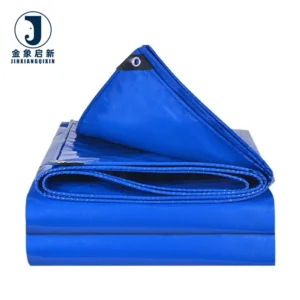
Factory Custom 9×11 Poultry Curtains Tarpaulin PVC Coated Waterproof Anti-Static Eco-Friendly Tarp for Chicken Coop Boys Girls
¥0.90 Select options This product has multiple variants. The options may be chosen on the product page -
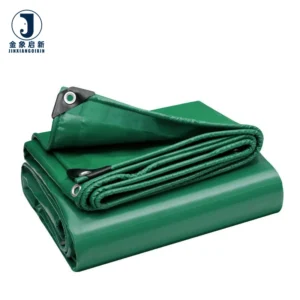
Factory Direct 20×30 Feet 13mil Heavy-Duty Vinyl Tarps PVC Tarpaulin for Firewood Roof Camping Patio Pool Boat Dump Trailer
¥2.60 Add to cart -
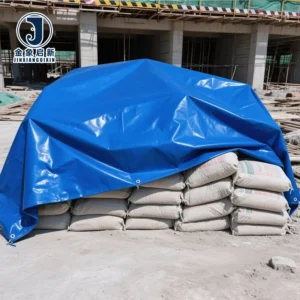
Wholesale Pvc Tarpaulin Wear-resistant Waterproof Multi-purpose Heat-resistant Tarpaulin
¥2.00 Add to cart -
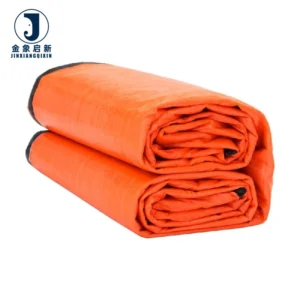
Factory 12ftx20ft Construction Cold Weather Insulated Pe Tarps Poly Tarp Heavy Duty Concrete Curing Blanket Tarpaulin Roll Sheet
¥0.66 Add to cart