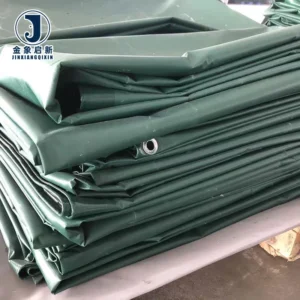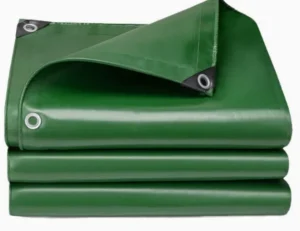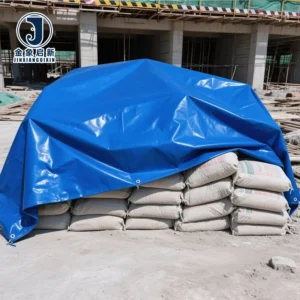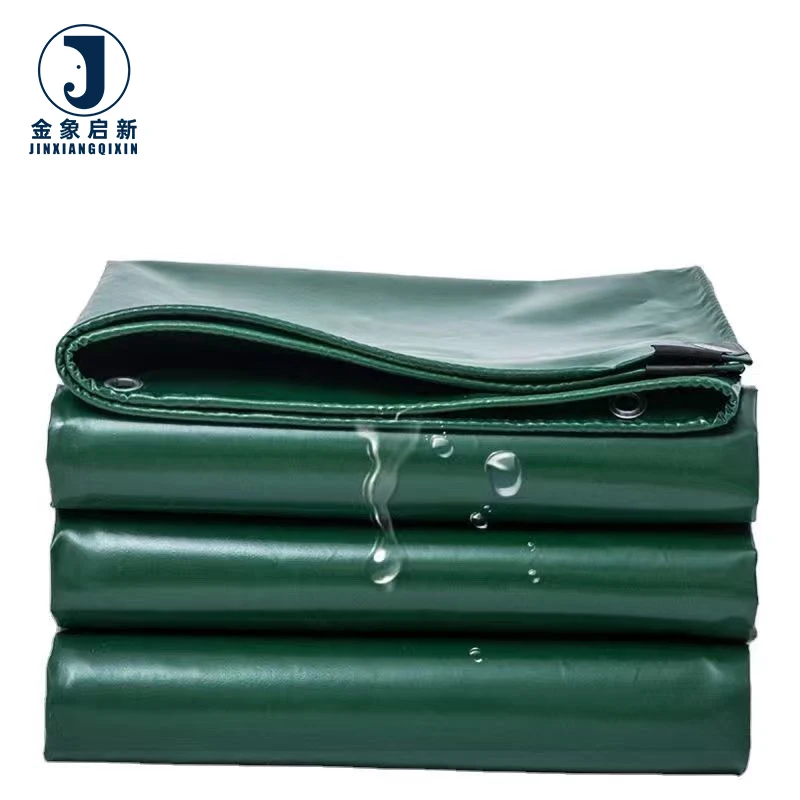
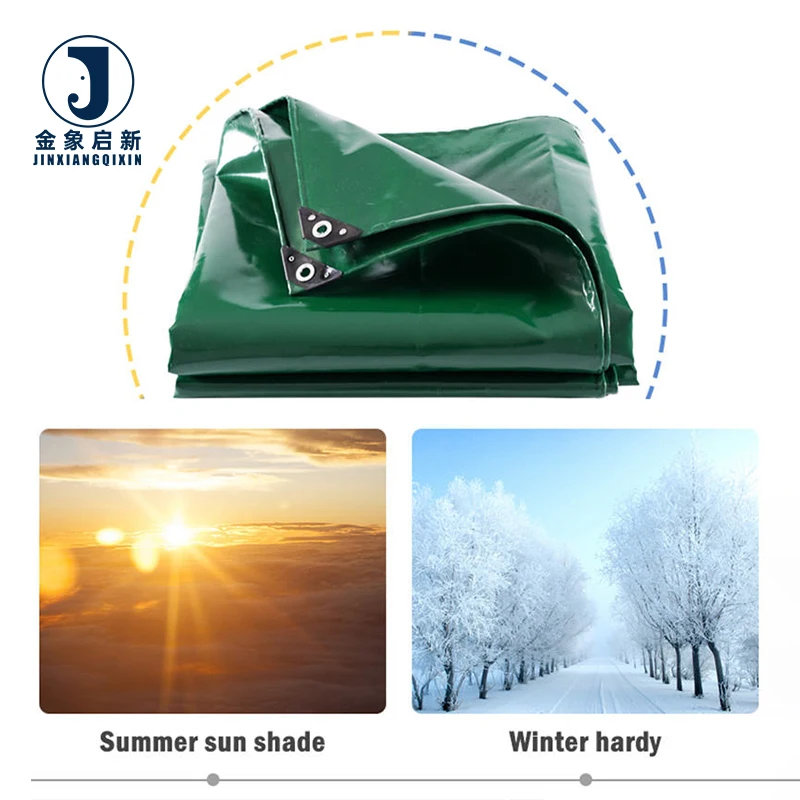
PVC Coated Tarpaulin — 250gsm to 1500gsm, 200DX300D to 1000DX1000D denier, glossy or matte finish with waterproof and UV treatment.
Sourcing from one supplier across multiple weights prevents colour mismatch and shipment delays. Base fabric denier and GSM together determine tensile and tear performance, and coating adhesion is verified at each production stage.
- Full roll and cut-size supply with custom width, colour and pattern printing
- Sample development within days for specification approval
- 100% pre-shipment inspection with material spec sheet, test reports and ISO/CE documentation
Description
Specification Control Depth — Nearly three decades of focused PVC coating production with dedicated QA/QC at every stage, ensuring the GSM and coating adhesion stated on your specification sheet are exactly what arrives at your door.
Technical Specifications
| Parameter | Value |
|---|---|
| Product Type | PVC Coated Tarpaulin |
| Base Fabric Denier | 200DX300D / 500DX500D / 840DX840D / 1000DX1000D |
| Weight Range | 250 gsm – 1500 gsm (confirm grade for your application) |
| Coating Material | PVC |
| Surface Finish | Glossy or matte (available as specified) |
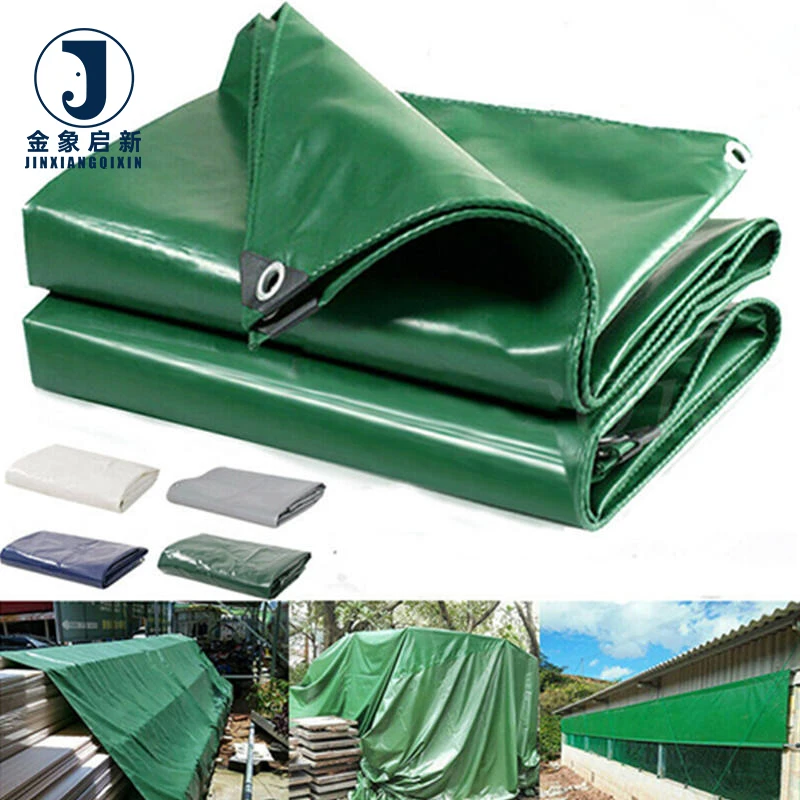
| Colour Options | Blue, yellow, black, green, white, or custom colour match |
| Standard Sizes | 3×4 m, 6×8 m, 8×10 m, 10×12 m or custom made |
| Temperature Range | -15 °C to 70 °C |
| UV Treatment | Customized (test basis not stated — confirm requirement) |
| Flame Retardant | FR treated (grade not stated — confirm the grade required for your market) |
| Anti-Mildew | Anti-fungal treated |
| Waterproof Rating | Waterproof, rain-resistant |
| Key Features | Good flexibility, adhesion strength, abrasion resistance, durable |
| Working Life | 3–10 years depending on usage environment |
| Standards | ISO, CE |
Application Suitability
| Application | Exposure & Requirement |
|---|---|
| Tent and awning roofs | Continuous UV exposure, wind uplift load, rain ingress at seams, repeated assembly and folding |
| Lumber and stockpile covers | Abrasion from rough timber surfaces, prolonged outdoor weathering, water pooling on flat sections |
| Construction site protection | Impact from falling debris, mud and chemical splash, frequent repositioning across the site |
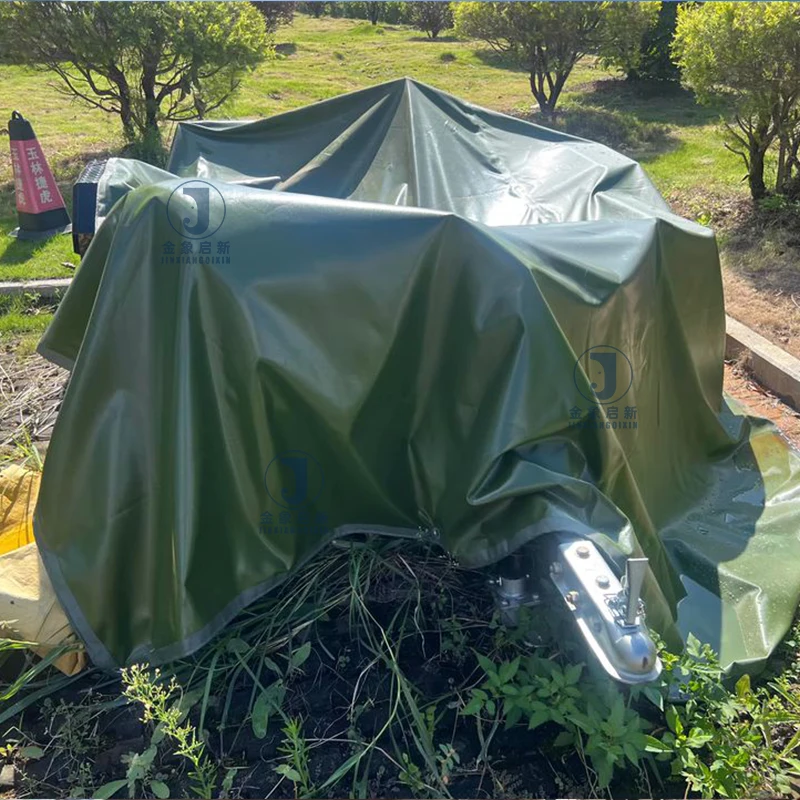
| General-purpose equipment covers | Dust and moisture ingress, handling abrasion from tie-down straps, UV degradation over seasons |
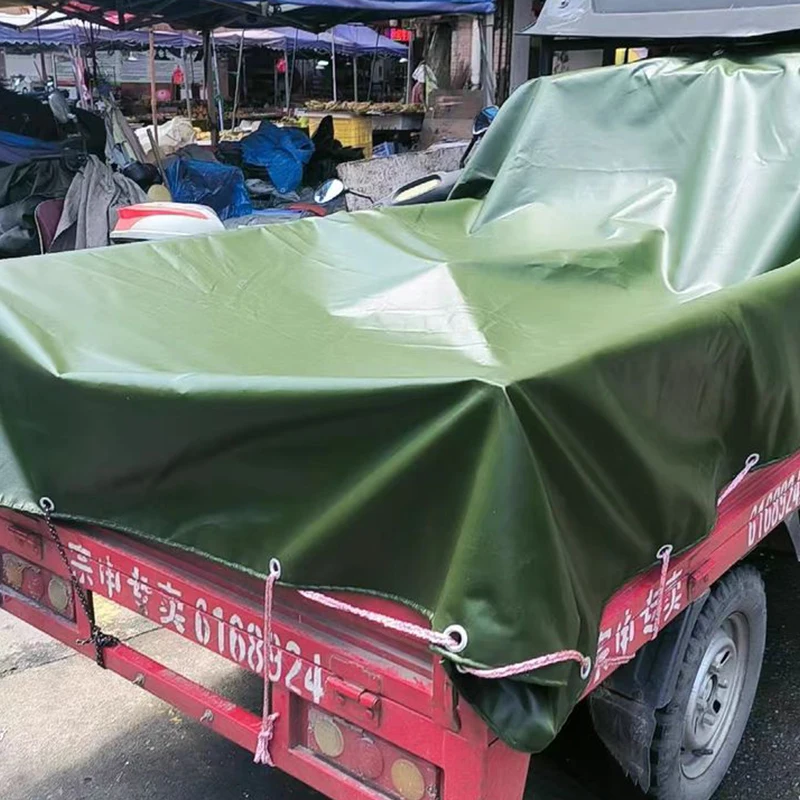
| Truck and trailer tarpaulins | Road-induced flex fatigue, wind flap at high speed, diesel fume exposure, loading dock abrasion |
What "Flame Retardant" Means When No Grade Is Stated on the Datasheet
A fabric described as FR treated is only as compliant as the grade behind that claim — verify the standard your local authority requires before committing to a production run.
Buyers in construction and public-assembly sectors routinely specify a flame-retardant PVC coated tarpaulin without checking which test method the supplier used. A material passing one national standard may not satisfy the fire marshal in another jurisdiction. The result is a failed site inspection after the covers are already fabricated and installed, forcing a costly replacement under project deadlines. [NEED_CITE: DIN 4102 fire classification for building materials]
Matching Denier Construction to the Mechanical Demands of Your End-Use
Selecting a PVC coated tarpaulin starts with the base fabric. A 200D×300D construction suits lighter tensile loads such as temporary event canopies, while a 1000D×1000D weave is necessary for heavy-duty lumber wrapping or mining ventilation curtains where tear propagation must be resisted across long unsupported spans. Specifying the denier correctly prevents premature failure at stress concentrations around hems and tie-down points.
How Coating Weight and Adhesion Control Determine Long-Term Performance
The PVC coating layer provides waterproofing, chemical resistance and the surface for heat welding. Our deep process control over coating weight and adhesion ensures that the stated GSM is consistent across the entire roll, and that the coating does not delaminate when the fabric flexes repeatedly. This is critical for applications like side curtains where the material undergoes constant mechanical cycling. [NEED_CITE: tensile and tear test methods for coated fabrics per ISO 1421]
Reading the Specification Sheet Beyond the GSM Number
A common purchasing mistake is treating GSM as a standalone indicator of strength. In reality, tensile and tear resistance depend on the interplay between base fabric denier, weave density and coating penetration. A 650 gsm fabric built on a 1000D×1000D base will outperform a 650 gsm fabric on a lighter 200D×300D base in tear resistance, even though the weight is identical. Surface finish — glossy versus matte — also matters: glossy surfaces shed dirt and water more effectively and accept printed branding with sharper definition, while matte finishes reduce glare and are preferred for architectural and tent applications where light reflection must be minimised. The temperature operating window of -15 °C to 70 °C defines the boundaries within which the coating remains flexible without cracking at the low end or softening and losing dimensional stability at the high end. Understanding these relationships allows you to specify a PVC coated tarpaulin that is matched to both the mechanical and environmental demands of your project.
The Hidden Cost of Specifying on Weight Alone
When a buyer selects a tarpaulin grade based only on the quoted GSM, without verifying denier or adhesion strength, the material may pass initial inspection but fail early at flex points or welded seams. Welded seams are often the weakest link — if the coating formulation does not bond well under heat, the seam opens before the body fabric shows any wear. Batch-to-batch variation in coating weight can also mean that the second container of an ongoing order behaves differently from the first, creating inconsistent welding parameters on the fabrication floor. [NEED_CITE: common failure modes in PVC coated fabric at heat-welded seams]
Why Sourcing This PVC Coated Tarpaulin Range From Jinxiang Works
Three full production lines and 36 sets of professional equipment provide the capacity to deliver bulk roll stock and finished cut sizes within the project timeline, without compressing QA steps. The 10-person R&D team handles material selection, custom colour matching, pattern printing and sample development, so a new specification can be validated before production commitment. Dedicated in-process quality control at every production stage, backed by 100% pre-shipment inspection, catches coating weight deviation and colour drift before the material leaves the factory. Samples for custom colour, sizing and print are developed within days, giving buyers the confidence to approve before committing to a full order run.
Documentation & Verification
- Material specification sheet stating exact GSM, base fabric denier and coating formulation for your ordered grade
- UV and flame-retardant test reports supplied where applicable to the grade you specify
- Pre-shipment inspection record confirming 100% QC coverage across every roll or finished panel
- Roll packing list with individual roll weights and dimensions for container load planning
- ISO and CE certificates with certificate of origin included for customs clearance
Fabrication, Handling & Storage
- Heat welding parameters should be calibrated to the specific GSM and coating formulation of your ordered grade before production begins
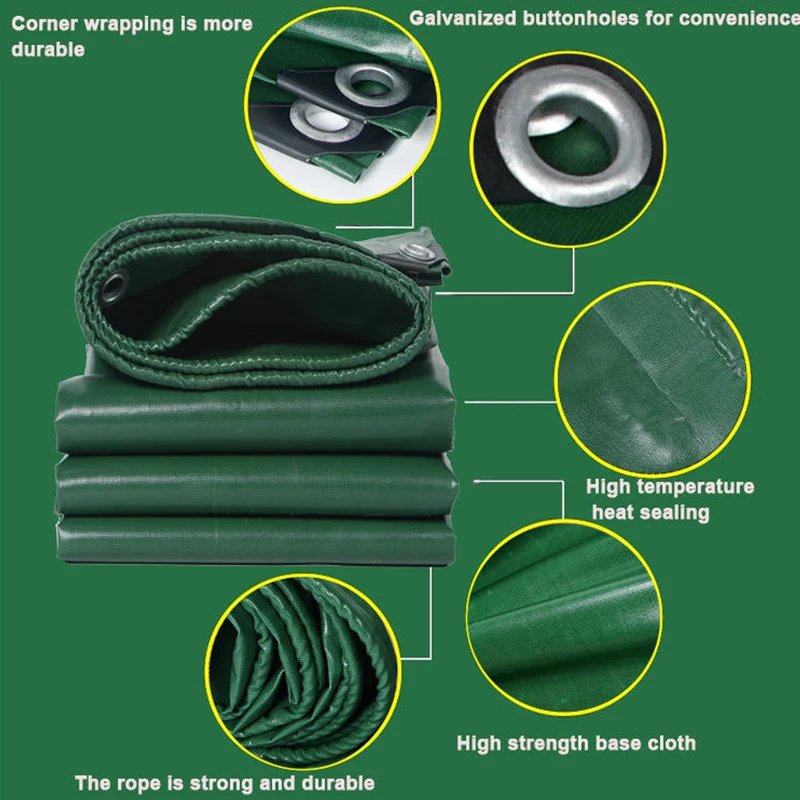
- Reinforced hems and eyelet spacing must account for the tear resistance characteristics of the selected denier construction
- Store rolls upright in a shaded, ventilated area to prevent flat-spot deformation and surface adhesion between coating layers
- Unroll and allow the PVC coated tarpaulin to acclimatise before fabrication when ambient temperature is near the -15 °C lower limit
- Use only PVC-compatible cleaners to avoid dissolving the surface coating or degrading the anti-fungal treatment
- Plan cutting layouts around the ordered width to minimise off-cuts and reduce the number of welded seams in the finished panel
Moving Your Enquiry Forward
To receive an accurate specification recommendation and sample, share the intended application, the environmental exposure conditions and the mechanical loads the fabric will face. Let us know whether you need roll stock or finished cut sizes, your target colour reference or print requirements, and any fire-retardant or compliance standard your end market demands. We can develop a sample for your approval before any bulk commitment is made.
Frequently Asked Questions
Q: How is the GSM on the quotation verified when the goods arrive?
A: Every roll or finished panel undergoes weight verification against the stated GSM during our 100% pre-shipment inspection. A material specification sheet accompanies each shipment documenting the exact GSM, base fabric denier and coating weight for the grade you ordered, so you can cross-check on receipt.
Q: Can you match our colour reference and keep consistency across multiple rolls?
A: Yes. Our QA/QC process includes colour checking at every production stage against your approved reference. The 100% pre-shipment inspection covers roll-to-roll colour consistency within the same order, preventing the visible mismatch that occurs when rolls from different production batches are installed side by side.
Q: What custom sizing, eyelet and hem options do you offer for finished panels?
A: We produce PVC coated tarpaulin in standard cut sizes or fully custom dimensions. Eyelet spacing, hem reinforcement style and corner patch configurations are all specified to your drawing. A sample panel is developed within days for your dimensional and fabrication approval before the full order is cut.
Q: How does the sample process work for a new specification?
A: Share your target GSM, denier, colour, finish and any treatment requirements. Our R&D team develops a sample within days for you to test — including welding trials if needed. Once you approve the sample, the same specification is locked for bulk production with full in-process quality control.
Q: What documentation ships with the order for import clearance?
A: Each shipment includes the material specification sheet, roll packing list, ISO and CE certificates, certificate of origin and, where applicable, UV or flame-retardant test reports for the grade supplied. These documents support both customs clearance and your own incoming quality verification.
Related products
-
500gsm MULTI-PURPOSE Green Waterproof Green Tarp for Emergency Rain Shelter. Outdoor Cover
¥7.72 Select options This product has multiple variants. The options may be chosen on the product page -
Heavy Duty Outdoor Tarpaulin Thickened for Outdoor Waterproof Large Tarpaulin with 3 Meter Width
¥7.78 Add to cart -
630 Gsm Blue/Grey/Orange Pvc Tarpaulin Roll Pvc Tarpaulin Truck Tarpaulin Pvc Coated Tarpaulin
¥1.66 Add to cart -
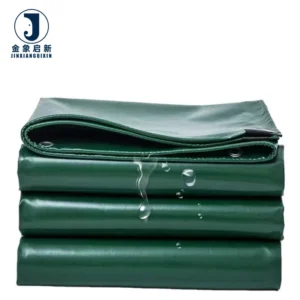
Pvc Coated Waterproof Tarpaulin Heavy Duty Tarp for Tent Roof Stocklot Lumber
¥1.60 Add to cart