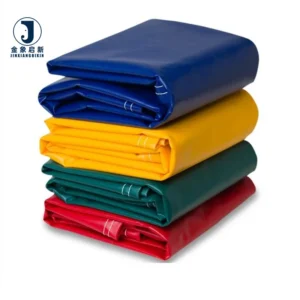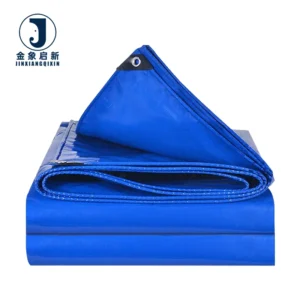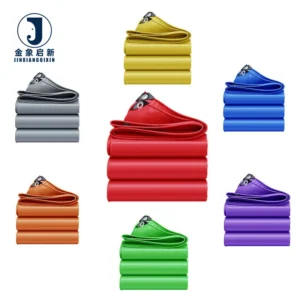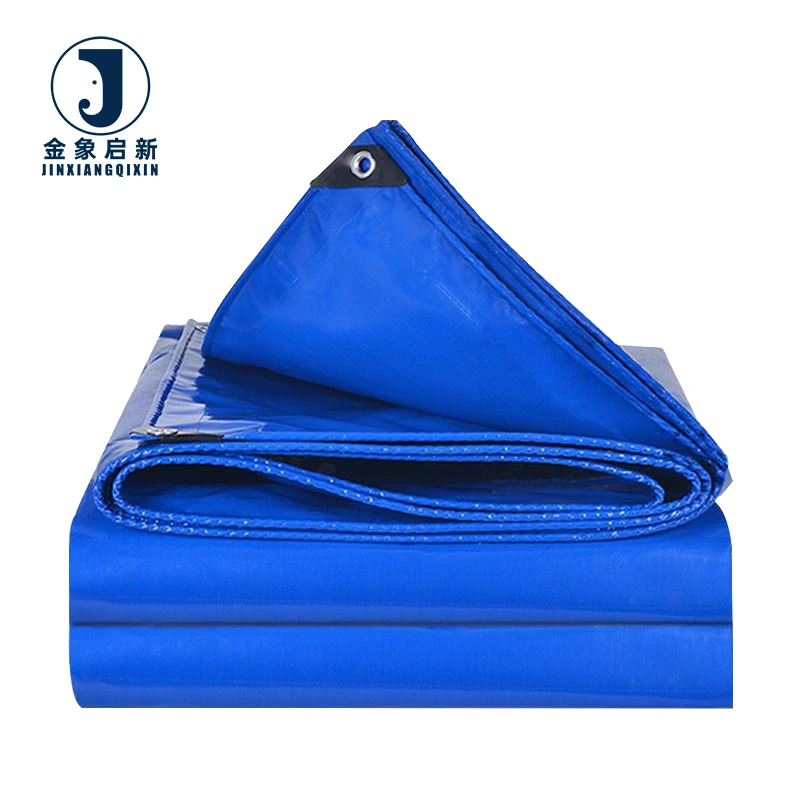
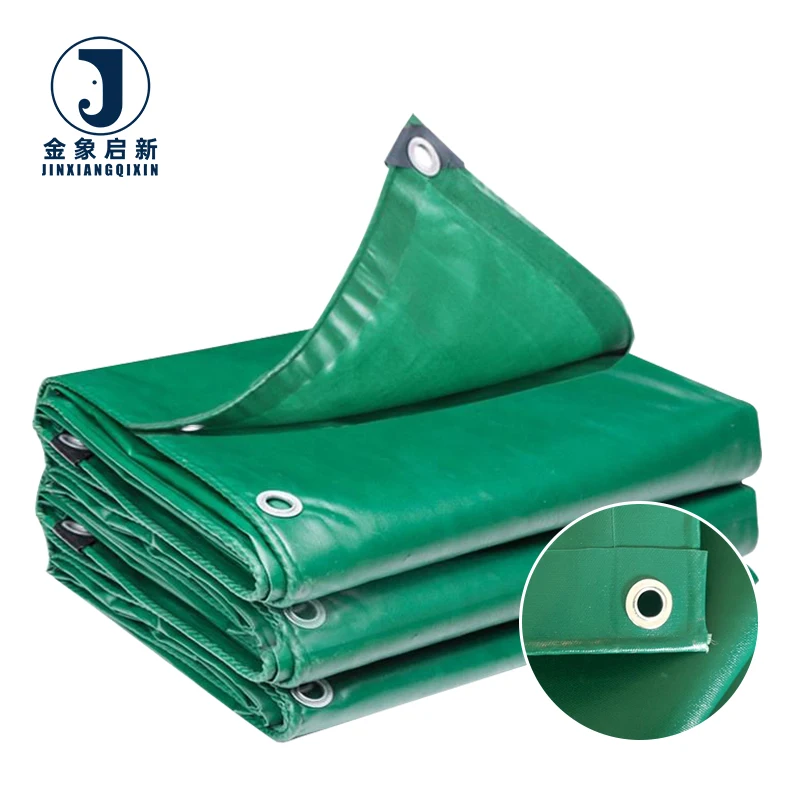
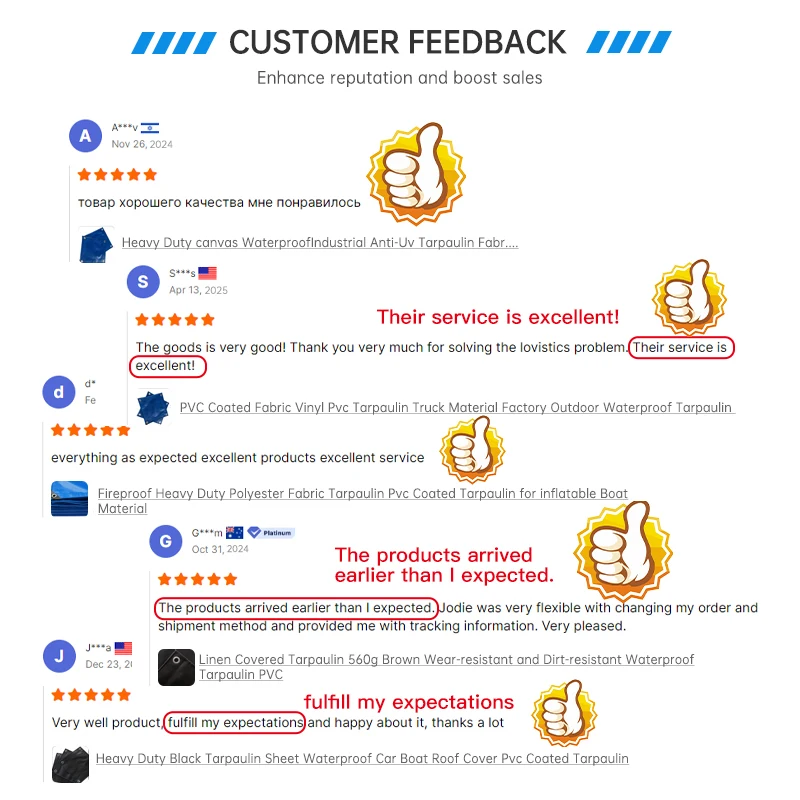
PVC Coated Tarpaulin 450-900 g/m², 500D×500D Polyester Base — waterproof double-sided coated fabric with flame retardant and anti-UV treatment options for truck, trailer and equipment covers.
- Custom widths, colours, eyelet placement and reinforced hems built around your application
- 10-person R&D team supports full material selection, pattern printing and sizing from design to dispatch
- Specification sheet stating GSM, base fabric, coating and colour reference provided with every order
Jinan Jinxiang backs each roll with 100% pre-shipment inspection and nearly 30 years of coated fabric process control.
Description
Coating Process Control — Every roll of PVC Coated Tarpaulin is weighed and measured against its stated GSM before leaving the factory, eliminating the mismatch between quotation and delivery that plagues bulk fabric procurement.
Technical Specifications
| Parameter | Value |
|---|---|
| Product Type | PVC Coated Tarpaulin |
| Base Fabric Denier | 500D × 500D polyester |
| Coating Material | PVC, double-sided |
| Weight Range | 450–900 g/m² (confirm grade per application) |
| Key Features | Water resistant, waterproof, flame retardant options, anti-UV options |
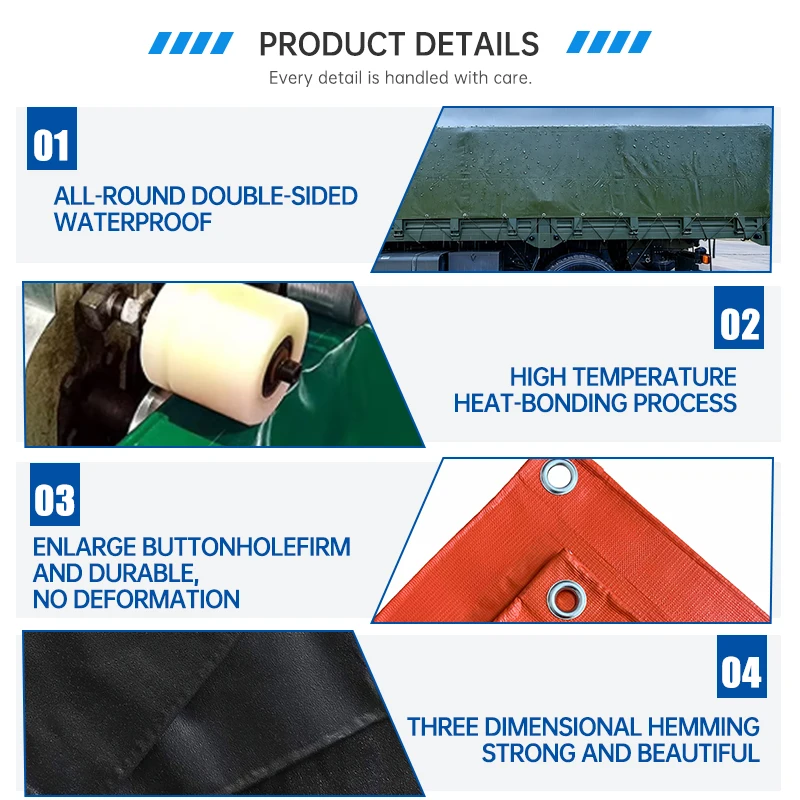
| Welding Method | Hot air welding |
| Package Format | Roll packing, bale packing, carton |
Application Suitability
| Application | Exposure & Requirement |
|---|---|
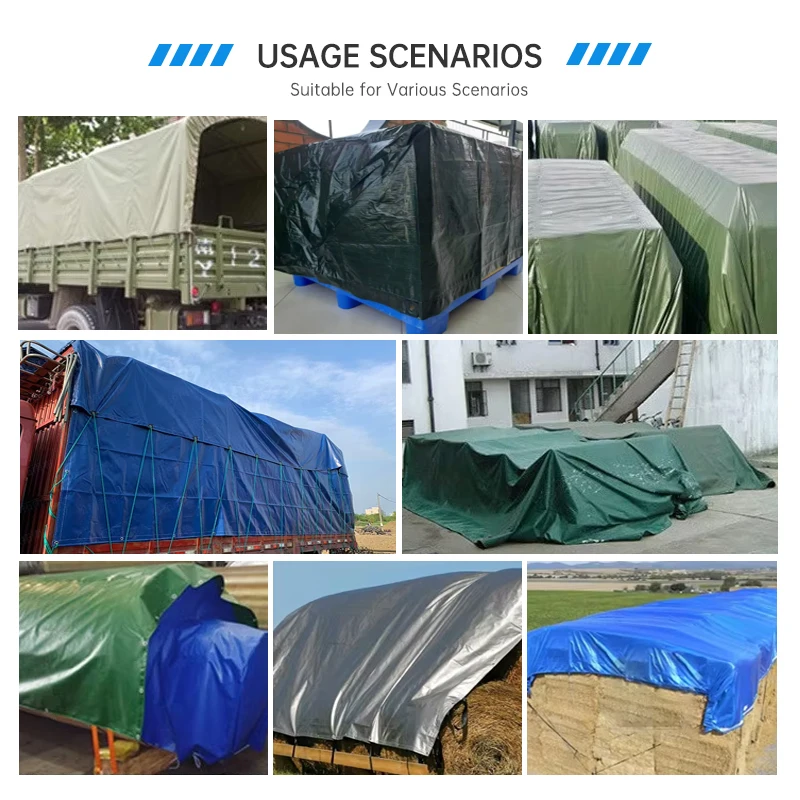
| Truck and trailer covers | Constant flexing at load points, road debris abrasion, rain and UV exposure, tie-down stress at hems |
| Construction site equipment covers | Prolonged outdoor weathering, dust and moisture ingress, repeated handling and folding |
| Machine and wood covers | Static outdoor storage, UV degradation risk, water pooling on flat surfaces |
| Awning and tent fabrication | Tension loading across frames, sun exposure, seam integrity under wind load |
Why Quoted GSM Often Fails the Field Test
A number on a quotation means nothing without a verified weight on the roll that arrives.
Buyers specifying PVC coated tarpaulin for transport and industrial covers frequently discover that the fabric delivered is lighter than the grade they paid for. The shortfall may only be a few grams per square metre, but across a full truck curtain or a large equipment cover, that deficit translates into a thinner coating, reduced tensile reserve, and seams that fail earlier than the fabric itself. The problem compounds when the fabric is hot-air welded — a thinner coating leaves less material at the weld interface, concentrating stress exactly where the load flexes most [NEED_CITE: tensile and tear test methods for coated fabrics per ISO 1421]. Sourcing from a PVC Coated Tarpaulin manufacturer that inspects and documents weight per roll before dispatch removes this variable from your supply chain.
Double-Sided Coating on a 500D Polyester Base
The 500D × 500D polyester base fabric provides the structural skeleton of this PVC coated tarpaulin. Double-sided PVC coating encapsulates the yarns, preventing water ingress through the weave while bonding the coating to the fabric under heat and pressure. This construction method delivers waterproof performance across the full surface and supports hot air welding without delamination at the seam line.
Treatment Options Aligned to Market Requirements
Flame retardant and anti-UV treatments are available in grades suited to different regulatory environments. The specific grade required depends on the end-use market and the fire safety or weathering standard your customer demands. Confirming the grade at inquiry stage ensures the test report shipped with your order matches the compliance documentation your project requires [NEED_CITE: flame retardant classification standards for coated textiles in transport and construction].
Reading the Specification Beyond the Weight
The 500D denier defines the thickness of individual polyester yarns, which directly influences tear propagation resistance — a higher denier yarn arrests a tear more effectively than a lighter one once a puncture occurs. The 450–900 g/m² weight range spans multiple grades within this product family, meaning a 450 g/m² roll and a 900 g/m² roll share the same base fabric but differ in coating thickness. Heavier coating adds abrasion resistance and stiffness, which suits flat equipment covers; lighter coating retains flexibility, which suits side curtains that fold daily. The double-sided coating method ensures adhesion on both faces, so hot air welds bond coating to coating rather than coating to bare fabric, producing a seam that holds under repeated flexing.
The Cost of Ignoring Batch Consistency
When multiple rolls in a single order vary in colour or coating weight, the differences become visible the moment two panels are installed side by side on a trailer or tensioned across an awning frame. A roll that is lighter than its neighbour will also have a thinner coating at the weld zone, creating a weak link in an otherwise continuous seam. These inconsistencies force rework, delay project handover, and erode trust with the end customer [NEED_CITE: colour consistency measurement methods for PVC coated fabrics]. Specifying from a source that controls coating weight across the production run and inspects every roll before packing removes this risk.
Sourcing Directly From the Coating Line
Nearly three decades of continuous production on PVC coated fabric has refined the process parameters that control adhesion, coating weight distribution, and surface finish. Three full production lines with 36 sets of professional equipment provide the capacity to fulfil bulk orders without compressing cure times or skipping in-process checks. A 10-person R&D team handles colour matching, custom width development, and sample production so that the roll you approve is the roll you receive. QA checkpoints at every stage — from base fabric inspection through coating, winding, and final packing — ensure that each roll of PVC coated tarpaulin meets the specification sheet it ships with.
Documentation & Verification
- Material specification sheet stating exact GSM, 500D base fabric denier, and double-sided PVC coating weight for every roll
- Flame retardant and anti-UV test reports issued per order when treatment grade is confirmed at inquiry
- Pre-shipment inspection record documenting weight verification and visual check before dispatch
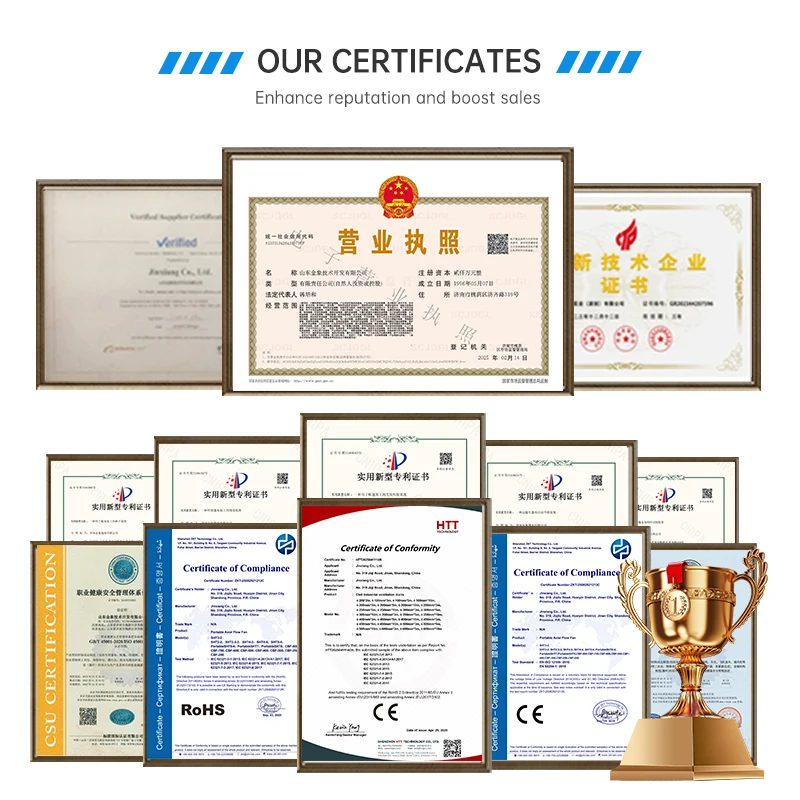
- ISO and CE certificates covering the production facility and quality management system
- Certificate of origin and customs documentation matched to the destination country requirements
Fabrication, Handling & Storage
- Hot air welding at recommended temperature and speed produces seams that match the 500D base fabric tensile strength
- Store rolls horizontally on racking to prevent flat spots that distort the PVC coating surface
- Allow cold-stored rolls to reach ambient temperature before unrolling to avoid coating micro-cracking
- Clean surfaces with mild detergent only — solvents can degrade the PVC coating layer over time
- Field repairs on punctures or seam failures are achievable with a portable hot air welder and matching PVC patch
What to Include in Your Inquiry
Specify the application, the exposure conditions the fabric will face, and the fire safety or UV standard your market requires. Provide the target width, roll length, and annual volume so that the PVC Coated Tarpaulin manufacturer can recommend the correct GSM grade and confirm production capacity. If custom colour or printed branding is needed, request a sample for approval before bulk production begins.
Frequently Asked Questions
Q: How is the GSM of each roll verified and what documentation ships with my order?
A: Every roll is weighed and measured against the stated GSM during pre-shipment inspection. A material specification sheet accompanies the shipment, listing the exact GSM, 500D base fabric, PVC coating type, and colour reference. The inspection record is included in the dispatch documentation so you can cross-check on arrival.
Q: What flame retardant grades are available and how do I select the right one?
A: Flame retardant treatment is available in grades aligned to different market standards. The correct grade depends on your end-use application and local fire safety regulations. Confirm the required standard at inquiry stage so the appropriate test report is generated and shipped with your PVC coated tarpaulin order.
Q: How is colour consistency maintained across multiple rolls in a single order?
A: Colour is matched against a reference standard during coating, and each roll is visually inspected under controlled lighting before packing. This process ensures that panels cut from different rolls within the same batch present a uniform appearance when installed side by side on truck covers or awnings.
Q: What custom widths and printing options can be produced, and what are the minimums?
A: Custom widths, colours, and pattern printing are supported by the R&D team with samples developed for approval before bulk production. Minimum order requirements depend on the width and treatment grade selected. Provide your target specification at inquiry to receive a quotation with lead time and volume terms.
Q: What is the recommended welding method and how strong is the seam compared to the fabric?
A: Hot air welding is the recommended method for joining panels of this PVC coated tarpaulin. When performed at correct temperature and speed, the weld bonds PVC coating to PVC coating, producing a seam that withstands flexing at load points without separating before the 500D base fabric itself reaches its tensile limit.
Related products
-

Hotsale Custom China Supplier Super Strength Industrial Grade 680GSM RIPSTOP PVC Tarpaulin for Builders Roof Tarp and Sheeting
¥2.80 Add to cart -
JX Fireproof 500gsm 600gsm Customizable PVC Tarpaulin Waterproof Truck Cargo Cover
¥0.79 Select options This product has multiple variants. The options may be chosen on the product page -
Secure Green PVC Coated Blackout Tarpaulin Truck Tent Cover Anti-Aging Waterproof Folding Design Breathable Woven Technics
¥0.83 Select options This product has multiple variants. The options may be chosen on the product page -
Pvc Coated Waterproof Tarpaulin Heavy Duty Tarp for Tent Roof Stocklot Lumber
¥1.60 Add to cart