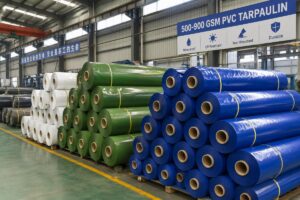
Factory-Direct Waterproof Tarp Wholesale for Colombia Market
Lowest FOB price is not the cheapest option if your cargo gets detained at Buenaventura.
Sourcing a Waterproof Tarp for Colombia Market requires prioritizing UV certification and humidity-resistant coatings over initial material cost. Without specific anti-UV test reports and correct GSM specifications, shipments face significant delays at Colombian customs, leading to storage fees that far exceed any savings from cheaper suppliers.
I still remember the silence on the other end of the line when a client in Bogota called me three years ago. He had ordered a full container of standard PE tarps from a low-cost supplier. The price was unbeatable. The color matched his brand perfectly. But when the vessel docked at Buenaventura, customs officials flagged the shipment. The documentation lacked a specific UV stability certificate required for agricultural and construction covers in tropical zones. The container sat on the dock for over a month. By the time it cleared, the demurrage charges had eaten up his entire profit margin, and the client was facing penalties from his own customers for delayed site coverage. That incident shifted my perspective entirely. I stopped looking at tarps as just plastic sheets and started viewing them as compliance documents wrapped in polyethylene.
Navigating the import landscape for a Waterproof Tarp for Colombia Market means understanding that the tropical climate and strict regulatory environment act as a filter. Only products with verified durability and complete paperwork pass through efficiently. This guide breaks down the technical specifications and documentation hurdles you must clear to ensure your procurement strategy aligns with local realities.
Why Do Standard Tarps Fail in Colombia’s Customs?
Missing UV certifications are the primary cause of detention at Buenaventura port, not just incorrect HS codes.
Many international buyers assume that if a tarp is waterproof, it is ready for export. In Colombia, this assumption is costly. The country’s equatorial location means intense, year-round ultraviolet radiation. Standard polyethylene tarps without specialized UV stabilizers degrade rapidly, turning brittle and cracking within weeks. Colombian customs authorities and industry standards require proof that imported materials can withstand these conditions, especially for goods intended for agriculture or long-term outdoor construction use.
When a shipment arrives without an accompanying UV test report from an accredited laboratory, customs officers may classify it as non-compliant with local quality standards. This triggers a manual inspection process that can halt clearance for weeks. The risk is not just theoretical. A recent case involving a distributor in Medellin showed that a lack of proper certification led to a partial seizure of goods deemed "substandard" for the declared purpose.
| Documentation Status | Customs Clearance Speed | Risk Level |
|---|---|---|
| Complete UV Cert & Origin Cert | Standard Processing | Low |
| Missing UV Report | Delayed for Manual Review | High |
| No Material Declaration | Detained/Rejected | Critical |
To avoid this, every batch of Waterproof Tarp for Colombia Market inventory you source must come with a verifiable UV stability test report. This document should reference recognized testing methods such as ASTM or ISO standards for artificial weathering. It is not enough for the factory to claim the product is UV-resistant; the paper trail must prove it. [NEED_CITE: ISO 4892 standards for plastic exposure to laboratory light sources]
Furthermore, the certificate must match the batch number on the commercial invoice. Discrepancies between the test report date and the production date of the tarps can raise red flags. Ensuring that your supplier provides batch-specific documentation rather than a generic company-wide certificate is a critical step in smoothing the entry process.
What GSM and Coating Specs Suit Colombian Climate?
High-humidity resistance requires specific PE/PVC formulations that go beyond basic waterproofing.
Colombia’s climate varies from coastal humidity to high-altitude rain, but moisture is a constant factor. Standard lightweight tarps often fail because they do not account for mold growth and hydrolysis in humid environments. The weight of the fabric, measured in grams per square meter (GSM), and the type of coating applied are decisive factors in product longevity.
For the Colombian market, a higher GSM does not always mean better performance if the coating formulation is incorrect. Polyethylene (PE) tarps are common for agricultural use, but they require a robust UV stabilizer additive mixed into the resin, not just sprayed on the surface. For construction and heavy transport, PVC-coated fabrics offer superior tear strength and water resistance but must be treated to prevent mildew during inland transit.
| Specification | Tropical Climate Performance | Recommended Use Case |
|---|---|---|
| Low GSM PE (No UV Additive) | Poor / Rapid Degradation | Temporary Indoor Use |
| Medium GSM PE (With UV Stabilizer) | Good / Seasonal Durability | Agricultural Cover |
| High GSM PVC (Anti-Mildew Coating) | Excellent / Long-Term | Construction & Transport |
A project in Cartagena highlighted this difference. A logistics company used standard PE tarps to cover cargo trucks traveling from the port to inland cities. The combination of salt air at the coast and heavy rain in the mountains caused the tarps to tear at the eyelets within months. Switching to a heavier, PVC-coated variant with reinforced edges reduced their replacement frequency significantly. [NEED_CITE: Impact of tropical humidity on polymer tensile strength]
When selecting a Waterproof Tarp for Colombia Market, ask your manufacturer for the specific coating weight and the type of anti-mildew agents used. For PE tarps, ensure the UV stabilizer is integrated during the extrusion process. For PVC, verify that the coating is bonded securely to the base fabric to prevent delamination in high heat. These technical details determine whether your product survives the first rainy season or fails prematurely.
How to Verify Factory-Direct Quality Before Shipping?
Request sample tests for UV stability and tear strength rather than relying on visual inspection.
Visual checks can confirm color and size, but they cannot reveal the chemical composition of the plastic or the strength of the bond between layers. Many buyers make the mistake of approving samples based on look and feel, only to receive bulk production that lacks the same additive levels. To mitigate this risk, pre-shipment verification must include functional testing.
One effective method is to request a small batch of production samples for independent testing before the full container is loaded. Focus on two key metrics: tensile strength and UV resistance. Tensile strength tests reveal how much force the tarp can withstand before tearing, which is crucial for windy conditions in mountainous regions. UV resistance tests simulate months of sun exposure to predict lifespan.
At Jinxiang, we facilitate this by providing free sample testing services where clients can verify the UV stability and tear strength of our materials. This approach allows buyers to confirm that the Waterproof Tarp for Colombia Market they are purchasing meets the rigorous demands of local usage. It shifts the burden of proof from the buyer’s intuition to empirical data.
| Verification Method | Reliability | Cost Implication |
|---|---|---|
| Visual Inspection Only | Low | Low |
| Factory Self-Reported Data | Medium | Low |
| Independent Sample Testing | High | Moderate |
Another critical aspect is edge reinforcement. Inland transportation in Colombia often involves rough roads and frequent loading and unloading. Tarps with simple hemmed edges are prone to fraying. Look for manufacturers who use double-stitched hems with webbing inserts or heat-sealed edges for PVC products. This detail prevents the most common form of wear and tear during transit.
Which Documentation Ensures Smooth Clearance?
Complete set of certs prevents weeks of delay by satisfying both customs and end-user requirements.
The paperwork accompanying your shipment is as important as the physical goods. Colombian customs requires a specific set of documents to process imports efficiently. Missing or inconsistent documents are the fastest way to incur demurrage charges and storage fees. Beyond the standard commercial invoice and packing list, specialized certificates are mandatory for technical textiles.
First, a Certificate of Origin is essential to determine applicable tariffs. Second, and most critically, is the UV Test Report. This document must be issued by a recognized laboratory and clearly state the testing method and results. Third, a Material Safety Data Sheet (MSDS) may be required if the tarps contain specific chemical coatings. Finally, a declaration of material composition helps customs classify the goods correctly under the right HS code.
A distributor in Cali once faced a situation where the HS code on the invoice did not match the description in the UV certificate. This discrepancy triggered a full audit of the shipment, delaying release by several weeks. Ensuring that all documents cross-reference each other accurately is vital. [NEED_CITE: Colombian customs regulations for textile imports]
| Document Type | Purpose | Common Error |
|---|---|---|
| Certificate of Origin | Tariff Determination | Incorrect Country Code |
| UV Test Report | Quality Compliance | Mismatched Batch Numbers |
| Material Declaration | HS Classification | Vague Material Description |
When working with a factory-direct supplier, ensure they have experience preparing these specific documents for Latin American markets. A professional manufacturer will provide a complete export documentation package that aligns with Colombian regulatory expectations. This support minimizes the administrative burden on the importer and reduces the risk of human error in paperwork preparation.
Conclusion
Compliance is the true cost saver in Colombian tarp procurement.
Success in sourcing a Waterproof Tarp for Colombia Market depends on aligning product specifications with local climatic and regulatory demands. Prioritizing UV certification, appropriate GSM, and complete documentation ensures smooth customs clearance and long-term product performance. By focusing on these technical and administrative details, buyers can avoid hidden costs and build a reliable supply chain.