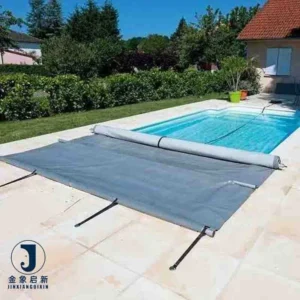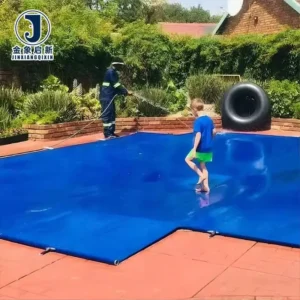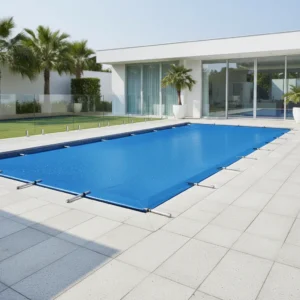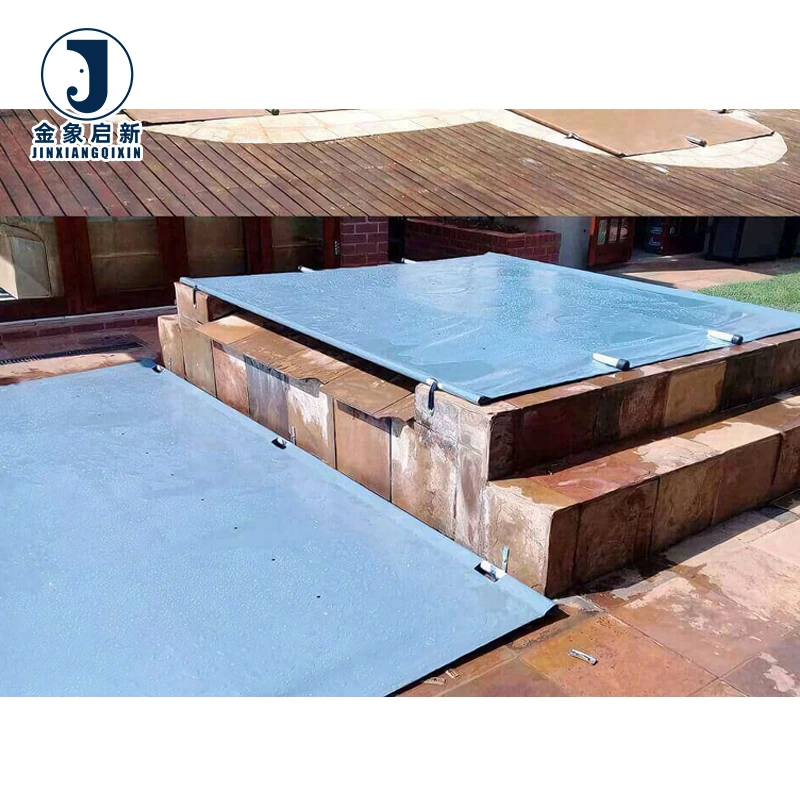
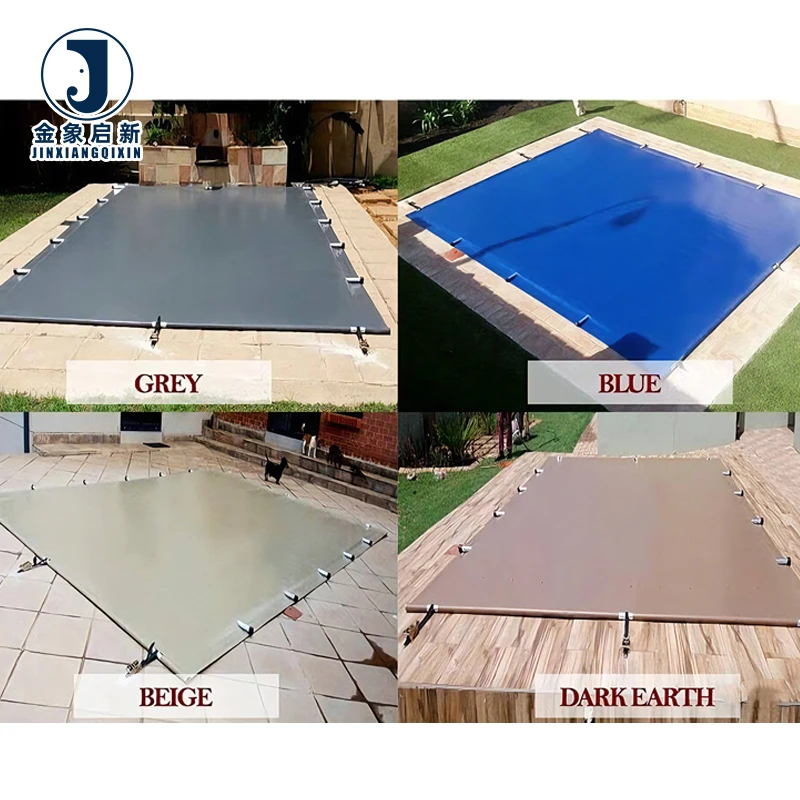
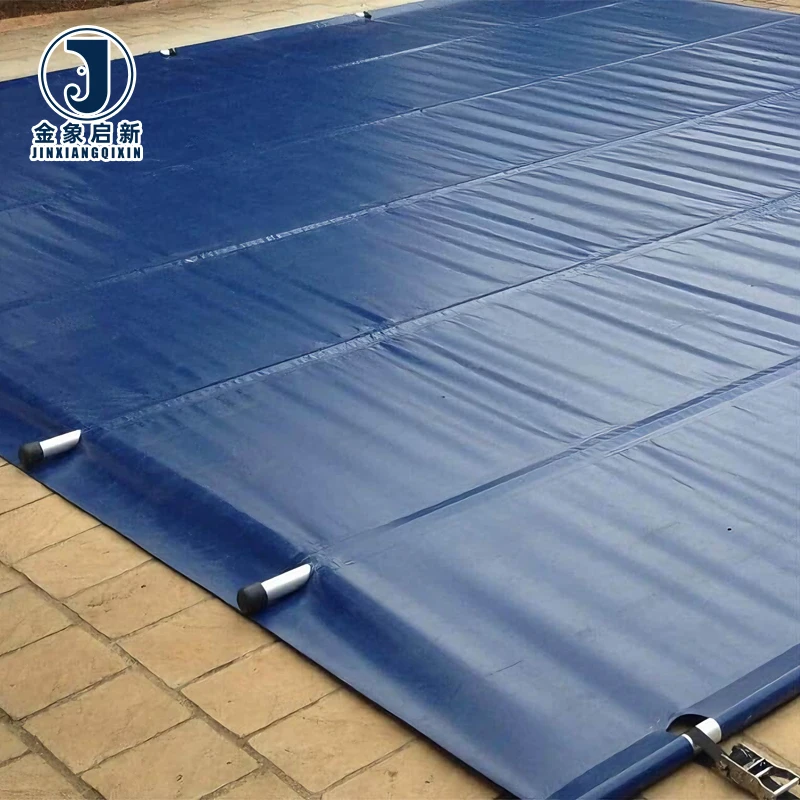
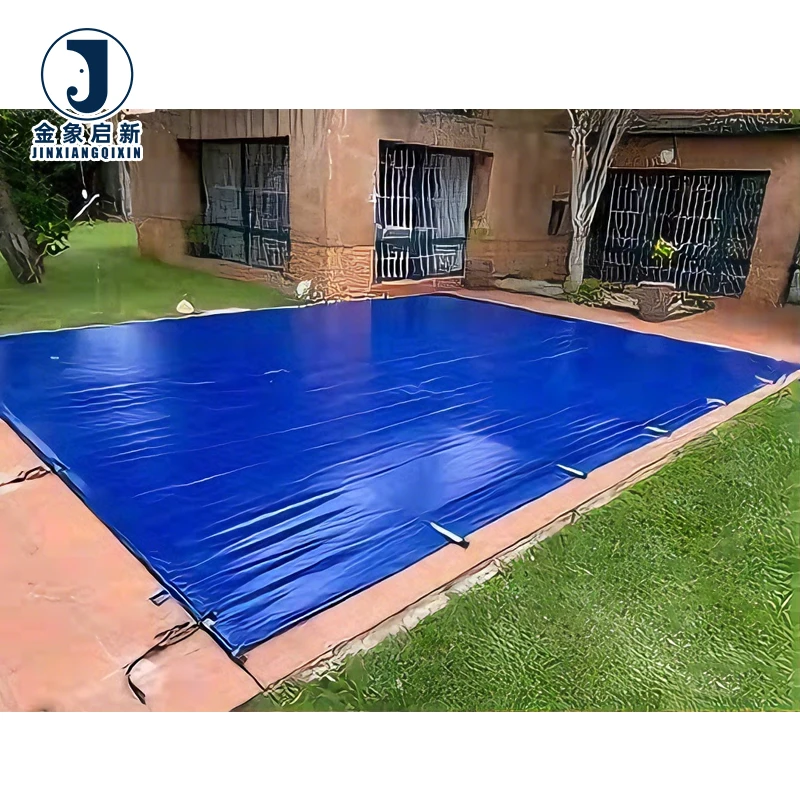
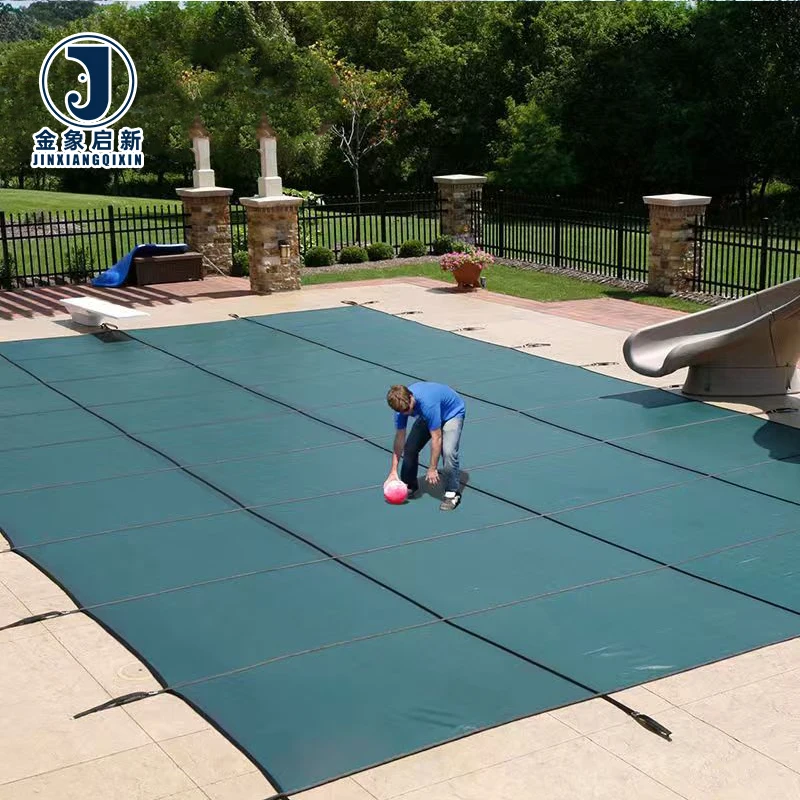
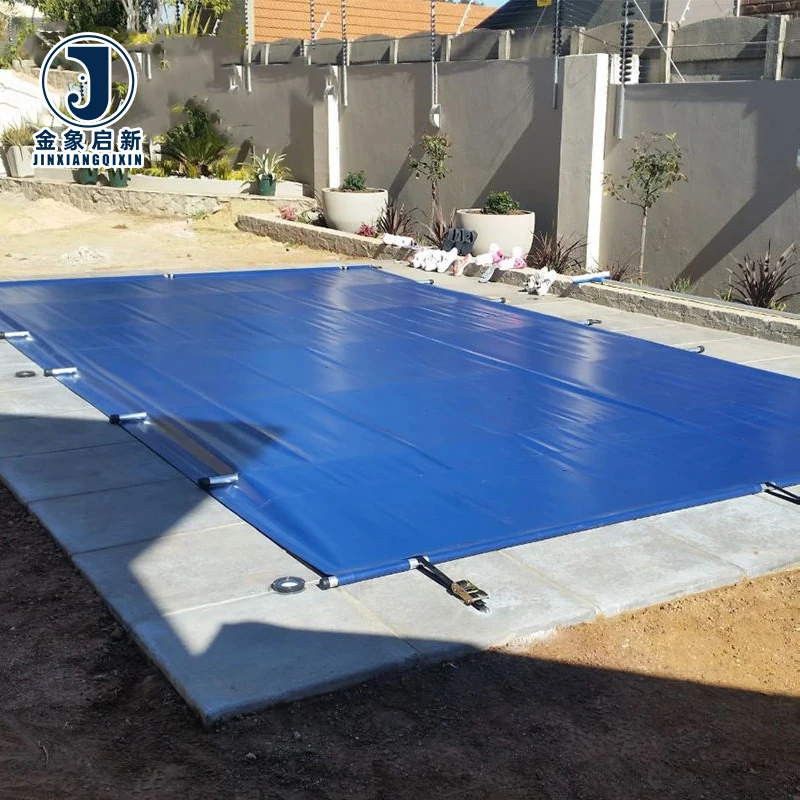
PVC Swimming Pool Cover Tarpaulin Fabric Roll 18oz / 610gsm, 0.914~3.42m width with 20×20 / 20×18 / 23×23 / 30×30 thread count options for varied tensile and tear demands.
- Knife coated for strong adhesion between base fabric and PVC layers, supporting reliable heat-welded seams on pool covers and outdoor structures.
- Anti-UV, fire retardant, and antimicrobial surface treatments available with test reports supplied on shipment.
- Custom width, color matching, and pattern printing keep roll-to-roll consistency across bulk orders.
Backed by 100% pre-shipment inspection and a 10-person R&D team handling material selection and sample development within days.
Description
Process-Controlled Coating — Every roll of 18oz 610gsm PVC coated tarpaulin leaves the line with a material specification sheet verifying exact coating weight, base fabric denier and mesh count, eliminating the GSM discrepancy buyers frequently encounter on arrival.
Technical Specifications
| Parameter | Value |
|---|---|
| Product Type | PVC Coated Tarpaulin |
| Weight | 610gsm / 18oz |
| Coating Material | PVC |
| Width Range | 0.914m – 3.42m |
| Mesh Count Options | 20×20 / 20×18 / 23×23 / 30×30 |
| Surface Finish | Available in glossy or matte |
| Color | All colors can be customized |
| Anti-UV Treatment | Available — confirm grade required for your market |
| Flame Retardant Grade | Available — confirm grade required for your market |
| Anti-Mildew | Claimed — test basis to be confirmed |
| Oilproof | Claimed — test basis to be confirmed |
| Acid and Alkali Resistance | Claimed — test basis to be confirmed |
| Temperature Resistance | Claimed — grade to be confirmed |
| Assembly State | Roll or custom cut size |
| Standards | ISO, CE |
Application Suitability
| Application | Exposure & Requirement |
|---|---|
| Swimming pool covers | Constant UV, chlorine-laden water splash, wind uplift load, seasonal deployment and storage cycles |
| Truck and boat covers | Road abrasion, high-speed wind flex, saltwater proximity, tie-down tension at hem and grommet points |
| Awnings and tents | Sustained sun exposure, rain pooling, repeated folding and unfolding at crease lines |
| Inflatable games and structures | Internal air pressure stressing seams, outdoor UV, frequent inflation and deflation cycles |
| Construction roofing membranes | Weather exposure during build phases, puncture risk from dropped tools, heat-welded lap seams |
What "Waterproof" Means When the Weld Fails First
A PVC coated tarpaulin is only as waterproof as its weakest seam.
Buyers specify 610gsm material expecting the fabric itself to hold up under water load, yet field failures routinely appear at the welded seam where the load flexes most. The base fabric remains intact while the heat-welded joint delaminates — a problem rooted in coating adhesion quality and welding temperature control rather than the GSM of the roll. When sourcing PVC Pool Cover Tarpaulin Fabric Roll material for pool or transport covers, the seam performance must be validated alongside the fabric weight [NEED_CITE: tensile and tear test methods for coated fabrics per ISO 1421]. Without this, the stated waterproof rating of the roll never translates to a waterproof finished product.
Full Catalogue Range and Customization Scope
This 18oz 610gsm material sits within a broader PVC coated tarpaulin range that covers lightweight to heavy-duty grades. The available mesh count options — 20×20, 20×18, 23×23, and 30×30 — let buyers select the base fabric density that matches the tensile and tear demands of their end product. A pool cover manufacturer might prioritize a tighter weave for puncture resistance, while a truck side curtain fabricator could favor a more flexible construction that withstands repeated flexing without cracking at the coating interface.
Color, Treatment and Cut-to-Size Options
Beyond the base specification, color is fully customizable across the order with batch consistency managed at the coating stage. Anti-UV, flame retardant, and anti-mildew treatments are available as optional add-ons — each must be confirmed against the target market’s regulatory or project specification before production begins. Rolls ship in widths up to 3.42m, supporting large-format panels that minimize welding seams on wide pool covers and transport curtain panels [NEED_CITE: DIN 4102 fire classification for building materials].
How Mesh Count and Coating Weight Interact
The 610gsm total weight is the sum of the base fabric and the PVC coating applied to both sides. Two rolls can share the same GSM yet perform very differently if one uses a 20×18 mesh with a heavier coating to reach the target weight while the other uses a 30×30 mesh with a thinner coat. The tighter mesh delivers higher tensile strength from the yarn itself; the heavier-coat, looser-mesh construction relies more on coating adhesion for integrity. Width selection from 0.914m to 3.42m directly affects how many welded seams are needed to cover a given pool or truck bed — wider rolls reduce seam count and the associated failure points. Surface finish, whether glossy or matte, influences dirt adhesion and cleaning effort over repeated seasons of pool cover deployment.
The Hidden Cost of Specifying by GSM Alone
Ordering PVC coated tarpaulin based solely on a quoted GSM figure invites several downstream failures. Material that arrives lighter than stated forces the buyer into a dispute that delays production and strains the supplier relationship. Color variation between rolls in the same order becomes visible once the panels are installed side by side on a pool deck or truck fleet — a rework scenario that costs far more than the original material saving [NEED_CITE: batch colour consistency standards for coated fabrics]. Treatment claims without supporting test reports leave the buyer exposed when a project inspector demands documentation for flame retardant or UV performance. These are not rare edge cases; they are routine pain points in coated fabric procurement.
Why Source This Material Here
Nearly 30 years of focused coated-fabric production underpins the process control behind every roll — coating weight and adhesion are monitored continuously on line, not spot-checked after the fact. Three full production lines and 36 sets of professional equipment support the bulk capacity needed for multi-container orders with reliable scheduling. A dedicated 10-person R&D team handles material selection, sample development, and custom sizing, delivering samples within days for buyer confirmation before full production runs. QA/QC inspection covers every production stage, and 100% pre-shipment inspection is standard, not an optional upgrade. The full custom capability spans color matching, treatment selection, width configuration, and cut-to-size finishing from a single production source.
Documentation & Verification
- Material specification sheet stating exact 610gsm, base fabric weave and PVC coating weight per roll
- Test report for UV or flame retardant grades supplied where applicable to your market standard
- Pre-shipment inspection record documenting roll-level weight and visual check results
- Roll packing list with color reference, mesh count and width for each item
- Certificate of origin and customs support documentation included in dispatch
Fabrication, Handling & Storage
- Heat-weld at temperatures matched to the PVC coating thickness to avoid delamination at 610gsm seams
- Store rolls upright on pallets to prevent permanent creasing across the 3.42m width
- Allow cold-stored rolls to reach ambient temperature before unrolling to prevent coating crack
- Use compatible PVC adhesive for field repairs on the coated surface rather than generic sealants
- Plan cut patterns to maximize yield from the chosen width and minimize offcut waste
Requesting a Specification Match
Provide the intended application and exposure conditions so the correct mesh count and treatment package can be recommended. Confirm whether you require rolls at a specific width and length or finished cut-to-size panels with hem and grommet details. If your project mandates a particular flame retardant or UV standard, state the target grade upfront to ensure test documentation is prepared with the shipment.
Frequently Asked Questions
Q: How do I verify the 610gsm weight matches what was quoted?
A: Every shipment includes a material specification sheet documenting the exact GSM, base fabric weave, and coating weight per roll. A 100% pre-shipment inspection is completed before dispatch, and the inspection record is included in your documentation package. You can cross-check the received rolls against this record immediately on arrival.
Q: What test reports come with UV or flame retardant grades?
A: Where UV or flame retardant treatment is specified, test reports are prepared against the standard applicable to your target market. Confirm the required grade — such as NFPA 701, M2, or B1 — at the inquiry stage so the correct testing protocol is followed and documentation accompanies the shipment.
Q: Can I order custom width and color in small quantities?
A: Custom width up to 3.42m and color matching are available. Minimum order quantities apply to non-stock colors and widths. Request a sample first to confirm color accuracy, weight, and treatment before committing to the full production run.
Q: How is color consistency maintained across multiple rolls?
A: Color consistency is controlled at the coating stage, with batch formulation monitored to reduce roll-to-roll variation. For orders spanning multiple rolls, a pre-shipment visual comparison is conducted and documented in the inspection record before dispatch.
Q: What is the lead time for custom-printed or branded tarpaulin rolls?
A: Lead times depend on the customization scope — color matching, width configuration, and printing all affect scheduling. Samples are developed within days for approval. Once the sample is confirmed, production lead time is communicated in the formal quotation.
Related products
-
Custom Made PVC Pool Cover 500gsm Blackout – Manufacturer
Read more -
JX PVC Laminated Waterproof Breathable Anti-UV Blackout Organic Plain Weft Swimming Pool Covers Tarpaulin Coated
¥1.78 Select options This product has multiple variants. The options may be chosen on the product page -
Custom PVC Pool Cover Tarpaulin for Pools – Manufacturer
Read more -
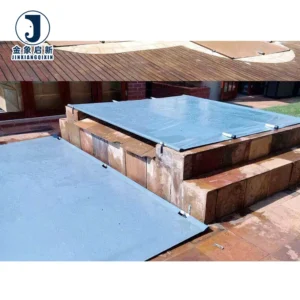
China Manufacturer 18oz 610gsm Heavy Duty Pvc Swimming Pool Cover Pvc Coated Tarpaulin Fabric Roll Roofing Cover Tarp Sheet
¥2.50 Select options This product has multiple variants. The options may be chosen on the product page