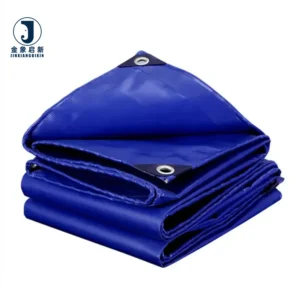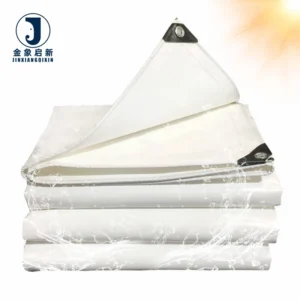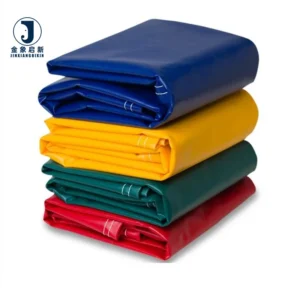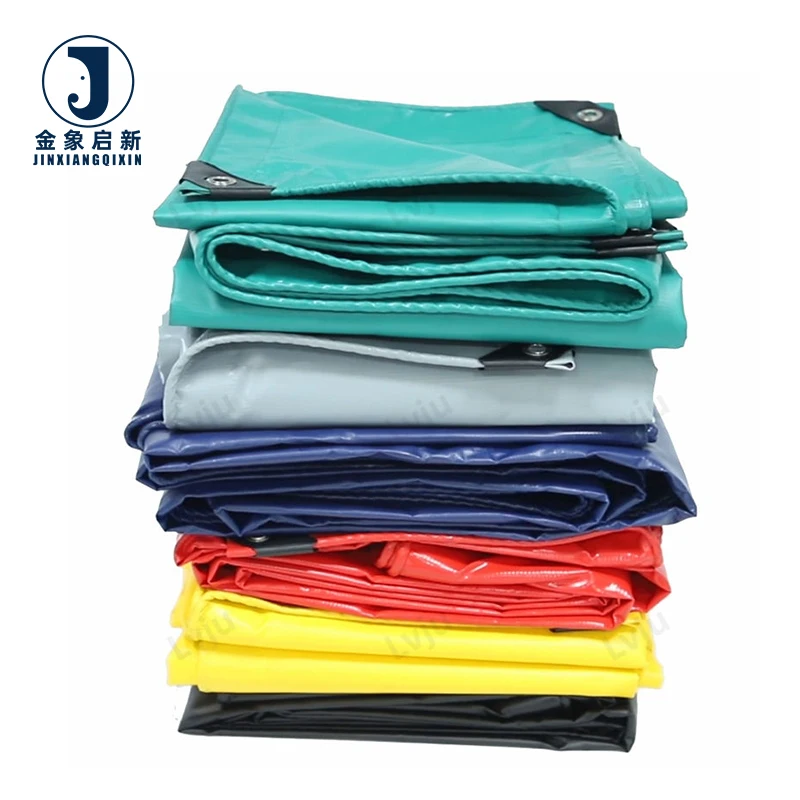
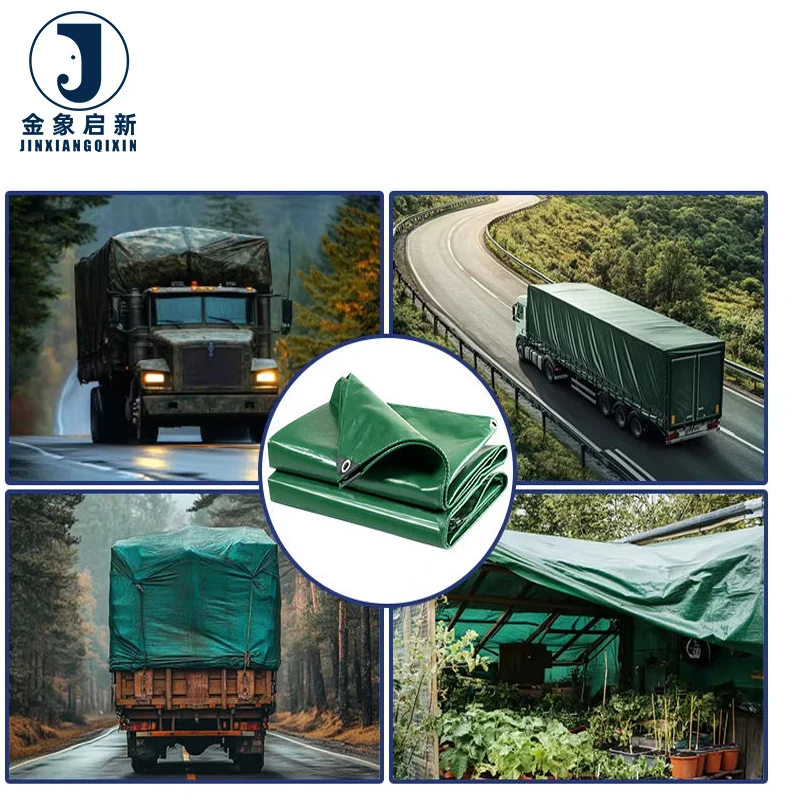
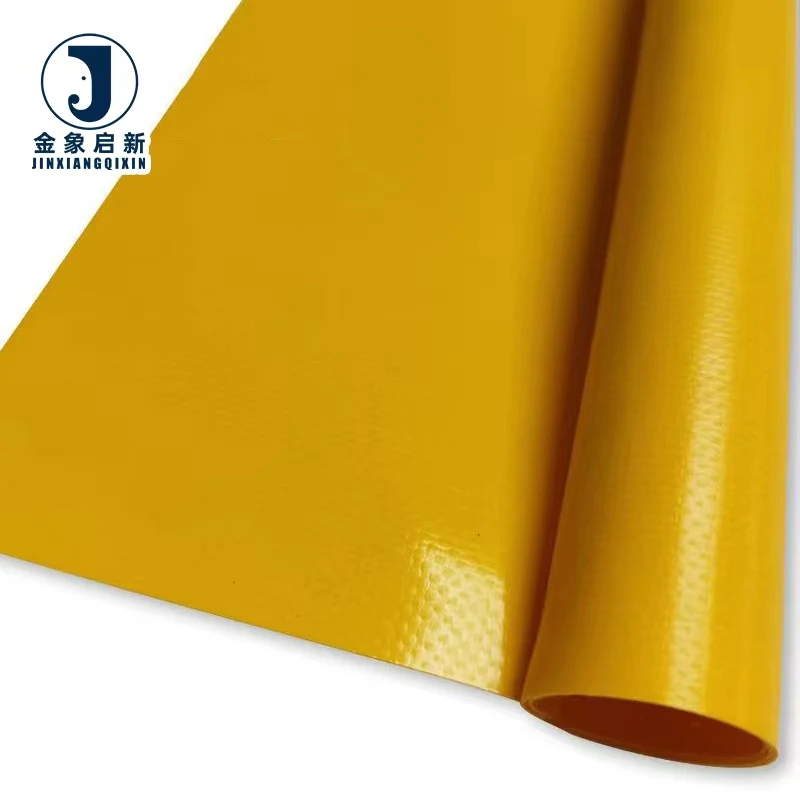
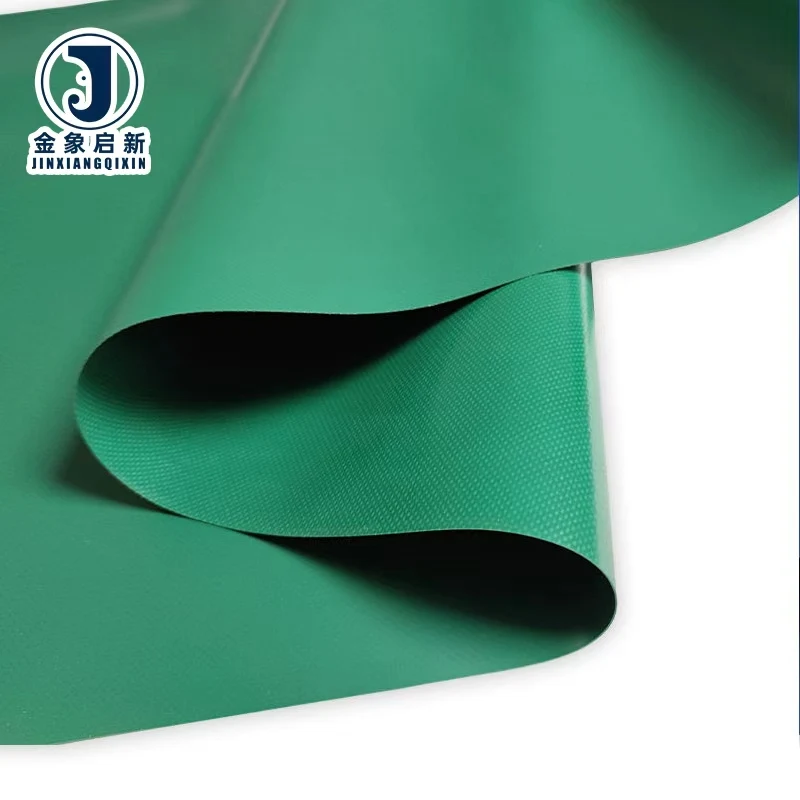
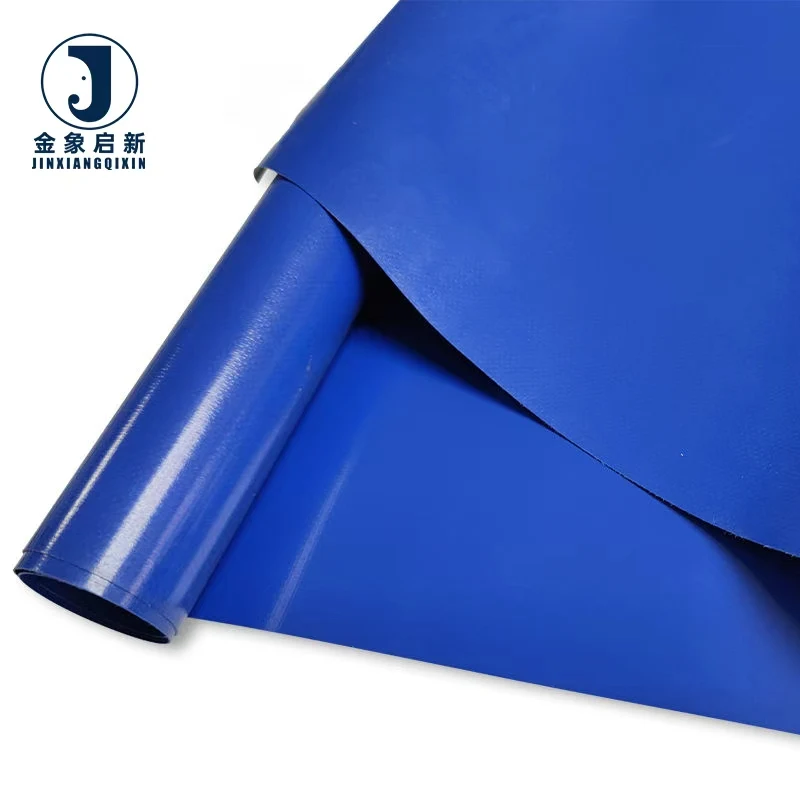
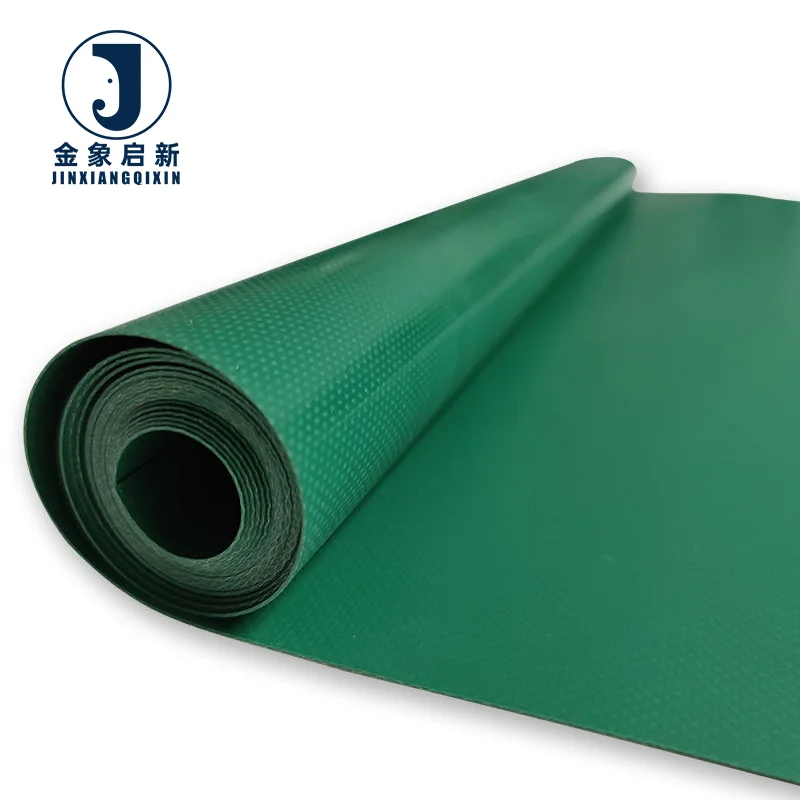
PVC Knife Coated Tarpaulin 650GSM — knife-coated PVC on high-tenacity polyester base, waterproof and UV treated, supplied in rolls or cut-to-size with heat-welded seams and reinforced brass eyelets.
- Coating weight and base denier jointly determine tensile and tear performance; knife-coating ensures strong adhesion and reliable heat-weld behaviour at flex points.
- Verified GSM per roll with pre-shipment inspection records, 10-person R&D team handling custom width, colour and print from sample to bulk.
Description
Verified Coating Adhesion — Every roll of PVC knife coated tarpaulin passes a peel-strength check before dispatch, ensuring the coating stays bonded to the base fabric under load flex and weather exposure.
Technical Specifications
| Parameter | Value |
|---|---|
| Product Type | PVC Coated Tarpaulin |
| Thickness | 0.35-1.5 mm |
| Weight (GSM) | 400-1500 g/m² |
| Base Fabric Denier | 500D-2000D |
| Tensile Strength (Warp) | 1500-3000 N/5cm |
| Tensile Strength (Weft) | 1200-2800 N/5cm |
| Material | PVC coated polyester fabric |
| Color | Black (custom colors available) |
| Key Features | Waterproof, tear resistant, UV treatment, mildew proof, anti-aging |
| Certification | ISO, CE |
Application Suitability
| Application | Exposure & Requirement |
|---|---|
| Truck and trailer side curtains | Constant flexing at corners, road grit abrasion, UV exposure, tie-down stress at hems |
| Outdoor storage and equipment covers | Prolonged sun exposure, wind uplift, rain pooling, puncture risk from sharp edges |
| Tent and awning structures | Tension stress at ridge poles, repeated folding and unfolding, mildew in humid climates |
| Construction site protection | Impact from falling debris, dust containment, temporary enclosure under variable weather |
| Pond and reservoir liners | Permanent water contact, soil chemistry, puncture from substrate irregularities |
| Industrial equipment covers | Chemical splash, thermal fluctuation, abrasion from vibration against metal frames |
Why the Quoted GSM Is Not What You Actually Receive
The scale never lies, but the coating line sometimes does.
I have seen it happen: a fleet operator specifies a mid-weight PVC knife coated tarpaulin aftermarket supplier quotation, the rolls arrive, and the cutting table scale reads well below the agreed figure. The missing mass is not imaginary — it was simply never applied. Some coating lines run faster by reducing the knife gap, shaving grams off every square metre without adjusting the quote. The fabric looks identical to the naked eye, performs adequately for a season, and then fails at a weld line or eyelet point where the coating was thinnest [NEED_CITE: weight variance and premature seam failure in coated fabrics]. When that happens, the conversation turns to claims, and nobody wins.
Knife Coating Consistency and Peel Strength
The knife-coating process controls how much PVC paste is deposited onto the polyester base fabric, and the gap between blade and substrate determines coating weight on each side. When this gap is calibrated per production run and verified by cross-section sampling, the adhesion between PVC and yarn stays intact through repeated flex cycles. A PVC knife coated tarpaulin aftermarket supplier running consistent knife settings delivers rolls that heat-weld predictably because both surfaces carry the same coating mass.
Batch-to-Batch Colour Stability Across the Full Order
Colour drift between rolls is a common rejection reason once fabric panels are installed side by side on a trailer or structure. By matching pigment batches to the order volume and running all rolls from the same dye lot, colour stays within a narrow delta across the full shipment. This matters especially for fleet operators who replace one panel and need it to match the rest of the curtain set.
How Denier, Weave, and Coating Weight Work Together
The tensile and tear performance of this PVC knife coated tarpaulin comes from the interaction between base fabric and coating, not from either one alone. A 500D base at 400 g/m² total weight carries less coating mass than a 2000D base at 1500 g/m², but a heavier base fabric with poor coating adhesion will delaminate before it tears. The knife-coating method forces PVC paste into the weave interstices, creating a mechanical lock that resists peel forces at welded seams. Thickness values from 0.35 to 1.5 mm reflect this combined build — base plus two coating faces — and correlate to puncture resistance in field use [NEED_CITE: relationship between coating thickness and puncture resistance in PVC tarpaulins].
What Happens When the Specification Is Wrong for the Job
Choosing too light a grade for a truck side curtain means the fabric flexes past its fatigue limit at the corner gussets, and cracks propagate from the eyelet line inward. Selecting a grade without confirming UV treatment for a long-term outdoor cover leads to surface chalking and loss of tensile strength over an extended exposure period. Ordering rolls without locking the colour reference upfront results in visible shade variation once panels are joined. Each of these outcomes traces back to a specification gap at the inquiry stage, not a manufacturing defect [NEED_CITE: specification mismatch as root cause of tarpaulin field failures].
Production Control and Sample-First Workflow
The coating lines run with dedicated QA checkpoints at the paste mixing, knife application, and curing stages, catching weight deviation before it reaches the winding station. The 10-person R&D team develops samples for custom width, colour, and print requirements within days, so you approve the actual material before bulk production starts. Every roll undergoes a pre-shipment weight check against the specification sheet — if it does not meet the stated GSM, it does not ship. Welding parameters are matched to the coating formulation so that seams hold through load flex cycles without splitting at the bond line.
Documentation & Verification
- Material specification sheet listing GSM, base fabric denier, and coating type for each roll
- Weight verification per roll against the stated GSM before dispatch
- UV and flame-retardant test reports provided where applicable — confirm the grade required for your market
- Pre-shipment inspection record with roll-level measurement data
- Roll packing list with net weight and dimensions per unit
Fabrication, Handling & Storage
- Heat-weld at temperatures matched to the 0.35-1.5 mm thickness range to avoid scorch or incomplete bond
- Space brass eyelets at intervals suited to the 500D-2000D base fabric tear strength
- Store rolls upright on cores to prevent flat-spot creasing on the PVC coating surface
- Avoid dragging cut panels across abrasive substrates during installation on site
- Clean with mild detergent only — solvent-based cleaners attack the plasticiser in the PVC layer
What to Include with Your Inquiry
Send the application scenario and expected exposure conditions — whether it is a side curtain flexing in highway wind or a static cover on stored machinery. Specify the target width and whether you need roll stock or finished cut sizes with welded hems and eyelets. If your market requires a particular flame-retardant or UV grade, state the standard so the correct formulation is quoted from the start.
Frequently Asked Questions
Q: How do you verify the GSM matches what was quoted?
A: Every roll is weighed on a calibrated scale after production, and the measured GSM is recorded against the specification sheet. Rolls that fall outside the agreed tolerance are held back from shipment. The pre-shipment inspection record includes this per-roll data, so you see the actual numbers before the container is sealed.
Q: Can I get a sample before placing a bulk roll order?
A: Yes. The R&D team produces samples in your required width, colour, and weight within days. You test the sample for welding compatibility, colour match, and hand feel before approving bulk production. No roll order runs until the sample is signed off.
Q: What flame-retardant or anti-UV certifications come with the fabric?
A: Test reports are provided for grades that have been tested — confirm the specific grade and standard your project requires, such as DIN 4102 or NFPA 701, so the correct formulation is produced. Not all grades carry these treatments, and the applicable report follows the shipment documentation.
Q: How do you handle colour consistency across multiple rolls?
A: All rolls in a single order are produced from the same pigment batch and dye lot. This prevents visible shade variation when panels are installed side by side. If a reorder is placed later, a colour reference sample from the original batch is used for matching.
Q: What is the minimum order for custom width or printed branding?
A: Custom widths and printed branding carry minimums that depend on the roll width and print complexity. The exact minimum is confirmed at the quotation stage once your design file and required dimensions are reviewed. A print sample is produced for approval before the full run.
Related products
-
Customize 500-600GSM Heavy Duty Waterproof Anti-UV Knife Fabric PVC Tarpaulin for Car Tents Canopies Awnings
¥0.90 Select options This product has multiple variants. The options may be chosen on the product page -
JX Customizable Waterproof Anti-UV Knife Tarpaulin Tents Canopies Awnings PVC Coated Plain Style Wrinkle Resistant Solid
¥2.49 Add to cart -
Customizable PVC Knife-Coated Tarpaulin for Tents – Full Range
Read more -
Different Colors 500 GSM Heavy Duty PVC Tarpaulin Knife Fabric Cloth Tent Canopy Awnings Truck Ship Rainproof Tarp Cover
¥1.45 Select options This product has multiple variants. The options may be chosen on the product page