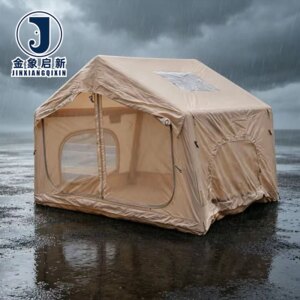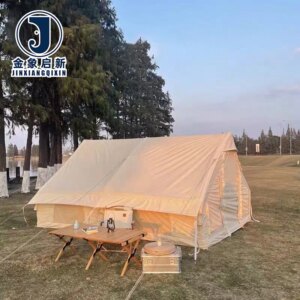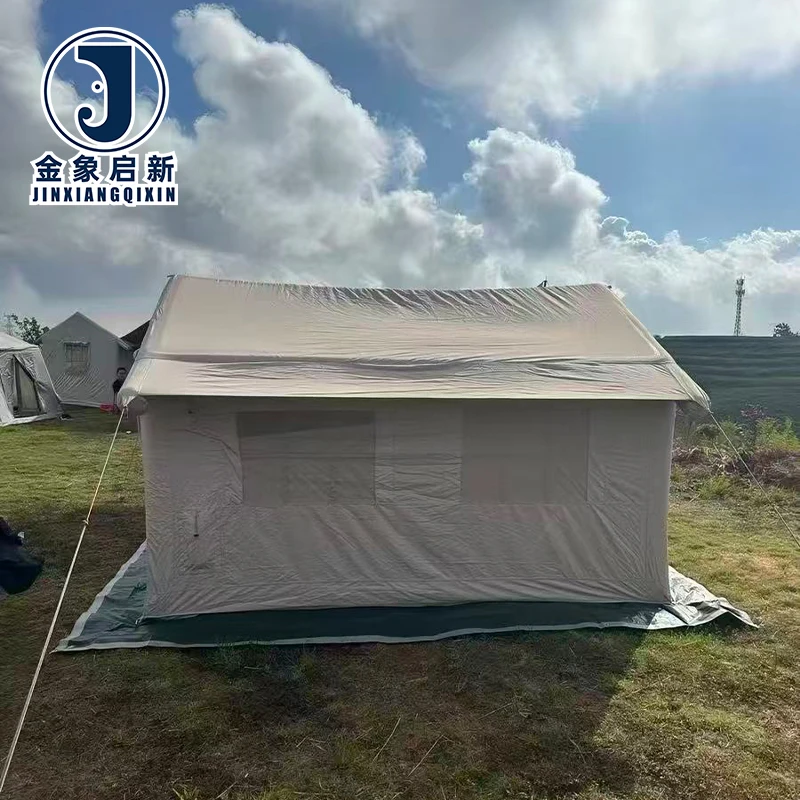
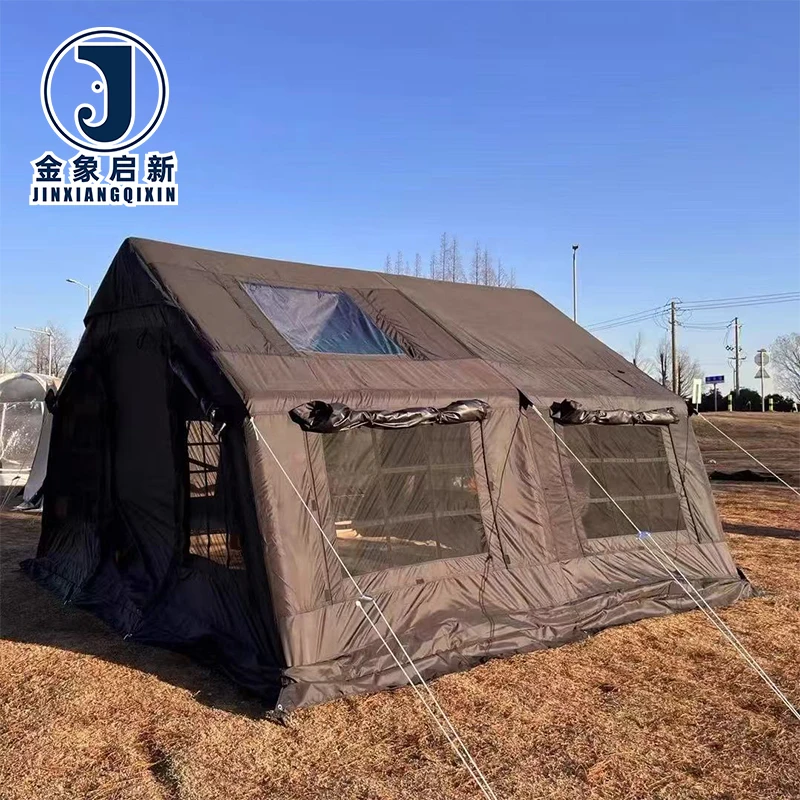
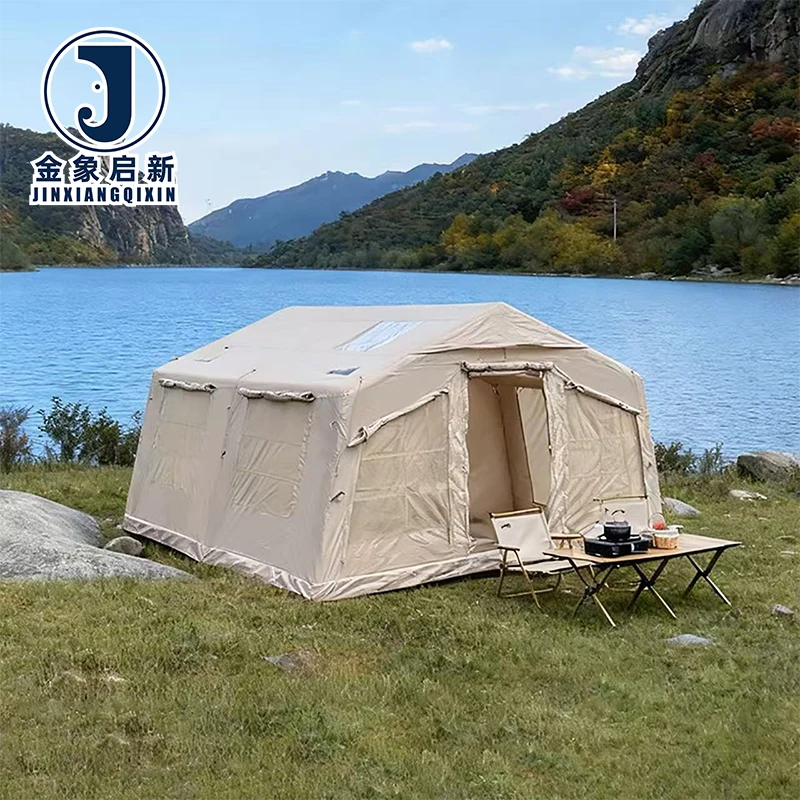
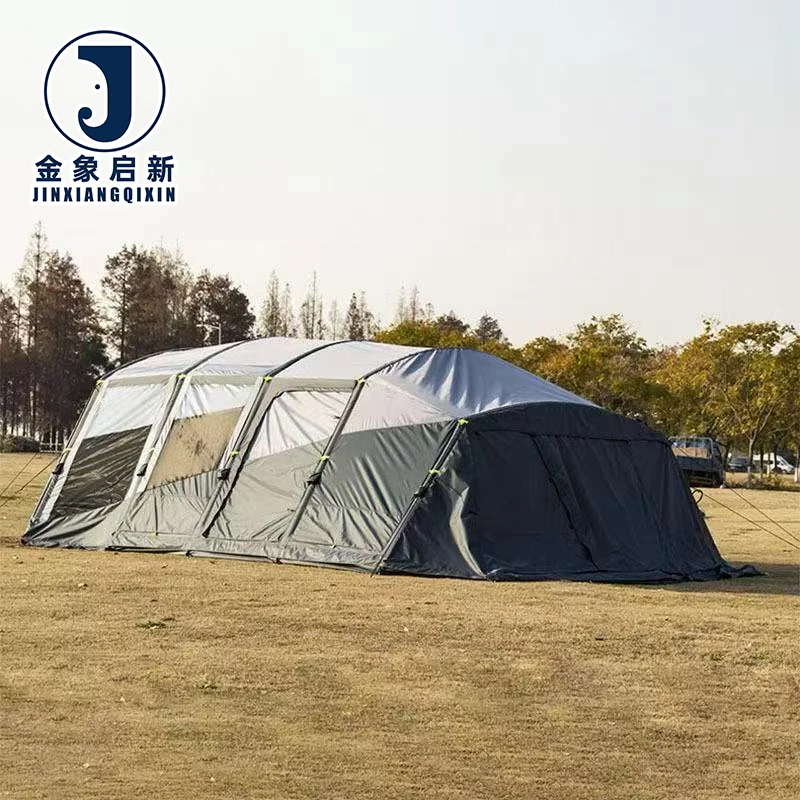
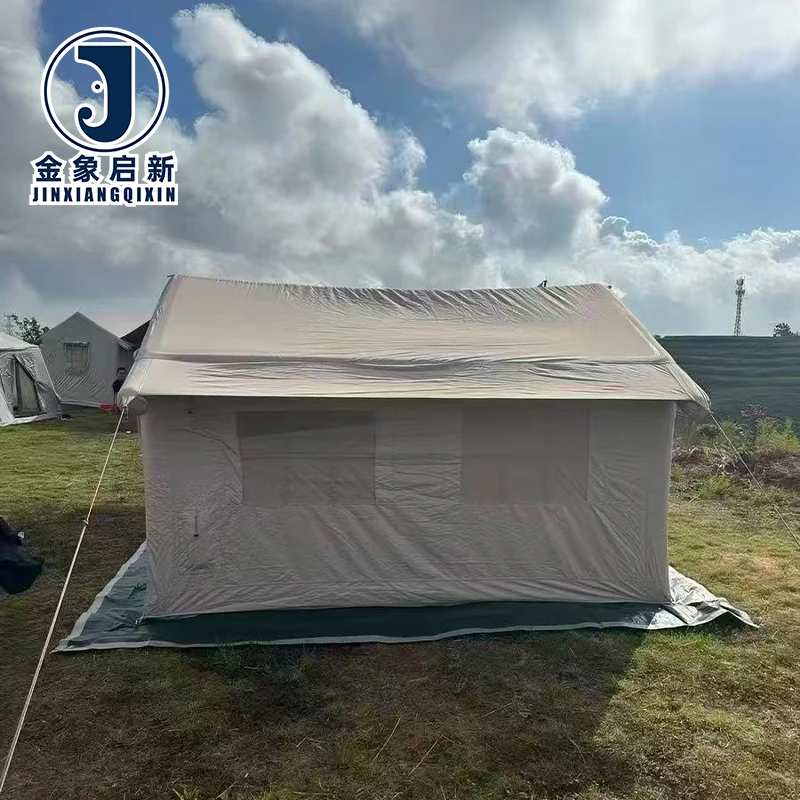
Portable Inflatable Camping Tent, 4-6 Person, Oxford Waterproof Fabric — single-layer construction with ≥1000mm H₂O water resistance and UV-resistant additives for prolonged outdoor deployment.
- Quick automatic opening mechanism reduces setup time for repeated event cycles
- OEM & ODM customization covering sizing, material thickness, and pattern printing
- Batch-consistent coating across 3 full production lines with 100% pre-shipment inspection
Description
Process-Controlled Coating — three full production lines maintaining GSM tolerance and colour consistency across every roll of inflatable tent fabric dispatched.
Technical Specifications
| Parameter | Value |
|---|---|
| Product Type | Inflatable Tent |
| Core Material | Oxford Waterproof Fabric |
| Waterproof Rating | ≥1000mm H2O |
| UV Treatment | UV-resistant additives (test basis not stated — confirm requirement) |
| Construction | Single Layer |
| Capacity | 4–6 Person |
| Opening Mechanism | Quick Automatic Opening |
| Customization | OEM & ODM, sample customization, pattern printing |
| Flame Retardant | Available in flame retardant grades — confirm the grade required for your market |
| Standards | ISO 9001, ISO 14001, ISO 45001, CE |
Application Suitability
| Application | Exposure & Requirement |
|---|---|
| Outdoor event management | Repeated setup and takedown cycles, wind loading on inflated structure, rapid deployment under tight schedules |
| Commercial camping facilities | Continuous seasonal UV exposure, guest contact abrasion, branding and pattern printing visibility |
| Construction site accommodations | Dust ingress, variable weather, compliance documentation for site safety audits |
| Outdoor product promotions | High-visibility custom printing, short-term intensive use, transport between venues |
| Industrial temporary housing | Extended occupancy, thermal fluctuation, waterproof integrity under sustained rain |
Why Material Specs Alone Do Not Guarantee Inflatable Tent Performance
Choosing an inflatable tent fabric on waterproof rating and nothing else invites structural failure when the tent is inflated and under tension.
A waterproof rating confirms water resistance at a point in time, but an inflatable tent operates under continuous internal air pressure. The seams, valve points, and fabric-to-tube junctions experience stress patterns that a simple hydrostatic test does not capture. [NEED_CITE: seam strength testing methods for inflatable structures per relevant textile standards] Batch-to-batch variation in coating weight can shift the effective strength from one production run to the next, meaning the sample you approved and the container you receive may not behave identically under inflation pressure.
Consistent Coating Weight Across Every Production Run
The inflatable tent fabric we produce moves through a controlled coating process where GSM is monitored at multiple stages, not just at final inspection. Single-layer Oxford waterproof construction demands uniform coating thickness because any thin point becomes a failure origin under inflation stress. When you order multiple rolls for a tent manufacturing run, colour and weight consistency between rolls prevents visible variation once panels are cut and welded side by side. This level of Inflatable Tent Fabric manufacturer custom capability is sustained by a 10-technician R&D team overseeing formulation and process parameters.
Quick Automatic Opening Demands Precision in Fabric Behaviour
Quick automatic opening relies on the inflatable structure inflating evenly and holding shape immediately. If one panel is heavier or stiffer than the next due to coating inconsistency, the tent deploys asymmetrically and stresses specific seams beyond their design load. Our 36 sets of professional processing equipment allow tight control over cutting tolerances and welding parameters so that the finished tent inflates predictably every time. [NEED_CITE: deployment testing standards for inflatable temporary shelters] The 4–6 person capacity configuration requires balanced air chamber design supported by fabric that responds uniformly across the entire surface.
Reading Between the Spec Sheet Lines
Waterproof rating at ≥1000mm H2O confirms the coating resists water penetration under hydrostatic head pressure, but this single number does not describe how the fabric performs when stretched over an inflated frame. The Oxford base fabric provides the structural backbone — its denier and weave density determine how much load the material carries before the coating takes over. Single-layer construction reduces overall tent weight, which is critical for commercial camping operators transporting shelters between sites, but it also means the coating must carry both waterproof and structural duties without the backup of a secondary liner. UV-resistant additives are integrated into the material, though the specific test basis should be confirmed against your deployment environment and expected exposure duration.
What Happens When the Wrong Fabric Reaches the Production Floor
An inflatable tent built from fabric with inconsistent coating weight will show its first failure at the welded seams, precisely where inflation pressure concentrates. Operators who sourced from suppliers without in-process QA report tents that passed initial inflation testing but leaked within weeks of field deployment. [NEED_CITE: common failure modes in inflatable shelter structures] Colour variation between rolls becomes visible only after panels are sewn or welded together, turning a material cost saving into a complete batch rejection. Missing UV or flame retardant documentation then blocks customs clearance or site safety sign-off, compounding the delay.
Why Fabric Buyers Specify Our Production Line
Our nearly 30 years of coated fabric experience translates into process parameters that are dialled in, not guessed — every roll of inflatable tent fabric reflects that accumulated knowledge. The 10-person R&D team handles material selection, pattern printing specification, and sample development so that your custom requirements are resolved before bulk production begins. Dedicated QA/QC operates at every production stage, not just at final inspection, catching coating deviations before they reach the cutting table. [NEED_CITE: ISO 9001 quality management in coated textile manufacturing] With 9,180 square metres of production space and 36 sets of processing equipment, we hold the capacity to deliver container-volume orders without compressing lead times or skipping inspection steps.
Documentation & Verification
- Material specification sheet stating Oxford base fabric, coating type, colour reference, and waterproof rating
- UV treatment test report provided where applicable to the grade ordered
- ISO and CE certificates included in every shipment documentation package
- Pre-shipment inspection record confirming coating weight and waterproof integrity per roll
- Certificate of origin and customs documentation prepared for cross-border dispatch
Fabrication, Handling & Storage
- Heat-weld seams using parameters matched to the single-layer Oxford coating thickness to prevent adhesive breakdown
- Store rolls upright on cores to prevent flat-spot creasing that weakens the coating at fold lines
- Use compatible PVC-based repair patches field-side for puncture repair on inflated structures
- Allow cold-stored rolls to reach ambient temperature before unrolling to avoid coating micro-cracking
- Pattern printing registration verified against cutting templates before bulk panel production begins
What We Need to Build Your Specification
Provide the deployment environment — whether the tents will serve commercial camping sites, event venues, or construction sites — along with the expected seasonal exposure duration. Share your target market so we can confirm applicable flame retardant grades and any site-specific compliance requirements. Specify whether you need finished tents cut to your design or roll stock for your own fabrication line, and indicate if custom pattern printing or branding is part of the brief.
Frequently Asked Questions
Q: How is batch-to-batch colour consistency ensured across roll orders?
A: Coating formulation is locked per approved sample and monitored through every production run. Each roll is inspected against the reference colour standard before packing. Our in-process QA checks coating weight at multiple stages, so colour and material properties stay aligned across your entire order volume.
Q: What UV test basis supports the claimed outdoor durability?
A: UV-resistant additives are integrated into the material matrix during coating. The specific test method and exposure rating depend on the grade selected. We provide the relevant test report with your shipment — confirm the standard your deployment market requires before ordering.
Q: What customization options are available for size, pattern printing, and branding?
A: OEM and ODM customization covers cut dimensions, pattern printing, and branding artwork applied during production. Our R&D team develops a sample for your approval before bulk manufacturing begins, ensuring registration, colour accuracy, and material compatibility are confirmed on the actual fabric.
Q: What is the sample development and approval process before bulk production?
A: Once specifications are agreed, the R&D team produces a sample reflecting your exact material, sizing, and printing requirements. You review and approve the sample before production scheduling begins. Any adjustments are resolved at sample stage, preventing costly changes during the bulk run.
Q: How is airtightness and seam integrity verified before shipment?
A: Every finished unit undergoes inflation testing and seam inspection as part of 100% pre-shipment QA. Weld strength, valve seating, and panel alignment are checked against specification. Inspection records accompany the shipment so you have documented verification before the product reaches your site.
Related products
-
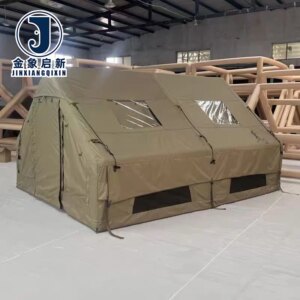
Waterproof Inflatable Camping Tent Outdoor Easy Setup Air Tent for Camping
Read more -
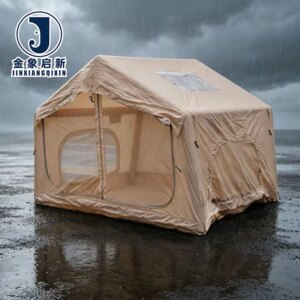
Inflatable Camping Tent Waterproof Outdoor Air Tent for Camping Inflatable Tent Shelter
Read more -
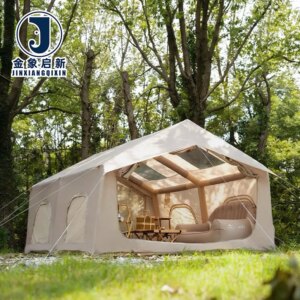
Camping Tent Inflatable UV Resistant Customizable Four-season Waterproof PVC Quick Automatic Opening 2-3 Person Outdoor
Read more -
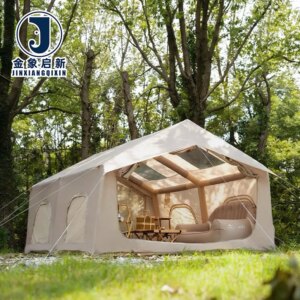
High Quality Four-Season Inflatable Tent for Camping Durable PVC Waterproof All-Weather Resistance Quick Automatic Opening
Read more