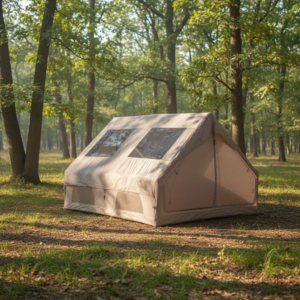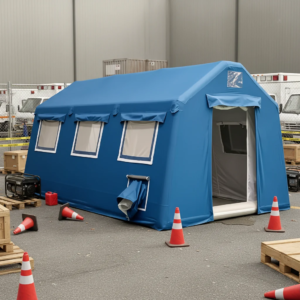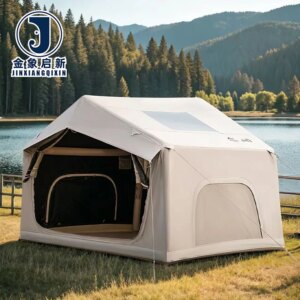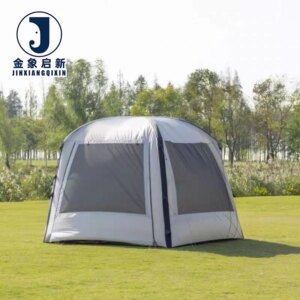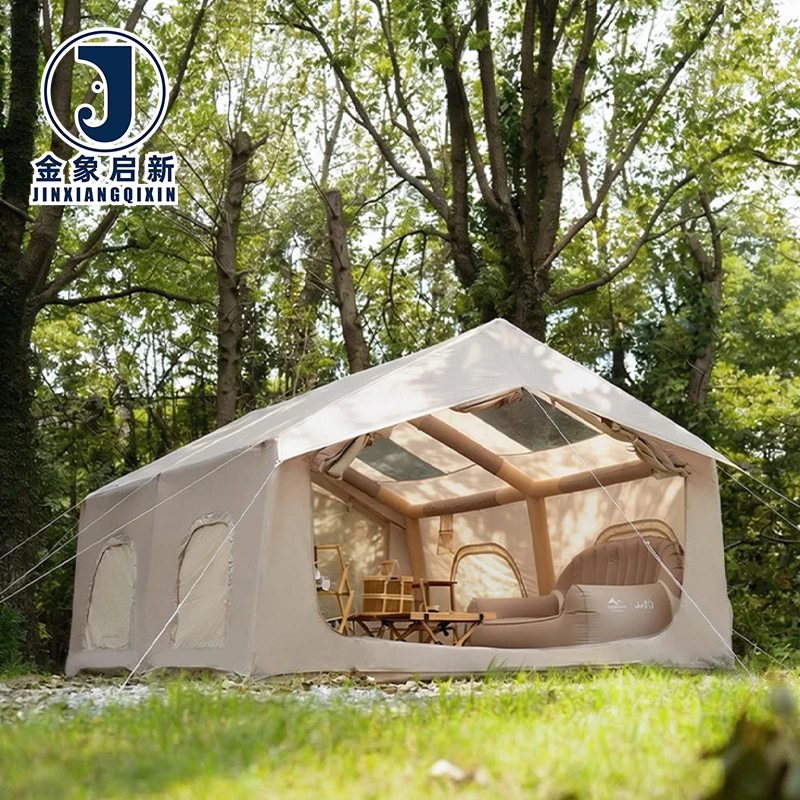
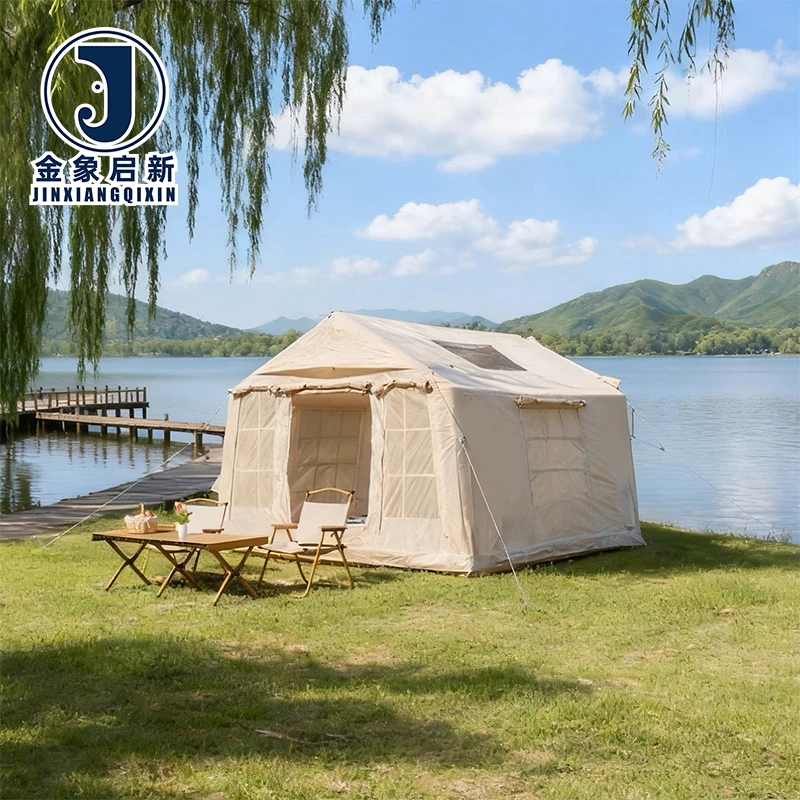
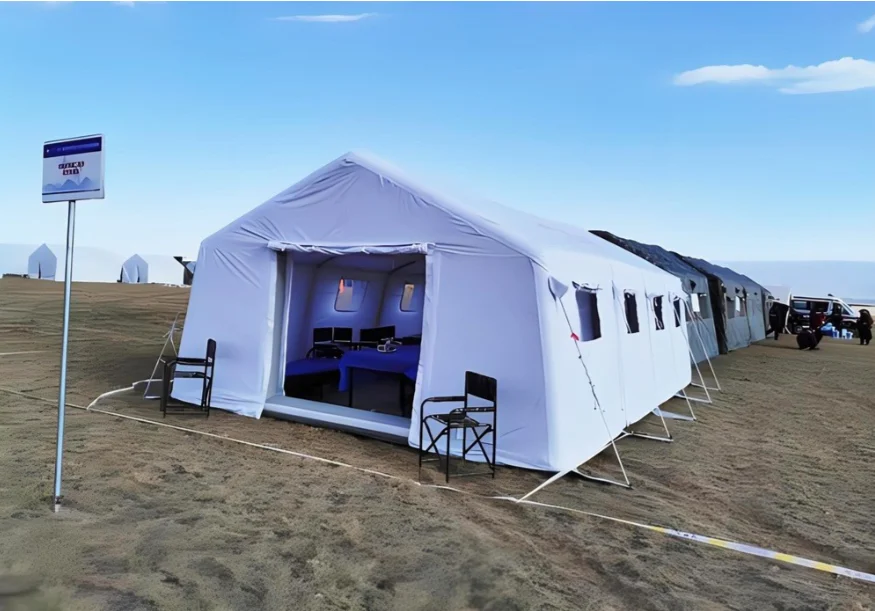
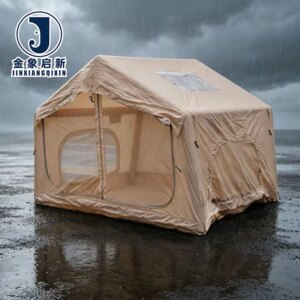
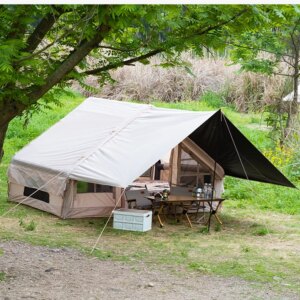
Inflatable Four-season Camping Tent — waterproof, UV-resistant, tear-resistant PVC coated fabric construction with quick automatic inflation for rapid deployment.
- Engineered for construction site shelters, outdoor event logistics, and emergency facilities where weather resistance and fast setup reduce downtime on critical projects
- PVC coated fabric delivers reliable waterproofing and UV protection across repeated installation cycles, while four-season tear-resistant construction handles transport stress
Backed by 100% pre-shipment inspection and dedicated QA at every production stage.
Description
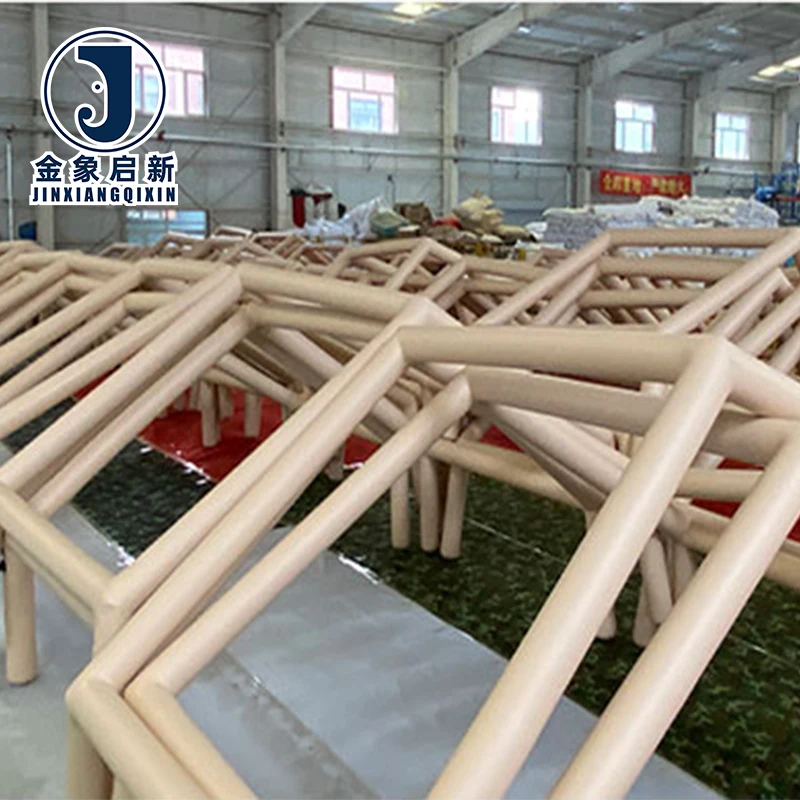
Precision in Every Layer — Our PVC coated inflatable tent fabric undergoes dedicated QA/QC inspection at every production stage, ensuring the material you approve is the material you receive.
Technical Specifications
| Parameter | Value |
|---|---|
| Product Type | Inflatable Four-season Camping Tent |
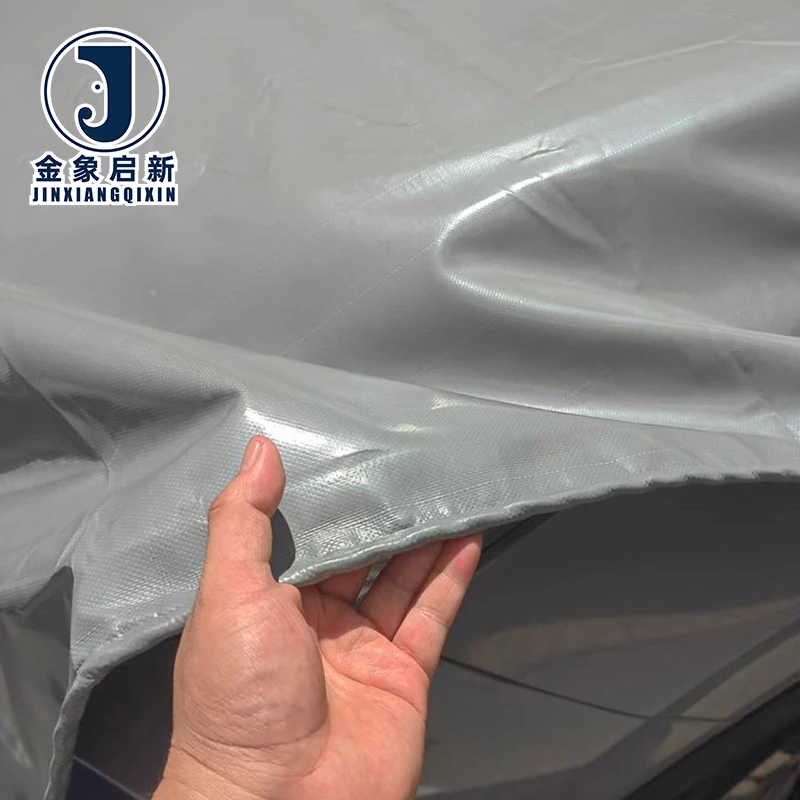
| Core Material | PVC Coated Fabric |
| Key Performance | Waterproof, UV-resistant (test basis not stated), Tear-resistant |
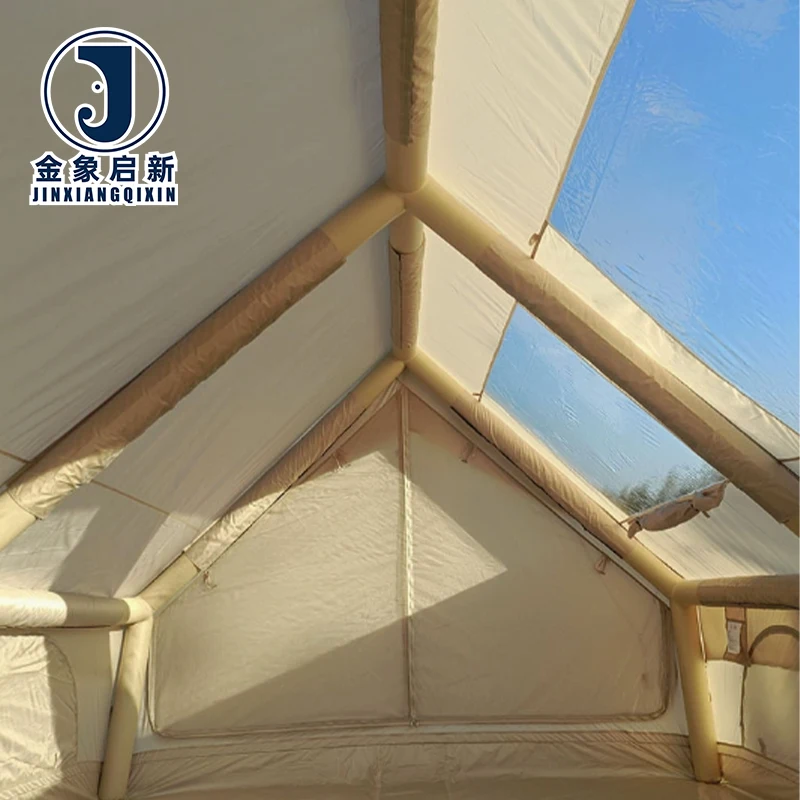
| Structure Type | Extended type structure, single layer design |
| Inflation Method | Quick automatic opening |
| Season Rating | Four-season |
| Customization Service | OEM & ODM (Sample customization, Pattern printing) |
| Certifications | ISO9001, ISO14001, ISO45001, CE |
Application Suitability
| Application | Exposure & Requirement |
|---|---|
| Construction site temporary shelters | Wind loading, debris impact, repeated assembly and relocation across job phases |
| Outdoor event logistics storage | Continuous weather exposure, high foot traffic, branding and pattern printing visibility |
| Emergency preparedness facilities | Rapid deployment under time pressure, waterproof integrity, structural stability in wind |
| Equipment storage and temporary workspace | UV exposure over extended periods, abrasion from equipment movement, tear resistance at stress points |
| Commercial temporary structures | Four-season temperature variation, inflation system reliability, custom sizing for site constraints |
Why Inflatable Tent Specifications Fail on Arrival
Material consistency is not a claim — it is a documented inspection record tied to your order.
Buyers of inflatable camping tents regularly face a frustrating gap between the quotation sheet and what arrives at the dock. The fabric weight feels lighter, the coating thickness varies from roll to roll, and the colour shifts visibly when panels are installed side by side. For inflatable structures, these inconsistencies are not cosmetic — they affect air-holding seam integrity, structural rigidity under wind load, and the lifespan of the inflation chambers. When an Inflatable Tent manufacturer skips in-process QA, the consequences show up at the worst possible moment: during deployment in the field [NEED_CITE: coated fabric batch consistency and weld failure correlation].
Full Catalogue Custom Capability Under One Production Roof
Sourcing an Inflatable Camping Tent that meets both functional and branding requirements demands more than picking from a stock catalogue. Our production supports material selection, size adjustment, pattern printing, and sample development as integrated steps rather than separate vendor hand-offs. A 10-person R&D team works directly from your application requirements, producing samples within days so you can verify inflation behaviour, seam performance, and print quality before committing to a production run.
Pattern Printing and Branding Without Compromising Fabric Performance
Printing on PVC coated fabric introduces variables that affect coating adhesion and heat-weld behaviour. Ink formulation must bond to the plasticiser-rich surface without migrating into the coating layer or reducing tear strength at printed zones. Our customisation workflow addresses this by testing print samples alongside weld samples, confirming that branded panels maintain the same seam strength as unprinted areas [NEED_CITE: PVC coated fabric print adhesion and weld integrity standards].
How PVC Coated Fabric Properties Translate to Inflatable Structure Performance
PVC coated fabric derives its tear resistance from the interplay between base fabric denier, weave density, and coating penetration. A higher GSM reading alone does not guarantee stronger performance — a heavy coating on a low-density base fabric may resist puncture but tear easily along the warp. The coating method determines how deeply the PVC penetrates the weave, which directly affects peel strength at welded seams. For inflatable tent applications, this matters because the inflation chambers concentrate stress at seam junctions, and any delamination at the coating-to-yarn interface propagates quickly under cyclic pressure changes. Surface finish — glossy or matte — influences both UV reflection characteristics and the adhesion of printed graphics, requiring specification at the inquiry stage rather than as a production afterthought.
The Hidden Cost of Underspecifying Inflatable Structure Fabric
Specifying an inflatable tent fabric by colour and price alone creates downstream costs that far exceed the initial savings. Rolls that arrive below the quoted GSM produce inflation chambers that flex excessively under wind load, accelerating fatigue at weld lines. Colour variation between rolls forces either visible panel mismatch on the finished structure or complete rework to sort and group matching shades. Fabric supplied without UV treatment verification may show surface chalking and embrittlement within a single season of outdoor deployment, turning a four-season rated structure into a single-use asset [NEED_CITE: PVC coated fabric UV degradation and embrittlement field data]. These failures are preventable through specification discipline and supplier verification at the sample stage.
Production Discipline That Shows in the Finished Inflatable Tent
Three full production lines and 36 sets of professional processing equipment give us the capacity to maintain batch consistency across large orders without splitting your quantity across multiple production runs. Our 10-person R&D team develops samples that mirror production conditions, so the custom Inflatable Camping Tent you approve is the one that ships. Every production stage includes dedicated QA/QC checkpoints — from base fabric inspection through coating weight verification to final roll packing — backed by ISO9001, ISO14001, ISO45001, and CE certification. Pre-shipment inspection records travel with your documentation, giving you traceability from order to installation.
Documentation & Verification
- Material specification sheet stating coating type, base fabric construction, and colour reference per roll
- Pre-shipment inspection record with batch quality verification against your approved sample parameters
- UV and flame retardant test documentation where applicable to the specified treatment grade
- ISO9001, ISO14001, ISO45001, and CE certificates included in the shipment documentation package
- Roll packing list with individual roll weights and dimensions for receiving verification
Fabrication, Handling & Storage
- Heat-weld parameters must match the PVC coating formulation — request our recommended temperature and dwell settings before fabrication
- Store rolls upright in shaded, ventilated conditions to prevent flat-spot deformation of the coated surface
- Avoid dragging unrolled fabric across abrasive ground during tent layout to protect the PVC coating layer
- Test inflation cycle on the first fabricated unit to confirm weld seam behaviour under full chamber pressure
- Use PVC-compatible cleaners only — solvent-based products can dissolve the plasticiser and embrittle the coating surface
What to Include in Your Inquiry
Provide your deployment environment, expected wind exposure, and seasonal temperature range so we can recommend the appropriate PVC coated fabric grade and treatment package. Specify whether you need finished tent units or fabric rolls for your own fabrication, along with target dimensions and any pattern printing or branding requirements. If your market has specific compliance or fire classification requirements, include the standard reference so we can confirm available grades at the quotation stage.
Frequently Asked Questions
Q: What customization options are available for inflatable tent sizing, material grade, and printing?
A: We support OEM and ODM customization covering size adjustment, material selection across PVC coated fabric grades, and pattern printing for branding. Our R&D team develops samples within days, allowing you to verify dimensions, print quality, and inflation behaviour before production. Each custom specification is documented in a material sheet for your records.
Q: How is batch-to-batch colour and weight consistency controlled across production runs?
A: Dedicated QA/QC staff inspect every production stage, from base fabric intake through coating application to final packing. Colour is verified against approved reference standards, and coating weight is measured per roll against the specification sheet. Pre-shipment inspection records accompany each delivery for your receiving verification.
Q: What is the sample development and approval process before mass production?
A: Your inquiry triggers material selection and sample development by our R&D team, typically completed within days. Samples reflect production-grade PVC coated fabric and construction methods. Once you approve dimensions, print quality, and inflation performance, the approved sample becomes the production benchmark referenced throughout manufacturing and final inspection.
Q: Which certifications and documentation are supplied with each shipment?
A: Every order ships with ISO9001, ISO14001, ISO45001, and CE certificates, a material specification sheet, pre-shipment inspection record, and roll packing list. Where UV or flame retardant treatment is specified, relevant test documentation is included. All documents reference your order number for full traceability.
Q: What are the lead time and minimum order requirements for custom sizes and prints?
A: Lead times and minimums vary based on the level of customization — standard sizes in stock grades move faster, while custom colours, pattern printing, and non-standard dimensions require dedicated production scheduling. We confirm specific lead times and order minimums at the quotation stage once your full requirements are defined.
Related products
-
Tenda de Eventos Inflável para Quatro Estações, Exterior, Impermeável em PVC, Abertura Automática Rápida para 6-8 Pessoas, Logotipo Personalizado
Read more -
Camping Tent Inflatable UV Resistant Customizable Four-season Waterproof PVC Quick Automatic Opening 2-3 Person Outdoor
Read more -
Inflatable Camping Tent Waterproof Outdoor Air Tent for Camping Inflatable Tent Shelter
Read more -
Barraca de Camping Inflável PVC Impermeável Resistente a UV Quatro Estações Abertura Rápida Automática Personalizável 2-3 Pessoas
Read more