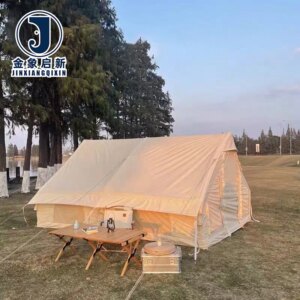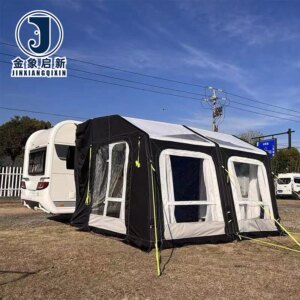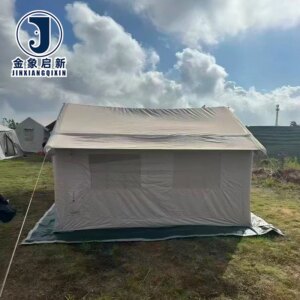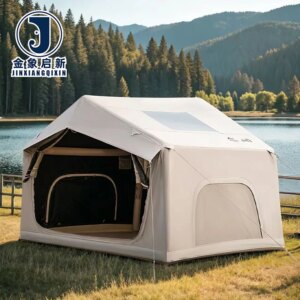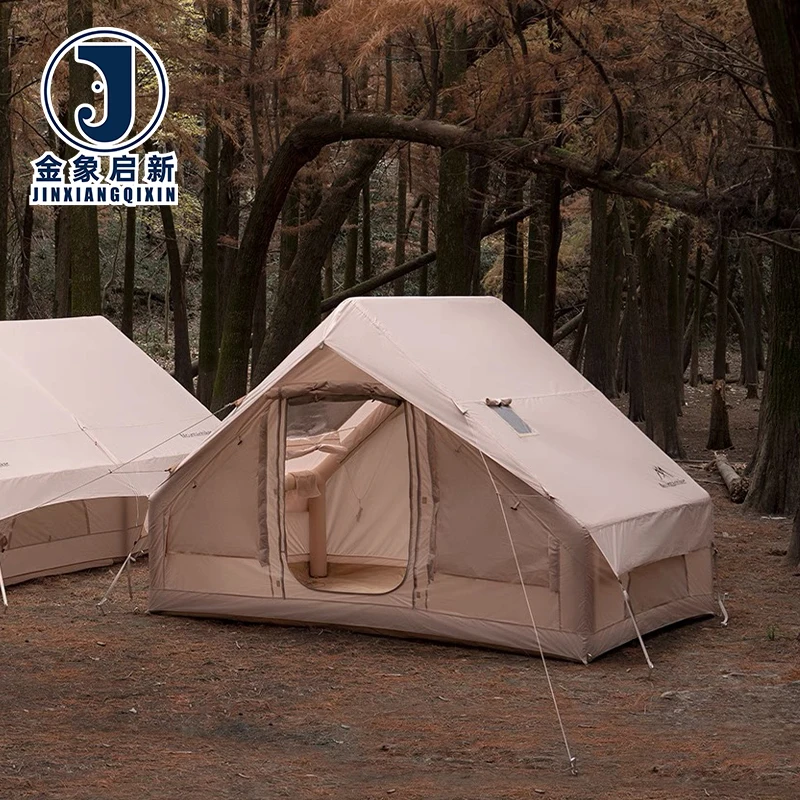
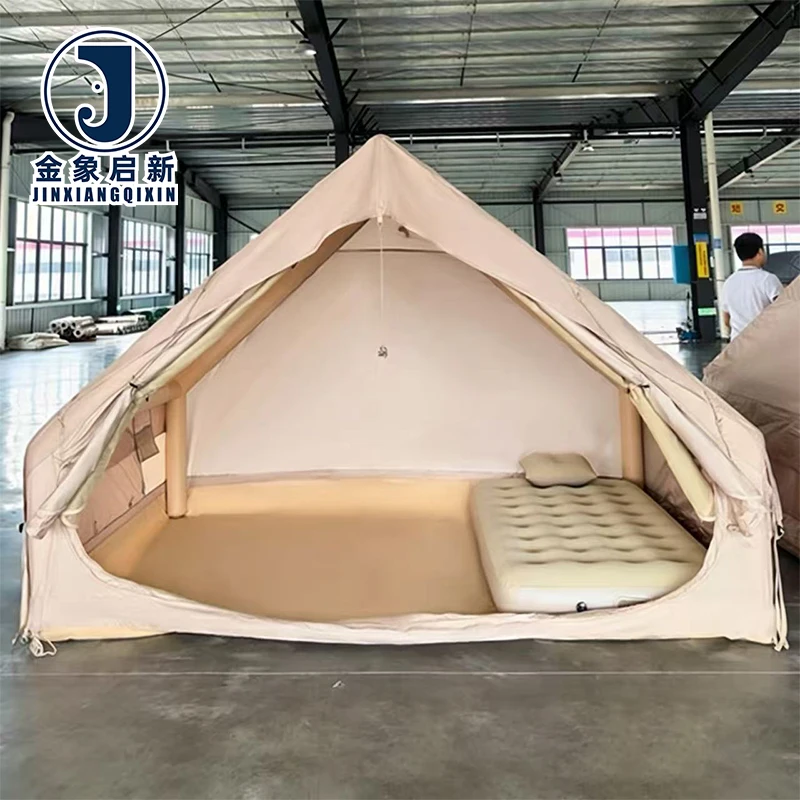
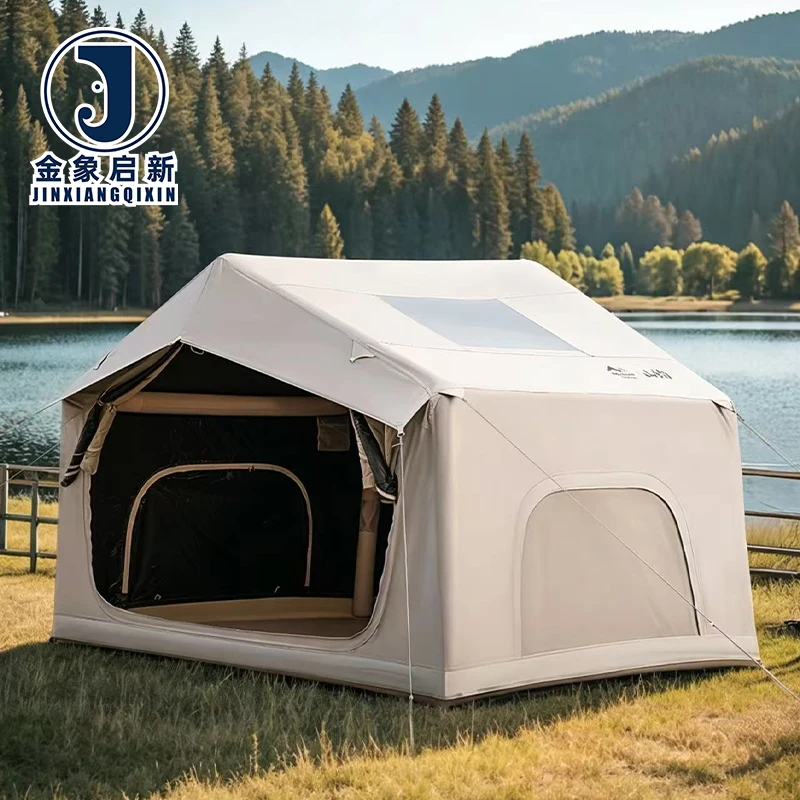
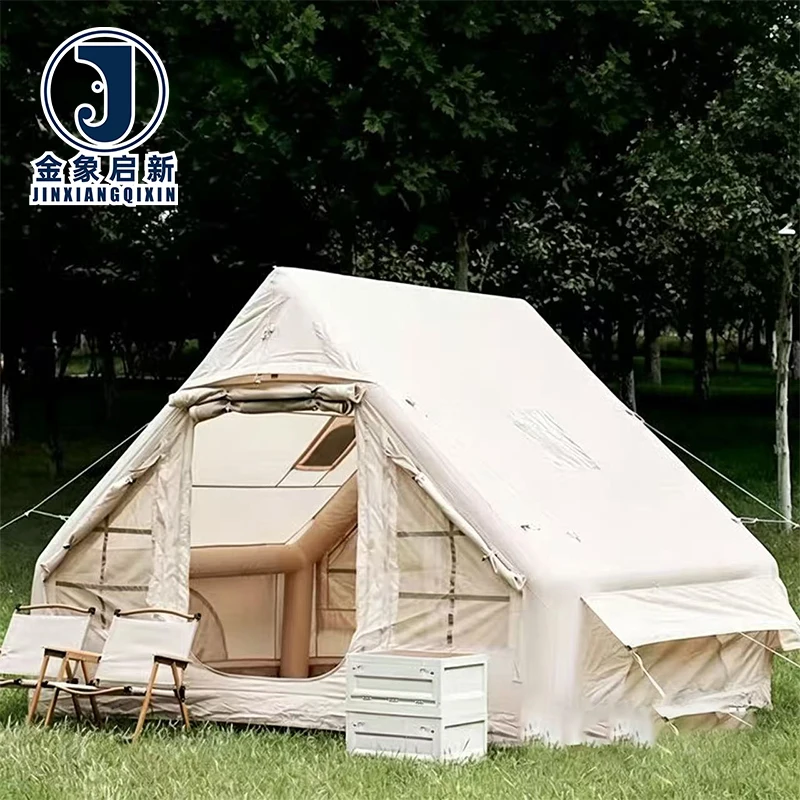
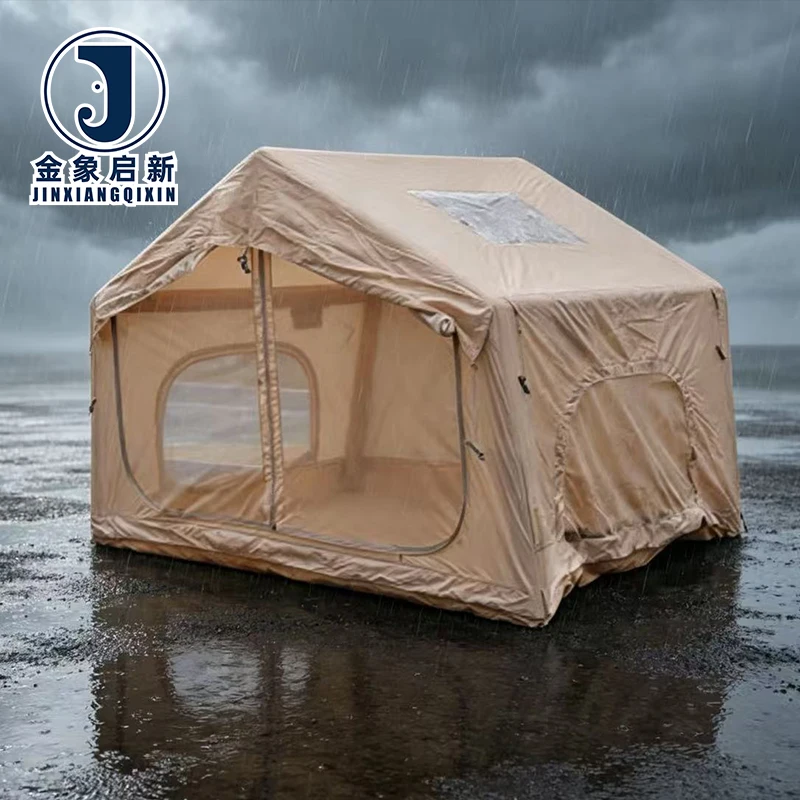
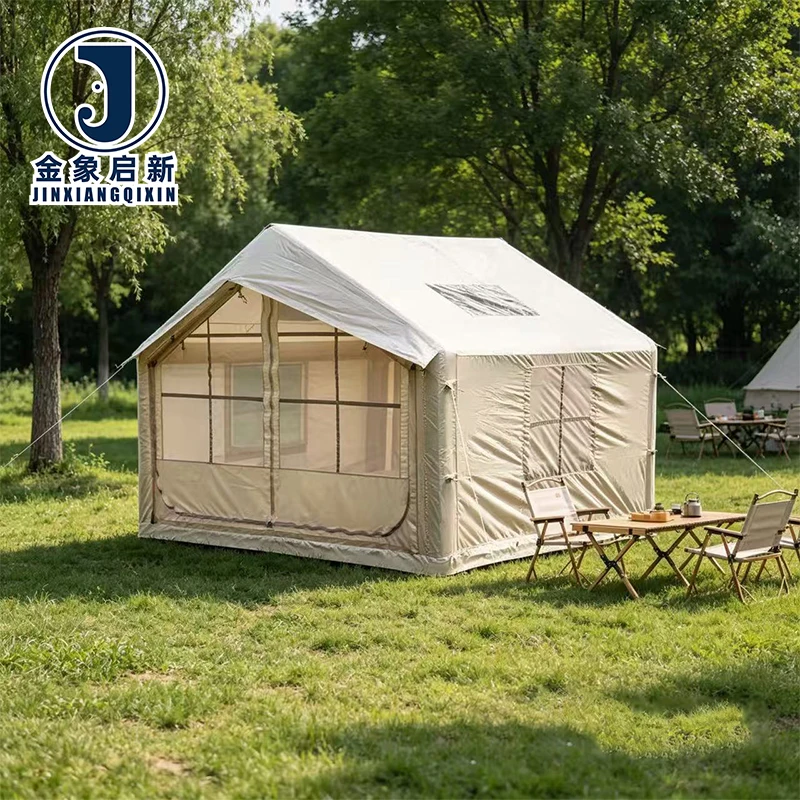
Heavy Duty Inflatable Tent — waterproof PVC tarpaulin construction with UV-resistant and tear-resistant treatment, available in 1-12 person capacity configurations.
- Full OEM & ODM customization including size, pattern printing, and specialized fabric treatments
- Sealed seam inflatable structure for rapid deployment and reliable weather protection
- Complete material specification sheets and batch-specific inspection documentation provided
Backed by dedicated QA/QC at every production stage, 36 sets of professional processing equipment, and a 10-person R&D team supporting full sample development.
Description
Full material traceability — Every roll of PVC tarpaulin we produce carries a batch-specific specification sheet stating base fabric, coating weight and treatment levels, so what you quote is what arrives on site.
Technical Specifications
| Parameter | Value |
|---|---|
| Product Type | Inflatable Tent |
| Core Material | PVC tarpaulin |
| Key Features | Waterproof, UV-resistant, tear-resistant |
| Product Form | Inflatable structure |
| Capacity Range | 1–12 person configurations |
| Customization | OEM & ODM, sample customization, pattern printing |
| Certifications | ISO9001, ISO14001, ISO45001, CE |
Application Suitability
| Application | Exposure & Requirement |
|---|---|
| Temporary site offices on construction projects | Continuous weathering, wind loading on inflatable beams, ground contact abrasion |
| Mobile command centers for outdoor events | Rapid deployment and deflation cycles, high public visibility requiring clean finishes |
| Equipment storage shelters for agricultural operations | Long-term UV exposure, dust and moisture ingress, chemical contact from fertilizers |
| Remote industrial workspace enclosures | Extreme temperature swings, heavy wind shear on membrane surfaces, limited maintenance access |
Why Spec Sheet Claims Alone Cannot Guarantee an Inflatable Tent Will Hold Pressure
Sealed seam integrity depends on consistent coating weight, not just the fabric label.
I have seen heavy-grade coated rolls fail at the weld line because the coating thickness varied across the web. The heat sealer was set for the nominal weight, but the thinner side of the roll did not fuse properly and the beam deflated within days [NEED_CITE: tensile and tear test methods for coated fabrics per ISO 1421]. When you are specifying an inflatable tent for a project site or an event, the difference between a structure that stands through the season and one that collapses mid-use often comes down to coating uniformity that no single GSM number can capture.
Sealed Beam Construction Demands Coating Consistency
Every inflatable beam in this inflatable tent system relies on thermally welded seams to hold air pressure continuously. The PVC tarpaulin coating must reach a consistent melt point along the entire weld length. If the coating layer is even slightly uneven, the weld temperature that works on one section will under-fuse or over-burn another. Our production process monitors coating weight at multiple points across the web width, and the 10-person R&D team adjusts heat sealing parameters to match each batch’s actual coating profile rather than relying on a generic setting.
Fabric Selection Across Capacity Configurations
An inflatable tent built for a 12-person group camping setup places different loads on the base fabric than a compact single-person shelter. Larger structures require higher-denier base fabric to resist the increased internal pressure on beam walls and the greater ground contact area. We match base fabric denier and weave density to the structural demands of each size configuration [NEED_CITE: DIN standard references for coated textile testing in inflatable structures]. Available fabric treatments include UV-resistant and tear-resistant grades — confirm the specific grade required for your market before placing the order.
Reading the Specifications Beyond Surface Numbers
The relationship between GSM, base fabric density and actual field performance is not linear. A PVC tarpaulin sheet with a high GSM achieved through heavy coating but a loose base weave will tear more easily than a lighter sheet built on a tight high-denier fabric. For inflatable tent applications, the base fabric provides the structural skeleton while the coating provides the air seal — both must be specified together. Coating adhesion to the base fabric determines whether the material delaminates under repeated inflation and deflation cycles. Our knife-over-edge coating process builds a mechanical bond that resists peeling at the beam flex points, which is where most field failures originate.
What Happens When the Wrong Fabric Grade Ships
A buyer once specified a mid-weight PVC for a batch of event tents, expecting the material to handle a coastal installation. The fabric itself met the quoted GSM, but the UV treatment level was not matched to the sustained coastal exposure the site demanded. The surface chalked and the beam fabric lost flexibility earlier than the project timeline required [NEED_CITE: UV degradation testing standards for outdoor PVC coated fabrics]. The replacement cost exceeded the original order value. This is why we ask for your specific exposure conditions before recommending a material grade.
Why Buyers Specify From This Production Line
Our three full production lines and 36 sets of professional processing equipment allow us to run dedicated batches for inflatable tent orders without contaminating the line with unrelated products. The 10-person R&D team develops samples within days so you can test weld parameters, beam pressure tolerance and fabric drape before committing to full production. Every roll undergoes 100 percent inspection before shipment with a pre-shipment inspection record documenting the results. We have nearly 30 years of focused experience in coated fabric, which translates into process control over coating weight, adhesion and surface finish that shows up in the consistency of every beam weld.
Documentation & Verification
- Material specification sheet stating GSM, base fabric denier, coating type and treatment levels per batch
- UV resistance and flame-retardant test reports provided where applicable grades are specified
- ISO9001, ISO14001, ISO45001 and CE certification documents available for project compliance submissions
- Pre-shipment inspection record with roll-by-roll verification against the stated specification
- Certificate of origin and customs documentation prepared per destination country requirements
Fabrication, Handling & Storage
- Set heat sealing temperature based on the specific PVC tarpaulin coating weight confirmed on the batch spec sheet
- Reinforce beam junction points with additional welded patches matching the base fabric denier
- Store rolls upright on pallets to prevent flat-spot creasing that weakens the coating bond
- Allow cold-stored fabric to reach ambient temperature before unrolling to avoid coating micro-cracking
- Use only PVC-compatible cleaners on the waterproof surface to preserve coating integrity and finish
Moving Forward With a Custom Inflatable Tent Specification
Tell us the intended application and the environmental conditions the structure will face — coastal salt exposure, desert UV, or industrial dust. Share your target capacity range, preferred dimensions and whether you need pattern printing or branding on the outer shell. We will recommend a fabric grade, develop a sample for your approval and provide full documentation with the shipment.
Frequently Asked Questions
Q: What customization options are available for size, printing and fabric treatment?
A: We offer OEM and ODM services covering capacity configurations from 1 to 12 persons, custom pattern printing on the outer shell, and specialized fabric treatments. UV-resistant and tear-resistant grades are available — confirm the specific grade needed for your market. Samples are developed within days so you can evaluate the material before full production begins.
Q: Are fire-retardant or anti-static certifications provided with the tent fabric?
A: Fire-retardant and anti-static grades are available upon specification. We supply test reports documenting the performance grade achieved. Because fire safety requirements vary by region and application, share your local compliance standard and we will match the appropriate treatment level and provide the corresponding certification documents with your shipment.
Q: How is batch-to-batch colour and material consistency maintained across large orders?
A: Each production run is monitored with dedicated QA at every stage, and coating weight is verified across the full web width. Colour matching is controlled against reference standards before the run starts. A batch-specific inspection record accompanies every shipment so you can confirm consistency upon receipt before the material reaches the fabrication floor.
Q: What supporting documentation accompanies each shipment?
A: Every order ships with a material specification sheet, pre-shipment inspection record, packing list, certificate of origin and applicable test reports. ISO and CE certification documents are included for project compliance submissions. If your destination country requires specific customs documentation, our team prepares it in advance to prevent clearance delays.
Q: How do I proceed with a custom sample before committing to full production?
A: Share your application requirements including capacity, exposure conditions and any printing or treatment needs. Our R&D team develops a sample within days using the exact fabric and coating specification proposed for your order. You can test weld parameters, inflate the sample and evaluate surface finish before authorizing the full production run.
Related products
-
Camping Tent Inflatable UV Resistant Customizable Four-season Waterproof PVC Eco-Friendly Windproof Foldable Quick Automatic
Read more -
High Quality Four-Season Inflatable Tent for Camping Durable PVC Material All-Weather Resistance Quick Automatic Opening
Read more -
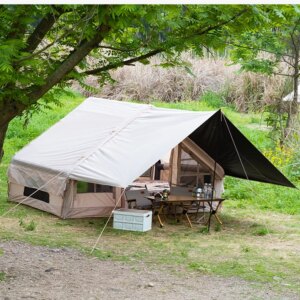
Barraca de Camping Inflável PVC Impermeável Resistente a UV Quatro Estações Abertura Rápida Automática Personalizável 2-3 Pessoas
Read more -
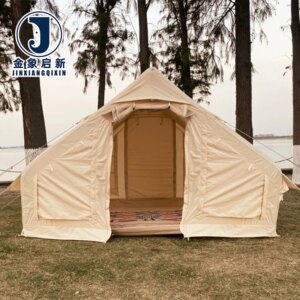
Tenda Inflável Quatro Estações Camada Única >3000mm Impermeável À Prova de Vento Abertura Automática Rápida Tecido de PVC Ecológico
Read more