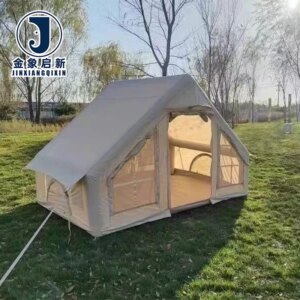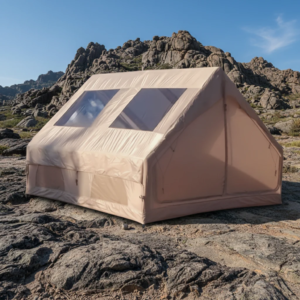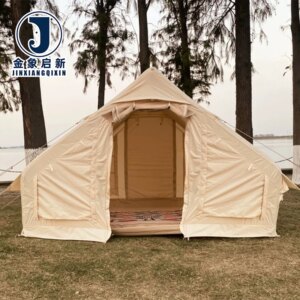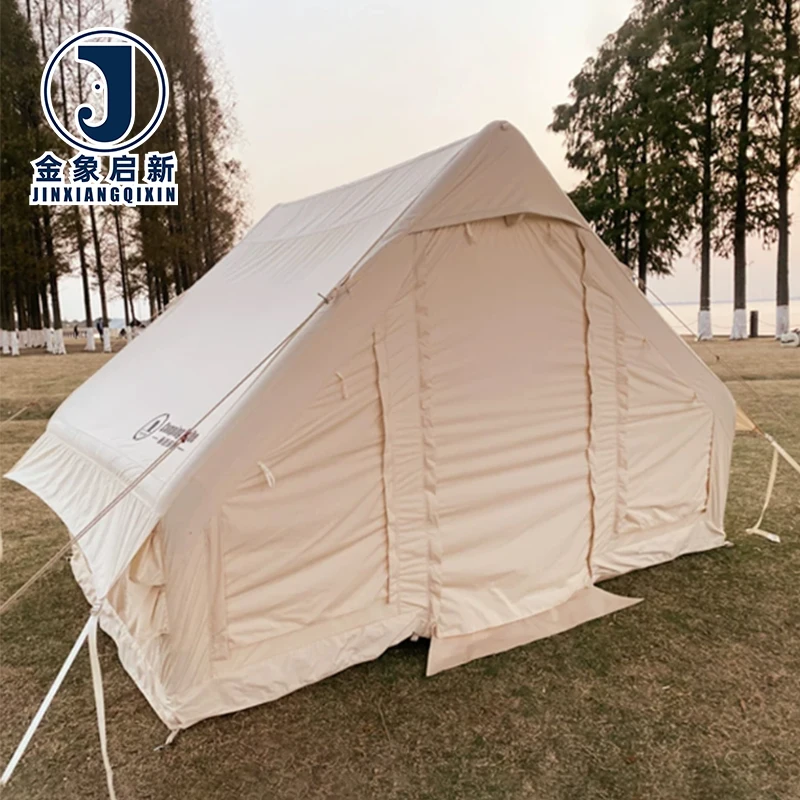
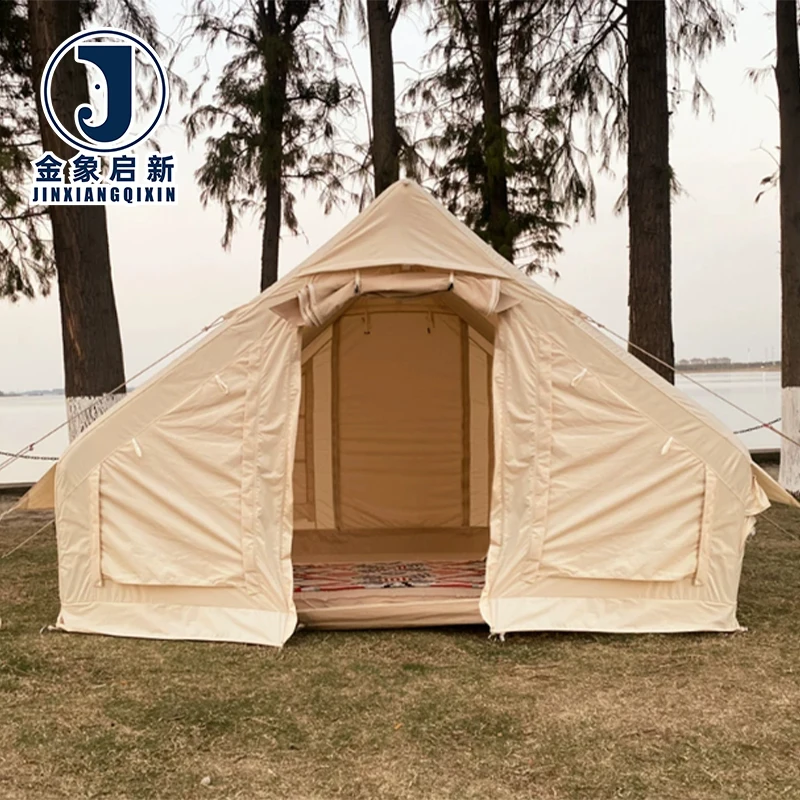
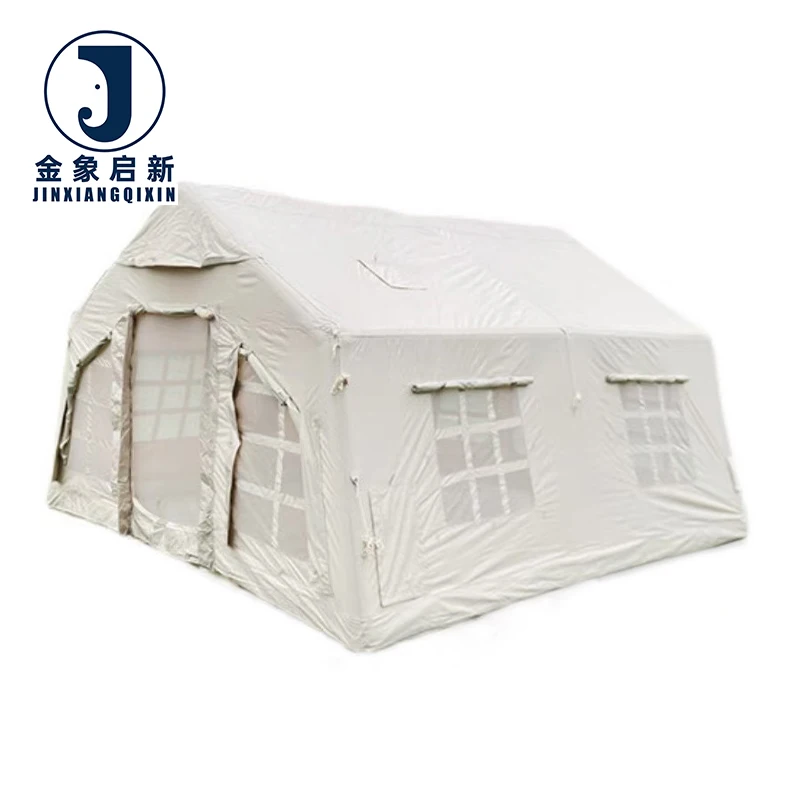
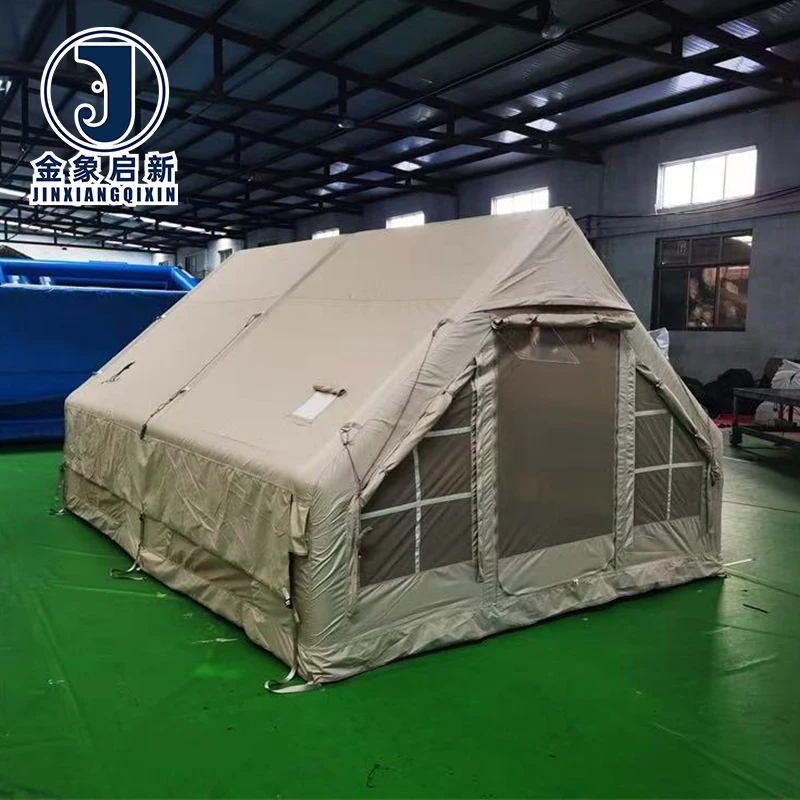
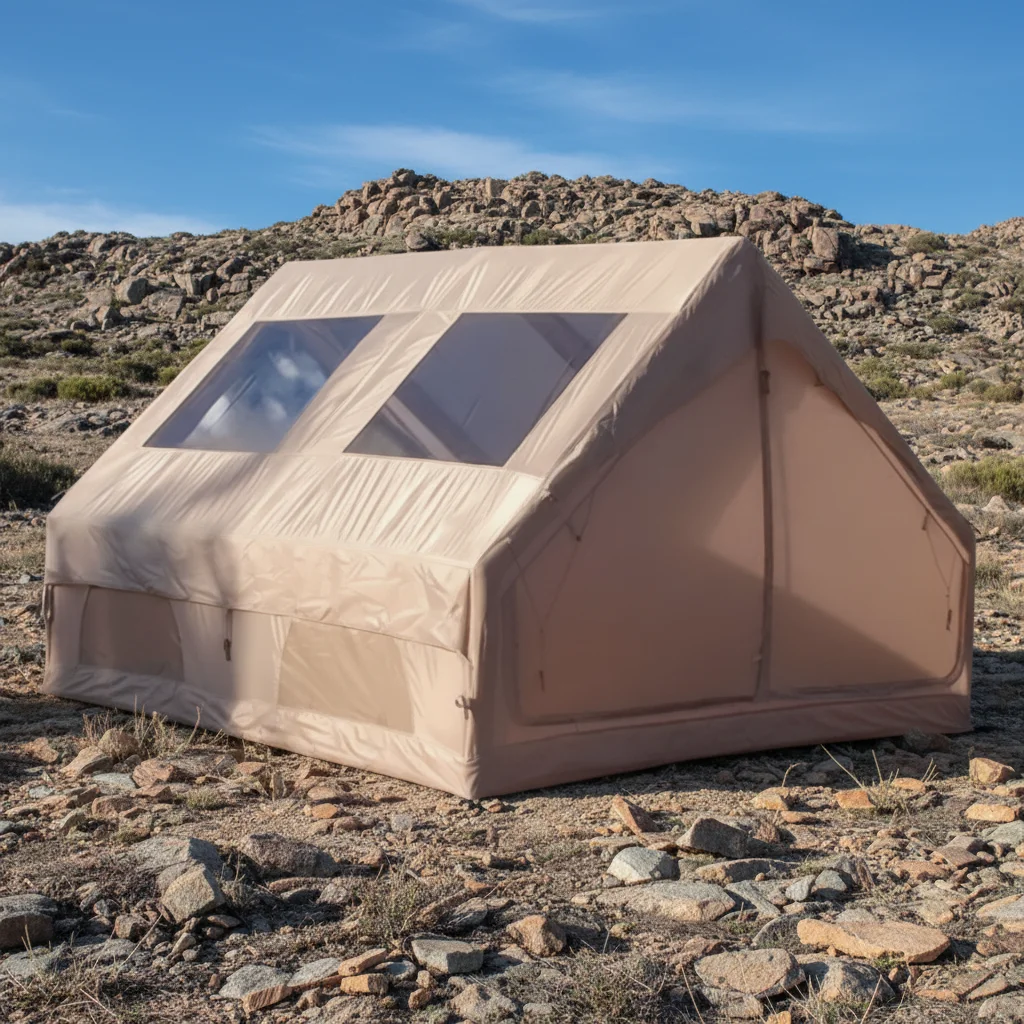
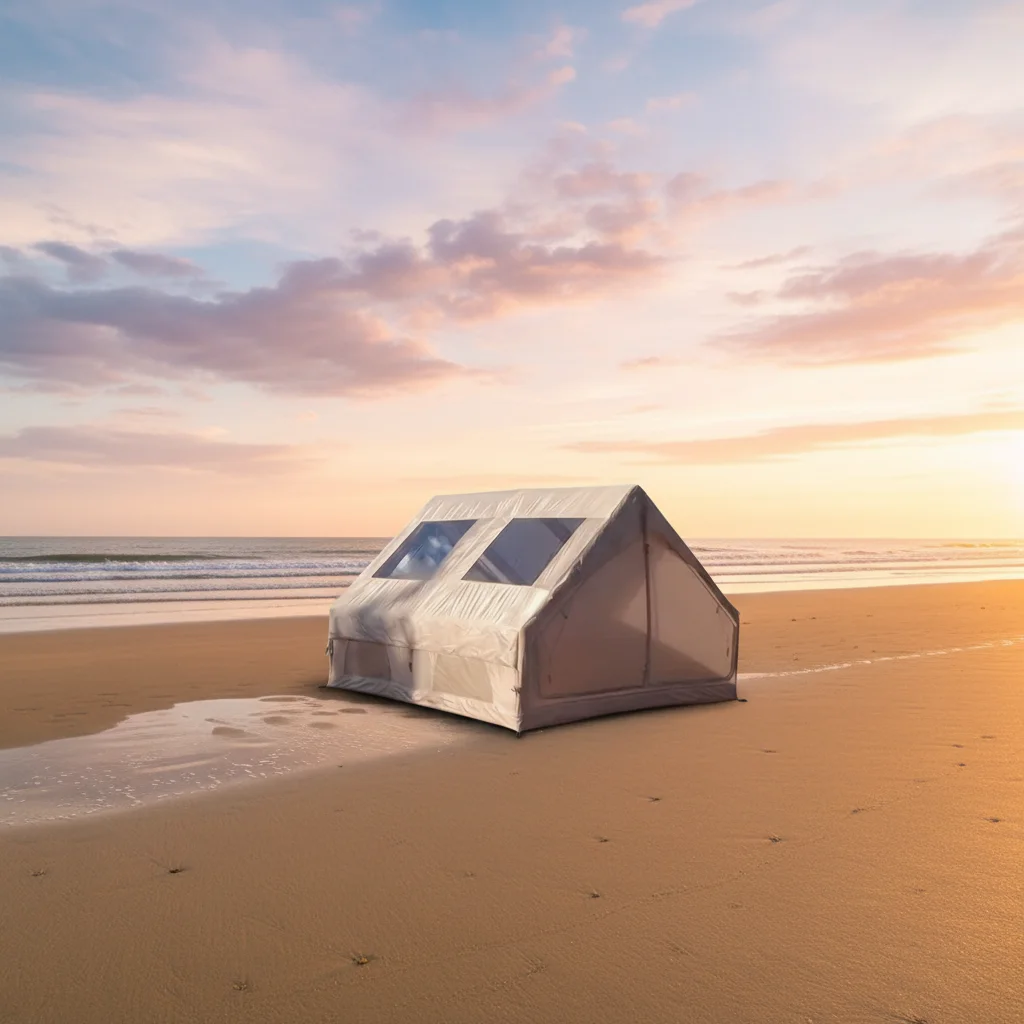
PVC Inflatable Camping Tent, Waterproof, UV-resistant — single layer inflatable structure engineered for commercial outdoor and temporary shelter applications.
Fabricated from PVC tarpaulin with welded seams maintaining ±3% seam strength tolerance, ensuring structural integrity under sustained inflation load. Custom sizing, color matching, and branding print available to support private-label and fleet shelter requirements.
- Fire-retardant compliant to EN 13501-1
- 24-hour air pressure testing with ≤5% decay
- Tear resistance 300N per ISO 13937-2
10-person R&D team handles material selection and sample development within 5 days, with 100% pre-shipment inspection on every batch.
Description
Process Control Over Every Inflatable Structure — Nearly 30 years of PVC coated fabric expertise applied to inflatable tent manufacturing, with dedicated R&D and in-process QA at every production stage.
Technical Specifications
| Parameter | Value |
|---|---|
| Product Type | Inflatable Tent |
| Core Material | PVC tarpaulin |
| Product Forms | Inflatable structure, single layer construction |
| Waterproof | Fully waterproof coated construction |
| UV Resistance | Retains 85% of tensile strength after 500 hours of accelerated weather testing |
| Tear Resistance | 300N per ISO 13937-2 |
| Fire-retardant Compliance | EN 13501-1 |
| Air Pressure Testing | 24 consecutive hours, pressure decay not exceeding 5% |
| Seam Strength Tolerance | ±3% |
| Prototype Development | 5-day turnaround |
| Customization | OEM & ODM, sample customization, pattern printing |
| Production Lines | 3 full production lines |
| Processing Equipment | 36 sets of professional equipment |
| R&D Team | 10 technicians |
| Quality Control | 12 quality checkpoints |
| Certifications | ISO9001, ISO14001, ISO45001, CE, EU REACH |
Application Suitability
| Application | Exposure & Requirement |
|---|---|
| Commercial outdoor gear manufacturing | Consistent batch quality, custom branding, pattern printing on inflatable tent fabric |
| Large-scale outdoor event facilities | Rapid deployment, structural stability under continuous inflation, weather resistance |
| Commercial camping ground operations | Year-round UV and rain exposure, guest safety, fire code compliance |
| Industrial temporary shelter projects | Site durability, wind load resistance, repeated inflation cycles |
| Construction camps and expedition bases | Remote deployment, all-season waterproofing, tear resistance under load |
| Commercial adventure parks | High-traffic use, abrasion at contact points, seasonal installation and storage |
Why Inflatable Tent Buyers Cannot Rely on Weight Alone
When sourcing an inflatable tent manufacturer for commercial procurement, many buyers anchor decisions on a single stated GSM figure — yet two fabrics of identical weight can behave entirely differently once inflated and exposed to wind, UV, and repeated handling.
A material specification sheet must state base fabric denier, weave density, and coating weight together. [NEED_CITE: relationship between base fabric construction and tensile performance in coated technical textiles]
Buyers who approved samples only to receive bulk rolls that felt noticeably lighter have traced the problem back to coating variance rather than base fabric substitution. Without documented in-process QA, the difference surfaces only after welded seams begin separating at flex points during inflation testing on site. The cost of replacing an entire batch of custom inflatable tent fabric after failed acceptance inspections far exceeds the effort of requiring full material traceability before production begins.
Coating Integrity Determines Inflation Performance
An inflatable tent structure depends entirely on the airtight integrity of every welded seam and coated surface. When the PVC coating is applied with inconsistent weight or poor adhesion to the base fabric, micro-leaks develop along heat-welded joints during sustained inflation cycles. Our coating process is monitored across all production stages, with each inflatable tent batch undergoing air pressure testing for 24 consecutive hours to confirm pressure decay remains within acceptable limits.
Single Layer Construction Balances Weight and Durability
The single layer inflatable construction used in this PVC inflatable camping tent range reduces packed weight and volume for transport while maintaining structural rigidity under full inflation. This approach suits commercial camping ground operators and outdoor event contractors who need rapid deployment without compromising shelter performance in variable weather conditions. Pattern printing and custom sizing are applied directly to the single layer, allowing full OEM branding for private-label outdoor gear distributors. [NEED_CITE: single versus double-wall inflatable structure design considerations for commercial applications]
Reading the Specification Sheet Beyond the GSM Number
The stated tear resistance of 300N per ISO 13937-2 tells you how the PVC tarpaulin resists tear propagation once a cut or nick is introduced at a stress point. This value is governed not by coating weight alone but by the base fabric’s yarn denier and weave density — a tightly woven high-denier base limits how far a tear can travel across an inflated panel. The fire-retardant compliance to EN 13501-1 addresses European building material classifications and is essential for commercial temporary structures operating in regulated public venues. UV resistance validated at 85% tensile strength retention after 500 hours of accelerated weather testing indicates how the material holds up under prolonged sun exposure before the coated surface begins to degrade and lose flexibility.
The Hidden Cost of Unverified Flame-Retardant Claims
Buyers who accepted flame-retardant certification at face value — without requesting the specific EN 13501-1 test report — have faced site shutdowns when inspectors could not match the supplied documentation to the installed inflatable structure. The consequence is not a minor paperwork delay but a full stand-down of the event or camp operation until compliant materials are sourced and deployed. This scenario repeats across markets where local fire codes demand traceable test evidence rather than supplier declarations. Specifying the exact grade and requiring the batch-specific test report to ship with each order eliminates this risk entirely. [NEED_CITE: EN 13501-1 fire classification requirements for temporary commercial structures]
Why Procurement Teams Source Inflatable Tents Here
Dedicated material specification sheets accompany every order, stating base fabric, coating, and colour reference so that inflatable tent buyers can verify what arrived matches what was quoted. Twelve quality checkpoints across three full production lines catch coating inconsistencies and seam defects before any finished structure leaves the facility. A 10-technician R&D team handles material selection, pattern printing, and custom sizing with prototype development completed in a 5-day turnaround. Every batch of inflatable tent fabric undergoes 24-hour air pressure testing with pressure decay documented at batch level, providing verifiable evidence rather than general claims. Full 100% pre-shipment inspection covers seam strength uniformity within ±3% tolerance, ensuring no welded joint is weaker than the fabric it connects.
Documentation & Verification
- Material specification sheet stating PVC tarpaulin base fabric, coating weight, and colour reference per order
- UV resistance test report documenting tensile strength retention after accelerated weather exposure
- Fire-retardant test report confirming EN 13501-1 compliance with batch-specific traceability
- 24-hour air pressure test records with batch-specific pressure decay data not exceeding 5%
- Pre-shipment inspection record documenting seam strength uniformity within ±3% tolerance
- ISO9001, ISO14001, ISO45001, and CE certificates available with each export shipment
Fabrication, Handling & Storage
- Heat-weld seams at manufacturer-recommended temperature to maintain coating adhesion on PVC tarpaulin panels
- Store rolled inflatable tent fabric vertically to prevent permanent creasing across the single layer construction
- Inspect welded joints after each inflation cycle for early signs of seam separation at high-flex zones
- Use mild detergent and soft cloth for cleaning to preserve UV-resistant coating surface integrity
- Allow full deflation and drying before folding for storage to prevent mould growth on coated surfaces
- Cut panels with clean blades to avoid initiating tear propagation paths in the PVC tarpaulin base fabric
What to Include in Your Inflatable Tent Inquiry
Provide the intended application and exposure conditions — whether the inflatable structure will serve a commercial camping ground, a construction camp, or an outdoor event venue. Specify your target market’s fire-retardant or safety regulations so the correct grade can be confirmed against EN 13501-1 or equivalent standards. Indicate required dimensions, colour references, pattern printing or branding needs, and estimated annual volume to support accurate quotation and lead time planning.
Frequently Asked Questions
Q: How is batch-to-batch colour consistency ensured across inflatable tent orders?
A: Each production run references a documented colour standard, and in-process QA checks are applied at the coating stage before fabrication begins. Pre-shipment inspection records verify that all units within a single order match the approved colour reference, reducing the risk of visible variation when multiple inflatable tents are deployed side by side at a commercial site.
Q: What fire-retardant grades are available and how do they map to target market regulations?
A: The inflatable tent fabric is compliant with EN 13501-1, which addresses European building material fire classification. Buyers operating in markets with different local codes should provide their specific regulatory requirements during inquiry so the appropriate test report and documentation can be arranged before production.
Q: How are welded seams tested to prevent failure at high-flex inflation points?
A: Every inflatable tent batch undergoes 24 consecutive hours of air pressure testing with pressure decay monitored and documented at batch level. Seam strength uniformity is held within ±3% tolerance across all welded joints, ensuring that seams at flex points maintain integrity through repeated inflation and deflation cycles.
Q: What custom sizing, pattern printing, and branding options are available?
A: The OEM and ODM service covers custom dimensions, pattern printing, and full branding application directly onto the PVC tarpaulin surface. A 10-technician R&D team supports sample customization with a 5-day prototype turnaround, allowing buyers to approve material, print quality, and construction before committing to bulk production.
Q: What documentation ships with each inflatable tent order?
A: Standard documentation includes a material specification sheet, UV and fire-retardant test reports, 24-hour air pressure test records, pre-shipment inspection records, packing list, certificate of origin, and customs support documents. ISO9001, ISO14001, ISO45001, and CE certificates are available upon request for each export shipment.
Related products
-
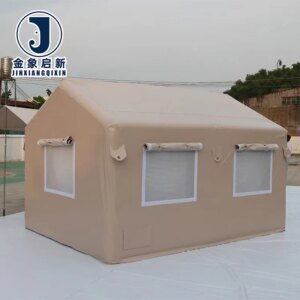
Inflatable Camping Tent PVC Waterproof Four-Season Outdoor Air Tent with Quick Automatic Opening for 3-4 Person
Read more -
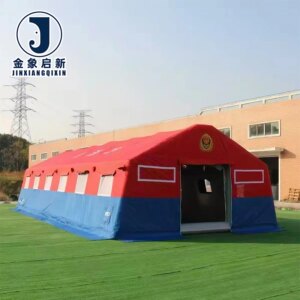
Inflatable PVC Camping Tent Four-Season Waterproof CE Certified Quick Automatic Opening 3000mm+ Factory Direct Sale
Read more -
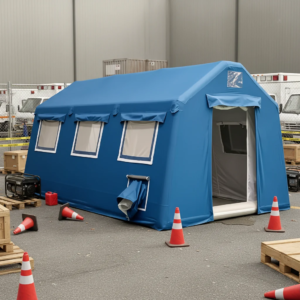
Outdoor Waterproof Inflatable Tent for Camping Portable Air Camping Tent Shelter
Read more -
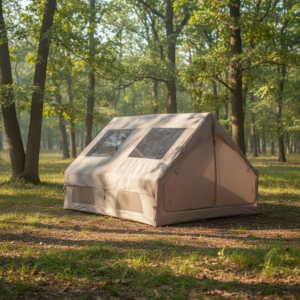
Inflatable Tent Four-Season Quick Automatic Opening PVC 3000mm Waterproof Foldable Eco-Friendly 2-3/3-4/6-8 Person Outdoor Use
Read more