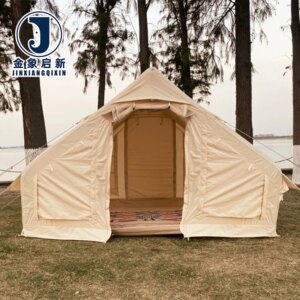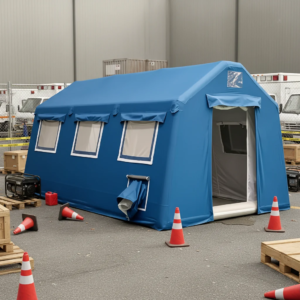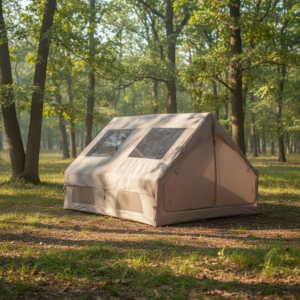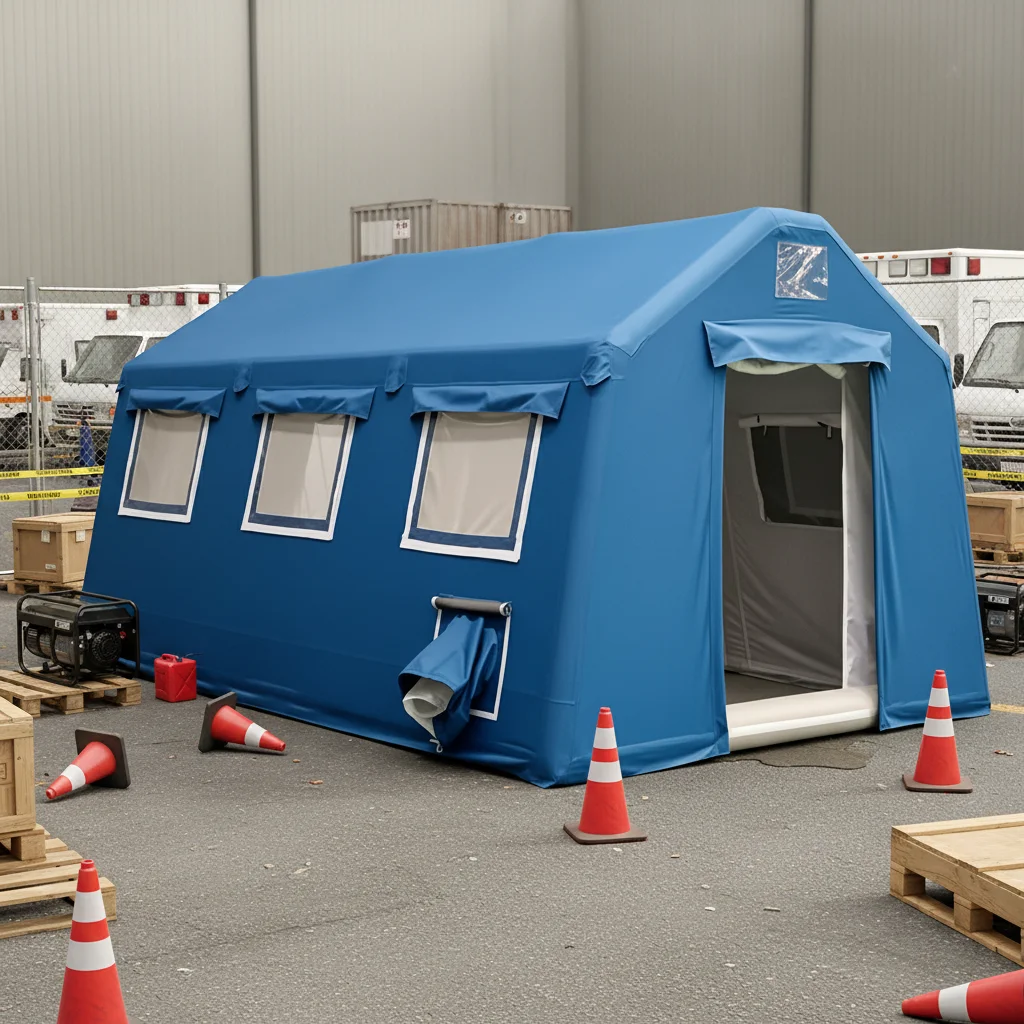
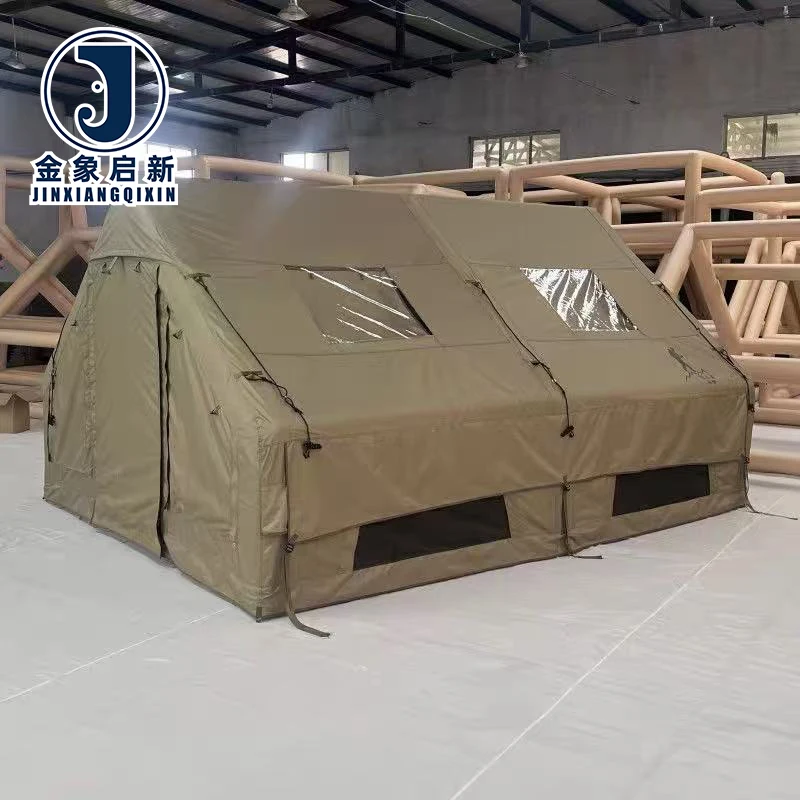
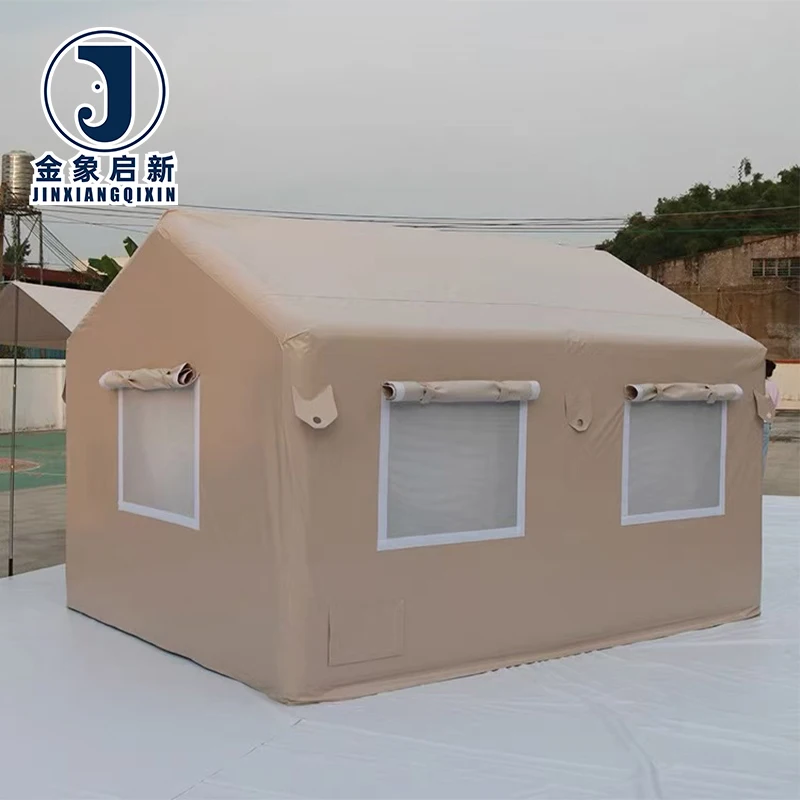
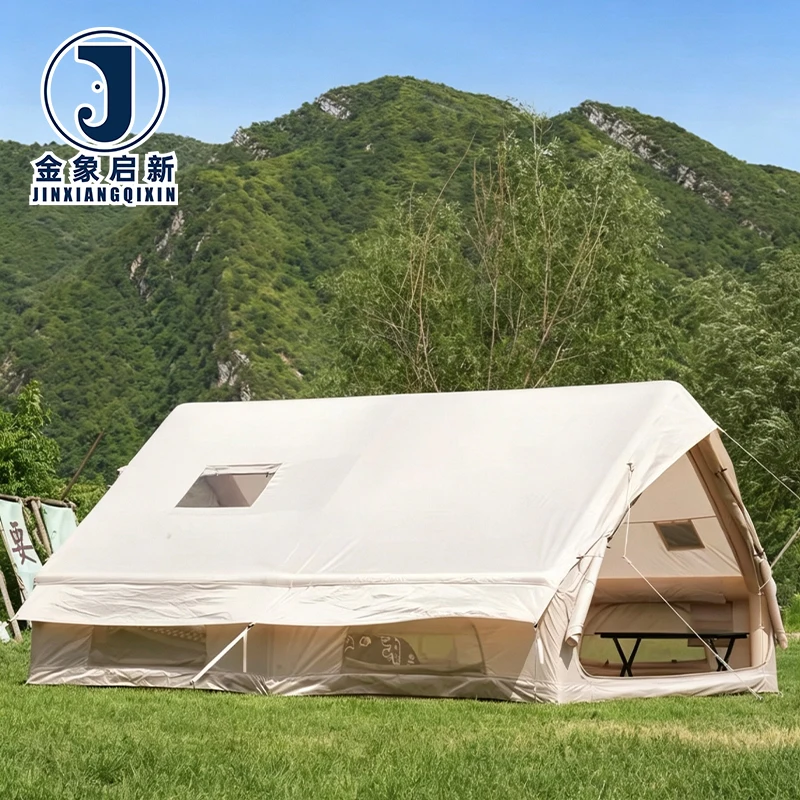
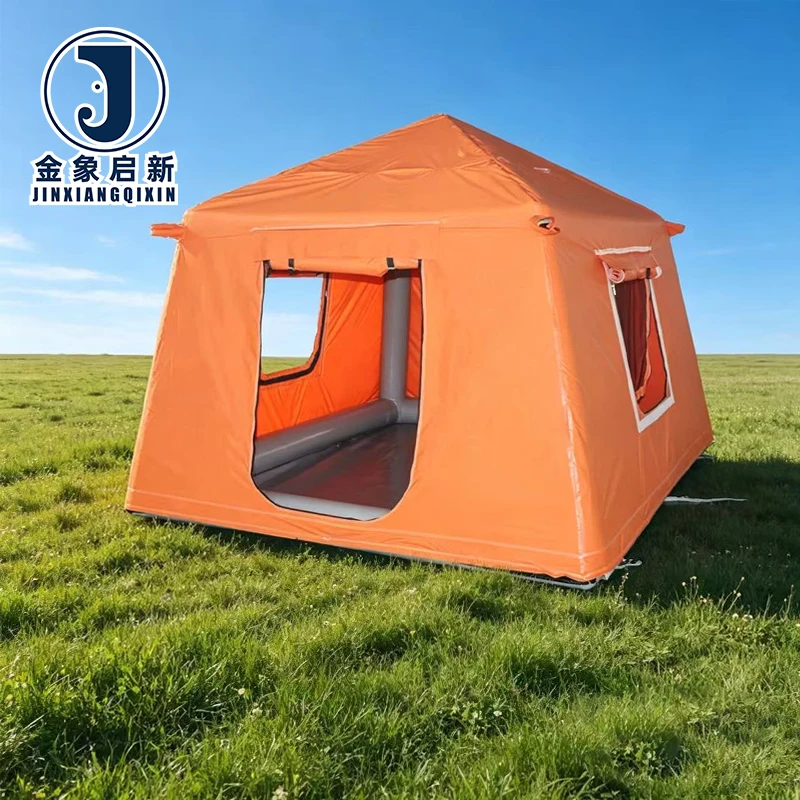
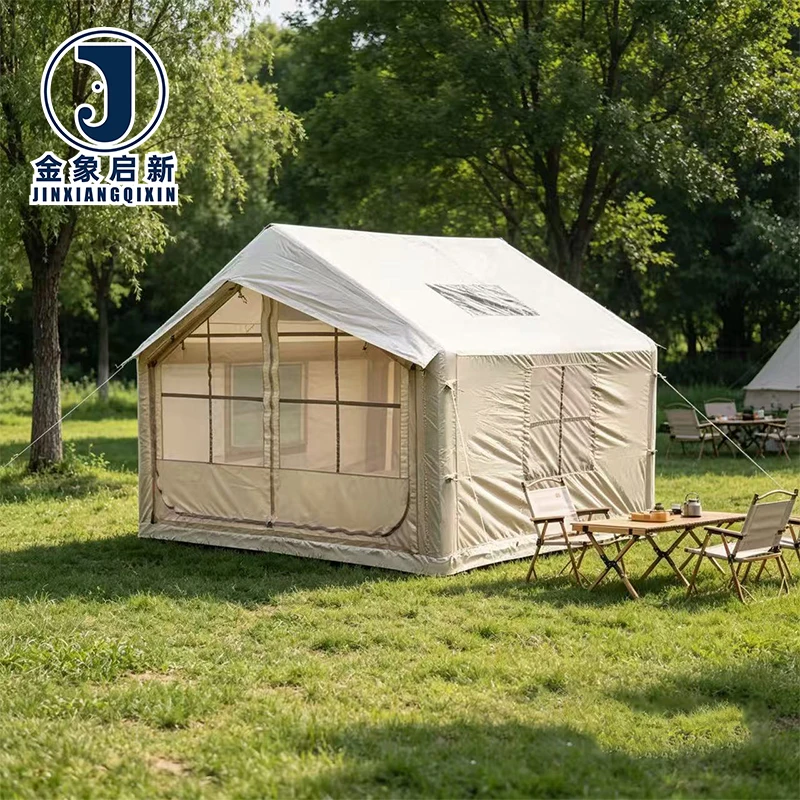
PVC Inflatable Camping Tent — waterproof, UV-resistant, and tear-resistant fabric with portable single-layer construction, built for rapid-deploy shelter needs.
- Full OEM & ODM capability with in-house pattern printing and sample customization
- Single-source production from coated fabric to final inflation test eliminates multi-supplier coordination gaps
- Material spec sheet, pre-shipment inspection records, and ISO/CE documentation included with every order
Description
Process-Controlled Coating Output — nearly 30 years of coated fabric production informs every roll of PVC inflatable tent fabric we ship, with QA checkpoints from base fabric intake to final inflation test before dispatch.
Technical Specifications
| Parameter | Value |
|---|---|
| Product Type | Inflatable Tent |
| Core Material | PVC Tarpaulin |
| Key Performance | Waterproof, UV-Resistant (test basis not stated in source), Tear-Resistant |
| UV Treatment | UV-Resistant (test basis not stated in source) |
| Flame Retardant Grade | Not stated in source |
| Weight (GSM) | Not stated in source |
| Base Fabric Denier | Not stated in source |
| Coating Method | Not stated in source |
| Tensile Strength | Not stated in source |
| Tear Strength | Not stated in source |
| Product Forms | Portable, Single Layer Construction |
| Customization Service | OEM & ODM (sample customization, pattern printing) |
| Standards | ISO9001, ISO14001, ISO45001, CE |
Application Suitability
| Application | Exposure & Requirement |
|---|---|
| Outdoor commercial events and temporary portable workspaces | Sustained sun and rain exposure, rapid inflation and deflation cycles, frequent transport and redeployment |
| Temporary equipment storage on construction and industrial sites | Abrasive ground contact, dust and debris ingress prevention, wind load on inflated structure |
| Mobile facilities and emergency rapid-deployment shelters | All-weather deployment urgency, repeated folding and unfolding, structural integrity under internal air pressure |
| Wholesale distribution to commercial clients | Batch consistency across multiple units, branding and colour matching, reliable lead times for seasonal demand |
Why Your Inflatable Tent Fabric Supplier Must Verify More Than Just GSM
A fabric weight figure on a quotation means little when the coating adhesion, base fabric weave, and seam behaviour are left unverified.
Procurement teams sourcing custom inflatable tent material often receive a GSM number and assume the rest follows. In practice, two rolls at the same stated weight can behave entirely differently under inflation pressure — one holds a weld cleanly while the other delaminates at the seam within the first deployment cycle. The cost of discovering this mismatch after cutting, printing, and shipping finished units to a commercial client far exceeds the effort of requesting verified test data up front [NEED_CITE: tensile and tear test methods for coated fabrics per ISO 1421].
What Coating Consistency Means for Inflatable Structures
When an inflatable tent manufacturer sources PVC tarpaulin for air-beam construction, the coating must bond uniformly to the base fabric across the entire roll width. Any variation in coating thickness or adhesion strength creates weak zones that reveal themselves only under sustained internal pressure. Our three full production lines maintain controlled coating application, and every roll undergoes in-process inspection before it reaches the finishing stage.
Full-Cycle Quality Control from Coating to Inflation
Producing a reliable inflatable tent fabric requires more than a passing tensile test on a lab sample. The material must survive cutting, high-frequency welding or hot-air seaming, pattern printing, and then hold air under load without creep or seam separation. Our QA system tracks each batch through these stages, and finished tent units receive a 24-hour inflation test before packaging to confirm structural integrity under real conditions [NEED_CITE: industrial coated fabric quality assurance protocols].
Reading Beyond the Spec Sheet for Inflatable Tent Material
The base fabric denier and weave density determine how well the PVC tarpaulin resists tear propagation — critical for inflatable tent panels that flex under wind load. Coating method influences how cleanly the material heat-welds: knife-coated fabrics typically offer stronger peel resistance at the weld line compared to laminated alternatives. Surface finish — available in glossy or matte options — affects both print adhesion for branding and the ease of cleaning after field use. When flame retardant grades are required for your market, confirm the specific classification needed before ordering, as standards vary between regions. UV-resistant treatment is available; the applicable test basis should be confirmed against your target market’s exposure expectations.
The Hidden Cost of Specifying on Price Alone
Commercial buyers who select inflatable tent fabric primarily on quoted GSM and unit cost often encounter downstream failures that erase any initial savings. Colour drift between production batches forces rework when multiple tents are installed side by side at an event. Welded seams that fail before the fabric itself tears leave the supplier liable for field repairs and client compensation. Orders placed without confirmed flame retardant documentation may fail site safety inspections, delaying entire projects [NEED_CITE: fire classification requirements for temporary commercial structures].
Why Procurement Teams Source Their Inflatable Tent Fabric Here
Our 10-person R&D team handles material selection, pattern printing layout, and sample development in-house, so custom inflatable tent projects move from enquiry to approved sample without handoff delays. Three full production lines and 36 sets of professional equipment give us the capacity to fulfil bulk orders within predictable lead times. A dedicated QA and QC team inspects at every stage, and 100% pre-shipment inspection means each roll or finished unit is verified before it leaves the facility. We supply material specification sheets that state the actual GSM, base fabric construction, and coating type — not a generic range — so your incoming quality check matches the documentation.
Documentation & Verification
- Material specification sheet stating GSM, base fabric construction, and coating type for each inflatable tent fabric batch
- UV and flame retardant test reports supplied where the grade has been specified and confirmed for your market
- Pre-shipment inspection record covering coating adhesion, colour consistency, and dimensional accuracy per roll
- ISO and CE certificates included with every shipment for compliance and customs clearance
- Certificate of origin and customs support documentation prepared for international inflatable tent fabric orders
Fabrication, Handling & Storage
- Heat-weld parameters must be matched to the PVC coating thickness; request our recommended temperature and dwell time settings before first production run
- Store rolls upright on pallets in a shaded, dry area to prevent permanent creasing of the PVC tarpaulin coating surface
- Avoid dragging cut panels across abrasive ground during tent assembly to protect the coated surface from scoring
- Use PVC-compatible cleaners only; solvent-based products may degrade the coating and compromise waterproof integrity
- Pattern printing registration should be confirmed on a test panel before full-run production to ensure colour and alignment accuracy
Starting Your Custom Inflatable Tent Fabric Enquiry
To move quickly from specification to sample, share the intended deployment environment, expected inflation pressure range, and any fire safety classification your market requires. Let us know whether you need rolls in a specific width for your own cutting and welding line, or finished panels cut to your pattern. Colour references, print artwork, and annual volume estimates help us confirm lead times and batch consistency from the first reply.
Frequently Asked Questions
Q: How do you verify the GSM of each inflatable tent fabric roll before shipment?
A: Every roll is weighed and measured against the stated specification during our pre-shipment inspection. The actual GSM is recorded on the material specification sheet that ships with your order. If your incoming quality process requires independent lab verification, we support third-party testing at the point of dispatch.
Q: Can you match a specific colour and print across multiple inflatable tent units?
A: Our in-house pattern printing and colour matching capability ensures consistency across a production batch. We confirm the colour reference on a sample panel before mass production begins, and our QA team checks each roll against that approved standard during finishing.
Q: What certifications and test reports come with an inflatable tent fabric order?
A: ISO and CE certificates ship with every order. Where UV-resistant or flame retardant grades have been specified, corresponding test reports are included. Confirm the exact classification your market requires so we align the test documentation before production.
Q: How long does sample development take for a custom inflatable tent specification?
A: Our 10-person R&D team typically develops material samples within days once the specification — including GSM range, surface finish, and any print requirement — is confirmed. Sample approval then triggers the production schedule for your bulk order.
Q: Do you supply flame retardant inflatable tent fabric for commercial event use?
A: We produce PVC tarpaulin in flame retardant grades. The specific classification required varies by market and application, so confirm the standard applicable to your region before ordering. We then supply the matching test report with your shipment.
Related products
-
Barraca de Camping Inflável Impermeável PVC Tenda de Ar para Exteriores Montagem Fácil Abrigo de Camping Familiar Quatro Estações >3000mm Impermeável Rápido
Read more -
Inflatable Camping Tent PVC Waterproof Four-Season Outdoor Air Tent with Quick Automatic Opening for 3-4 Person
Read more -
Waterproof Inflatable Camping Tent Outdoor Easy Setup Air Tent for Camping
Read more -
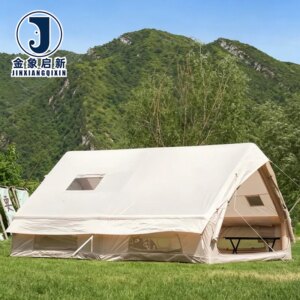
Inflatable Camping Tent PVC Four-Season Waterproof Outdoor Air Tent with Quick Automatic Opening for 2-3 Person
Read more