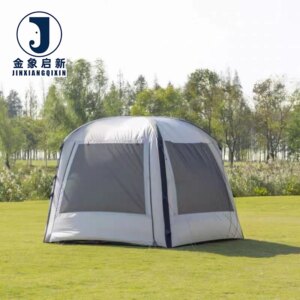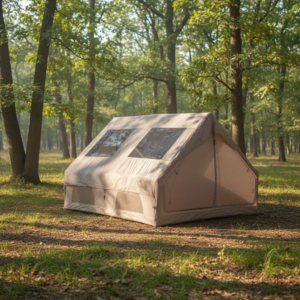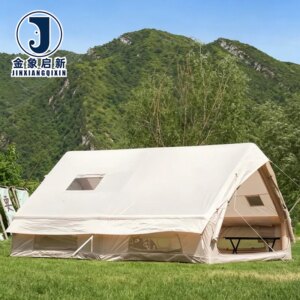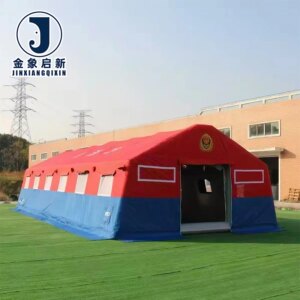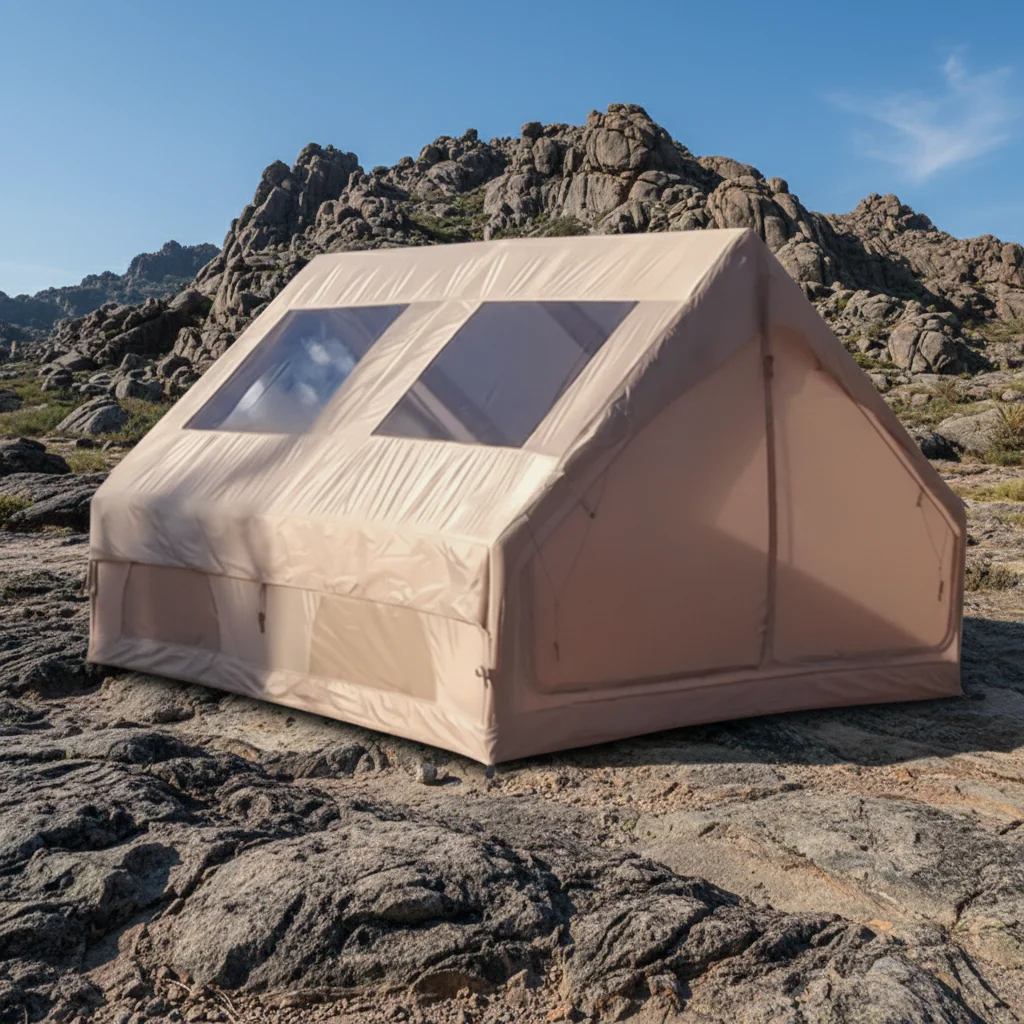
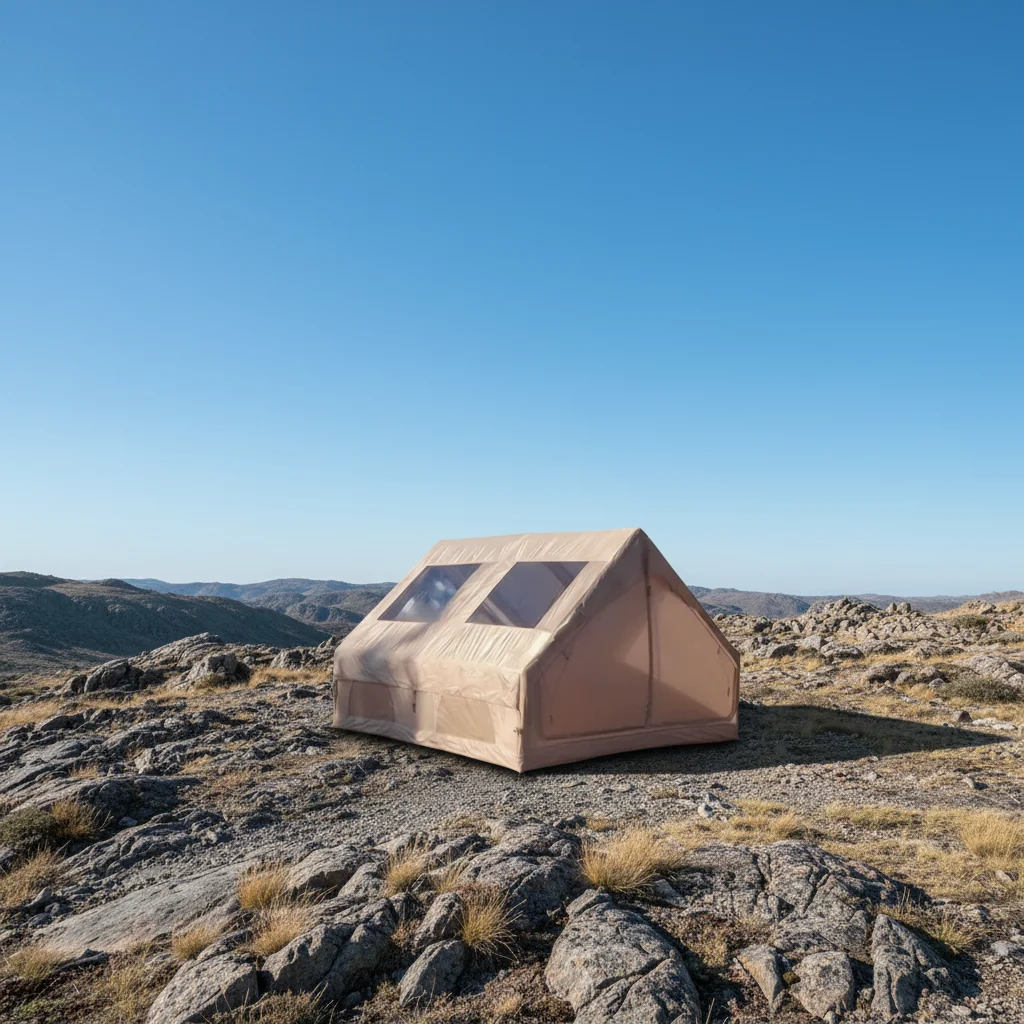
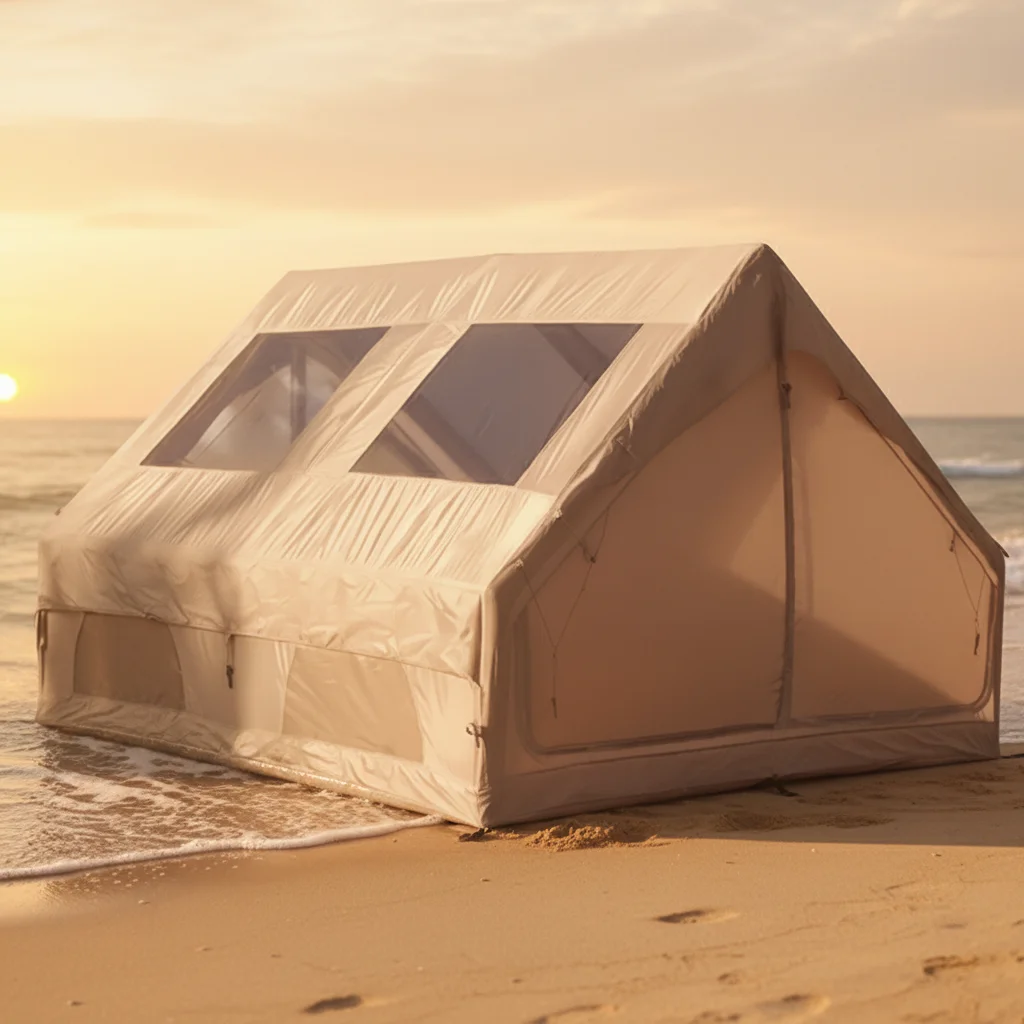
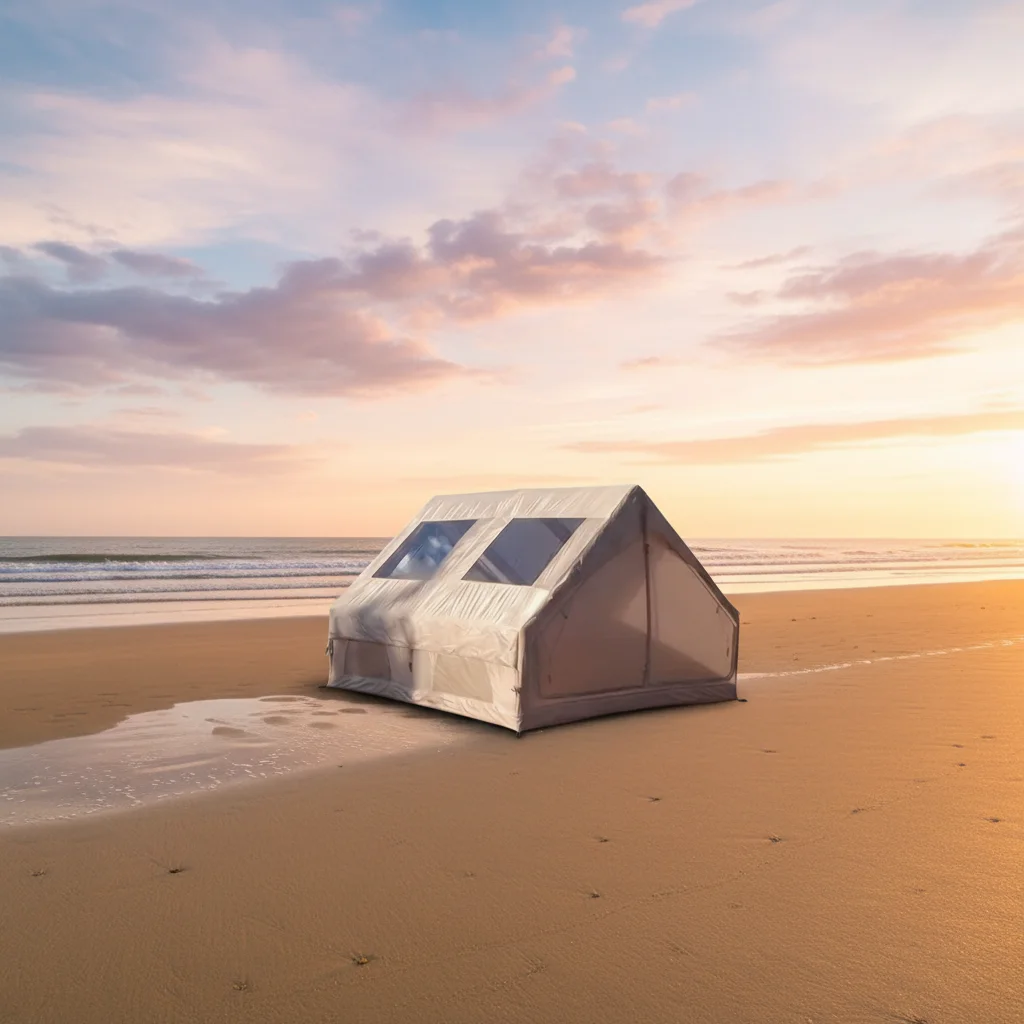
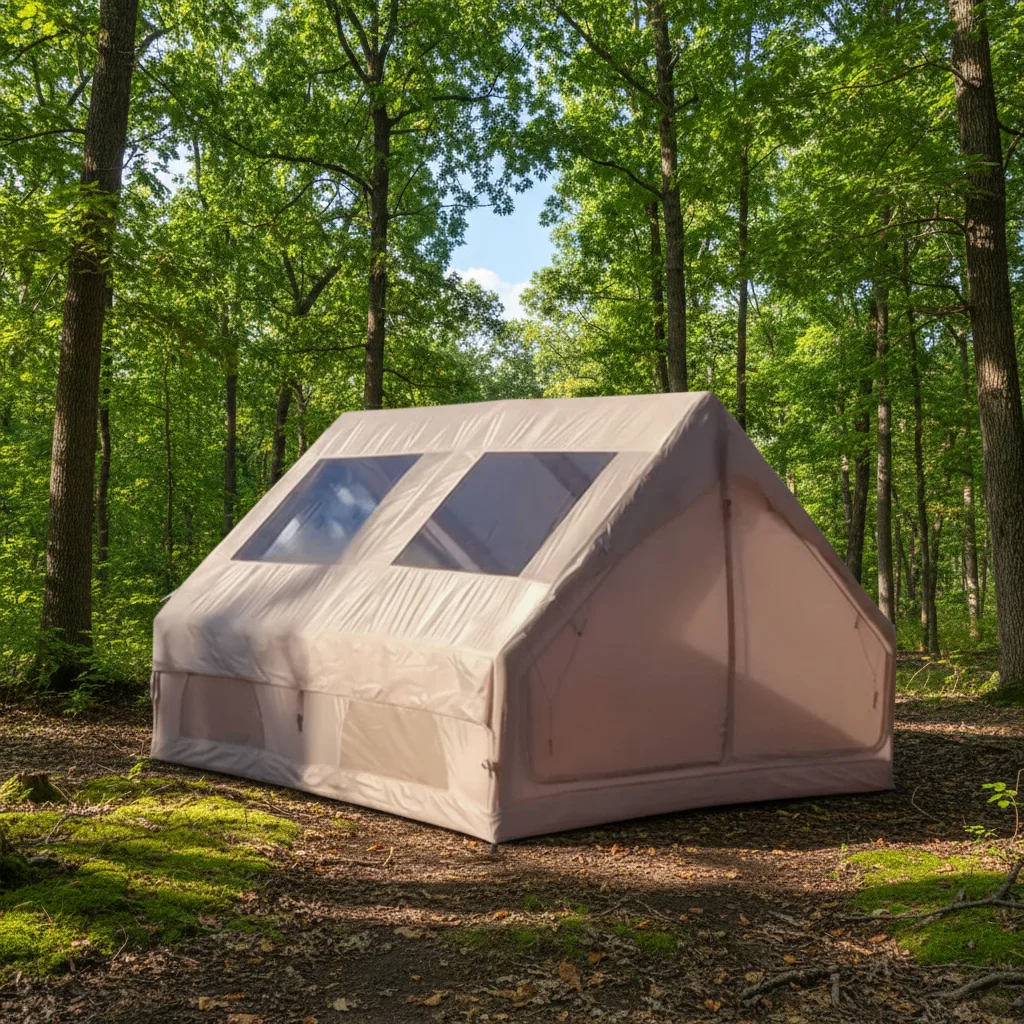
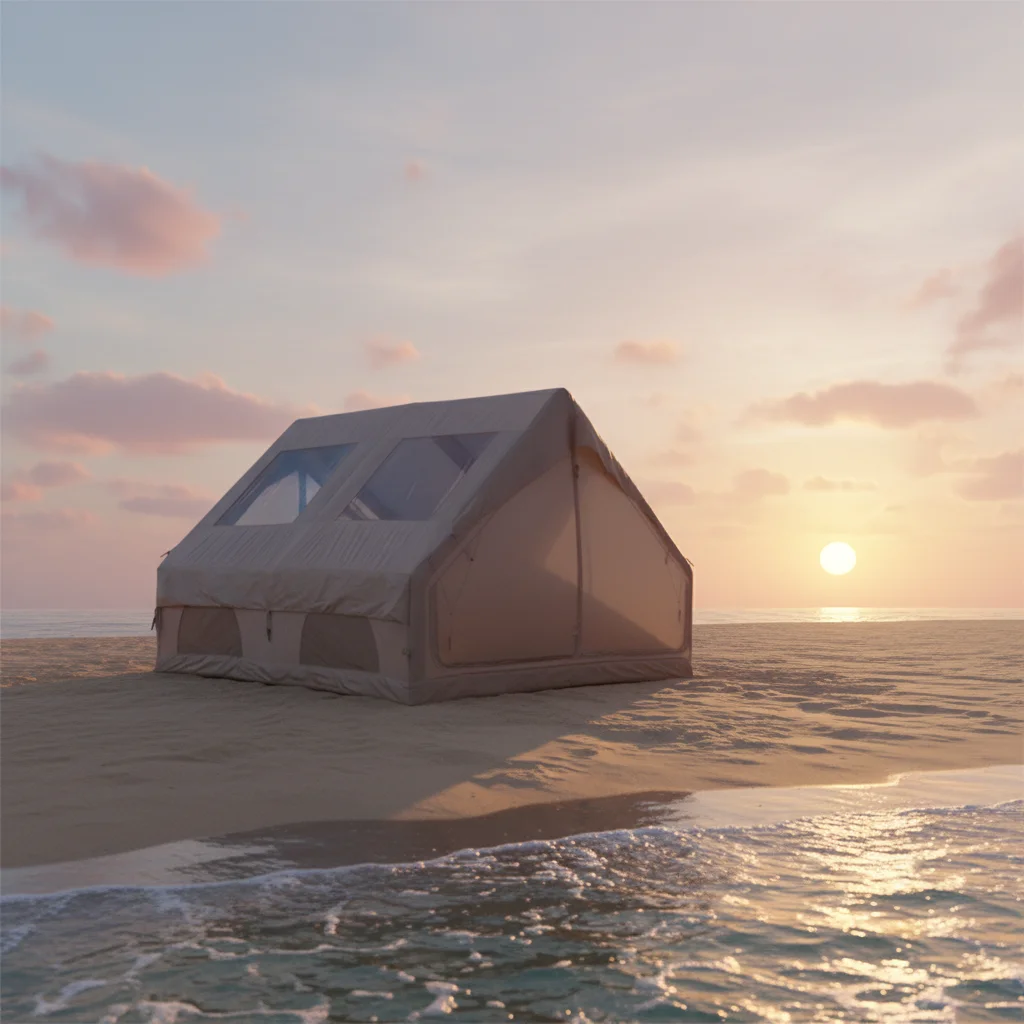
Inflatable Tent for Camping with 0.6mm–1.2mm PVC tarpaulin, quick automatic opening, and UPF 50+ UV-resistant coating — built for commercial outdoor deployments where rapid setup and material longevity matter.
- Knife-coated PVC fabric ensures strong adhesion between base and coating, reducing delamination risk during repeated inflation cycles
- Custom valve systems and fabric thickness options align with portability and environmental demands
Samples developed within days; 100% pre-shipment inspection and batch-specific test reports included with every order.
Description
Complete Custom Capability — Inflatable tent fabric engineered from PVC knife-coated stock with full OEM/ODM support, Pantone color matching, valve modifications, and thickness selection from 0.6mm to 1.2mm, all developed by an in-house R&D team from design to delivery.
Technical Specifications
| Parameter | Value |
|---|---|
| Product Type | Inflatable Tent Fabric |
| Core Material | PVC knife-coated fabric |
| Fabric Thickness Range | 0.6mm to 1.2mm |
| Construction | Single layer |
| Tensile Strength | ≥3000N/5cm (test basis not stated in source) |
| Tear Strength | ≥500N (test basis not stated in source) |
| Waterproof Rating | ≥5000mm water column (test basis not stated in source) |
| UV Protection | UPF 50+ (test basis not stated in source) |
| Flame Retardant | Available in flame retardant grades — confirm the grade required for your market |
| Total Weight | ≤8kg/m² |
| Customization | OEM & ODM, custom dimensions, Pantone color matching, logo printing, valve system modifications |
| Quality Control | 12-point inspections, 100% leak testing with compressed air, 24-hour sustained pressure retention test |
| Certifications | ISO 9001, ISO 14001, ISO 45001, CE |
Application Suitability
| Application | Exposure & Requirement |
|---|---|
| Commercial adventure camp shelters | Repeated inflation/deflation cycles, ground abrasion, multi-season UV exposure, transport packing stress |
| Outdoor promotional event structures | Rapid automatic opening, high visibility branding, short-term weather exposure, frequent relocation |
| Expedition base camp tents | Mountainous or coastal wind loads, prolonged sun exposure, low-temperature flexibility, salt air contact |
| Guided tour temporary shelters | Daily setup and breakdown, varied terrain deployment, crew handling wear, all-weather waterproofing |
Why Material Verification Matters More Than Quoted Specs for Inflatable Tents
A spec sheet only matters when the tent holds pressure on the third deployment, not the first.
Commercial operators sourcing a custom inflatable tent frequently receive fabric that tests well on the sample roll but degrades after repeated field cycles. Coating adhesion drops at the heat-welded seams where inflation pressure concentrates stress. UV treatment claimed on paper may not survive a full season of direct exposure. When a supplier cannot back material claims with batch-specific test data, the operator absorbs the cost of mid-season replacements and reputational damage from failed deployments [NEED_CITE: tensile and tear test methods for coated fabrics per ISO 1421].
Knife-Coated PVC Built for Repeated Inflation Stress
Inflatable tent fabric undergoes cyclical pressurisation every time it deploys, placing sustained tension on every welded seam and valve penetration point. PVC knife-coated construction bonds the coating directly into the base fabric weave, producing higher peel strength at the weld line compared to laminated alternatives. This matters for commercial operators running dozens of setup cycles per season, where seam failure ends a tent’s service life long before the body fabric wears through. The custom inflatable tent manufacturer selects coating weight and base fabric density together to balance inflation rigidity against packed weight.
UV Formulation for Extended Commercial Deployment Seasons
Adventure camp operators and event organisers leave inflatable structures standing for weeks or months under direct sun. The UPF 50+ UV-resistant coating is formulated to slow plasticiser migration and surface chalking that leads to brittleness and cracking at fold lines [NEED_CITE: UV degradation mechanisms in PVC coated polyester fabrics]. For operators in high-altitude or coastal environments where UV intensity compounds with salt or ozone exposure, confirming the specific test basis behind the UV claim ensures the material matches actual field conditions rather than a laboratory ideal. Request the test report tied to your production batch before committing to volume.
Reading Thickness, Tensile, and Tear Values Together
Fabric thickness from 0.6mm to 1.2mm does not act alone — it works in combination with base fabric denier and weave density to determine how the material behaves under inflation pressure. A thicker coating adds puncture resistance but increases packed weight, a trade-off expedition outfitters weigh against portability requirements. Tensile strength at ≥3000N/5cm indicates how much inflation pressure the fabric can sustain before stretching at the seams. Tear strength at ≥500N measures resistance to damage propagation once a puncture or cut occurs, which is critical at valve cut-outs and corner welds where stress concentrates. The relationship between these values and the chosen thickness determines whether a tent survives its first season of commercial abuse or requires patching within weeks [NEED_CITE: relationship between coating thickness and tear propagation in PVC tarpaulin].
The Hidden Cost of Specifying Inflatable Tent Fabric on Thickness Alone
Selecting fabric based on millimetre thickness without verifying coating adhesion and weld integrity leads to a predictable failure pattern: the tent inflates perfectly on delivery, then develops slow leaks at the seam lines after several setup cycles. The coating delaminates from the base fabric at flex points where the tent folds for transport. Batch-to-batch variation in coating weight means the second order performs differently from the approved sample. For commercial operators running multiple tents across locations, this inconsistency forces unplanned downtime and replacement costs that far exceed the initial material savings [NEED_CITE: weld line failure analysis in inflatable PVC structures].
What This Manufacturer Brings to Inflatable Tent Projects
Three full production lines and 36 sets of professional equipment support bulk inflatable tent fabric orders with reliable scheduling, even during seasonal demand spikes when event and adventure operators order simultaneously.
A 10-person R&D team handles valve system modifications, Pantone color matching, logo printing, and fabric thickness adjustments — developing samples within days so operators can validate material feel and weld response before committing to production.
Dedicated QA/QC at every production stage includes 100% leak testing with compressed air and 24-hour sustained pressure retention validation, catching seam and valve defects before the tent ships rather than after it reaches the campsite.
Deep process control over coating weight and adhesion, built over decades of coated fabric production, ensures that the PVC knife-coated material maintains consistent peel strength at heat-welded joints across every roll in an order.
Full documentation accompanies each shipment — from material specification sheets to pre-shipment inspection records — so procurement teams can audit compliance without requesting additional paperwork after delivery.
Documentation & Verification
- Material specification sheet stating base fabric, coating method, GSM, and thickness for each tent batch
- Batch-specific quality inspection report with waterproof rating, UV resistance results, and inflation pressure retention values
- ISO 9001, ISO 14001, ISO 45001, and CE certificates included with each shipment
- Pre-shipment inspection record with 12-point QA/QC documentation accessible via order number
- Certificate of origin and customs documentation for international inflatable tent fabric shipments
Fabrication, Handling & Storage
- Heat-weld seam temperature and dwell time must match the specific PVC knife-coated thickness selected, from 0.6mm to 1.2mm
- Valve cut-outs require reinforced weld patches to prevent tear propagation under sustained inflation pressure
- Store rolls upright on pallets to avoid permanent creasing that weakens the coating at fold lines
- Allow fabric to reach ambient temperature before unfolding in cold conditions to prevent coating crack at the crease
- Clean deployed tent surfaces with mild soap solutions — solvent-based cleaners degrade the UV-resistant coating layer
- Repair minor field punctures with compatible PVC adhesive patches matched to the coating chemistry
Starting Your Inflatable Tent Fabric Inquiry
Provide your deployment environment, expected setup frequency, and any fire-retardant grade required by local venue or site regulations so the specification can be matched accurately. Specify whether you need finished tent panels with valve penetrations and welded seams, or flat fabric rolls for your own fabrication line. Confirm target dimensions, Pantone references, and logo placement if branding is part of the structure design.
Frequently Asked Questions
Q: How is fabric thickness and coating weight verified on arrival, and do you support third-party re-inspection?
A: Each batch ships with a material specification sheet documenting coating method, GSM, and measured thickness. Buyers may arrange independent laboratory testing against the stated values upon receipt. The manufacturer supports third-party inspection access before dispatch to confirm compliance with the purchase order specification.
Q: What UV resistance test basis backs the UPF 50+ claim, and what service life can commercial operators expect?
A: The UPF 50+ rating is stated with the test basis available on request per batch. Actual field longevity depends on deployment intensity, sun exposure hours, and storage conditions between uses. Request the specific test report for your order to verify the UV formulation matches your operating environment.
Q: How do you ensure batch-to-batch color consistency across large custom inflatable tent orders?
A: Pantone color references are matched at the coating stage, and each production run is checked against the approved sample under standardised lighting. The pre-shipment inspection record documents the color verification result so buyers can confirm consistency before the order leaves the factory.
Q: What custom sizing, valve, and printing options are available, and what are the sample lead times?
A: OEM and ODM options include custom dimensions, fabric thickness from 0.6mm to 1.2mm, valve system modifications, and logo printing. The R&D team develops samples within days for custom requirements, allowing buyers to evaluate material, weld response, and print quality before bulk production begins.
Q: What certifications and documentation ship with each order for audit and compliance purposes?
A: Every shipment includes ISO 9001, ISO 14001, ISO 45001, and CE certificates, a batch-specific inspection report, material specification sheet, packing list, and certificate of origin. The 12-point pre-shipment inspection record is traceable by order number for buyer audit requirements.
Related products
-
Inflatable Camping Tent Waterproof Outdoor Air Tent for Camping Inflatable Tent Shelter
Read more -
Camping Tent Inflatable UV Resistant Customizable Four-season Waterproof PVC Quick Automatic Opening 2-3 Person Outdoor
Read more -
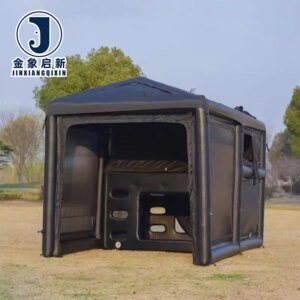
Premium Four-season Inflatable Tents for Camping Easy-to-Use Spacious Portable Waterproof Outdoor Tent Quick
Read more -
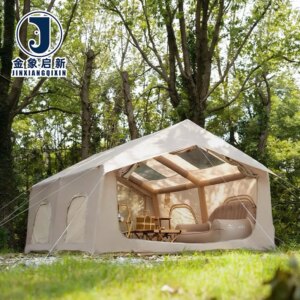
Inflatable Camping Tent Waterproof PVC Outdoor Air Tent Easy Setup Family Camping Shelter
Read more