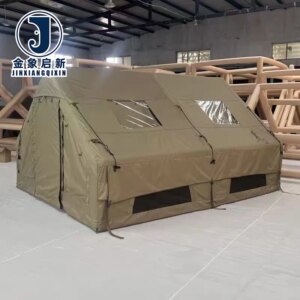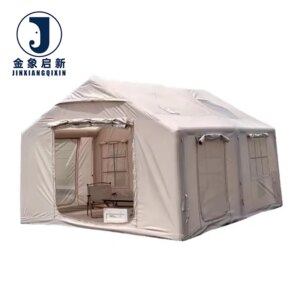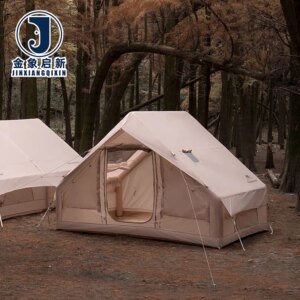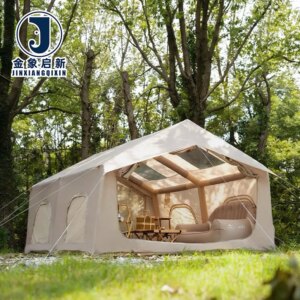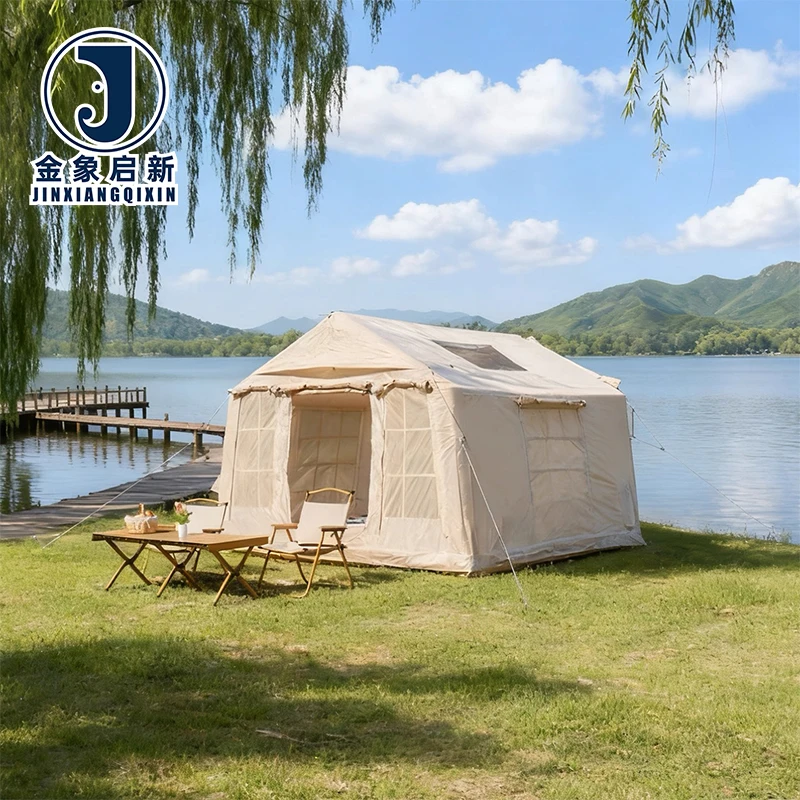
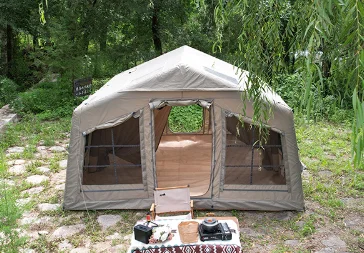
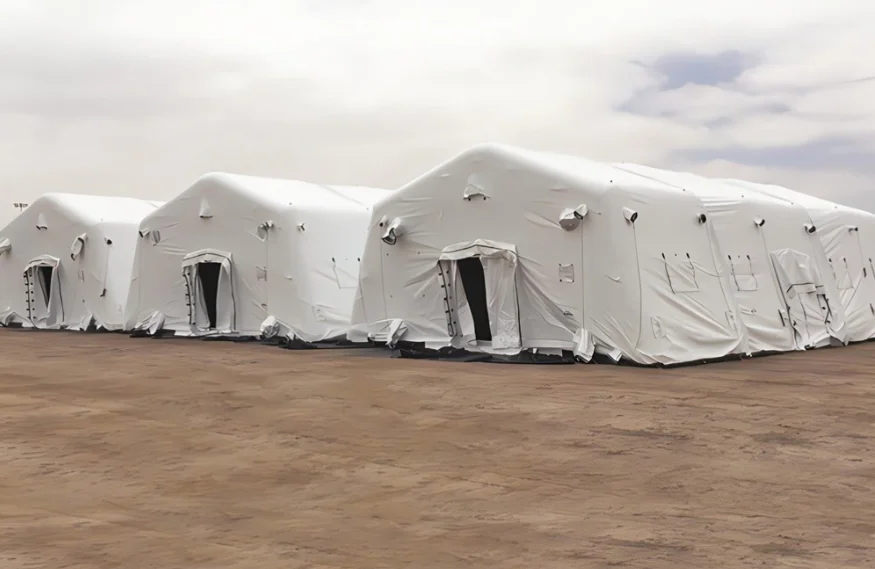
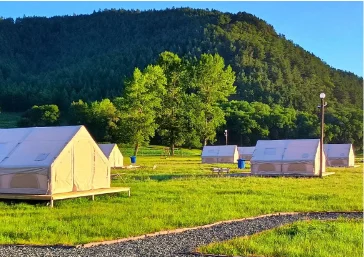
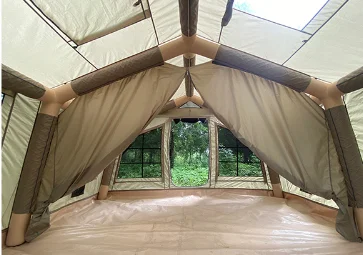
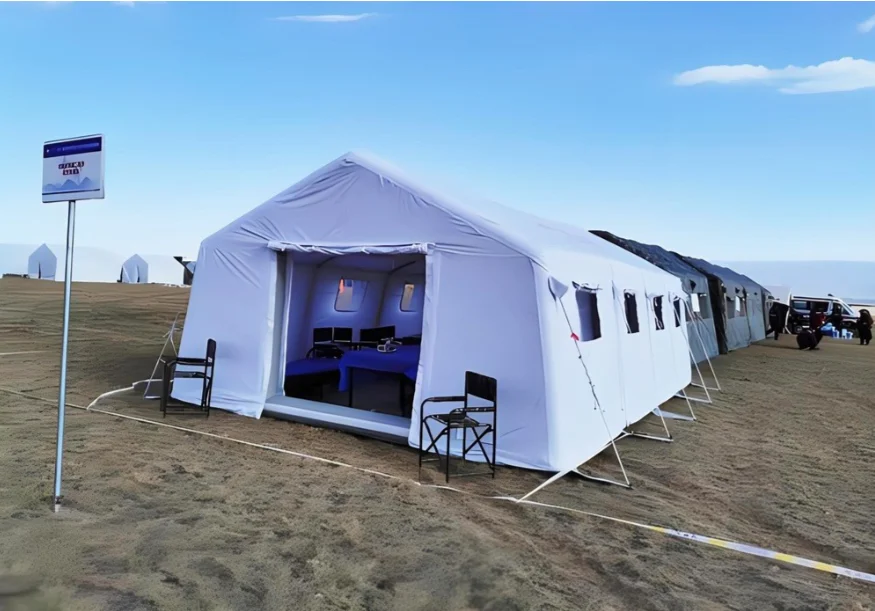
Inflatable Tent for Glamping — Waterproof PVC Fabric, UV-resistant, Tear-resistant — single-layer construction with heat-welded seams rated for repeated inflation cycles, supporting full OEM & ODM customization in size, color, and pattern printing.
- Knife-coated PVC base delivers verified 2000mm waterproof rating with consistent coating adhesion across every panel.
- UV-resistant formulation maintains color stability between units in multi-tent resort deployments.
- Custom sizing and branding integration from design approval through bulk container delivery.
Backed by three dedicated production lines, 100% pre-shipment inspection, and sample development within days for project-specific requirements.
Description
Precision-Coated Fabric Control — nearly three decades of coating process mastery applied to every roll of inflatable tent fabric we produce, ensuring consistent weight, adhesion, and surface quality across your entire order.
Technical Specifications
| Parameter | Value |
|---|---|
| Product Type | Inflatable Tent Fabric |
| Core Material | Waterproof PVC coated fabric |
| Coating Method | Knife coated |
| Waterproof Rating | 2000mm water pressure |
| UV Treatment | UV-resistant formulation (test basis not stated in source) |
| Flame Retardant | Available in flame retardant grades — confirm the grade required for your market |
| Key Features | Waterproof, UV-resistant, tear-resistant |
| Construction | Single-layer |
| Setup System | Quick automatic opening (under 10 minutes) |
| Weight | 25% less than comparable multi-layer tents |
| Customization | OEM & ODM — size adjustments, color matching, pattern printing, accessory integration |
| Standards | ISO9001, ISO14001, ISO45001, CE |
Application Suitability
| Application | Exposure & Requirement |
|---|---|
| Luxury glamping resorts | Four-season weather exposure, guest comfort, branded aesthetics, repeated inflation cycles |
| Outdoor event venues | Rapid deployment, high-visibility branding, wind and rain resistance, frequent transport |
| Temporary hospitality structures | Continuous occupancy loads, climate control retention, fire safety compliance per local code |
| Commercial campsites | High turnover usage, abrasion from ground contact, UV exposure across open terrain |
Why Batch Consistency Matters More Than Quoted GSM for Inflatable Tent Fabric
Roll-to-roll colour and weight variation is the most frequent complaint we hear from inflatable structure manufacturers after their first container arrives.
When you source inflatable tent fabric custom manufacturer services, the specification sheet may state a target GSM, but without in-process coating weight checks, the actual material can arrive lighter than agreed. A variance of even a small percentage across rolls becomes visible once multiple units are inflated side by side at a glamping site — colour drift and surface texture differences undermine the premium positioning your client expects. [NEED_CITE: ISO 1421 test methods for coated fabric tensile and tear properties]
Knife-Coated PVC for Structural Air-Holding Performance
The knife coating process applies liquid PVC directly onto the base fabric under controlled tension, producing a uniform coating layer that bonds through the weave rather than sitting on the surface. For inflatable tent fabric, this adhesion method is critical because the material must withstand repeated inflation and deflation cycles without delamination at stress points. Each roll produced as an inflatable tent fabric custom manufacturer order undergoes coating weight verification during the run, not just at the final inspection stage.
Single-Layer Engineering for Transport and Deployment Efficiency
Single-layer construction reduces overall unit weight by a measurable margin compared to multi-wall alternatives, which directly affects shipping cost per unit and on-site handling. Event operators deploying dozens of structures across a festival site benefit from lighter units that two crew members can position and inflate within minutes. This weight reduction is achieved through material engineering — selecting the correct base fabric denier and coating weight combination — rather than by reducing coating thickness below the level needed for reliable waterproofing and structural integrity. [NEED_CITE: relationship between base fabric denier and coated fabric tear propagation resistance]
Reading the Specification Sheet Beyond the Headline Number
The 2000mm waterproof rating indicates the hydrostatic head pressure the coated fabric can withstand before water penetration occurs, which is relevant for sustained rainfall scenarios at permanent glamping installations. Knife-coated PVC achieves this barrier through complete encapsulation of the base fabric, eliminating the pinholes and gaps that can occur in laminated constructions. The UV-resistant formulation is integrated into the coating compound during mixing, providing protection throughout the coating thickness rather than as a surface-applied treatment that wears away. Flame retardant grades are available for markets with specific fire safety requirements — the exact classification should be confirmed against your local building or temporary structure regulations before production begins. Coating weight and base fabric density work together to determine the final tensile and tear values; a heavier coating on a loosely woven base will not outperform a balanced specification.
The Hidden Cost of Skipping Pre-Production Sample Approval
Manufacturers who skip sample approval and move directly from quotation to bulk production frequently encounter issues that could have been caught early. Colour matching across a multi-unit order requires physical sample sign-off under controlled lighting, because screen-based colour references do not account for how PVC coating pigments render under natural daylight versus interior LED lighting at the installation site. Weld parameters also vary with coating formulation — a heat setting that produces a strong seam on one batch may underperform on another if the plasticizer content has shifted. [NEED_CITE: weld strength testing protocols for PVC coated fabrics]
Why Procurement Teams Specify Our Inflatable Tent Fabric
Our three full production lines allow us to schedule dedicated runs for your inflatable tent fabric custom manufacturer order rather than fitting your specification into gaps between other products. The 10-person R&D team develops material samples within days, adjusting coating weight, colour, and surface finish to match your engineering requirements before you commit to bulk volume. Every production run includes hourly in-process QA checks measuring fabric thickness and seam strength, not just a final visual inspection. We supply batch-specific quality inspection reports documenting waterproof performance and UV resistance metrics for your records. Full documentation — material specification sheets, ISO and CE certificates, and pre-shipment inspection records — ships with every order so your receiving team can verify compliance immediately upon arrival.
Documentation & Verification
- Material specification sheet confirming coating method, waterproof rating, and base fabric construction
- Batch-specific quality inspection report covering waterproof performance and UV resistance metrics
- Pre-shipment inspection record documenting roll count, weight verification, and visual assessment
- ISO9001, ISO14001, ISO45001, and CE certificates included with every shipment
- Certificate of origin and customs documentation prepared for your destination market
Fabrication, Handling & Storage
- Heat-weld seams using temperature settings matched to the knife-coated PVC formulation for optimal bond strength
- Reinforce air-beam junction points with additional fabric layers to distribute inflation pressure evenly
- Store rolls upright on pallets in a covered area to prevent flat-spot deformation of the coated surface
- Allow cold-stored rolls to reach ambient temperature before unrolling to avoid coating crack at low temperatures
- Use mild soap solutions for cleaning — avoid solvent-based agents that can degrade the PVC coating surface
- Pattern printing areas require compatible ink systems tested against the specific PVC formulation for adhesion
Request a Material Sample and Specification Proposal
Provide your intended application environment, the fire safety classification required by your local regulations, and your target colour or print specification so we can develop a material sample matched to your project. Confirm whether you need rolls in standard widths or custom-cut panels with finished edges. Let us know your projected annual volume and preferred delivery schedule so we can allocate production capacity and provide an accurate lead time.
Frequently Asked Questions
Q: How can I verify the PVC fabric weight on arrival matches the quotation?
A: We include a weight verification record with each roll in your shipment, documenting the measured GSM against the quoted specification. Your receiving team can cross-check using a calibrated scale and a standard sample cutter. We recommend verifying at least three rolls per batch to confirm consistency across the production run before cutting begins.
Q: What UV test basis supports the weather resistance claim for this inflatable tent fabric?
A: The UV-resistant formulation is integrated during coating compounding, but the specific test standard and exposure duration should be confirmed against your market requirements. We can arrange accelerated weathering testing to a nominated standard upon request. Provide your target climate zone and expected service exposure so we recommend the appropriate test protocol.
Q: How are pattern printing and colour matching controlled across multiple production batches?
A: We produce a physical colour sample for your approval before bulk coating begins, matched under controlled lighting conditions. Each production run references the approved sample, and hourly in-process checks monitor colour consistency. For repeat orders, we retain the formulation record so subsequent batches match the original approval within production tolerances.
Q: What lead times and minimums apply to custom-sized inflatable tent fabric orders?
A: Sample development typically completes within a week for standard customizations. Bulk production for custom sizes, colours, or printed patterns requires a multi-week lead time depending on order volume and current line scheduling. Minimum order quantities vary by customization complexity — contact us with your specification to receive a confirmed timeline and volume requirement.
Q: What welding parameters work best for inflatable air-beam construction with this fabric?
A: Knife-coated PVC responds well to hot-air and high-frequency welding, but optimal temperature, pressure, and dwell time depend on the specific coating weight and formulation. We recommend conducting weld tests on sample material before production to establish parameters that produce seam strength equal to or exceeding the base fabric strength. Our technical team can provide starting parameter guidance with your sample shipment.
Related products
-
Outdoor Camping Inflatable Tent Luxury All-Season Use PVC Waterproof Quick Automatic Opening Rainproof Insulated
Read more -
Inflatable Tent Family Size Four-Season Quick Automatic Opening Waterproof 2-8 Person Factory Direct Sale
Read more -
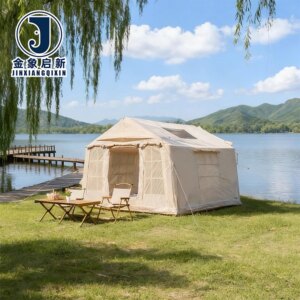
Luxury Inflatable Tent for Glamping Outdoor Waterproof Air Tent with Pump
Read more -
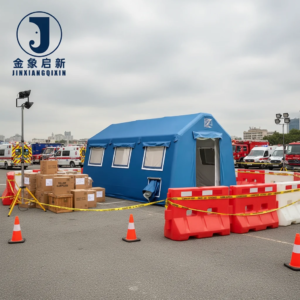
Barraca de Camping Inflável Impermeável PVC Tenda de Ar para Exteriores Montagem Fácil Abrigo de Camping Familiar Quatro Estações >3000mm Impermeável Rápido
Read more