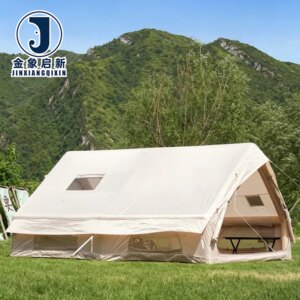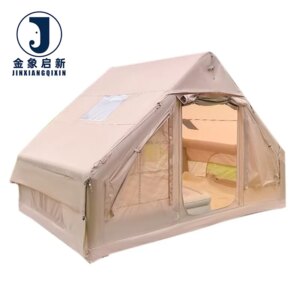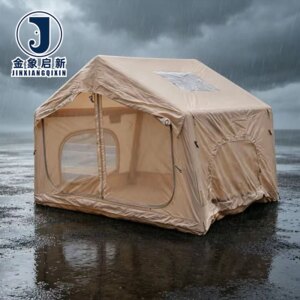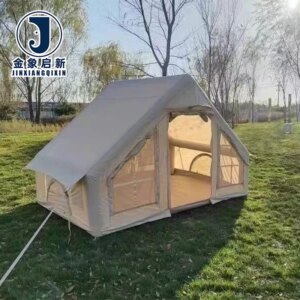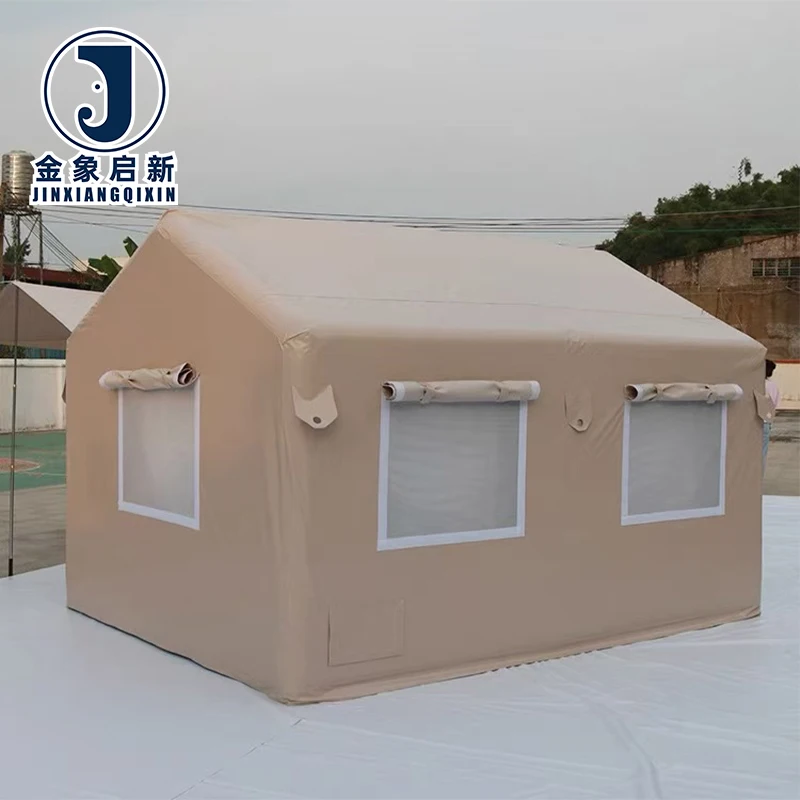
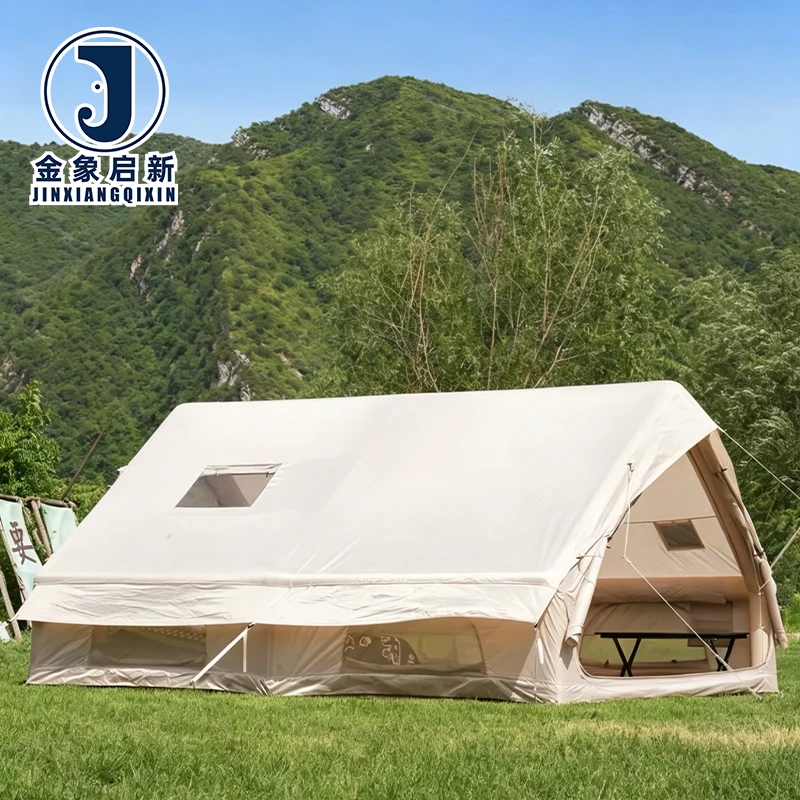
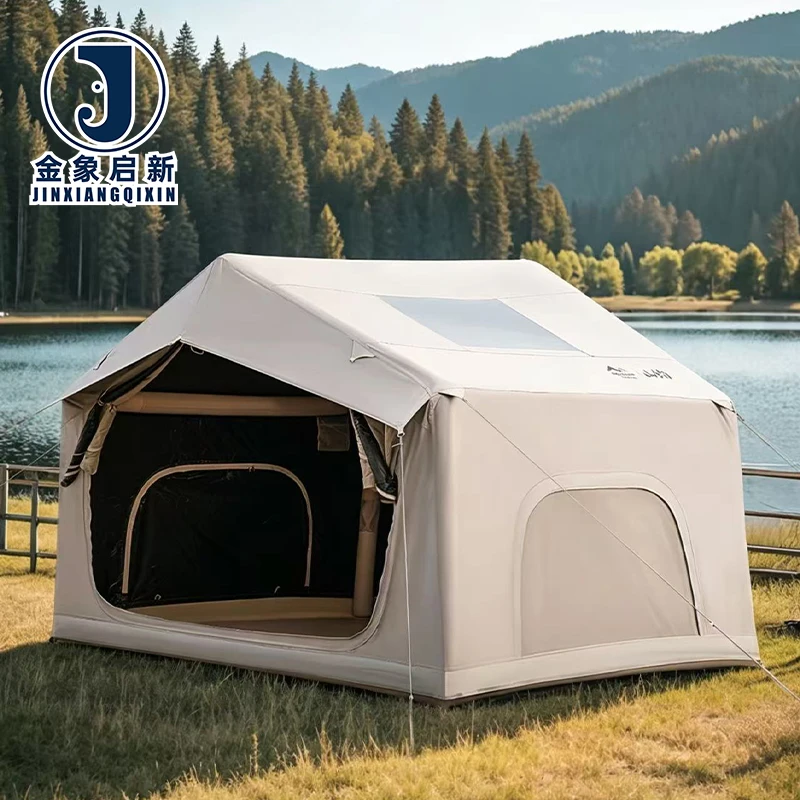
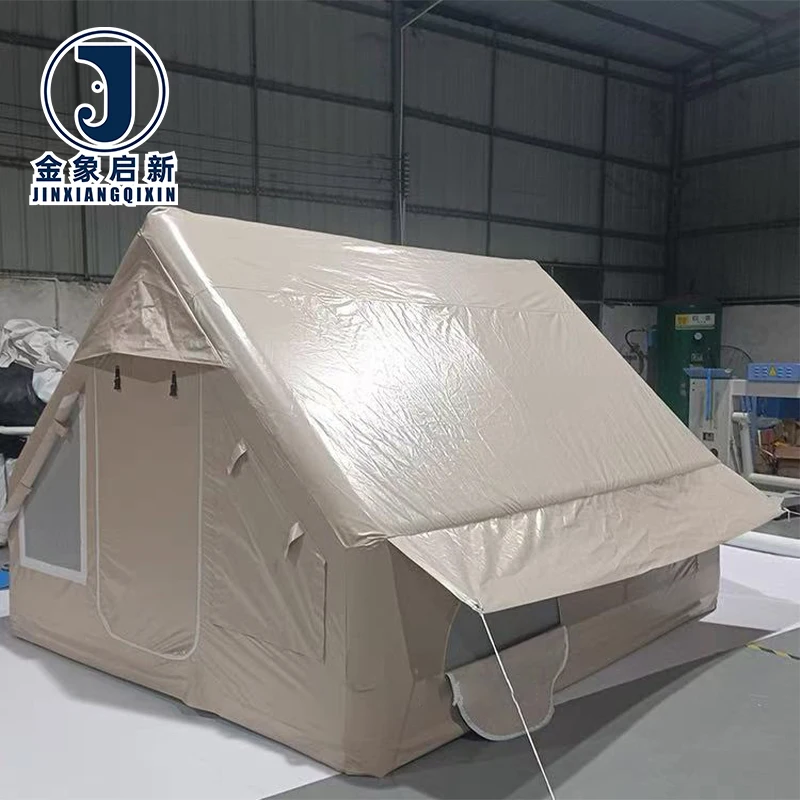
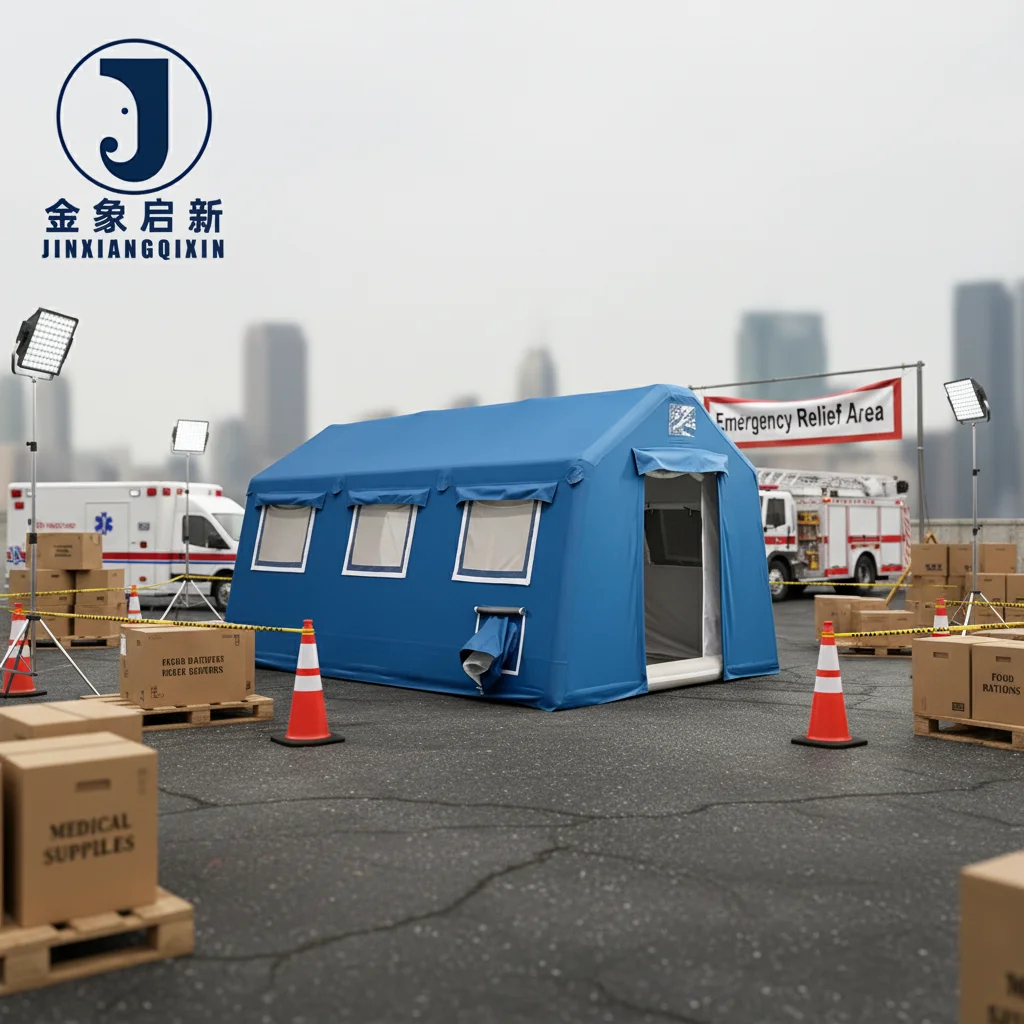
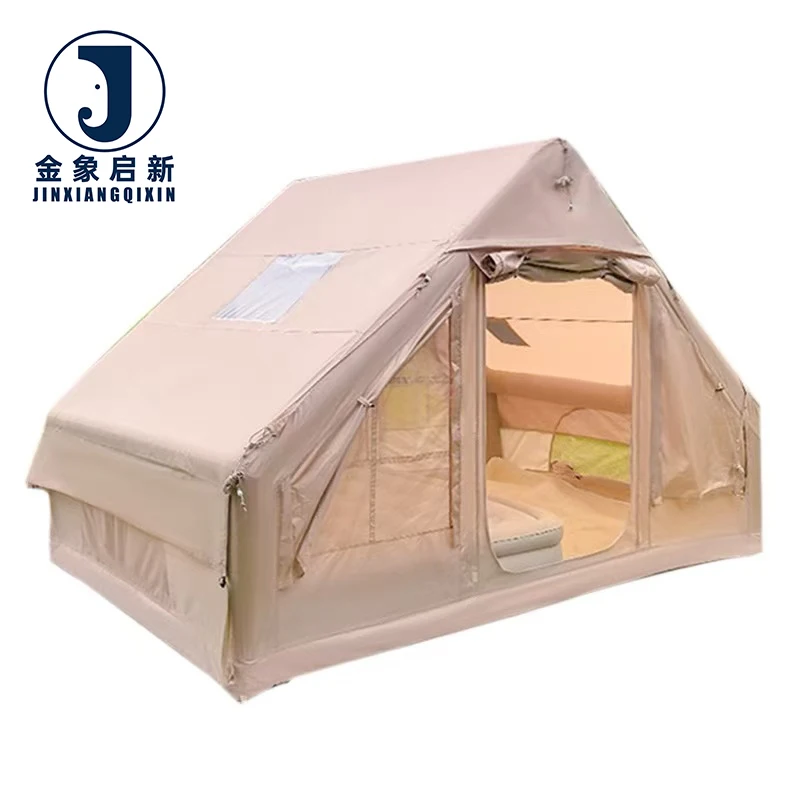
Inflatable Tent PVC Waterproof Four-Season Outdoor Air Tent — single-layer PVC tarpaulin construction with quick automatic opening system for rapid deployment across commercial and industrial sites.
Heat-sealed seams maintain sustained waterproof integrity under prolonged field exposure. The multi-layered PVC coating resists UV degradation, and the 8-point pressure testing protocol validates air retention and structural stability for repeated commercial use.
Backed by 3 full production lines, 100% pre-shipment inspection, and 10-person R&D support for custom sizing and sample development.
Description
Process Control in Coated Fabric — nearly 30 years focused on PVC coating weight and adhesion, applied here to inflatable tent structures where air retention depends on consistent material integrity across every seam and panel.
Technical Specifications
| Parameter | Value |
|---|---|
| Product Type | Inflatable Tent |
| Core Material | PVC tarpaulin |
| Capacity | 3-4 person |
| Construction | Single layer |
| Key Performance | Waterproof, quick automatic opening, four-season design |
| Air Retention Testing | 8-point pressure testing per unit |
| UV Treatment | Anti-UV formulation (test basis not stated in source) |
| Flame Retardant | Available in flame retardant grades — confirm the grade required for your market |
| Seam Construction | Heat-sealed seams |
| Customization | OEM & ODM, sample customization, pattern printing |
| Standards | ISO 9001, ISO 14001, ISO 45001, CE |
Application Suitability
| Application | Exposure & Requirement |
|---|---|
| Construction site field offices | Constant UV exposure, abrasion from site dust and debris, repeated deployment and dismantling cycles |
| Outdoor event infrastructure | High foot traffic, wind loading on inflated structure, rapid setup and teardown between events |
| Expedition base camps | Sub-zero to high-temperature swings, snow load, extended continuous inflation in remote conditions |
| Emergency response staging areas | Immediate deployment under time pressure, waterproof integrity in uncontrolled weather, transportability |
| Mobile commercial operations | Daily inflation cycles, surface abrasion from ground contact, branded appearance for customer-facing use |
Why Material Consistency Matters More Than the Quoted Specification
A stated specification means nothing if the material arriving on site does not match what was agreed.
Buyers of inflatable tents often specify a PVC grade based on a sample, then receive a production run where the coating weight varies between units. The inflatable structure relies on uniform air pressure across all panels — when one panel is lighter than the rest, it becomes the failure point under wind load or snow accumulation. This inconsistency is not always visible until the tent is inflated and stressed in the field, by which time the project is already delayed. [NEED_CITE: tensile and tear test methods for coated fabrics per ISO 1421]
Coating Uniformity and Air Retention Performance
The PVC tarpaulin used in this inflatable tent range is produced on dedicated coating lines where weight consistency is monitored throughout the run. Multi-layered waterproof coating with heat-sealed seams ensures that the structural envelope holds pressure without leakage at the joints. For inflatable tent manufacturers and commercial shelter operators, this means each unit maintains its shape under sustained inflation, reducing the risk of partial collapse during use.
Quick Deployment Without Compromising Structural Durability
The automatic opening system reduces on-site setup time compared to traditional frame tents, which is critical for emergency staging and event infrastructure where hours matter. The four-season design addresses both thermal extremes and precipitation, while the anti-UV formulation provides protection during prolonged outdoor exposure — buyers should confirm the specific UV test standard required for their destination market before placing an order.
Understanding How PVC Coated Fabric Performs Under Inflation Stress
Inflatable tent structures place unique demands on coated fabric. The material must resist biaxial tension — stretching simultaneously in warp and weft directions — as internal air pressure pushes outward on every panel. Single-layer PVC tarpaulin construction relies on the base fabric denier and weave density to distribute this load, while the coating provides the airtight barrier. Heat-sealed seams are critical here: adhesive-bonded or stitched seams create micro-perforations that compromise air retention, whereas thermal welding fuses the coating into a continuous membrane. The 8-point pressure testing protocol on each finished unit verifies that no panel or seam leaks beyond acceptable thresholds. Buyers evaluating inflatable tent fabric should request the base fabric specification alongside the coating weight, as both parameters together determine how the material behaves under sustained inflation pressure. [NEED_CITE: DIN 4102 fire classification for building materials]
The Hidden Cost of Underspecified Inflatable Tent Fabric
When a buyer focuses only on unit price without verifying coating weight and seam construction, the consequences surface in the field. A tent that loses pressure faster than expected requires constant re-inflation, consuming fuel or battery power on remote sites. Panels with inconsistent coating thickness develop stress concentrations at the seams, leading to tears that propagate under wind load. Colour variation between units in the same order becomes visible once multiple tents are deployed side by side at an event or construction site, undermining the professional appearance the buyer intended. These are not manufacturing defects in the traditional sense — they result from specifications that were too vague to enforce during production. [NEED_CITE: common causes of coated fabric seam failure under cyclic loading]
Why Source This PVC Inflatable Tent Range Here
Coating weight and adhesion are controlled at every production stage across three full production lines, ensuring that the PVC tarpaulin used in your inflatable tent order meets the agreed specification from first roll to last. A 10-technician R&D team handles custom sizing, pattern printing, and sample development, allowing you to validate material choice and print quality before committing to a full production run. Dedicated QA/QC inspection at each stage — including 8-point pressure testing on every finished unit — means air retention performance is verified before dispatch, not discovered on site. Samples for custom requirements are developed within days, shortening the approval cycle for OEM and ODM inflatable tent projects. ISO 9001, ISO 14001, ISO 45001, and CE certifications underpin the quality management system, and full documentation accompanies every shipment.
Documentation & Verification
- Material specification sheet stating base fabric type, coating weight, and colour reference per order
- Pre-shipment inspection record confirming 8-point pressure test results on each inflatable tent unit
- UV test report provided where anti-UV grade is specified and tested
- ISO 9001, ISO 14001, ISO 45001, and CE certificates included with every dispatch
- Certificate of origin and customs documentation supporting international shipment clearance
- Pre-production sample approval record retained against the production batch for traceability
Fabrication, Handling & Storage
- Heat-sealed seams require calibrated temperature and dwell time — confirm welding parameters match PVC tarpaulin coating thickness
- Store rolled units vertically in dry conditions to prevent permanent creasing in the single-layer PVC construction
- Avoid dragging inflated or deflated units across abrasive ground to protect the waterproof coating surface
- Use mild detergent for cleaning — solvent-based cleaners may degrade the anti-UV formulation on the PVC surface
- Allow full material relaxation after cold transport before inflation to prevent stress cracking in low temperatures
- Field repair kits should use compatible PVC adhesive and patch material matching the coating chemistry
What to Include in Your Inflatable Tent Inquiry
Provide the intended application environment — whether construction site, event infrastructure, or expedition use — along with the climate range the tent must withstand. Specify any fire-retardant grade or compliance standard required by your local authority or site operator. Indicate whether you need custom sizing, pattern printing, or branding, and confirm the quantity range to determine production scheduling. State whether you require finished inflatable tent units or PVC fabric rolls for your own fabrication line.
Frequently Asked Questions
Q: How do you ensure colour consistency across multiple inflatable tent units in one order?
A: Every production run is monitored for coating colour at each stage, with dedicated QA/QC checks comparing panels within the same batch. A colour reference is documented on the material specification sheet, and pre-shipment inspection verifies that all units in your order match before dispatch. This prevents the visible variation that occurs when tents from different production runs are deployed side by side.
Q: What customization options are available for sizing, printing, branding, and material selection?
A: OEM and ODM services cover custom dimensions, pattern printing, and branding applied directly to the PVC tarpaulin surface. The 10-person R&D team develops pre-production samples within days, allowing you to confirm sizing, print quality, and material grade before mass production begins. Both fabric selection and finished tent construction can be adjusted to your project specification.
Q: How is waterproof and air-retention performance verified before shipment?
A: Each finished inflatable tent unit undergoes 8-point pressure testing to confirm air retention across all panels and heat-sealed seams. Results are recorded in the pre-shipment inspection report included with your documentation. The multi-layered PVC coating and heat-sealed seam construction provide the structural envelope, and testing verifies that no unit leaves the facility with leaks or pressure loss beyond acceptable limits.
Q: What documentation and certifications accompany each order for customs and compliance?
A: Every shipment includes a material specification sheet, pre-shipment inspection record, ISO 9001, ISO 14001, ISO 45001, and CE certificates, plus a certificate of origin and customs documentation. Where flame retardant or anti-UV grades are specified, the corresponding test reports are provided. This documentation package supports both import clearance and on-site compliance verification by project inspectors.
Q: What is the sample development and approval process for OEM and ODM inflatable tent projects?
A: After you submit application details, sizing requirements, and material preferences, the R&D team produces a pre-production sample within days. This sample covers fabric selection, seam construction, and any custom printing or branding. Once approved, the sample specification is locked as the production standard, ensuring the full order matches the validated design.
Related products
-
Camping Tent Inflatable UV Resistant Customizable Four-season Waterproof PVC Eco-Friendly Windproof Foldable Quick Automatic
Read more -
Inflatable Camping Tent PVC Waterproof Four-Season Outdoor Air Tent with Quick Automatic Opening for 3-4 Person
Read more -
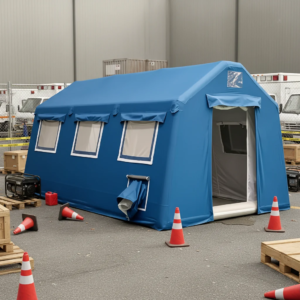
Outdoor Waterproof Inflatable Tent for Camping Portable Air Camping Tent Shelter
Read more -
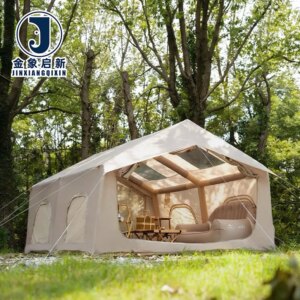
Inflatable Four-season Camping Tent-PVC Coated Waterproof Eco-Friendly Quick Inflation CE Certified ODM/OEM Accepted
Read more