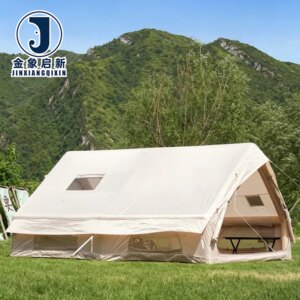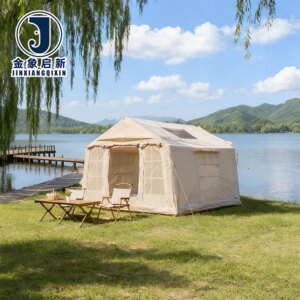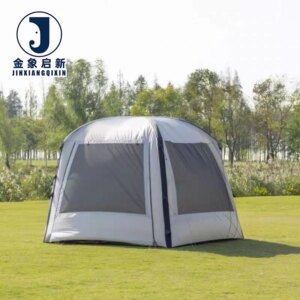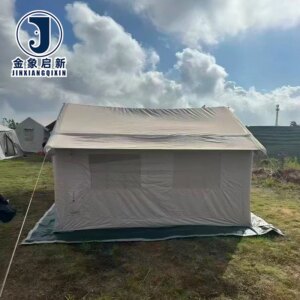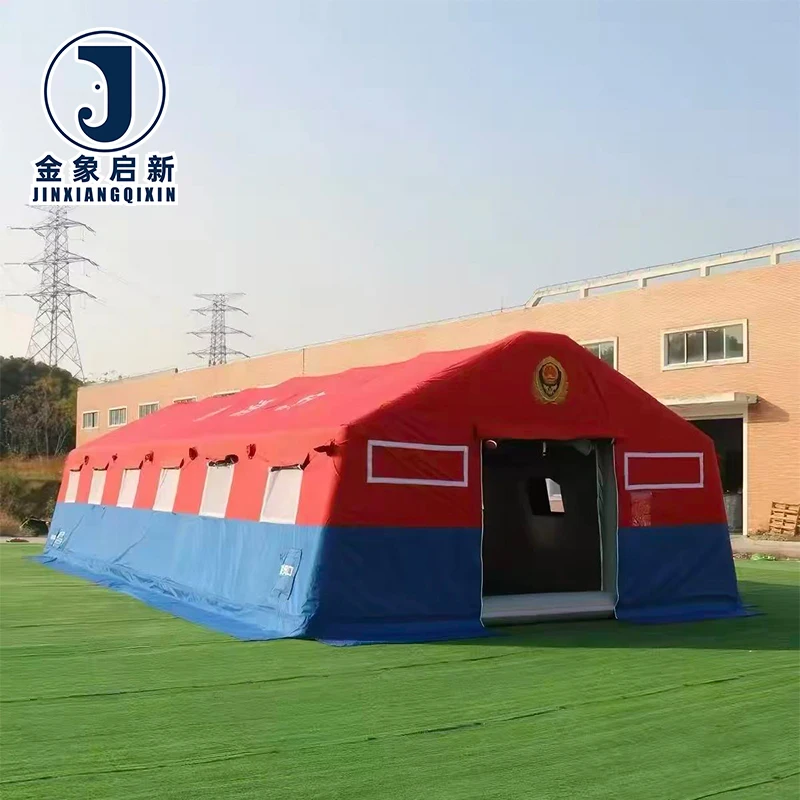
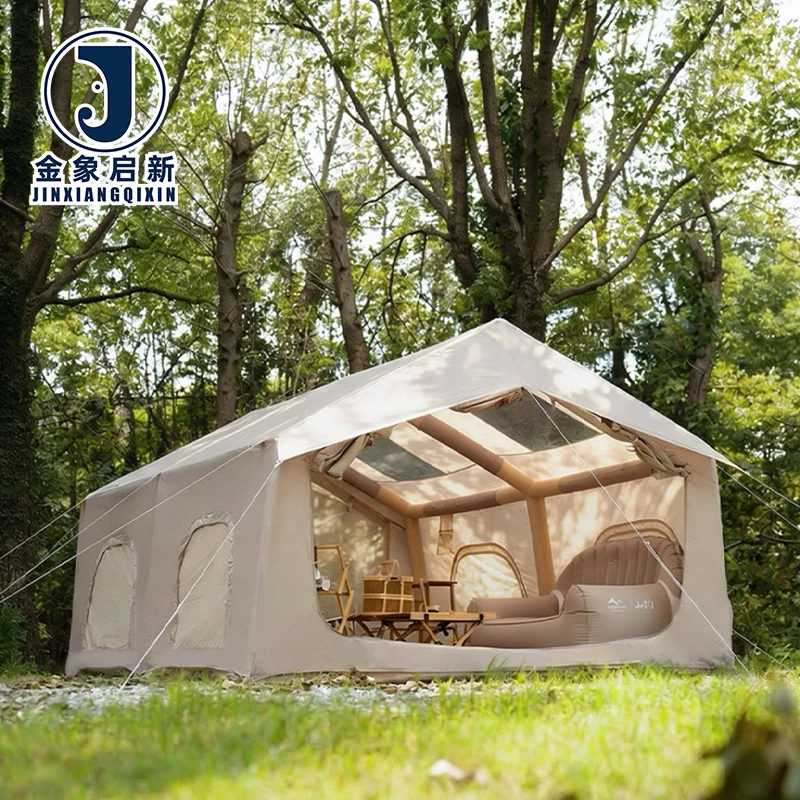
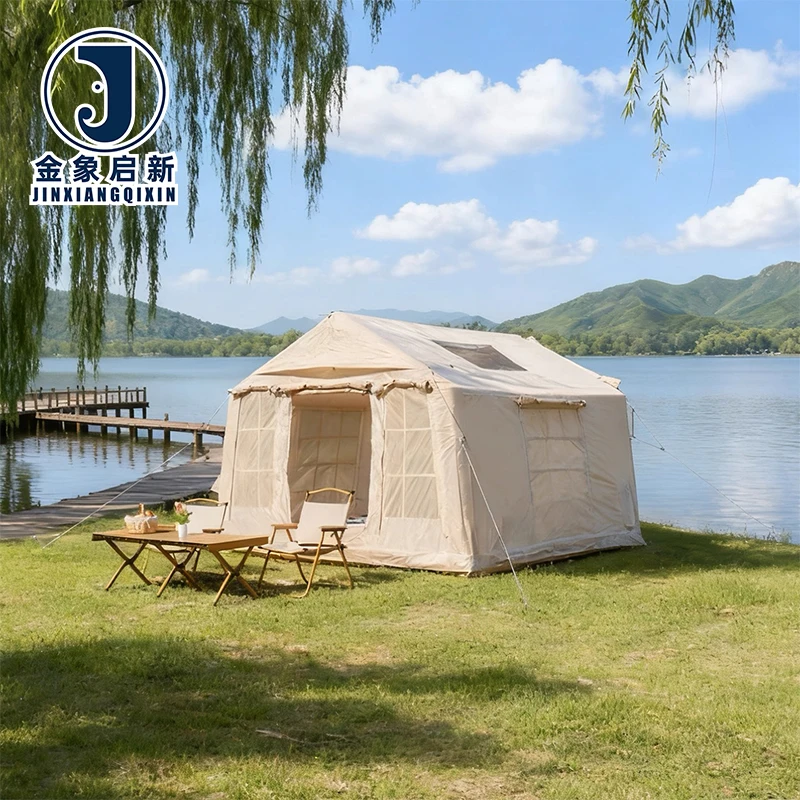
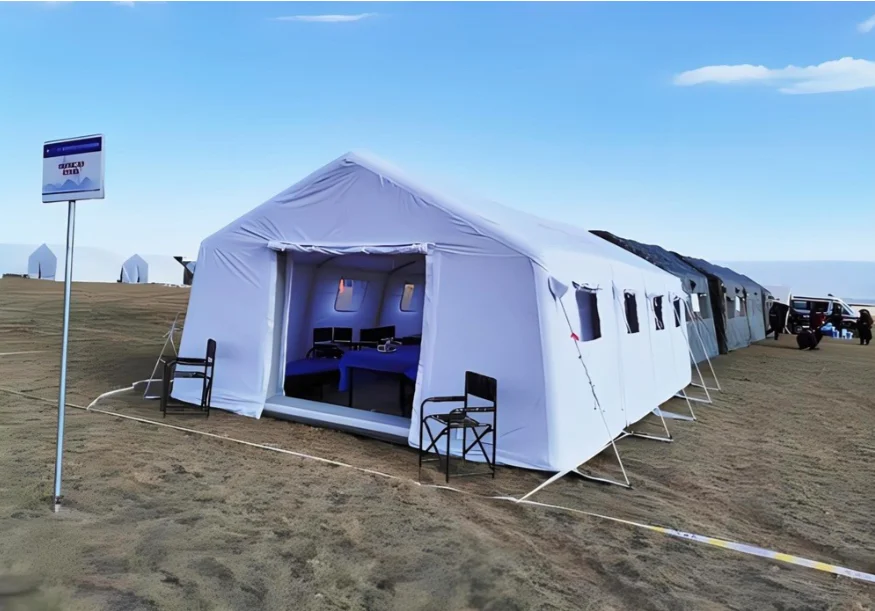
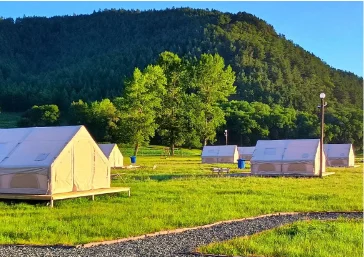
PVC Inflatable Tent — waterproof, UV-resistant, and tear-resistant inflatable structure with quick automatic opening system.
Engineered for glamping, commercial events, and construction shelters, this inflatable tent uses high-strength PVC tarpaulin fabric to deliver reliable four-season performance. The rapid deployment design reduces setup time while maintaining structural integrity under environmental stress.
Backed by 3 full production lines, 36 sets of processing equipment, and 100% pre-shipment inspection for batch consistency.
Description
Process-Controlled Coating — Every roll of PVC inflatable tent fabric passes through dedicated QA checkpoints where coating adhesion and weight are verified against specification before leaving our facility.
Technical Specifications
| Parameter | Value |
|---|---|
| Product Type | Inflatable Tent |
| Core Material | PVC Tarpaulin |
| Key Features | Waterproof, UV-resistant, Tear-resistant, Quick Automatic Opening |
| Product Forms | Inflatable structure with pump |
| Production Facility | 9,180 m² with 3 full production lines |
| Processing Equipment | 36 sets of professional equipment |
| R&D Capability | 10 technicians supporting OEM & ODM |
| Customization | Sample customization, pattern printing, size adjustments |
| Quality Control | Full-process inspection with dedicated QA & QC staff |
| Standards | ISO9001, ISO14001, ISO45001, CE |
Application Suitability
| Application | Exposure & Requirement |
|---|---|
| Commercial event venues | Frequent assembly and teardown, crowd contact, weather exposure, branding visibility |
| Outdoor exhibitions | Multi-day UV exposure, wind loading on inflated panels, foot traffic abrasion at base |
| Construction site shelters | Dust, debris impact, equipment proximity, temporary weather barrier demands |
| Glamping operations | Four-season temperature fluctuation, guest comfort expectations, repeated seasonal deployment |
| Temporary storage facilities | UV degradation risk, moisture ingress, structural stability under inflation pressure |
Why Batch Consistency Matters More Than Quoted GSM for Inflatable Structures
Uniform coating weight across every roll prevents weld failures and panel imbalance in pressurized tent structures.
When a buyer receives PVC inflatable tent fabric where coating thickness drifts between rolls, the thermal welding parameters that worked on roll one will under-bond or scorch on roll three. I once watched a Middle East client reject an entire shipment because the contract stated double-sided PVC coating at 650g, but incoming inspection showed 610g on average. The material was lighter than agreed, the seams opened under inflation pressure, and the whole batch came back for rework. [NEED_CITE: coating weight variance and heat-seal integrity in PVC tarpaulins]
The problem compounds with inflatable tent applications because every panel carries structural load. If one panel is lighter than its neighbor, the stiffer panel transfers stress to the weaker weld line. The seam fails before the fabric does — exactly where the structure flexes most under wind or internal pressure.
How Quick Automatic Opening Demands Reliable Fabric Behaviour
The inflatable tent market increasingly demands rapid deployment. A quick automatic opening system relies on consistent panel stiffness and predictable inflation characteristics. When the PVC inflatable tent aftermarket supplier delivers fabric with variable coating weight, the air channels fill unevenly — some panels stand firm while others lag, forcing operators to troubleshoot instead of deploying.
Our R&D team of 10 technicians develops samples within days, matching coating formulation to the specific inflation pressure and panel geometry of your tent design. This pre-production alignment eliminates surprises on the production floor and ensures the aftermarket supplier delivers material that performs identically from first roll to last.
Weld Integrity Under Repeated Inflation Cycles
Every time an inflatable tent is erected and deflated, the welded seams endure folding stress that the flat fabric never sees. The coating must bond to the base fabric strongly enough to survive thousands of flex cycles without delamination at the seam edge. [NEED_CITE: peel strength requirements for heat-welded PVC coated fabrics per ISO 1421]
I personally adjust thermal welding parameters whenever we shift coating batches, because even minor formulation differences change how the PVC surface responds to heat and pressure. The weld temperature, dwell time, and pressure must track the coating chemistry precisely. When these variables align, the welded joint outlasts the surrounding fabric through repeated seasonal use.
Coating Method and Its Practical Consequences for Inflatable Panels
PVC tarpaulin for inflatable structures typically uses knife-over-roll or calender coating methods, each producing different surface characteristics. Knife coating builds thicker, more uniform layers suited to heavy-duty inflatable panels that must hold shape under internal pressure. Calender coating produces thinner, more flexible sheets appropriate for lighter temporary shelters.
The base fabric denier and weave density interact with coating weight to determine the final tensile and tear behaviour. A high-denier polyester base with tight weave gives the coating a strong mechanical anchor, improving peel strength at welds. Surface finish — glossy or matte — affects both cleanability in commercial event settings and the adhesion of printed branding. Available in flame retardant grades — confirm the grade required for your market before specifying, as different regions mandate different fire classifications for temporary structures.
What Happens When Specification Gaps Reach the Field
When a buyer orders inflatable tent fabric without verifying that the quoted UV-resistant treatment has supporting test data, the material may chalk and embrittle after a single season of sun exposure. Panels that should last through multiple event cycles crack at stress concentrations — around air valve fittings and panel corners — forcing premature replacement.
Colour variation between rolls in the same order becomes painfully visible once panels are inflated side by side at an exhibition or glamping site. The client sees inconsistency before the structure even opens, eroding confidence in both the tent operator and the fabric source. [NEED_CITE: colour consistency standards for PVC coated fabric batches]
Thermal welds failing before the fabric itself is perhaps the most costly defect. The load concentrates at seam junctions where panels meet, and if welding parameters were not matched to the specific coating batch, the joint peels apart under inflation pressure — sometimes during the first erection, sometimes weeks later when wind loading peaks.
Why Source Inflatable Tent Fabric Through This Facility
Three full production lines and 36 sets of processing equipment provide the capacity to fulfil container-volume orders without sacrificing the process control that inflatable structures demand. Coating weight and adhesion are monitored at every stage, not just sampled at dispatch.
A 10-person R&D team handles material selection, custom sizing, pattern printing, and sample development specifically for inflatable applications — matching coating formulation to your inflation pressure requirements and panel geometry. Dedicated QA and QC staff conduct 100% inspection before shipment, catching coating inconsistencies that would otherwise surface as weld failures on your assembly floor.
Samples are developed within days for custom requirements, allowing you to validate material behaviour under your specific welding equipment and inflation systems before committing to full production. Full OEM and ODM capability covers size adjustments, colour matching, and printed branding aligned to your project timeline.
Documentation & Verification
- Material specification sheet stating base fabric type, coating method, and verified weight per roll
- Test reports for UV and flame retardant treatments where applicable to your market requirements
- ISO9001, ISO14001, ISO45001, and CE certificates confirming quality management compliance
- Pre-shipment inspection record documenting coating consistency across the full order
- Roll packing list with individual roll identification for traceability
- Certificate of origin and customs documentation supporting international shipment
Fabrication, Handling & Storage
- Heat-weld seams at temperatures matched to the specific PVC coating batch to prevent delamination at panel junctions
- Store rolls upright on pallets to avoid permanent creasing that weakens the coating at fold lines
- Allow cold-stored PVC tarpaulin to reach ambient temperature before unrolling to prevent surface cracking
- Use mild detergent and soft cloth for cleaning — abrasive cleaners damage the PVC coating surface finish
- Repair field punctures with compatible PVC adhesive patches, ensuring surface is clean and dry before application
- Plan panel cutting layout to minimize offcuts and reduce seam count in high-stress structural zones
What We Need From Your Inquiry
Provide your intended application environment, expected inflation pressure range, and the seasonal temperature extremes your inflatable tent will encounter. Let us know your target market’s fire safety or compliance requirements so we can match the correct treatment grade. Specify whether you need roll stock for your own fabrication line or finished panels with custom sizing, and indicate your annual volume to help us plan production scheduling.
Frequently Asked Questions
Q: What customization options are available for size, printing, and material thickness?
A: Our R&D team supports full OEM and ODM customization including panel dimensions matched to your inflatable frame design, pattern printing for branding or wayfinding, and coating weight selection aligned to your structural requirements. Samples are developed within days for approval before mass production begins.
Q: Which international certifications does the inflatable tent fabric hold?
A: The fabric is produced under ISO9001, ISO14001, and ISO45001 certified management systems with CE marking. Flame retardant treatments are available in various grades — specify the fire classification required by your destination market so we can provide the appropriate test documentation with your shipment.
Q: Can I request samples before placing bulk orders?
A: Yes. We develop samples within days for custom requirements, allowing you to test coating behaviour on your welding equipment and verify inflation performance. Sample approval is a standard step in our sales process before full production commences.
Q: How is batch-to-batch quality consistency ensured across rolls?
A: Dedicated QA and QC staff conduct full-process inspection with 100% pre-shipment checks. Coating weight is verified per roll against the stated specification, and welding parameters are adjusted when coating batches change to maintain seam integrity across your entire order.
Q: What documentation is provided with each shipment?
A: Each shipment includes a material specification sheet, test reports where applicable, pre-shipment inspection records, roll packing list, certificate of origin, and ISO and CE compliance certificates. All documentation references individual roll identification for full traceability.
Related products
-
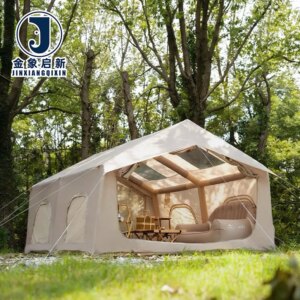
Camping Tent Inflatable UV Resistant Customizable Four-season Waterproof PVC Quick Automatic Opening 2-3 Person Outdoor
Read more -
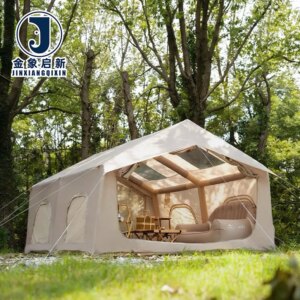
High Quality Four-Season Inflatable Tent for Camping Durable PVC Waterproof All-Weather Resistance Quick Automatic Opening
Read more -
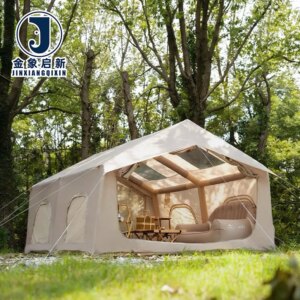
Inflatable Tent Family Size Four-Season Quick Automatic Opening Waterproof 2-8 Person Factory Direct Sale
Read more -
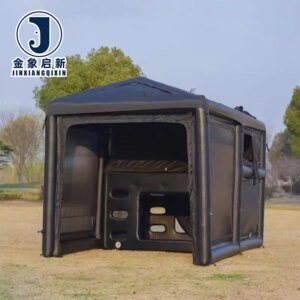
Premium Four-season Inflatable Tents for Camping Easy-to-Use Spacious Portable Waterproof Outdoor Tent Quick
Read more