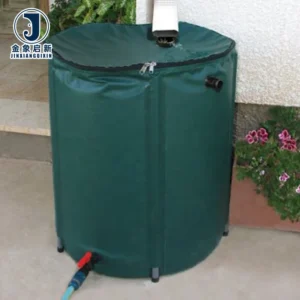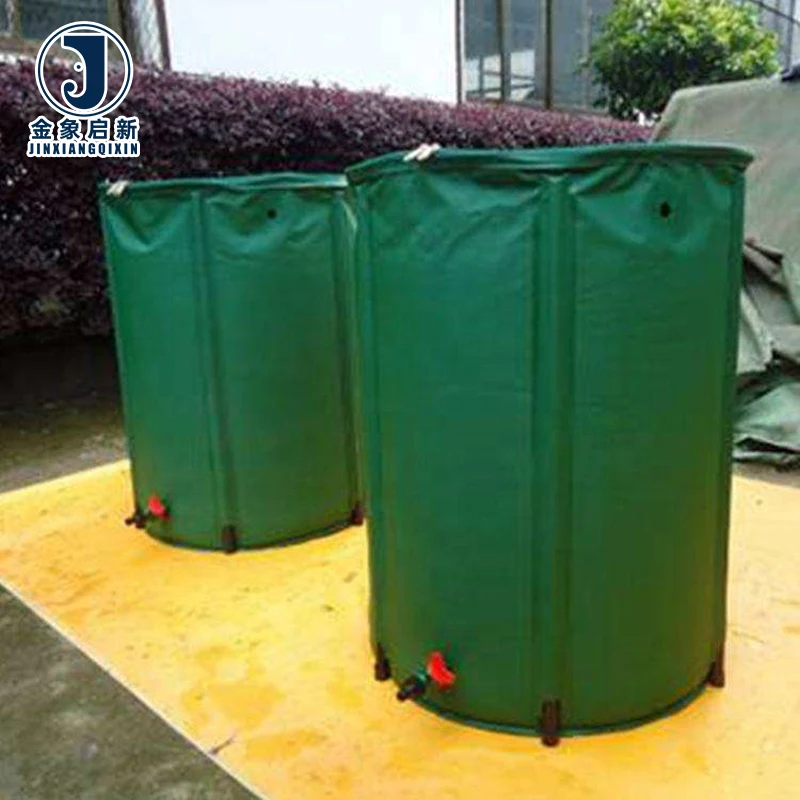
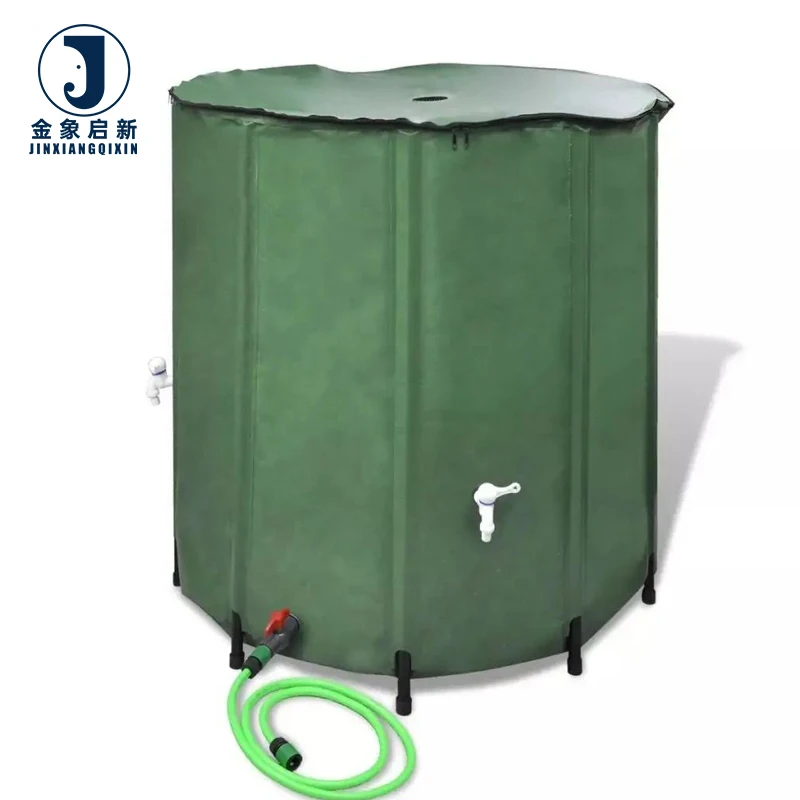
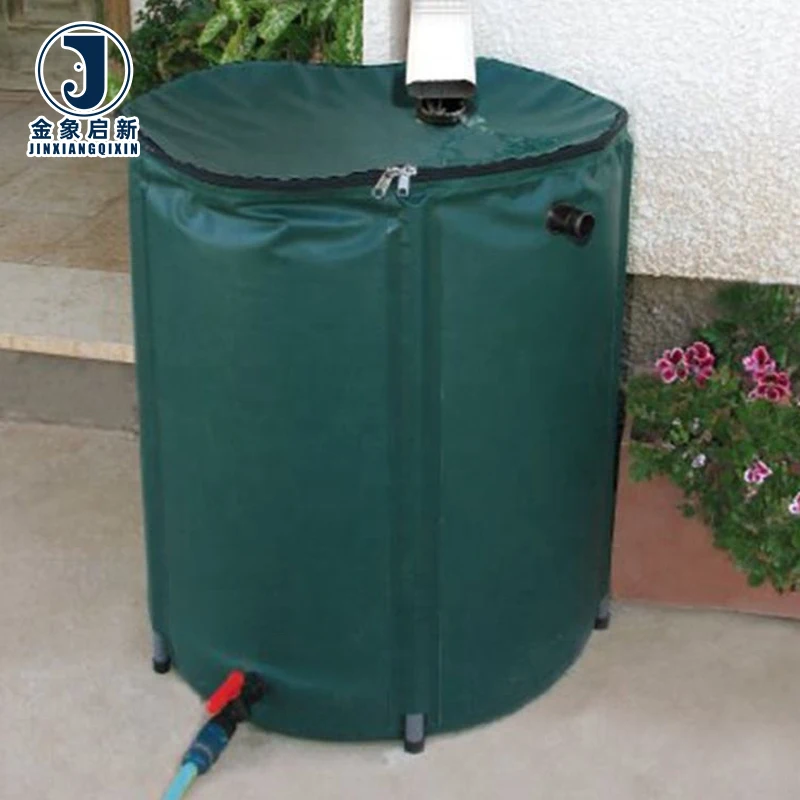
PVC Foldable Rain Water Storage Tank, 750L Capacity, Waterproof & UV-Resistant — flexible collapsible structure with mildew-proof PVC tarpaulin fabric for reliable liquid containment.
- Heat-welded seams engineered to match fabric lifespan, preventing leaks at stress points during filling and transport
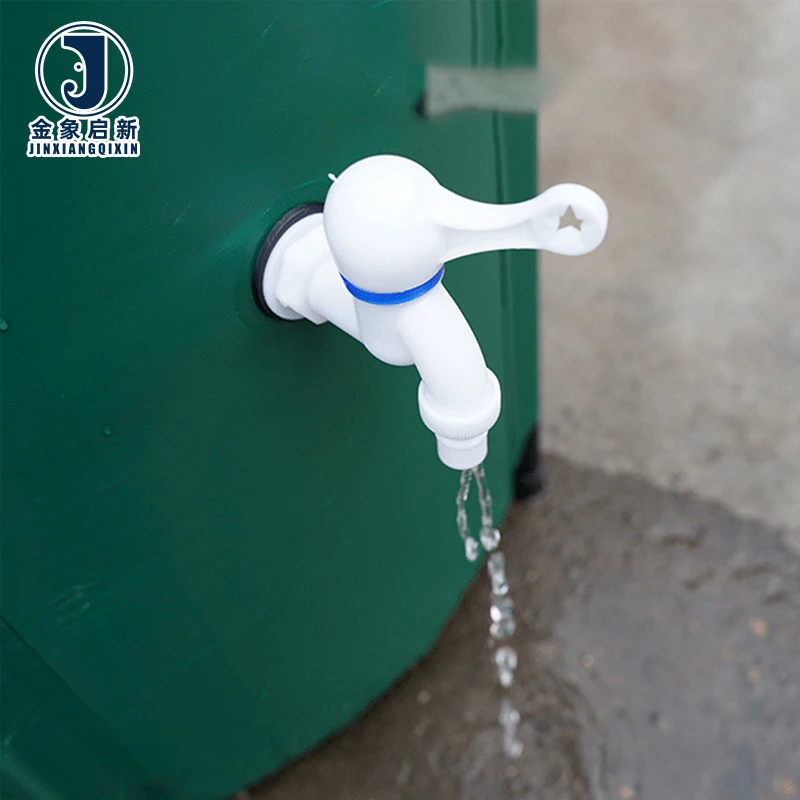
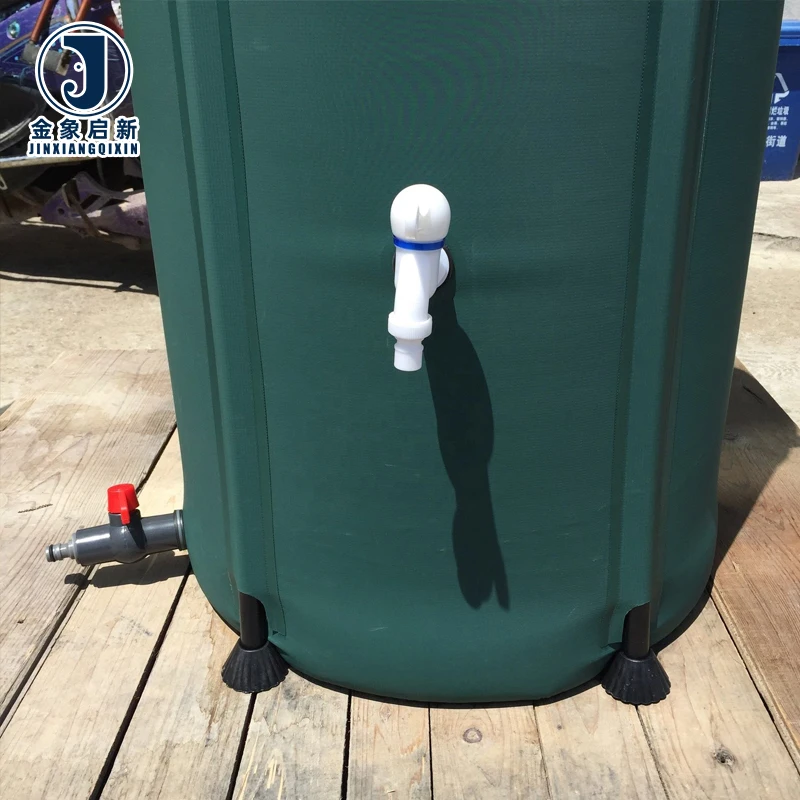
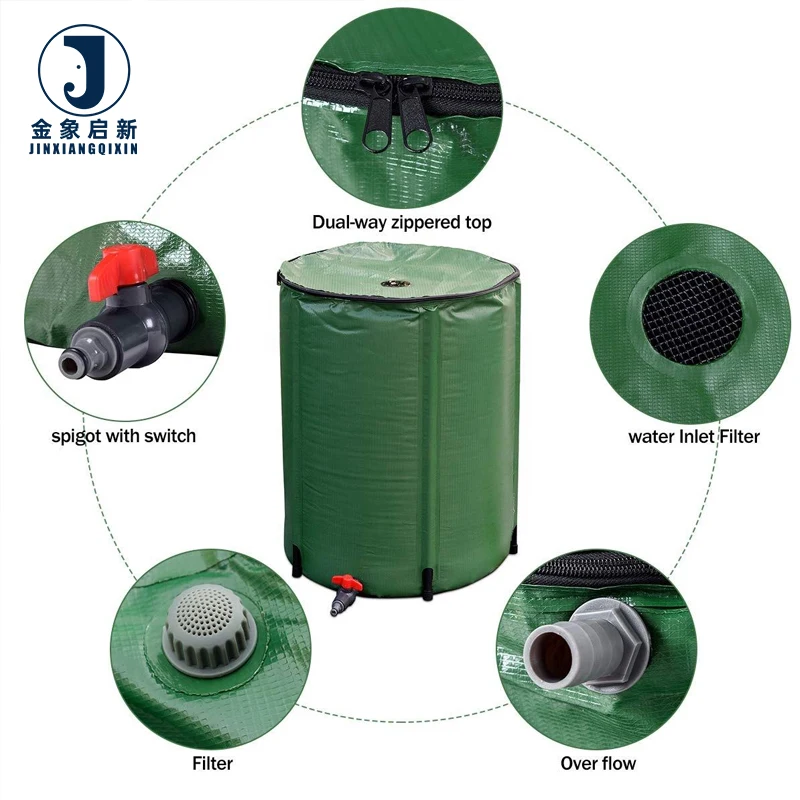
- Custom inlet, outlet and overflow port positions to suit your site piping layout
Supported by 30 years of coating process control and 100% pre-shipment leak inspection on every unit.
Description
Process-Controlled Coating — nearly 30 years focused on PVC coated fabric gives us repeatable control over coating weight and adhesion, which we apply to every collapsible water tank we weld in-house.
Technical Specifications
| Parameter | Value |
|---|---|
| Product Type | Water Storage Tank |
| Capacity | 750L |
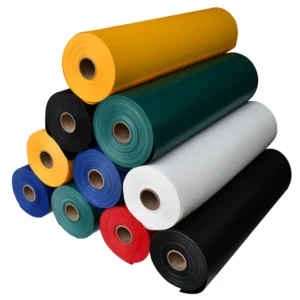
| Material | PVC Tarpaulin |
| Structure | Flexible Collapsible |
| Key Features | Waterproof, UV-Resistant, Mildew-Proof |
Application Suitability
| Application | Exposure & Requirement |
|---|---|
| Garden irrigation and rainwater harvesting | Continuous outdoor UV exposure, seasonal temperature swings, rooftop or ground-level placement |
| Agricultural and aquaculture water storage | Prolonged water contact, algae and mildew risk, farmyard chemical exposure |
| Construction and industrial site water supply | Rough terrain abrasion, forklift and boot traffic, dust and debris ingress |
| Emergency relief and portable water collection | Rapid deployment, frequent folding and unfolding, transport vibration |
Why Coated Fabric Water Tanks Crack at the Seams Before the Fabric Fails
A collapsible tank lives or dies at its welded seams, not across the main panel.
I have seen PVC tarpaulin water storage tanks come back with the fabric still intact but the weld lines split open at the corners where hydrostatic pressure concentrates. The problem is rarely the material itself. It is the heat welding parameters — temperature, dwell time, and pressure — not matched to the specific coating formulation and GSM of the fabric being used [NEED_CITE: tensile and tear test methods for coated fabrics per ISO 1421]. When a factory runs the same weld settings across different product families, the seams on a water tank become the weakest link under sustained water load. The PVC tarpaulin water storage tank aftermarket supplier who controls both coating and welding in one facility can align these variables rather than guessing at someone else’s material.
Matching Coating Formulation to Water Contact Duty
Not every PVC coated fabric is formulated for prolonged water immersion. The plasticiser system, the base fabric weave density, and the coating adhesion method all behave differently when submerged for weeks or months. For a collapsible rainwater tank, the inner surface must resist mildew colonisation and plasticiser migration into stored water, while the outer surface needs to handle UV exposure and physical abrasion from ground contact. We select the coating grade and base fabric construction based on whether the tank will sit permanently filled or cycle through fill-and-drain use, because these two duty profiles stress the material in fundamentally different ways.
Weld Geometry and Hydrostatic Load Paths
A 750-litre flexible tank exerts significant outward pressure at its base and corners when full. The weld pattern must account for this load distribution. Straight lap welds along the base panel carry the full hydrostatic head, while corner junctions experience multi-directional peel forces that standard linear welding does not address. Our production team adjusts weld overlap width and reinforces high-stress junctions based on the tank’s filled dimensions, not just its empty pattern. This is where in-house coating control matters — knowing exactly how the PVC layer flows and fuses at a given temperature lets us set weld parameters that match the actual material on the line [NEED_CITE: PVC coating heat welding parameters for industrial fabric applications].
Reading Beyond the Label on PVC Tarpaulin Water Storage Tanks
Capacity, waterproofing, and UV resistance are stated on nearly every product listing, but the construction details determine whether those claims hold after a season outdoors. The base fabric denier and weave density set the structural backbone — a loosely woven scrim will allow the coating to crack under flex fatigue even if the PVC layer itself is thick. The coating method, whether knife-over-roll, dip, or calender, determines peel strength between fabric and coating, which directly affects how well the material resists delamination when folded repeatedly. UV-resistant and mildew-proof treatments are chemical additives in the coating compound, and their effectiveness depends on the dosage and dispersion quality during production, not just their presence on a data sheet. A PVC tarpaulin water storage tank aftermarket supplier who can show the coating weight per side and the base fabric construction gives you the information needed to evaluate long-term performance.
What Happens When Material Spec and Weld Spec Drift Apart
The most common failure pattern we encounter in collapsible water tanks is seam separation at the inlet and outlet port flanges. These penetrations create local stress concentrations that demand precise weld control. If the coating batch varies in plasticiser content — even within tolerance — the weld temperature that produced a strong seam on last week’s roll may under-fuse or burn through on this week’s material [NEED_CITE: coating batch consistency and its effect on heat weld integrity]. Without in-process QA checking weld peel strength against each new roll, the tank ships with an invisible defect that only reveals itself under water pressure at the installation site.
Why Production Control Matters for Your Next Tank Order
Our three full production lines and dedicated equipment sets allow us to run coating and welding under one roof, eliminating the variable of sourcing fabric from one supplier and welding at another. The ten-person R&D team develops tank patterns and port layouts matched to your site piping and fill method, not generic cut sheets. Every tank undergoes 100 percent pre-shipment inspection including weld seam review and leak verification before packing. Custom capacities, port positions, and colour requirements are sampled within days so you can confirm fit and function before production begins. This level of process integration is what separates a PVC tarpaulin water storage tank aftermarket supplier with real fabrication capability from a trading desk forwarding orders to third-party workshops.
Documentation & Verification
- Material specification sheet stating base fabric denier, coating weight per side, and total GSM
- UV-resistant and mildew-proof additive confirmation with treatment reference
- Pre-shipment inspection record covering weld seam integrity and leak test result
- Capacity verification showing filled dimensions against the stated 750L volume
- Certificate of origin and customs documentation for cross-border shipment
Fabrication, Handling & Storage
- Heat weld parameters set per roll to match the specific PVC coating formulation and GSM
- Inlet and outlet flange welds reinforced to handle local hydrostatic stress concentrations
- Empty tanks folded along marked crease lines to avoid random crease damage to the coating
- Store in shaded, dry conditions away from direct sunlight when not deployed
- Clean outer surface with mild detergent only — solvent-based cleaners attack PVC plasticiser
- Field repair of minor punctures using compatible PVC patch and adhesive from the same coating family
Getting the Right Specification for Your Project
Tell us the installation environment — indoor or outdoor, ground type, expected fill cycle, and any chemical exposure from collected runoff. Specify port type and position requirements so the tank interfaces directly with your existing pipework. If your market requires specific material certifications for water contact or fire classification, flag those early so we select the appropriate coating grade and prepare matching test documentation.
Frequently Asked Questions
Q: Can the tank capacity and shape be customised to fit a specific installation footprint?
A: Yes. We develop the pattern based on your available space and required volume. Length, width, height ratio, and port layout are all adjustable. A sample is produced first so you can confirm the filled dimensions and connection positions before the full order runs.
Q: How is the correct PVC tarpaulin grade chosen for water storage duty?
A: We match the base fabric weight, coating thickness, and additive package to the exposure conditions — permanent outdoor UV, fold-and-store seasonal use, or indoor industrial service. The coating formulation and GSM are selected together, not independently, because they interact under sustained water load.
Q: Which fails first in a collapsible water tank — the welded seams or the fabric?
A: In most field failures we have investigated, the weld lines give way before the main fabric panel. This is why we control welding parameters per material batch and inspect every seam before shipment, rather than treating welding as a fixed process step.
Q: Is brand printing or custom colour available on the tank outer surface?
A: Custom colours and printed branding are available. The outer PVC coating surface accepts pattern printing, and colour matching is confirmed via sample before production. Colour consistency across multiple tanks in the same order is controlled through batch-level coating formulation.
Q: What testing is done before the tank ships?
A: Each tank undergoes pre-shipment inspection including visual weld seam review and leak verification. The inspection record travels with the shipment so you have documented proof of condition at point of dispatch, rather than relying on batch-level sampling.
Related products
-
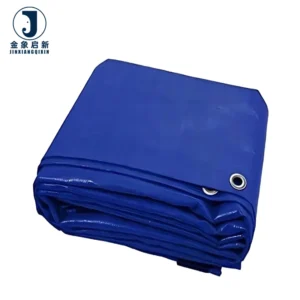
PVC Tarpaulin 650 Gsm 630 Gsm for Truck Cover – Custom Made
Read more -
Portable 220V Axial Flow Exhaust Fan Ball Bearing Small Electric Blower for Tight Space Ventilation Cast Iron ODM Available
¥67.00 Select options This product has multiple variants. The options may be chosen on the product page -
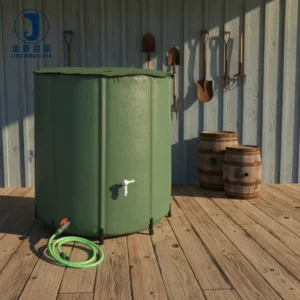
Foldable Waterproof PVC Rain Collecting Barrel Garden Use Rain Water Tank Collapsible Water Storage
¥21.25 Add to cart -
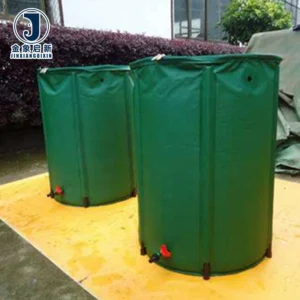
Garden Flexible 750L PVC Waterproof Fabric Rain Tank Irrigation Rainwater Harvesting Industrial Fabric Large Water Storage Tank
¥15.70 Add to cart