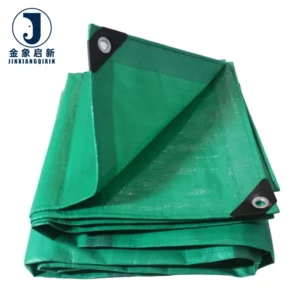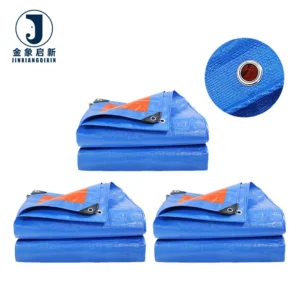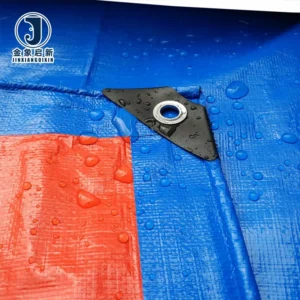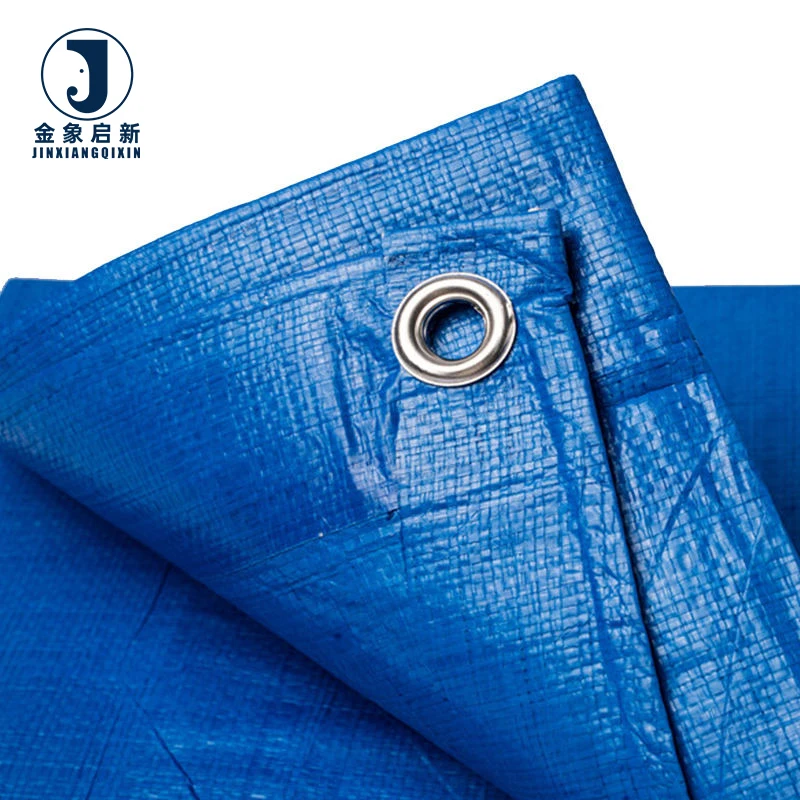
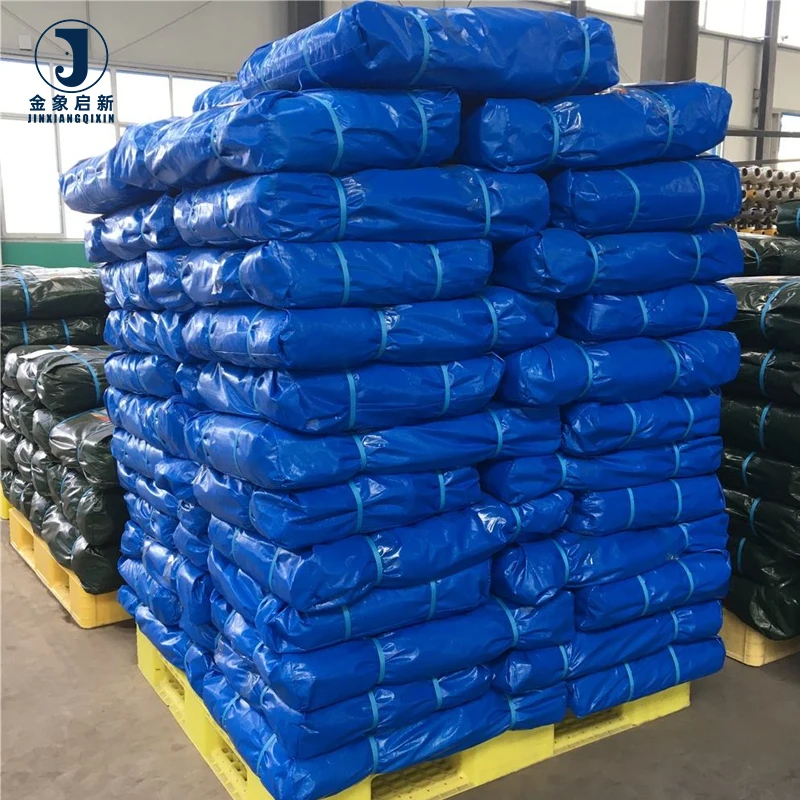
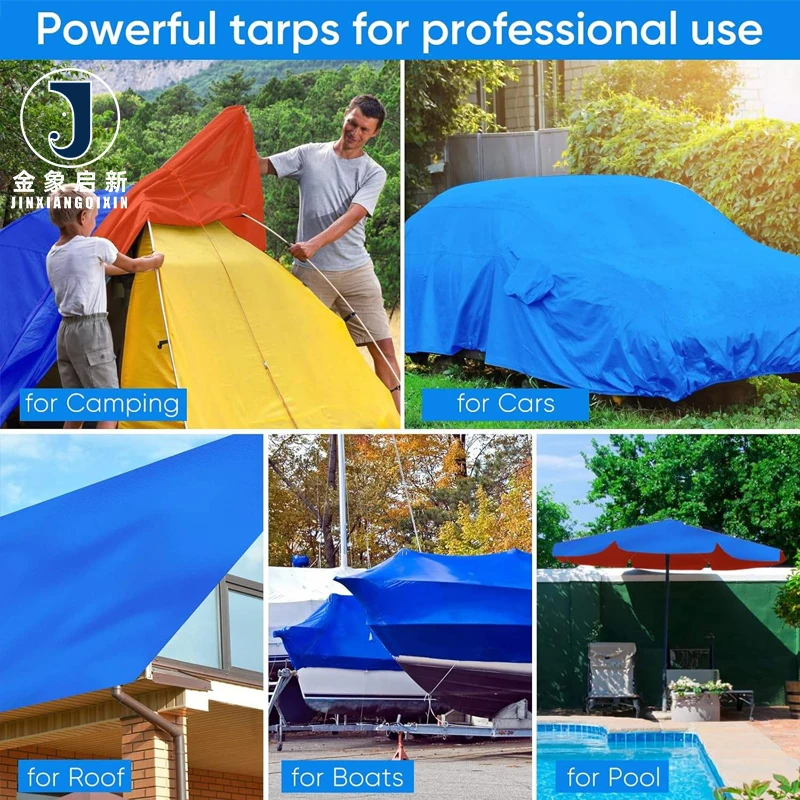
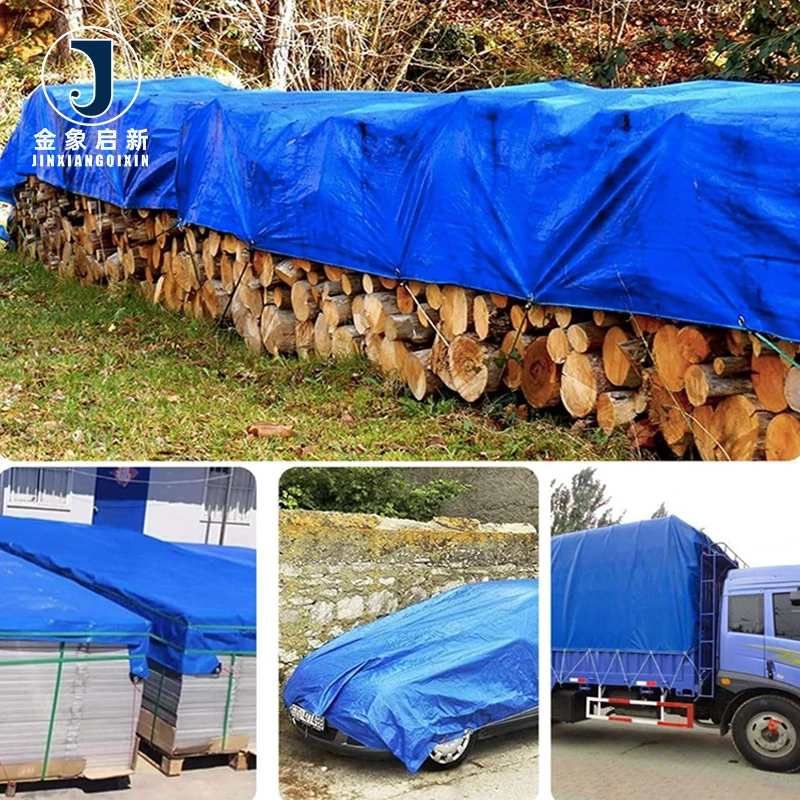
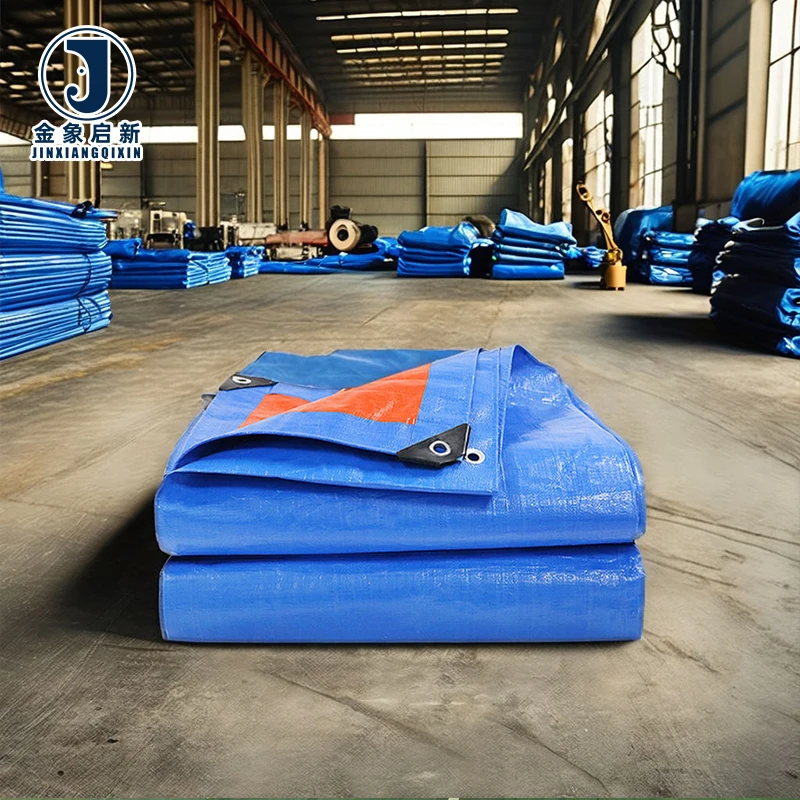
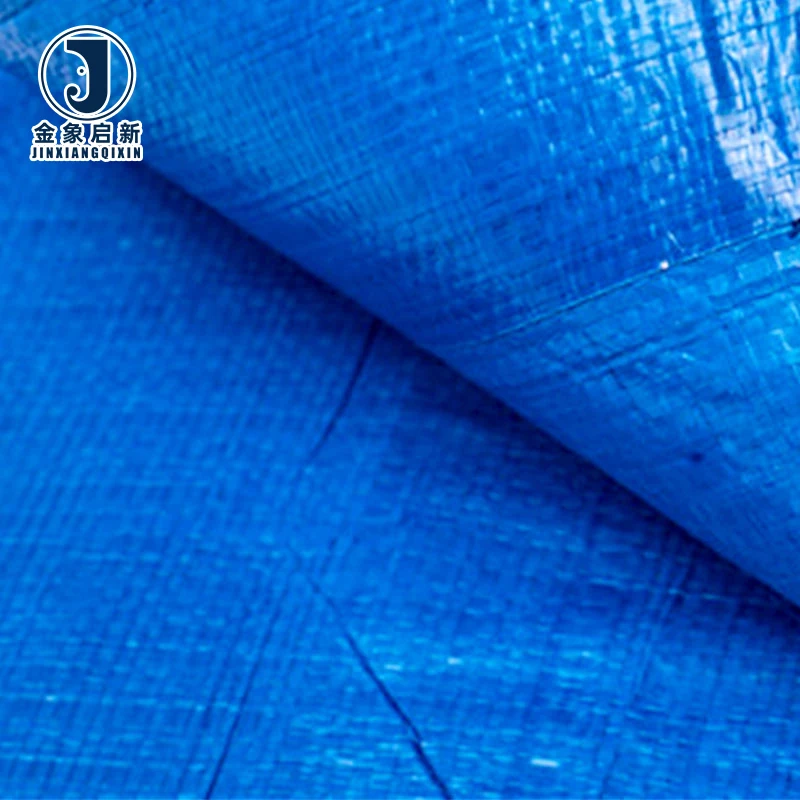
Waterproof Coated Polyethylene Tarpaulin Sheets, 40-500 g/m², 8×8 to 12×12 Knitting Density — double waterproof coated with reinforced corners and rustproof grommets at 39.4-inch spacing, UV resistant and mildew proof for agricultural, transport, and tent applications.
- Weight range from 40 to 500 g/m² paired with knitting density selection ensures the right tensile balance for each application, from lightweight greenhouse covers to heavy-duty truck tarps.
- Custom width, length, color, and printed branding available with roll-to-roll batch consistency.
- 100% pre-shipment inspection with material specification sheet and ISO/CE documentation included.
Description
Deep process control over coating weight and adhesion — every roll of PE Tarpaulin custom manufacturer output is verified against the approved specification sheet before dispatch, ensuring the GSM you ordered is the GSM you receive.
Technical Specifications
| Parameter | Value |
|---|---|
| Product Type | PE Tarpaulin |
| Material | Polyethylene |
| Weight (GSM) | 80-110 (lightweight), 120-150 (medium), 160-240 (heavy-duty) |
| Total Thickness | 0.18-0.22 mm (lightweight), 0.22-0.28 mm (medium), 0.30-0.35 mm (heavy-duty) |
| Mesh Count | 8×8 (lightweight), 10×10 (medium), 12×12 (heavy-duty) |
| Tensile Strength (N/5cm) | Meridian 300-500 / Latitude 250-450 (lightweight); Meridian 500-800 / Latitude 400-700 (medium); Meridian 900-1200 / Latitude 700-1000 (heavy-duty) |
| Coating | Polyethylene, double waterproof surfaces |
| UV Treatment | UV treatment available (test basis not stated) |
| Anti-Mildew | Mildew proof (test basis not stated) |
| Eyelet & Hem | Reinforced rustproof grommets, reinforced corners; center-to-center spacing 39.4 inches |
| Size | Custom size |
| Color | Custom color |
| Certification | ISO, CE |
Application Suitability
| Application | Exposure & Requirement |
|---|---|
| Agricultural and greenhouse covering | Continuous UV and moisture exposure, lightweight flexibility for seasonal deployment, mildew resistance in humid greenhouse environments |
| Warehouse and stockpile coverage | Abrasion from stacked goods, wind uplift on large flat surfaces, repeated handling and repositioning |
| Truck and trailer tarpaulin | Road vibration and flexing at tie-down points, weather exposure during transit, abrasion against load edges |
| Construction site equipment covers | Puncture risk from sharp machinery edges, prolonged outdoor weathering, dust and debris ingress prevention |
| Outdoor canopy tents and event shelters | Frequent assembly and disassembly, UV and rain exposure, moderate wind loading on frame structures |
Why the Tarpaulin You Receive Rarely Matches the Quotation
Material specification verification at every production stage eliminates the GSM shortfall that causes most field failures.
Buyers routinely specify a GSM based on structural requirements, only to find the delivered rolls measurably lighter when weighed on arrival. This shortfall compounds across an entire container — a PE Tarpaulin custom manufacturer order quoted at heavy-duty grade may arrive with tensile capacity below what the load demands, leading to tear-outs at stress points within the first weeks of service [NEED_CITE: tensile and tear test methods for coated fabrics per ISO 1421]. The root cause is often a gap between the coating weight applied on the production line and the value stated on the quotation.
Defining the Weight Tiers That Actually Matter
The PE Tarpaulin custom manufacturer catalogue spans three clearly separated weight tiers, each defined by GSM, mesh count, and measured tensile strength rather than a vague "standard" or "premium" label. Lightweight grades at 80-110 GSM with 8×8 mesh serve agricultural and temporary covering roles where handling ease outweighs structural demand. Medium grades at 120-150 GSM with 10×10 mesh bridge into transport and warehouse applications where moderate abrasion resistance is required. Heavy-duty grades at 160-240 GSM with 12×12 mesh address construction and industrial equipment protection where puncture and tear resistance govern service life.
How Grommet and Hem Construction Determines Tie-Down Survival
Reinforced rustproof grommets set at 39.4-inch center-to-center spacing distribute tie-down loads across a wider fabric area, reducing the point stress that pulls standard grommets through the hem. Reinforced corners add a secondary load path at the four highest-stress locations on any flat cover. When a truck tarpaulin flexes under road vibration or a construction site cover catches wind uplift, the grommet-to-fabric interface is where failure begins [NEED_CITE: tie-down load distribution across reinforced hem constructions]. Double waterproof surfaces with mildew proof treatment extend the functional life of the fabric between these critical attachment points.
Reading the Specification Sheet Beyond GSM
GSM alone does not predict how a polyethylene tarpaulin will perform under load. Mesh count — the number of warp and weft yarns per unit area — determines the base fabric’s contribution to tear propagation resistance. A 12×12 mesh at 200 GSM will resist tear spread differently than a 10×10 mesh at the same weight because the yarn density changes how force distributes across the weave when a puncture initiates. Coating thickness, measured here from 0.18 to 0.35 mm across the weight range, governs surface abrasion resistance and the fabric’s ability to shed water under sustained rainfall. Tensile strength values — ranging from Meridian 300 N/5cm in lightweight grades to 1200 N/5cm in heavy-duty — must be read alongside mesh count to understand whether the strength comes from the base fabric or the coating layer.
The Cost of Specifying on GSM Alone
When a buyer selects a tarpaulin grade based only on weight per square metre, the mesh count and coating method remain uncontrolled variables. A medium-duty cover specified at 140 GSM but woven on an 8×8 mesh will exhibit lower tear resistance than the same weight on a 10×10 mesh, because fewer yarns carry the load when a cut propagates. Similarly, grommets punched through an unreinforced hem will pull free under wind loading long before the fabric body reaches its rated tensile limit [NEED_CITE: hem reinforcement and grommet pull-through testing for coated fabrics]. Batch color variation between rolls in the same shipment becomes visible once installed side by side, triggering rework or rejection on finished structures.
Why Buyers Return for Repeat Orders
Three full production lines with 36 sets of professional equipment support bulk PE tarpaulin volumes with consistent on-time dispatch. A dedicated 10-person R&D team handles custom sizing, color matching, and sample development within days rather than weeks. QA/QC checkpoints at every coating and finishing stage catch GSM deviations, color drift, and grommet alignment issues before they reach the packing line. Samples are developed and shipped for buyer approval before bulk production begins, locking in the specification that governs the entire order. Pre-shipment inspection covers every roll, not a statistical sample.
Documentation & Verification
- Material specification sheet stating exact GSM, mesh count, and coating weight for each roll
- Pre-shipment inspection record with measured values against quoted tolerances
- Test reports for UV treatment grades where specified at inquiry stage
- ISO and CE certificates accompanying every international dispatch
- Roll packing list with individual roll weights and dimensions for receiving verification
- Certificate of origin and customs documentation for destination clearance
Fabrication, Handling & Storage
- Heat welding parameters must account for the specific polyethylene coating thickness across the 0.18-0.35 mm range to avoid burn-through or incomplete fusion
- Grommet installation at 39.4-inch spacing requires a consistent hem fold width to maintain load distribution at reinforced corners
- Rolls stored on edge prevent permanent creasing that weakens the polyethylene coating along fold lines
- Cold-weather unfolding should be gradual to prevent coating micro-cracking on heavy-duty grades at low temperatures
- Mild detergent cleaning preserves the double waterproof surface without degrading mildew proof treatment
What to Include in Your Inquiry
Specify the application environment — whether the cover faces continuous UV, road abrasion, or static warehouse storage — along with the required dimensions and annual volume. Indicate whether UV treatment or specific color matching is needed for your project, and confirm if finished cut sizes with grommets or roll stock is preferred. Request a sample if color consistency across multiple rolls is critical to your installation.
Frequently Asked Questions
Q: How is GSM verified to ensure the tarpaulin I receive matches the quoted specification?
A: Every roll undergoes weight measurement at the coating stage and again during pre-shipment inspection. The recorded GSM is logged against the material specification sheet accompanying your order, so you can cross-check on arrival. Any deviation outside the agreed tolerance triggers a hold before dispatch.
Q: What custom sizes, colors, and eyelet spacing options are available across the weight range?
A: Custom cut sizes are produced to your dimensions across all three weight tiers. Color matching is available per roll or per order, with batch consistency verified during inspection. Standard grommet spacing is 39.4 inches center-to-center, with alternative spacing available on request for specific tie-down configurations.
Q: How do you control batch color consistency across multiple rolls in the same order?
A: Color reference standards are locked at sample approval stage. During production, each roll is checked against the approved reference under controlled lighting. The pre-shipment inspection record documents color consistency across the full order, flagging any roll that deviates before packing.
Q: What is the minimum order quantity and lead time for custom width, color, or printed PE tarpaulin?
A: Minimums vary by the specific customization requested — custom color and width carry different thresholds than standard grades. Lead times depend on current production scheduling and the complexity of the specification. Submit your requirements for a quotation with confirmed minimum and timeline.
Q: What documentation accompanies each shipment?
A: Each dispatch includes a material specification sheet, pre-shipment inspection record, roll packing list, ISO and CE certificates, and certificate of origin. Test reports for UV or other treatments are included where applicable to your specification. Customs support documentation is provided for international shipments.
Related products
-
Heavy Duty Poly Tarps 5/10/12/16/20 Mil Waterproof Tarpaulin Cover 701 Fire Retardant Anti-UV and Windproof for Cars Tents
¥0.20 Select options This product has multiple variants. The options may be chosen on the product page -
JX Tear-Resistant PE Coated Polyethylene Eco-Friendly Tarpaulin Waterproof Blackout Organic with Eyelets
¥1.31 Select options This product has multiple variants. The options may be chosen on the product page -
Custom Made PE Tarpaulin with Eyelets – Waterproof Tear-Resistant
Read more -
Heavy Duty Organic Breathable PVC Coated Weft Tarpaulin 400gsm Waterproof UV Resistant for Trucks Buildings Agriculture Boys
¥0.87 Select options This product has multiple variants. The options may be chosen on the product page