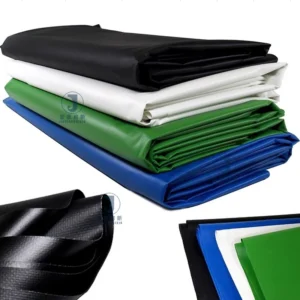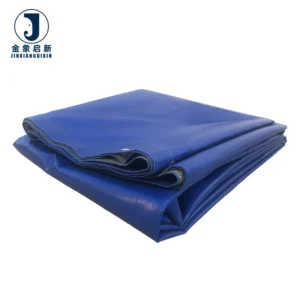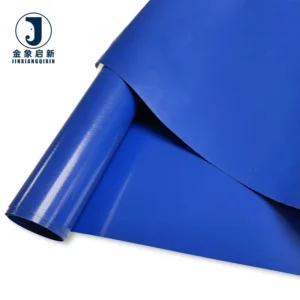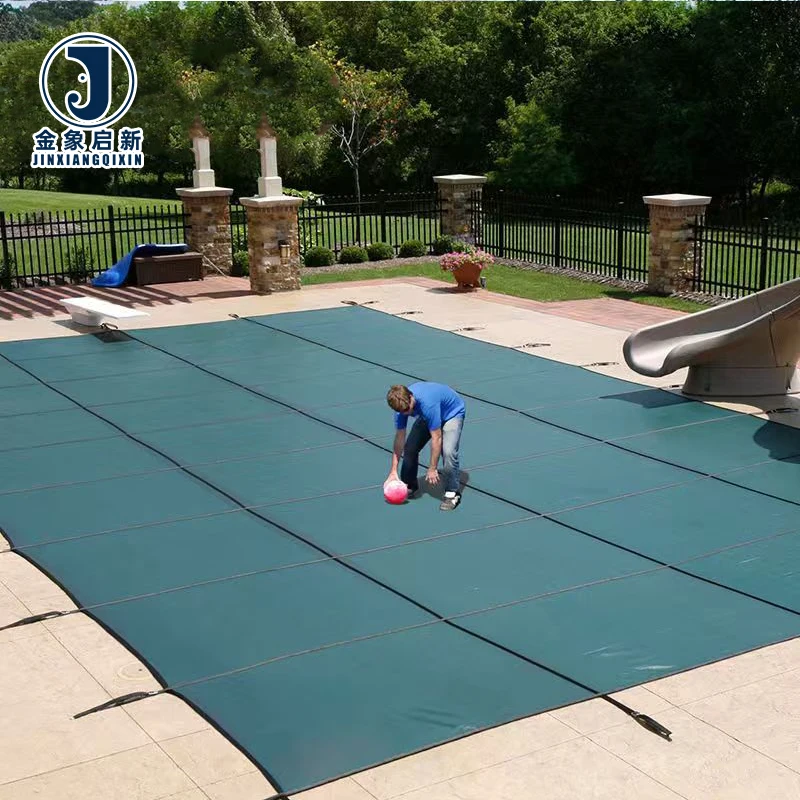
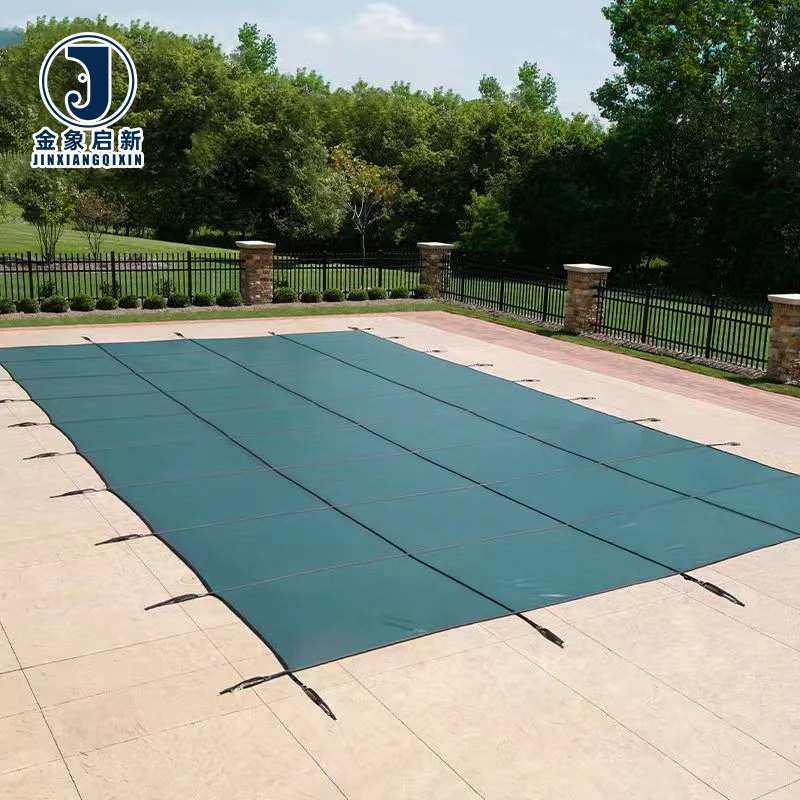
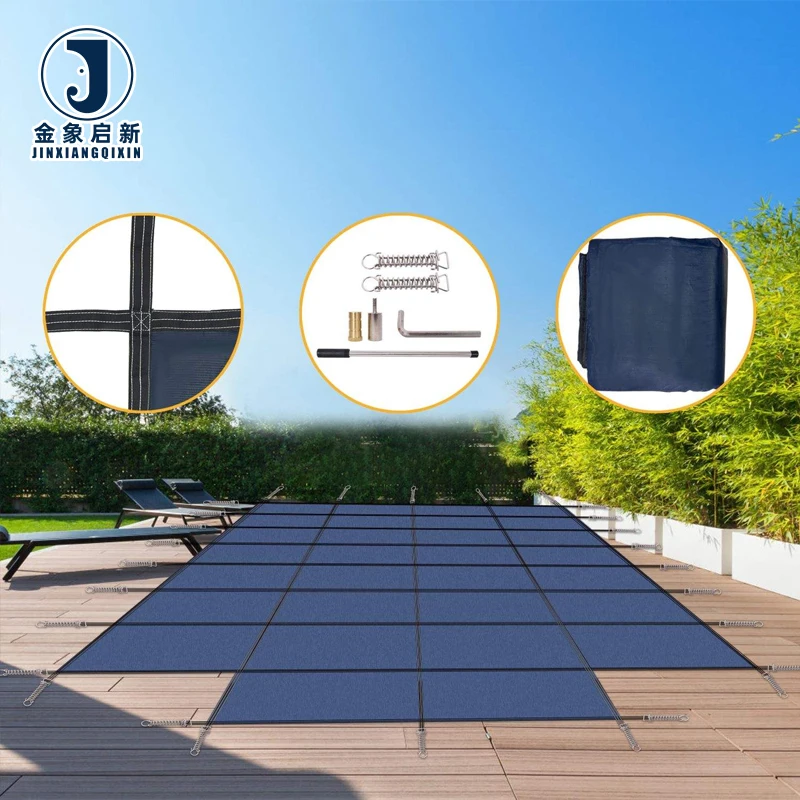
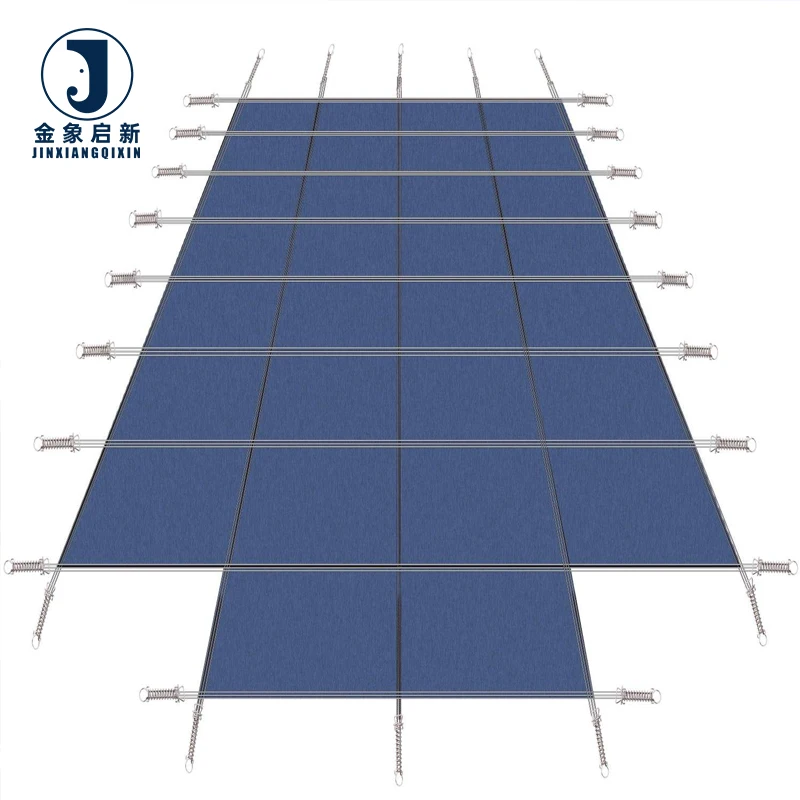
PVC Coated Tarpaulin Roll for Swimming Pool — HDPE weaving with LDPE lamination, 50gr/m2 ~ 220gr/m2 GSM, 0.2-0.4mm thickness, waterproof and tear resistant.
- Full catalogue and custom angle: GSM and base fabric determine tensile and tear behaviour together — not higher weight alone. Coating adhesion controlled at every stage ensures reliable heat welding and long service under UV exposure.
- Colour, width and treatment customised per roll with batch consistency verified before dispatch.
- 10-person R&D team develops samples within days, with 100% pre-shipment inspection on every roll order.
Description
Deep Process Control — Coating weight and adhesion verified at every stage for PVC coated swimming pool cover fabric, ensuring the GSM on the quote matches the roll you receive.
Technical Specifications
| Parameter | Value |
|---|---|
| Product Type | PVC Coated Tarpaulin (Swimming Pool Cover Application) |
| Material Construction | HDPE weaving with LDPE lamination on both sides (source value — verify against manufacturer catalog) |
| Weight (GSM) | 50gr/m2 ~ 220gr/m2 available (range covers product family — confirm the grade for this item) |
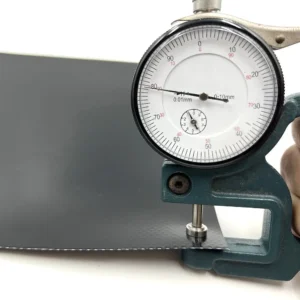
| Total Thickness | 0.2-0.4mm / 8 mil-16 mil / Custom |
| Color Options | Blue, Blue/Orange, Green, Grey, Black, Clear, Grey/Green, Orange, or custom color |
| Key Features | Waterproof, washable, tear resistant, weather proof, sunproof, mildew proof, anti-aging |
| UV Treatment | Available (test basis not stated — confirm requirement) |
| Flame Retardant Grade | Not stated (available in flame retardant grades — confirm the grade required for your market) |
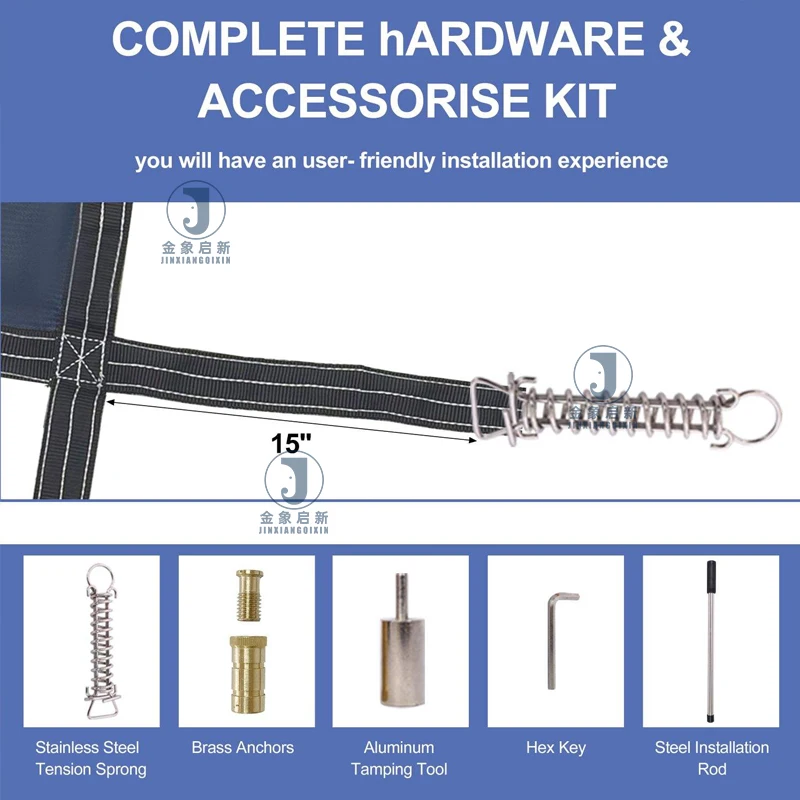
| Hardware Options | Brass Anchor, Triangular Hook, Ratchet System, Aluminium Poles |
| Operation Method | Manual or motorized winders; attached at six points using self-sinking stainless steel connections |
| Standards | ISO 9001, ISO 14001, ISO 45001, CE |
Application Suitability
| Application | Exposure & Requirement |
|---|---|
| Residential swimming pool safety cover | Continuous UV and weather exposure, chemical contact from pool treatment, debris load, tension from ratchet systems |
| Commercial pool cover | High-frequency deployment and retraction, motorized winder stress, public safety compliance, extended seasonal outdoor storage |
| Deck-mounted pool protection | Abrasion against concrete or composite decking surfaces, standing water drainage, wind uplift resistance |
| Pool cover distributor stock | Roll-to-roll batch consistency, colour matching across shipments, reliable GSM for inventory classification |
Why Stated GSM Does Not Guarantee Cover Performance on Arrival
A quoted GSM means nothing if the coating weight is not verified against the base fabric before the roll ships.
Buyers sourcing a PVC Coated Swimming Pool Cover manufacturer often discover that the fabric weight on arrival is lighter than the specification sheet indicated. The coating layer may be thinner than required, or the base weave may have a lower denier count than agreed, leaving the cover vulnerable to tearing under ratchet tension [NEED_CITE: tensile and tear test methods for coated fabrics per ISO 1421]. When a pool cover fails mid-season, the cost is not just the replacement fabric — it is the site visit, the client complaint, and the reputational damage with the pool operator.
How the Complete Cover System Works Together
Selecting the right PVC coated swimming pool cover fabric is only the first step in building a reliable pool protection system. The material must integrate with the hardware — brass anchors, triangular hooks, ratchet systems, and aluminium poles — to distribute load evenly across the cover surface. A fabric that performs well in isolation can still fail if the attachment points concentrate stress at the hem, particularly where the cover meets the deck edge and flexes during wind events.
Colour Consistency Across the Full Order
When a distributor or contractor orders multiple rolls for a series of pool installations, visible colour variation between rolls creates an immediate quality concern once covers are deployed side by side at the same site. Dedicated QA control at every production stage ensures that the colour reference specified at the sampling phase is maintained through the full production run. This matters especially for commercial pool projects where the client expects uniform appearance across all covers installed in the same facility [NEED_CITE: colour fastness testing standards for coated outdoor fabrics].
Reading the Specification Sheet Beyond GSM
The GSM range of 50gr/m2 to 220gr/m2 spans from lightweight seasonal covers to heavier-grade safety covers designed for year-round deployment. However, weight alone does not define performance. The HDPE weaving base provides the structural skeleton, and its denier count and mesh density determine how well the fabric resists tear propagation once a puncture starts. The LDPE lamination on both sides seals the weave and delivers waterproof performance, but the adhesion between lamination and base fabric governs whether the layers delaminate after repeated exposure to pool chemicals and UV radiation. Thickness values from 0.2mm to 0.4mm correlate with overall durability, yet a thicker cover with poor coating adhesion will underperform a thinner cover with strong layer bonding.
The Hidden Cost of Specifying on Price per Kilogram Alone
When buyers focus exclusively on cost per kilogram without verifying the relationship between base fabric density and coating weight, they often receive a material that meets the GSM target but achieves it through excessive coating on a weak base weave. This produces a cover that feels substantial on the roll but tears readily at the hem under ratchet load. Similarly, specifying UV treatment without requesting the test basis leaves the buyer unable to confirm whether the treatment level suits the actual solar exposure at the installation site [NEED_CITE: UV degradation test protocols for polymeric outdoor covers].
Why Buyers Source This Cover Fabric Here
Dedicated QA and QC checkpoints at every production stage mean the GSM stated on the quotation is the GSM verified on the roll before dispatch. A 10-person R&D team handles custom sizing, colour matching, and hardware integration — developing samples within days so buyers can validate fit and finish before committing to bulk. The three full production lines and 36 sets of professional equipment support volume orders with reliable on-time delivery, while 100% pre-shipment inspection with documented records gives buyers confidence that every roll meets the agreed specification. Nearly 30 years of focused coated fabric production provides the process depth needed to control coating weight and adhesion consistently across the PVC Coated Swimming Pool Cover manufacturer product range.
Documentation & Verification
- Material specification sheet stating exact GSM, base fabric construction, lamination type, and colour reference for every roll
- Pre-shipment inspection record documenting weight verification and visual check against order specification
- ISO 9001, ISO 14001, ISO 45001, and CE certificates available for compliance submission
- Test documentation for UV treatment grades where applicable, matched to the specific batch produced
- Roll packing list detailing quantity, dimensions, and net weight per roll for customs and receiving verification
Fabrication, Handling & Storage
- Heat-seal parameters must match the LDPE lamination thickness — confirm temperature and dwell time on the 0.2-0.4mm range before production
- Brass anchor and ratchet attachment points require reinforced hem folding to distribute load across the HDPE weave base
- Store rolls upright on hard paper tubes in a dry, shaded area to prevent surface lamination marking
- Allow rolled cover fabric to relax and flatten at ambient temperature before cutting to avoid dimensional inaccuracy
- Use only mild, non-solvent cleaners on the laminated surface to preserve the anti-aging treatment and colour integrity
- Plan cutting layout on the specified roll width to minimize offcuts and maximize yield for custom pool dimensions
What We Need to Quotation Your Cover Project
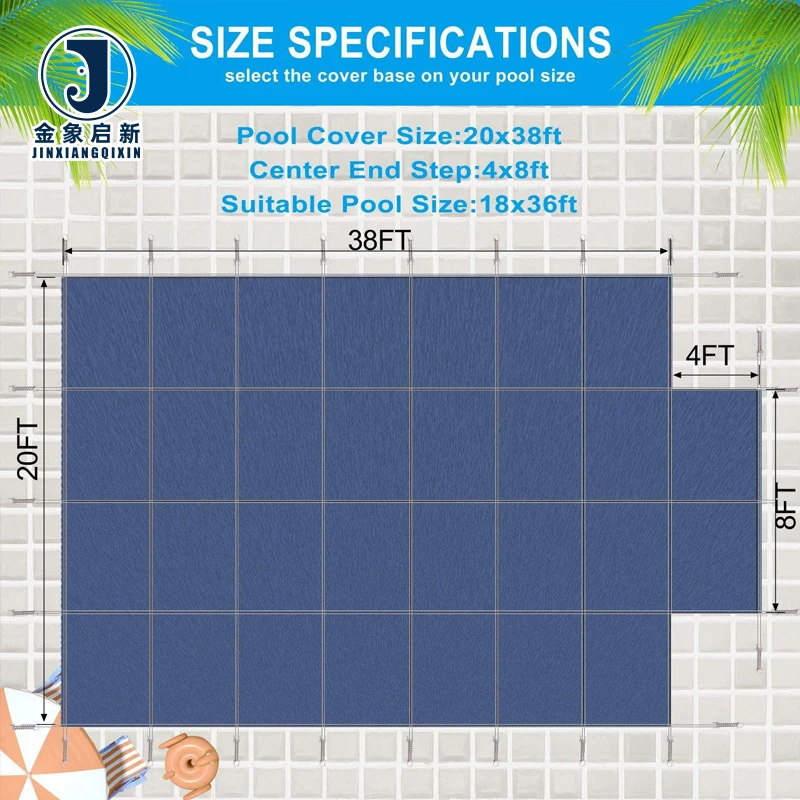
To provide an accurate specification and quotation, share the pool dimensions and cover deployment method — whether manual winder, motorized system, or fixed safety cover. Confirm the target GSM grade or performance requirement for your market, along with any UV treatment or flame retardant grade needed for local compliance. Specify colour preferences, roll width requirements, and whether you need finished cut-to-size covers with hardware or roll stock for your own fabrication.
Frequently Asked Questions
Q: How is GSM verified on arrival and what documentation accompanies each shipment?
A: Every roll undergoes weight verification against the stated GSM during 100% pre-shipment inspection. A material specification sheet listing GSM, base fabric, lamination type, and colour reference ships with the order, along with the inspection record and packing list for receiving confirmation.
Q: What UV treatment options are available and what test basis supports the claim?
A: UV treatment is available across the product range. The specific treatment level and test basis depend on the grade selected. Request the test documentation for the UV grade matched to your order to confirm suitability for your installation site’s solar exposure conditions.
Q: How do you control colour consistency across multiple rolls in the same order?
A: Dedicated QA control monitors colour at every production stage against the approved sample reference. Rolls from the same batch are inspected side by side before dispatch to ensure no visible variation occurs once covers are installed together at a single site.
Q: What custom sizing, colour, and hardware options are available, and what is the MOQ?
A: Custom dimensions, colour matching beyond the standard range, and hardware integration including brass anchors and ratchet systems are all available. The 10-person R&D team develops samples within days for approval before bulk. Contact us with your project specifics to confirm minimum quantities.
Q: How are rolls packed for container shipping to prevent transit damage?
A: Rolls are packed on hard paper tubes and wrapped in the same tarpaulin sheet material for surface protection. This packing method prevents crushing, creasing, and moisture ingress during ocean freight and handling at destination ports.
Related products
-
Best Quality 650gsm Waterproof Polyester Heavy Duty Bache Pvc Tarpaulin
¥0.53 Add to cart -
Custom Reinforced Edges Rip-Stop Rubberized PVC Tarpaulin Industry Covering Vinyl Coated Polyester Tarps for Trucks
¥8.00 Select options This product has multiple variants. The options may be chosen on the product page -
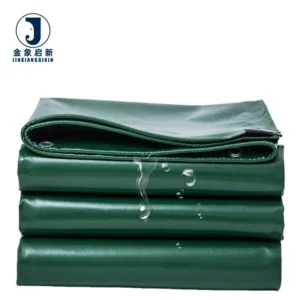
PVC Tarpaulin Industry Fabric PVC Tarpaulin 620gsm for Fish Pond Factory Swimming Pools Cover PE Tarpaulin
¥0.90 Select options This product has multiple variants. The options may be chosen on the product page -
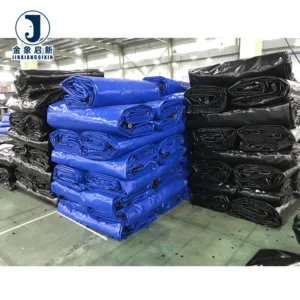
Wholesale 650 Gsm Waterproof Outdoor Tarp Roll Pvc Coated Industrial Tarpaulin Roll for Tent
¥1.26 Select options This product has multiple variants. The options may be chosen on the product page