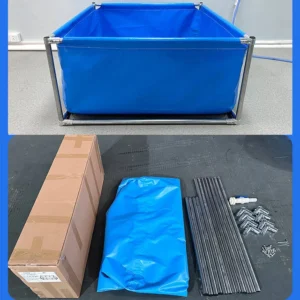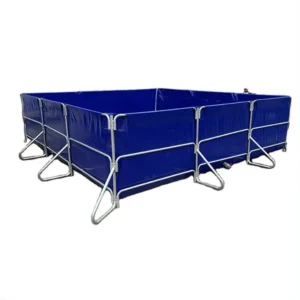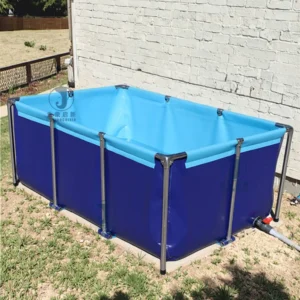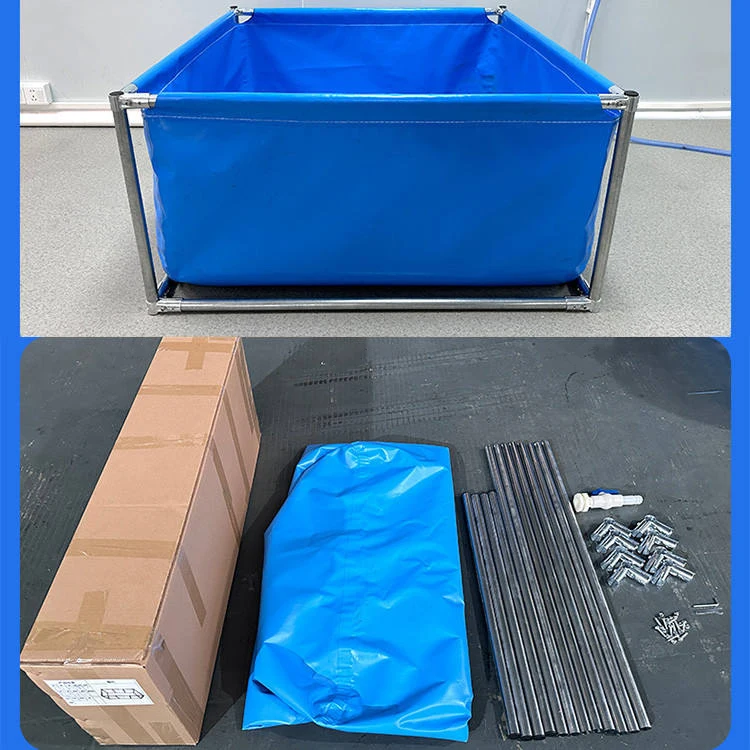
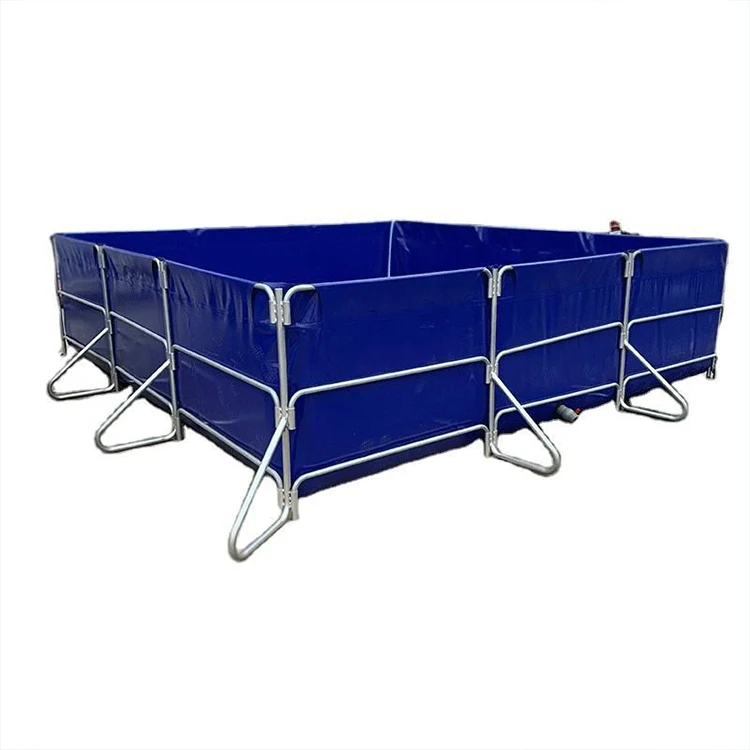
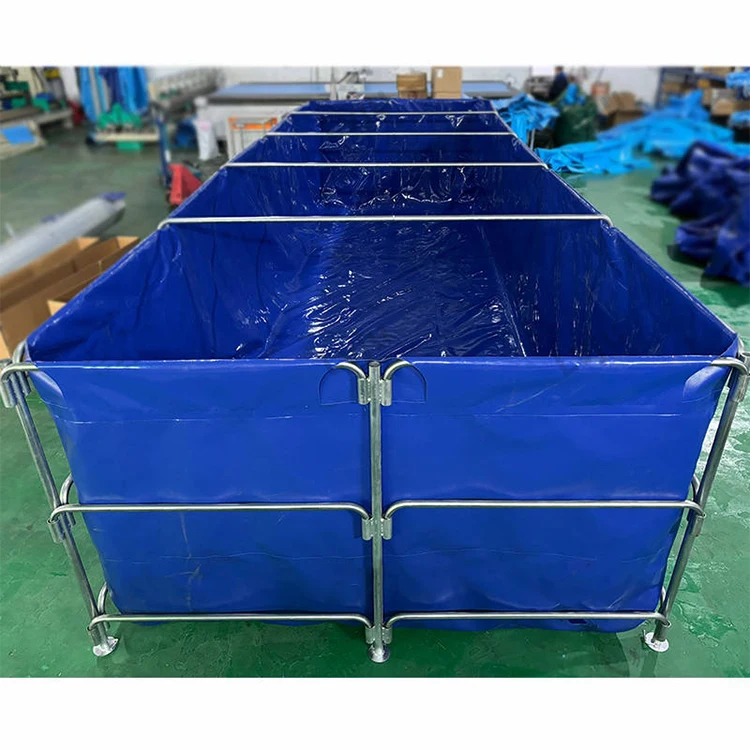
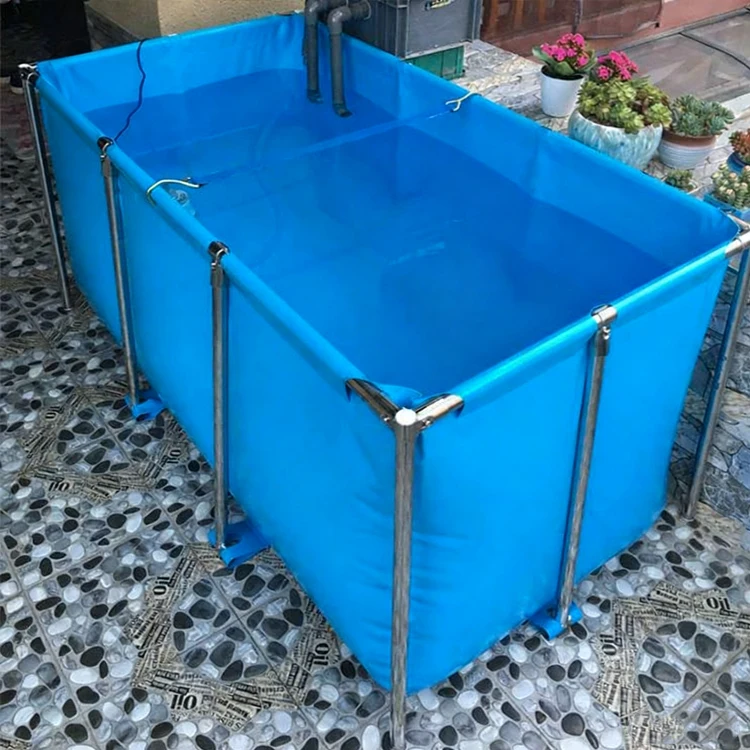
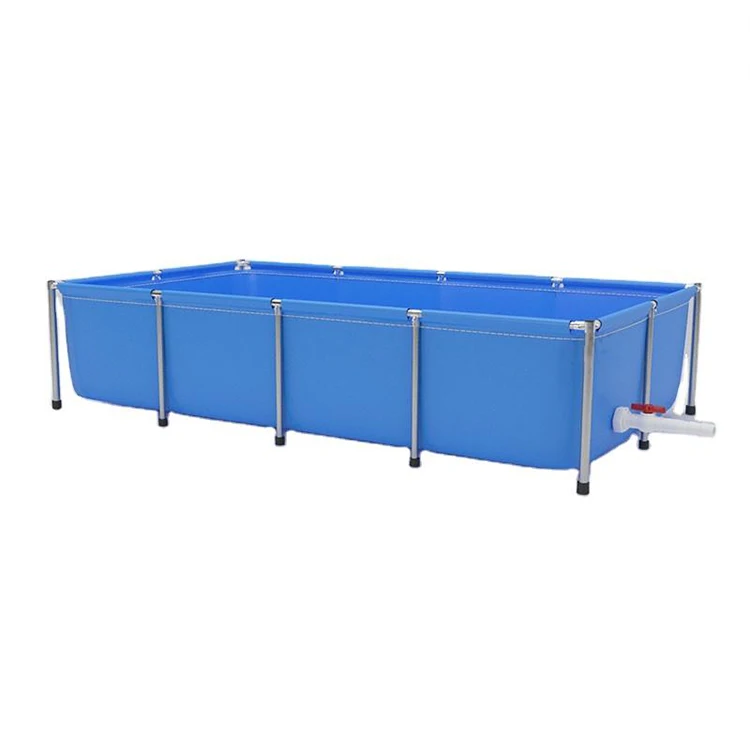
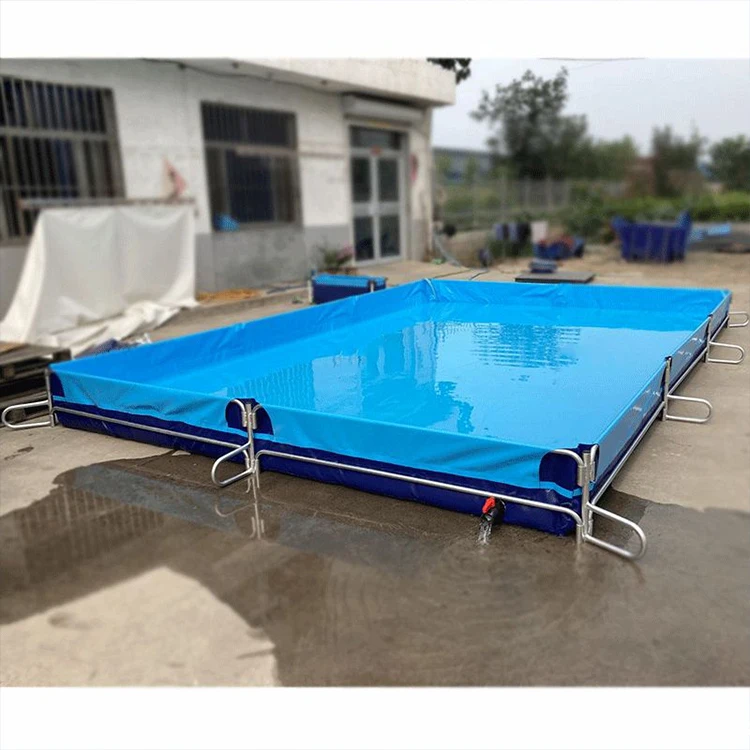
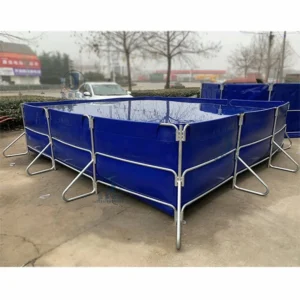
Foldable PVC Tarpaulin Fish Pond Liner, Circular & Rectangular Shapes — available with anti-UV and flame-retardant treatment options, custom sizing, glossy or matte finish, and reinforced welded seams for long-term water containment.
- Designed for aquaculture operators who need verified GSM matching the quoted specification, with colour consistency across rolls in the same batch.
- Process-controlled PVC coating ensures adhesion strength and seam integrity at high-stress flex points where most pond liners fail first.
- Samples developed within days for custom dimensions and treatment requirements, with 100% pre-shipment inspection on every roll.
Description
Custom Fabrication Control — Nearly 30 years of coating process mastery allows every PVC tarpaulin fish pond liner to ship with verified GSM matching the quoted specification, not a lighter substitute.
Technical Specifications
| Parameter | Value |
|---|---|
| Product Type | PVC Tarpaulin Fish Pond Liner |
| Shape Options | Circular / Rectangular |
| Foldable Design | Yes |
| Material | PVC Tarpaulin |
| Custom Sizing | Available |
| Anti-UV Treatment | Available in treated grades — confirm the UV level required for your climate zone |
| Flame Retardant | Available in flame retardant grades — confirm the grade required for your market |
| Surface Finish | Glossy or matte options available |
| Certification | ISO, CE |
Application Suitability
| Application | Exposure & Requirement |
|---|---|
| Fish farming and aquaculture ponds | Permanent water contact, hydrostatic pressure, biological fouling, puncture risk from substrate |
| Foldable fish tanks for temporary setups | Frequent assembly and disassembly, fold-line stress, rapid deployment needs |
| Breeding and rearing containment | Controlled water environment, chemical treatment exposure, cleanability between cycles |
| Agricultural water reservoirs | Extended outdoor exposure, UV degradation risk, wind-load stress on anchored edges |
Why GSM Verification Matters When Sourcing a PVC Tarpaulin Fish Pond Liner
A quoted GSM means nothing unless the delivered roll matches it on the scale.
Purchasing a PVC tarpaulin fish pond liner often starts with a specification sheet, but the material arriving on site can feel noticeably lighter once unrolled. Coating weight variances during production or deliberate down-gauging to cut costs leave operators with liners that lack the tensile mass needed to resist puncture from gravel substrates or sustained hydrostatic load [NEED_CITE: coating weight variance in calendered PVC tarpaulin production]. When seams are welded onto a lighter-than-specified base fabric, the peel strength drops proportionally, and failures concentrate at the exact points where water pressure flexes the material most.
Coating Process Control Across the Full PVC Tarpaulin Fish Pond Range
Jinan Jinxiang produces every PVC tarpaulin fish pond liner with deep process control over coating weight and adhesion, ensuring the material leaving the line carries the mass stated on the documentation. This control begins with the base fabric selection, where denier count and weave density are matched to the target GSM before coating begins. Operators lining large commercial ponds or stocking temporary breeding tanks both benefit from this consistency, because the mechanical behaviour of the liner under load remains predictable across every panel delivered.
Shape Versatility From a Single PVC Tarpaulin Fish Pond Manufacturer
Circular ponds distribute hydrostatic pressure evenly around the perimeter, reducing peak stress on any single seam, while rectangular configurations maximise footprint utilisation inside greenhouse or indoor farming layouts. Our 10-person R&D team develops samples within days for either geometry, allowing aquaculture operators to evaluate fold behaviour, weld-line placement, and anchoring hem construction before committing to a production run [NEED_CITE: hydrostatic pressure distribution in circular versus rectangular flexible containment]. Foldable designs ship flat-packed, cutting container volume substantially compared to rigid tank alternatives.
Reading Between the Specs on a PVC Tarpaulin Fish Pond Liner
The relationship between GSM, base fabric density, and coating thickness determines how a liner performs once water fills it. A heavier coating does not automatically mean higher tear resistance if the base fabric uses a loose weave with low denier yarns; conversely, a tight high-denier scrim with moderate coating weight can deliver superior puncture and tear behaviour at a lower total mass. The coating method — whether knife-over-roll, calendering, or hot-melt lamination — directly affects peel strength at welded seams, which is where most pond liner failures originate. Knife-coated fabrics typically show higher adhesion values, making them more forgiving during on-site heat welding. Surface finish selection also plays a practical role: glossy surfaces resist algae adhesion and clean more easily between cycles, while matte finishes reduce glare and may improve grip during installation on wet ground.
The Hidden Cost of Specifying a Pond Liner on Price Alone
When a liner is sourced primarily on unit cost, the delivered material often arrives at the lower boundary of the GSM tolerance — or below it. Seams that were welded at the factory may hold during pre-shipment inspection but separate within weeks under sustained water load because the coating adhesion was marginal on the lighter fabric. Colour variation between rolls in the same order becomes visible once panels are installed side by side, forcing operators to either accept an inconsistent appearance or reorder at their own expense [NEED_CITE: batch colour consistency challenges in pigmented PVC coating runs]. Anti-UV or flame-retardant treatments claimed on the quotation without supporting test reports leave buyers exposed during regulatory audits or insurance inspections, where documentation — not verbal assurance — determines compliance.
What Sets This PVC Tarpaulin Fish Pond Manufacturer Apart
Three full production lines and 36 sets of professional equipment support bulk pond liner orders with reliable on-time delivery, even when custom dimensions or non-standard colours are specified. Dedicated QA/QC inspection at every production stage catches coating weight deviations before they reach the cutting table, not after the container is sealed. The R&D team handles everything from pattern printing for branded tank exteriors to bespoke sizing for irregularly shaped aquaculture sites. Pre-shipment inspection covers 100% of finished pond liners, with documented records provided before dispatch. Samples are developed within days, giving buyers the chance to verify weld strength, fold behaviour, and colour accuracy before authorising the full run.
Documentation & Verification
- Material specification sheet confirming GSM, base fabric denier, and coating type for every pond liner order
- Anti-UV and flame retardant test reports provided where applicable treatments are specified
- 100% pre-shipment inspection record covering seam integrity, dimensional accuracy, and surface finish
- Roll packing list with individual weights and dimensions for customs and warehouse receipt
- Certificate of origin and customs documentation package supporting smooth import clearance
Fabrication, Handling & Storage
- Heat-weld seams at temperatures matched to the PVC coating thickness to avoid delamination at fold lines
- Reinforce anchoring hems with additional PVC strip overlays before installing grommets on circular pond edges
- Store rolled liners upright on pallets to prevent permanent creasing across the coating surface
- Avoid dragging unfolded liners over gravel substrates; use ground cloth underneath during installation
- Clean between aquaculture cycles with non-solvent detergents to preserve coating adhesion at welded joints
- Repair minor punctures on site using compatible PVC patch material and hot-air welding equipment
Before You Request a Quotation
Provide the intended pond dimensions, water depth, and whether the installation is permanent or requires periodic folding and relocation. Specify any anti-UV treatment level needed for your regional solar exposure, along with preferred surface finish and colour. Indicate whether you need finished panels with welded seams and reinforced hems, or roll stock for on-site fabrication. If colour consistency across multiple panels is critical, request a pre-production sample for approval before the bulk order enters production.
Frequently Asked Questions
Q: What GSM grade is typically specified for aquaculture pond liners versus general water containment?
A: Aquaculture pond liners generally require heavier GSM grades than decorative or temporary water containment, because sustained hydrostatic pressure, biological load, and substrate puncture risk demand greater coating mass and base fabric density. We recommend sharing your water depth, substrate type, and expected service conditions so our R&D team can propose the appropriate GSM and coating construction for your specific application.
Q: Can pond liners be custom-cut to exact dimensions or only ordered in standard sizes?
A: Both circular and rectangular pond liners are produced to custom dimensions. Our R&D team develops cut-to-size samples within days, allowing you to verify fit, fold behaviour, and seam placement before production. Minimum order quantities vary depending on the size and complexity of the configuration requested.
Q: Are test reports available for anti-UV and flame-retardant claims on pond liner fabric?
A: Yes — when anti-UV or flame-retardant treatment is specified on your order, corresponding test reports are included in the documentation package. We recommend confirming the specific grade or standard required by your local regulations or insurance provider at the inquiry stage so the correct treatment level is applied during production.
Q: How is colour consistency maintained across multiple pond panels in one order?
A: Colour matching is controlled at the coating stage, with pigment batches mixed for the full order quantity before production begins. Panels cut from the same production run are inspected side by side during pre-shipment QC. For projects where visible colour uniformity is critical, requesting a pre-production sample for approval eliminates any variance risk.
Q: What documentation accompanies a pond liner shipment for import compliance?
A: Each shipment includes a material specification sheet, packing list with roll-level weights, certificate of origin, and applicable test reports. ISO and CE certificates are available for the manufacturing facility. Additional customs support documentation can be arranged based on the destination country’s import requirements.
Related products
-
Anti-leaking Durable PVC Tarpaulin Fish Pond Liner Plastic Fish Ponds Foldable Aquaculture Pond Tanks for Fish
¥153.00 Add to cart -
Custom Blackout Plain Flexible Foldable PVC Tarpaulin Fish Tank 500gsm PVC Coated Roll
¥1.00 Select options This product has multiple variants. The options may be chosen on the product page -
PVC Coated Tarpaulin for Fish Pond – Custom Made
Read more -
Custom PVC Tarpaulin Fish Pond Liner for Aquaculture – Manufacturer
Read more