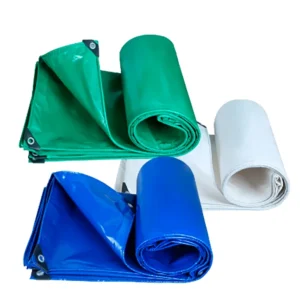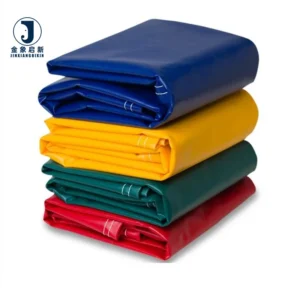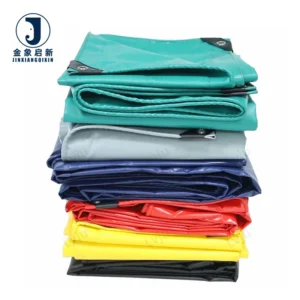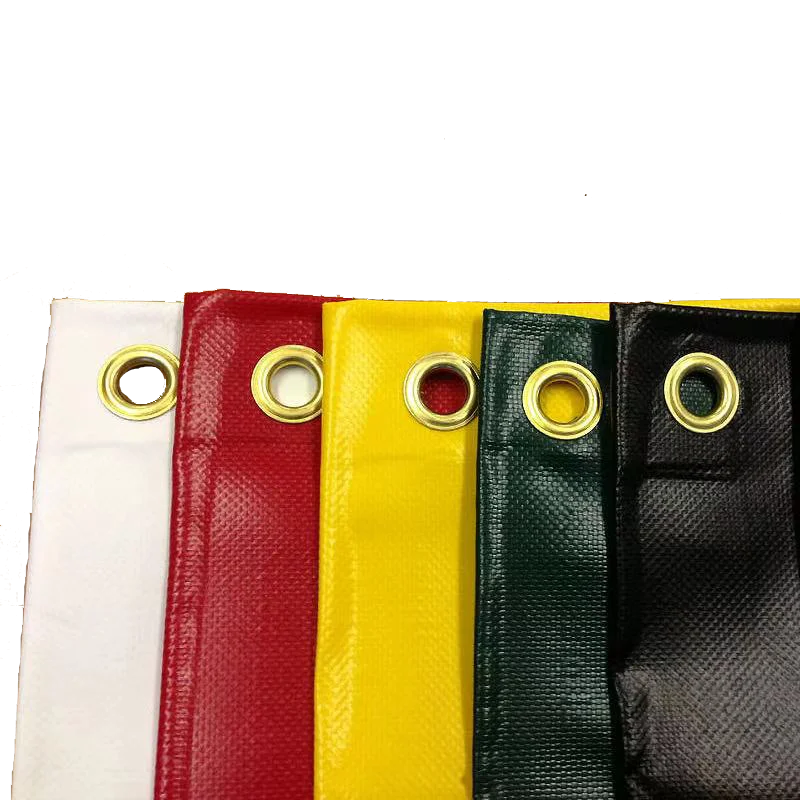
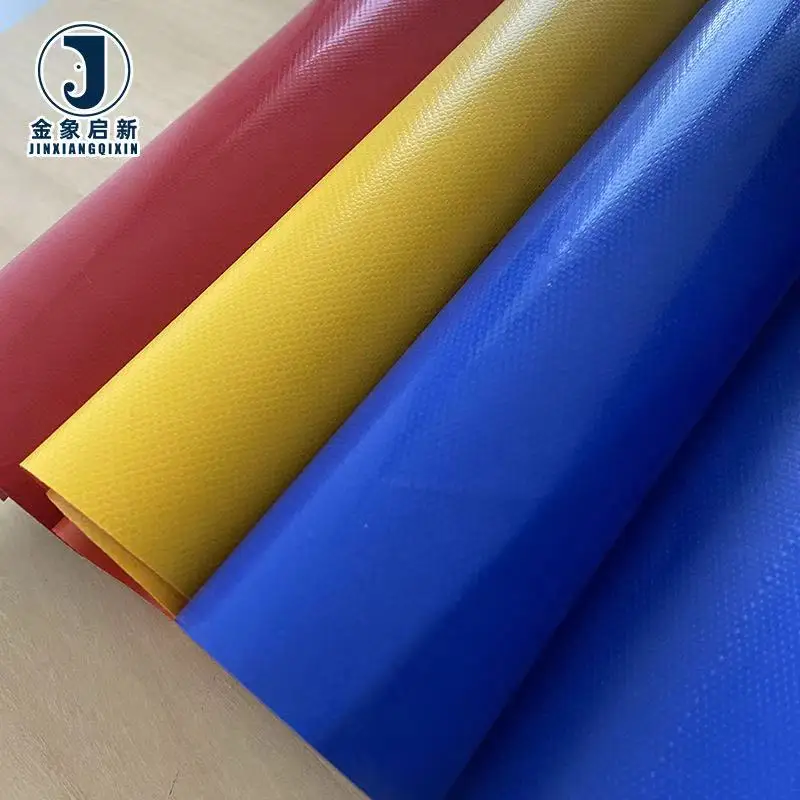
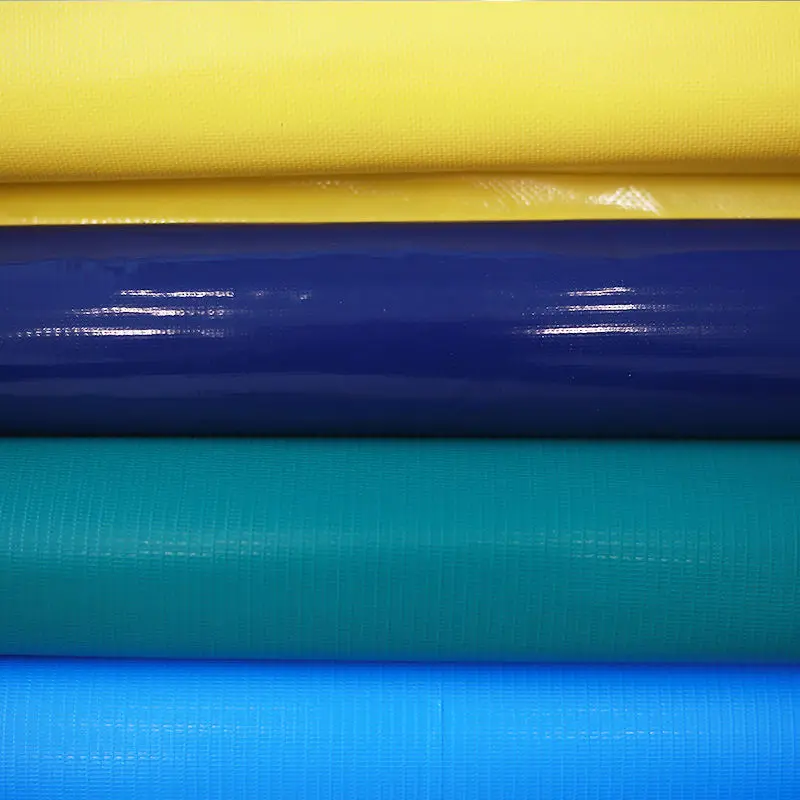
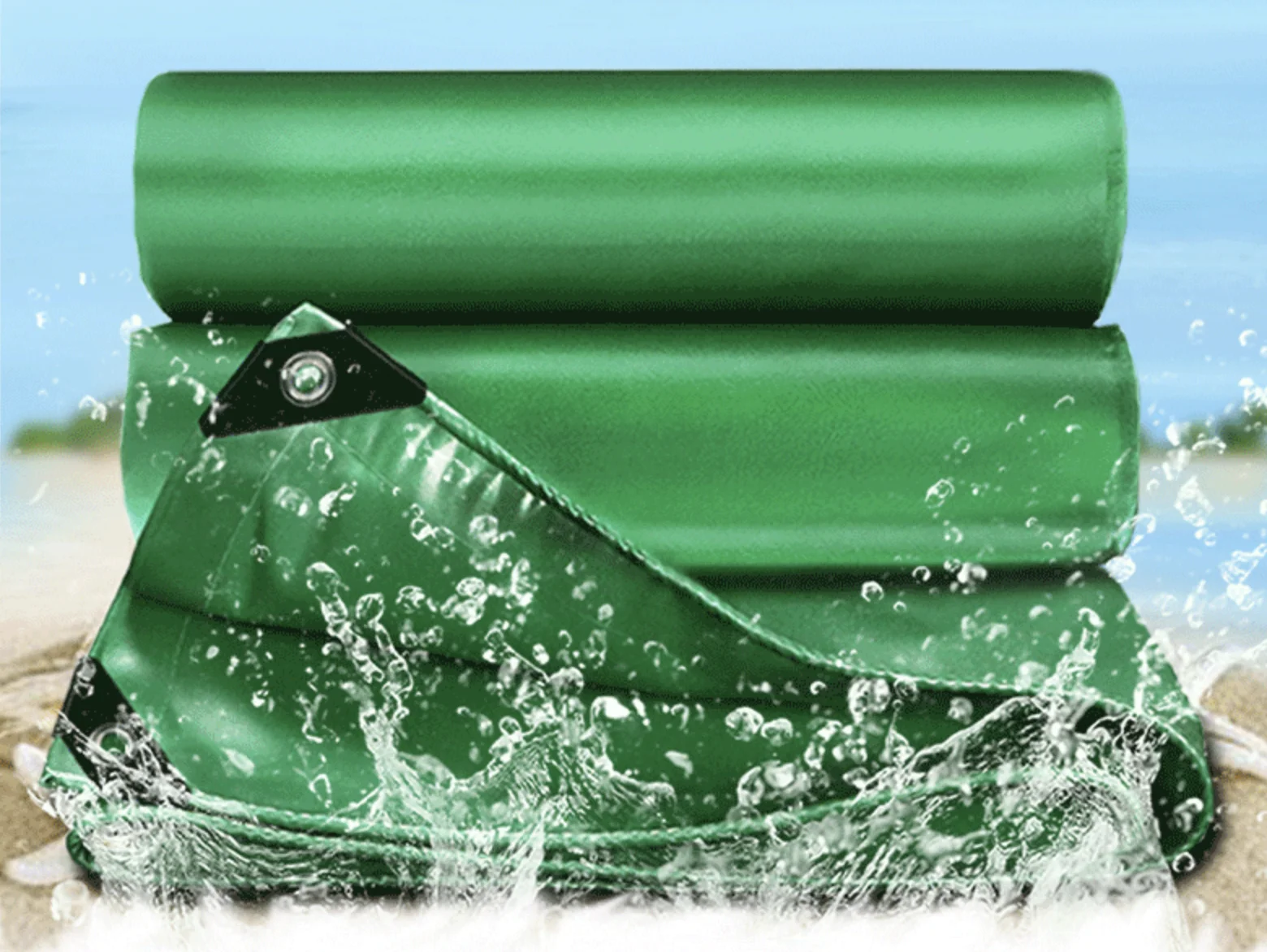
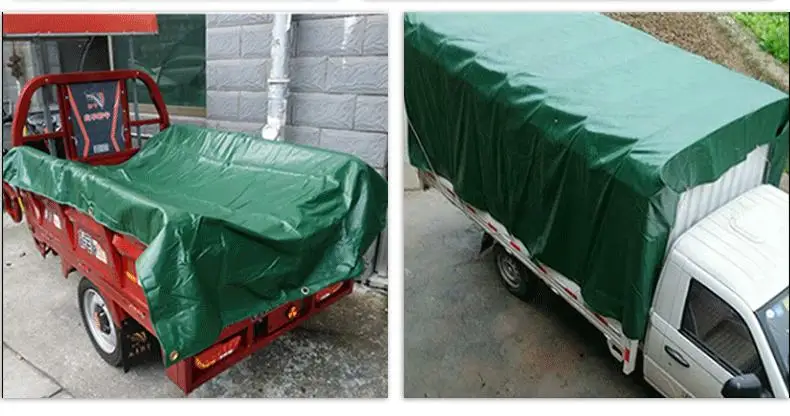
Heavy Duty PVC Knife-Coated Fabric Tarpaulin 300-600gsm — available in roll stock or custom-cut dimensions, with flame retardant, anti-static, anti-cold, anti-mildew and 3P treatment options.
- Knife-coating process bonds PVC firmly to the base fabric, reducing delamination risk at welded seams under flex load
- Full GSM range from 300 to 600 covers truck tarps, tent panels and structural membranes in one production line
- Supported by a 10-person R&D team for custom sizing, pattern printing and rapid sample development
Description
Process-Controlled Coating Output — Three full production lines and 36 sets of professional equipment manage every batch of PVC knife coated tarpaulin with dedicated QA checkpoints at each coating and finishing stage.
Technical Specifications
| Parameter | Value |
|---|---|
| Product Type | PVC Knife-Coated Fabric |
| Weight Range | 300-600 gsm (confirm grade per application) |
| Coating Method | Knife coated |
| Coating Material | PVC |
| Format | Roll stock or custom-cut panels |
| Flame Retardant | Available in treated grades — confirm the grade required for your market |
| Anti-Static | Available — specify the standard applicable to your site |
| Anti-Cold | Available for low-temperature environments |
| Anti-Mildew | Available for humid or tropical exposure |
| Waterproof | Fully waterproof coated construction |
| Outdoor Durability | Suited to extended outdoor exposure — request UV test basis for your climate zone |
| Certifications | ISO, CE (factory-level); product-specific test reports available on request |
Application Suitability
| Application | Exposure & Requirement |
|---|---|
| Truck and trailer side curtains | Constant flexing at load points, road spray abrasion, daily UV exposure, wind flap fatigue |
| Flatbed load protection tarps | Tie-down strap abrasion, puncture from sharp-edged cargo, weather during multi-day transit |
| Outdoor event tents and awnings | Prolonged sun exposure, rain pooling on horizontal surfaces, repeated fold-unfold cycles |
| Inflatable and membrane structures | Internal air pressure stress, seam integrity under tension, UV degradation on exposed faces |
| Industrial equipment covers | Chemical dust contact, forklift handling abrasion, flame retardant compliance on site |
Why Stated Weight and Actual Delivered Weight Diverge on Coated Fabric Orders
Every roll leaving our facility carries a measured GSM record matched against the purchase order specification before dispatch.
Buyers who have received coated fabric shipments lighter than quoted know the frustration — the material arrives, feels thinner, and welds tear under loads the specified grade should have handled. The gap between quotation GSM and delivered GSM often traces back to coating weight variance during production, where line speed and knife gap settings drift without real-time monitoring [NEED_CITE: tensile and tear test methods for coated fabrics per ISO 1421]. When you source PVC knife coated tarpaulin across multiple suppliers, this inconsistency compounds across rolls, making batch-wide fabrication unreliable.
Coating Adhesion and What Knife Coating Delivers for Fabricators
The knife-coating process forces PVC compound into the base fabric weave under controlled pressure, filling interstices between yarns rather than sitting as a surface film. This produces a mechanical bond between coating and substrate that resists delamination when the fabric flexes repeatedly — a condition truck side curtains and inflatable membranes experience throughout their service life. For fabricators welding seams on PVC knife coated tarpaulin, the coating-to-yarn adhesion directly determines whether the weld holds or the coating peels away from the base fabric under peel load.
Treatment Selection Depends on Your End-Use Environment
The treatment menu — flame retardant, anti-static, anti-cold, and anti-mildew — addresses distinct failure modes in different operating environments. A mining ventilation duct requires anti-static properties to prevent spark ignition in dust-laden air, while an outdoor tent in a tropical climate demands anti-mildew chemistry embedded in the coating compound. Specifying treatments without naming the applicable test standard creates ambiguity at delivery [NEED_CITE: fire classification standards for temporary structures and tents]. Confirm which certification your local authority or site safety officer requires, then request the matching test report before production begins.
Reading the Specification Sheet Beyond the GSM Number
Weight in grams per square metre tells you how much PVC compound sits on the base fabric, but it does not isolate coating weight from yarn mass. A 450 gsm fabric built on a high-denier, loosely woven base may carry less coating than a 400 gsm fabric on a tighter weave — and the tighter weave typically delivers superior tear propagation resistance. The base fabric denier and thread count govern how a puncture or cut spreads through the material, while the coating weight governs abrasion resistance and waterproofing continuity. When evaluating PVC knife coated tarpaulin grades, request the base fabric specification alongside the total GSM to understand what proportion of the weight comes from structural yarn versus protective coating. Knife coating, compared to laminating or calendering, embeds compound deeper into the weave, which improves peel strength at welded seams but requires precise oven temperature control to cure without trapping volatiles.
The Hidden Cost of Specifying on Price Per Kilogram Alone
When procurement decisions reduce coated fabric to cost per kilogram, the incentive shifts toward lower coating weight and thinner base yarn — both invisible once the roll is wrapped. Panels fabricated from underweight material fail first at welded seams and eyelet reinforcement zones, where flex loads concentrate and coating adhesion matters most [NEED_CITE: common failure modes in coated fabric tarpaulin installations]. Batch colour variation between rolls ordered from different production runs forces fabricators to reject panels or accept visible colour lines across a single truck curtain. Selecting a PVC knife coated tarpaulin grade without verifying roll-to-roll consistency and pre-shipment weight records often costs more in rework than the savings on the initial purchase.
Production Infrastructure Behind Consistent Roll Output
Dedicated QA inspection at each production stage — from base fabric receiving through coating, curing, and winding — means deviations are caught before the roll reaches the packing area rather than after it reaches your warehouse. A 10-person R&D team handles material selection, colour matching, and sample development, producing trial rolls within days when your application demands a non-standard width or treatment combination. Three full production lines with 36 sets of professional equipment support concurrent scheduling of stock grades and custom orders, reducing the lead-time penalty typically associated with non-standard specifications. Every roll ships with a pre-shipment inspection record covering measured GSM, visual surface check, and coating adhesion verification.
Documentation & Verification
- Material specification sheet stating GSM, base fabric denier, coating compound type, and colour reference for every roll
- Flame retardant and anti-static test reports matched to the grade specified on your purchase order
- Pre-shipment inspection record documenting measured weight and surface quality per roll before packing
- ISO and CE factory certificates with product-specific test data available on request
- Certificate of origin and customs documentation prepared per destination country requirements
Fabrication, Handling & Storage
- Heat-weld seams using temperature and dwell time settings matched to the PVC coating thickness of the selected GSM grade
- Reinforce eyelet zones with additional fabric patches when the specified weight falls below the heavy-duty range
- Store rolls upright on pallets in shaded, ventilated areas to prevent compression creasing across the coating surface
- Allow cold-stored rolls to reach ambient temperature before unrolling to avoid cracking the anti-cold treated PVC compound
- Use mild detergent and soft brush for cleaning; avoid solvent-based agents that attack the PVC coating surface
- Plan cutting layouts to minimise offcuts when working with custom widths, reducing waste on higher-GSM grades
What We Need to Quote Accurately
Provide the end-use application, the environmental exposure conditions your fabric will face, and any fire-safety or anti-static standards required by your local regulatory authority or site safety plan. Specify whether you need roll stock at a particular width and roll length, or finished panels with welded hems and eyelets cut to your dimensions. Include your colour reference or request a sample swatch if matching an existing installation, and indicate your annual volume so we can plan production runs for batch colour consistency.
Frequently Asked Questions
Q: What GSM should I specify for truck covers versus tent fabric?
A: Truck side curtains and flatbed covers typically require a heavier grade to resist strap abrasion and cargo puncture, while tent fabric prioritises flexibility for folding and transport. Confirm the mechanical loads your application imposes — tie-down tension, wind flap cycles, or snow load — and we will recommend the appropriate weight within the 300-600 gsm range with supporting test data.
Q: Can I combine flame retardant and anti-UV treatments on the same roll?
A: Treatment combinations are available, but each added compound can interact with the PVC coating chemistry and affect weld behaviour or surface finish. Specify both treatments on your inquiry, name the fire classification standard your market requires, and we will produce a sample panel for your approval before full production.
Q: Do you supply finished panels or only roll stock?
A: Both formats are available. Roll stock ships in standard or custom widths for fabricators who weld and finish in-house, while pre-cut panels can be supplied with heat-welded seams, reinforced hems, and eyelets positioned to your drawing. Specify your format requirement at inquiry stage.
Q: How do you control colour consistency across multiple rolls?
A: Multi-roll orders for a single colour are scheduled in one production run to minimise batch variation. Each roll undergoes a visual surface check during pre-shipment inspection, and a colour reference is recorded on the material specification sheet. Request a pre-production sample swatch if your installation places panels side by side.
Q: What test reports ship with treated fabric grades?
A: Flame retardant grades ship with a test report citing the classification standard applied. Anti-static grades include surface resistivity measurement data. Anti-UV performance is documented with the test method and exposure conditions used. Specify which certifications your project requires when placing your order so the correct documentation is prepared.
Related products
-
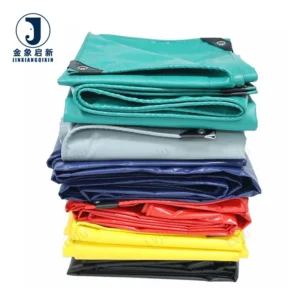
500 GSM PVC Knife-Coated Fabric for Tent Truck – Custom Made
Read more -
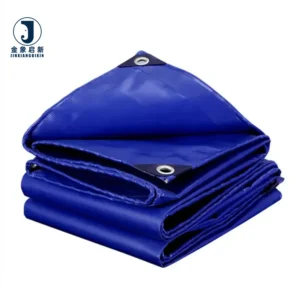
Custom Made PVC Knife-Coated Fabric for Truck Canopy
Read more -
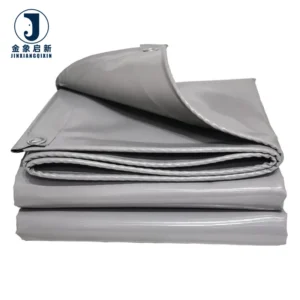
Customize 500-600GSM Heavy Duty Waterproof Anti-UV Knife Fabric PVC Tarpaulin for Car Tents Canopies Awnings
¥0.90 Select options This product has multiple variants. The options may be chosen on the product page -
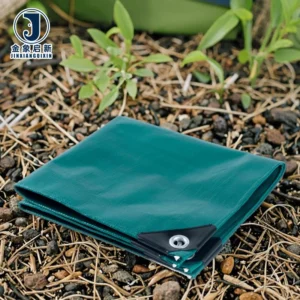
Plastic Tarpaulin PVC Material Truck Tarpaulin Tent Tarpaulin Green Color Heavy Duty High Quality
¥0.90 Select options This product has multiple variants. The options may be chosen on the product page