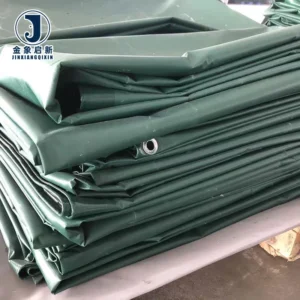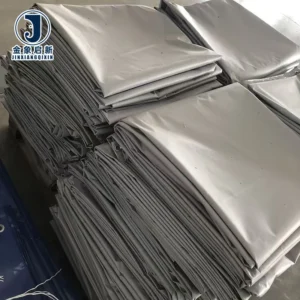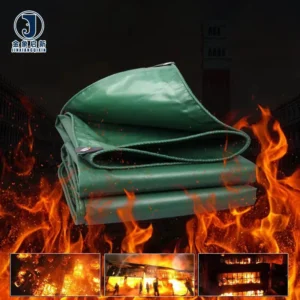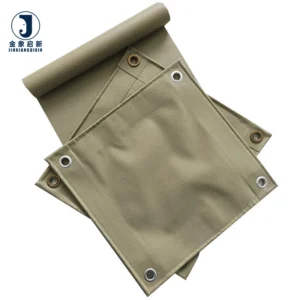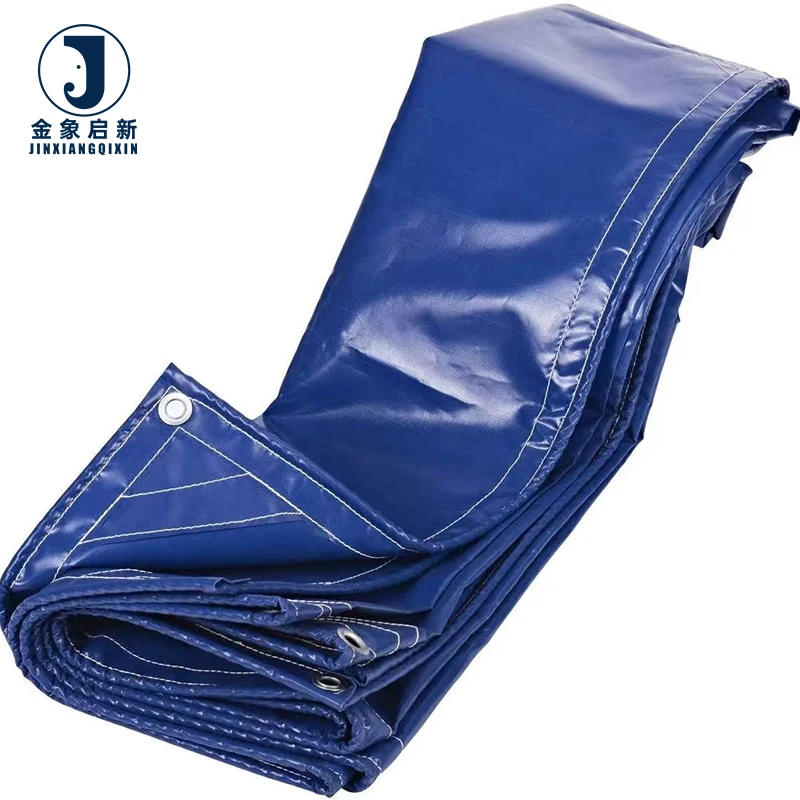
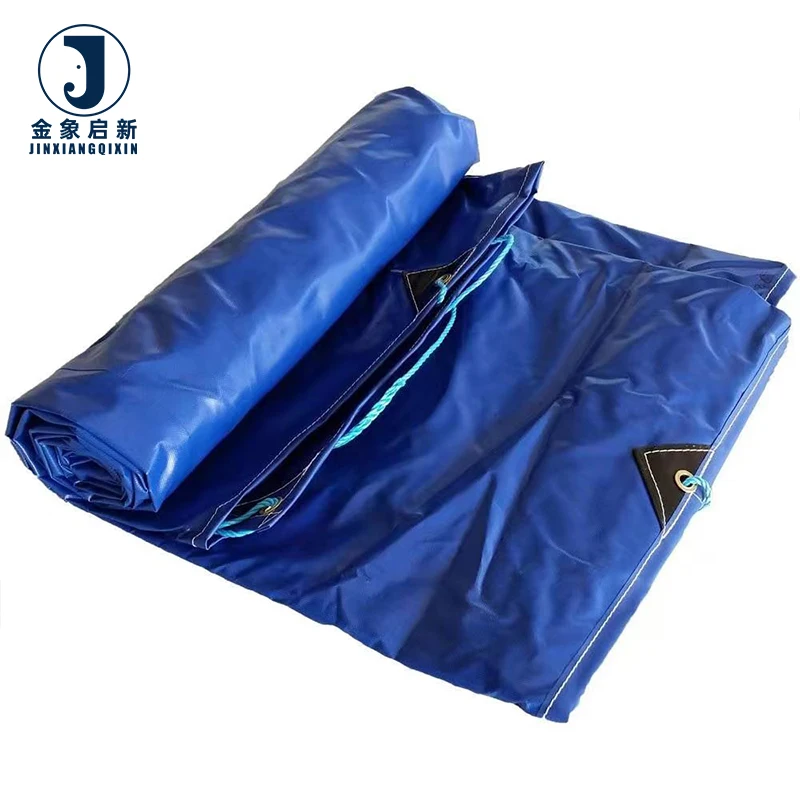
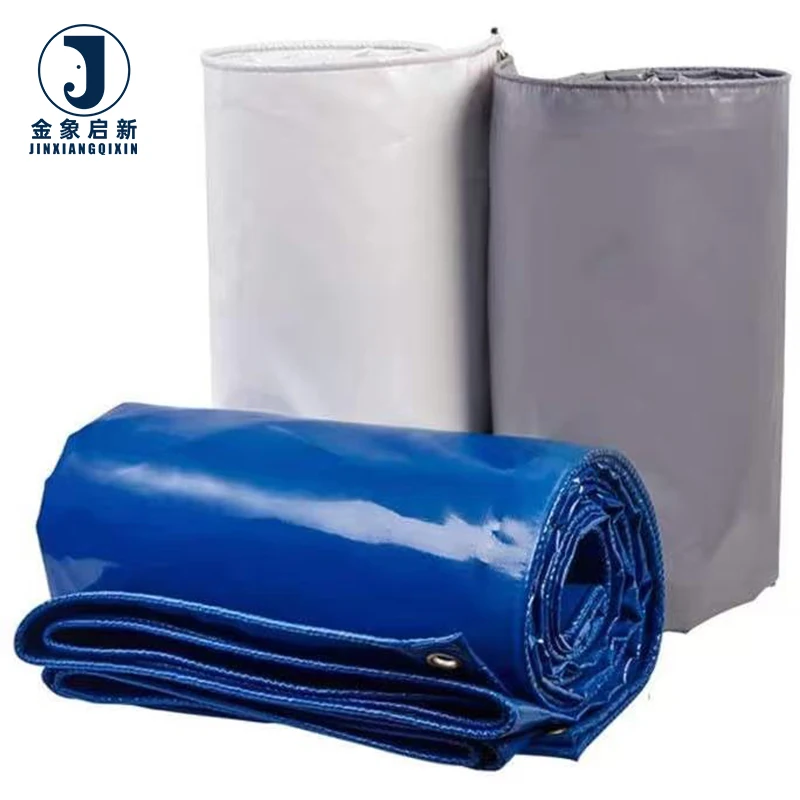
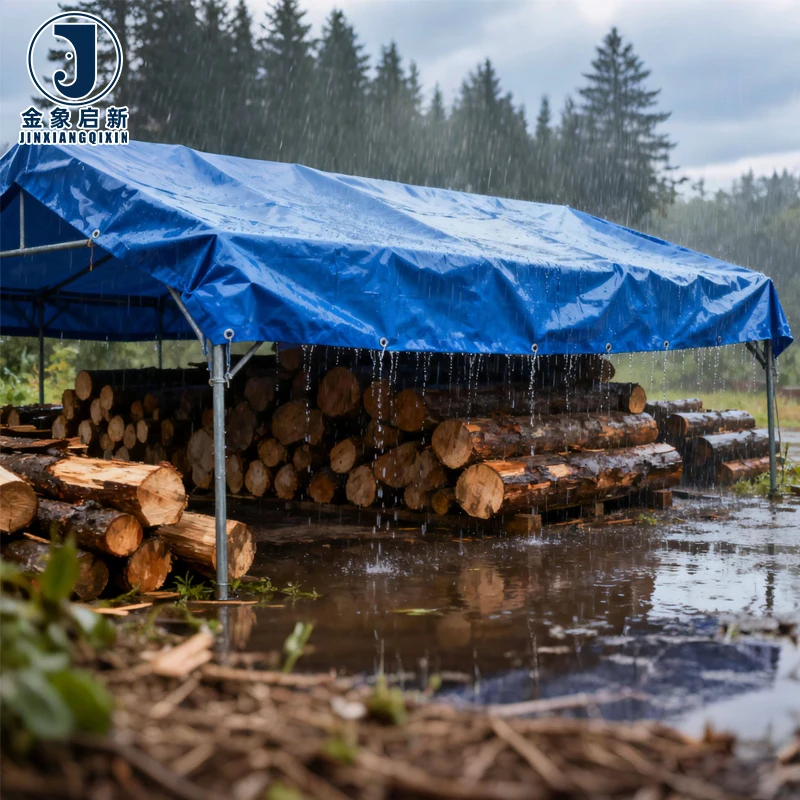
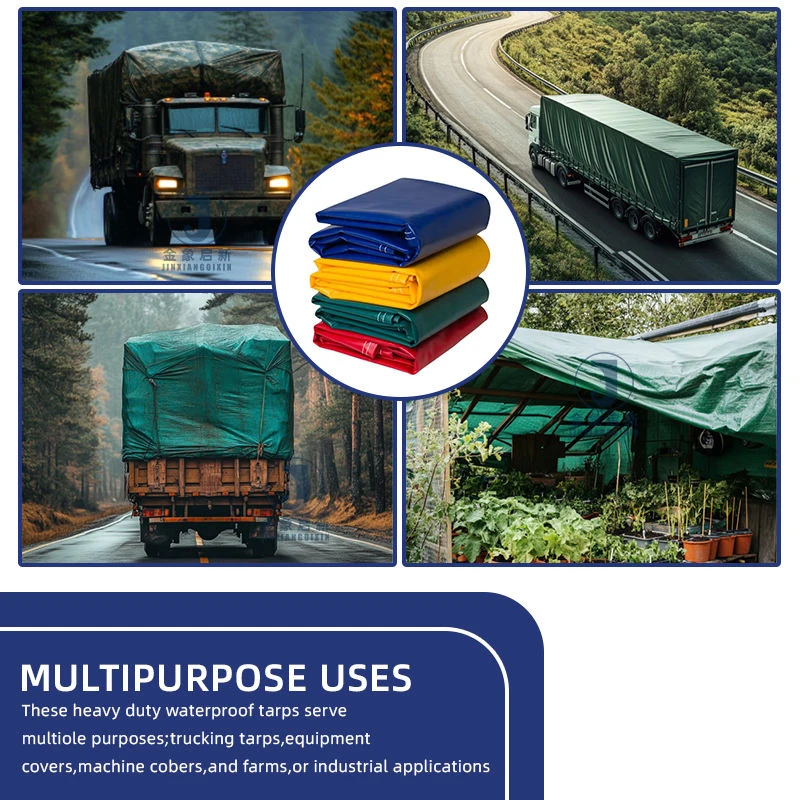
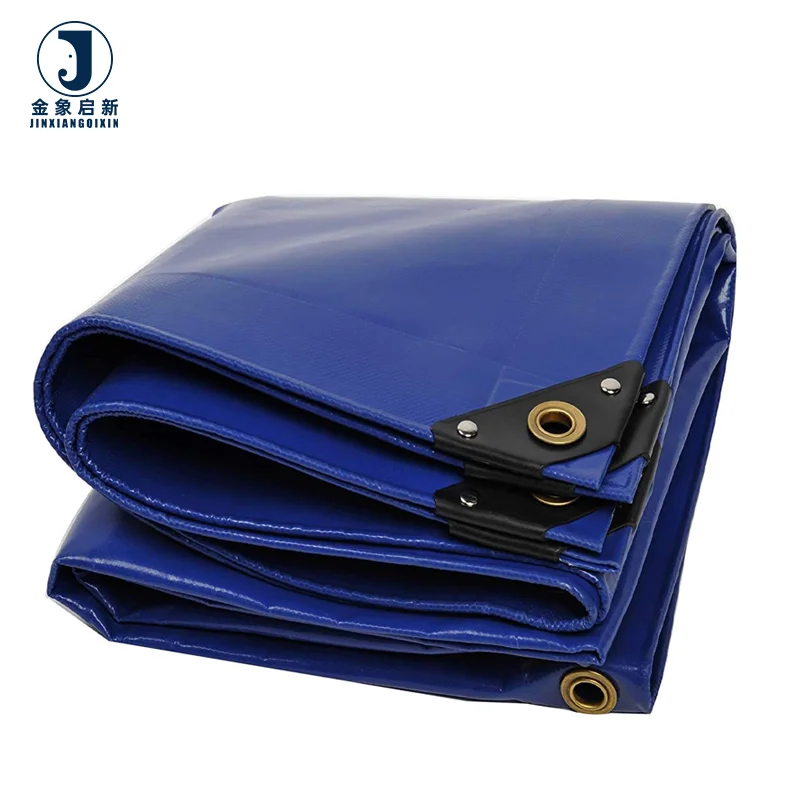
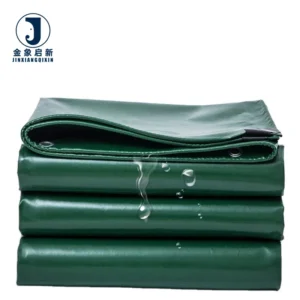
Super Strength Industrial Grade PVC Tarpaulin — waterproof, UV and flame retardant treated, available in 250gsm-1500gsm with glossy or matte surface finish.
- Deep process control over coating weight and adhesion ensures consistent GSM across every roll, verified at each production stage
- Custom width, length, eyelet spacing and reinforced hems tailored to your site or equipment profile, with pattern printing applied during coating for durable colour fastness
Backed by three full production lines, a 10-person R&D team developing samples within days, and 100% pre-shipment inspection before dispatch.
Description
Precision-Coated Heavy Duty Fabric — Our dedicated QA/QC team verifies coating weight and adhesion at every production stage, ensuring the GSM on the specification sheet matches the roll on your receiving dock.
Technical Specifications
| Parameter | Value |
|---|---|
| Product Type | PVC Coated Tarpaulin |
| Weight Range | 250gsm–1500gsm |
| Base Fabric Denier Options | 200DX300D, 500DX500D, 840DX840D, 1000DX1000D |
| Available Cut Sizes | 3x4m, 6x8m, 8x10m, 10x12m or custom made |
| Color Options | Blue, yellow, black, green, white, etc. |
| Surface Finish | Available in glossy or matte |
| UV Treatment | Customized (confirm the UV grade required for your market) |
| Treatment Options | Waterproof, UV, FR and anti fungal treated (confirm the FR grade required for your market) |
| Temperature Range | -15°C to 70°C |
| Environmental Profile | Eco-friendly |
| Certifications | ISO, CE |
Application Suitability
| Application | Exposure & Requirement |
|---|---|
| Construction site covers | Constant UV and rain exposure, abrasion from scaffolding, requires tear resistance and water shedding |
| Roof tarps | Direct sun and wind load, pooling water, needs reliable heat-weld seams and UV stability |
| Truck covers | Road vibration, flexing at tie-down points, weather exposure, requires abrasion-resistant coating adhesion |
| Equipment protection | Outdoor storage, dust and moisture ingress, needs full waterproofing and durable hems |
| Agricultural covers | Field chemicals, seasonal UV, crop contact, benefits from anti-fungal treatment |
| Pond liners | Permanent water immersion, soil chemistry, puncture risk from substrate |
| Tent and awning fabric | Repeated folding, wind stress, UV exposure, requires consistent colour and weight across rolls |
What Happens When the Roll Arrives Lighter Than Quoted
GSM on paper does not guarantee GSM on the scale — every roll must be verified before it leaves the factory floor.
I spent my early years on a coating line in Jinan watching production runs go out the door without a second weighing. One buyer ordered heavy-duty coated fabric at a specified weight, received rolls that measured noticeably lighter upon arrival, and had to reject the entire container. The financial loss was severe, but the trust damage lasted far longer. A PVC coated tarpaulin aftermarket supplier worth your time will weigh each roll individually and record the result against the purchase order. [NEED_CITE: standard test methods for mass per unit area of coated fabrics]
When weight falls short of the agreed specification, tensile performance drops proportionally. Coated fabric is an engineered composite — the base yarn provides structural strength while the coating adds waterproofing, UV screening, and abrasion resistance. If either component is under-dosed, the failure mode shifts from the fabric body to the weakest link in the system, often the weld seam or the hemline under load.
Full Catalogue Coverage from Light Utility to Heavy Industrial Grades
This range spans from 250gsm utility fabric up to 1500gsm heavy-duty material, with base fabric denier options from 200DX300D through 1000DX1000D. The breadth of the PVC coated tarpaulin aftermarket supplier catalogue means buyers sourcing for multiple applications — lighter covers for temporary site protection alongside heavier grades for permanent truck and trailer curtains — can consolidate orders and maintain batch consistency across the full container load.
Colour and Surface Finish Consistency Across Production Runs
Whether the specification calls for glossy or matte surface finish, the coating line is calibrated to hold the same visual appearance from the first roll to the last in a single order. Colour variation between rolls is one of the most visible defects once material is installed side by side on a fleet of trailers or across adjacent construction enclosures. Process control at the coating head ensures pigment dispersion and film thickness stay within tolerance throughout the production run. [NEED_CITE: colour consistency measurement standards for coated technical textiles]
How Base Fabric Denier and Coating Weight Work Together
The denier options — 200DX300D up to 1000DX1000D — define the yarn thickness in warp and weft directions. Higher denier yarns create a thicker base fabric that resists tear propagation when punctured, because each yarn must be broken individually for a tear to advance. Coating weight, expressed as part of the total GSM, determines how completely the weave interstices are filled and how much surface protection is available against abrasion and chemical contact. A high-denier base with insufficient coating will show weave pattern through the surface and wear prematurely at high-contact points, while a heavily coated low-denier fabric may crack at the fold before the base yarns themselves fail. Specifying both parameters together is essential for matching the fabric to the actual stress profile of the end use.
The temperature range of -15°C to 70°C sets the operational boundaries. Below the lower limit, the plasticiser in the PVC compound begins to stiffen, reducing flexibility and increasing the risk of cracking when the material is folded or flexed under load. At the upper boundary, the coating softens and becomes more susceptible to surface marking and adhesion loss at welded seams.
The Hidden Cost of Underspecified Coated Fabric
When the specified weight is treated as a suggestion rather than a hard requirement, the consequences compound downstream. Coated fabric that arrives underweight often passes initial visual inspection but fails at the first stress event — a weld seam peeling apart on a truck curtain, a hemline tearing where an eyelet pulls through, or a pond liner puncturing on first filling. The buyer absorbs the cost of replacement material, expedited freight, and installation labour, often on a compressed timeline that leaves no room for re-sampling. [NEED_CITE: common failure modes in coated fabric field performance]
Batch colour variation is less catastrophic but equally costly when the installed result is visible to end users. A fleet operator who fits side curtains in slightly different shades across ten trailers faces a branding problem that cannot be fixed without stripping and replacing the affected panels.
Why Buyers Source This Range Through Jinxiang
Three full production lines and 36 sets of professional equipment provide the capacity to hold delivery schedules on large container orders while maintaining the process control needed for batch-to-batch consistency. The 10-person R&D team develops material samples within days when custom width, colour, or treatment combinations are required, allowing buyers to confirm performance before committing to full production volume.
Dedicated QA/QC operates at every production stage — incoming yarn inspection, base fabric weaving checks, coating weight verification, and 100% pre-shipment inspection. Each roll is weighed individually against the purchase order specification before it is cleared for dispatch. ISO and CE certification underpins the quality management system across the facility.
Documentation & Verification
- Material specification sheet stating GSM, base fabric denier, coating weight, and colour reference matched to the purchase order
- Test report for UV and flame-retardant grades supplied where applicable and where the grade has been confirmed at inquiry stage
- 100% pre-shipment inspection record with individual roll weights documented against the stated GSM before dispatch
- Roll packing list with roll numbers, weights, and dimensions for container loading verification
- ISO and CE certificates included with shipping documentation
- Certificate of origin prepared for customs clearance at destination
Fabrication, Handling & Storage
- Heat-weld temperature and dwell time must be calibrated to the specific coating weight and finish, whether glossy or matte, to avoid under- or over-fusion at the seam
- Eyelet reinforcement patches should match the base fabric denier to distribute tie-down loads across a sufficient area of the coated surface
- Rolls should be stored horizontally on their cores in a shaded, ventilated area to prevent flat-spot deformation of the coating at contact points
- When unrolling at temperatures near -15°C, allow the material to acclimatise before folding or flexing to prevent coating micro-cracking
- Use only mild, non-solvent cleaners on the PVC surface to avoid plasticiser extraction that would stiffen the coating over time
- For field repairs on heavier denier grades, use compatible PVC repair tape applied to a clean, dry surface at ambient temperature above 10°C
Request a Specification Match for Your Application
To recommend the correct weight, denier, and treatment combination from this catalogue, provide the intended application, the environmental exposure conditions including UV intensity and chemical contact, and whether the material will be supplied by the roll or as finished cut-to-size panels. Specify any fire classification or UV performance grade required by your local regulations or project specification.
Confirm the preferred surface finish, colour reference, and whether pattern printing or branding is required on the coating surface. If you are consolidating multiple grades in a single order, list each application separately so that batch consistency can be planned across the container load.
Frequently Asked Questions
Q: How do you verify the GSM on arrival matches the quotation?
A: Every roll is weighed individually on calibrated scales during the pre-shipment inspection, and the recorded weight is compared against the specification stated on your purchase order. The inspection record documents each roll result and travels with the shipping documentation. Rolls that fall outside the agreed tolerance are held and reworked or replaced before dispatch.
Q: Can you supply a test report for UV and flame-retardant treatment?
A: Yes. When UV or flame-retardant treatment is specified at the inquiry stage, the relevant test report is included with the shipment documentation. Confirm the specific grade or standard required for your market — such as the local fire classification — so that the correct treatment level is applied and tested before production.
Q: What is the lead time and minimum for custom width or colour?
A: Custom widths, colours, and treatment combinations go through a sample development stage before full production, and the R&D team typically prepares samples within days. Minimums and lead times depend on the roll count and the complexity of the specification. Confirm your requirements at inquiry and a detailed production schedule will be provided with the quotation.
Q: How do you ensure colour consistency across rolls in the same order?
A: Pigment formulation is locked after sample approval, and the coating line is monitored throughout the production run to hold film thickness and colour within the approved tolerance. Pre-shipment inspection includes a visual check comparing rolls from the start, middle, and end of the run side by side under controlled lighting conditions.
Q: What documentation ships with the container?
A: Each shipment includes a material specification sheet matched to the purchase order, roll packing list with individual weights and dimensions, ISO and CE certificates, certificate of origin for customs clearance, and any applicable test reports for UV or flame-retardant treatment. The pre-shipment inspection record is also provided for your receiving verification.
Related products
-
630 Gsm Blue/Grey/Orange Pvc Tarpaulin Roll Pvc Tarpaulin Truck Tarpaulin Pvc Coated Tarpaulin
¥1.66 Add to cart -
Tarpaulin Hot Selling 30M X 30M Finished PVC Tarpaulin for Farming Tarpaulin
¥1.48 Add to cart -
Factory Direct Sale Flatbed Trailer Tarps Black Heavy Duty Lumber Pe Tarp Flatbed Truck Transportation Tarpaulin Roll Sheet
¥1.25 Select options This product has multiple variants. The options may be chosen on the product page -

PVC Coated Tarpaulin PVC Fabric Tarpaulinheavy duty fire retardant waterproof pvc coated tarpaulin rolling pvc tarp
¥1.00 Select options This product has multiple variants. The options may be chosen on the product page