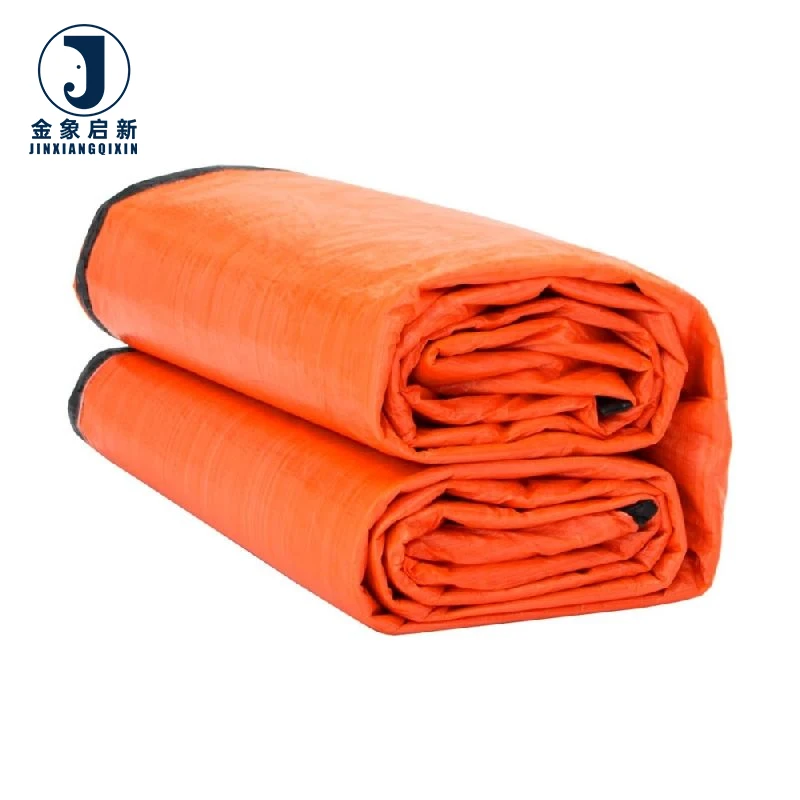
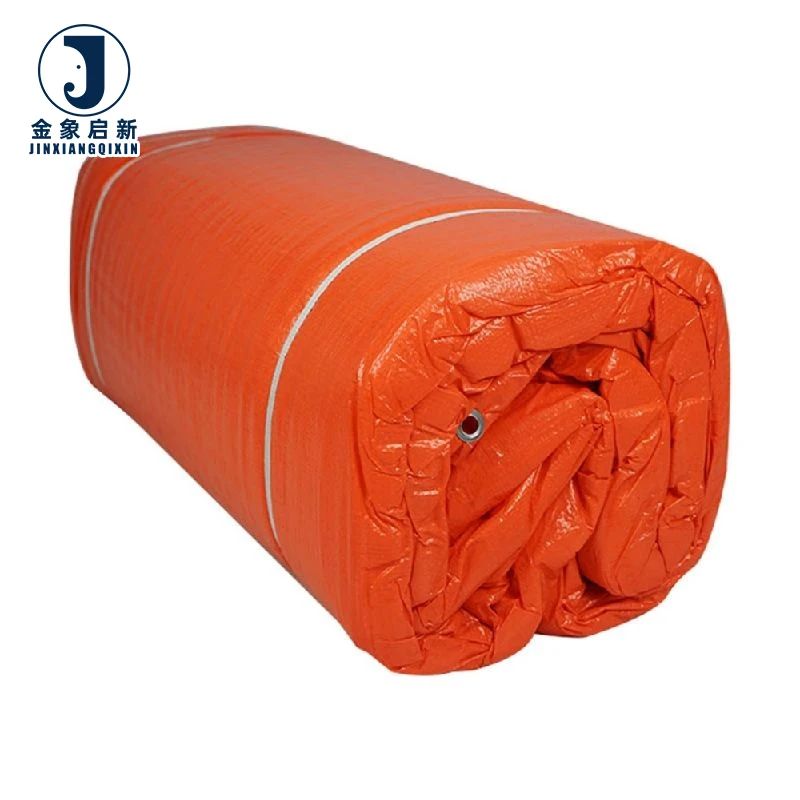
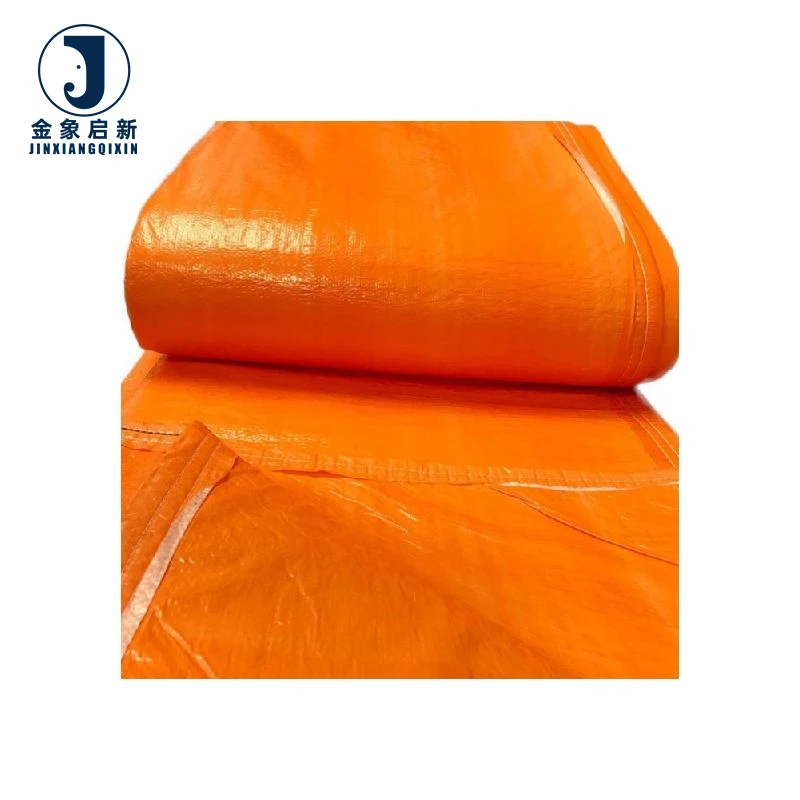
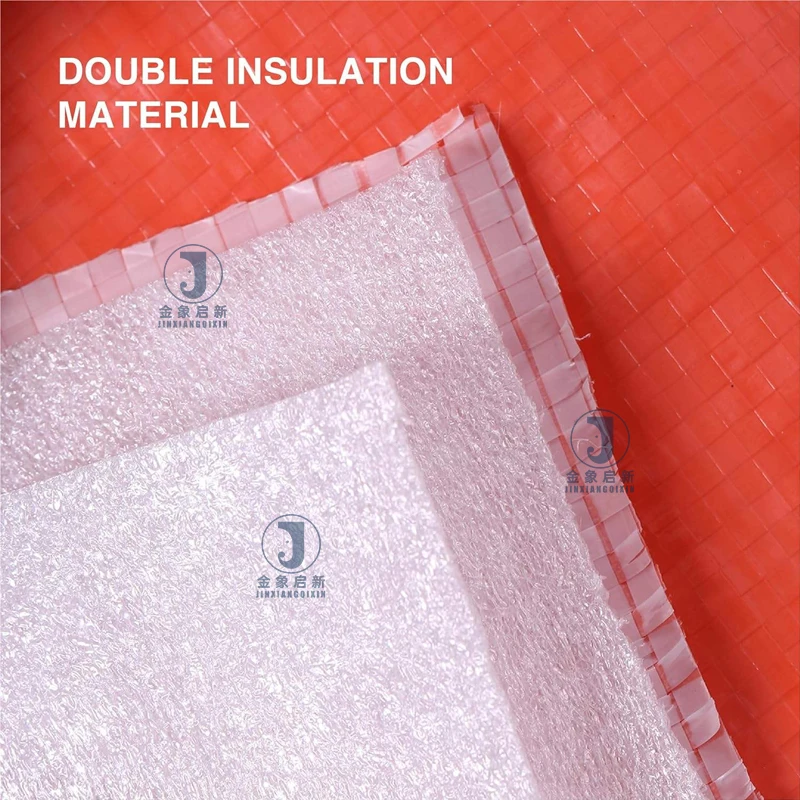
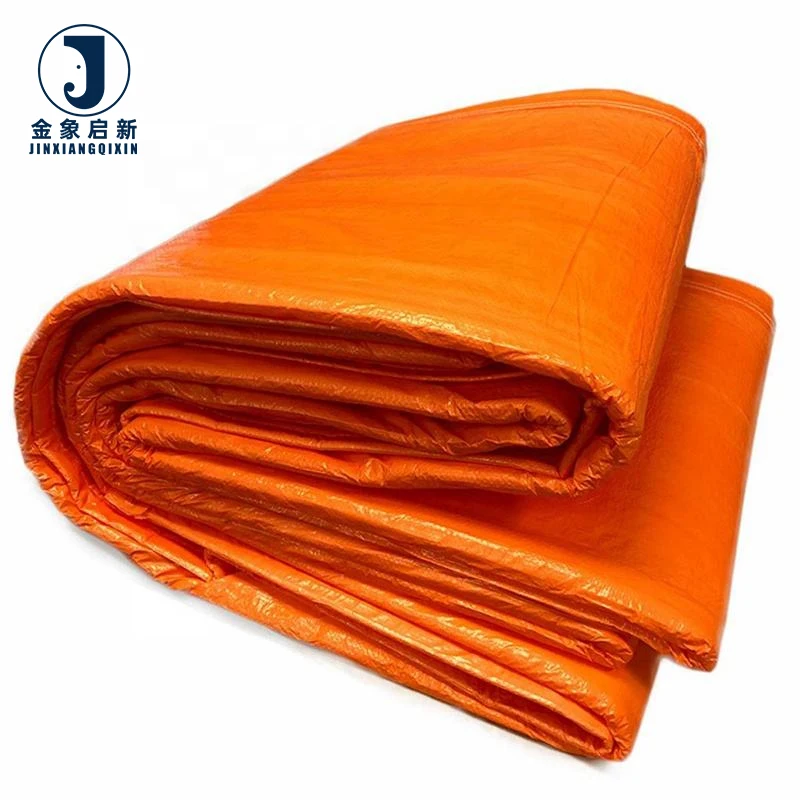
Insulated PE Tarpaulin Concrete Curing Blanket — available in 6ftx24ft, 8ftx25ft, 12ftx20ft and 12ftx24ft with thickness from 2x2mm to 12mm. PE cloth layers bonded to a closed-cell PE foam core for thermal insulation in heated enclosures and cold-weather pours.
- UV treatment built into base fabric for sustained outdoor exposure
- Rust-proof grommets at 61cm or 91.5cm spacing along stitched hems
- Custom color, size and thickness options with sample development
Nearly 30 years of coated fabric process control ensures coating weight and adhesion consistency across every roll in your order.
Description
Closed-Cell Foam Core Expertise — our three-layer PE insulated construction integrates waterproof outer fabrics with a closed-cell foam core, verified at every production stage to ensure thermal performance matches your specification.
Technical Specifications
| Parameter | Value |
|---|---|
| Product Type | PE Insulated Tarpaulin |
| Structure | PE cloth + closed cell PE foam core + PE cloth |
| Size Options | 6ft×24ft, 8ft×25ft, 12ft×20ft, 12ft×24ft |
| Thickness Options | 2×2mm, 3×1.5mm, 1×4mm, 5mm, 6mm, 8mm, 12mm |
| Color Options | Orange, Black, White, Silver, Customized color |
| Grommet Configuration | Aluminum grommets around perimeter, spacing 61cm or 91.5cm |
| Edge Finish | Reinforcement stitch with stitched hems |
| UV Treatment | UV treatment built into base fabric (test basis not stated) |
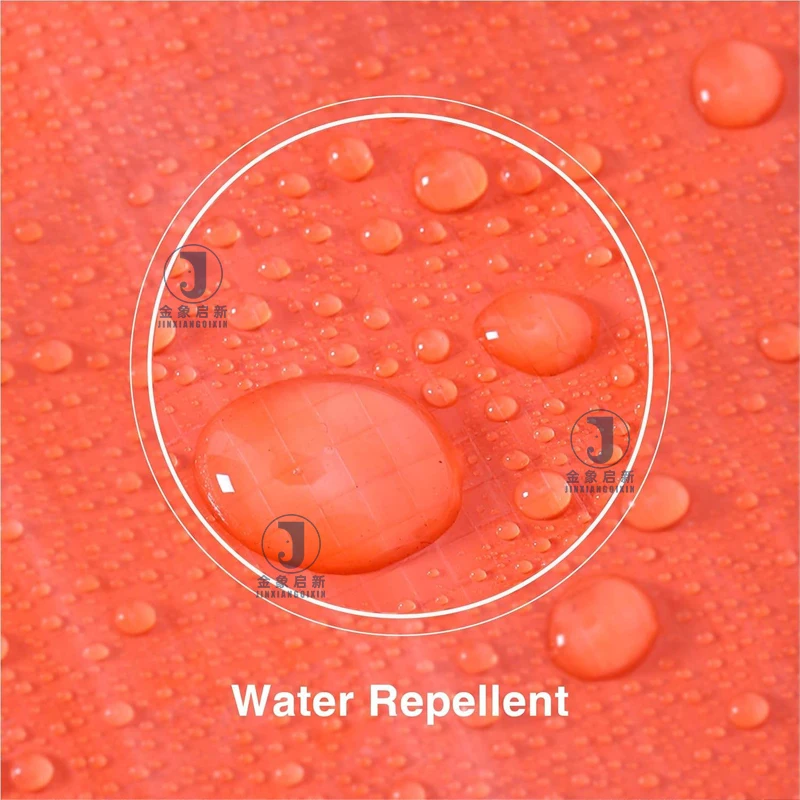
| Waterproof | Surface fabric is waterproof (rating not stated) |
Application Suitability
| Application | Exposure & Requirement |
|---|---|
| Concrete curing blanket | Prolonged ground contact, moisture retention, temperature stability across slab surfaces during cold-weather pours |
| Heated enclosure insulation | Continuous thermal differential, internal heat retention, wind-driven air infiltration at panel joints |
| Vertical wind block and building enclosure | Lateral wind load on hanging panels, abrasion against scaffolding, UV exposure on exterior face |
| Construction cold weather protection | Sub-zero ambient temperatures, snow and rain loading, repeated deployment and folding on site |
| Equipment and stock cover | Medium to high wind uplift, water pooling on horizontal surfaces, tie-down stress at grommet points |
Why Thickness Alone Does Not Guarantee Insulation Performance on a Concrete Curing Blanket
A 12mm insulated PE tarpaulin with an open-cell core loses thermal value faster than a 6mm closed-cell version under sustained exposure.
When procurement teams evaluate an insulated PE tarpaulin manufacturer, the first number they compare is thickness. Yet thickness without core density and cell structure tells you almost nothing about how the blanket performs once it is deployed over fresh concrete or hung as a heated enclosure wall. We have seen contractors specify the thickest option available, only to find the blanket compresses under its own weight when hung vertically, collapsing the air pockets that provide insulation. The closed-cell PE foam core in this product resists compression, maintaining its thermal barrier whether laid flat over a slab or tensioned on a scaffold frame. [NEED_CITE: thermal resistance testing methods for insulated construction blankets]
The relationship between core structure and real-world performance matters more than a single thickness figure. Buyers who focus on millimetres alone often overlook how the outer PE cloth layers contribute to waterproofing and how the reinforcement stitch at the hems prevents delamination under wind load.
Three-Layer Construction Designed for Temperature-Controlled Environments
The insulated PE tarpaulin range uses a bonded three-layer structure where the closed-cell PE foam core sits between two waterproof PE cloth faces. This configuration prevents moisture from migrating into the core, which would otherwise reduce thermal resistance and add dead weight. The outer layers carry the UV treatment within the base fabric rather than as a surface application, supporting sustained outdoor exposure across multiple deployment cycles.
Sizing, Grommets, and Edge Details That Match Site Reality
Four standard cut sizes cover the most common concrete pour dimensions and enclosure panel widths, while custom sizing remains available for project-specific requirements. Aluminum grommets are set at 61cm or 91.5cm intervals along the reinforced perimeter, giving contractors flexibility in tie-down spacing depending on wind exposure and scaffold geometry. The reinforcement stitch at every hem distributes tie-down load across a wider fabric area, reducing the risk of grommet pull-through when panels are tensioned vertically. [NEED_CITE: tie-down load distribution on reinforced tarpaulin hems per ISO 1421]
Reading the Thickness Range Against Your Actual Application
The available thickness options — from 2×2mm through to 12mm — serve different roles on a construction site. Thinner grades suit horizontal concrete curing where the blanket lies flat and compression is minimal. Mid-range options balance insulation value with handling weight for daily deployment and folding. The heavier grades address vertical enclosure panels and heated tent walls where the core must resist compression under its own suspended weight. Choosing the right thickness means matching core behaviour to orientation and exposure, not simply picking the highest number on the chart.
Core Density and Outer Fabric Weight Determine Long-Term Value
Closed-cell foam maintains its shape and insulation properties because each cell is sealed, preventing air and moisture exchange between cells. This is critical for construction curing blankets that may sit on wet concrete for days or hang as wind barriers through rain and snow. The outer PE cloth layers add tensile stability, so the blanket does not stretch or distort when pulled taut across a formwork frame. Together, the three layers function as a composite system where each component addresses a different failure mode.
What Happens When Insulation Specifications Are Chosen on Price Alone
Contractors who select the lowest-cost insulated blanket often discover the failure mid-project. The core compresses permanently after the first folding cycle, leaving thin spots that allow heat to escape. Grommets tear free from unreinforced hems when wind catches a vertical panel. Colour varies between pieces delivered in the same shipment, creating a patchwork appearance on high-visibility enclosure walls. These are not cosmetic issues — they mean re-ordering material while the pour schedule continues and labour stands idle. [NEED_CITE: common failure modes in temporary construction enclosure fabrics]
Why Sourcing This Insulated PE Tarpaulin From a Single-Source Manufacturer Matters
Nearly 30 years of coated fabric production gives our process control depth that extends to PE lamination and foam bonding, not just PVC coating. Three full production lines and 36 sets of professional equipment support bulk cut-size orders with consistent lead times. The 10-person R&D team handles custom thickness, colour, and sizing requests, developing samples within days so you can validate performance before committing to a production run. Dedicated QA and QC inspection at every production stage means each blanket is checked before packing, not spot-sampled after the fact. ISO and CE certified facility operations underpin every shipment with traceable documentation.
Documentation & Verification
- Material specification sheet confirming structure, measured thickness, and colour reference per roll or cut piece
- Pre-shipment inspection record with piece-by-piece dimensional checks on custom-size orders
- UV treatment test report provided for grades where applicable to your exposure requirement
- Certificate of origin and customs documentation for cross-border shipment clearance
- Roll packing list detailing quantity, size, and colour breakdown per bale or carton
Fabrication, Handling & Storage
- Stitched hems with aluminum grommets at 61cm or 91.5cm spacing allow standard tie-down hardware without custom fittings
- Fold along the reinforcement stitch lines to avoid creasing the closed-cell PE foam core permanently
- Store cut-size blankets flat or loosely rolled to prevent compression marks on the foam layer
- Clean outer PE cloth surfaces with mild detergent; avoid solvent-based cleaners that may degrade the UV treatment
- Inspect grommet seats before each redeployment to catch early signs of pull-through at high-stress corners
- Repair minor surface tears with PE-compatible adhesive patches before moisture reaches the foam core
What We Need to Quote Your Insulated Blanket Requirement
Send us the application — concrete curing, heated enclosure, or vertical wind block — along with the exposure conditions and ambient temperature range you expect on site. Specify whether you need standard cut sizes or custom dimensions, and indicate the colour and grommet spacing preference. If your project requires a specific UV treatment grade or fire performance classification, state the standard your market demands so we can confirm suitability before sampling.
Frequently Asked Questions
Q: How do you verify insulation performance and thickness on arrival?
A: Every shipment includes a pre-shipment inspection record documenting measured thickness and structural integrity per piece. We recommend buyers cross-check core density and outer fabric weight against the material specification sheet upon receipt, particularly on custom-thickness orders where the foam core is bonded to your stated requirement.
Q: What custom sizes and colours are available for insulated blankets?
A: Beyond the four standard cut sizes, we develop custom width, length, and colour options with samples produced within days for your approval. Colour consistency across all pieces in one order is controlled through dedicated batch mixing and verified during the in-process QA stage before final cutting and grommeting.
Q: What UV test basis supports the outdoor exposure claim?
A: UV treatment is built into the PE base fabric during production. We provide a test report for UV grades where applicable — confirm the specific test standard your market or project specification requires so we can match the treatment level and supply the corresponding documentation with your order.
Q: What grommet spacing and edge reinforcement options can I specify?
A: Standard aluminum grommets are set at 61cm or 91.5cm intervals along reinforcement-stitched hems. Custom spacing and grommet material can be configured to match your tie-down system and wind load calculation. Confirm the load per grommet point so we can recommend the appropriate reinforcement configuration.
Q: How is colour consistency controlled across multiple pieces in one order?
A: All pieces within a single order are produced from the same PE cloth batch and foam core lot. The in-process QA team checks colour reference against the approved sample at the cutting stage. A colour variance check is included in the pre-shipment inspection record before the order is packed and dispatched.
Related products
-
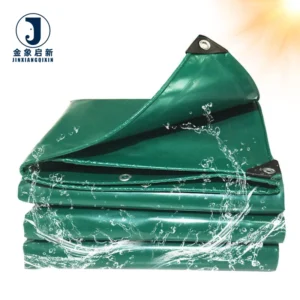
Waterproof Heavy Duty Tarpaulin Water Proof Cover Tarpaulin Manufacturer
¥1.48 Add to cart -
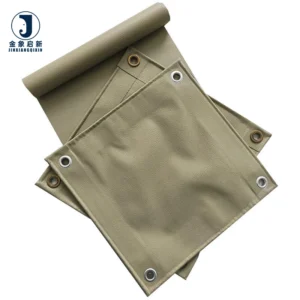
JX PVC Waterproof Fabric High-strength Sheeting for Industrial and Outdoor Coverings
¥1.90 Select options This product has multiple variants. The options may be chosen on the product page -
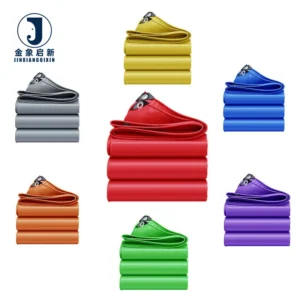
PVC-coated Waterproof Heavy-duty Vinyl Industrial Outdoor Reinforced Tarpaulins for Tents and Truck Covers
¥1.45 Add to cart -
630 Gsm Blue/Grey/Orange Pvc Tarpaulin Roll Pvc Tarpaulin Truck Tarpaulin Pvc Coated Tarpaulin
¥1.66 Add to cart