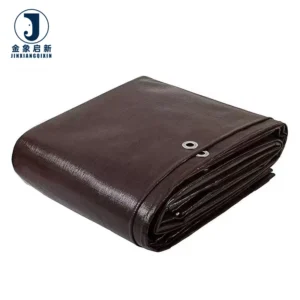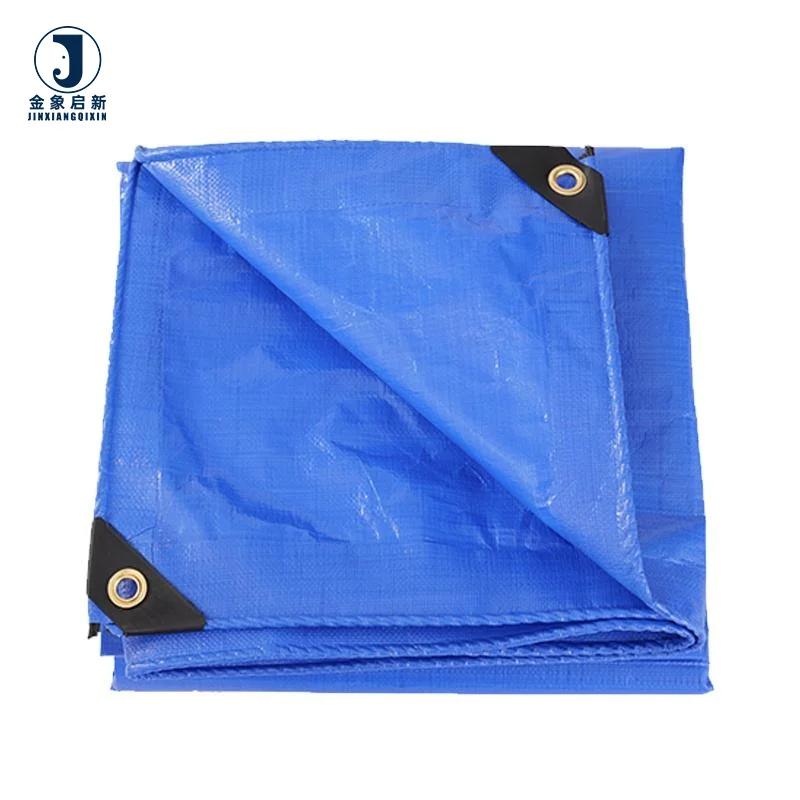
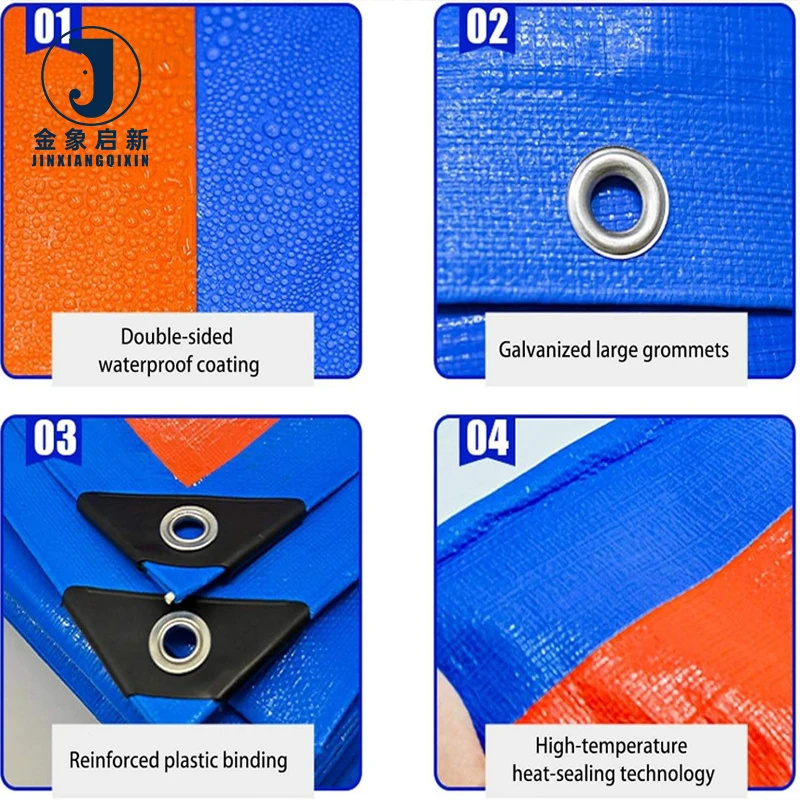
PE Tarpaulin 50–220 GSM, HDPE woven with LDPE lamination on both sides — available in rolls and finished cut sizes with PP rope reinforced hems and galvanized eyelets.
Three weight tiers cover agricultural, warehouse, and heavy transport use, where knitting density and coating weight together determine tensile and tear performance at flex points. Roll widths up to 6 m with UV and anti-aging treatment standard across grades.
- Custom width, length, colour and finished sizing with samples developed within days
- 100% pre-shipment inspection verifying GSM, colour consistency and eyelet reinforcement
- 36 sets of professional equipment across 3 full production lines supporting bulk orders
Description
Three Full Production Lines — PE Tarpaulin in rolls and cut sizes manufactured with dedicated QA at every stage, covering lightweight to heavy-duty GSM grades with 100% pre-shipment weight inspection.
Technical Specifications
| Parameter | Value |
|---|---|
| Product Type | PE Tarpaulin |
| Material | HDPE weaving with LDPE lamination on both sides |
| Weight (GSM) | 50 gr/m² – 220 gr/m² available (confirm the grade for this item) |
| Thickness | 0.18 – 0.35 mm (varies by grade) |
| Knitting Density | 8×8 / 10×10 / 12×12 (varies by grade) |
| Tensile Strength (N/5cm) | Meridian 300–1200 / Latitude 250–1000 (varies by grade) |
| Roll Width | 6 ft, 8 ft, 10 ft, 12 ft or 2 m, 4 m, 6 m (custom available) |
| Roll Length | 100 yards, 100 meters, or custom |
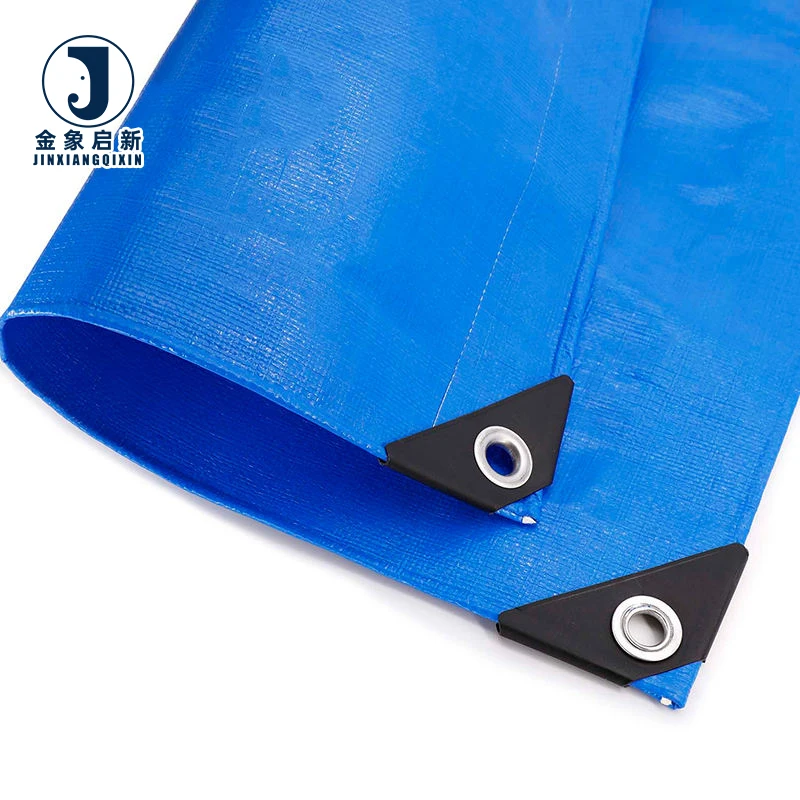
| Hem Construction | All four edges reinforced with PP rope |
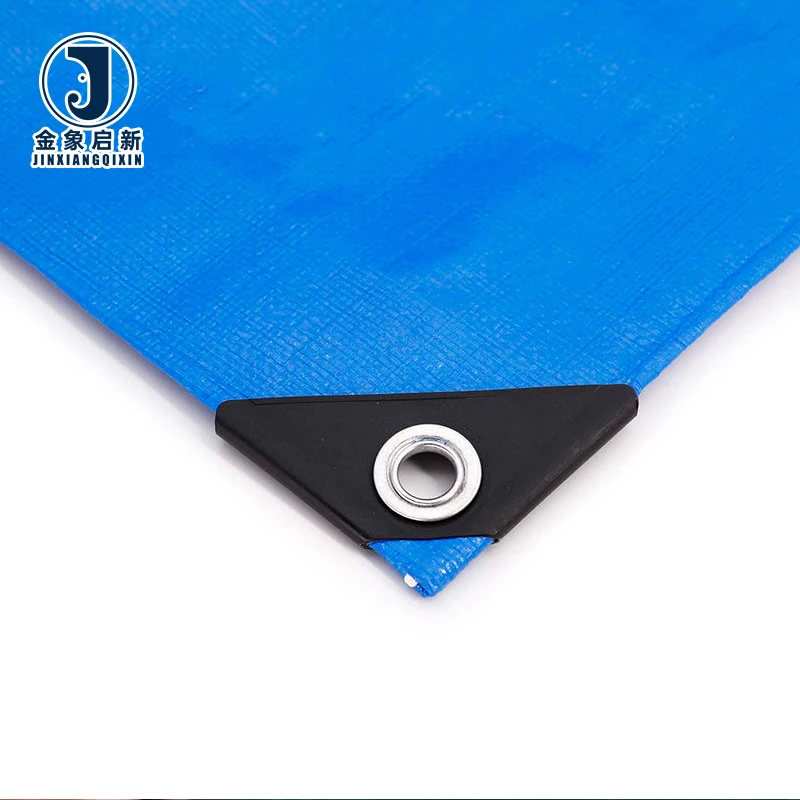
| Eyelets | Galvanized, every 3 ft or 1 meter interval |
| Corners | Reinforced plastic |
| Key Features | Waterproof, washable, tear resistant, UV treatment available, mildew proof, anti-aging |
| Colors | Blue, Blue/Orange, Green, Grey, Black, Clear, Grey/Green, Orange, custom colors |
| Standards | ISO, CE |
Application Suitability
| Application | Exposure & Requirement |
|---|---|
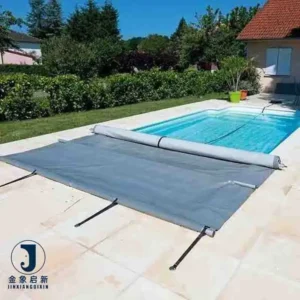
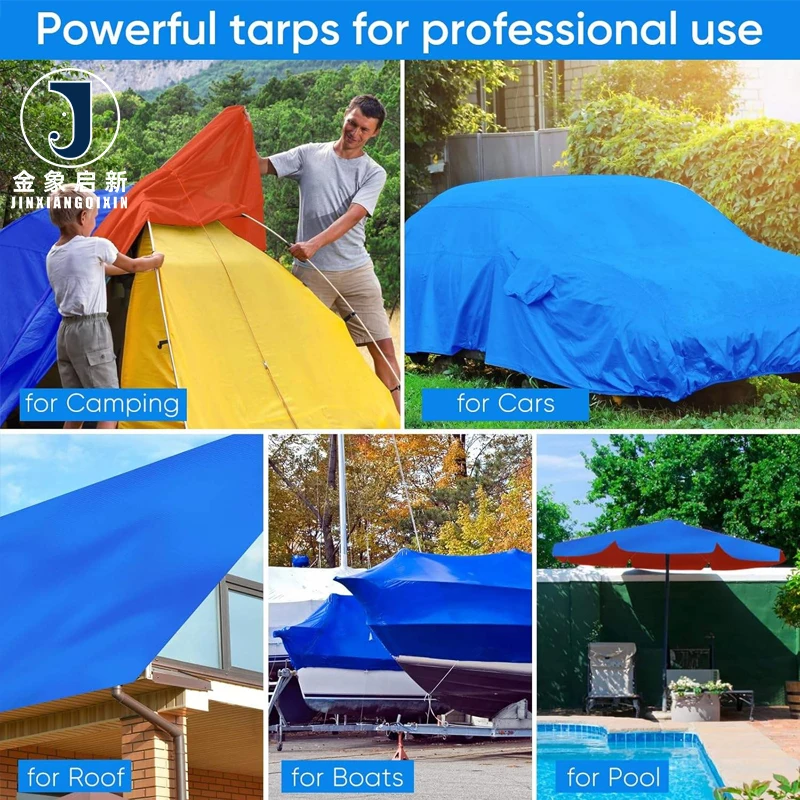
| Agricultural stock cover | Prolonged sun exposure, seasonal weather, lightweight handling, requires UV treatment and mildew resistance |
| Construction site equipment cover | Debris impact, wind load, rain ingress, requires high tensile strength and tear resistance at flex points |
| Truck and trailer load cover | Road abrasion, constant flexing during transit, UV exposure, requires reinforced hems and secure eyelet spacing |
| Temporary warehouse partition | Indoor handling, dust and moisture barrier, requires lightweight grade with clean surface finish |
| Pond and reservoir liner (temporary) | Continuous water contact, soil chemistry, puncture risk, requires waterproof integrity and adequate GSM |
Why GSM Claims Alone Cannot Confirm Material Integrity
Every roll is weighed and measured against the stated GSM before dispatch, with documented weight verification.
A PE Tarpaulin manufacturer quoting a specific GSM does not guarantee the buyer receives that exact weight. Lighter material arriving on site leads to premature tearing under load and failed project inspections. The gap between quoted specification and delivered product remains a frequent source of dispute in bulk coated fabric procurement [NEED_CITE: tensile and tear test methods for coated fabrics per ISO 1421].
Full Custom Range from Lightweight Agricultural Covers to Heavy-Duty Transport Tarps
The PE Tarpaulin range spans three weight tiers mapped directly to application demands. Lightweight grades between 80–110 GSM with 8×8 weave serve agricultural covering and temporary shelter where ease of handling matters. Medium grades between 120–150 GSM with 10×10 density cover warehouse stock and standard truck loads. Heavy-duty grades from 160–220 GSM with 12×12 density address construction site protection and industrial transport where load flex and abrasion are constant.
How the HDPE Base and LDPE Lamination Work Together
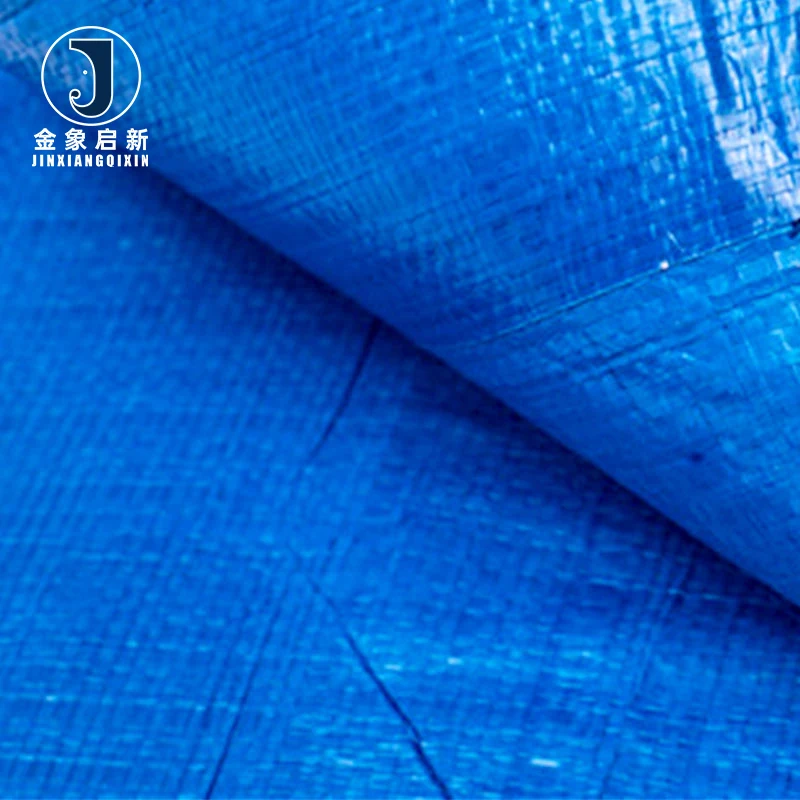
The woven HDPE base fabric provides the structural tensile and tear strength, while LDPE lamination on both sides delivers waterproofing and surface integrity. As knitting density increases from 8×8 to 12×12, both meridian and latitude tensile values scale accordingly — the lamination locks the weave in place and prevents yarn displacement under load [NEED_CITE: relationship between weave density and tensile strength in polyethylene fabrics]. UV treatment is available across all grades; confirm the treatment basis required for your market and expected exposure duration.
What GSM, Weave Density, and Lamination Together Determine
GSM alone does not define fabric performance — a lighter PE Tarpaulin with a tight 12×12 weave can outperform a heavier sheet with a loose 8×8 construction. Knitting density dictates how load distributes across the yarn matrix, while lamination thickness governs waterproofing and surface abrasion resistance. Total thickness from 0.18 to 0.35 mm reflects both base fabric and coating contribution. When specifying, request the material specification sheet stating exact GSM, base fabric denier, mesh count, and coating weight to ensure the grade matches your application.
The Hidden Costs When Specifications Do Not Match the Application
Selecting a GSM grade too low for the intended exposure leads to early fabric failure at stress points — typically where the tarpaulin flexes over load edges or at eyelet pull-out zones. Batch colour variation across rolls in the same order becomes visible once sheets are installed side by side, forcing costly replacement. Rolls supplied without verified UV treatment degrade under sun exposure well before the expected service window, leaving the buyer to absorb downtime and re-procurement costs [NEED_CITE: common causes of tarpaulin field failure in construction and transport applications].
Why Source PE Tarpaulin From This Production Facility
Three full production lines and 36 sets of professional equipment support bulk volume with consistent roll-to-roll quality across orders. A 10-person R&D team handles custom width, length, colour matching, and sample development — samples are prepared within days for non-standard requirements. Dedicated QA/QC operates at every production stage with 100% inspection before shipment, ensuring GSM, colour, and finish match the approved sample. Nearly 30 years of focused coated fabric production provides deep process control over lamination adhesion and coating uniformity. Material specification sheets, test documentation, and pre-shipment inspection records ship with every order.
Documentation & Verification
- Material specification sheet stating exact GSM, base fabric mesh count, and lamination type per roll
- UV treatment test report where applicable — confirm the test basis for your destination market
- Pre-shipment inspection record verifying roll weight against quoted GSM before dispatch
- Colour reference and batch consistency record across all rolls in a single order
- ISO and CE certificates available for customs and compliance documentation
Fabrication, Handling & Storage
- Weld temperature must match the LDPE lamination grade — higher GSM requires adjusted heat settings for full seam adhesion
- Galvanized eyelets at 3 ft intervals distribute tie-down load; reinforce corners further for heavy transport covers
- Store rolls horizontally on pallets to prevent permanent creasing across the 0.18–0.35 mm laminate surface
- Cut sheets should be folded with PP rope hems facing outward to avoid compression damage to the hem line
- Clean with mild detergent only — abrasive solvents compromise the LDPE surface and UV treatment layer
What to Include With Your Enquiry
Provide the target application, expected exposure conditions, and required GSM range so the correct grade can be recommended. Specify roll width, roll length, or finished sheet dimensions along with colour preferences and any custom print requirements. Confirm whether UV treatment documentation or specific test certifications are needed for your market compliance. Request a sample if colour accuracy or material hand-feel must be verified before committing to bulk production.
Frequently Asked Questions
Q: How is the GSM of each roll verified before shipment and upon arrival?
A: Every roll undergoes weight measurement against the stated GSM during pre-shipment inspection, with results documented in the inspection record. Buyers can cross-check by weighing a sample cut on arrival using the same method — the pre-shipment record provides the baseline for comparison and any discrepancy resolution.
Q: What UV test basis supports the anti-UV treatment claim?
A: UV treatment is available across the PE Tarpaulin range, but the test basis varies by grade and market requirement. Request the specific test report for your ordered grade and confirm whether the standard aligns with your destination market’s exposure classification before finalizing the specification.
Q: How is colour consistency maintained across multiple rolls in the same order?
A: All rolls within a single order are matched against the approved colour reference during production and verified at pre-shipment inspection. A batch consistency record ships with the order documenting the colour check, ensuring no visible variation when sheets are installed side by side on site.
Q: What are the custom width, length, and minimum order options?
A: Standard roll widths include 2 m, 4 m, 6 m and imperial equivalents, with custom widths available. Roll length can be specified beyond standard 100 yards or 100 meters. Confirm the minimum order quantity and lead time for non-standard dimensions during the quotation stage, as custom sizes may affect production scheduling.
Q: What eyelet spacing and hem reinforcement options are available?
A: Standard configuration includes galvanized eyelets every 3 ft or 1 meter with PP rope reinforced hems on all four edges and reinforced plastic corners. Custom eyelet spacing and additional corner reinforcement can be specified for heavy-duty transport covers where tie-down loads concentrate at specific points.
Related products
-
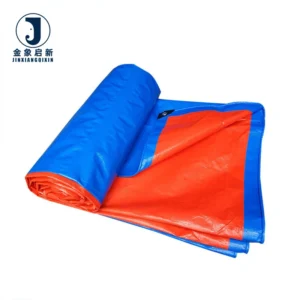
Custom Made PE Tarpaulin with Eyelets – Waterproof Tear-Resistant
Read more -
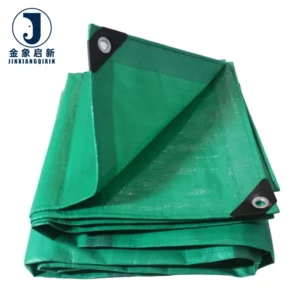
Waterproof Organic Blackout PE Coated Medium Duty All-Purpose Truck Tarpaulin for Outdoor Use Boys
¥6.81 Select options This product has multiple variants. The options may be chosen on the product page -
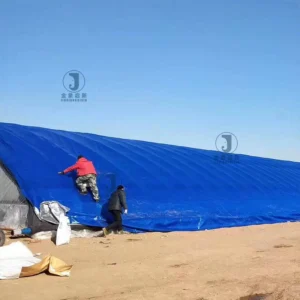
Wholesale Organic Breathable PVC Waterproof Oilcloth Blackout Fabric Sun Protection Tarpaulin Outdoor Awning Industrial Tent
¥0.89 Select options This product has multiple variants. The options may be chosen on the product page -
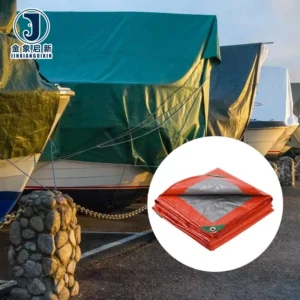
PE Coated Blackout Tarpaulin Poly Tarp with UV Protection Standard Size Fabric Sheet for Agriculture & Industrial Use
¥0.35 Select options This product has multiple variants. The options may be chosen on the product page