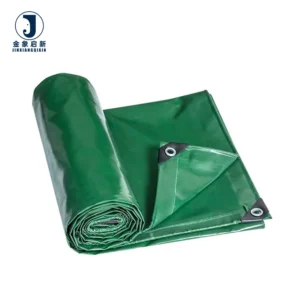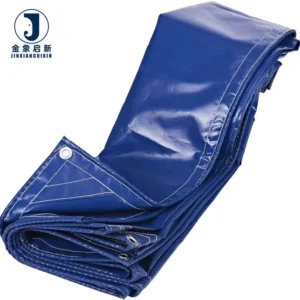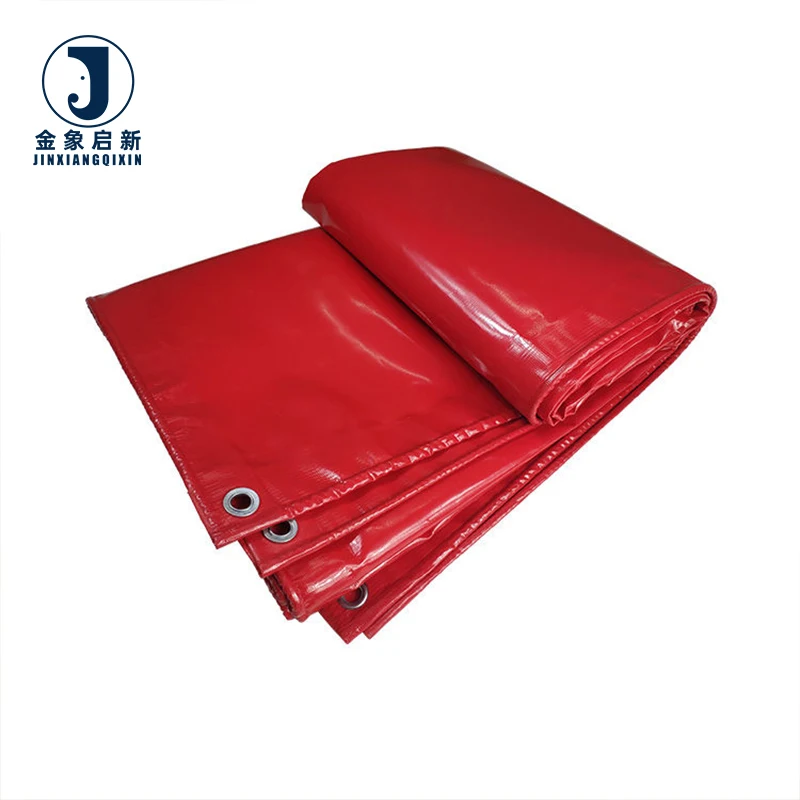
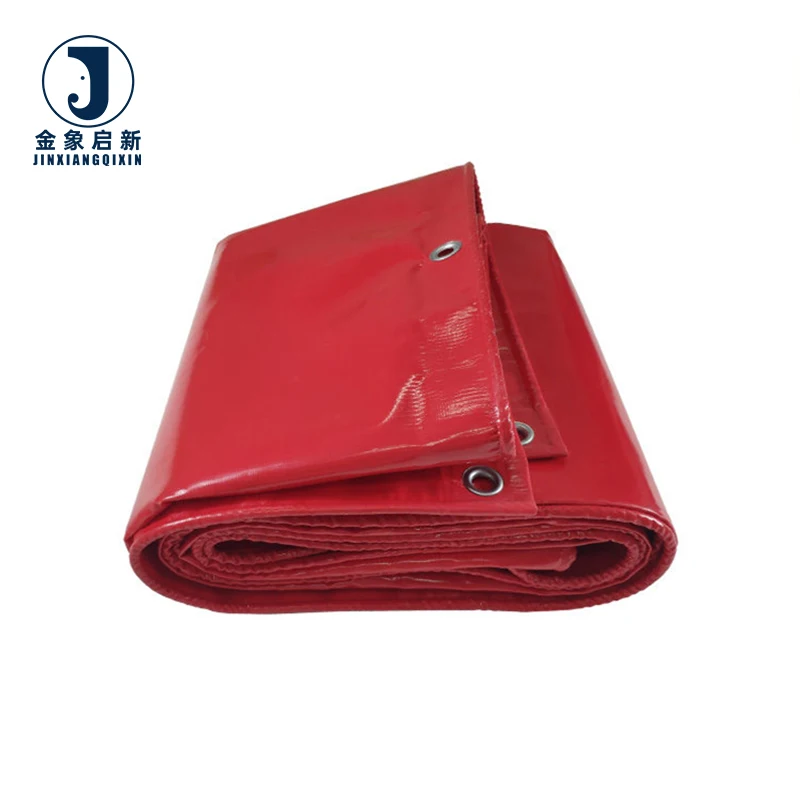
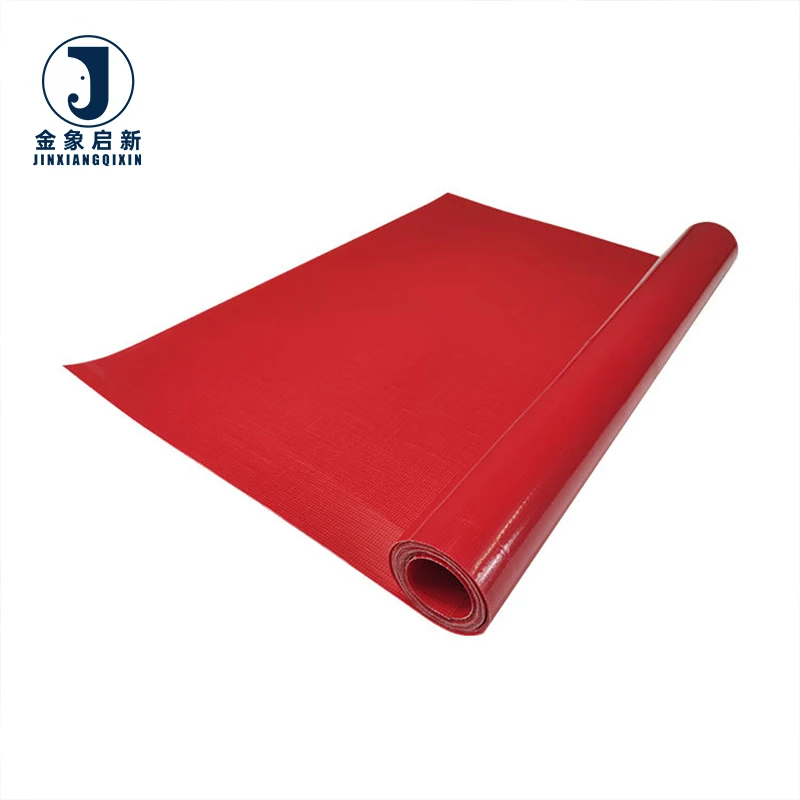
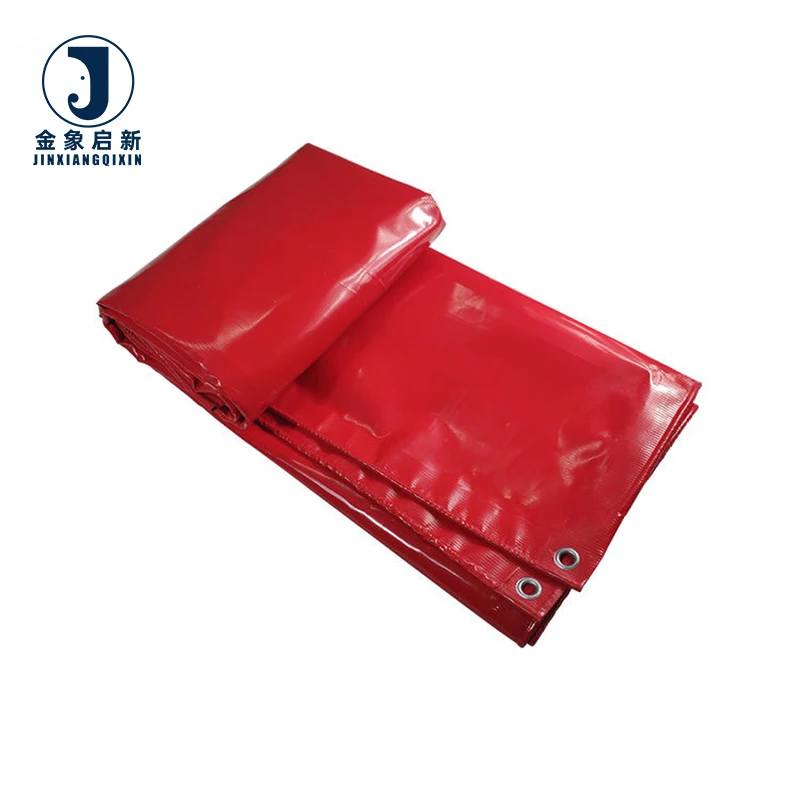
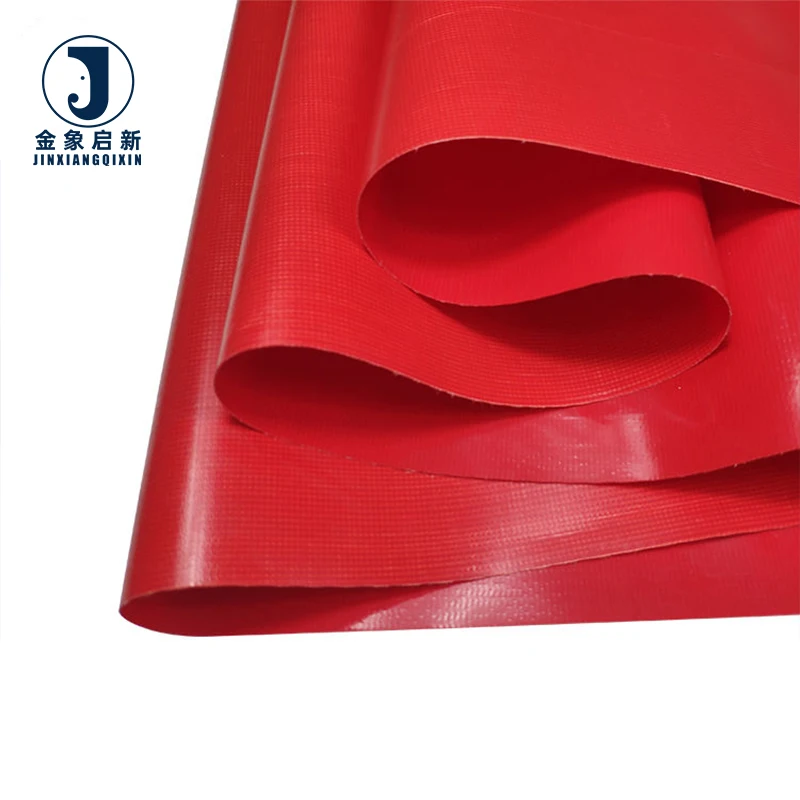
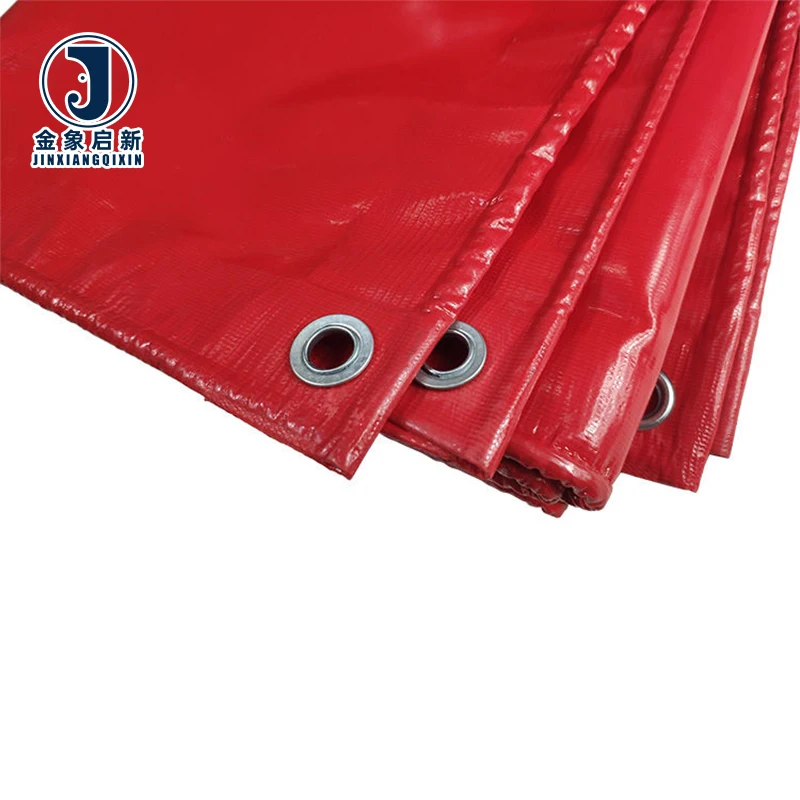
PVC Coated Tarpaulin for Farming — 500gsm-1000gsm weight range, polyester base fabric with double-sided PVC coating, custom sizing available for agricultural covers and pond liners.
Engineered for farming applications where consistent coating adhesion and waterproof performance matter most. Heat-sealed seams prevent delamination at flex points, while reinforced edges and enlarged aluminum eyelets handle tie-down stress in outdoor conditions.
- Waterproof, anti-mildew and UV-resistant treatment with test documentation
- Custom width, length, colour and branding with batch consistency across rolls
- Full pre-shipment inspection and specification sheet verification before dispatch
Description
Process Control Depth — Thirty years of coated fabric production ensures every roll leaves with verified GSM and documented coating adhesion, not just a label claim.
Technical Specifications
| Parameter | Value |
|---|---|
| Product Type | PVC Coated Tarpaulin |
| Base Fabric | Polyester woven substrate |
| Coating | Double-sided PVC |
| Available Weight Grades | 350 GSM, 400 GSM, 420 GSM, 500 GSM, 600 GSM, 650 GSM, 750 GSM, 900 GSM |
| Yarn Denier Options | 500D×840D / 500D×1000D / 1000D×1000D / 1000D×1300D / 1300D×1300D / 1000D×2000D |
| Mesh Count | 30×19 / 20×20 / 30×15 |
| Thickness Range | 0.29 mm – 0.65 mm (varies by grade) |
| Warp Tensile Strength | 1650 N – 3900 N (varies by grade, test standard not stated) |
| Weft Tensile Strength | 1600 N – 3500 N (varies by grade, test standard not stated) |
| Joining Methods | High frequency hot melt, hot air welding, sewing |
| Surface Finish | Glossy or matte (varies by grade) |
| Printing | Printable, customized branding available |
| Feature Treatments | Waterproof, fire retardant (grade not stated — confirm requirement), anti-UV (test basis not stated — confirm requirement), heavy metal free, anti-mildew, self-clean |
| Edge Finish | High temperature heat sealed seamless edge wrapping |
| Rope | 5 mm thick rope without splicing |
| Eyelets | 3 cm enlarged aluminum alloy buttonhole |
| Reinforcement | Reinforced corners on all sides |
| Packing | Polyester bag |
| Certifications | ISO, CE |
Application Suitability
| Application | Exposure & Requirement |
|---|---|
| Truck and trailer top roof and side curtain | Constant flexing at load points, road abrasion, UV and weather exposure, tie-down stress at eyelets |
| Farming and agricultural covers | Permanent outdoor exposure, rain and wind loading, soil contact, mechanical handling stress |
| Pond and reservoir liners | Continuous water immersion, soil chemistry, puncture risk from substrate irregularities |
| Outdoor event tents and awnings | UV and rain exposure, wind uplift, frequent assembly and teardown handling |
| Pallet and equipment covers | Warehouse and transit dust, moisture, stacking abrasion, forklift contact |
| Inflatable and membrane structures | Internal air pressure, UV degradation, welded seam integrity under tension |
Why the GSM on the Label Does Not Guarantee the Strength You Paid For
A heavier PVC coated tarpaulin only delivers real strength when the base fabric denier, mesh count and coating adhesion are engineered together.
Buyers routinely specify a GSM based on past experience, then find the material feels lighter on arrival or tears more easily than expected. The reason is that two fabrics can share the same GSM while differing substantially in base yarn denier and weave density — one achieves its weight through coating thickness, the other through a denser polyester substrate [NEED_CITE: tensile and tear test methods for coated fabrics per ISO 1421]. When the coating carries the weight but the base fabric is thin, tensile values drop and weld lines become the first failure point under flex. This PVC coated tarpaulin range addresses the gap by documenting both the yarn construction and the finished weight for every grade, so specification decisions rest on complete data rather than a single number.
Matching the Grade to the Load and Flex Pattern
Selecting the correct PVC coated tarpaulin grade starts with the mechanical demands of the end use, not the lowest acceptable GSM. A side curtain fabric that flexes thousands of times per trip needs a high-denier base with strong warp tensile values, while a static pond liner prioritises puncture resistance and coating adhesion. This catalogue spans eight grades from 350 GSM to 900 GSM, each with documented yarn count and mesh density, enabling a direct match between application stress and fabric construction.
Joining Method Selection Based on Application Stress
The three available joining methods — high frequency hot melt, hot air welding and sewing — each serve different load profiles. High frequency welding produces the strongest bond for load-bearing panels where the seam must match the fabric tensile value. Hot air welding suits curved or complex geometries common in inflatable structures. Sewing remains appropriate for hems and non-structural edges where flexibility matters more than seam strength [NEED_CITE: ISO 1421 standard for tensile testing of coated fabrics]. Specifying the wrong method for a given flex pattern is a frequent cause of early seam failure.
How Base Fabric Construction Drives Real-World Durability
The relationship between denier, mesh count and tensile strength is the foundation of coated fabric performance. A 1000D×2000D yarn in a 30×15 mesh delivers the highest tensile values in this range (warp 3900 N, weft 3500 N) because the heavy weft yarns resist the dominant cross-direction forces. Conversely, a 500D×840D yarn at 30×19 mesh provides adequate strength for lighter covers at a lower GSM, but would fail prematurely under the same load. The coating method — here a double-sided PVC application — locks the weave in place and contributes to peel strength at welded seams, which determines whether the joint holds or delaminates under repeated flex. Thickness correlates with coating mass: the 0.65 mm grade carries substantially more PVC per square metre than the 0.29 mm grade, adding abrasion resistance and UV shielding but also increasing roll weight and handling difficulty.
The Hidden Cost of Underspecifying the Material
When a PVC coated tarpaulin is selected on GSM alone, the consequences surface in the field rather than on the quotation. A transport cover that specified a mid-range grade for a heavy-duty side curtain application may show weld line delamination within the first season, because the coating adhesion was insufficient for the flex cycles involved [NEED_CITE: weld adhesion testing requirements for PVC coated fabrics]. Similarly, a farming cover ordered without confirming the fire retardant grade may fail a site safety audit, forcing a complete replacement at the buyer’s cost. Colour inconsistency between rolls in the same batch is another recurring issue — panels installed side by side reveal visible shade variation, requiring a full reorder to maintain a professional appearance.
Why This Range Holds Up Under Procurement Scrutiny
Nearly 30 years of focused coated fabric production means the coating weight and adhesion parameters are controlled at the process level, not adjusted at the end of the line. Three full production lines and 36 sets of professional equipment support consistent output volume with reliable dispatch scheduling. A 10-person R&D team handles material selection, custom sizing and sample development, so a buyer can request a trial piece cut to exact dimensions before committing to bulk. Every production stage carries dedicated QA/QC oversight, and 100% pre-shipment inspection ensures the GSM, colour and finish match the specification sheet before the goods leave the facility.
Documentation & Verification
- Material specification sheet stating GSM, base fabric denier, coating weight and colour reference per order
- Pre-shipment inspection record confirming weight verification against the stated grade before dispatch
- UV and flame retardant test reports supplied where applicable to the selected grade
- ISO and CE certificates included with shipment documentation
- Roll packing list with batch identification for traceability across multiple rolls
- Certificate of origin and customs support documents for export shipments
Fabrication, Handling & Storage
- Set high frequency welding parameters to match the specific GSM grade — thicker coatings require adjusted power and dwell time for full adhesion
- Heat-sealed edge wrapping on all sides prevents fraying and moisture ingress at cut edges during field installation
- Store rolls horizontally on a flat surface to prevent permanent creasing that can crack the PVC coating at fold lines
- Allow cold-stored rolls to reach ambient temperature before unrolling to avoid coating stiffness and surface cracking
- Clean self-clean treated surfaces with mild detergent and soft brush — abrasive cleaners will degrade the surface treatment layer
- Position 3 cm aluminum alloy eyelets at intervals matching the expected tie-down load, with reinforced corners bearing the highest point stress
Preparing Your Specification Enquiry
To receive an accurate recommendation and sample, provide the intended application and the specific exposure conditions the cover will face — including wind loading, UV intensity and any fire safety requirements for the installation market. Confirm whether you need finished cut-to-size panels with eyelets and edge finishing, or roll stock for your own fabrication line. If colour matching or printed branding is required, supply a Pantone or RAL reference so the sample can be developed to your exact standard before bulk production begins.
Frequently Asked Questions
Q: How is the stated GSM verified on arrival and what documentation accompanies each shipment?
A: Every roll or finished panel is weighed during pre-shipment inspection and the result is recorded against the specification sheet. The shipment includes a material specification document stating the confirmed GSM, base fabric construction, colour reference and any applicable test reports, so you can cross-check on receipt.
Q: What flame-retardant grades and anti-UV test reports are available for specific market compliance?
A: Fire retardant and anti-UV treatments are available in multiple grades. The exact grade and supporting test report depend on the compliance standard required in your target market — specify the relevant standard such as DIN 4102, NFPA 701 or local building code, and the appropriate test documentation will be prepared with your sample.
Q: How are custom dimensions, eyelet spacing and printing handled, and what is the minimum order?
A: Custom sizing is developed through the sample stage, where a trial piece is produced to your exact dimensions, eyelet layout and printing specification for approval. Minimum order quantities vary by grade and finish — confirm your required specification and annual volume to receive a precise minimum and lead time.
Q: How is colour consistency maintained across multiple rolls or panels in the same order?
A: Production batching groups all rolls for a single order under the same coating run and colour formulation. The pre-shipment inspection includes a visual colour check panel-to-panel, and the roll packing list identifies batch numbers so any future reorder can be matched to the original shade.
Q: What joining and finishing methods are recommended for high-flex load-bearing applications?
A: High frequency hot melt welding delivers the strongest seam for load-bearing panels subject to repeated flex, as the weld penetrates the PVC coating to bond with the base fabric. Hot air welding suits curved seams in inflatable structures, while sewing with heat-sealed tape reinforcement is used for hems and non-structural edges.
Related products
-
Pvc Coated Waterproof Tarpaulin Heavy Duty Tarp for Tent Roof Stocklot Lumber
¥1.60 Add to cart -
Factory Custom 9×11 Poultry Curtains Tarpaulin PVC Coated Waterproof Anti-Static Eco-Friendly Tarp for Chicken Coop Boys Girls
¥0.90 Select options This product has multiple variants. The options may be chosen on the product page -
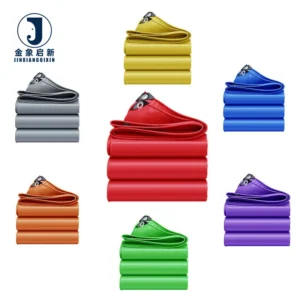
PVC-coated Waterproof Heavy-duty Vinyl Industrial Outdoor Reinforced Tarpaulins for Tents and Truck Covers
¥1.45 Add to cart -
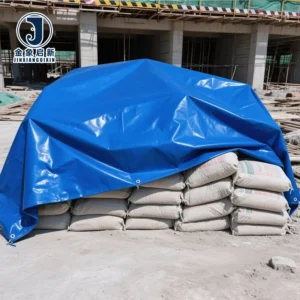
Wholesale Pvc Tarpaulin Wear-resistant Waterproof Multi-purpose Heat-resistant Tarpaulin
¥2.00 Add to cart