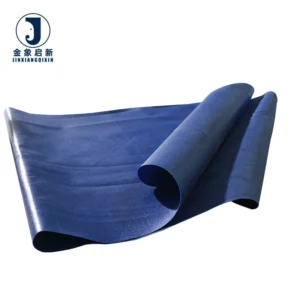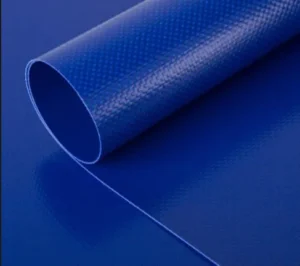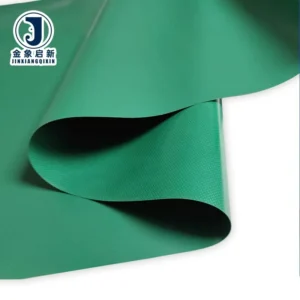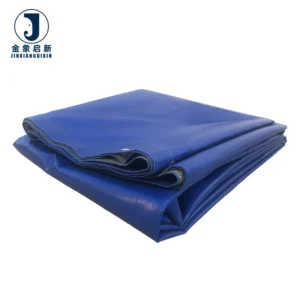
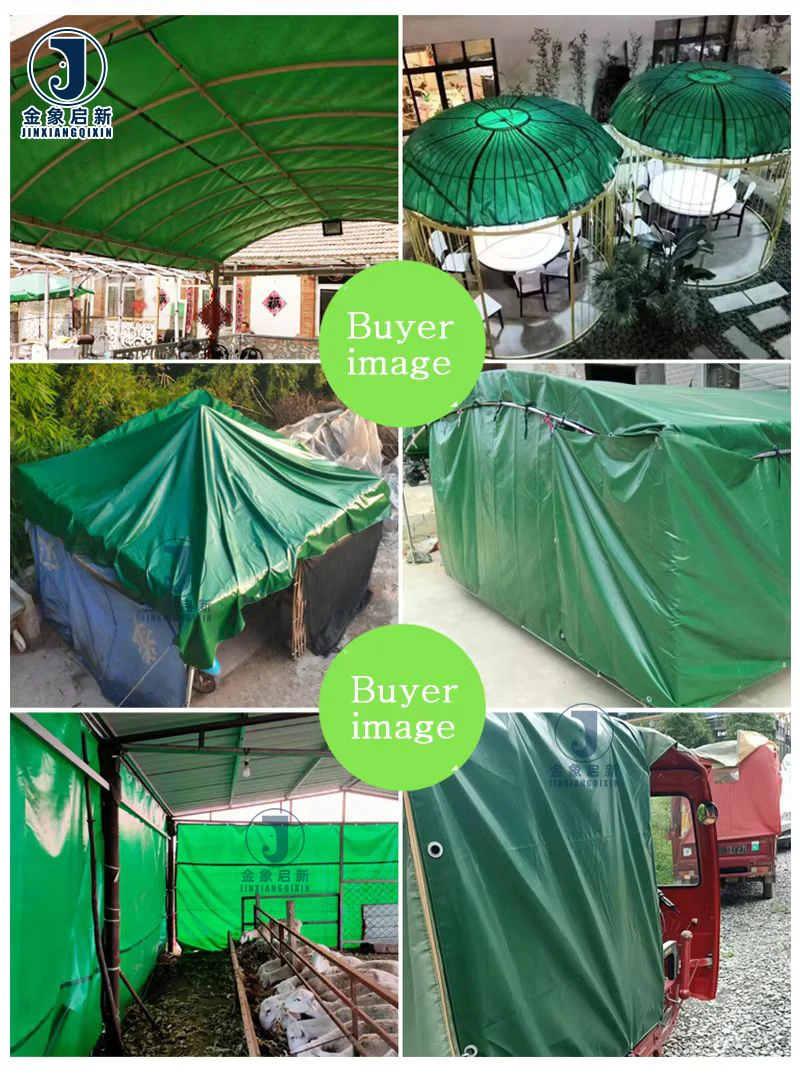
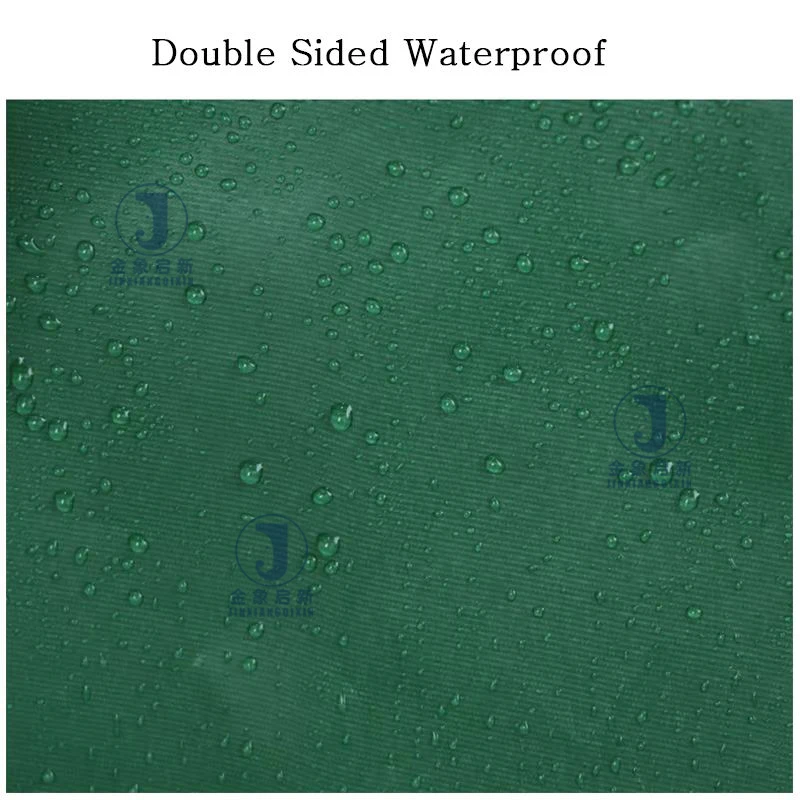
PVC Coated Tarpaulin Roll — waterproof, tear-resistant warp knitted fabric with plain weave construction, available in custom colors for farm tent and livestock cover applications.
Coating weight and base fabric denier are matched to agricultural duty cycles, balancing tensile strength with flexibility at seam and tie-down points. Roll width and length options reduce off-cuts and splice joints during fabrication.
- Samples developed within days for color and finish approval before bulk production runs begin
Description
Coated Fabric Expertise — Nearly 30 years of process control over PVC coating weight, base fabric adhesion, and batch-to-batch consistency applied to every agricultural tarpaulin roll we produce.
Technical Specifications
| Parameter | Value |
|---|---|
| Product Type | PVC Coated Tarpaulin Roll |
| Coating Material | PVC |
| Base Fabric Construction | Warp Knitted |
| Weave Style | Plain |
| Waterproof | Yes |
| Tear Resistant | Yes (test standard not stated in source) |
| Anti-Static | Claimed (surface resistance standard not stated in source) |
| Flame Retardant | Available — confirm the grade required for your market |
| UV Treatment | Available — confirm the treatment level for your application |
| Color | Customizable |
| Finish | Plain Style |
| Weight (GSM) | Not stated in source — specify required GSM at inquiry |
| Application Strength | Industrial / Heavy-duty |
Application Suitability
| Application | Exposure & Requirement |
|---|---|
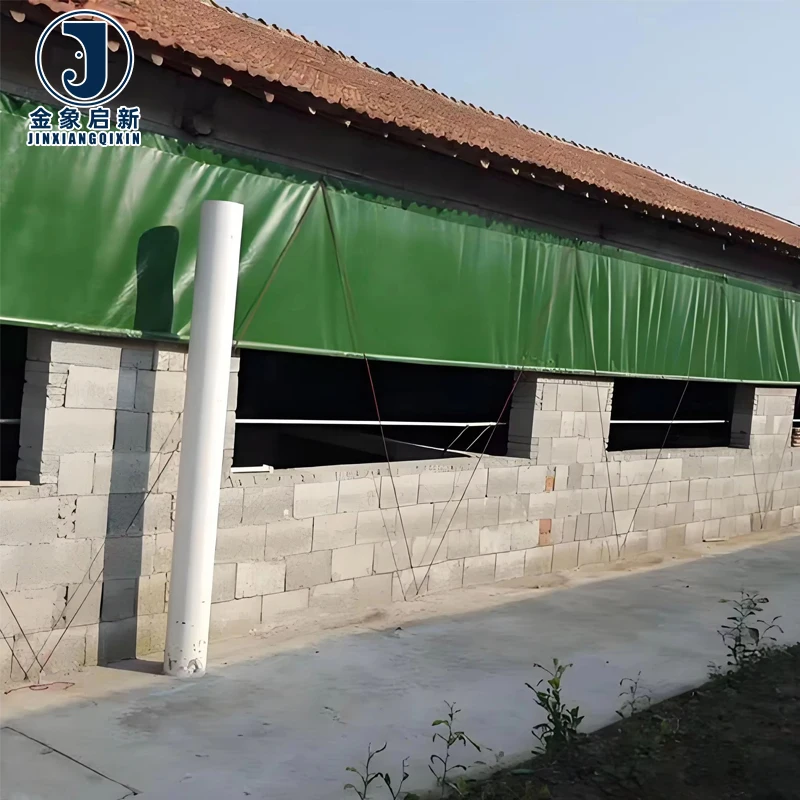
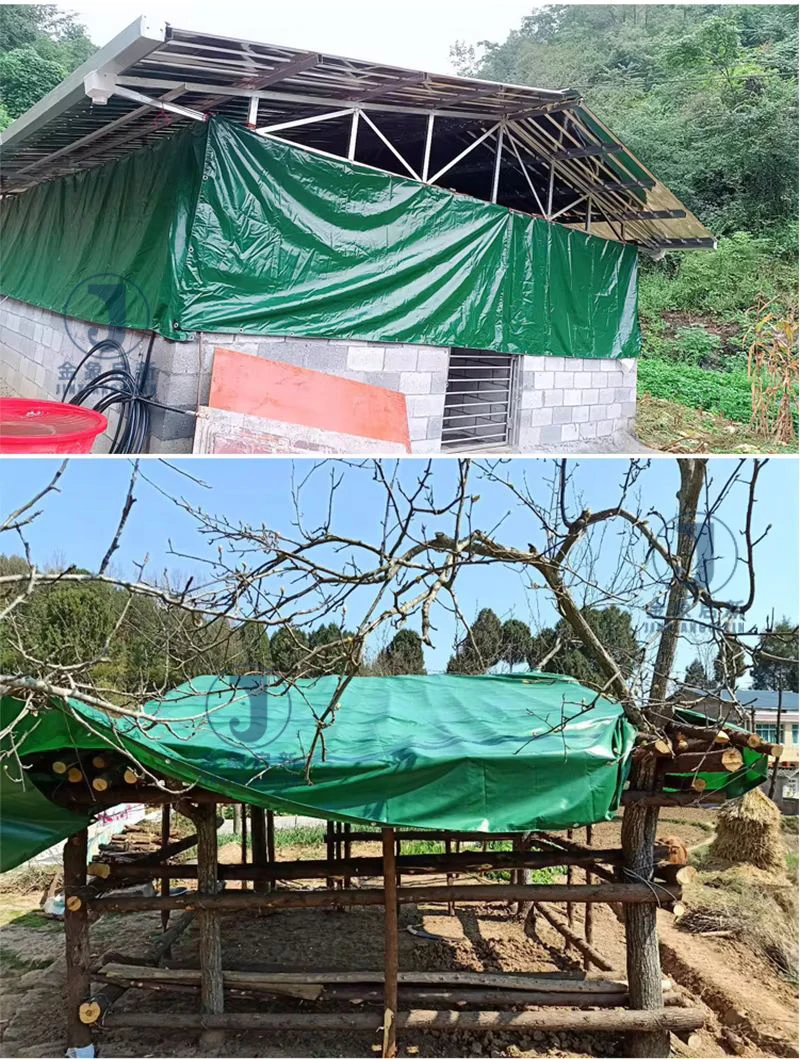
| Poultry house covers (broiler, chicken, egg production) | Constant moisture, ammonia-rich atmosphere, daily temperature fluctuation, wind load on large panels |
| Livestock shelter and pen covers (pig, sheep) | Mechanical abrasion from animal contact, manure exposure, UV from open-sided structures |
| Agricultural tent and temporary farm structures | Repeated assembly and disassembly, flexing at ridge poles, rain and wind-driven moisture |
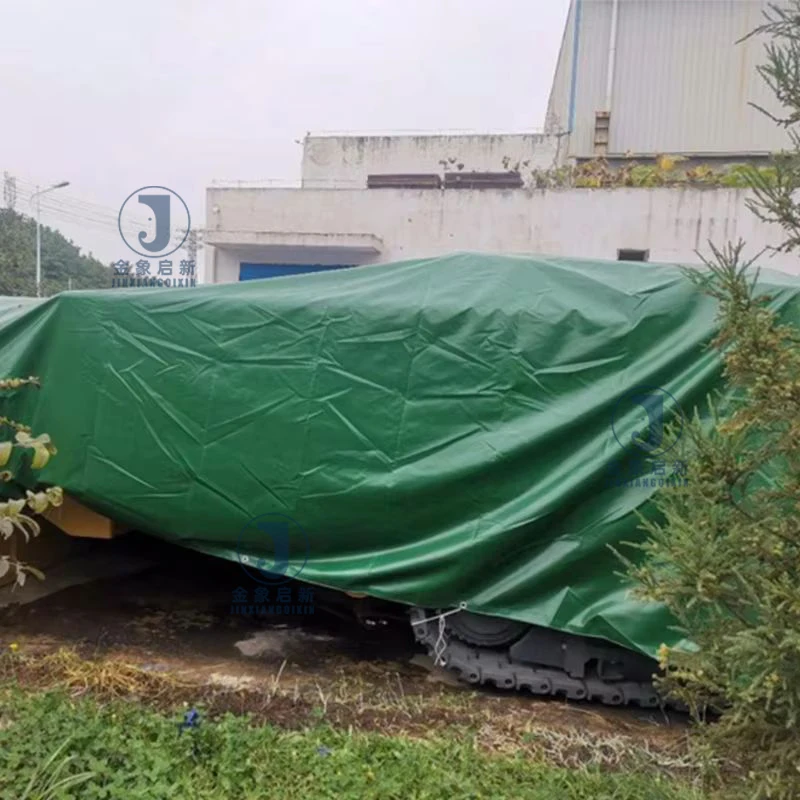
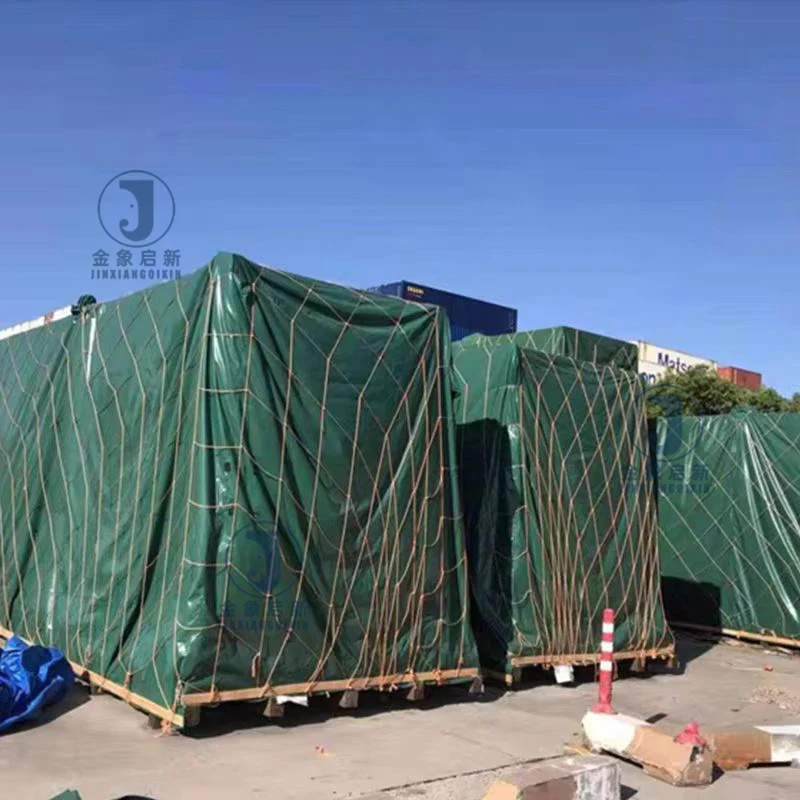
| Farm equipment and feed stockpile covers | Puncture risk from sharp edges, prolonged water pooling, UV degradation over seasons |
What Inconsistent Roll Colour Costs a Farm Cover Project
Batch-to-batch colour variation across a single order is one of the most frequent complaints from agricultural tarpaulin buyers, and it only becomes visible once the material is installed side by side on a structure.
When a poultry farm or livestock shelter requires multiple PVC coated tarpaulin rolls to cover a single building, even a slight shade difference between rolls creates a visible stripe effect that signals poor quality to the end user. This is not a cosmetic concern alone — colour variation often points to inconsistent pigment dispersion in the coating compound, which can also mean uneven UV stabiliser distribution across the batch [NEED_CITE: pigment dispersion and UV stabiliser correlation in PVC coating]. A PVC Coated Tarpaulin manufacturer custom order should guarantee that every roll in your shipment was coated from the same mixed batch of PVC compound, or at minimum, that each roll passed a side-by-side colour check before packing.
Colour Matching and Roll Consistency Across Your Farm Cover Order
Our production sequence for agricultural PVC coated tarpaulin rolls begins with pigment and compound mixing at a volume sufficient to cover the entire order in one batch where possible. Where order volume exceeds a single mix, each batch is checked against a physical colour reference standard before coating begins, and rolls from different batches are compared under standardised lighting before being assigned to the same shipment. This process addresses the core complaint that colour varies between rolls in the same order — a problem that frequently forces buyers into costly replacement or discount negotiations after the material is already on site.
Welded Seam Integrity at Flex Points on Farm Structures
Agricultural tent covers and livestock shelter panels experience repeated flexing at ridge lines, tie-down points, and where the fabric meets the frame. The welded seam is typically the first point of failure if heat and pressure settings are not matched to the specific coating weight and base fabric construction. Our in-process QA checks seam peel strength at intervals during production, and the warp knitted base fabric provides a stable substrate that resists distortion during hot-air or high-frequency welding [NEED_CITE: seam peel strength testing methods for PVC coated fabrics per ISO 1421]. When specifying a PVC Coated Tarpaulin Roll for farm tent applications, confirm that the welding parameters will be validated on your specific material before the full production run begins.
Reading the Specification Sheet Beyond the GSM Number
The stated weight in grams per square metre tells you how much material is in each square metre, but it does not independently predict how the fabric will perform under the mechanical loads a farm cover experiences. Tensile strength and tear resistance depend on the base fabric denier and warp knitted construction as much as on the total coating weight applied. A PVC coated tarpaulin with a heavier coating but a lighter base fabric may score well on stiffness but underperform on tear propagation resistance compared to a lighter-coated fabric built on a denser warp knitted scrim. The plain weave style specified for this roll provides a balanced tension profile in both warp and weft directions, which matters when large panels are tensioned across a frame. For buyers sourcing a PVC Coated Tarpaulin manufacturer custom product, the practical step is to request a material specification sheet that breaks out the base fabric denier, the coating weight on each side, and the total GSM separately — then match those figures to the mechanical demands of your specific farm structure.
The Hidden Cost of Specifying Without Verification
When a PVC coated tarpaulin roll arrives lighter than the quoted GSM, the buyer has already paid for material that does not exist, and the installed cover will underperform against wind load, puncture, and long-term UV degradation. The same applies to anti-static or flame-retardant claims that lack a supporting test report — the material may pass visual inspection but fail a site safety audit or an insurance assessment after installation [NEED_CITE: fire classification standards for temporary agricultural structures]. Requesting a pre-shipment inspection record with roll-by-roll weight verification and a test report for any claimed treatment is not an unreasonable demand; it is the minimum documentation that separates a verified PVC Coated Tarpaulin Roll from an unverified one.
Why Source This Product Through Our Production Lines
Every PVC coated tarpaulin roll in this range passes through a dedicated QA/QC checkpoint at each production stage — coating weight verification, colour consistency against the reference standard, and seam peel testing — before the 100% pre-shipment inspection. Our 10-person R&D team handles the sample development for custom colour, width, and sizing requirements, with samples typically developed within days so that buyers can confirm fit and appearance before committing to bulk production. The three full production lines and 36 sets of professional equipment provide the capacity to deliver multi-roll agricultural orders on time without splitting production across external subcontractors. ISO and CE certification underpins the documentation pack that accompanies every dispatch, giving buyers the paperwork needed for import clearance and site compliance. Custom widths, roll lengths, eyelet placement, reinforced hems, and pattern printing are all handled in-house, meaning one point of accountability from inquiry through to delivery.
Documentation & Verification
- Material specification sheet stating base fabric denier, coating weight, and total GSM per roll
- Colour reference record confirming roll-to-roll consistency before dispatch
- Pre-shipment inspection record with weight verification per roll against the quoted GSM
- UV and flame-retardant test reports included where treatment has been specified
- ISO and CE certificates provided with the dispatch documentation pack
- Certificate of origin and customs support documents included for international shipments
Fabrication, Handling & Storage
- Set hot-air welding temperature to match the specific PVC coating weight before joining panels
- Reinforce eyelet positions at tie-down points where the warp knitted base carries concentrated load
- Store rolls horizontally on pallets to prevent permanent creasing across the coating surface
- Allow cold-stored rolls to reach ambient temperature before unrolling to avoid coating crack
- Use mild detergent only; solvent-based cleaners may degrade the PVC coating finish
- Cut panels with allowance for thermal expansion on large agricultural tent spans
Before You Request a Quote
Provide the application type — poultry house, livestock shelter, or agricultural tent — along with the exposure conditions and any fire safety or compliance requirements for your target market. Specify the required roll width, length, and total quantity so that we can confirm batch consistency and production scheduling. If your project requires a specific colour or printed branding, request a physical sample for approval before bulk production begins.
Frequently Asked Questions
Q: How is GSM verified on arrival and what documentation supports the quoted weight?
A: Each roll is weighed and measured during pre-shipment inspection, and the verified GSM is recorded on the inspection report included with your dispatch documents. The material specification sheet breaks out base fabric denier and coating weight separately so you can cross-check total GSM on arrival.
Q: How do you control colour consistency across multiple rolls in one shipment?
A: Pigment and PVC compound are mixed in a single batch where order volume allows, and every roll is compared against a physical colour reference under standardised lighting. Rolls that deviate from the reference are flagged during the 100% pre-shipment inspection and replaced before dispatch.
Q: What custom widths and roll lengths are available for farm cover applications?
A: Custom widths and roll lengths are produced on our full production lines to match your panel dimensions and minimise on-site waste. Sample rolls in the requested width are developed within days for your approval before bulk production is scheduled.
Q: What eyelet and reinforced hem options are offered for agricultural tarpaulin installations?
A: Eyelet spacing, diameter, and placement are configured to your installation requirements, with reinforced hem welding applied at high-load edges. The warp knitted base fabric provides a stable anchor for hardware without tearing under tension.
Q: How quickly can samples be developed for a custom colour or size requirement?
A: Our R&D team develops samples for custom colour, width, and sizing within days of receiving your specification. Samples ship with a material data sheet so you can verify coating weight, colour match, and welding compatibility before committing to a full production order.
Related products
-
Tarp Factory 610gsm 650gsm 800gsm Awnings Tent PVC Coated Fabric Waterproof Bache Lona PVC Tarpaulin Roll
¥1.45 Select options This product has multiple variants. The options may be chosen on the product page -
High Quality Windproof Waterproof PVC Coated Plain Tarpaulin for Industrial Shelter Use
¥0.53 Add to cart -
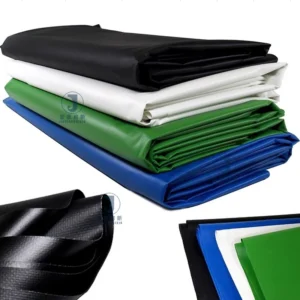
Best Quality 650gsm Waterproof Polyester Heavy Duty Bache PVC Tarpaulin Manufacturer
¥1.25 Select options This product has multiple variants. The options may be chosen on the product page -
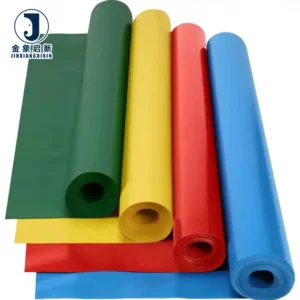
PVC Tarpaulin Glossy 650GSM 1000D*1000D 23*23 1.50*50M/R for Multi-purpose Cover SAMPLE FREE
¥2.70 Add to cart