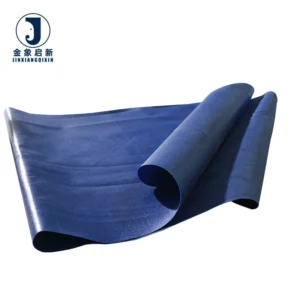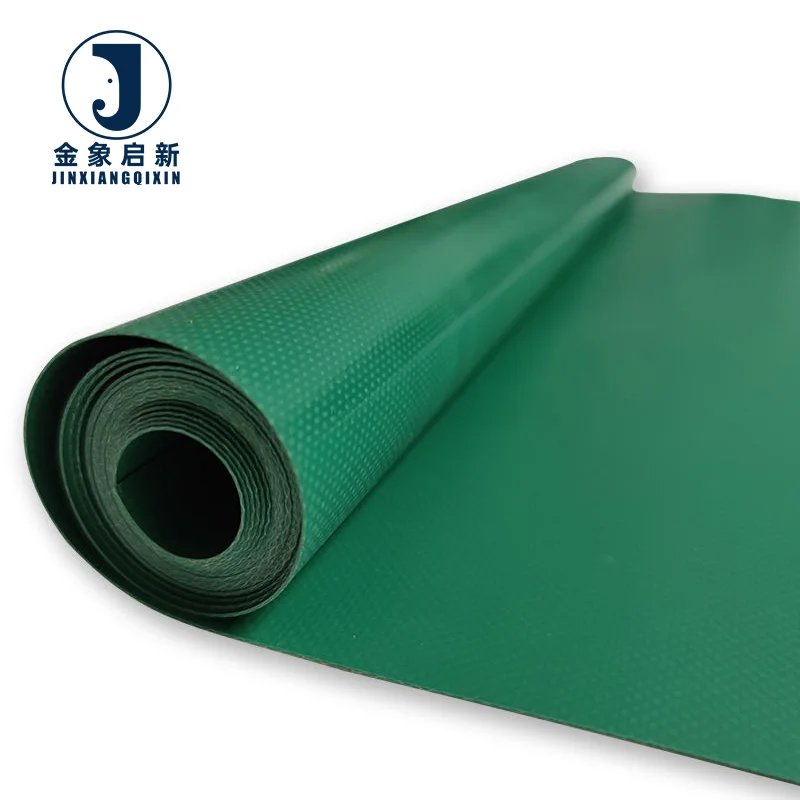
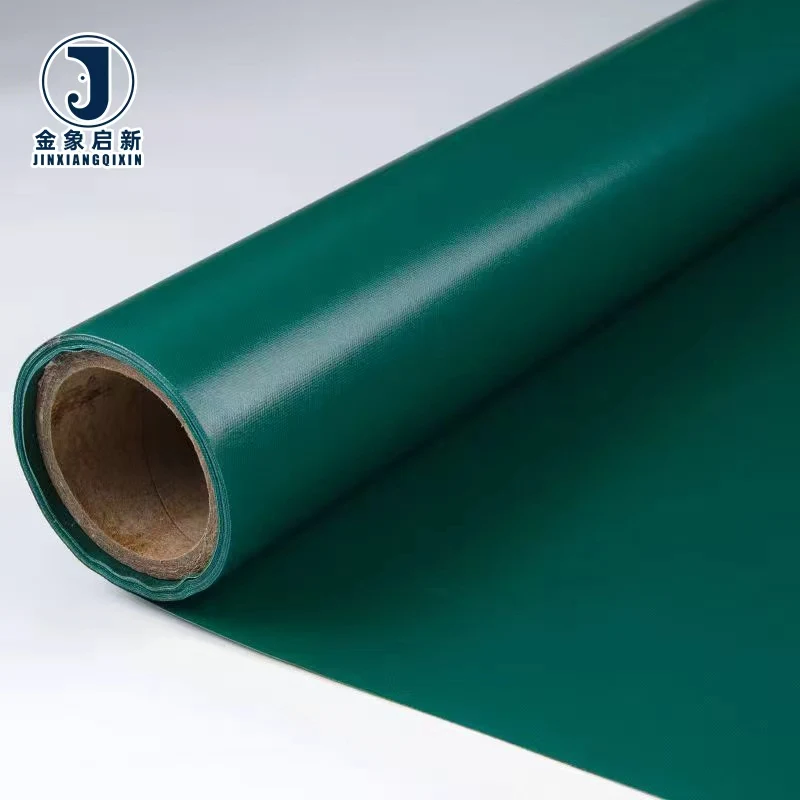
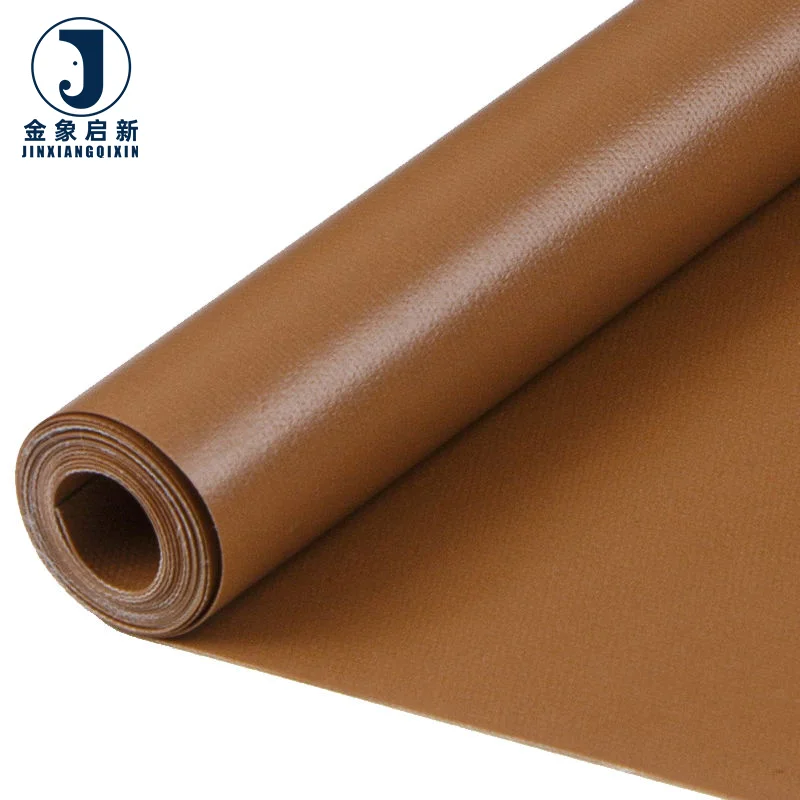
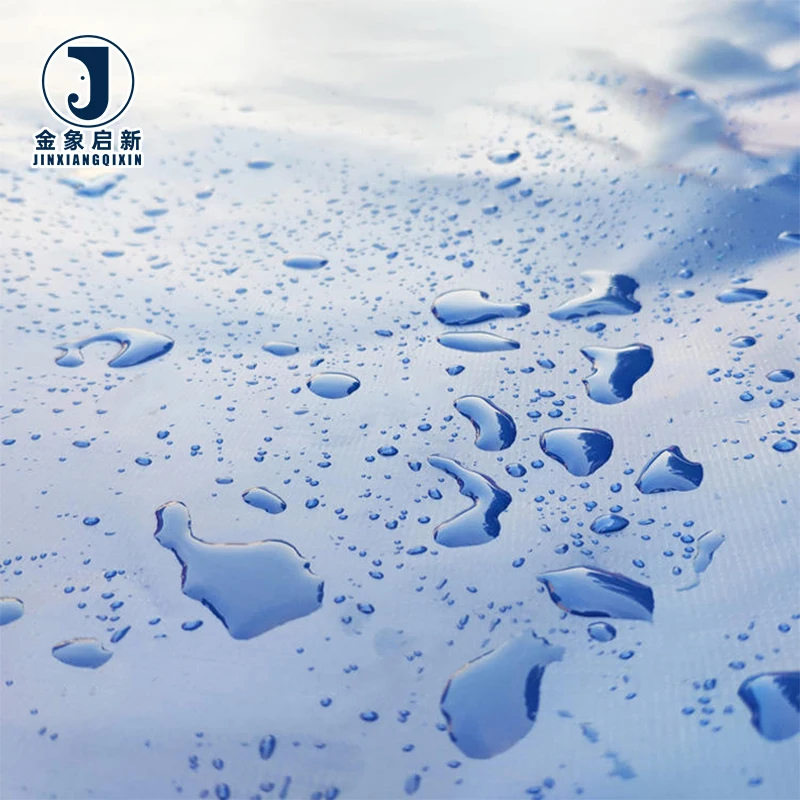
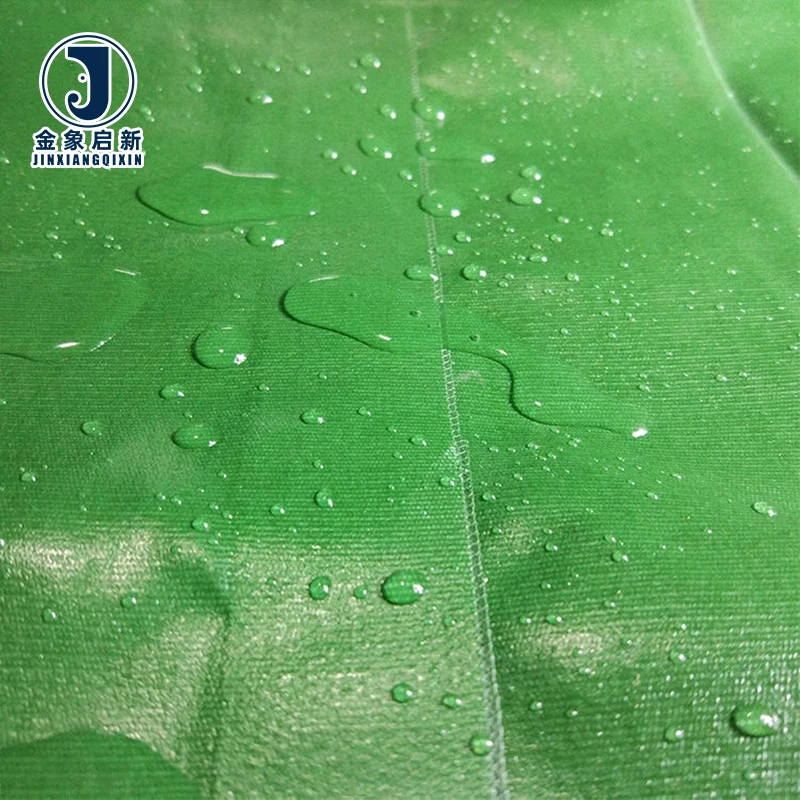
PVC Coated Tarpaulin Roll, 350–900 g/m², Polyester Base 500D–2000D — double-sided coated for industrial shelter and transport cover applications.
- Weight and base denier jointly determine tensile and tear behaviour; select GSM to match span and load, not just durability expectation
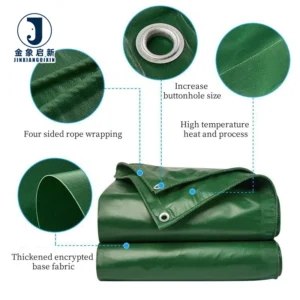
- Heat-sealed edges with reinforced corners and 3 cm aluminum eyelets hold under flex-point tension
- Roll width and length affect cutting yield and seam count on large covers
Backed by 36 sets of coating equipment, 100% pre-shipment inspection, and a 10-person R&D team handling custom colour and sizing.
Description
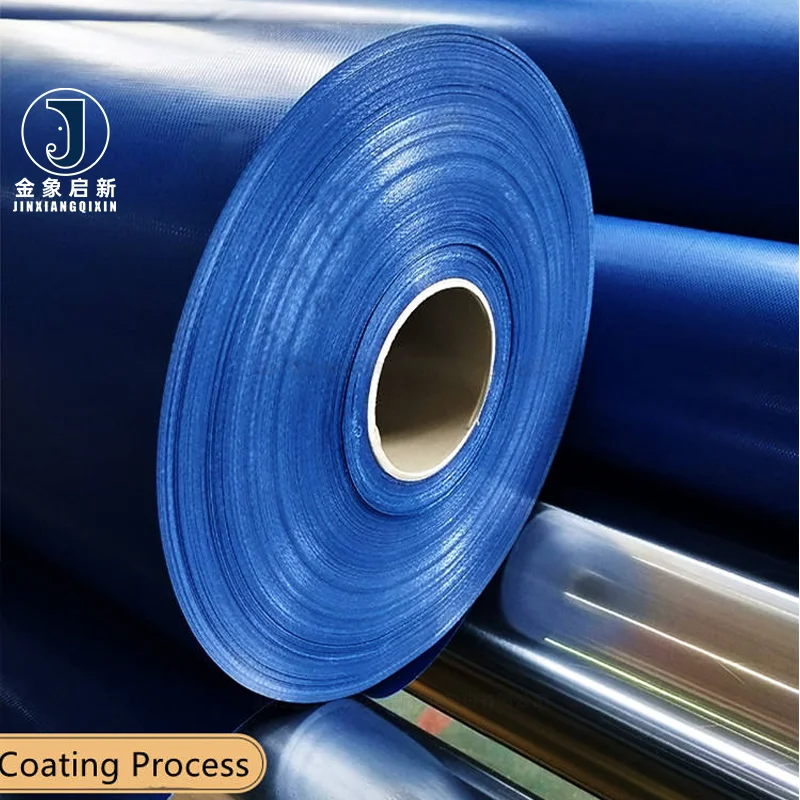
Coating Weight Control — Every PVC coated tarpaulin roll undergoes strict GSM verification at multiple production stages before leaving the factory floor, eliminating the gap between quoted specification and delivered material.
Technical Specifications
| Parameter | Value |
|---|---|
| Product Type | PVC Coated Tarpaulin |
| Base Fabric Material | PVC & Polyester Base Fabric |
| Yarn Count Options | 500D×840D / 500D×1000D / 1000D×1000D / 1000D×1300D / 1300D×1300D / 1000D×2000D |
| GSM Range | 350 g/m² to 900 g/m² |
| Thickness Range | 0.29 mm to 0.65 mm |
| Density | 1.15–2.00 g/cm³ |
| Tensile Strength (Material) | 50–80 MPa |
| Warp Strength | 1650 N to 3900 N |
| Weft Strength | 1600 N to 3500 N |
| Brittle Temperature | ≤ -50 to -60 °C |
| Softening Temperature | ≥ 80 °C |
| Melting Point | 212 °C |
| Key Features | Water Resistant, Waterproof, Anti-UV, Flame Retardant (customizable) |
| Edge Finishing | High temperature heat sealed seamless edge wrapping |
| Eyelets | 3 cm enlarged aluminum alloy buttonhole |
| Reinforcement | Reinforced corners on all sides |
| Rope | 5 mm thick rope without splicing |
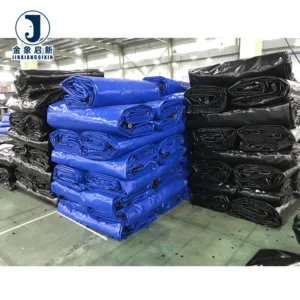
| Package | Roll packing, bale packing, carton |
Application Suitability
| Application | Exposure & Requirement |
|---|---|
| Industrial shelter cover | Prolonged UV exposure, wind load on tensioned panels, waterproofing against driving rain |
| Truck and trailer load cover | Road abrasion, constant flexing at tie-down points, weather exposure during transit |
| Awning and tent fabric | Repeated folding and unfolding, solar degradation, colour consistency across multiple panels |
| Garden and outdoor furniture cover | Seasonal temperature swings, moisture pooling, UV colour retention |
| Balcony and window rainproof cover | Wind-driven rain ingress, mounting stress at fixing points, long-term UV exposure |
Why Batch Consistency Matters More Than Quoted GSM for PVC Tarpaulin Roll Aftermarket Supplier
A roll that meets spec on paper but varies across the batch creates fabrication waste and field failures that cost far more than the material savings.
When sourcing PVC tarpaulin rolls in volume, buyers frequently encounter a familiar pattern: the quotation states one GSM, the sample roll checks out, but the bulk shipment arrives with visible weight variation between rolls. Fabricators cutting panels from multiple rolls then discover thickness differences that throw off heat-sealing parameters or create uneven tension when panels are joined. In industrial shelter applications where multiple panels form a continuous cover, even slight GSM drift between rolls shows up as visible stiffness differences once installed [NEED_CITE: tensile and tear test methods for coated fabrics per ISO 1421]. Fleet operators buying side curtain fabric by the roll face the same problem — a lighter roll hidden in a shipment may fail at the flex points while adjacent panels made from heavier stock hold up, making the entire curtain assembly appear defective.
Roll-to-Roll Uniformity Across the Full PVC Tarpaulin Range
Producing consistent PVC coated tarpaulin rolls requires controlling the coating weight at every stage, not just at the sample development phase. The polyester base fabric must pass through the coating line under stable tension and temperature conditions so that the PVC layer bonds evenly across the full width. Our PVC tarpaulin roll aftermarket supplier capability covers the complete weight range from lightweight 350 g/m² grades used for temporary covers up to heavy-duty 900 g/m² specifications demanded by industrial shelter applications. Each production run is monitored for GSM deviation, and rolls falling outside the tolerance band are separated before packing.
Colour Matching and Surface Finish Consistency
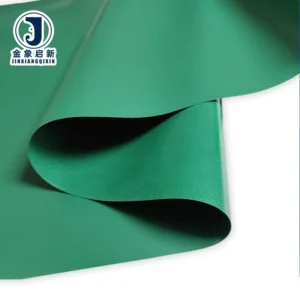
Colour variation between rolls in the same order is one of the most common complaints from fabricators who install panels side by side on awnings, tents or truck side curtains. Achieving batch colour consistency requires matching pigment ratios, coating temperature and curing time precisely across the entire production run [NEED_CITE: colour fastness testing standards for coated textiles]. The PVC coated tarpaulin range is available in glossy and matte surface finishes with custom colour matching supported by the in-house R&D team. Pattern printing and branding options are also available for buyers who need logo placement or identification markings directly on the roll stock.
Understanding Base Fabric and Coating Interaction
The relationship between base fabric yarn count and coating weight determines how the finished PVC tarpaulin behaves under load. A 1000D×1000D polyester base provides a dense weave that distributes tensile forces evenly, while the PVC coating adds tear resistance and environmental protection on both surfaces. Higher yarn counts such as 1300D×1300D or 1000D×2000D increase the warp and weft strength — reaching up to 3900 N in warp and 3500 N in weft — making these grades suitable for tensioned shelter structures and heavy transport covers. The coating method and adhesion quality directly influence how well the material performs during heat-sealing fabrication; poor coating adhesion causes delamination at weld seams long before the base fabric itself reaches its tensile limit [NEED_CITE: DIN 53354 test methods for coated fabric adhesion]. Brittle temperature ratings down to -50 to -60 °C indicate the material remains flexible in cold climates without cracking at fold lines or eyelet points.
The Hidden Cost of Overlooking Coating Adhesion Quality
Fabricators often focus on GSM and tensile strength when evaluating PVC tarpaulin rolls, but coating adhesion is the property that determines whether a heat-sealed seam holds or peels apart under load. When coating weight is inconsistent across a roll, the heat-sealing temperature that works on one section may under-cure or over-burn an adjacent section, producing weak welds that fail at the point of maximum flex. This failure pattern is especially common in truck covers and industrial shelter panels where the material experiences repeated bending and wind loading. Buyers who specify flame retardant grades should also verify that the treatment certification matches the fire classification required in their target market, as a generic flame retardant claim without a supporting test report will not satisfy site inspectors [NEED_CITE: DIN 4102 fire classification for building materials]. Anti-UV treatment claims similarly require documented test results to confirm the material will withstand the solar exposure conditions of the intended application.
Why Sourcing PVC Tarpaulin Rolls Here Makes Sense for Volume Buyers
Nearly 30 years of focused coated fabric production provides deep process control over coating weight and adhesion quality across every GSM grade. Three full production lines and 36 sets of professional equipment support bulk roll output with reliable on-time delivery schedules that keep fabricator production lines running. The 10-person R&D team handles material selection, custom width and colour development, and pattern printing specifications so that each roll order matches the buyer’s exact requirements. Dedicated QA/QC inspection at every production stage, including 100% pre-shipment roll inspection, ensures that the GSM, colour and treatment specifications stated in the quotation are verified on the material that actually ships.
Documentation & Verification
- Material specification sheet stating actual GSM, base fabric denier and coating weight per roll
- UV and flame retardant test reports provided where treatment grades are specified in the order
- Pre-shipment inspection record confirming GSM and colour consistency across all rolls in the batch
- ISO and CE certificates included with dispatch documentation for customs and compliance requirements
- Roll packing list with individual roll identification, weight and dimensions for container loading verification
- Certificate of origin supplied for trade agreement and tariff classification purposes
Fabrication, Handling & Storage
- Heat-sealing temperature must be matched to the specific GSM grade and coating thickness for proper weld adhesion
- Aluminum alloy eyelets at 3 cm spacing distribute tie-down loads across reinforced corner patches
- Store PVC coated tarpaulin rolls horizontally on pallets to prevent permanent creasing of the coating surface
- Allow cold-stored rolls to reach ambient temperature before unrolling to avoid cracking below -50 °C brittle point
- Clean surfaces with mild detergent only; solvents may degrade the PVC coating and compromise waterproofing
- Lay out panels flat before cutting to account for any tension from roll winding and ensure accurate dimensions
Getting the Right Roll Specification for Your Application
To match the correct PVC tarpaulin roll grade to your end use, provide the application environment and the exposure conditions the material will face, including UV intensity, temperature range and mechanical stress at mounting or tie-down points. Specify whether you need roll stock only or finished cut panels, along with the required width, roll length and annual volume so that production can be planned efficiently. If your market requires specific fire classification or anti-UV certification, state the exact standard or grade needed so that the appropriate treatment and test documentation are prepared before the order enters production.
Frequently Asked Questions
Q: How do I verify the GSM matches what was quoted before the roll ships?
A: Each roll undergoes GSM measurement during the pre-shipment inspection, and the results are recorded on the inspection report included with the dispatch documentation. You can request the weight verification record before the container loads, which shows the actual measured GSM for every roll in your order against the quoted specification.
Q: Can I get flame retardant or anti-UV test reports with my order?
A: Yes. Where flame retardant or anti-UV treatment is specified in the order, the corresponding test reports documenting the performance grade are included in the documentation package. State the specific fire classification or UV standard required for your target market so that the correct treatment is applied and tested.
Q: What is the minimum order for custom width, colour or printed rolls?
A: Minimum order quantities for custom specifications depend on the width, colour and printing complexity required. The R&D team develops samples for custom requirements within days, and once the sample is approved, the production minimum is set based on the coating line setup and pigment batch size needed for consistent colour across all rolls.
Q: How do you ensure colour consistency across multiple rolls in the same order?
A: Colour consistency is maintained by matching pigment ratios, coating temperature and curing time precisely across the entire production run. Every roll in the batch is inspected before packing, and any roll showing visible colour deviation from the approved sample is separated from the shipment.
Q: What packaging options are available for container loading by roll?
A: Rolls are available in roll packing, bale packing or carton packing depending on the container loading plan and the buyer’s handling equipment at destination. The roll packing list details individual roll identification, weight and dimensions to support efficient container space planning and customs clearance.
Related products
-
Custom Reinforced Edges Rip-Stop Rubberized PVC Tarpaulin Industry Covering Vinyl Coated Polyester Tarps for Trucks
¥8.00 Select options This product has multiple variants. The options may be chosen on the product page -
Awning and Tents Waterproof Fabric PVC Tarpaulin
¥1.50 Add to cart -
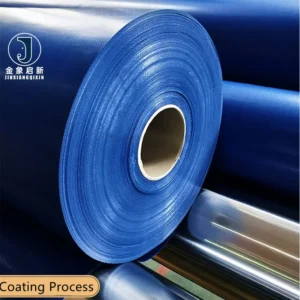
PVC Coated Tarpaulin Outdoor Poly Tarp Plastic Canvas Tarpaulin Roll 650 Gsm for Truck Tent. Roof Cover
¥2.70 Add to cart -
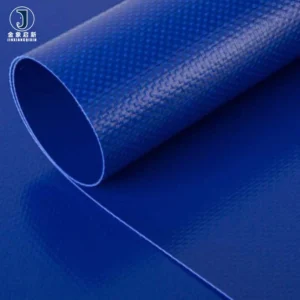
Nylon-coated Trailer Tarpaulin. Waterproof Canvas. Heavy-duty PVC Tarpaulin for Truck Tents
¥1.04 Add to cart