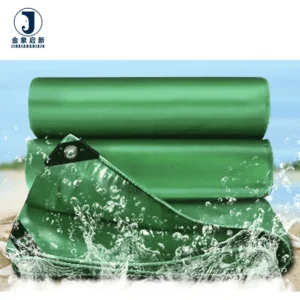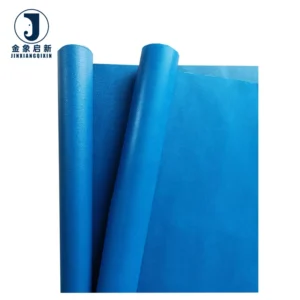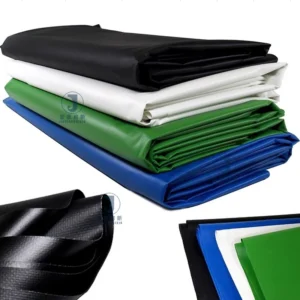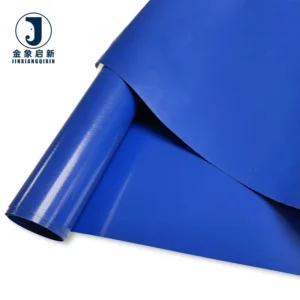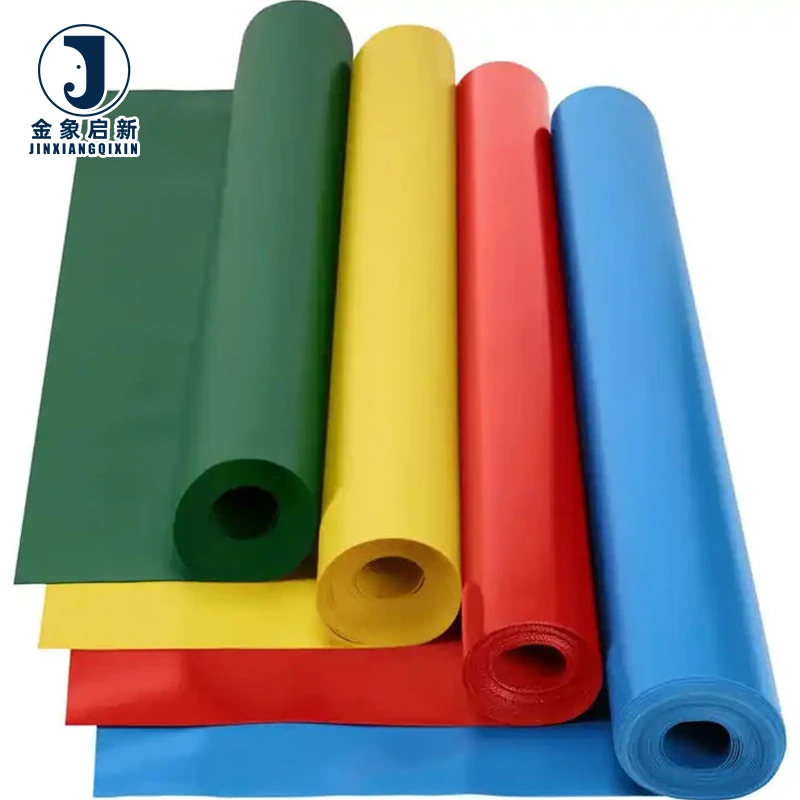
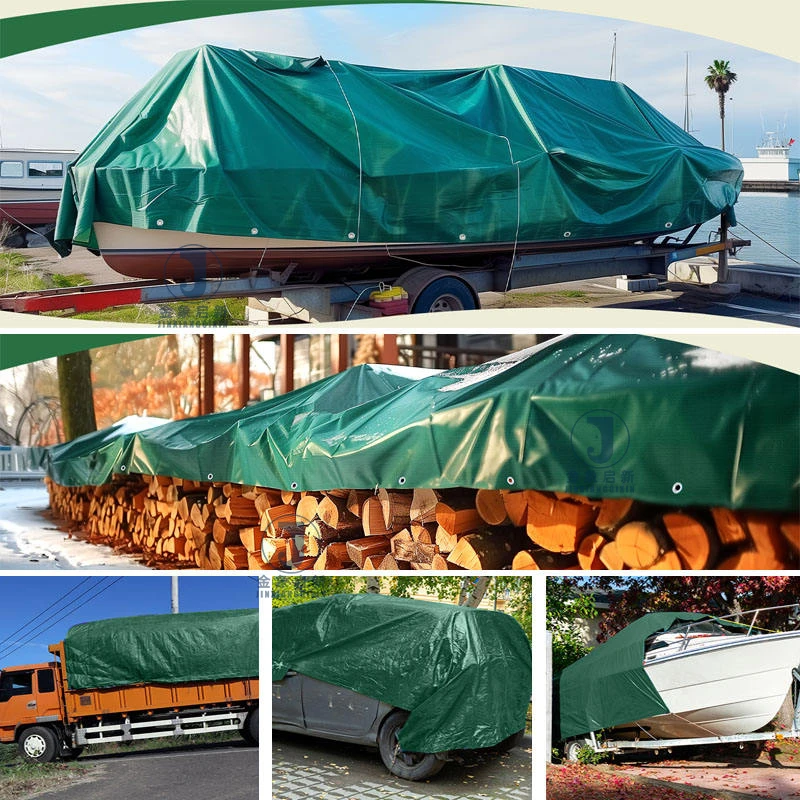
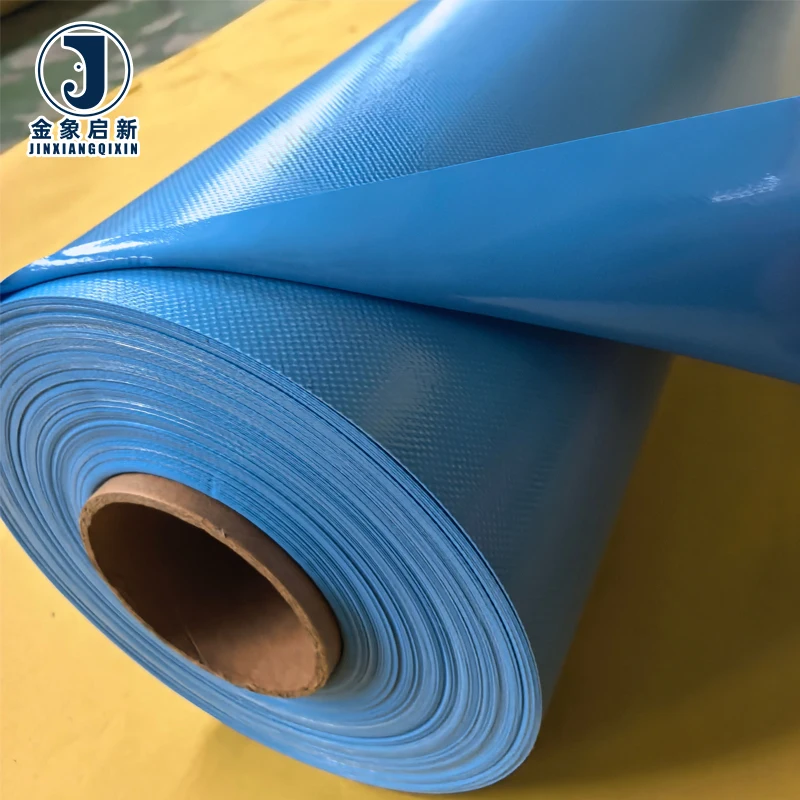
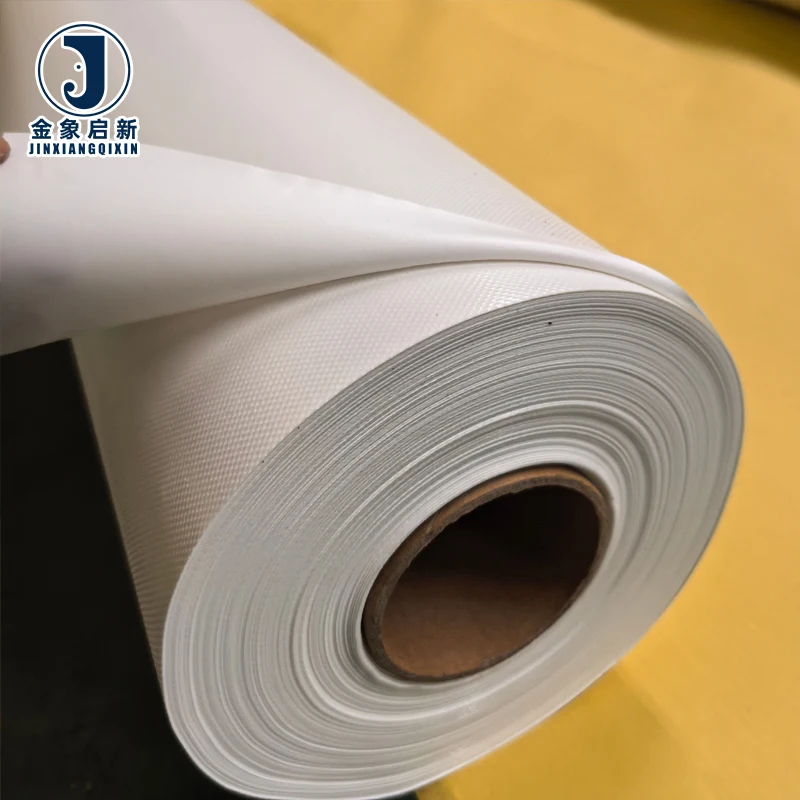
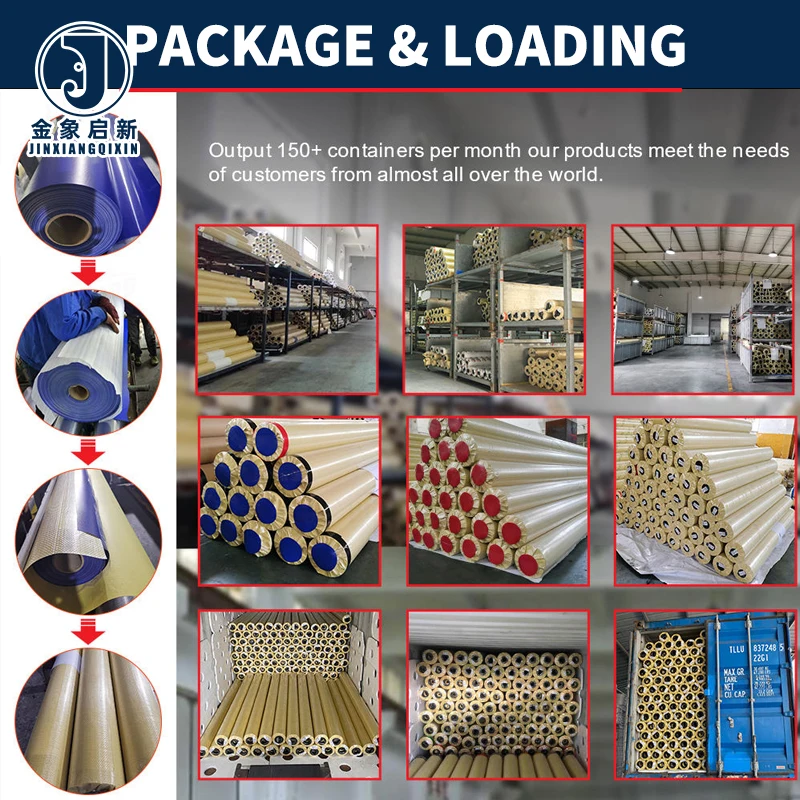
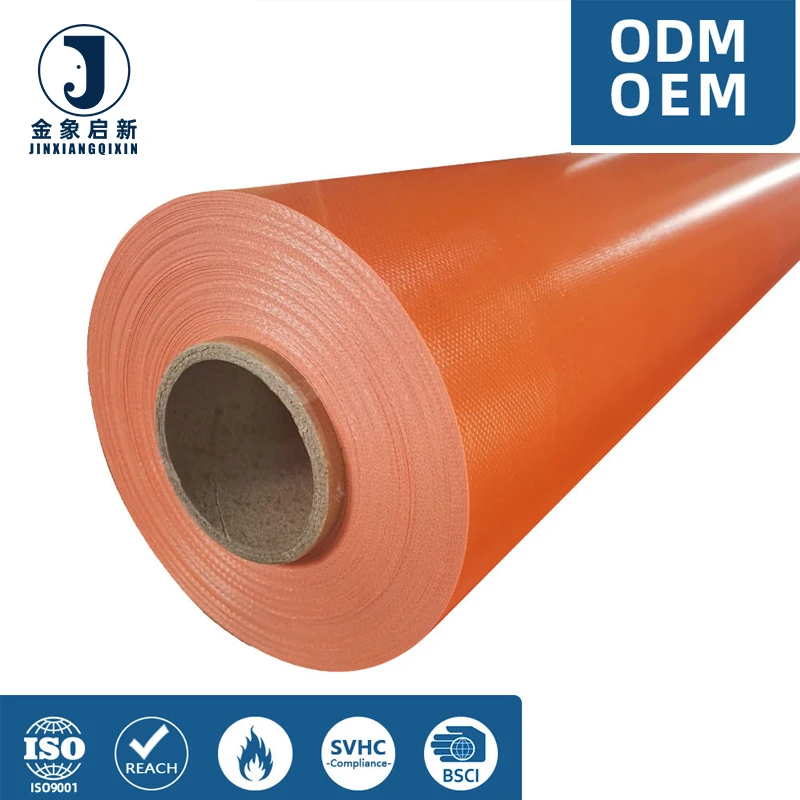
PVC Tarpaulin Roll with 1000D×1000D base fabric, glossy surface finish, and waterproof treatment — engineered for multi-purpose industrial covering applications. Coating weight and base denier jointly determine tensile and tear performance; specifying the correct balance avoids over-engineering for your actual load and exposure conditions. Backed by nearly 30 years of coated fabric process control, full in-line QA, and a 10-person R&D team for rapid sample development.
Description
Coating weight verification — every roll is weighed and cross-checked against the specification sheet before dispatch, ensuring the PVC Tarpaulin Roll you receive matches the GSM you ordered.
Technical Specifications
| Parameter | Value |
|---|---|
| Product Type | PVC Coated Tarpaulin |
| Base Fabric Denier | 1000D × 1000D |
| Density | 23 × 23 |
| Nominal Weight | 650 GSM |
| Surface Finish | Glossy |
| Temperature Range | -15°C to 70°C |
| Treatment Options | Waterproof, UV resistant (grade not stated — confirm for your market), Flame retardant (grade not stated — confirm for your market), Anti-fungal |
| Roll Dimensions | 1.50m × 50m |
| Certifications | ISO 14001, ISO 45001, CE, RoHS |
Application Suitability
| Application | Exposure & Requirement |
|---|---|
| Truck side curtains | Constant flexing at fold lines, road spray, UV exposure, abrasion against cargo |
| Construction site covers | Wind loading, puncture from scaffolding and rebar, prolonged weathering |
| Tent and awning structures | Tension stress at frame contact points, UV and rain exposure, color consistency across panels |
| Pond and reservoir liners | Permanent water immersion, soil chemistry, puncture from substrate |
| Inflatable and membrane structures | Internal air pressure stress, seam integrity under flex, UV degradation |
Why Roll-to-Roll Consistency Matters More Than the Quoted GSM
A PVC tarpaulin roll that measures correct on the first roll but drifts on the third is worse than a roll that is honestly lighter across the board.
When sourcing PVC tarpaulin rolls in volume, I have seen batches where the first roll hits the quoted 650 GSM perfectly, but by roll four or five the coating weight drops noticeably. On a truck side curtain that runs continuous panels, that variation shows up as uneven stiffness — the lighter sections flex differently under wind load and wear through at the fold lines sooner. [NEED_CITE: coating weight variance and its effect on tensile uniformity in PVC coated fabrics] The problem is not dishonesty at quotation stage; it is insufficient in-process control during coating runs. A PVC Tarpaulin Roll aftermarket supplier worth working with verifies GSM at the coating head, not just at the packing bench.
What the 1000D × 1000D Base Fabric Actually Controls
The denier of the polyester yarn determines how much load each individual thread can carry before breaking. At 1000D × 1000D, the warp and weft threads are both substantial, giving the base fabric high baseline tensile strength. When PVC coating is applied over this grid, the coating bridges the gaps and transfers load between threads, but the yarn itself remains the primary structural element. This is why a 650 GSM roll on a 1000D base behaves very differently from a 650 GSM roll on a 500D base — the coating weight is the same, but the load-bearing skeleton underneath is not.
How Density and Coating Weight Interact on the Production Line
A 23 × 23 weave density means 23 threads per inch in both directions. This relatively tight grid requires precise coating control — too little PVC and the yarn is exposed at crossover points; too much and the roll becomes unnecessarily heavy with coating that adds little structural value. The PVC Tarpaulin Roll production team monitors coating adhesion at every stage because a tight weave with poor coating penetration will delaminate under thermal welding. [NEED_CITE: coating adhesion test methods for woven PVC tarpaulin per ISO 1421] Getting this balance right is where decades of coated fabric experience shows up in the finished roll.
Reading the Specification Sheet Beyond the Headline Number
GSM alone tells you how much the material weighs, not what it is made of. A 650 GSM roll could be 400 GSM of base fabric and 250 GSM of coating, or it could be 300 GSM base and 350 GSM coating — both weigh the same but perform differently. The higher-coating version will*ams, while the higher-base version will have better tear propagation resistance. This is why the material specification sheet must state both base fabric weight and coating weight separately. Temperature range from -15°C to 70°C defines the operational envelope — below the lower limit, plasticizers stiffen and the glossy surface becomes brittle; above the upper limit, the PVC softens and dimensional stability under tension decreases. The glossy finish aids water runoff and makes surface cleaning straightforward, which matters for applications where appearance and hygiene are priorities. Available in flame retardant grades and UV resistant treatments — confirm the specific grade required for your market and end-use environment before ordering.
What Happens When Treatment Claims Are Not Backed by Test Reports
A buyer specifies flame retardant PVC tarpaulin for a mining ventilation application, pays the premium for treated material, and then fails the site safety inspection because no test certificate accompanied the shipment. The fabric may well be flame retardant, but without documented proof against a recognized standard, it is unusable on regulated sites. [NEED_CITE: fire classification standards for flexible PVC fabrics in mining and construction] The same applies to UV treatment — claiming resistance without a test result means the buyer is absorbing all the risk. A PVC Tarpaulin Roll aftermarket supplier that provides verified test reports with each batch removes this exposure entirely.
Why We Control What Others Outsource
The production process starts with base fabric inspection before any coating is applied — yarn defects caught here prevent weak points that would fail under tension later. Coating weight is verified at the coating head, not estimated from the finished roll, catching drift before it propagates through the batch. A dedicated QA team conducts full inspection on every roll before packing, not statistical sampling from the batch. Sample development for custom widths, colors, and treatments is handled by the internal R&D team, so specification changes do not require negotiating with a separate converter. Color matching across rolls in the same order is controlled at the compounding stage, ensuring panels installed side by side show no visible variation.
Documentation & Verification
- Material specification sheet stating base fabric denier, density, coating weight, and total GSM for each roll
- UV and flame retardant test reports provided where applicable treatments are specified
- Pre-shipment inspection record confirming 100% roll-by-roll quality check before dispatch
- Roll packing list with individual roll weights, dimensions, and batch traceability codes
- ISO 14001, ISO 45001, CE, and RoHS certificates included with shipment documentation
Fabrication, Handling & Storage
- Heat welding at 650 GSM works well with standard hot air settings; test seam peel strength on a sample strip before full production
- Glossy surface accepts solvent-based and UV-curable inks for branding — verify ink adhesion on a sample first
- Store rolls upright on pallets to prevent flat-spotting on the coating surface, especially in warm conditions
- Allow rolls to acclimatize to workshop temperature before unrolling in cold weather to avoid crease damage
- Cut panels with a minimum 25mm hem allowance for folded and welded edge reinforcement at tie-down points
- Repair field damage with PVC-coated patch material and hot air welding rather than adhesive tape for lasting bonds
What to Include in Your Enquiry
Provide the end-use application and exposure conditions — whether the fabric will face constant flexing, permanent water immersion, or regulated fire environments. Specify the roll width and length you need, along with annual volume, so production can be planned around batch consistency runs. If your market requires specific flame retardant or UV treatment grades, state the standard you need met so test documentation can be prepared before dispatch.
Frequently Asked Questions
Q: How do you verify the GSM stated on the quotation matches the material delivered?
A: Each roll is weighed individually during pre-shipment inspection and the result is recorded on the packing list. The material specification sheet states both base fabric weight and coating weight separately, so you can cross-reference on arrival. Any roll outside the agreed tolerance is held back before dispatch.
Q: Can you develop a sample with our custom width, color, and treatment requirements?
A: Yes, the R&D team handles sample development internally for custom specifications including width, color matching, and treatment levels. Samples are typically ready within days, allowing you to test weld settings, print adhesion, and dimensional fit before committing to a full production run.
Q: What test reports do you provide for UV and flame retardant treated tarpaulin?
A: Test reports are provided for the specific treatment grades applied to your order. State the standard or certification required by your market or site safety regulations when ordering, and the corresponding documentation is included with shipment paperwork.
Q: How do you ensure color consistency across multiple rolls in the same order?
A: Color is controlled at the PVC compounding stage before coating, not adjusted at the coating head. All rolls in a single order are produced from the same compound batch, and visual checks against the approved reference are performed on each roll during final inspection.
Related products
-
Factory Custom 9×11 Poultry Curtains Tarpaulin PVC Coated Waterproof and Anti-Static Tarp for Chicken Coop Farms
¥0.85 Add to cart -
PVC Tarpaulin Industry Fabric PVC Tarpaulin 620gsm for Fish Pond Factory Swimming Pools Cover PE Tarpaulin
¥0.90 Select options This product has multiple variants. The options may be chosen on the product page -
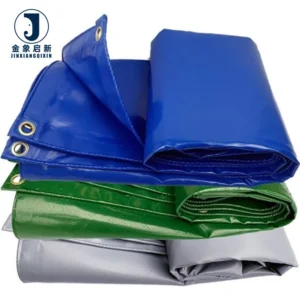
Best Quality 650gsm Waterproof Polyester Heavy Duty Bache PVC Tarpaulin Manufacturer
¥1.25 Select options This product has multiple variants. The options may be chosen on the product page -
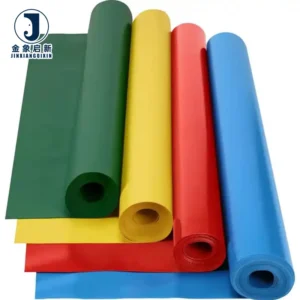
Stock PVC Tarpaulin Fabric Rolls 500D*500D 18*17 Hot Selling Colors in Stock China Manufacture Wholesale Fabrics Best Price
¥1.26 Select options This product has multiple variants. The options may be chosen on the product page