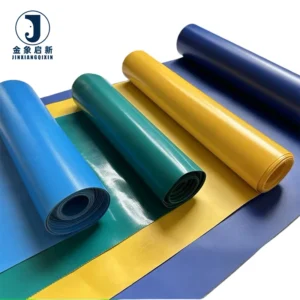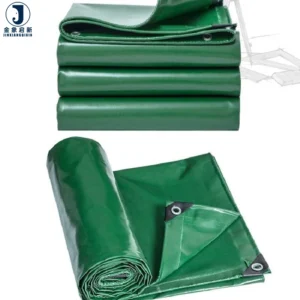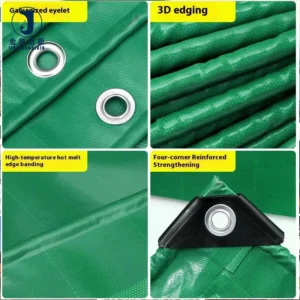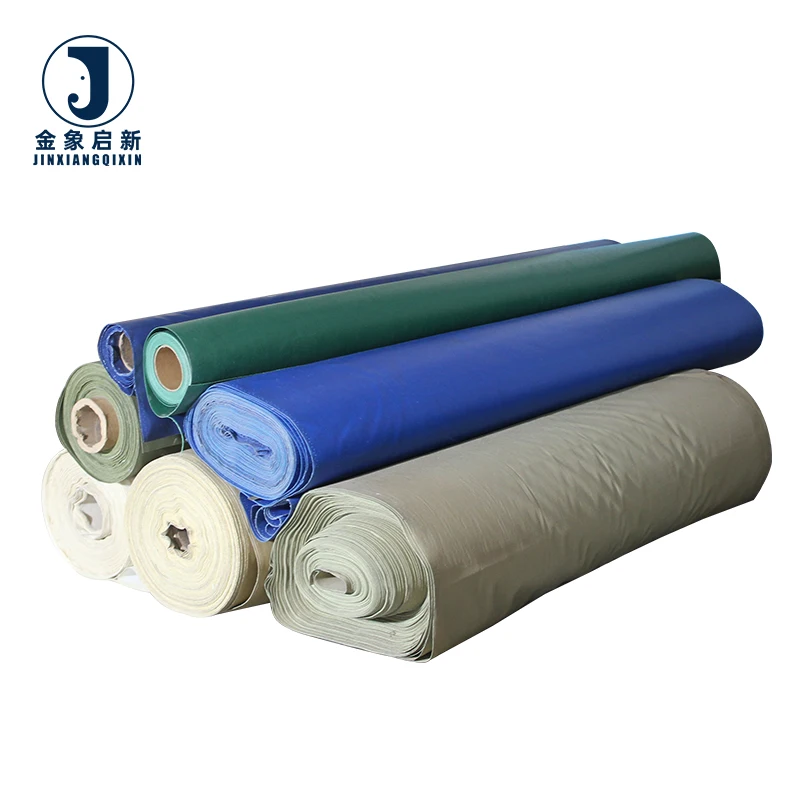
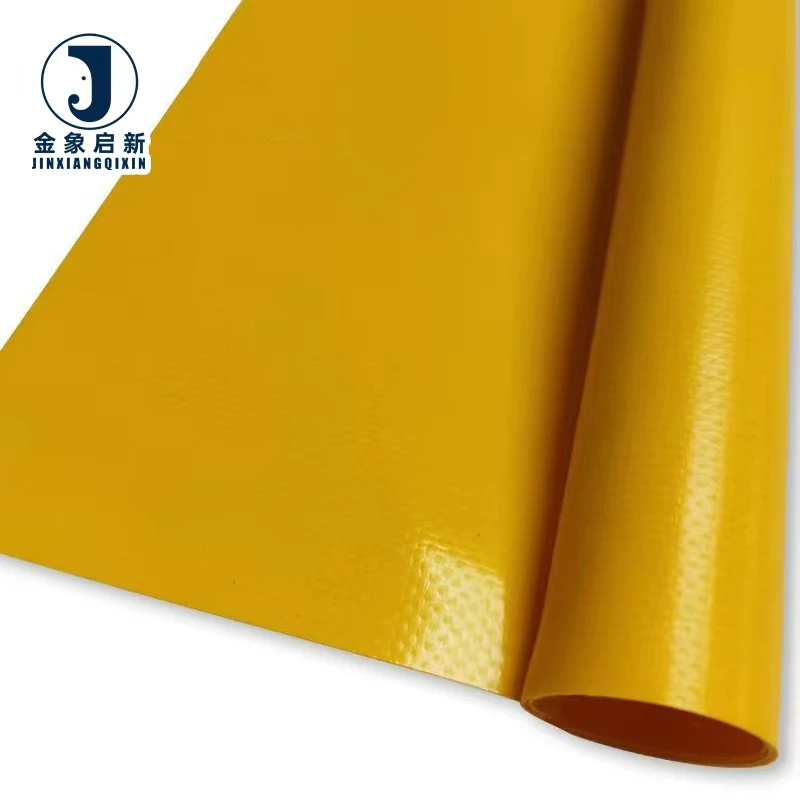
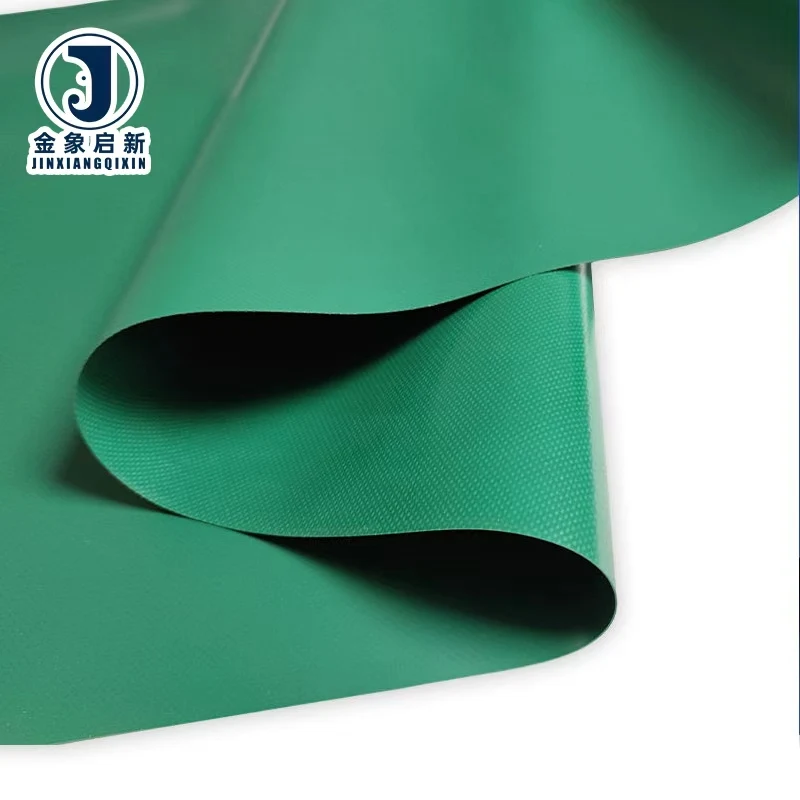
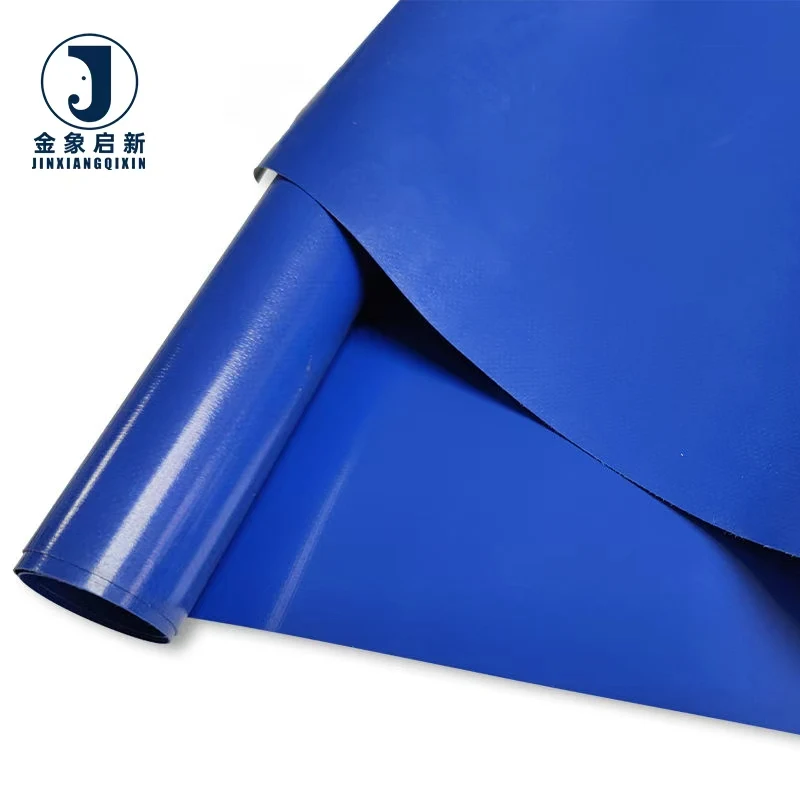
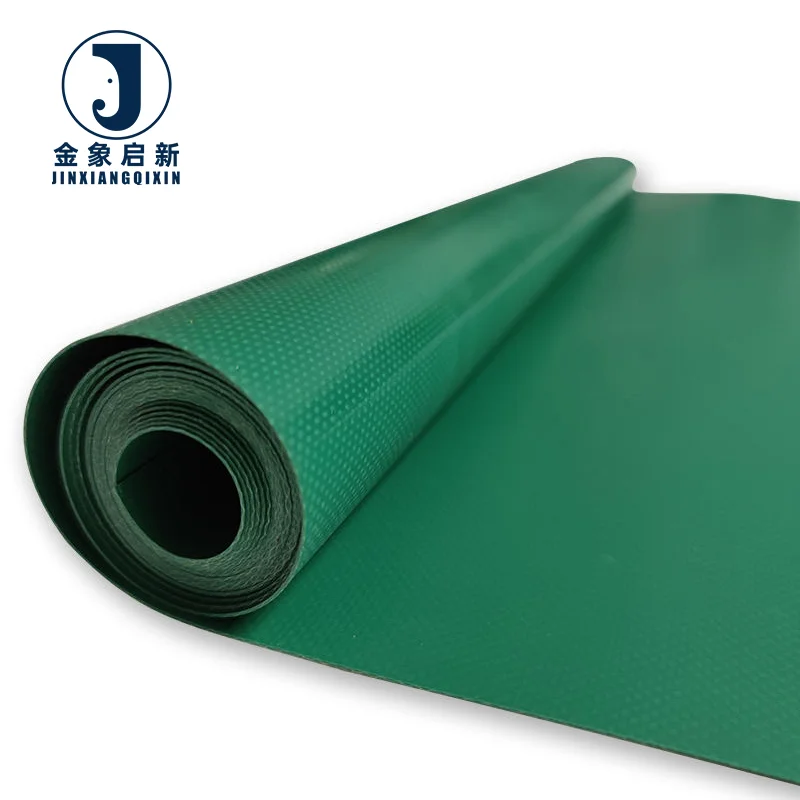
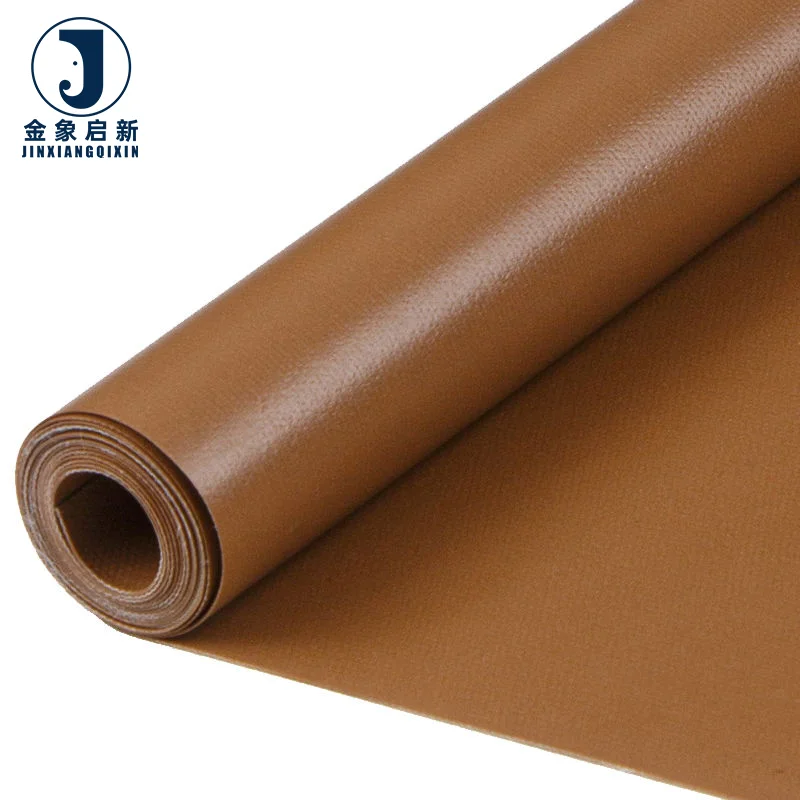
PVC Tarpaulin Roll for Awning and Tents — HDPE weave with LDPE lamination, 50–220 g/m², 0.2–0.4 mm thickness, UV and mildew resistant.
- Full catalogue covering awning, tent and inflatable structure fabric, with custom colour, width and pattern printing handled in-house.
- GSM verified at coating stage with 100% pre-shipment inspection; batch-to-batch colour consistency controlled across the same production run.
Three full production lines and 36 sets of equipment support bulk roll orders with reliable on-time dispatch.
Description
Coated Fabric Process Control — dedicated QA/QC at every production stage ensures the roll weight and finish you approve on sample is exactly what ships in bulk.
Technical Specifications
| Parameter | Value |
|---|---|
| Product Type | PVC Tarpaulin Roll |
| Material Construction | HDPE weaving with LDPE lamination on both sides |
| Weight Range | 50 g/m² ~ 220 g/m² |
| Total Thickness | 0.2–0.4 mm (8 mil–16 mil) |
| Colour Options | Blue, Blue/Orange, Green, Grey, Black, Clear, Grey/Green, Orange, custom colours available |
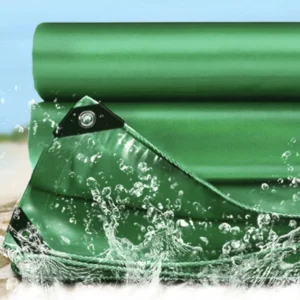
| Waterproof | Yes, fully laminated construction |
| UV Treatment | Available — confirm the grade required for your market |
| Mildew Resistance | Yes |
| Anti-Aging | Yes |
| Tear Resistance | Claimed (grade not stated) |
| Standards | ISO, CE certified production |
Application Suitability
| Application | Exposure & Requirement |
|---|---|
| Awning and canopy fabrication | Prolonged sun exposure, wind load flex, rain ingress prevention, colour retention across joined panels |
| Tent and marquee manufacturing | Repeated assembly and disassembly, ground moisture, variable weather, mildew risk in stored fabric |
| Outdoor equipment and stock covers | Standing water, soil contact, dust ingress, UV degradation over seasons |
| Agricultural and aquaculture sheeting | Permanent moisture exposure, pond water chemistry, puncture from substrate |
| Tarpaulin distribution and resale | Batch-to-batch colour matching, consistent GSM across rolls, branded printing for regional markets |
Why Quoted GSM and Delivered GSM Often Diverge in PE Tarpaulin
Verified weight at the coating stage, not just at the quotation stage, is what separates a reliable PE Tarpaulin Roll manufacturer custom order from a shipment dispute.
Buyers frequently receive rolls that measure lighter than the spec sheet promised, with the shortfall hidden by packaging weight and core mass [NEED_CITE: GSM verification methods for woven laminated tarpaulin per ISO 3801]. The gap between quoted and actual weight is where margin disappears for the converter and where premature field failures begin for the end user. When GSM is not controlled during lamination, downstream properties — tear propagation, puncture resistance, seam peel strength — all degrade without visible warning on the roll surface.
Lamination Architecture and What It Controls
The HDPE woven base provides the tensile skeleton, while double-side LDPE lamination seals the weave intersections against water penetration and locks the yarns against abrasion. This construction method determines the balance between flexibility for folding and stiffness for spanning. When sourcing a PE Tarpaulin Roll manufacturer custom specification, the lamination weight relative to the base fabric weight defines how the roll handles on the cutting table and how the finished panel behaves under wind load.
Colour Matching Across Multi-Roll Shipments
Colour drift between rolls in a single order becomes visible the moment two panels are installed side by side on an awning frame or a tent ridge. Controlling pigment dispersion during the LDPE lamination stage, rather than relying on masterbatch tolerance alone, is what keeps shade variation within acceptable limits [NEED_CITE: colour consistency standards for laminated polyethylene fabrics]. Buyers stocking multiple colour variants for regional resale need batch-matched rolls that can be cut and sold without segregation by shade lot.
Reading the GSM and Thickness Relationship
Weight in g/m² and thickness in millimetres are correlated but not interchangeable. A 220 g/m² roll at 0.4 mm thickness indicates a denser base weave carrying more lamination mass, which translates to higher puncture resistance for pond liner or heavy equipment cover applications. A 50 g/m² roll at 0.2 mm suits lightweight temporary covers where cost per square metre drives the buying decision. The ratio between the two figures reveals whether strength comes from the woven yarn or from the laminated coating — a distinction that matters when the fabric must resist tearing at grommet points or welded seams.
The Hidden Cost of Specifying on Price Per Kilogram Alone
When procurement decisions rest solely on unit price, the supplier has incentive to reduce base yarn denier while maintaining the quoted GSM through heavier lamination. The resulting roll passes the weight check but tears more easily along the warp or weft because the woven skeleton is under-built. This failure mode surfaces only after the fabric is cut, fabricated and installed — at which point replacement cost far exceeds the material savings [NEED_CITE: relationship between base fabric denier and tear propagation in laminated tarpaulins].
Why Buyers Source This Fabric Here
Three full production lines with 36 sets of professional equipment support bulk roll output without sacrificing lamination consistency across long runs. A 10-person R&D team develops custom colour, width and printed branding samples within days, not weeks. Every roll undergoes 100% pre-shipment inspection with documented GSM verification against the approved spec sheet. The production facility holds ISO and CE certification, with material specification sheets and test documentation shipped alongside the goods. Decades of coated and laminated fabric process control mean the lamination adhesion, colour dispersion and roll winding are managed as integrated variables, not independent checkpoints.
Documentation & Verification
- Material specification sheet listing exact GSM, HDPE base construction and LDPE lamination weight for each roll batch
- Colour reference and batch number recorded on the roll packing list for traceability
- Pre-shipment inspection record confirming measured GSM against quoted value before container loading
- UV treatment test documentation referenced to the applicable standard where treatment is specified
- Certificate of origin and customs documentation prepared per destination country requirements
Fabrication, Handling & Storage
- Heat-seal temperature windows vary by LDPE lamination thickness — confirm weld parameters on 0.2 mm and 0.4 mm grades separately before production
- Store rolls upright on pallets in covered space to prevent flat-spot deformation on the HDPE woven core
- Cut panels with allowance for thermal expansion in hot climates, particularly on darker colours that absorb more heat
- Mildew-proof formulation resists biological growth but stored rolls still require ventilation to prevent condensation between layers
- For custom-branded printing, verify ink adhesion on the LDPE surface with a cross-hatch test before full-run commitment
What We Need to Prepare Your Quotation
Provide the target GSM, finished roll width and the colour reference or RAL number so we can match the lamination formulation to your specification. Confirm whether the roll ships as stock width for your own cutting line, or if you require printed branding, custom eyelet spacing or cut-to-size panels. Share the end-use environment — tropical UV exposure, chemical contact in aquaculture, or general-purpose outdoor storage — so we can recommend the appropriate treatment grade and backing.
Frequently Asked Questions
Q: How is GSM verified on each roll before shipment?
A: Every roll is weighed and measured during pre-shipment inspection, with the result recorded against the quoted specification. The inspection document travels with the shipment so you can cross-check on arrival. This protocol eliminates the gap between stated and actual weight that causes disputes at destination.
Q: How do you control colour consistency across multiple rolls?
A: Pigment is dispersed during the LDPE lamination stage under controlled temperature and mixing conditions. Rolls in the same production run are batch-matched and labelled with a shared batch number. Physical samples from the run are available for approval before the balance ships.
Q: What UV treatment levels are available and how are they verified?
A: UV stabiliser grades are available for different exposure durations and climate zones. We recommend confirming the grade required by your end market and requesting the corresponding test documentation. The treatment level is recorded on the material specification sheet shipped with the goods.
Q: What are the lead times and minimums for custom colour or printing?
A: Custom colour matching and branded printing are handled in-house, with sample development typically completed within days. Minimum order quantities depend on the width and treatment combination. Confirm your colour reference, roll dimensions and annual volume for a precise lead time and minimum.
Q: How are rolls packed to prevent transit damage?
A: Rolls are wound on reinforced cores, wrapped against moisture ingress and loaded in container configuration that prevents crushing. The packing list records roll count, batch number and net weight per roll for receiving verification at destination.
Related products
-
New Design Waterproof Coated Heavy Duty Pool Cover Cargo Covers Tarp for Truck
¥1.15 Add to cart -
JX Manufacturer Direct Sales PVC Coated Swimming Pool Cover. Durable Waterproof and UV Resistant Floor Swimming Pool Cover Cloth
¥1.78 Select options This product has multiple variants. The options may be chosen on the product page -
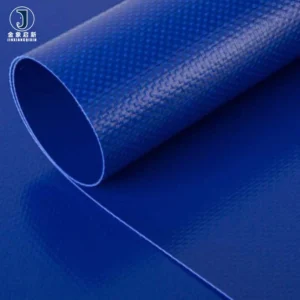
Nylon-coated Trailer Tarpaulin. Waterproof Canvas. Heavy-duty PVC Tarpaulin for Truck Tents
¥1.04 Add to cart -
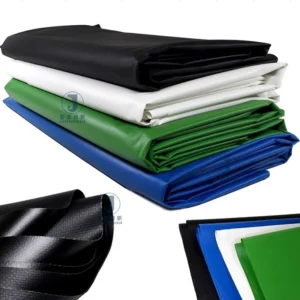
Custom Reinforced Edges Rip-Stop Rubberized PVC Tarpaulin Industry Covering Vinyl Coated Polyester Tarps for Trucks
¥8.00 Select options This product has multiple variants. The options may be chosen on the product page