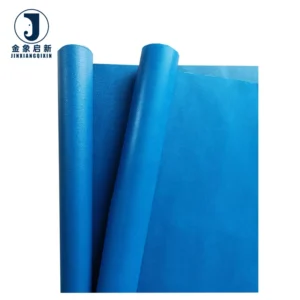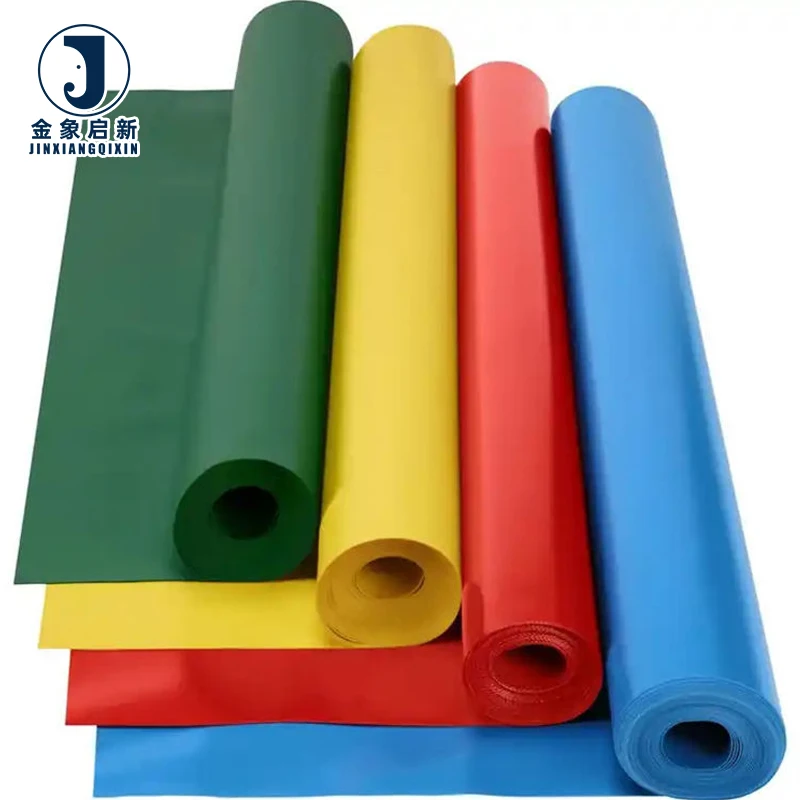
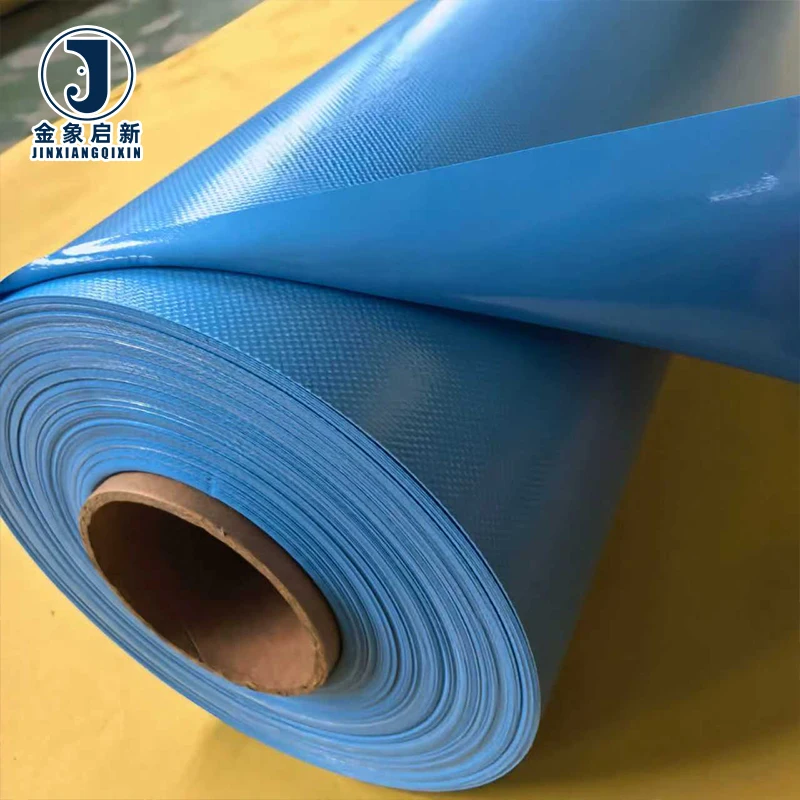
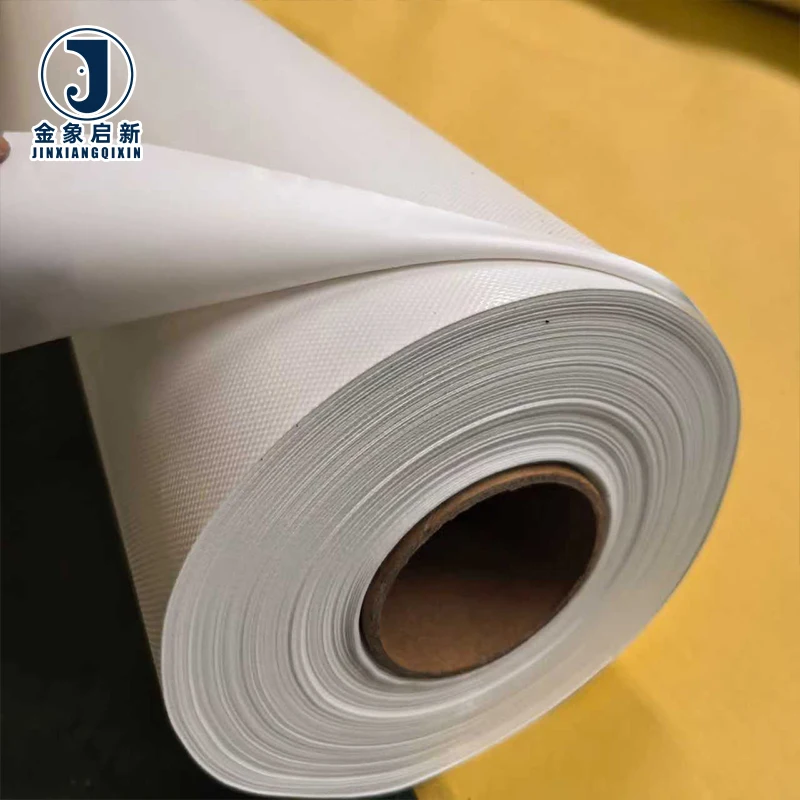
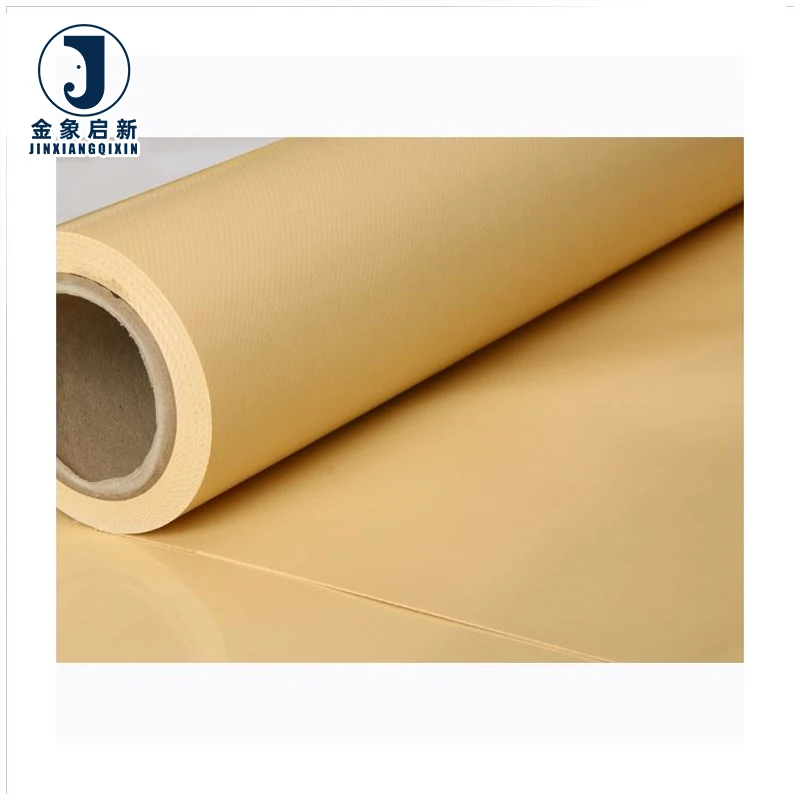
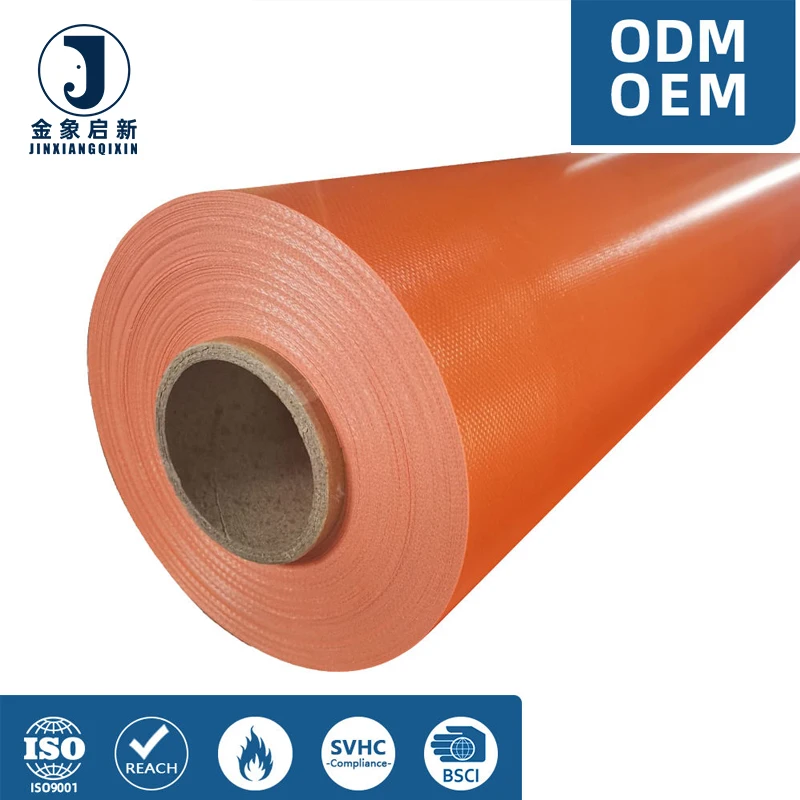
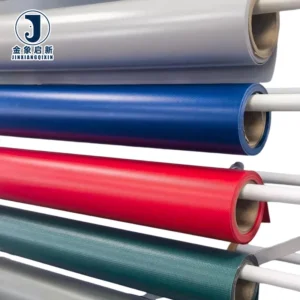
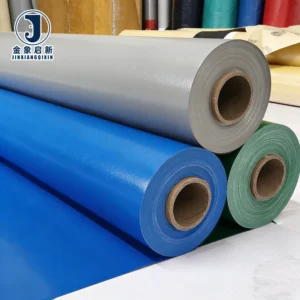
PVC Coated Tarpaulin Roll 500D500D 1817 — UV resistant, fire retardant and mildew proof surface for tensile structures, shade systems and portable storage. Compatible with HF, hot air and sewing for downstream fabrication.
Coating weight and adhesion are tightly controlled across every roll, ensuring consistent GSM and colour match when installed side by side on large-format architectural projects.
- Full custom width, colour and pattern printing available
- 100% pre-shipment inspection with test reports included
- Samples developed within days before bulk commitment
Description
Batch Consistency — Every roll of 500D500D 1817 PVC coated tarpaulin is produced under controlled coating and winding parameters to prevent the visible colour drift that forces contractors to reject installed membrane panels.
Technical Specifications
| Parameter | Value |
|---|---|
| Product Type | PVC Coated Tarpaulin Roll |
| Base Fabric Denier | 500D*500D |
| Mesh Count | 18*17 |
| Coating Material | PVC |
| Welding Compatibility | HF, Hot Air, Sewing |
| Surface Finish | Self-cleaning |
| Flexibility | Highly flexible, resistant to cracking |
| Temperature Behaviour | High temperature and cold resistance (range not stated) |
| Flame Retardant | Available in flame retardant grades — confirm the grade required for your market |
| UV Resistance | Available with UV treatment — test basis to be confirmed at inquiry |
| Anti-Mildew | Mildew proof (test basis not stated) |
| Oil & Stain Resistance | Stated (test basis not stated) |
| Acid & Alkali Resistance | Stated (test basis not stated) |
| Weather & Oxidation Resistance | Anti-oxidation and weather resistant (test basis not stated) |
Application Suitability
| Application | Exposure & Requirement |
|---|---|
| Tensile and membrane structures | Sustained tension, wind load cycling, UV exposure, long-term colour consistency across adjacent panels |
| Stadium architectural roofs | Large span, high solar gain, fire code compliance at public assembly venues |
| Airport hangar enclosures | Wide unsupported spans, fuel and hydraulic fluid splash, high wind suction |
| Shade systems and shadings | Daily UV load, thermal expansion, visual appearance from ground level |
| Portable storage structures | Repeated assembly and teardown, abrasion at frame contact points |
| Large format technical textiles | Fabrication by roll, HF or hot air welding, batch matching for multi-roll projects |
Why Roll-to-Roll Colour Drift Wastes More Than Just Material on Membrane Projects
Colour matching across every roll in a single shipment is a production discipline problem, not a post-production sorting problem.
When a tensile structure contractor installs six panels side by side and two of them shift half a shade toward yellow under daylight, the entire facade reads as defective even though every physical property meets spec. I have seen project managers reject entire container loads because the colour variance only became visible once the fabric was tensioned and the sun hit it at an angle. The cost is never just the two mismatched rolls — it is the crane time, the crew remobilisation, and the client relationship [NEED_CITE: colour tolerance standards for architectural coated fabrics]. Sourcing a PVC coated tarpaulin roll from a line that treats colour as a process variable rather than a sorting exercise changes the procurement outcome fundamentally.
How the 500D*500D Base Fabric Serves Architectural and Tensile Applications
The 500 denier yarn in both warp and weft directions provides a balanced base that handles multi-axial tension without preferential distortion. In tensile structures where the fabric is pulled into compound curves, an unbalanced weave would cause one direction to stretch further, leading to wrinkling or uneven stress at the clamping rail. The 18*17 mesh count gives a dense enough substrate for the PVC coating to lock into, producing the peel strength that welded seams depend on when the structure flexes under wind load.
What Full Customisation Actually Means for Roll Stock Buyers
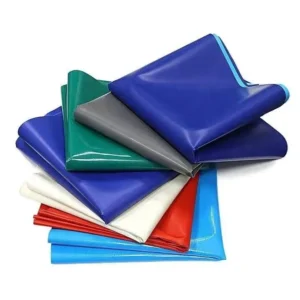
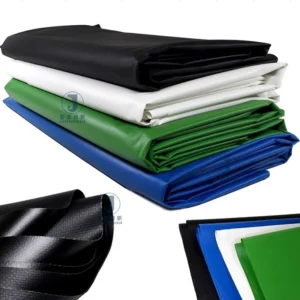
A PVC coated tarpaulin roll order for architectural projects rarely ships as a single standard spec. Width is dictated by the panel cutting layout to minimise offcuts, colour must match the architect’s RAL or Pantone reference across every roll in the order, and surface treatment — UV stabiliser package, flame retardant grade, anti-mildew additive — must align with the destination market’s building code [NEED_CITE: fire classification requirements for tensioned fabric in public buildings]. Our R&D team develops samples within days for custom width, colour, or surface treatment so you can verify the material before committing the full production run.
Reading the 500D500D 1817 Specification Beyond the Numbers
The denier figure tells you the linear mass of the yarn, but in a coated fabric the relationship between base cloth and coating weight determines the real-world behaviour. A 500D yarn at 18*17 mesh creates a substrate where the PVC paste penetrates the interstices thoroughly, which directly supports the peeling resistance needed at HF and hot air welded joints. The self-cleaning surface finish reduces the accumulation of particulate and biological growth on shade systems and stadium roofs, cutting the frequency of maintenance washes. Highly flexible construction with resistance to cracking matters where the fabric is folded during transport or where portable storage structures are assembled and dismantled seasonally. The acid and alkali resistance stated for this material supports use in environments where cleaning chemicals or industrial atmospheric exposure are factors.
The Hidden Cost of Specifying PVC Tarpaulin Roll by GSM Alone
I have watched fabricators discover too late that a roll meeting the quoted GSM still produced weak welds because the coating formulation lacked the plasticiser balance needed for reliable HF bonding. On a tensile structure, the weld is the first point to fail when the membrane cycles under wind load — and a seam failure on an installed stadium roof is a safety incident, not a warranty claim. Similarly, ordering flame retardant fabric without specifying the test standard for the destination market means the material may pass one laboratory protocol and fail the one the local fire marshal actually enforces [NEED_CITE: international variations in flame retardant test methods for coated textiles]. The result is a failed inspection, a project delay measured in weeks, and a contractor absorbing re-fabrication cost.
Why This PVC Coated Tarpaulin Roll Source Holds Up to Technical Procurement
Three full production lines and 36 sets of professional equipment support bulk roll output without collapsing lead times when custom widths or colours enter the schedule. A 10-person R&D team handles material selection, colour matching, and sample development in-house, meaning the sample you approve is produced on the same coating line as the bulk order. Every roll receives 100 percent inspection before dispatch — not a statistical sample — with GSM and visual checks recorded on the pre-shipment inspection document you receive with the packing list. ISO and CE certified production systems underpin the documentation chain from material specification sheet through to certificate of origin, supporting customs clearance in regulated markets.
Documentation & Verification
- Material specification sheet stating 500D500D base, 1817 mesh, PVC coating type, and colour reference
- Test reports for UV and flame retardant grades supplied where applicable to your market
- Pre-shipment inspection record confirming GSM and surface quality per roll
- Roll packing list with individual roll identifiers for traceability on site
- Certificate of origin and customs documentation for cross-border shipment
Fabrication, Handling & Storage
- HF and hot air welding both compatible — set temperature and dwell time to the PVC coating thickness of this 500D*500D grade
- Sewn seams on this 18*17 mesh should use bonded polyester thread to match the base fabric tenacity
- Store rolls upright on pallets to prevent flat spots that telegraph through the self-cleaning surface finish
- Unroll at ambient temperature; cold-conditioned PVC coated tarpaulin roll becomes stiff and risks coating micro-cracks
- Clean with neutral pH detergent only — acid or alkaline cleaners may compromise the stated anti-mildew treatment
What to Include in Your Specification Enquiry
Tell us the end-use application and the environmental exposure the fabric will face — sustained UV, chemical splash, public fire code — so we can confirm the correct treatment package. Specify the roll width that matches your cutting layout and the colour reference system you are working to. If your project requires flame retardant certification, name the test standard and grade your local authority requires so we align the test report before production begins.
Frequently Asked Questions
Q: How do you guarantee GSM matches the quotation when the rolls arrive?
A: Each roll undergoes weight verification against the stated specification during 100 percent pre-shipment inspection. The inspection record travels with the shipment so you can cross-check on arrival. GSM is measured at multiple points across the roll width, not sampled from a single edge cut.
Q: Can you supply a test report for UV or flame retardant treatment?
A: Yes, where these treatments are specified at the inquiry stage. The test report references the standard and grade confirmed with you before production. We recommend stating your destination market’s regulatory requirement so the correct protocol is applied.
Q: What is the lead time and minimum order for custom width or colour?
A: Custom width and colour orders follow the standard production cycle once the sample is approved. The R&D team produces samples within days so the bulk commitment can proceed without extended waiting. Minimums depend on the specific customisation requested.
Q: Will colour be consistent across all rolls in a single order?
A: Colour is managed as a process variable throughout coating and winding. All rolls within one order are matched to the approved colour reference and inspected side by side before packing. This prevents the visible panel-to-panel drift that causes rejection on installed tensile and shade structures.
Q: Which welding method should I choose for membrane structure fabrication?
A: HF welding produces a homogeneous bond suited to high-stress structural seams. Hot air welding offers flexibility for curved or complex joint geometries. Sewing is appropriate for non-structural joins or where the seam will be covered by a welded strip. Selection depends on your joint design and load path.
Related products
-
Wholesale Pricehigh Quality Outdoor Waterproof Tarp Customized Pvc Tarpaulin Roll
¥1.20 Add to cart -
Custom Reinforced Edges Rip-Stop Rubberized PVC Tarpaulin Industry Covering Vinyl Coated Polyester Tarps for Trucks
¥8.00 Select options This product has multiple variants. The options may be chosen on the product page -
PVC Tent Fabric Shelter Blackout Anti-UV PVC Tarpaulins 1000D for Tent Fabric for Event Exhibition Shade Tents
¥1.45 Select options This product has multiple variants. The options may be chosen on the product page -
Tarp Factory 610gsm 650gsm 800gsm Awnings Tent PVC Coated Fabric Waterproof Bache Lona PVC Tarpaulin Roll
¥1.45 Select options This product has multiple variants. The options may be chosen on the product page