PVC Tarpaulin for Tent Making: Best Fabric Weight and Coating Tips for China Tent Manufacturers
Heavier PVC tarpaulin does not always equal longer tent service life. Most tent production teams and raw material buyers default to assuming that higher fabric weight directly translates to better durability, yet this common assumption often leads to unnecessary cost increases, over-engineered products, and even higher production rejection rates without delivering matching end-user value.
For tent manufacturers, selecting the right PVC tarpaulin fabric weight and coating directly impacts product durability, cost control and end-user satisfaction, and targeted matching based on application scenarios can effectively balance performance and production cost.
Having supported over 200 global tent brands and bulk procurement projects across North America, Europe, Southeast Asia and Africa over the past 30 years, we have consistently seen that teams who align tarpaulin parameters to specific use cases rather than generic “high weight” benchmarks see an average 12% reduction in material costs while maintaining or improving product performance [NEED_CITE: Industry data shows targeted PVC tarpaulin parameter matching cuts material costs by 12% on average for tent manufacturers].
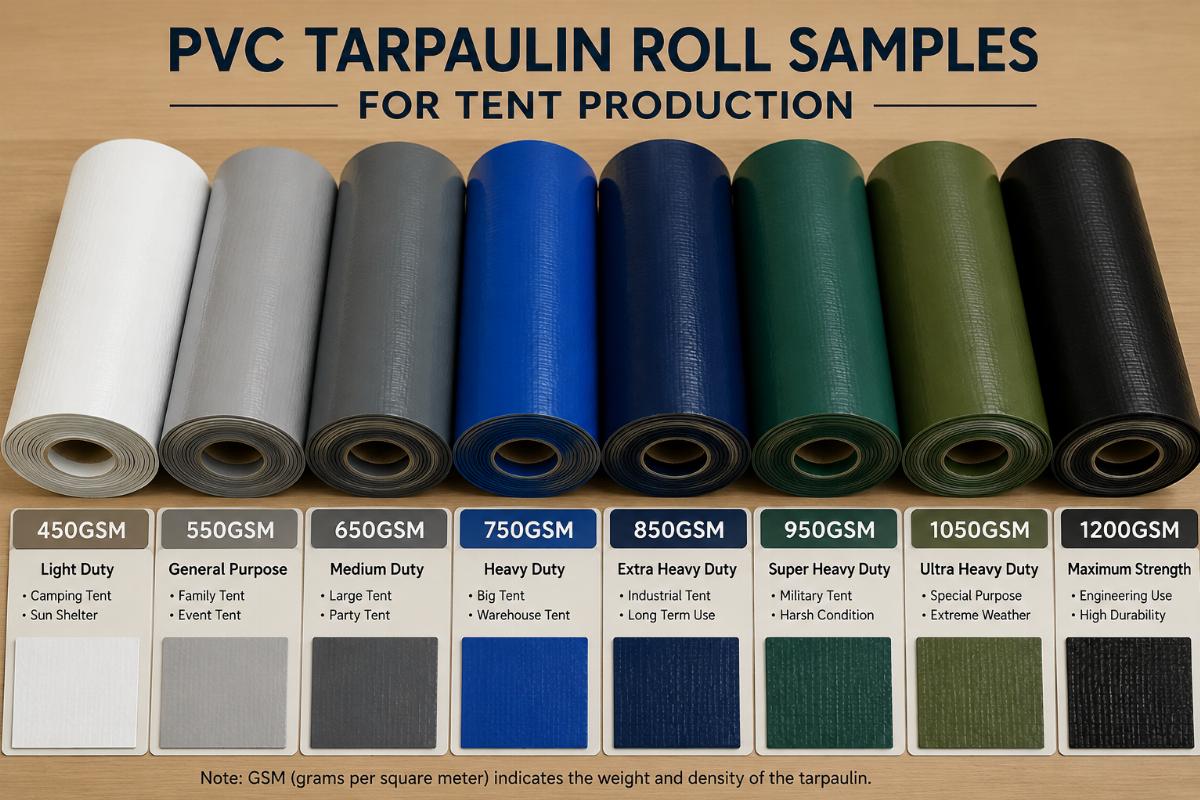
Below we break down actionable, field-tested guidance to help you avoid common selection pitfalls and source the right materials for your product line.
ما هو وزن القماش من قماش PVC الأكثر ملاءمة لصنع الخيام؟
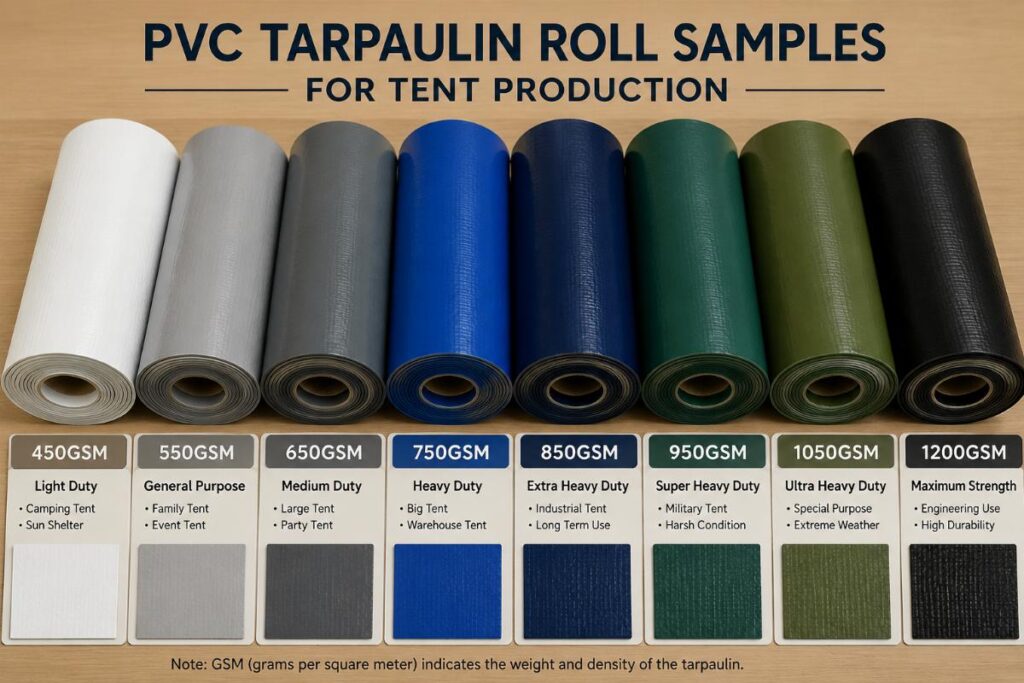
يجب أن يرتبط اختيار وزن القماش مباشرةً بحالة استخدام الخيمة المستهدفة، وليس بمعايير تناسب الجميع. للإشارة، تتراوح أوزان الأقمشة البلاستيكية الشائعة لإنتاج الخيام بين 0.3 كجم/متر مربع و 0.6 كجم/متر مربع، حيث يتم تحسين الأوزان الأقل للمنتجات المحمولة الخفيفة، بينما تم تصميم الأوزان الأعلى للاستخدام طويل الأمد والمتكرر. ممارسة الاختيار غير المتسقة الشائعة
ممارسة الاختيار الموصى بها
الشراء الزائد لهياكل الأحداث ذات الاستخدام الواحد، مما يؤدي إلى تكاليف زائدة غير ضرورية
تحديد خيام التخييم العائلية متوسطة المدى وهياكل الفعاليات ذات الاستخدام المتكرر، مع تحقيق التوازن بين المتانة وكفاءة الإنتاج
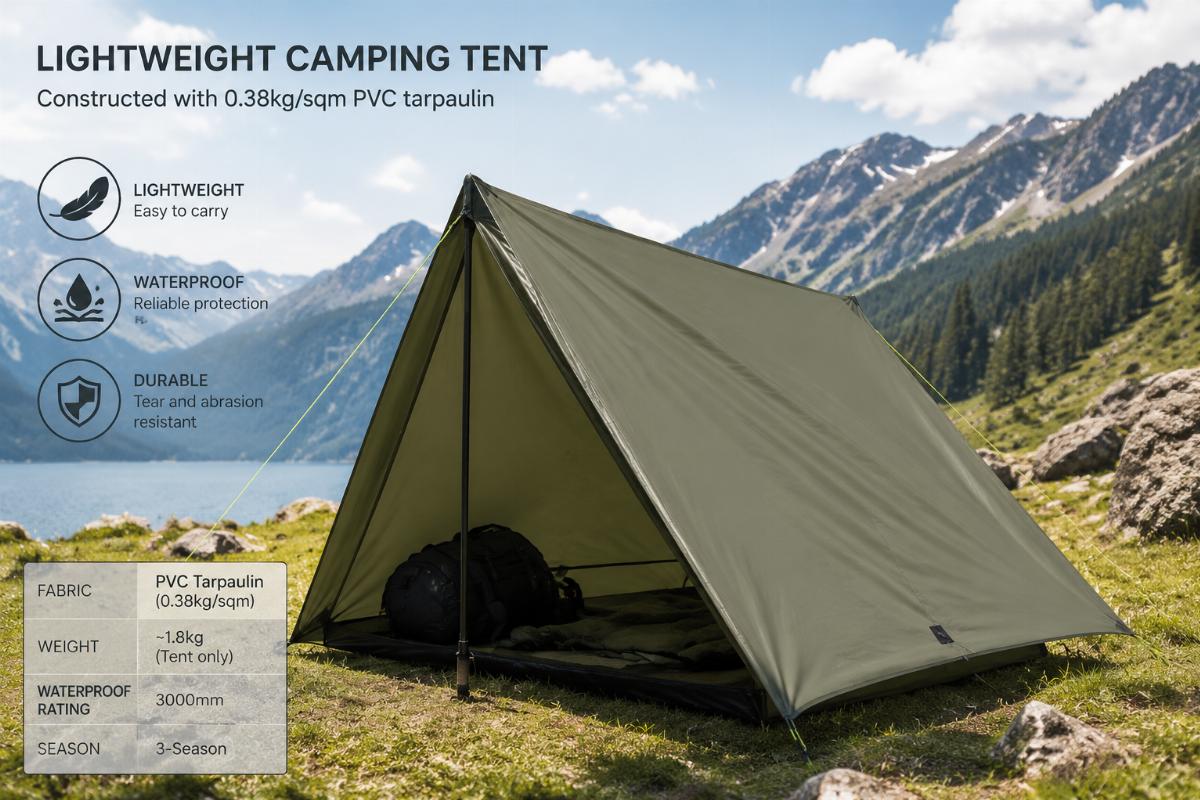
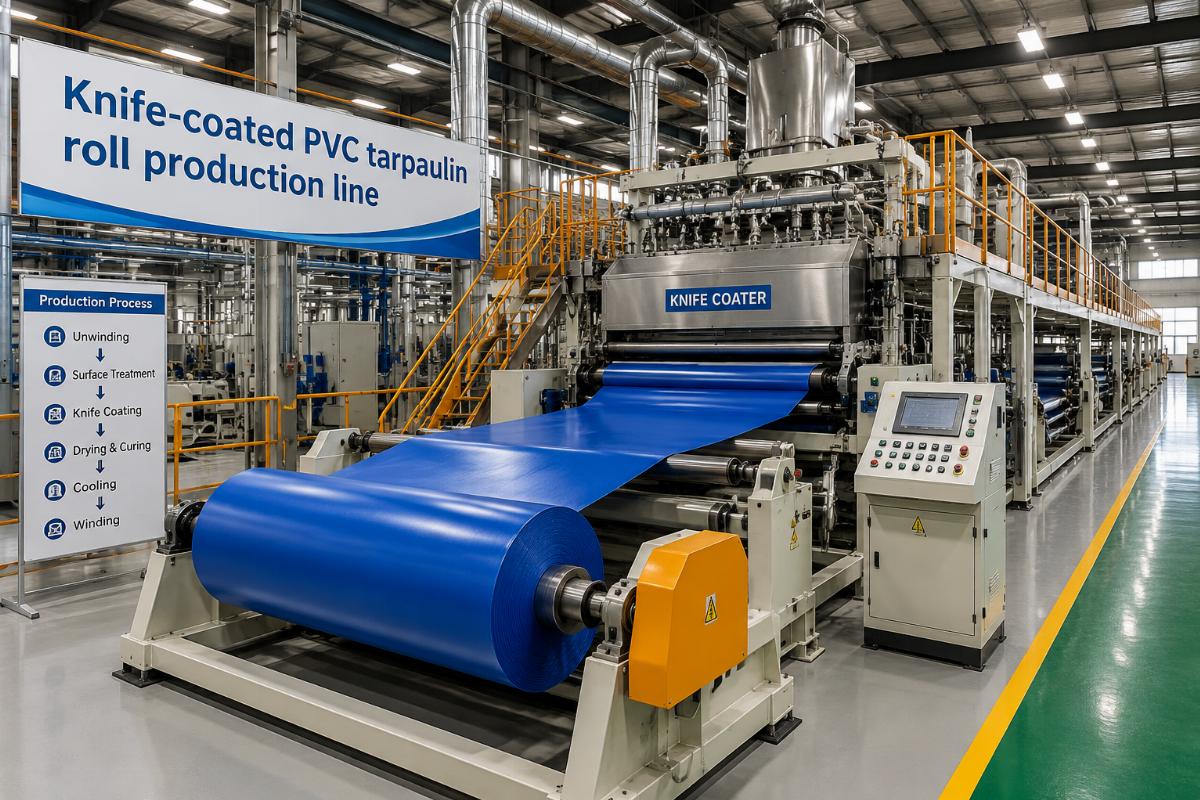
A North American camping goods wholesaler recently switched from a 0.45kg/sqm tarpaulin to our recommended 0.38kg/sqm coated PVC material for their lightweight weekend camping tent line, and their in-house production rejection rate dropped by 8% in the first quarter of adoption, while user feedback on product portability improved by 14% in post-purchase surveys. تخطيط حالات الاستخدام – قم بإدراج أول 3 أولويات أساسية للمستخدم لكل خط خيمة تنتجه، قبل مراجعة خيارات الوزن تأكيد العينة – اختبار 2-3 فئات وزن متجاورة لمدة 30 يومًا تحت ظروف استخدام محاكاة قبل تقديم طلبات بالجملة Coating process directly determines three core performance metrics: waterproof rating, tear resistance and anti-UV lifespan. Knife-coated and standard coated PVC are the two most common process types for tent tarpaulin, and each delivers distinct performance and cost tradeoffs. ممارسة الاختيار غير المتسقة الشائعة
ممارسة الاختيار الموصى بها
بلاستيك PVC مطلي بالسكين
اختيار خيام الأحداث ذات الاستخدام الواحد، مما يؤدي إلى زيادة تكاليف المواد غير الضرورية بنسبة 20-30%
اختيار خيام طويلة الأمد وعالية المتانة وخطوط مخصصة تحمل علامات تجارية تتطلب جودة طباعة متسقة عبر دفعات كبيرة
PVC مطلي قياسي
اختيار التثبيتات الخارجية الدائمة، مما يؤدي إلى تقليل العمر المتوقع للخدمة بنسبة 30% وزيادة مطالبات الضمان
اختيار هياكل الأحداث قصيرة الأجل وخطوط المنتجات ذات الميزانية حيث تكون كفاءة التكلفة متطلبًا أساسيًا
طلاء تركيبة مخصصة
افتراض أن جميع تركيبات الطلاء تقدم أداءً معادلاً عبر الأسواق العالمية، مما يؤدي إلى تأخيرات في تخليص الجمارك
اختيار صيغة تتناسب مع اللوائح المحلية وظروف المناخ في منطقة المبيعات المستهدفة [NEED_CITE: تغطيات PVC المعتمدة من CE تلبي معايير السلامة من الحرائق الإلزامية للاتحاد الأوروبي للمنتجات الخارجية]
قامت علامة تجارية أوروبية للخيام القابلة للنفخ مؤخرًا بوضع طلبية بوزن 12 طنًا لغطاء PVC مطلي بسكين بوزن 0.45 كجم/متر مربع مع طباعة شعار العلامة التجارية، وقد قمنا بتسليم الطلبية بالكامل خلال مهلة 15 يومًا، بينما اجتاز المادة النهائية اختبار الشيخوخة المضاد للأشعة فوق البنفسجية لمدة 5000 ساعة دون أي انحرافات في الأداء.
ما هي الأخطاء الشائعة التي يجب تجنبها عند اختيار قماش PVC للأكشاك؟
Ignoring regional regulatory requirements and over-reliance on generic material specifications are the two most costly mistakes for tent manufacturers. Teams that cut corners on these steps often face unexpected product rejections, sales blockages and rising after-sales costs that erase initial material cost savings. أفضل الممارسات للتخفيف
منتجات مفرطة في التصميم لا يمكنها المنافسة في السعر في الأسواق المستهدفة، دون أي تحسين متناسب في رضا المستخدم
بافتراض أن جميع الطلاءات المقاومة للاشتعال مقبولة عالميًا
احتجاز المنتج في الجمارك، أو استدعاءات المنتجات الإلزامية التي تضر بسمعة العلامة التجارية
بافتراض أن الطلبات المخصصة تتطلب كميات طلبات دنيا مرتفعة للغاية
تمديد جداول تطوير المنتجات، وزيادة المخزون للخطوط التجريبية للمنتجات الجديدة
A Southeast Asian outdoor event operator recently sourced 8000 square meters of our eco-friendly standard coated PVC for their temporary event tent line, and their total material cost was 12% below the local average market quotation, while the finished material delivered a full IPX6 waterproof rating that exceeded their project requirements. كيف تجد مورد موثوق لأقمشة PVC لإنتاج الخيام؟
A supplier with deep OEM experience and complete qualification certification cuts raw material trial and error costs by an average of 35% for new tent product lines. When evaluating potential suppliers, prioritize teams that have direct experience serving manufacturers in your target regions, and can offer transparent support across custom specifications, lead times and order flexibility. خاتمة
The highest performing PVC tarpaulin selection strategy for tent manufacturers prioritizes use case alignment over generic “higher is better” assumptions. There is no universal best weight or coating type that works for every product line, but teams that map their material choices to specific end user needs and regional requirements consistently deliver better products at lower total production cost. Working with an experienced supplier that offers flexible order terms and transparent performance data removes the guesswork from material selection
Tarpaulin Weight Category
0.3 – 0.38kg/sqm
Specifying for permanent or heavy-use event tents, leading to premature tearing and waterproof failure
Specifying for lightweight backpacking and camping tents, where weight reduction and ease of carry are core user priorities [NEED_CITE: 0.38kg/sqm coated PVC tarpaulin reduces production rejection rates by 8% for lightweight tent lines]
0.4 – 0.48kg/sqm
0.5 – 0.6kg/sqm
Defaulting to this weight for all product lines to avoid perceived quality risk, inflating end-product pricing
Specifying for permanent outdoor shelters and high-wind exposure locations, where structural integrity is the top requirement
How to choose the right coating type for your PVC tent tarpaulin?
Coating Process
Common Selection Mistake
Typical Outcome of the Mistake
Assuming higher weight always equals better durability
Compare 3-year on-site performance data for different weight and coating combinations to identify actual performance drivers [NEED_CITE: Coating uniformity and anti-UV formula are the core determinants of tent service life, not raw fabric weight]
Map your target market’s mandatory certification requirements to your selected tarpaulin before placing any sample orders
Work with suppliers that offer flexible MOQ and fast sample delivery for small-batch new product testing