PVC Tarpaulin for Tent Making: Best Fabric Weight and Coating Tips for China Tent Manufacturers
Heavier PVC tarpaulin does not always equal longer tent service life. Most tent production teams and raw material buyers default to assuming that higher fabric weight directly translates to better durability, yet this common assumption often leads to unnecessary cost increases, over-engineered products, and even higher production rejection rates without delivering matching end-user value.
For tent manufacturers, selecting the right PVC tarpaulin fabric weight and coating directly impacts product durability, cost control and end-user satisfaction, and targeted matching based on application scenarios can effectively balance performance and production cost.
Having supported over 200 global tent brands and bulk procurement projects across North America, Europe, Southeast Asia and Africa over the past 30 years, we have consistently seen that teams who align tarpaulin parameters to specific use cases rather than generic “high weight” benchmarks see an average 12% reduction in material costs while maintaining or improving product performance [NEED_CITE: Industry data shows targeted PVC tarpaulin parameter matching cuts material costs by 12% on average for tent manufacturers].
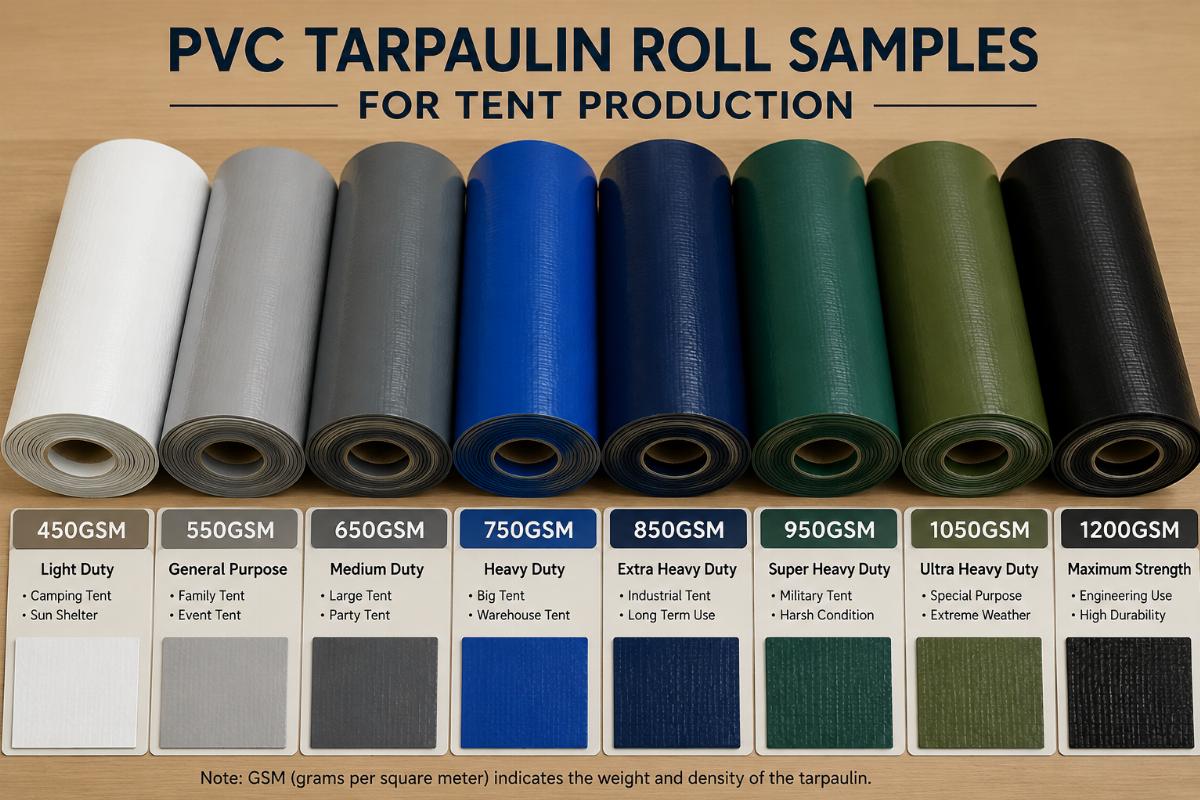
Below we break down actionable, field-tested guidance to help you avoid common selection pitfalls and source the right materials for your product line.
What fabric weight of PVC tarpaulin is most suitable for tent making?
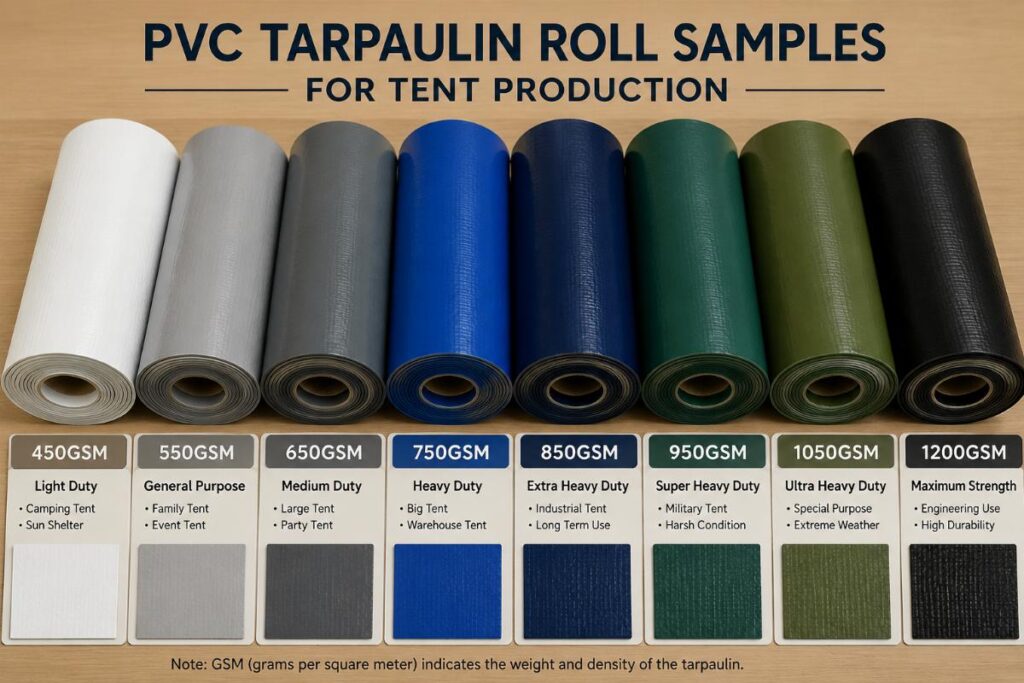
Fabric weight selection must be tied directly to your target tent use case, not one-size-fits-all benchmarks. For reference, common PVC tarpaulin weights for tent production range between 0.3kg/sqm and 0.6kg/sqm, with lower weights optimized for lightweight portable products and higher weights built for long-term, frequent use.
| Tarpaulin Weight Category | Common Misaligned Selection Practice | Recommended Selection Practice |
|---|---|---|
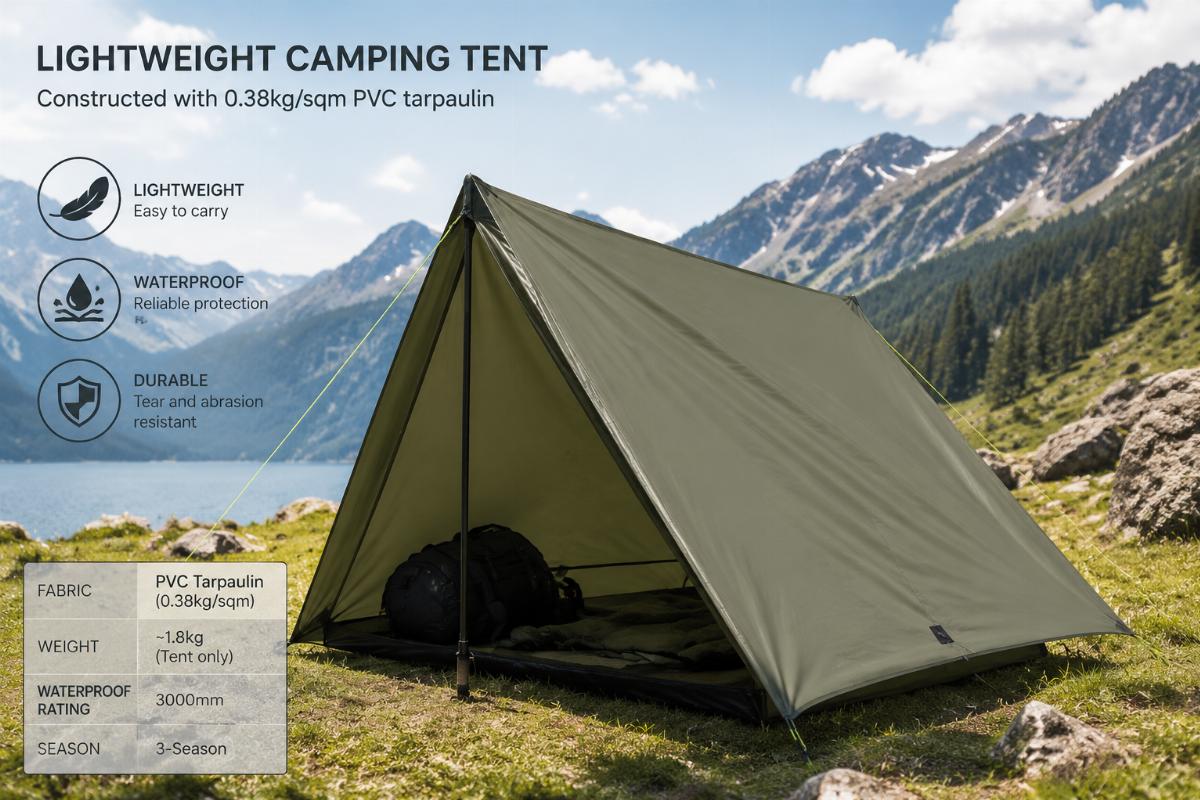
| 0.3 – 0.38kg/sqm | Specifying for permanent or heavy-use event tents, leading to premature tearing and waterproof failure | Specifying for lightweight backpacking and camping tents, where weight reduction and ease of carry are core user priorities [NEED_CITE: 0.38kg/sqm coated PVC tarpaulin reduces production rejection rates by 8% for lightweight tent lines] |
| 0.4 – 0.48kg/sqm | Over-purchasing for single-use event structures, leading to unnecessary cost overhead | Specifying for mid-range family camping tents and frequent-use event structures, balancing durability and production efficiency |
| 0.5 – 0.6kg/sqm | Defaulting to this weight for all product lines to avoid perceived quality risk, inflating end-product pricing | Specifying for permanent outdoor shelters and high-wind exposure locations, where structural integrity is the top requirement |
A North American camping goods wholesaler recently switched from a 0.45kg/sqm tarpaulin to our recommended 0.38kg/sqm coated PVC material for their lightweight weekend camping tent line, and their in-house production rejection rate dropped by 8% in the first quarter of adoption, while user feedback on product portability improved by 14% in post-purchase surveys.
- Use Case Mapping – List the top 3 core user priorities for each tent line you produce, before reviewing weight options
- Market Alignment Check – Cross-reference weight options against the average price point of competing products in your target sales region
- Sample Validation – Test 2-3 adjacent weight categories for 30 days under simulated use conditions before placing bulk orders
How to choose the right coating type for your PVC tent tarpaulin?
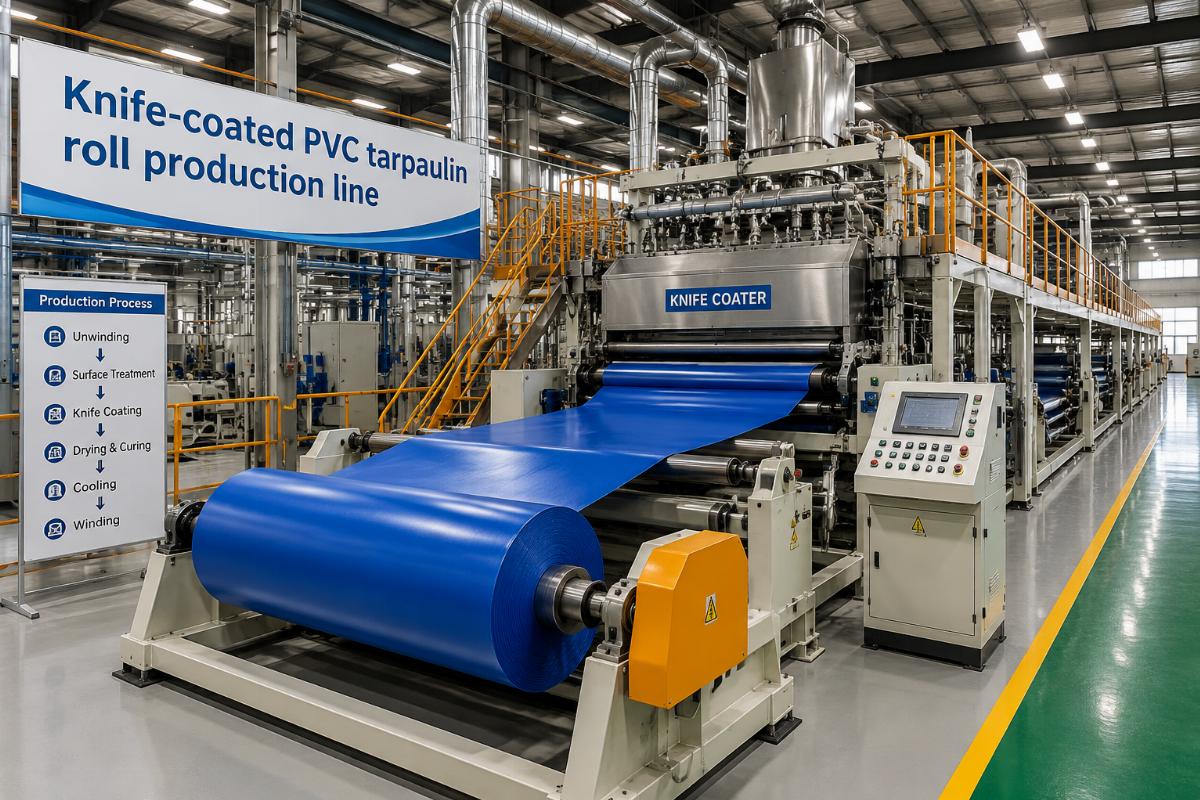
Coating process directly determines three core performance metrics: waterproof rating, tear resistance and anti-UV lifespan. Knife-coated and standard coated PVC are the two most common process types for tent tarpaulin, and each delivers distinct performance and cost tradeoffs.
| Coating Process | Common Misaligned Selection Practice | Recommended Selection Practice |
|---|---|---|
| Knife-coated PVC | Selecting for single-use event tents, leading to 20-30% unnecessary material cost increases | Selecting for long-term, high-durability tents and custom branded lines that require consistent print quality across large batches |
| Standard coated PVC | Selecting for permanent outdoor installations, leading to 30% shorter expected service life and higher warranty claims | Selecting for short-term event structures and budget product lines where cost efficiency is a core requirement |
| Custom formula coating | Assuming all coating formulas deliver equivalent performance across global markets, leading to customs clearance delays | Selecting a formula matched to the local regulatory and climate conditions of your target sales region [NEED_CITE: CE-certified PVC coatings meet mandatory EU fire safety standards for outdoor products] |
A European inflatable tent brand recently placed a 12-ton order for custom 0.45kg/sqm knife-coated PVC tarpaulin with on-brand logo printing, and we delivered the full order within a 15-day lead time, while the finished material passed 5000-hour anti-UV aging testing with zero performance deviations.
- Lead Time Confirmation – Confirm that your supplier can deliver the required coating type within your production schedule, especially for custom formula orders
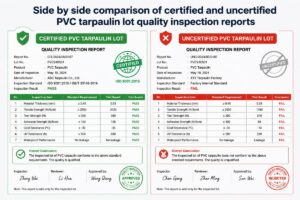
- Performance Test Review – Request independent third-party test reports for waterproof, tear and anti-UV metrics for any coating type you are considering
- Cost Benchmarking – Calculate total cost of ownership across the expected service life of the tent, rather than only reviewing per-square-meter material pricing
What common mistakes should be avoided when selecting PVC tarpaulin for tents?
Ignoring regional regulatory requirements and over-reliance on generic material specifications are the two most costly mistakes for tent manufacturers. Teams that cut corners on these steps often face unexpected product rejections, sales blockages and rising after-sales costs that erase initial material cost savings.
| Common Selection Mistake | Typical Outcome of the Mistake | Mitigation Best Practice |
|---|---|---|
| Assuming higher weight always equals better durability | Over-engineered products that cannot compete on price in target markets, with no matching improvement in user satisfaction | Compare 3-year on-site performance data for different weight and coating combinations to identify actual performance drivers [NEED_CITE: Coating uniformity and anti-UV formula are the core determinants of tent service life, not raw fabric weight] |
| Assuming all flame-retardant coatings are universally acceptable | Product detainment at customs, or mandatory product recalls that damage brand reputation | Map your target market’s mandatory certification requirements to your selected tarpaulin before placing any sample orders |
| Assuming custom orders require extremely high minimum order quantities | Extended product development timelines, and excess inventory for new product test lines | Work with suppliers that offer flexible MOQ and fast sample delivery for small-batch new product testing |
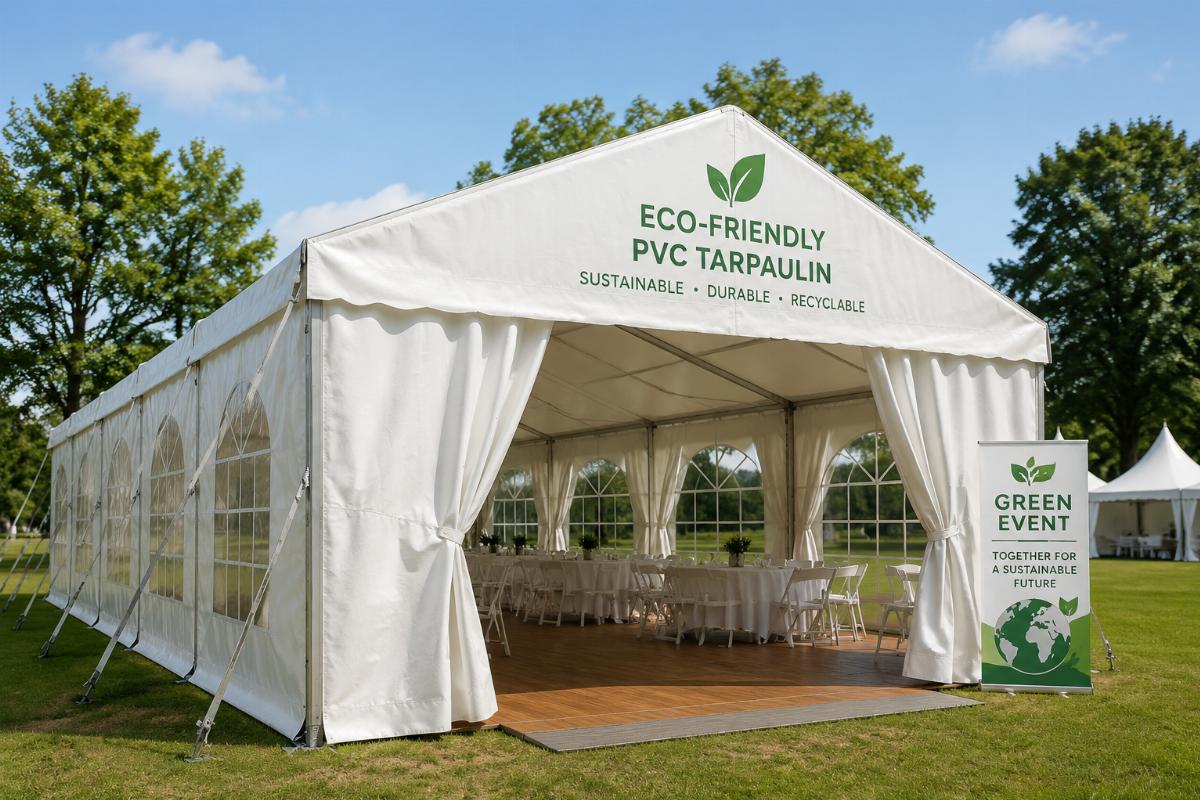
A Southeast Asian outdoor event operator recently sourced 8000 square meters of our eco-friendly standard coated PVC for their temporary event tent line, and their total material cost was 12% below the local average market quotation, while the finished material delivered a full IPX6 waterproof rating that exceeded their project requirements.
- Regulation Audit – Create a shared checklist of mandatory certifications for each target sales region you serve
- New Product Testing – Allocate a fixed budget for small-batch trial orders of new material lines, to avoid overcommitting to unproven specifications
- Warranty Alignment – Match the expected service life of your selected tarpaulin to the warranty period you offer on your finished tents
How to find a reliable PVC tarpaulin supplier for tent production?
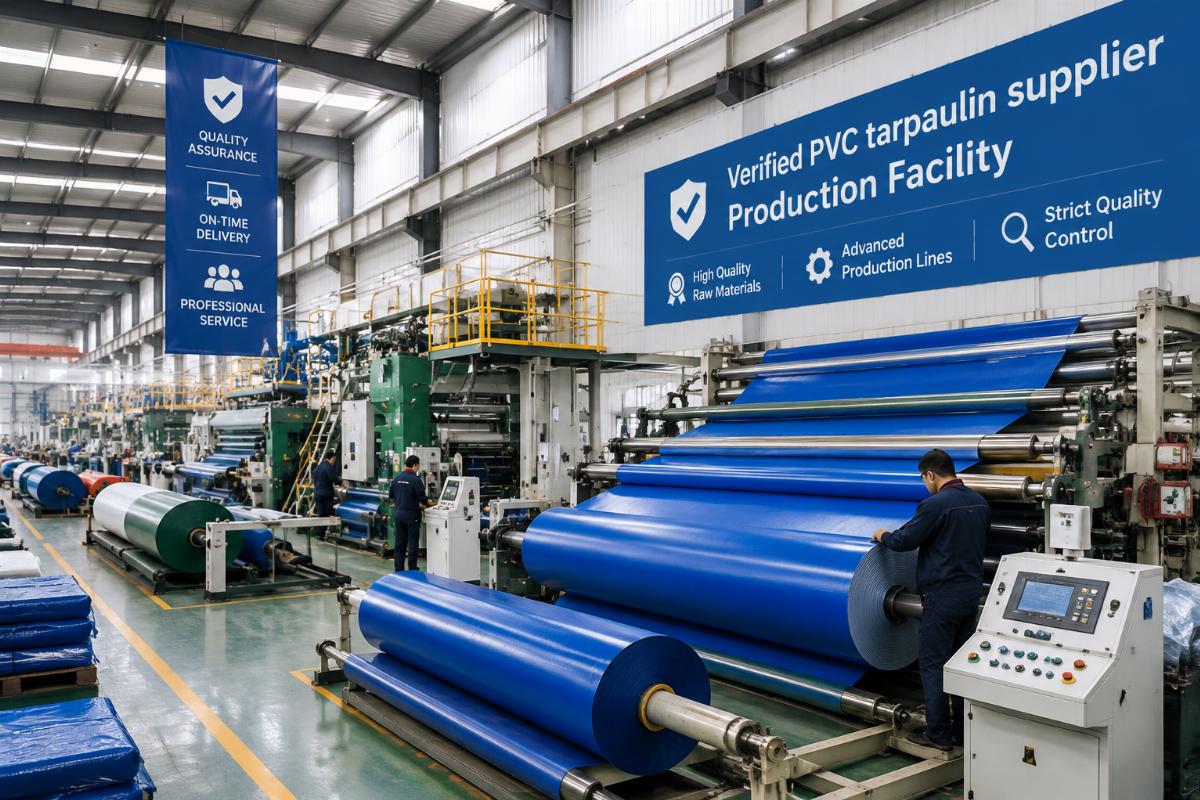
A supplier with deep OEM experience and complete qualification certification cuts raw material trial and error costs by an average of 35% for new tent product lines. When evaluating potential suppliers, prioritize teams that have direct experience serving manufacturers in your target regions, and can offer transparent support across custom specifications, lead times and order flexibility.
- Reference Verification – Request case studies of past orders for tent manufacturers in the same product category as your line
- Capability Confirmation – Confirm the supplier has in-house R&D support to adjust coating formulas and weights to your custom requirements
- Delivery Alignment – Verify that the supplier can deliver sample orders within 7 days, and bulk orders within standard lead times for your production schedule
Conclusion
The highest performing PVC tarpaulin selection strategy for tent manufacturers prioritizes use case alignment over generic “higher is better” assumptions. There is no universal best weight or coating type that works for every product line, but teams that map their material choices to specific end user needs and regional requirements consistently deliver better products at lower total production cost. Working with an experienced supplier that offers flexible order terms and transparent performance data removes the guesswork from material selection