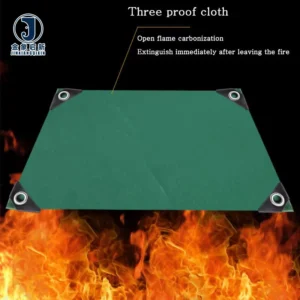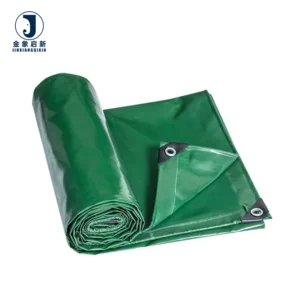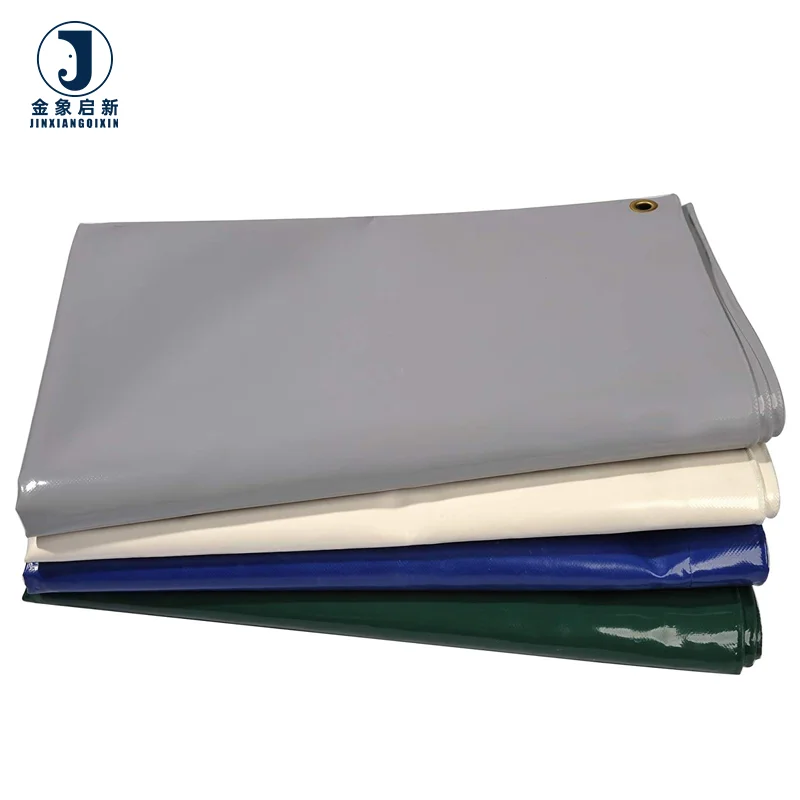
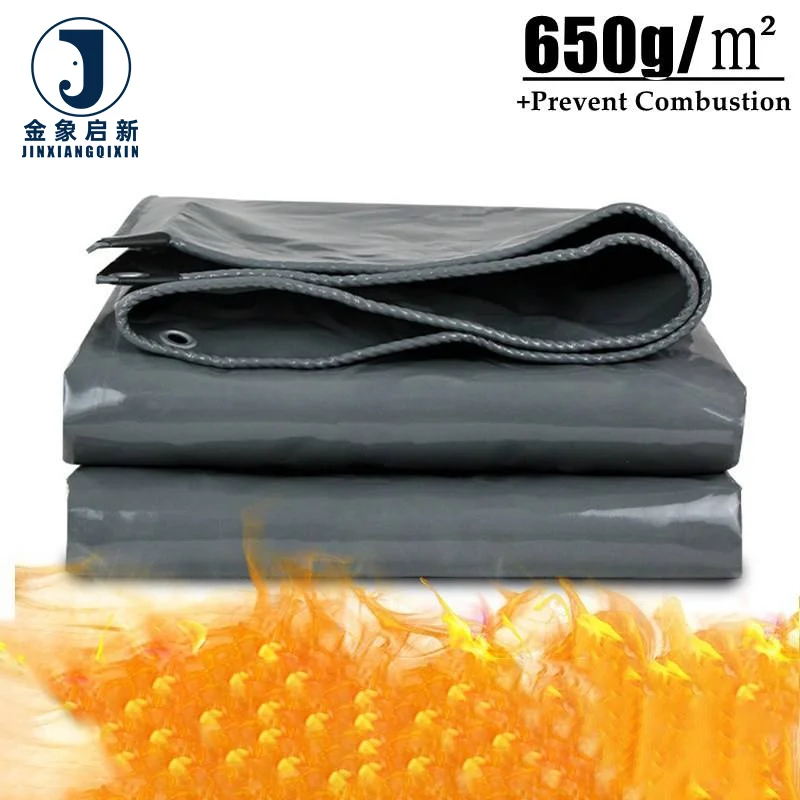
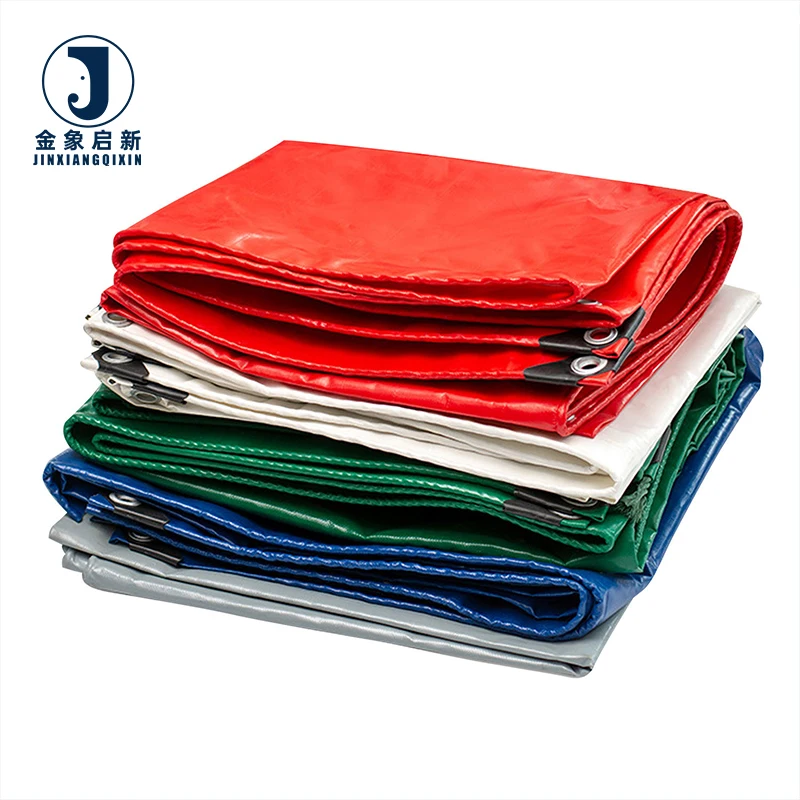
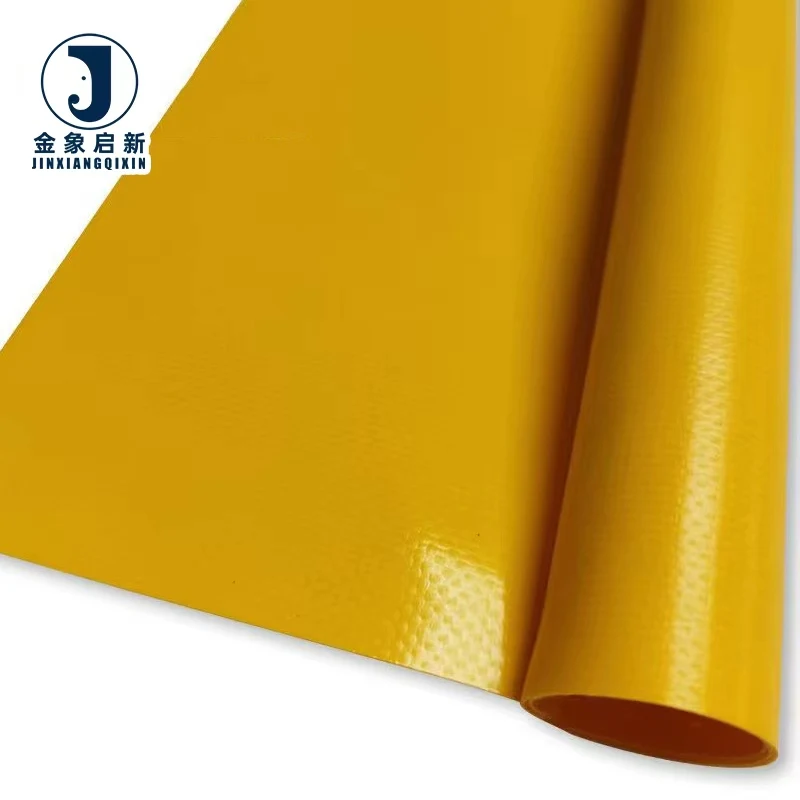
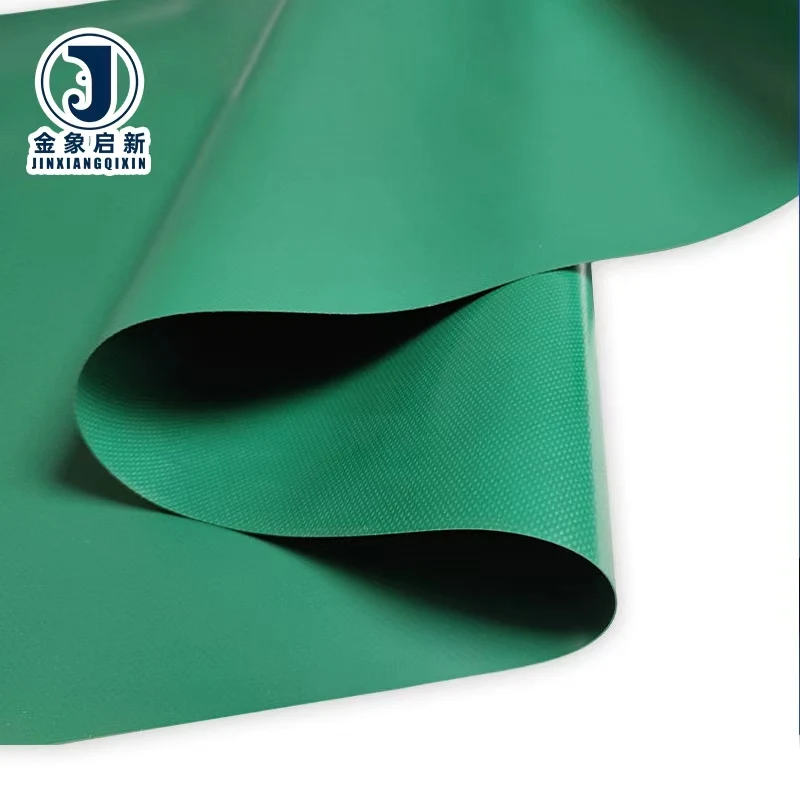
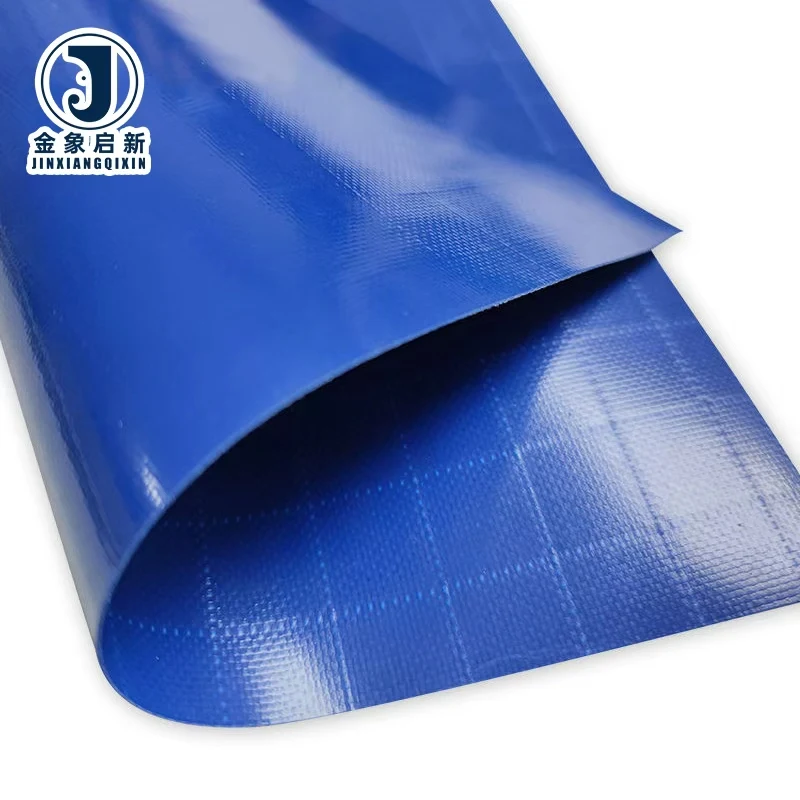
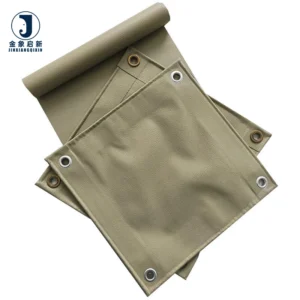
Gray Flame-Retardant PVC Tarpaulin — PVC coated tarpaulin with 350–900 g/m² range, 500D to 2000D yarn count options, and heat-sealed seam construction for truck, trailer, awning and tent covers.
- Double-sided PVC coating with controlled adhesion supports reliable heat welding at flex points where loads shift most.
- Eyelet spacing, edge rope reinforcement and corner patches are configurable to match your tie-down pattern and trailer dimensions.
- 10-person R&D team delivers custom sizing, colour and print samples within days for rapid specification approval.
Description
Coating Weight Control — Each roll undergoes stage-by-stage QA with 100% pre-shipment weight verification against the stated 420~1000g/m² tolerance before dispatch.
Technical Specifications
| Parameter | Value |
|---|---|
| Product Type | PVC Coated Tarpaulin |
| Base Fabric | Polyester |
| Yarn Count Options | 500D×840D, 500D×1000D, 1000D×1000D, 1000D×1300D, 1300D×1300D, 1000D×2000D |
| Density Options | 30×19, 20×20, 30×15 |
| Weight (GSM) | 420~1000g/m² (confirm the grade for this item) |
| Total Thickness | 0.29 mm – 0.65 mm (varies by grade) |
| Coating Material | PVC, double-sided |
| Tensile Strength Warp | 1650 N – 3900 N (varies by grade, test standard not stated) |
| Tensile Strength Weft | 1600 N – 3500 N (varies by grade, test standard not stated) |
| Flame Retardant | Available in flame retardant grades — confirm the grade required for your market |
| UV Treatment | Available with anti-UV treatment — confirm test basis for your application |
| Color | Gray |
| Key Features | Waterproof, Water Resistant |
| Edge Finishing | 5 mm thick rope without splicing, high temperature heat sealed seamless edge wrapping |
| Eyelet Options | 3 cm enlarged aluminum alloy buttonhole, reinforced corners |
| Brittle Temperature | ≤ -50 °C to -60 °C |
| Softening Temperature | ≥ 80 °C |
| Certifications | ISO, CE |
Application Suitability
| Application | Exposure & Requirement |
|---|---|
| Truck and trailer cover | Constant road vibration, UV exposure, flexing at tie-down points, weather resistance |
| Awning and pergola | Prolonged sun exposure, wind load tension, water runoff, colour retention |
| Tent and canopy | Repeated assembly stress, weather cycling, flame retardant compliance for public venues |
| Machine and equipment cover | Abrasion from contact surfaces, dust ingress prevention, outdoor storage |
| Construction site cover | Debris impact, UV degradation, temporary shelter wind loads |
What "Flame Retardant" Actually Means Without a Test Report Behind It
A flame retardant label on a quotation is not a compliance document — the grade and test standard are what determine whether the fabric passes your local inspection.
Many buyers specify flame retardant PVC coated tarpaulin on the purchase order, only to discover at the job site that no test report accompanies the shipment. [NEED_CITE: fire safety classification standards for temporary structures and tents] Without a grade tied to a recognised standard such as DIN 4102 B1, NFPA 701 or M2, the claim is unenforceable. The coating formulation that achieves one classification may differ substantially from another, affecting cost, flexibility and colour. Requesting the specific test report before production locks in the chemistry and avoids rejection at the installation stage.
Selecting the Right Yarn Count for Your Load Profile
The base fabric denier is the structural backbone of any PVC coated tarpaulin. A 500D×840D weave suits lighter covers where flexibility and fold-ability matter more than absolute tear resistance, while a 1000D×2000D construction handles the sustained tension and abrasion found on side curtains and heavy equipment wraps. Matching denier to the mechanical stress profile prevents premature failure at tie-down and eyelet points.
Edge and Eyelet Engineering for High-Stress Fitment
Welded seams and hems are where most tarpaulin failures originate, not the field of the fabric. [NEED_CITE: tensile and tear test methods for coated fabrics per ISO 1421] The high temperature heat sealed edge wrapping on this range addresses flex-point fatigue by distributing load across a broader bond area. Paired with 3 cm enlarged aluminum alloy eyelets and reinforced corner patches, the system transfers tie-down tension into the base fabric rather than concentrating it at the grommet ring.
Reading GSM and Denier Together
GSM alone does not define mechanical performance. A 650 g/m² fabric woven from 1000D×1000D yarn at 20×20 density will exhibit different tensile and tear behaviour compared to the same weight built on a finer 500D×1000D weave at 30×19 density. The heavier yarn resists tear propagation across the weft, while higher pick density improves puncture resistance. Coating weight and adhesion method — knife-over-roll, lamination or calendering — further influence peel strength and heat-seal behaviour during fabrication. Understanding these interactions is essential when specifying PVC coated tarpaulin for structural or tensioned applications.
The Hidden Cost of Underspecifying the Grade
Selecting a lighter grade to reduce material cost often shifts expense downstream. A cover that flexes daily on a truck trailer will abrade through a marginal coating long before a heavier grade shows surface wear. Similarly, a flame retardant grade that lacks the correct certification for the destination market can halt an entire project at the inspection stage, forcing replacement under deadline pressure. [NEED_CITE: common failure modes in coated fabric installations] Batch-to-batch colour drift across rolls in the same order compounds the problem when panels are installed side by side, making rework visible and costly.
Why Procurement Teams Source This Range Here
Deep process control over coating weight and adhesion means the GSM on the quotation is the GSM on the roll, verified through in-process checks. A 10-person R&D team handles material selection, pattern printing and sample development, turning custom requirements into confirmed samples within days. Three full production lines and 36 sets of professional equipment support bulk volume with consistent on-time delivery. Dedicated QA/QC runs at every production stage, culminating in 100% pre-shipment inspection so that weight, colour and dimensions match the approved sample.
Documentation & Verification
- Material specification sheet stating exact GSM, base fabric denier, coating weight and gray colour reference
- Test report for UV and flame retardant grades matching target market regulation
- 100% pre-shipment inspection record with roll-by-roll weight verification
- Roll packing list confirming colour and GSM consistency across all units
- Certificate of origin and customs documentation for export clearance
- ISO and CE certificates included with shipment paperwork
Fabrication, Handling & Storage
- Heat-seal temperature and dwell time must match the PVC coating grade to avoid delamination at seam lines
- Eyelet spacing should account for the 3 cm enlarged aluminum alloy buttonhole diameter and reinforced corner patch dimensions
- Store rolls upright on pallets to prevent flat-spot creasing through the double-sided PVC coating layers
- Allow cold-stored rolls to reach ambient temperature before unrolling to avoid cracking at the brittle point of ≤ -50 °C
- Use mild detergent for cleaning; solvent-based agents may degrade the surface coating and affect flame retardant treatment
- Plan cut patterns to minimise cross-grain seams where tensile load direction shifts at the weld line
Requesting a Specification Match
To move forward, provide the intended application, the mechanical and environmental exposure conditions, and the target market fire safety classification if flame retardant compliance is required. Specify the preferred GSM grade from the available 420~1000g/m² range, yarn count and any custom width or colour requirements. Indicating whether you need finished cut-to-size panels with eyelets or full roll stock will determine the quotation and lead time.
Frequently Asked Questions
Q: How is GSM verified before the rolls leave the factory?
A: Every roll passes a 100% pre-shipment inspection where coating weight and total GSM are measured and recorded against the stated specification. An inspection report accompanies the shipment, and the roll packing list cross-references each unit to its verified weight, so the grade you ordered is the grade that arrives.
Q: Which flame retardant grades are available and how do I confirm compliance?
A: The range is available in multiple flame retardant grades. The specific grade must be matched to your destination market standard, such as DIN 4102 B1, M2 or NFPA 701. Request the test report for the grade you need before production so the correct coating formulation is locked in and documented.
Q: How is batch-to-batch colour consistency controlled across rolls?
A: Colour reference is set on the material specification sheet before production. In-process QA checks each roll against the approved gray standard under controlled lighting, and the pre-shipment inspection record confirms that no visible variation exists between rolls destined for the same order.
Q: What are the options for eyelet spacing and custom sizing?
A: The standard configuration uses 3 cm enlarged aluminum alloy eyelets with reinforced corner patches. Spacing, hem reinforcement and finished dimensions are configurable to match specific truck, trailer or structural frame requirements. Submit the fitment drawing or dimensions to receive a cut-to-size quotation.
Q: What is the typical lead time for custom widths or colours?
A: Custom width, colour and printed branding requirements involve separate line set-up and sample approval. Typical multi-week lead times apply depending on order volume and the degree of customisation. Provide your specification early to secure a production slot and confirm the timeline before placing the order.
Related products
-
JX Fireproof 500gsm 600gsm Customizable PVC Tarpaulin Waterproof Truck Cargo Cover
¥0.79 Select options This product has multiple variants. The options may be chosen on the product page -
Wholesale Pvc Tarpaulin Wear-resistant Waterproof Multi-purpose Heat-resistant Tarpaulin
¥2.00 Add to cart -
Waterproof Heavy Duty Tarpaulin Water Proof Cover Tarpaulin Manufacturer
¥1.48 Add to cart -
JX PVC Waterproof Fabric High-strength Sheeting for Industrial and Outdoor Coverings
¥1.90 Select options This product has multiple variants. The options may be chosen on the product page