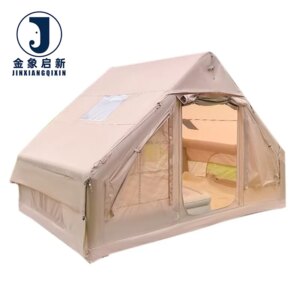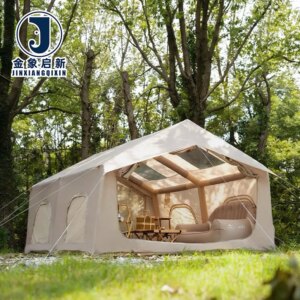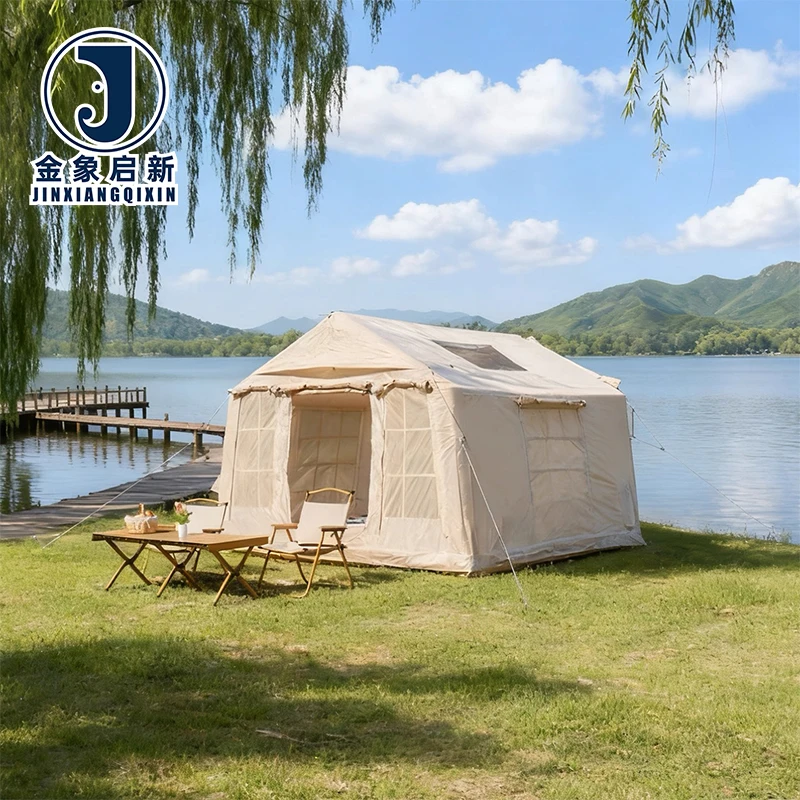
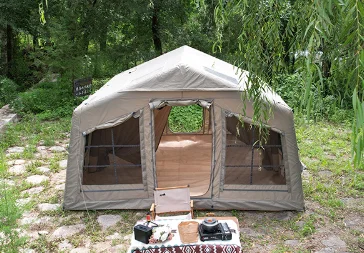
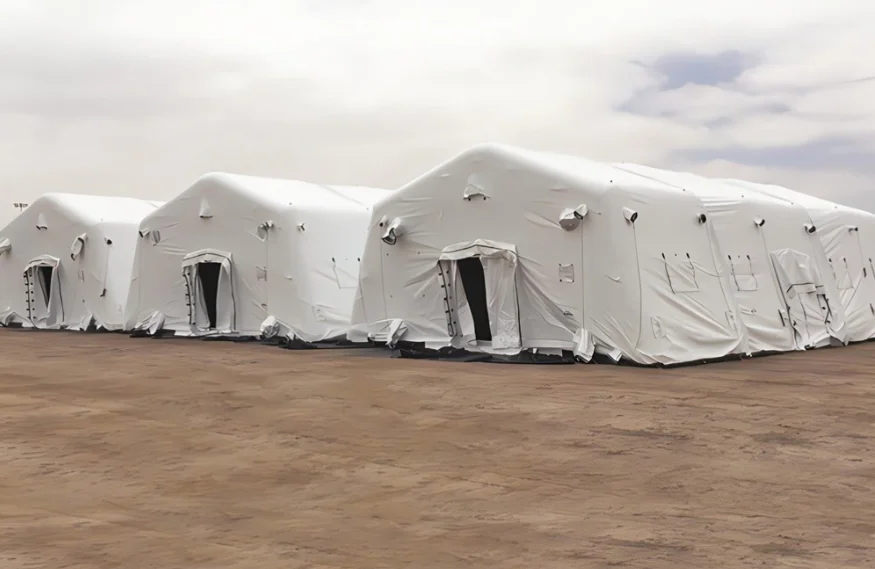
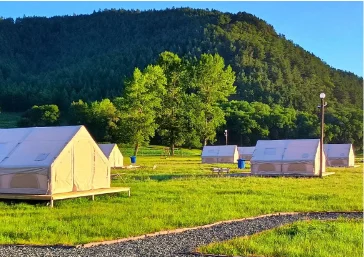
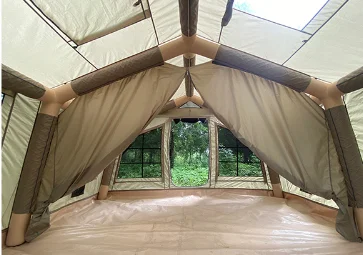
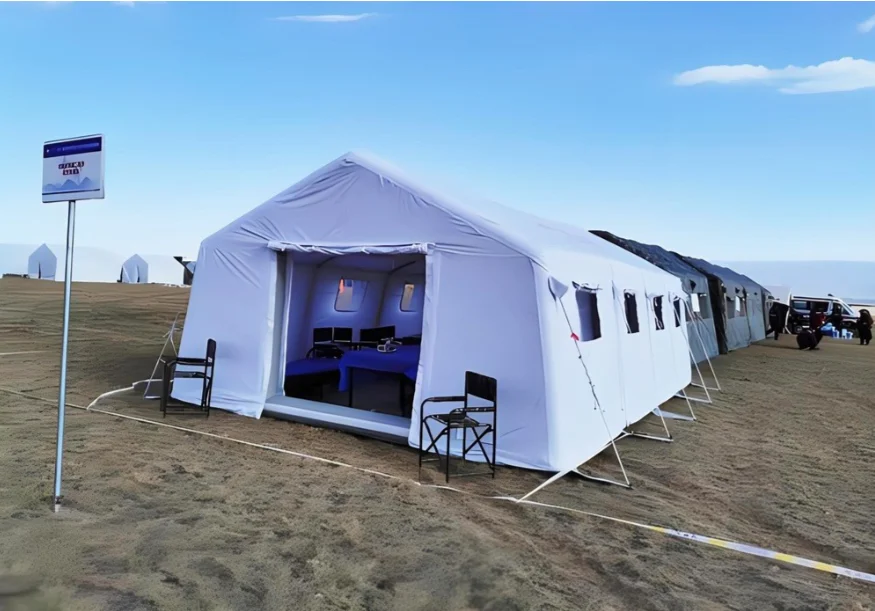
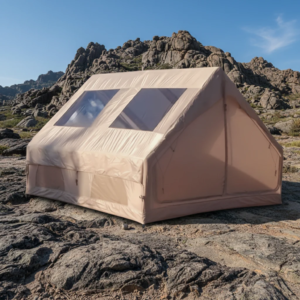
Inflatable Glamping Tent — waterproof PVC knife-coated fabric, UV-resistant treatment, quick automatic inflation under 10 minutes
- Single-layer construction balances durability with transport efficiency for bulk deployment across resort and event sites
- Full OEM/ODM capability covering size adjustments, colour matching, pattern printing, and accessory integration from design to dispatch
Backed by 3 full production lines, 10-person R&D team, and 100% pre-shipment inspection with 48-hour inflation test on every unit.
Description
Coated Fabric Expertise — nearly 30 years of PVC coating process control applied to inflatable tent fabric, ensuring consistent adhesion and seam integrity across every production run.
Technical Specifications
| Parameter | Value |
|---|---|
| Product Type | Inflatable Tent |
| Core Material | PVC knife-coated fabric |
| Waterproof Rating | 2000mm water pressure |
| Construction | Single-layer |
| UV Resistance | Available with UV-resistant treatment — confirm the level required for your market (test basis not stated in source) |
| Setup System | Quick automatic inflation, under 10 minutes |
| Monthly Capacity | 500+ units |
| Lead Time | 15–20 days for bulk orders |
| Customization | OEM & ODM — size adjustments, color matching, pattern printing, accessory integration |
| Quality Control | Full-process inspection, 48-hour inflation test per unit |
| Certifications | ISO 9001, ISO 14001, ISO 45001, CE |
Application Suitability
| Application | Exposure & Requirement |
|---|---|
| Luxury glamping resorts | Four-season weather exposure, guest comfort, repeated inflation cycles, aesthetic consistency across units |
| Outdoor event venues | Rapid deployment and teardown, high foot traffic, branding and colour uniformity |
| Commercial campsites | Continuous seasonal operation, UV and rain exposure, branded appearance for marketing |
| Temporary hospitality structures | Short-term weather resistance, quick setup with pump systems, structural air retention |
Why Welded Seams Fail Before the Fabric Does — and What Inflatable Glamping Tent Buyers Should Demand
Seam failure on inflatable structures is almost always a process problem, not a material problem.
When an Inflatable Glamping Tent manufacturer cuts corners on heat welding temperature or dwell time, the bonded edge becomes the weakest point in the entire structure. The fabric itself may handle wind load and internal pressure without issue, but the seams — especially at curved panels and valve surrounds — carry concentrated stress during inflation and deflation. Buyers who specify material grade but ignore weld parameters often discover the failure point only after the tent has been deployed on-site, where repair is costly and guest-facing. [NEED_CITE: tensile and seam strength test methods for coated fabrics per ISO 1421]
Coating Adhesion and What It Means for Air Retention
The PVC knife-coated fabric used in this Inflatable Glamping Tent is applied in a controlled coating process that bonds the PVC layer directly to the base fabric. This method produces a uniform coating thickness and strong adhesion between layers, which is critical for inflatable structures that must hold internal air pressure over extended periods. Poor adhesion leads to delamination at stress points — particularly where the fabric folds during packing and unfolds during inflation — creating micro-channels for air loss that compound over each setup cycle.
Single-Layer Construction and Transport Efficiency
Single-layer construction reduces packed weight and volume, which matters when shipping inflatable tents in container loads or moving them between event sites. The trade-off is that all waterproofing, UV resistance, and structural strength must come from one fabric layer rather than a laminated system. This places higher demand on coating quality and base fabric selection, since there is no secondary membrane to compensate for coating defects or pinholes. Buyers sourcing custom Inflatable Tent units for resort deployments should weigh transport logistics against the performance margin a single-layer design provides. [NEED_CITE: single-layer versus multi-layer coated fabric performance in inflatable structures]
Reading the Specification Sheet Beyond Waterproof Ratings
A 2000mm waterproof rating indicates the hydrostatic head the fabric can withstand before water penetrates, but this number alone does not define field performance. The base fabric denier and weave density determine how the material handles puncture and tear propagation — a high waterproof rating on a loosely woven base will still fail if a sharp object breaches the coating. Knife-coated PVC tends to offer better tear resistance than laminated alternatives because the coating penetrates the weave rather than sitting on the surface. For glamping operators, this means the tent skin resists damage from ground contact, branch abrasion, and the repeated flexing that occurs during wind events.
The Hidden Cost of Batch-to-Batch Colour Variation
When a glamping resort orders multiple inflatable tents expecting uniform colour across the site, variation between production batches becomes immediately visible once units are installed side by side. This is not a cosmetic issue alone — it signals inconsistent pigment dispersion or coating thickness, which can correlate with variation in UV protection and waterproofing across the same order. Buyers who do not request batch-specific inspection documentation before shipment often discover the mismatch only after the tents are inflated and positioned, at which point replacement or re-dyeing is commercially unviable. [NEED_CITE: colour consistency standards for coated architectural fabrics]
Why Sourcing Here Reduces Specification Risk
The production facility operates 3 full production lines with 36 sets of professional processing equipment, giving capacity to run dedicated batches for single orders rather than blending multiple customer runs. A 10-person R&D team handles material selection and sample development, producing pre-production samples within days so buyers can verify colour, coating weight, and weld quality before committing to bulk. Every unit undergoes a 48-hour inflation test before dispatch — this catches seam leaks and valve failures that a visual inspection would miss. Full-process quality inspection with dedicated QA and QC staff means coating weight and adhesion are checked at each stage, not only at final packing.
Documentation & Verification
- Material specification sheet stating PVC coating method, base fabric type, and waterproof rating
- Test report for UV-resistant grades where applicable — confirm the standard for your market
- Batch-specific quality inspection report with documented 48-hour inflation test results
- ISO 9001, ISO 14001, ISO 45001, and CE certificates provided as standard
- Pre-shipment inspection record covering seam integrity, colour consistency, and dimensional accuracy
- Certificate of origin and customs documentation for international shipment
Fabrication, Handling & Storage
- Heat weld parameters must match the PVC knife-coated fabric thickness — test weld samples before full production runs
- Store inflated units deflated and loosely rolled to avoid permanent crease marks in the single-layer PVC coating
- Use compatible PVC adhesive for field repairs on knife-coated surfaces — solvent-based adhesives may damage the coating layer
- Allow fabric to reach ambient temperature before unfolding in cold conditions to prevent coating crack at fold lines
- Clean with mild soap and soft brush — abrasive cleaners will degrade the PVC surface and reduce waterproof performance
- Pattern printing requires surface preparation compatible with the PVC coating formulation for lasting adhesion
Before You Request a Quote
Provide your intended deployment environment — climate zone, seasonal duration, and wind exposure — so the correct UV-resistant treatment level can be confirmed for your market. Specify whether you need finished units with integrated valves and door configurations, or fabric-only supply for your own fabrication line. If branding or colour consistency across multiple units is critical, request a pre-production sample to approve before bulk commitment.
Frequently Asked Questions
Q: What customization options are available for size, colour, and printing?
A: Full OEM and ODM services cover size adjustments, color matching, pattern printing, and accessory integration including ventilation ports and door configurations. The 10-person R&D team develops samples within days, allowing you to verify material, colour, and dimensional accuracy before approving bulk production.
Q: How is batch-to-batch colour consistency controlled across large orders?
A: Dedicated batch runs on individual production lines prevent pigment cross-contamination. Each batch undergoes colour comparison against the approved reference before packing, and batch-specific inspection reports document the results so you can verify consistency across your full order.
Q: What certifications ship with each order and are they valid internationally?
A: ISO 9001, ISO 14001, ISO 45001, and CE certificates are provided as standard documentation. Buyers should confirm whether their target market requires additional local fire or structural compliance and request specific test reports during the specification stage before bulk production begins.
Q: How are welded seams tested before shipment?
A: Every inflatable tent unit undergoes a 48-hour inflation test that holds the structure at operating pressure to identify seam leaks, valve failures, and coating defects. Results are documented in a batch-specific quality inspection report that ships with the order.
Q: What is the sample development timeline before bulk production?
A: Pre-production samples are typically developed within days of specification approval. The sample allows verification of PVC coating quality, colour accuracy, dimensional tolerances, and weld parameters before you commit to the full production run.
Related products
-
خيمة قابلة للنفخ فاخرة للتخييم الفاخر في الهواء الطلق، خيمة هوائية مقاومة للماء مع مضخة
Read more -
Inflatable Tent Family Size Four-Season Quick Automatic Opening Waterproof 2-8 Person Factory Direct Sale
Read more -
Inflatable Camping Tent Waterproof Outdoor Air Tent for Camping Inflatable Tent Shelter
Read more -
High Quality Four-Season Inflatable Tent for Camping Durable PVC Material All-Weather Resistance Quick Automatic Opening
Read more