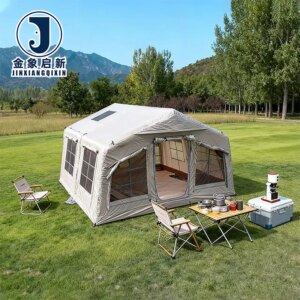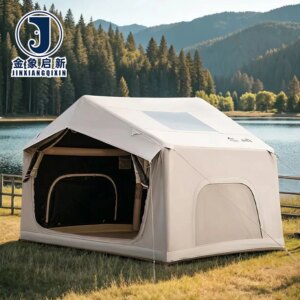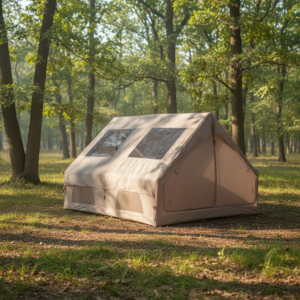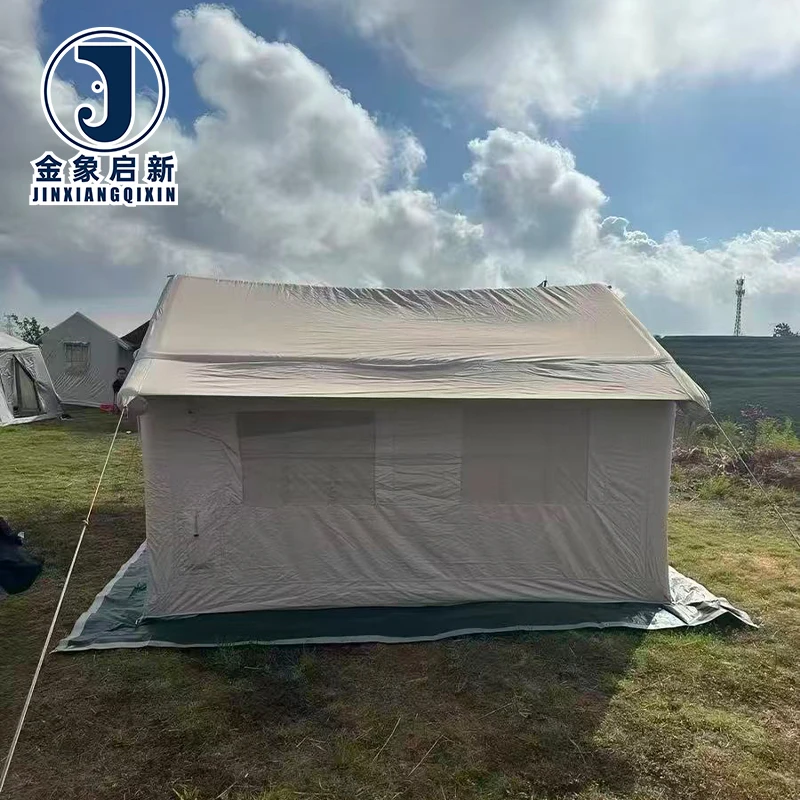
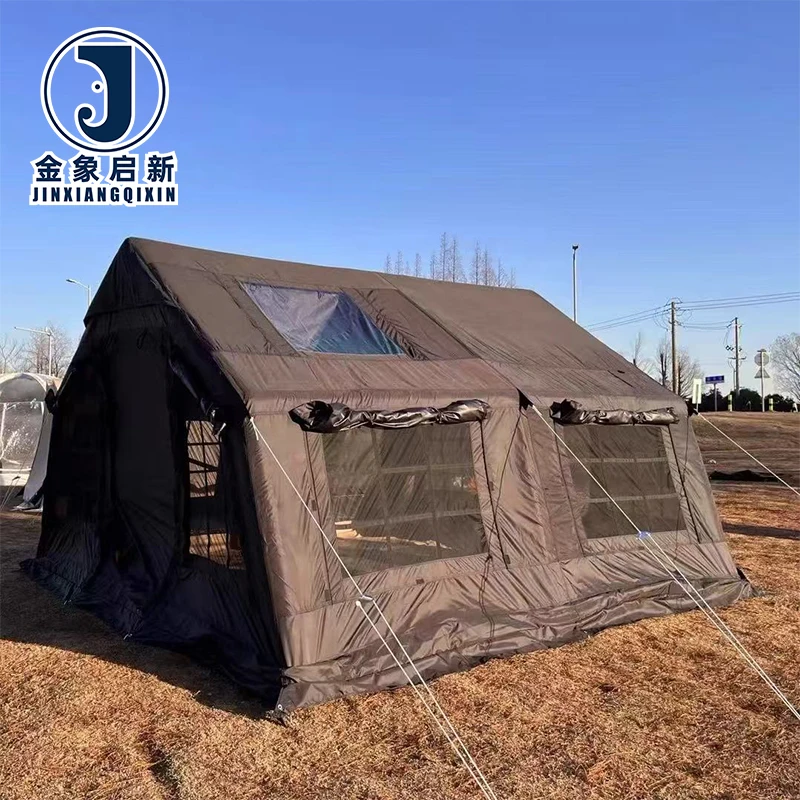
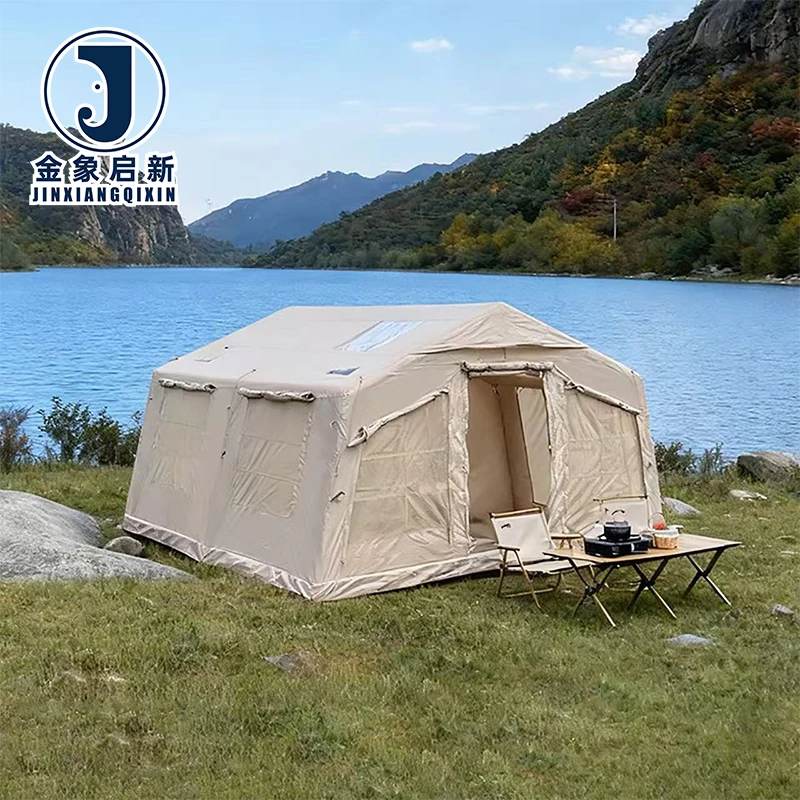
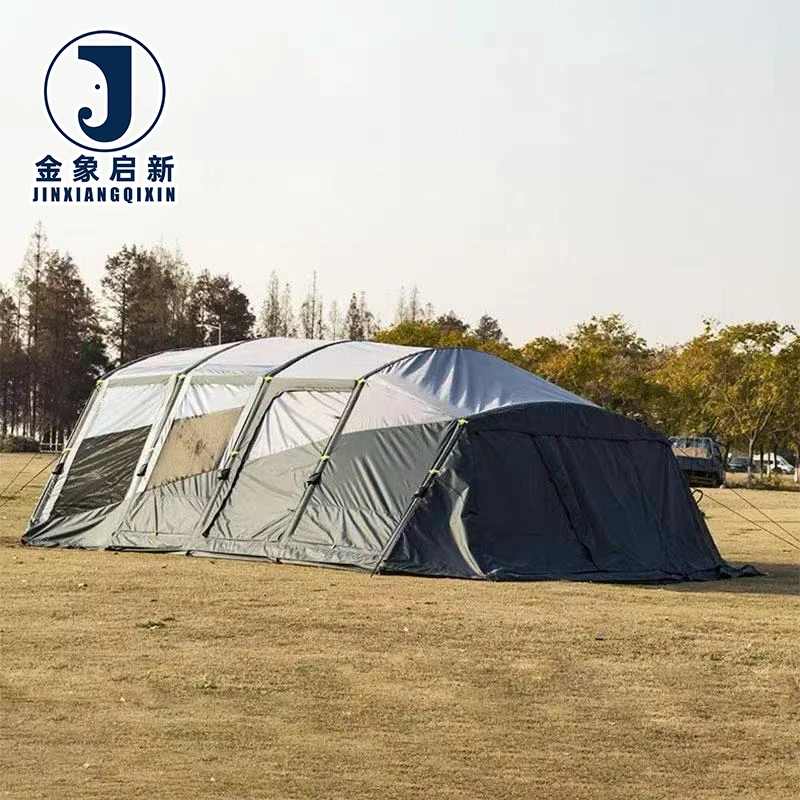
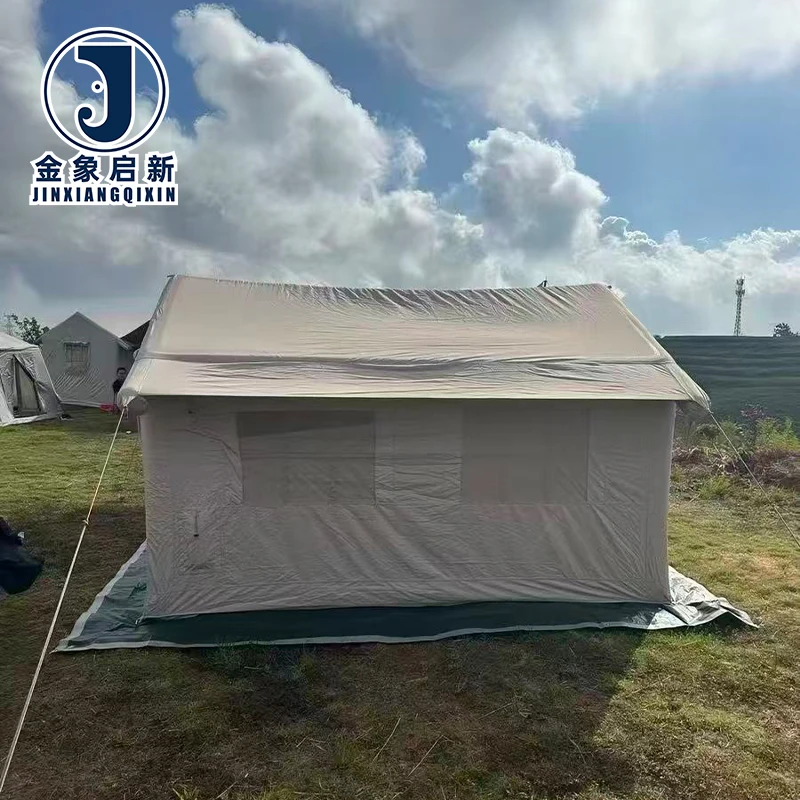
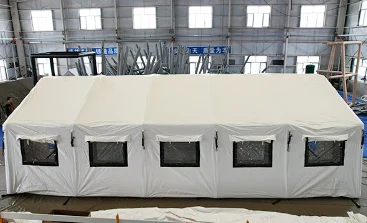
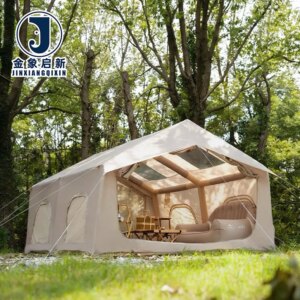
Inflatable Tent, Oxford Waterproof Fabric, 4-6 Person Capacity — quick automatic opening with ≥1000mm H2O waterproof rating and UV-resistant additives for extended outdoor service life. Full customisation from design to delivery, addressing batch consistency and project-specific dimension requirements across commercial and industrial applications. OEM & ODM supported with 10-person R&D team, 100% pre-shipment inspection, and sample development within days.
Description
Precision-Engineered Inflatable Structures — 7-point inspection protocol validates valve airtightness, seam pressure resistance, and stress point load capacity before every custom inflatable tent leaves the factory.
Technical Specifications
Product Type | Inflatable Tent
| Parameter | Value |
|---|---|
| Core Material | Oxford Waterproof Fabric |
| Construction | Single layer |
| Waterproof Rating | ≥1000mm H2O |
| UV Treatment | UV-resistant additives in material matrix (test basis not stated) |
| Key Features | Quick automatic opening, portable, waterproof |
| Capacity | 4-6 Person |
| Coating Process | Specialized coating for water resistance |
| Customization | OEM & ODM (sample customization, pattern printing) |
| Certifications | ISO9001, ISO14001, ISO45001, CE |
Application Suitability
| Application | Exposure & Requirement |
|---|---|
| Outdoor event management | Repeated inflation cycles, UV exposure, wind load on inflated structure |
| Commercial camping facilities | Frequent guest turnover, cleaning between uses, ground moisture contact |
| Construction site temporary housing | Dust exposure, equipment proximity, puncture risk from site debris |
| Outdoor product promotions | Brand visibility requirements, rapid deployment and packing cycles |
| Industrial temporary accommodations | Extended static inflation periods, weather resistance demands |
Why Batch Consistency Matters More Than Single-Roll Samples
Colour varying between rolls in the same order becomes visible once installed side by side — a problem that compounds when multiple inflatable tents are deployed together at a single event site. [NEED_CITE: colour consistency measurement standards for coated fabrics]
Buyers approving a single pre-production sample often discover that the full production run shows noticeable shade variation across panels. When inflatable tents are positioned adjacent to each other at commercial camping facilities or promotional events, this inconsistency undermines the professional appearance the buyer intended. Dedicated QA&QC at every production stage with 100% inspection before shipment addresses this by verifying colour reference against the approved standard for each roll in the batch, not just the first one off the line.
Full Catalogue Customisation From Material Selection to Finished Product
The custom inflatable tent programme covers the complete production chain within a 9,180 m² facility operating 3 full production lines and 36 sets of professional equipment. Material selection begins with Oxford waterproof fabric treated through specialized coating processes to achieve the ≥1000mm H2O waterproof rating, with UV-resistant additives integrated into the material matrix for extended outdoor exposure. The 10-person R&D team handles sample development, pattern printing, and bespoke sizing — meaning buyers specifying a custom inflatable tent for a particular application receive a physical sample for validation before full production commences.
Quality Control Built Around Inflatable Structure Demands
Inflatable structures place unique stresses on fabric that flat tarpaulin applications do not. Internal air pressure creates constant tension across all seams, while inflation and deflation cycles introduce repeated flexing at fold lines. The 7-point inspection protocol addresses these specific failure modes: material tensile strength testing, seam pressure resistance verification, valve airtightness checks, automatic opening mechanism function testing, stress points load testing, packaging integrity inspection, and final dimension measurement. [NEED_CITE: test methods for seam strength and airtightness in inflatable fabric structures] This systematic approach ensures that each custom inflatable tent meets the performance threshold before dispatch.
Understanding Oxford Waterproof Fabric for Inflatable Applications
Oxford fabric used in inflatable tent construction combines a woven base cloth with a specialized coating that delivers water resistance. The coating process directly affects how the material behaves during heat welding — the primary joining method for inflatable structures. Consistent coating weight across the full roll width ensures uniform weld strength, preventing weak spots where internal air pressure could cause seam separation. The UV-resistant additives integrated into the material matrix rather than applied as a surface treatment provide more durable protection, as the additive remains effective even as the surface experiences abrasion from packing and unpacking cycles. Single-layer construction keeps weight manageable for portable applications while the ≥1000mm H2O rating provides adequate protection against rain penetration during typical outdoor use.
The Hidden Cost of Unverified Waterproof Claims
Waterproof ratings stated on quotations but not verified on arrival create downstream problems that surface only after the inflatable tent is deployed. A structure that passes visual inspection at the factory may allow water ingress during its first rain event if the actual coating weight falls below the specified threshold. For commercial camping facility operators, this translates into guest complaints, emergency relocations, and reputation damage that far exceeds the unit cost difference between verified and unverified supply. The material specification sheet provided with each order states the base fabric, coating type, colour reference, and waterproof rating — giving buyers documented evidence to confirm against incoming goods rather than relying on verbal assurances. [NEED_CITE: industry practices for verifying coated fabric waterproof performance on delivery]
Manufacturing Capability Aligned With Inflatable Tent Requirements
Three full production lines provide capacity for bulk orders while maintaining the flexibility needed for custom sizing and pattern printing. The 36 sets of professional processing equipment include specialized machinery for cutting, welding, and finishing inflatable structures — not generic tarpaulin equipment adapted for the purpose. Dedicated QA&QC staff conduct in-process checks during production, catching dimensional deviations or weld defects before they propagate through the batch. Sample development within days allows buyers to validate material hand-feel, colour accuracy, and valve positioning before committing to full production quantities. Pre-shipment inspection records accompany each dispatch, providing traceability from raw material batch through to finished product.
Documentation & Verification
- Material specification sheet stating Oxford fabric base, coating type, colour reference, and ≥1000mm H2O waterproof rating
- Pre-shipment inspection record documenting 7-point quality checks for each custom inflatable tent
- ISO9001, ISO14001, ISO45001, and CE certificates for cross-border compliance requirements
- Batch-specific quality report linking production date to material lot and inspection results
- Roll packing list with individual unit identification for inventory tracking
Fabrication, Handling & Storage
- Heat welding parameters must match Oxford coating thickness to avoid seam weakness or material burn-through
- Store inflated structures away from sharp edges; ground sheets require puncture protection on construction sites
- Deflate completely and dry before packing to prevent mould growth during storage between commercial camping seasons
- UV-resistant additive integration means surface cleaning with mild detergents will not compromise weather resistance
- Fold along consistent lines during packing to reduce stress on coating at random crease points
Specifying Your Custom Inflatable Tent Requirements
Provide the intended application environment, expected inflation cycle frequency, and target market compliance requirements when requesting a quotation. Specify whether pattern printing, custom dimensions beyond standard 4-6 person capacity, or modified valve configurations are needed. Sample approval before full production ensures the Oxford fabric weight, coating performance, and construction details match your operational requirements.
Frequently Asked Questions
Q: What customization options are available for inflatable tent dimensions and features?
A: The 10-person R&D team handles OEM and ODM customization including bespoke sizing beyond standard 4-6 person capacity, pattern printing for brand visibility, and modified valve or opening configurations. Sample development occurs before full production to validate dimensions and construction details against your specific application requirements.
Q: How is waterproof performance verified for Oxford fabric used in inflatable tents?
A: Each production batch undergoes the 7-point inspection protocol including seam pressure resistance verification and material testing. The material specification sheet documents the ≥1000mm H2O waterproof rating, and pre-shipment inspection records provide batch-specific evidence that the coating process achieved the stated water resistance standard before dispatch.
Q: What documentation accompanies a custom inflatable tent order?
A: Orders include a material specification sheet stating base fabric and coating details, pre-shipment inspection records documenting quality checks, ISO9001, ISO14001, ISO45001, and CE certificates for compliance, batch-specific quality reports, and roll packing lists with individual unit identification for traceability and inventory management.
Q: How does the sample approval process work before full production?
A: After receiving your specifications for dimensions, printing, and features, the R&D team develops a physical sample for your review. This allows validation of Oxford fabric hand-feel, colour accuracy, valve positioning, and construction quality. Full production proceeds only after sample approval, reducing the risk of batch-wide specification mismatches.
Related products
-
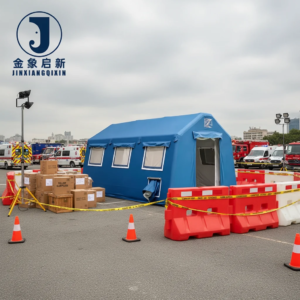
Inflatable Camping Tent Waterproof PVC Outdoor Air Tent Easy Setup Family Camping Shelter Four-Season >3000mm Waterproof Quick
Read more -
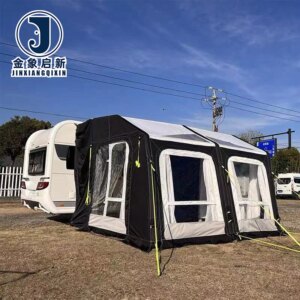
Outdoor Camping Inflatable Tent Luxury All-Season Use PVC Waterproof Quick Automatic Opening Rainproof Insulated
Read more -
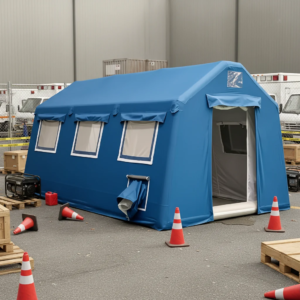
Outdoor Waterproof Inflatable Tent for Camping Portable Air Camping Tent Shelter
Read more -
Inflatable Camping Tent Waterproof PVC Outdoor Air Tent Easy Setup Family Camping Shelter
Read more