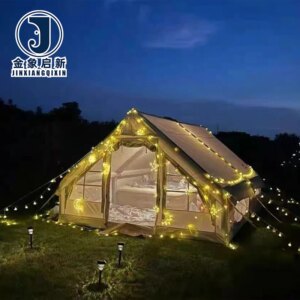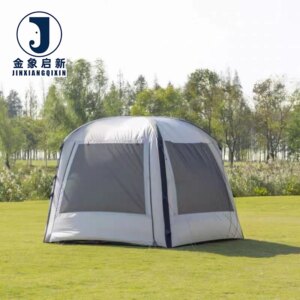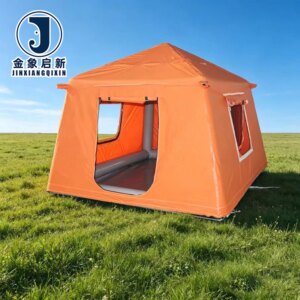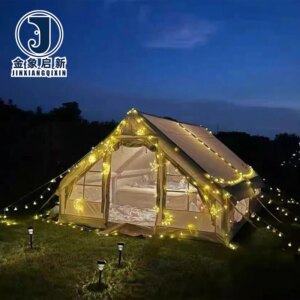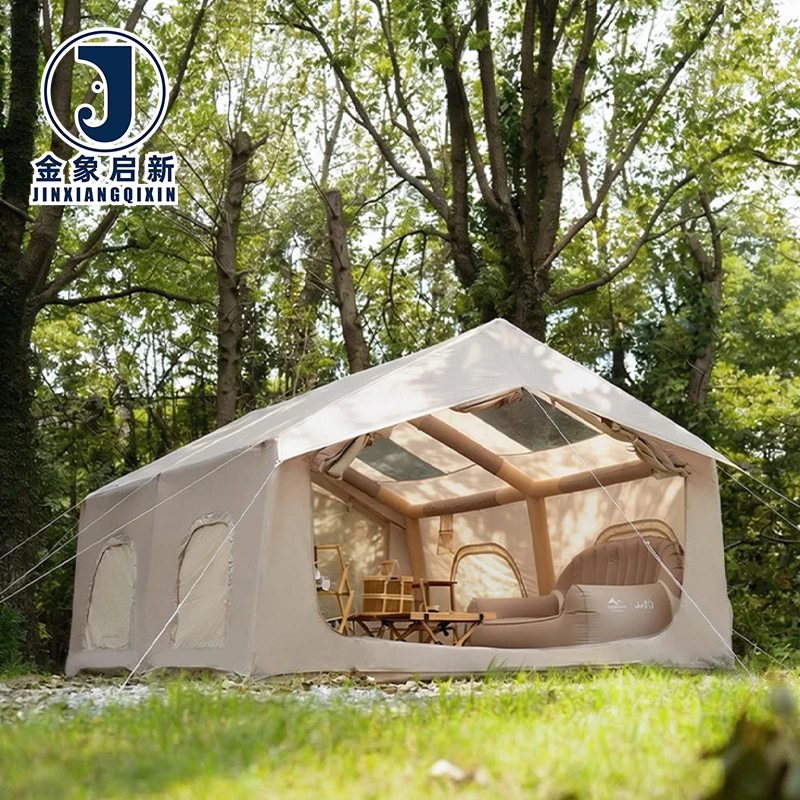
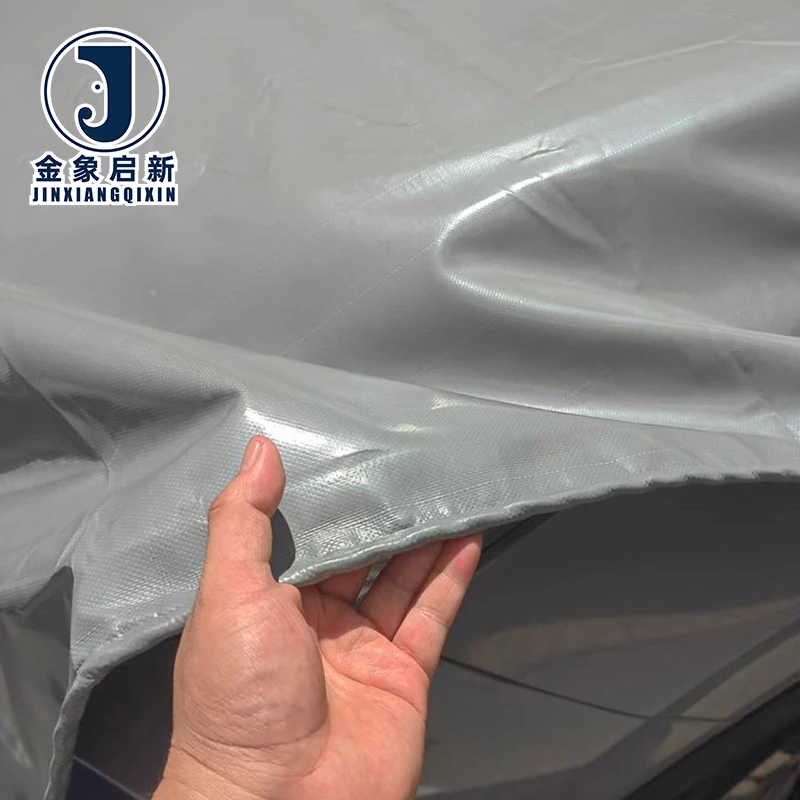
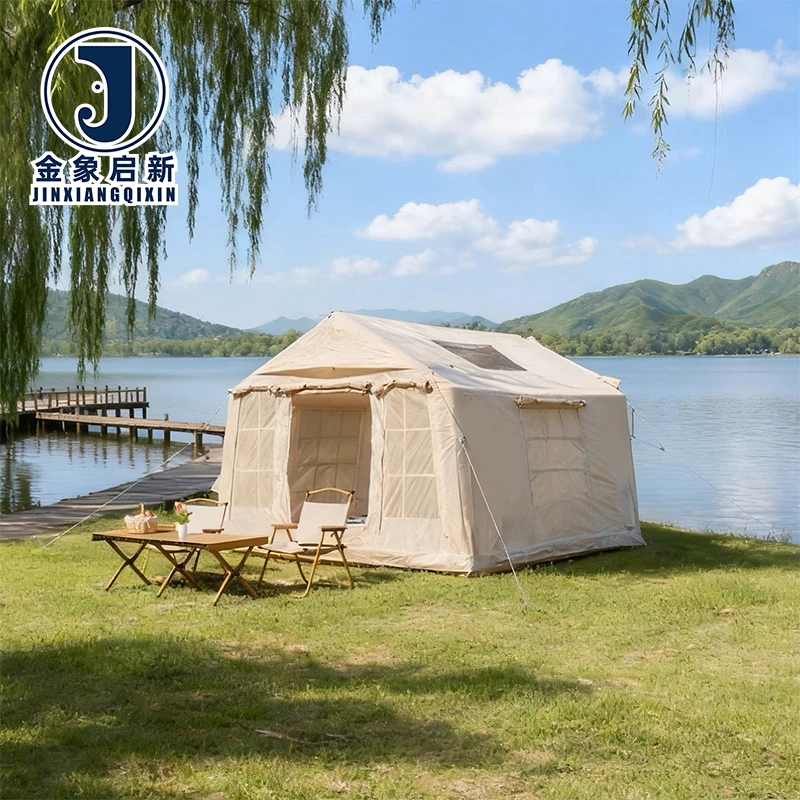
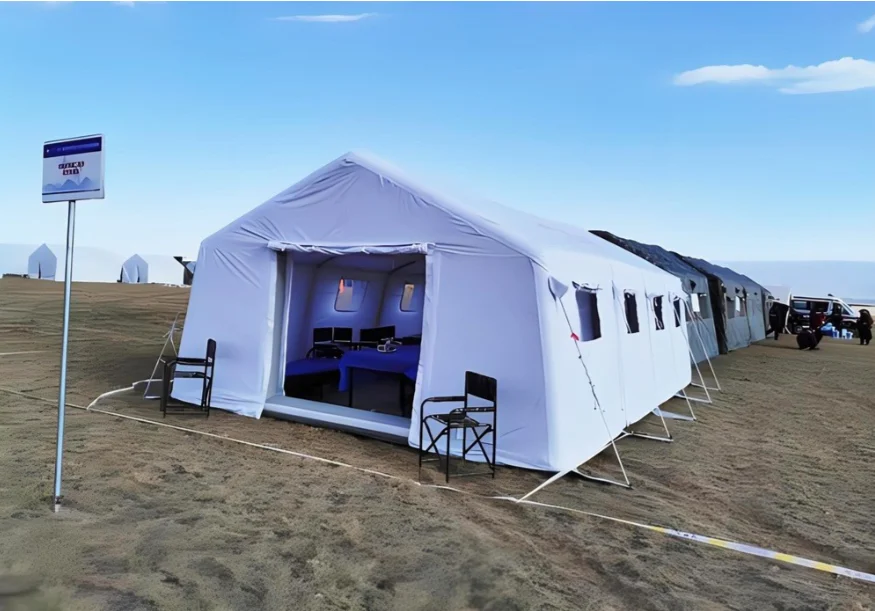
Inflatable Four-season Camping Tent — PVC coated fabric, waterproof, UV-resistant, tear-resistant
- Engineered for rapid deployment in construction shelters, event logistics, and emergency facilities across four-season conditions
- PVC coating weight and base fabric adhesion controlled to maintain consistent air-holding performance through repeated inflation cycles
- Single-layer extended structure balances durability with lightweight portability for bulk site logistics
Supported by 10-person R&D for sample development, 36 sets of professional equipment, and 100% pre-shipment inspection.
Description
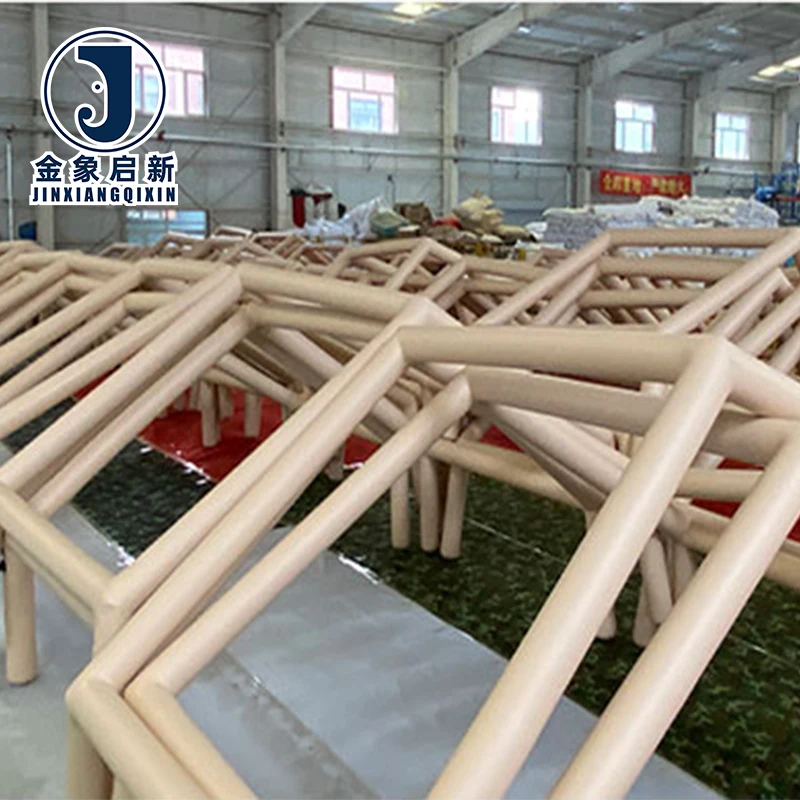
Deep Process Control Over Coating Weight and Adhesion — nearly 30 years focused on coated fabric with three full production lines and 36 sets of equipment, enabling tight tolerance on every inflatable tent roll we coat.
Technical Specifications
| Parameter | Value |
|---|---|
| Product Type | Inflatable Tent |
| Core Material | PVC Coated Fabric |
| Key Performance | Waterproof, UV-resistant, Tear-resistant |
| Product Form | Inflatable Four-season Camping Tent |
| Structure Type | Extended type |
| Layer Design | Single layer |
| Customization | OEM & ODM (Sample customization, Pattern printing) |
| Standards | ISO 9001, ISO 14001, ISO 45001, CE |
Application Suitability
| Application | Exposure & Requirement |
|---|---|
| Construction site temporary shelters | Wind loading, rain ingress, repeated relocation across uneven ground |
| Outdoor event logistics storage | UV exposure over extended periods, dust and debris ingress prevention |
| Emergency preparedness facilities for industrial operations | Rapid inflation under time pressure, four-season temperature fluctuation, compliance documentation |
Why Seams Fail Before the Fabric Does on an Inflatable Tent
The weakest point on any inflatable structure is the welded joint, not the coated fabric itself.
When PVC-coated air beams flex during inflation and deflation cycles, the thermal weld carries concentrated stress at the bond line. I have seen coated fabric remain intact while the seam opens at the fold point — especially where the welding temperature or dwell time was set for a different material grade. [NEED_CITE: thermal welding parameters for PVC coated fabric joints]. Each GSM and coating formulation demands its own heat, pressure, and travel-speed profile, and those profiles shift when the workshop floor temperature drops in winter.
Coating Consistency Across the Air Beam Surface
An inflatable tent relies entirely on uniform air retention across every beam panel. If the PVC coating thickness drifts even slightly from one section to another, the thinner zone inflates faster, creating uneven tension that accelerates fatigue at the weld. Our coating lines are calibrated before every production run so that the film weight stays within tolerance from the first metre to the last, which is critical when a single beam spans several metres of continuous fabric.
Rapid Deployment Without Compromising Structural Integrity
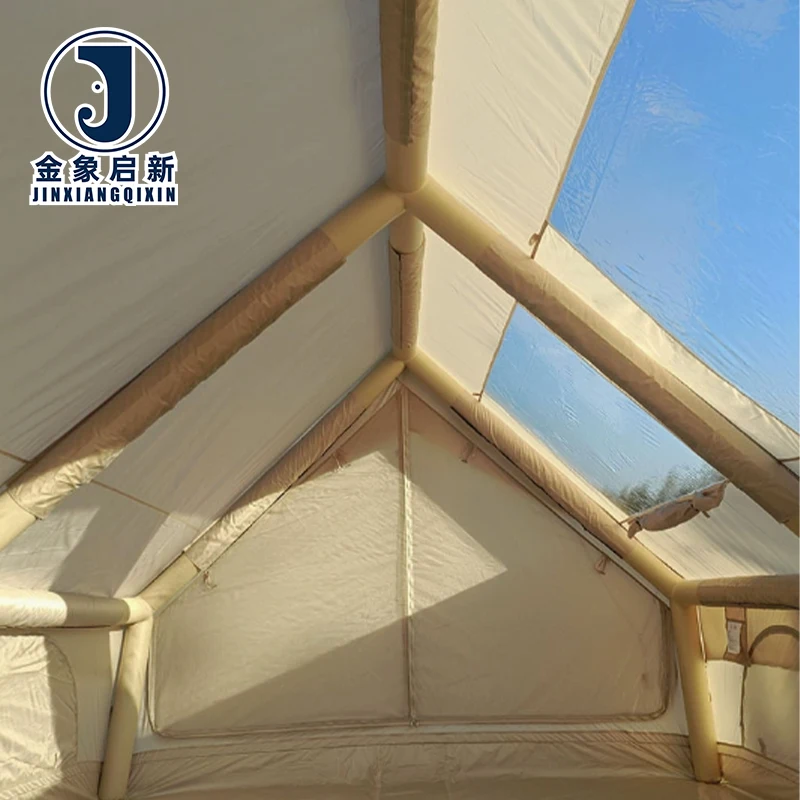
The automatic inflation mechanism on this inflatable tent is only as reliable as the material holding the air. Tear-resistant PVC coated fabric ensures that the beam walls withstand the initial pressure surge during inflation without micro-tears propagating from cut edges or eyelet zones. Single-layer construction keeps the packed weight manageable for bulk transport to remote sites while maintaining sufficient rigidity once pressurised.
Understanding What the Specification Sheet Actually Tells You
PVC coated fabric performance depends on the interplay between base fabric denier, weave density, and coating weight — not any single figure in isolation. A heavier coating does not automatically mean higher tensile strength if the underlying yarn count is low. The single-layer design here prioritises portability and fast pack-down, which means the coating must deliver full waterproofing and UV resistance without the backup of a secondary membrane. [NEED_CITE: relationship between base fabric denier and coating adhesion per ISO 1421]. Tear resistance is governed more by the ripstop or warp-weft balance in the base cloth than by coating thickness alone, so requesting the base fabric specification alongside the GSM gives a far clearer picture of how the inflatable tent will behave under load.
What Happens When Weld Parameters Ignore the Coating Formula
Every PVC formulation softens at a different temperature window. Run the hot-air welder too cool and the bond is superficial — it passes a peel test in the workshop but delaminates the first time the beam flexes under wind load. Run it too hot and the coating burns through, leaving a brittle zone that cracks in cold weather. [NEED_CITE: PVC weld failure modes in coated fabric structures]. I have tracked this across multiple production batches: when the operator skips the warm-up protocol on a cold morning, the first roll processed almost always shows lower peel strength at the seam. That is why we archive the temperature, pressure, and line-speed settings for every GSM and coating recipe we run.
Why Consistency Matters More Than Peak Performance
A single outstanding sample means little if the next fifty units drift off-spec. Batch-to-batch colour variation becomes visible the moment two inflatable tents are erected side by side at an event site, and GSM shortfalls only surface when the buyer cuts into the roll and weighs a swatch. Our QA protocol includes in-process checks at the coating head, the laminator, and the slitter, followed by a full pre-shipment inspection against the purchase-order specification. Every roll is verified for weight, colour reference, and weld-peel strength before it leaves the floor.
Documentation & Verification
- Material specification sheet stating GSM, base fabric construction, and coating weight for each inflatable tent batch
- UV and tear test reports issued per applicable standard when treatments are specified
- ISO and CE certificates covering the production management system
- Pre-shipment inspection record confirming weight and colour against order parameters
- Roll packing list with batch traceability codes for site-level verification
- Certificate of origin prepared for destination-country customs requirements
Fabrication, Handling & Storage
- Set hot-air welder to the temperature profile matched to the PVC coating grade before welding air-beam seams
- Preheat all welding equipment to target temperature in cold workshops before feeding coated fabric
- Store rolls upright on pallets to prevent flat-spot creasing across the PVC coating surface
- Avoid dragging single-layer panels over abrasive ground during on-site inflation setup
- Use mild detergent only when cleaning — solvents can degrade the PVC coating bond
- Keep spare repair patches from the same batch to ensure colour and adhesion match
What We Need to Quote Accurately
To specify the right inflatable tent for your project, share the deployment environment — including expected wind conditions, temperature range, and duration of continuous inflation. Let us know whether your market requires fire-retardant certification and which standard applies. Confirm the unit dimensions, colour reference, and whether pattern printing is needed so we can prepare a sample for your approval before production begins.
Frequently Asked Questions
Q: What customization options are available for size, material, and pattern printing?
A: We adjust panel dimensions, beam diameter, and overall footprint to your site requirements. PVC coating grade and colour are selectable, and pattern printing can be applied to exterior panels. Every custom inflatable tent begins with a sample for your approval before the full production run is scheduled.
Q: Which certifications does the inflatable tent carry and are test reports available?
A: The production system is certified to ISO 9001, ISO 14001, ISO 45001, and the product carries CE marking. Where UV or fire-retardant treatments are specified, test reports are issued against the applicable standard. Confirm the grade required for your market and we will include the corresponding documentation with each shipment.
Q: How does the sample approval process work before mass production?
A: We develop a sample using your specified PVC coating grade, colour, and dimensions. You evaluate the sample for material feel, weld quality, and inflation performance. Once approved, we lock those parameters into the production line settings and begin the full order — no substitutions are made without your written confirmation.
Q: What documentation is included with each shipment for procurement compliance?
A: Every dispatch includes a material specification sheet, pre-shipment inspection record, roll packing list, and certificate of origin. ISO and CE certificates are provided at order level. For inflatable tent orders requiring fire-retardant or UV verification, batch-specific test reports accompany the shipping documents.
Q: What is the typical lead time from sample approval to delivery?
A: Lead time depends on order volume, customisation complexity, and current line scheduling. Standard-width inflatable tent orders in stock coating grades move faster, while custom colours and printed panels require additional setup. We confirm the production schedule and dispatch date once your sample is signed off.
Related products
-
Outdoor Camping Inflatable Tent Luxury All-Season Use PVC Waterproof Quick Automatic Opening Rainproof Insulated
Read more -
خيمة فعاليات قابلة للنفخ لجميع الفصول، خارجية مقاومة للماء من مادة PVC، فتح تلقائي سريع، تتسع لـ 6-8 أشخاص، مع شعار مخصص
Read more -
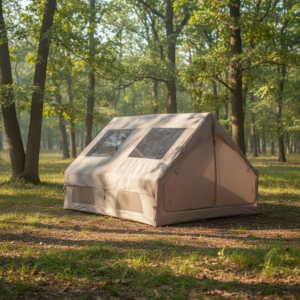
Inflatable Tent Four-Season Quick Automatic Opening PVC 3000mm Waterproof Foldable Eco-Friendly 2-3/3-4/6-8 Person Outdoor Use
Read more -
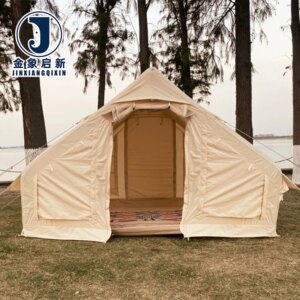
خيمة قابلة للنفخ لأربعة مواسم طبقة واحدة >3000 مم مقاومة للماء ومقاومة للرياح فتح تلقائي سريع قماش PVC صديق للبيئة
Read more