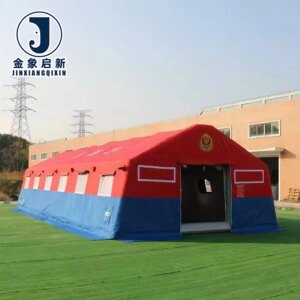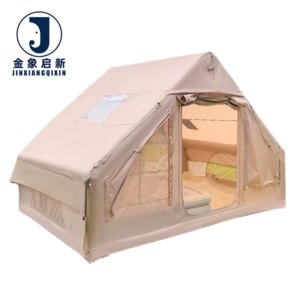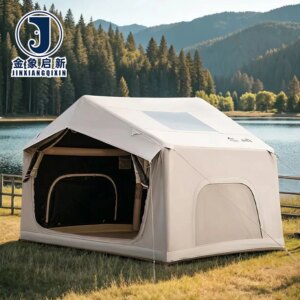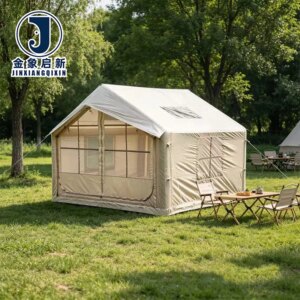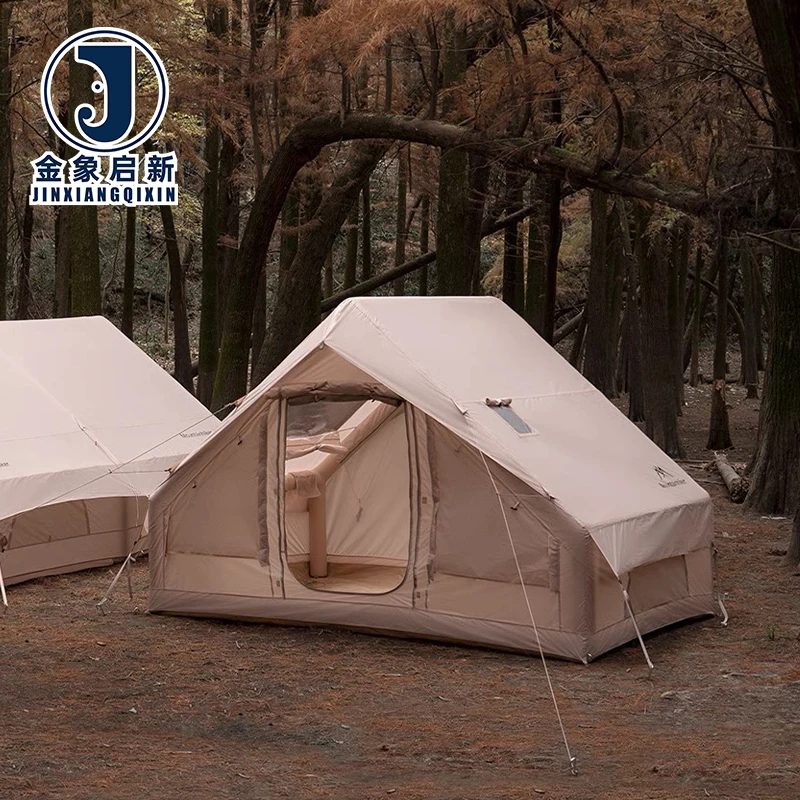
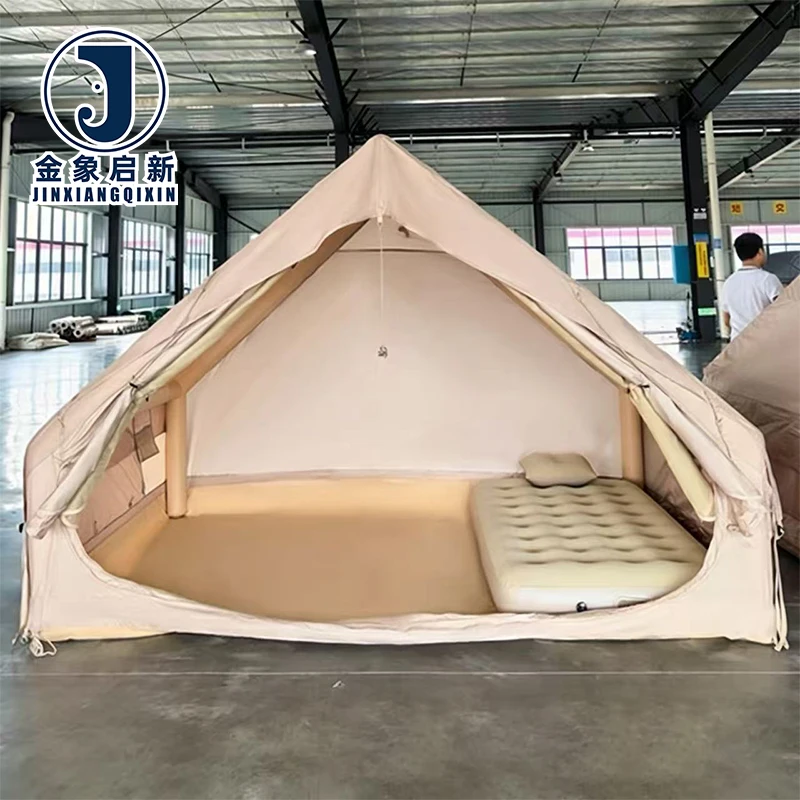
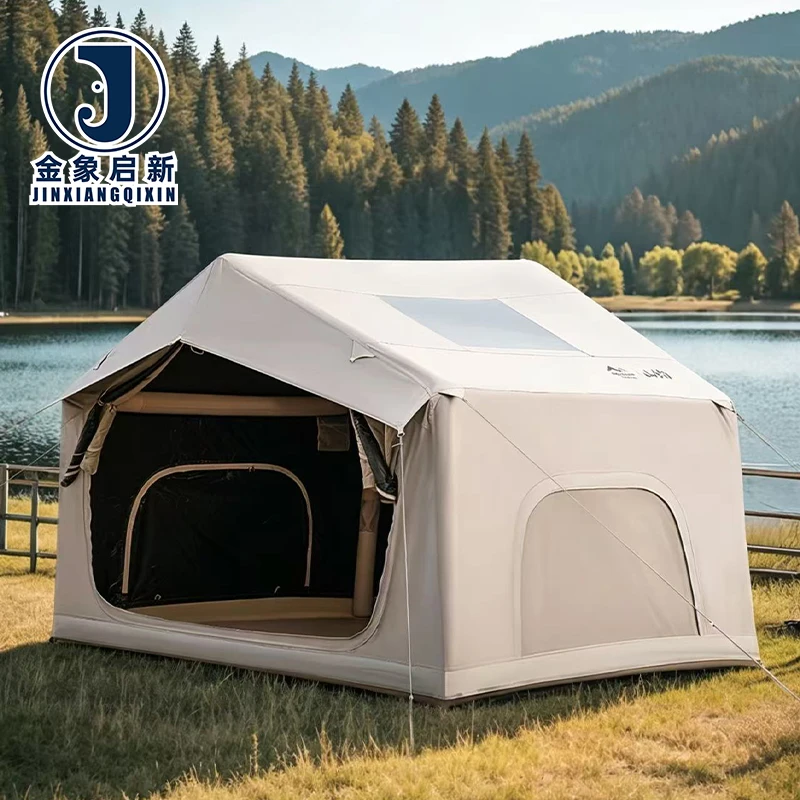
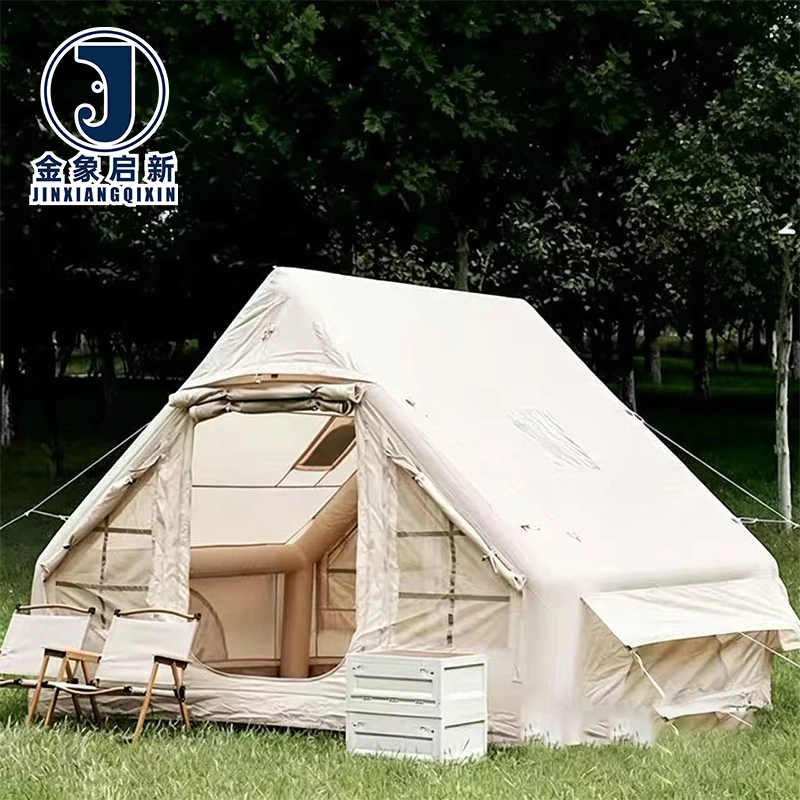
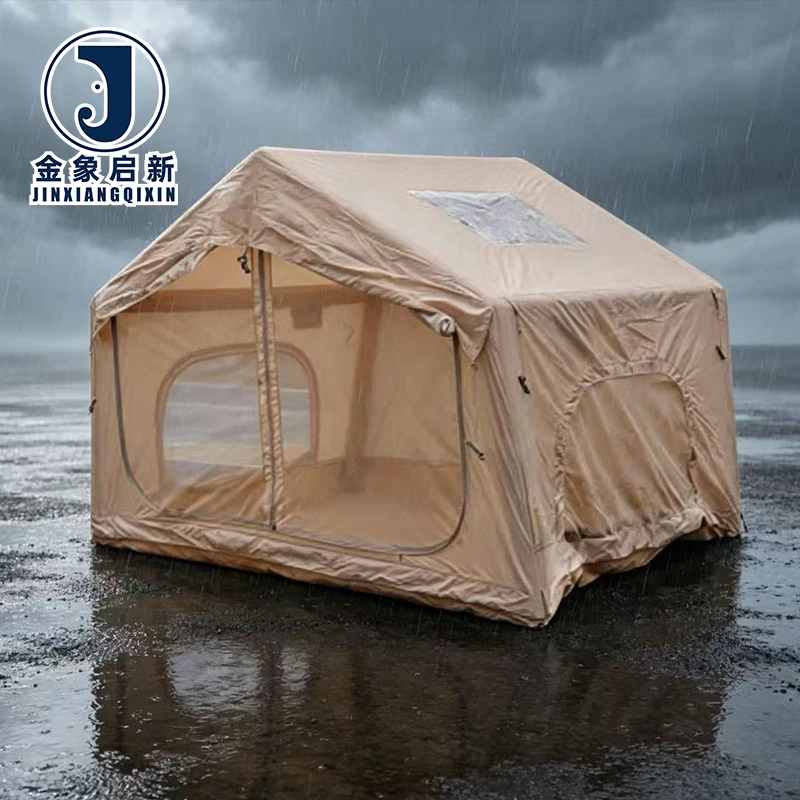
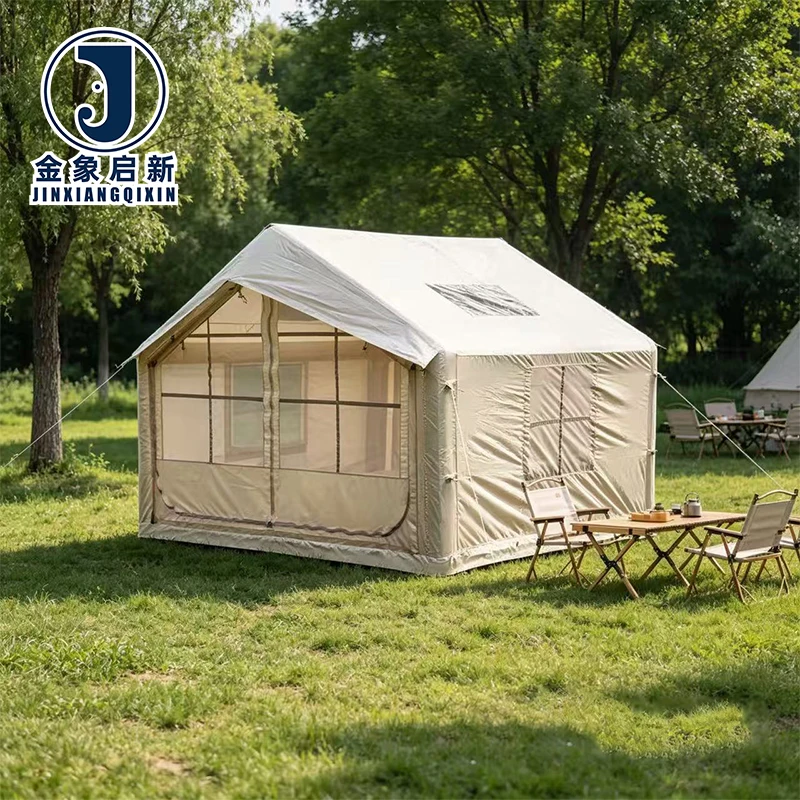
Heavy Duty Inflatable Camping Tent — PVC tarpaulin core with waterproof, UV-resistant, tear-resistant performance. Capacity customizable from 1 to 12 persons, with OEM/ODM options including pattern printing and size adjustments.
- Fabric weight and base weave jointly determine tensile and tear strength; coating adhesion governs seam weld durability under flex and wind load
- Full-process QA/QC with 100% pre-shipment inspection, backed by nearly 30 years of coated fabric expertise and a dedicated 10-person R&D team
Description
Deep Process Control Over Coating Weight — Nearly 30 years focused on PVC coated fabric ensures every roll of inflatable tent material meets its stated GSM and adhesion requirement before it leaves the line.
Technical Specifications
| Parameter | Value |
|---|---|
| Product Type | Inflatable Tent |
| Core Material | PVC tarpaulin |
| Key Performance | Waterproof, tear-resistant |
| UV Resistance | UV-resistant treatment available (test basis not stated) |
| Product Forms | Inflatable structure |
| Capacity | 1–12 person (customizable) |
| Customization Service | OEM & ODM — sample customization, pattern printing, size adjustments, fire-retardant and anti-static treatments available on request |
| Production Facility | 9,180 m² with 3 full production lines and 36 sets of professional processing equipment |
| R&D Team | 10 technicians |
| Quality Control | Full-process QA/QC with 100% pre-shipment inspection |
| Standards | ISO 9001, ISO 14001, ISO 45001, CE |
Application Suitability
| Application | Exposure & Requirement |
|---|---|
| Temporary site offices for construction | Wind loading, daily inflation cycles, abrasion from ground contact, need for rapid deployment |
| Mobile command centers for outdoor events | High visibility, branding surface, repeated assembly and teardown across venues |
| Equipment storage shelters for agriculture | Continuous UV exposure, moisture ingress, dust and chemical contact from fertilizers |
| Remote industrial workspace enclosures | Extreme temperature swings, high wind, requirement for fire-retardant compliance on site |
| Family group camping | Waterproof integrity, lightweight pack-down, tear resistance from stake and pole stress |
Why Material Verification Matters More Than the Quoted GSM for Inflatable Tent Fabric
A quoted GSM means nothing if the coating adhesion and base fabric denier are not verified at dispatch.
Inflatable structures place unusual demands on coated fabric. Every inflation cycle flexes the material at seam lines and valve surrounds. When the coating weight on the quotation does not match what arrives on site, the structure may hold air initially but develop micro-leaks at heat-welded joints within the first season. Buyers who specify an inflatable tent fabric manufacturer without demanding pre-shipment weight verification often discover the shortfall only after the structure is erected and pressurized [NEED_CITE: tensile and tear test methods for coated fabrics per ISO 1421]. The cost of replacing a deployed inflatable shelter far exceeds the effort of confirming the roll data before it ships.
Coating Adhesion and Its Role in Air-Holding Performance
Inflatable tent fabric must maintain a continuous, airtight barrier across every welded seam. The PVC tarpaulin used in these structures relies on coating adhesion to the base fabric — if the bond weakens under repeated inflation and deflation, delamination starts at the weld edges and propagates under stress. Our heavy duty inflatable tent material is produced with controlled coating weight and adhesion parameters to support reliable heat-welded joints across the full surface area of the structure.
Heat Welding Behaviour of PVC Tarpaulin in Inflatable Structures
Unlike stitched tents, inflatable structures depend almost entirely on heat-welded seams to maintain internal pressure. The PVC tarpaulin core material responds to thermal welding based on its plasticizer content, coating thickness, and base fabric weave. A consistent custom inflatable tent build requires fabric that welds at predictable temperatures without scorching or under-bonding. Our production process controls these variables so that fabricators can dial in weld parameters once and repeat them across every panel of the structure [NEED_CITE: heat welding parameters for PVC coated polyester fabrics].
Reading the Specs That Actually Determine Inflatable Tent Durability
GSM alone does not predict how an inflatable tent will perform under wind load or repeated inflation. The base fabric denier and weave density determine tear propagation resistance — a high GSM with a loose weave can tear more easily than a lighter fabric with a tight construction. The coating method affects peel strength at welded seams, which is the most common failure point in inflatable structures. Surface finish — glossy or matte — influences how well pattern printing adheres and how the fabric resists dirt accumulation during outdoor deployment. Fire-retardant treatments are available in different grades, and the correct specification depends on the compliance requirements of the destination market [NEED_CITE: fire classification standards for temporary structures and tents].
The Hidden Cost of Specifying Inflatable Tent Fabric on Price Alone
When buyers select inflatable tent material based solely on quoted price per metre, the first consequence usually appears at the weld line. Fabric with insufficient coating thickness or poor adhesion will fail at the seam before the body of the material shows any wear. In a commercial inflatable shelter deployed at a construction site or outdoor event, a seam failure means the entire structure deflates — potentially damaging stored equipment or halting operations. Batch-to-batch colour inconsistency across rolls in the same order also forces rework when panels are joined side by side on a large inflatable command center [NEED_CITE: batch colour consistency in PVC coated fabric production].
What Sets This Supply Chain Apart for Inflatable Tent Projects
Deep process control over coating weight and adhesion has been refined across nearly 30 years of PVC coated fabric production, directly supporting the airtight weld integrity that inflatable structures demand. Three full production lines and 36 sets of professional equipment provide the capacity to fulfil large-volume orders for commercial inflatable shelters with reliable on-time delivery. A 10-person R&D team handles material selection, custom sizing, and pattern printing development, enabling OEM and ODM buyers to move from concept to approved sample within days. Dedicated QA and QC staff inspect every production stage, with 100% pre-shipment verification ensuring the roll you receive matches the specification you ordered [NEED_CITE: DIN 4102 fire classification for building materials and temporary structures].
Documentation & Verification
- Material specification sheet confirming GSM, base fabric denier, coating type, and colour reference for each inflatable tent roll
- Test reports for UV-resistant and fire-retardant grades supplied when specified in the purchase order
- ISO 9001, ISO 14001, ISO 45001, and CE certificates included with every shipment
- Pre-shipment inspection record documenting weight verification and visual quality checks before dispatch
- Roll packing list and certificate of origin for customs clearance at destination
Fabrication, Handling & Storage
- Heat-weld PVC tarpaulin panels at manufacturer-recommended temperatures to ensure airtight seams on the inflatable structure
- Store rolls upright in a dry, shaded area to prevent surface creasing that could weaken the PVC coating at fold lines
- Use compatible PVC adhesives for field repairs on the inflatable tent fabric to maintain coating bond integrity
- Avoid dragging cut panels across abrasive ground surfaces during deployment to protect the tear-resistant PVC layer
- Clean with mild detergent and soft brush — harsh solvents can degrade the plasticizer content in the PVC coating
- Allow custom inflatable tent fabric to acclimatize before unrolling in cold conditions to prevent coating stiffness and cracking
Moving from Inquiry to Production on Your Inflatable Tent Project
To get an accurate specification recommendation, share the intended application and deployment environment — whether the inflatable shelter will serve as a temporary site office, an event command center, or agricultural equipment storage. Specify any fire-retardant or anti-static compliance requirements for the destination market, along with preferred dimensions, capacity, and whether pattern printing or branding is needed. Confirm whether you require finished structures or roll stock for your own fabrication, and request a sample to validate material performance before committing to full production volume.
Frequently Asked Questions
Q: What customization options are available for size, printing, and specialized fabric treatments on inflatable tents?
A: Our OEM and ODM service covers custom sizing, pattern printing, and specialized treatments including fire-retardant and anti-static finishes. A 10-person R&D team develops samples within days so buyers can approve material, colour, and print quality before mass production begins. Confirm your specific treatment requirements and target market compliance standards at the inquiry stage.
Q: Does the inflatable tent fabric meet international safety and fire-retardant standards for site use?
A: Fire-retardant treatments are available in multiple grades. The correct grade depends on the compliance framework of your destination market. Request the applicable test report when placing your order so the correct certification accompanies your shipment. Our production holds ISO 9001, ISO 14001, ISO 45001, and CE certification.
Q: What documentation accompanies each shipment of inflatable tent fabric or finished structures?
A: Every order ships with a material specification sheet stating GSM and base fabric details, relevant test reports, ISO and CE certificates, a pre-shipment inspection record, a roll packing list, and a certificate of origin. This documentation package supports customs clearance and on-site compliance verification.
Q: How is batch consistency ensured across large-volume inflatable tent orders?
A: Dedicated QA and QC staff inspect every production stage with 100% pre-shipment verification. Weight, colour, and coating adhesion are checked against the confirmed specification before dispatch, ensuring roll-to-roll consistency across the full order volume so joined panels match when the inflatable structure is erected.
Q: What is the process from inquiry to sample approval and mass production?
A: The process begins with your application details, size, and treatment requirements. We provide a specification recommendation and develop a sample for your review. After sample approval, production proceeds with in-process quality checks, followed by full pre-shipment inspection and dispatch with complete documentation.
Related products
-
Waterproof Inflatable Camping Tent Outdoor Easy Setup Air Tent for Camping
Read more -
خيمة فعاليات قابلة للنفخ لجميع الفصول، خارجية مقاومة للماء من مادة PVC، فتح تلقائي سريع، تتسع لـ 6-8 أشخاص، مع شعار مخصص
Read more -
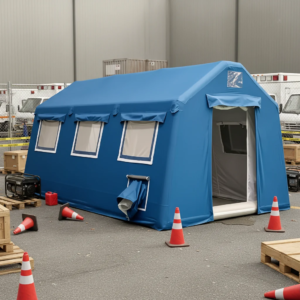
Outdoor Waterproof Inflatable Tent for Camping Portable Air Camping Tent Shelter
Read more -
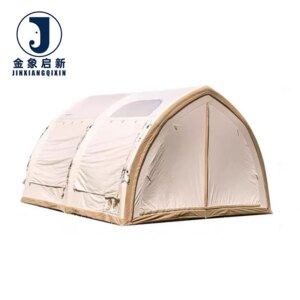
Premium Four-season PVC Inflatable Tents for Camping Easy-to-Use Spacious Portable Waterproof Outdoor Tent with Pump
Read more