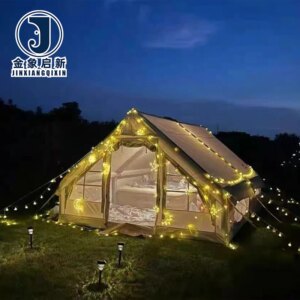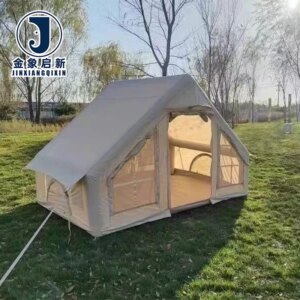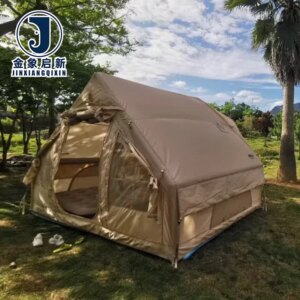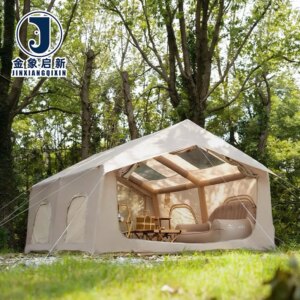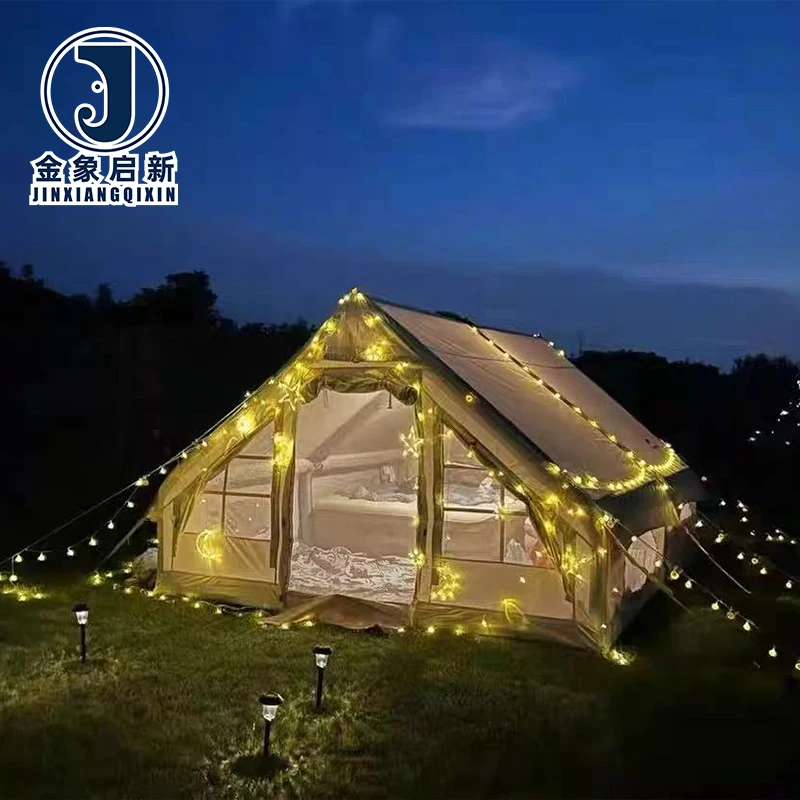
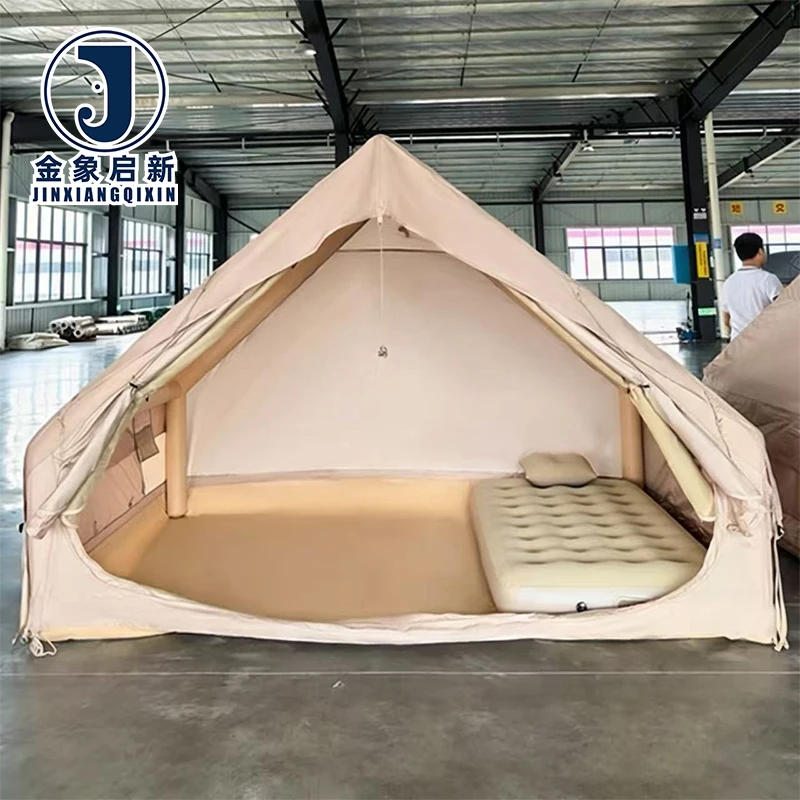
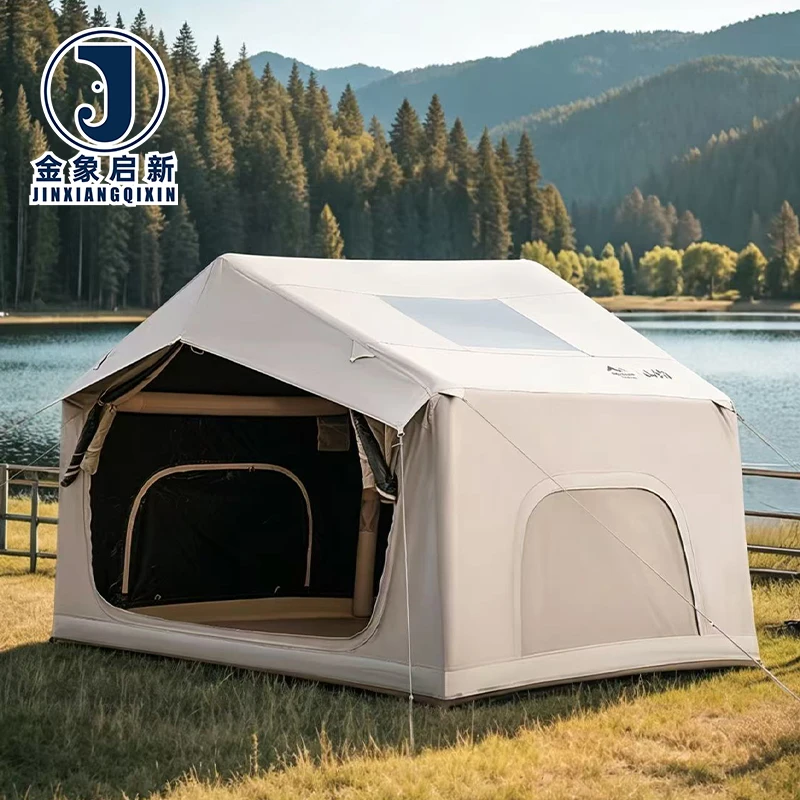
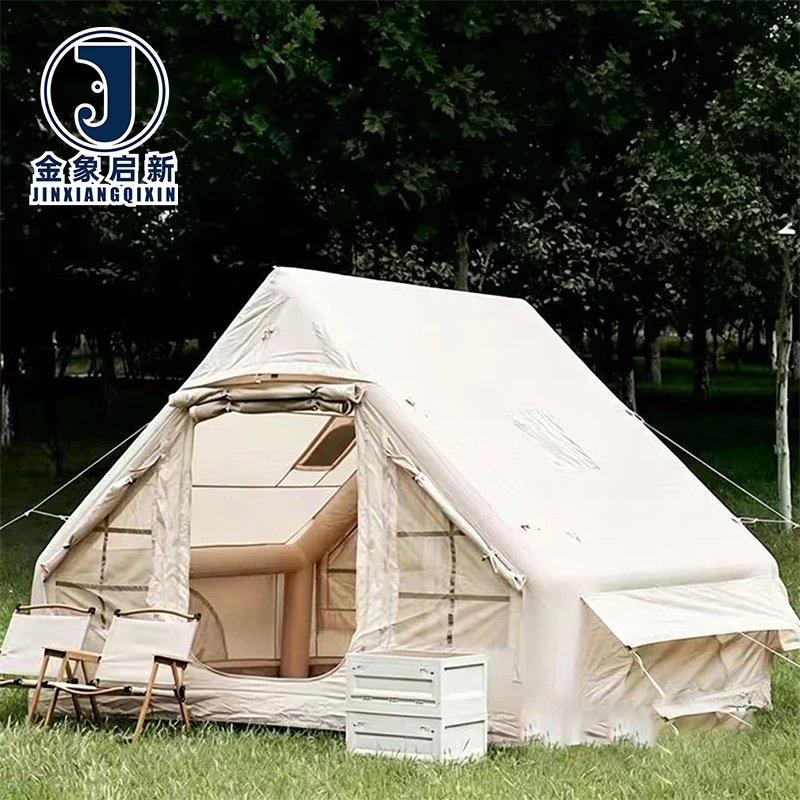
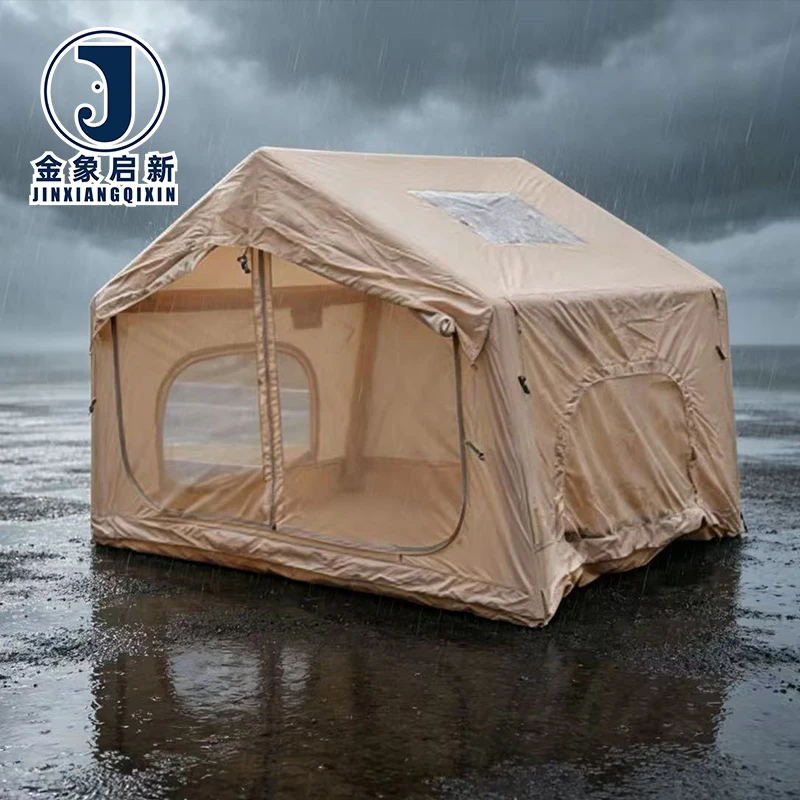
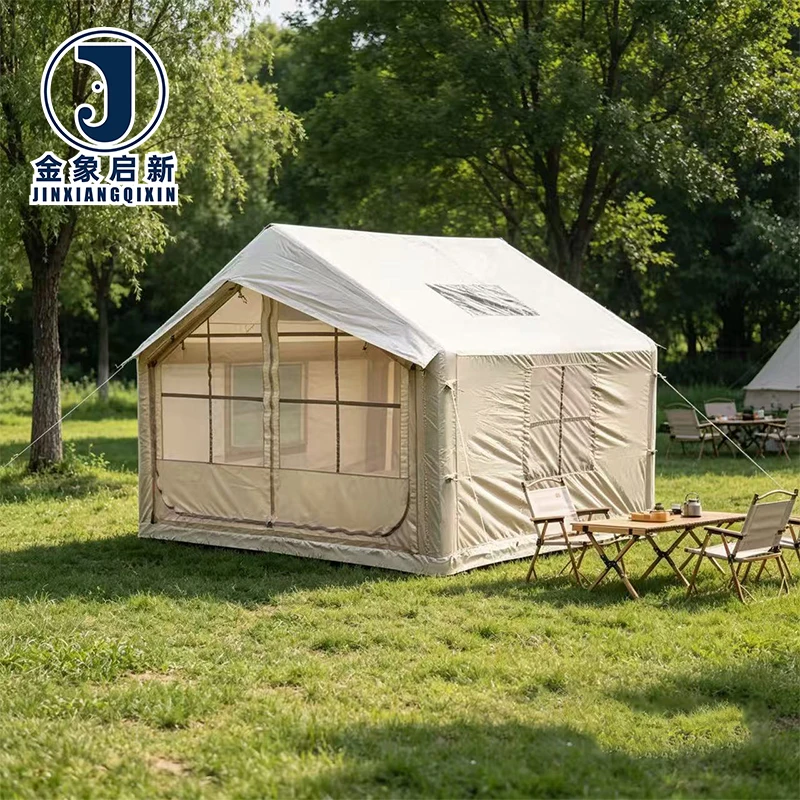
Portable Inflatable Camping Tent — PVC tarpaulin, waterproof, UV-resistant, tear-resistant
- Engineered for temporary site offices, field operation bases and outdoor event management
- Coating weight and seam welding controlled in-house for structural integrity across inflation cycles
- Custom sizing, colour and pattern printing developed by our R&D team to your project dimensions
- Test reports for UV and flame-retardant grades provided where specified
10-person R&D team handles sample development within days, with 100% pre-shipment inspection on every unit and full documentation including material spec sheet and packing list.
Description
Complete Custom Capability — Every inflatable tent structure we produce is backed by a 10-person R&D team managing material selection, seam engineering, and pattern printing under one roof, ensuring the fabric performs exactly as the structure demands.
Technical Specifications
| Parameter | Value |
|---|---|
| Product Type | Inflatable Tent |
| Core Material | PVC Tarpaulin |
| Product Forms | Inflatable structure, single layer construction |
| Key Performance | Waterproof, UV-resistant (test basis not stated in source), Tear-resistant |
| Customization Service | OEM & ODM (sample customization, pattern printing) |
| Capacity | 4–6 Person |
| Season Rating | Four-season |
| Deployment | Automatic opening design |
| Certifications | ISO9001, ISO14001, ISO45001, CE |
Application Suitability
| Application | Exposure & Requirement |
|---|---|
| Temporary site offices on construction and mining projects | Wind loading, dust ingress, rapid deployment and relocation cycles |
| Equipment storage shelters in remote field locations | Prolonged UV exposure, precipitation, abrasion from stored machinery contact |
| Outdoor event management enclosures | Branded surface requirements, frequent inflation and deflation, public safety compliance |
| Field operation bases and personnel accommodation | Four-season temperature fluctuation, ground moisture, repeated assembly |
| Remote work environment shelters | Extended outdoor service, limited maintenance access, structural air-beam integrity |
Why Inflatable Tent Manufacturers Choose Engineered PVC Over Generic Tarps
A structure that inflates must hold air through every seam — and that demands coating adhesion as reliable as the fabric itself.
Retail-grade tents and generic tarpaulin sheets were never designed to sustain internal air pressure across welded beam joints. When an inflatable shelter fails in the field, it is almost always the heat-welded seam that gives way first, not the base fabric. Sourcing teams that treat material selection as an afterthought end up paying twice — once for the initial production run and again for warranty replacements [NEED_CITE: seam failure modes in inflatable membrane structures per ASTM D751].
Custom inflatable structure fabric sourced from a coating-specialist manufacturer addresses this gap at the material level. The PVC compound, the base fabric weave, and the coating weight are all controlled together so that the heat-weld zone reaches a bond strength that matches the parent material. That is the difference between an inflatable tent manufacturer managing production with confidence and one chasing field failures.
Coating Adhesion and Air-Beam Weld Integrity
Inflatable tent construction relies on heat-welded seams to form airtight beam channels. The PVC tarpaulin used here is produced with controlled coating weight and adhesion, allowing the weld zone to fuse consistently across the full seam width. This matters most at flex points — corners and junctions where the air beam changes direction and the welded joint experiences cyclic stress during inflation and deflation. When adhesion between the coating and base fabric is weak, the weld peels apart under pressure long before the fabric itself reaches its tensile limit.
Single Layer Construction for Transport and Storage Efficiency
The single layer construction balances structural durability with the practical realities of field deployment. A lighter packed volume means the inflatable shelter fits into standard transport cases and can be carried by a two-person team to remote sites. The PVC tarpaulin base material delivers waterproof and tear-resistant performance within that single-layer format, eliminating the weight penalty of dual-wall designs without sacrificing weather protection. This specification suits contractors who deploy and strike shelters repeatedly across project phases.
Specification Reading: What the Numbers Actually Mean for Inflatable Structures
The PVC tarpaulin core material determines how the inflatable tent responds to internal air pressure and external loading. Base fabric denier and weave density govern tear propagation resistance — critical when a puncture in an air beam can compromise the entire structure. Coating weight and method influence peel strength at welded seams; knife-coated fabrics generally offer superior adhesion for heat welding compared to laminated alternatives [NEED_CITE: coating method comparison for welded inflatable membrane fabrics]. Waterproof performance in single layer construction depends on complete coating coverage with no pinholes, which is verified during in-process QA. Tear-resistant specification means that if the fabric is nicked during installation, the damage will not propagate catastrophically along the beam. UV-resistant treatment is available — confirm the test basis and grade required for your target market and expected outdoor exposure duration before placing a production order. The four-season rating reflects the material’s ability to handle temperature fluctuation without becoming brittle in cold conditions or excessively soft in heat.
The Hidden Cost of Specifying the Wrong Fabric Grade
Sourcing teams that select PVC tarpaulin based solely on the lowest per-metre cost often encounter failures that surface only after the inflatable tent is deployed in the field. Under-weight material that arrives below the quoted specification may inflate successfully during factory testing but cannot sustain beam pressure under wind loading on site. Colour variation between rolls in the same order becomes visible once multiple shelters are erected side by side at an event venue, forcing costly rework or replacement. Heat-welded seams that fail before the fabric does leave the contractor with an unusable structure and no practical field repair option [NEED_CITE: coated fabric weld strength testing methodology per ISO 1421]. Batch inconsistency in coating thickness can cause some beam sections to hold pressure while adjacent sections leak, making quality control at the material source the single most important procurement decision.
Why Source Inflatable Structure Fabric Through This Facility
Three full production lines and 36 sets of professional equipment provide the capacity to fulfil roll-stock orders for multi-unit inflatable tent production runs without outsourcing to secondary coaters. The 10-person R&D team handles material selection, custom sizing, and pattern printing in-house, so the inflatable tent manufacturer can request sample development and approve the exact specification before committing to bulk. Dedicated QA and QC inspection at every production stage, with 100 percent inspection before shipment, means the roll stock arriving at your factory matches the material specification sheet you approved. Nearly 30 years focused on coated fabric has produced deep process control over coating weight and adhesion — the two properties that determine whether your heat-welded air beams hold pressure or delaminate under cyclic stress. ISO9001, ISO14001, ISO45001, and CE certifications are held at factory level, supporting cross-border procurement compliance for buyers operating in regulated markets.
Documentation & Verification
- Material specification sheet stating base fabric, PVC coating material, and colour reference per batch
- Weight verification record per roll against the stated specification before dispatch
- Test reports for UV and waterproof performance supplied where applicable to the order
- ISO9001, ISO14001, ISO45001, and CE certificates included with shipment documentation
- Pre-shipment inspection record confirming 100 percent inspection completion
- Roll packing list with unit identification for traceability through production
Fabrication, Handling & Storage
- Heat-weld temperature and dwell time must be calibrated to the specific PVC tarpaulin coating weight before production
- Store rolls flat or upright on core to prevent permanent creasing in the single layer construction
- Use compatible PVC-based repair patches for field maintenance on the waterproof coating surface
- Allow material to reach ambient temperature before unrolling in cold conditions to avoid coating micro-cracking
- Pattern printing inks should be matched to the PVC coating chemistry for durable adhesion
- Cut panels with allowance for weld overlap width specified by your air-beam design engineering team
What We Need to Quote Your Inflatable Tent Project
Provide the intended application environment and the climatic conditions the shelter will face, including temperature range and wind exposure expectations. Specify whether you require roll stock for your own fabrication or finished inflatable units with valve integration. Share your target market and any fire safety or regulatory compliance requirements so we can confirm the correct treatment grade. Let us know your colour references, pattern printing requirements, and whether you need sample approval before full production.
Frequently Asked Questions
Q: What dimensions and minimum order quantities apply to custom inflatable tent fabric?
A: Custom width and length are available, with sizing developed by our R&D team based on your air-beam engineering drawings. Minimum order quantities vary depending on whether you require standard stock grades or custom colour and treatment combinations. We recommend requesting a sample first to confirm the specification suits your welding equipment and inflation system before committing to a full production order.
Q: What heat welding parameters should we use for this PVC tarpaulin in inflatable structures?
A: Welding temperature, pressure, and dwell time depend on the specific coating weight and thickness of the PVC tarpaulin you order. We supply a fabrication guide with recommended starting parameters, which your production team should validate through test welds on sample material. Controlled coating adhesion at our facility ensures consistent weld performance across the entire roll.
Q: How does pattern printing and colour matching work across multiple inflatable tent units?
A: We develop a colour reference and print proof for your approval before production begins. All rolls in a single order are produced within the same batch to maintain colour consistency across units. The PVC coating surface is prepared to accept compatible inks, and the R&D team can adjust formulation to meet your branding requirements.
Q: How can we verify the material specification when the rolls arrive at our factory?
A: Each shipment includes a material specification sheet documenting base fabric type, coating material, and colour reference. A pre-shipment inspection record confirms weight and visual quality checks completed before dispatch. We recommend verifying roll weight against the documented specification upon receipt and contacting our team immediately if any discrepancy is found.
Q: What UV-resistant treatment options are available and how is outdoor service life determined?
A: UV-resistant treatment is available in grades suited to different exposure durations and climatic zones. The specific test basis and expected outdoor service life depend on the grade selected and the environmental conditions at the installation site. Request the applicable test report when specifying, and confirm the grade required for your target market with our technical team before ordering.
Related products
-
خيمة فاخرة قابلة للنفخ من PVC للتخييم الفاخر في الهواء الطلق مقاومة للماء مع تصميم سريع الفتح التلقائي قابل للطي لجميع الفصول ومضخة
Read more -
خيمة تخييم قابلة للنفخ من مادة PVC، مقاومة للماء والأشعة فوق البنفسجية، لجميع الفصول، فتح تلقائي سريع، قابلة للتخصيص، تتسع لـ 2-3 أشخاص
Read more -
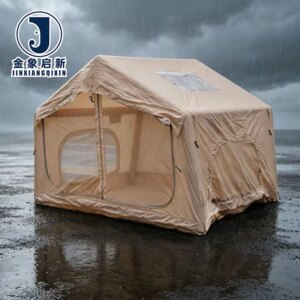
Inflatable Camping Tent Waterproof Outdoor Air Tent for Camping Inflatable Tent Shelter
Read more -
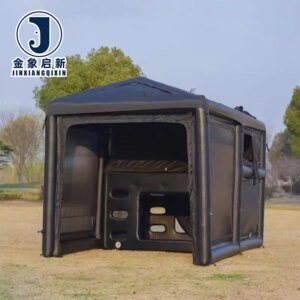
Premium Four-season Inflatable Tents for Camping Easy-to-Use Spacious Portable Waterproof Outdoor Tent Quick
Read more