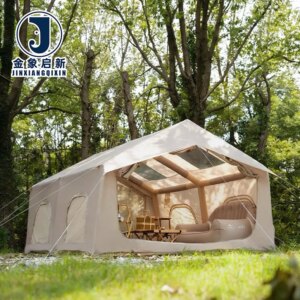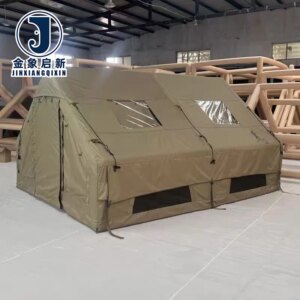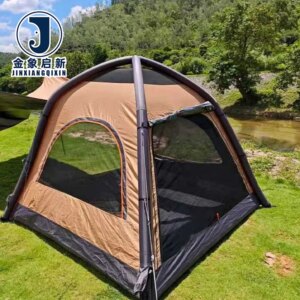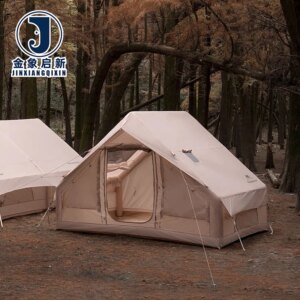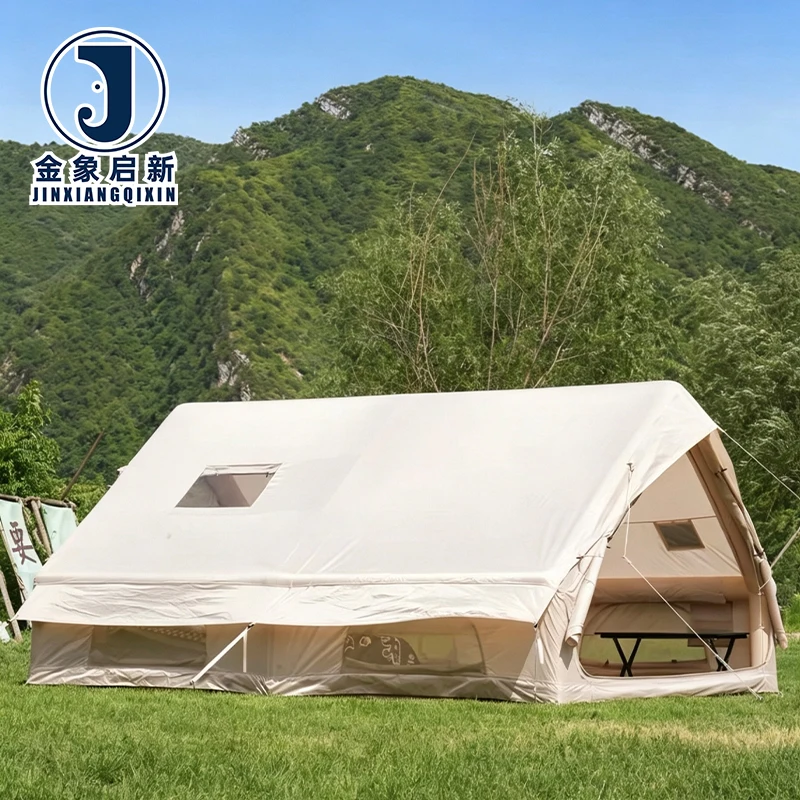
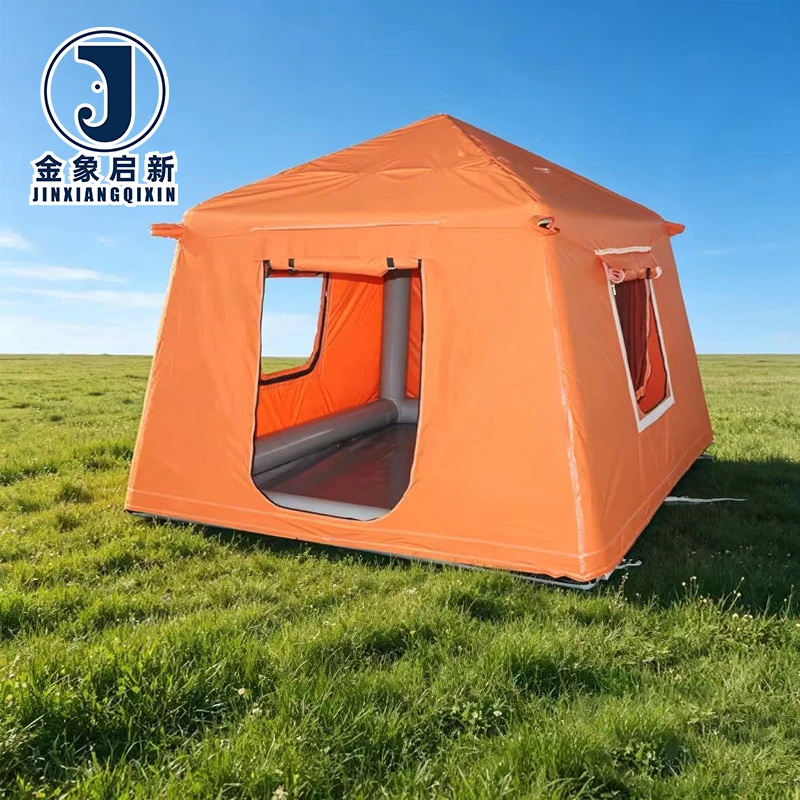
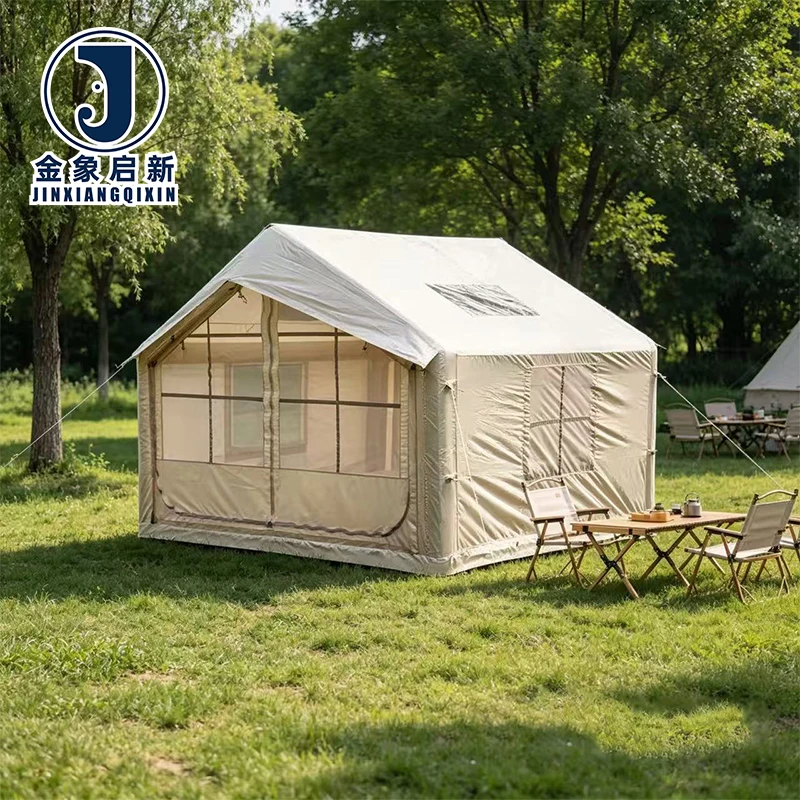
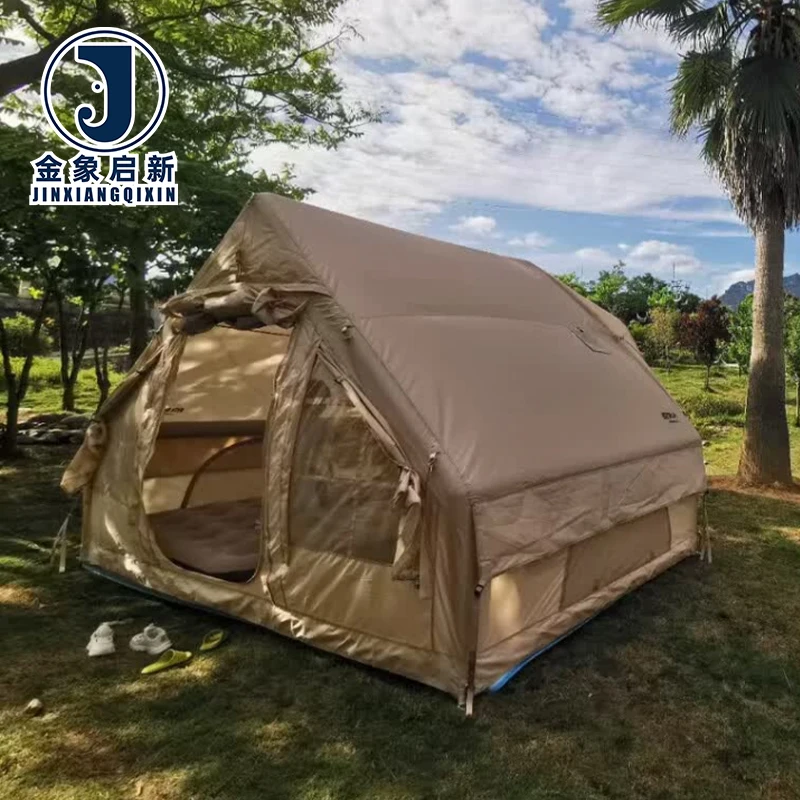
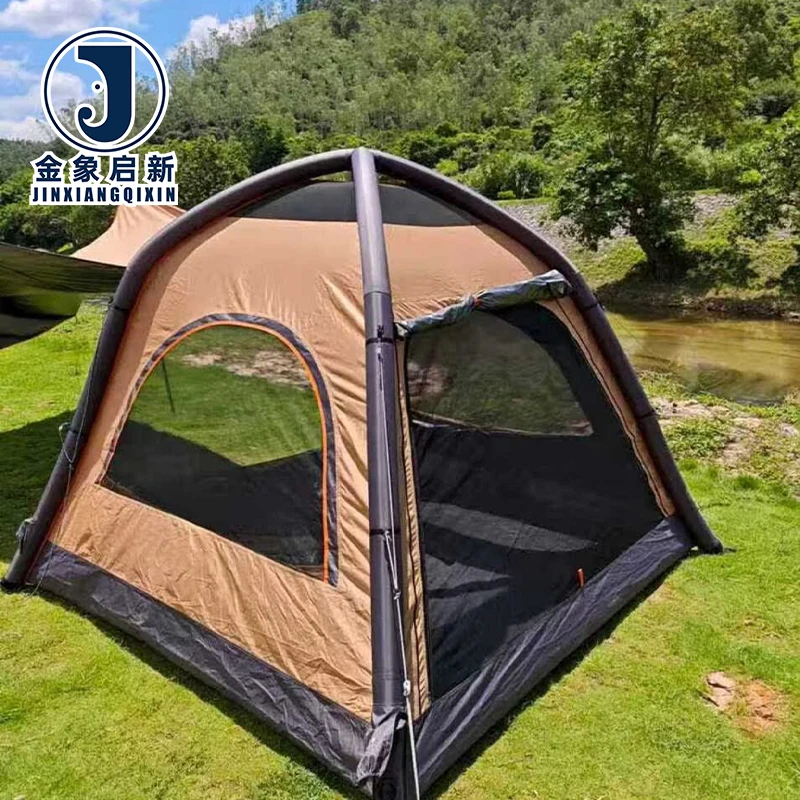
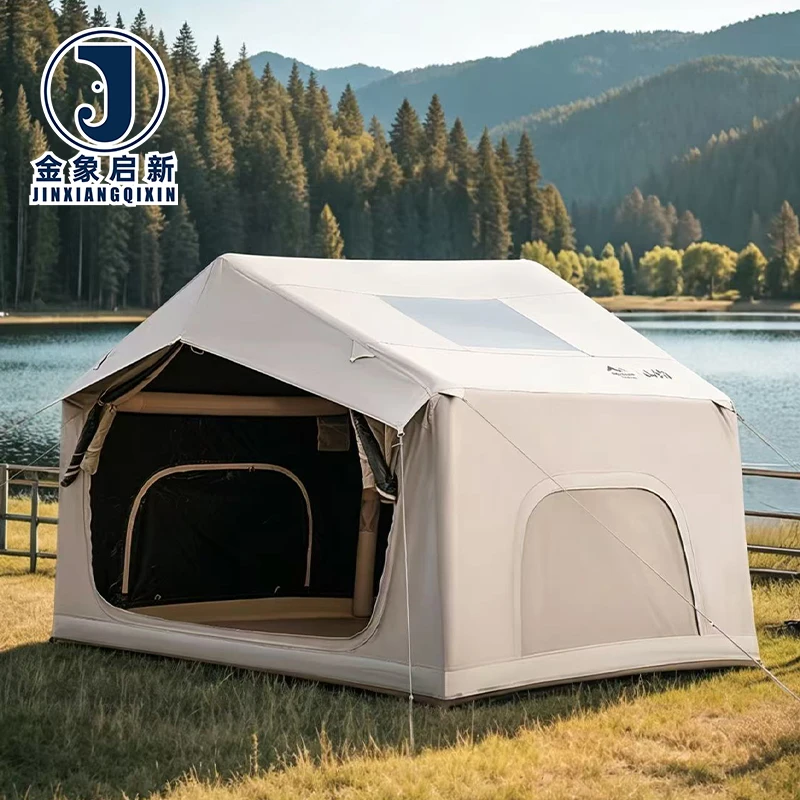
Inflatable Camping Tent — PVC knife-coated fabric with ≥5000mm H₂O waterproof rating, ≥2000N/5cm tensile strength, and heat-sealed seams for sustained air pressure integrity.
Developed for commercial outdoor gear manufacturers and industrial event contractors, this fabric delivers verified waterproof and fire-retardant performance under EN 13501-1, with coating weight and adhesion controlled through full-process QA/QC.
- Anti-UV and anti-static treatments available for regulated environments
- 72-hour inflation testing with batch-specific inspection documentation
- Full OEM/ODM customization from material formulation to pattern printing
Backed by 36 sets of professional equipment across 3 production lines, ensuring reliable supply capacity and consistent roll-to-roll quality for volume production planning.
Description
Full-Spectrum Custom Capability — Nearly 30 years of PVC coated fabric process control supports this Inflatable Camping Tent PVC Four-Season Waterproof Outdoor Air Tent, from material formulation through heat-sealed seam fabrication to pattern printing, backed by a dedicated 10-person R&D team delivering validated samples within days.
Technical Specifications
| Parameter | Value |
|---|---|
| Product Type | Inflatable Tent |
| Core Material | PVC Knife-Coated Fabric |
| Waterproof Rating | ≥5000mm H₂O |
| Tensile Strength | ≥2000N/5cm (test standard not stated in source) |
| Fire-retardant Standard | EN 13501-1 |
| Anti-static Treatment | Available (surface resistance not stated in source) |
| UV Resistance | UV-resistant formulation (test basis not stated in source) |
| Seam Construction | Heat-sealed seams |
| Thickness Uniformity Tolerance | ±5% |
| Assembly State | Quick automatic opening mechanism |
| Product Capacity | 2-3 person |
| Certification | ISO9001, ISO14001, ISO45001, CE |
Application Suitability
| Application | Exposure & Requirement |
|---|---|
| Commercial Outdoor Equipment Manufacturing | Consistent batch quality across production runs, verified certifications for retail compliance, reliable supply capacity for seasonal demand |
| Industrial Event Temporary Structures | Rapid deployment, wind loading resistance, repeated inflation/deflation cycles, public safety fire compliance |
| Site Accommodations & Emergency Response | Extended outdoor exposure, all-weather waterproofing, quick setup in remote locations, durability under frequent relocation |
| Equipment Storage & Temporary Workspace | UV exposure during stationary periods, abrasion from ground contact, protection against moisture ingress |
Why Batch Consistency Matters More Than Quoted Specifications
Material spec sheets mean nothing if the rolls you receive vary in thickness, colour, or coating adhesion from one batch to the next.
When sourcing custom inflatable camping tent materials for commercial production, buyers often receive documentation stating the correct GSM and fire-retardant grade, only to discover visible colour variation once multiple units are inflated side by side at a trade show or retail display. Thickness inconsistency across rolls leads to uneven inflation behaviour, where some tent sections require higher pressure to achieve structural rigidity while others become over-stressed. [NEED_CITE: quality control standards for coated fabric batch consistency]
Coating weight variation also affects heat-sealed seam integrity. When thickness tolerance drifts beyond acceptable limits, the heat-sealing parameters that worked on sample material may produce weak bonds on production stock, causing seam failure under inflation pressure.
Material Selection for Commercial Inflatable Tent Production
PVC knife-coated fabric provides the structural foundation for reliable inflatable camping tent manufacturing. The coating method ensures consistent thickness and strong adhesion between the PVC layer and base fabric, which directly affects how well the material holds air pressure through heat-sealed seams. Commercial outdoor gear manufacturers require this level of process control to produce units that inflate uniformly and maintain shape across varying temperature conditions.
The fire-retardant compliance to EN 13501-1 addresses European market requirements for temporary structures used in public settings. For manufacturers distributing inflatable tent product lines across multiple regions, having documented certification eliminates compliance gaps during import inspections or retail audits.
Controlling Thickness Uniformity for Predictable Inflation Performance
In-line thickness monitoring during the coating process maintains uniformity within ±5% tolerance across the full roll width. This consistency directly impacts how the fabric behaves during heat-sealing operations, where uneven material thickness creates inconsistent bond strength along seam lines. When manufacturers work with material that meets this tolerance specification, they can establish stable heat-sealing parameters that produce reliable seams on every production unit.
The 72-hour sustained air pressure testing protocol identifies micro-leaks before shipment, catching seam failures or material defects that would otherwise surface after the end customer deploys the tent in field conditions. [NEED_CITE: inflation testing protocols for airtight fabric structures] This pre-shipment validation reduces warranty claims and protects the manufacturer’s brand reputation in competitive outdoor equipment markets.
How Coating Method and Base Fabric Determine Structural Performance
PVC knife-coated fabric achieves its mechanical properties through the interaction between coating weight and base fabric construction. The knife-coating process allows precise control over coating thickness, ensuring the PVC penetrates the base fabric weave to create strong mechanical bonding. This adhesion strength directly affects how the material performs under the cyclic stress of repeated inflation and deflation.
Tensile strength rated at ≥2000N/5cm indicates the fabric’s capacity to withstand the hoop stress generated by internal air pressure, particularly at curved sections and structural joints where stress concentrates. However, tensile strength alone does not predict tear propagation resistance, which depends more heavily on base fabric yarn denier and weave density. A fabric with high tensile strength but low tear resistance may resist initial loading but propagate damage rapidly once punctured.
The waterproof rating of ≥5000mm H₂O reflects the coating’s ability to prevent water penetration under hydrostatic pressure, relevant for tent floors and lower wall sections exposed to ground moisture and rain splash. The heat-sealed seam construction maintains this waterproof integrity at panel joints, provided the sealing temperature and pressure match the specific coating formulation.
The Hidden Cost of Unverified Material Claims
Buyers who accept fire-retardant claims without requiring documented test reports face compliance rejection when customs authorities or event venue inspectors request certification. A tent that fails fire safety inspection cannot be deployed, regardless of how well it performs structurally or how competitive the purchase price appeared. [NEED_CITE: fire safety compliance requirements for temporary public structures]
Colour variation between production batches forces manufacturers to either reject partial shipments and delay product launches, or ship mismatched units that damage brand perception in the retail market. When inflatable tents from the same order display visibly different shades when inflated together, customers perceive the variation as a quality defect even though the material meets all other specifications.
Why Procurement Teams Specify This Supplier
Dedicated in-process quality control at every production stage catches coating defects, seam failures, and dimensional deviations before they compound through downstream operations. The 24-point pre-shipment inspection checklist covers seam integrity, valve functionality, and material finish verification, providing buyers with documented evidence that each unit meets specification before it leaves the production facility.
Full customization capability from material selection through pattern printing and bespoke sizing eliminates the coordination burden of sourcing fabric from one supplier and finished fabrication from another. The 10-person R&D team develops samples within days, allowing manufacturers to validate material performance and visual appearance before committing to production quantities.
Three full production lines and 36 sets of professional processing equipment support bulk capacity requirements without sacrificing the process control needed for consistent batch quality. This production scale enables manufacturers to plan seasonal inventory builds with confidence that lead times will remain stable across multiple orders.
Documentation & Verification
- Material specification sheet stating GSM, base fabric denier, coating weight, and colour reference matched to each purchase order
- Batch-specific test reports for fire-retardant grade EN 13501-1 provided with shipment documentation
- Waterproof rating test results showing ≥5000mm H₂O compliance for the specific material batch
- 100% pre-shipment inspection record covering seam integrity, valve functionality, and dimensional verification
- ISO9001, ISO14001, ISO45001, and CE certificates available for import compliance documentation
Fabrication, Handling & Storage
- Heat-sealing parameters must match the specific PVC knife-coated fabric thickness to achieve consistent seam strength across joints
- Store rolls vertically on pallets to prevent permanent creasing that creates weak points in the coating layer
- Clean with pH-neutral detergents only; solvent-based cleaners may degrade the PVC coating surface
- Unroll and inspect material for coating defects before cutting to minimize waste from defective sections
- Allow material to acclimate to workshop temperature before heat-sealing to ensure consistent bond formation
What We Need to Quote Accurately
To provide a specification recommendation and sample development for your custom inflatable camping tent requirements, we need your target market compliance standards (fire-retardant grade, anti-static requirements), annual volume projection, and whether you require finished inflatable structures or roll fabric for in-house fabrication. Colour references and pattern printing specifications should be provided at the inquiry stage to ensure sample accuracy.
Frequently Asked Questions
Q: How do you verify GSM matches the quoted specification on each shipment?
A: Every roll undergoes weight verification against the stated GSM before dispatch, with results documented on the material specification sheet provided with your shipment. This pre-shipment inspection ensures the coating weight and base fabric combination meets your purchase order requirements, eliminating the common problem of receiving lighter material than agreed.
Q: What fire-retardant certification do you provide, and which markets does it cover?
A: The tent fabric carries fire-retardant compliance to EN 13501-1, which addresses European market requirements for temporary structures in public settings. Test reports documenting the specific grade are provided with each shipment, enabling you to demonstrate compliance during import inspections, venue approvals, or retail audits. Confirm your target market’s specific fire classification requirements at the inquiry stage.
Q: How do you control colour consistency across multiple rolls in one order?
A: In-process quality control monitors coating formulation and colour matching throughout production, with batch consistency verified before shipment. This prevents the visible colour variation that damages brand perception when multiple inflatable tents from the same order display different shades when deployed together. We provide colour reference documentation with each shipment.
Q: Can you supply finished inflatable structures or only roll fabric?
A: We supply both PVC knife-coated fabric by the roll and finished inflatable tent structures with heat-sealed seams, depending on your production capabilities and requirements. Our customization service covers OEM and ODM projects including sample customization, pattern printing, and bespoke sizing. Specify your preference at the inquiry stage.
Q: What does the 24-point pre-shipment inspection cover?
A: The inspection covers seam integrity, valve functionality, material finish, dimensional accuracy, coating uniformity, and structural inflation performance. Each unit undergoes 72-hour sustained air pressure testing to identify micro-leaks before shipment. Buyers can request the full inspection report as part of their shipment documentation package.
Related products
-
Inflatable Tent Family Size Four-Season Quick Automatic Opening Waterproof 2-8 Person Factory Direct Sale
Read more -
Waterproof Inflatable Camping Tent Outdoor Easy Setup Air Tent for Camping
Read more -
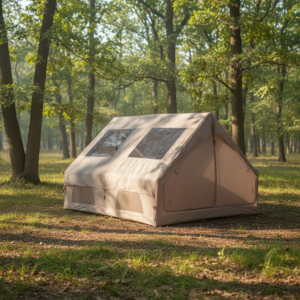
Inflatable Tent Four-Season Quick Automatic Opening PVC 3000mm Waterproof Foldable Eco-Friendly 2-3/3-4/6-8 Person Outdoor Use
Read more -
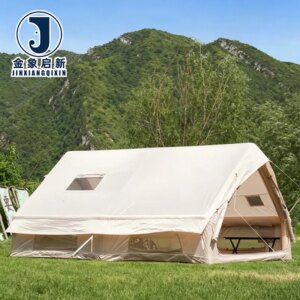
Inflatable Camping Tent PVC Four-Season Waterproof Outdoor Air Tent with Quick Automatic Opening for 2-3 Person
Read more