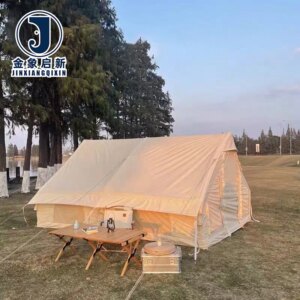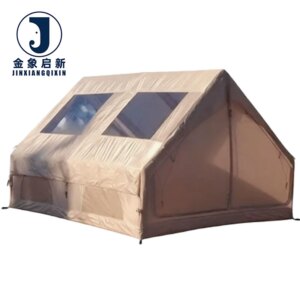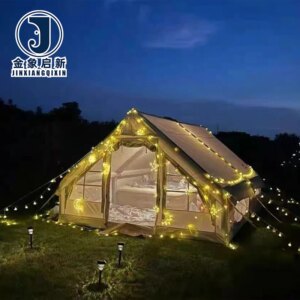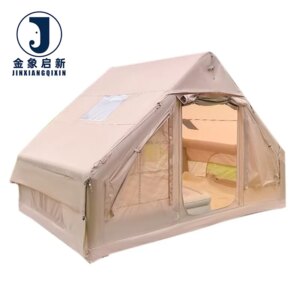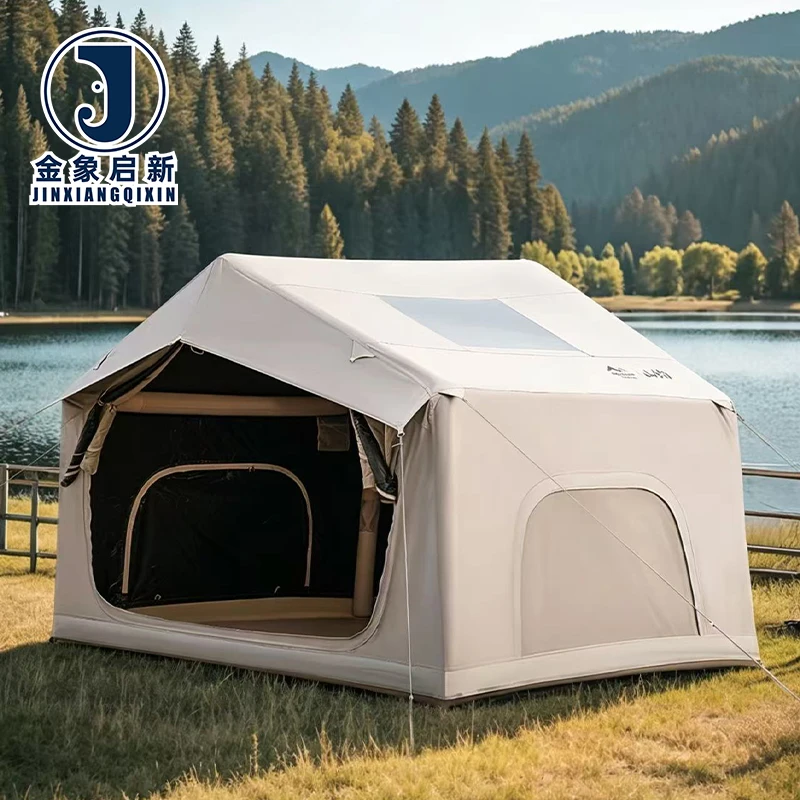
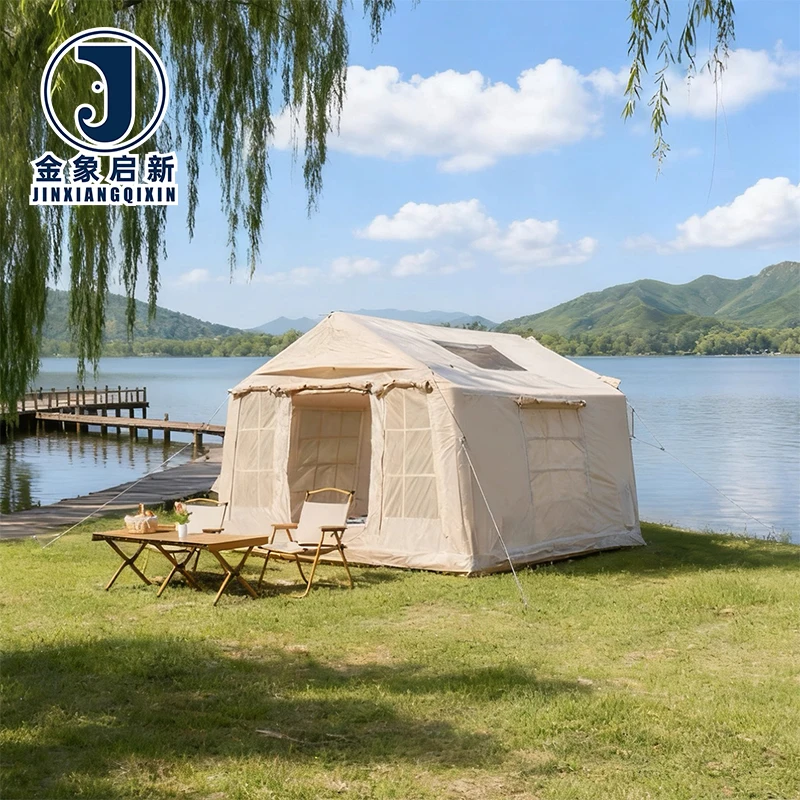
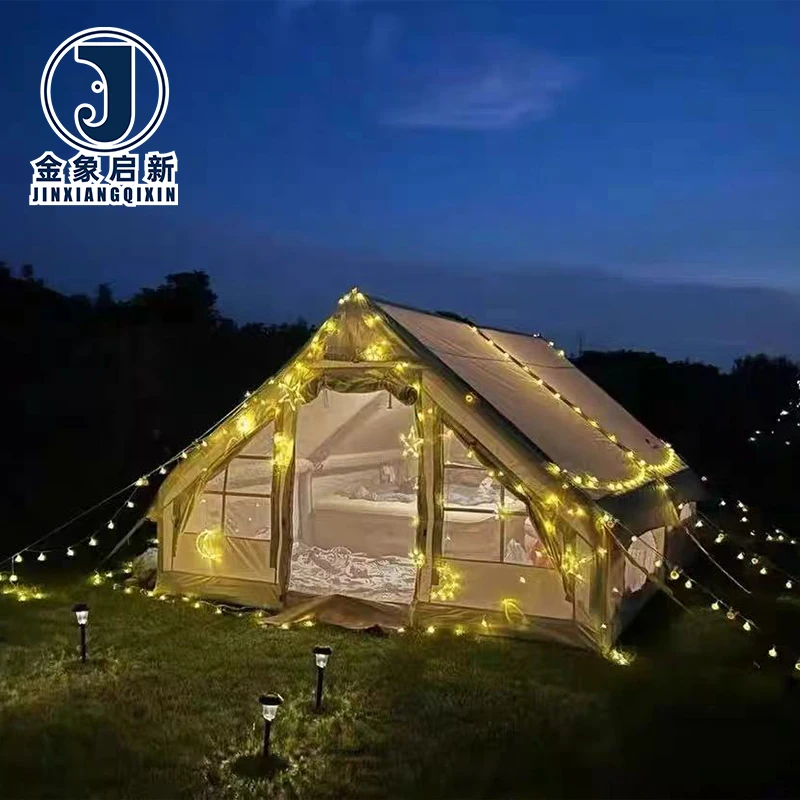
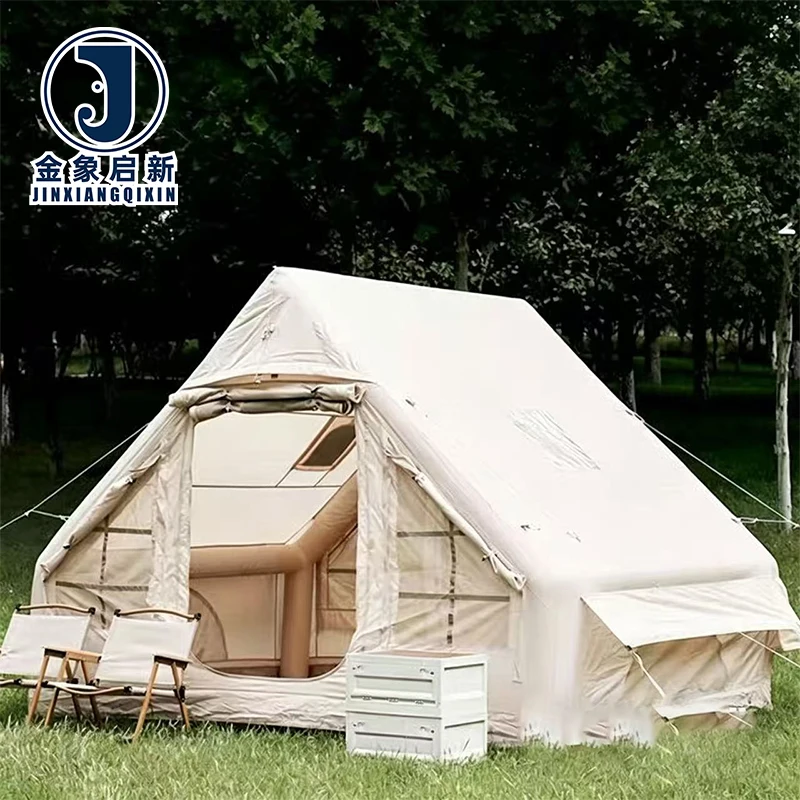
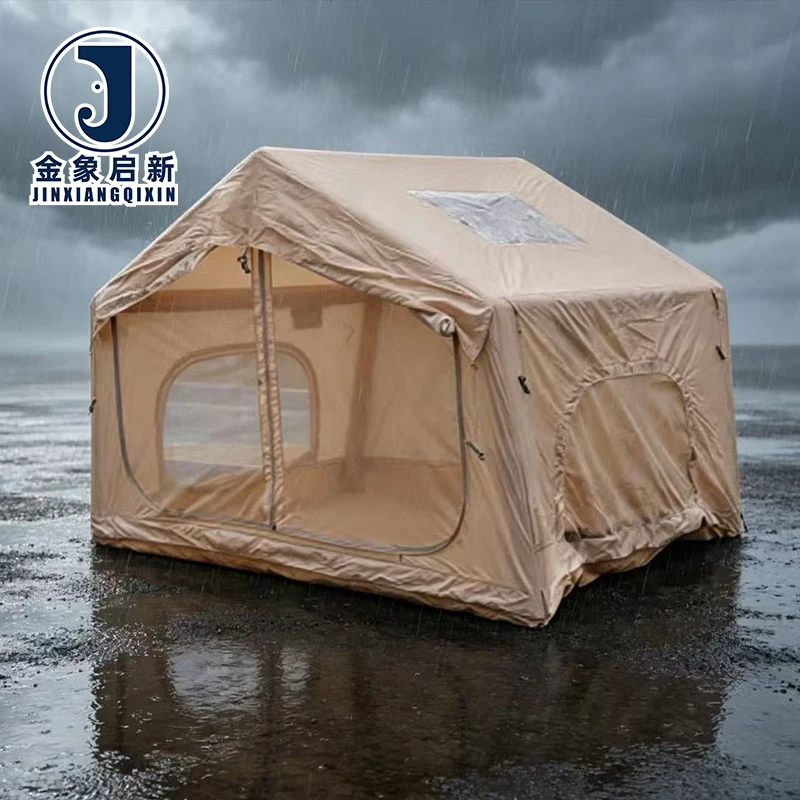
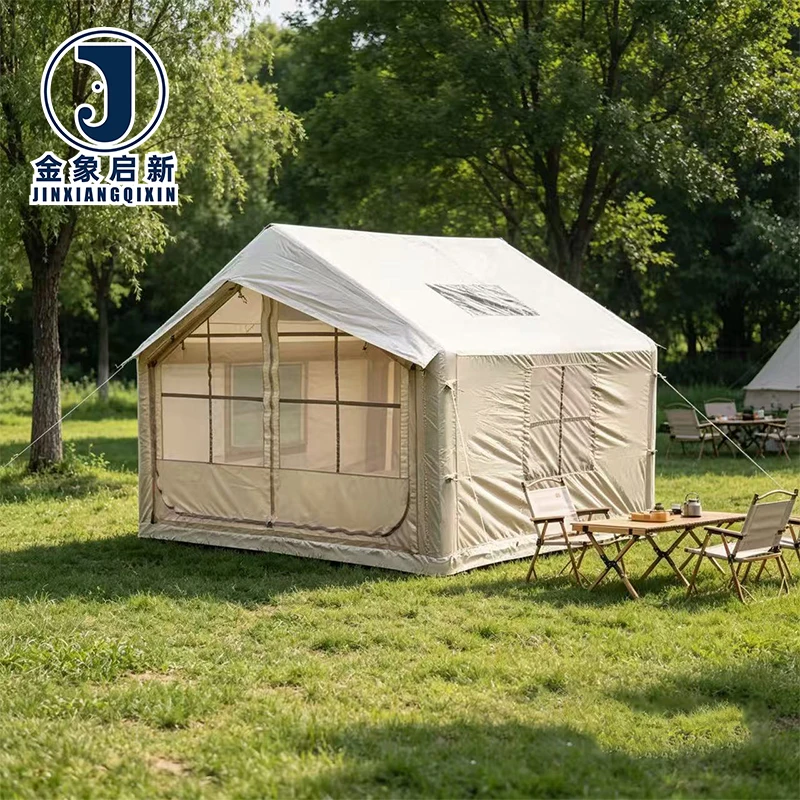
Waterproof Inflatable Camping Tent with waterproof PVC tarpaulin construction, UV and fire-resistant treatment for commercial glamping operations. Engineered for rapid deployment in outdoor resort, festival campsite, and adventure tourism base camp environments where temporary accommodation demands quick setup without compromising weather protection. Backed by nearly 30 years of coated fabric expertise, 100% pre-shipment inspection, and 10-person R&D team supporting full OEM customization from sample to bulk delivery.
Description
Deep Coating Process Control — Every roll of PVC tarpaulin we coat for inflatable tent structures is tracked from base fabric through to final inspection, ensuring weld seams hold under air pressure and repeated inflation cycles.
Technical Specifications
| Parameter | Value |
|---|---|
| Product Type | Inflatable Tent |
| Core Material | PVC tarpaulin |
| Key Features | Waterproof, UV-resistant, tear-resistant, fire-retardant, anti-static |
| Certifications | ISO9001, ISO14001, ISO45001, CE |
| Customization | OEM & ODM, sample customization, pattern printing |
| Quality Control | Full-process inspection with dedicated QA & QC staff |
Application Suitability
| Application | Exposure & Requirement |
|---|---|
| Premium glamping resort operations | Continuous sun and rain exposure, guest safety compliance, aesthetic consistency across multiple units |
| Festival and event temporary accommodation | Rapid deployment and takedown cycles, high foot traffic abrasion, variable weather conditions |
| Adventure tourism base camps | Remote site logistics, wind load resistance, repeated seasonal assembly and storage |
| Corporate retreat facilities | Branding and visual uniformity, fire safety regulations for commercial occupancy, extended seasonal use |
Why Test Reports Matter More Than "Fire-Retardant" Claims on Inflatable Tents
A fabric called fire-retardant without a named grade is a liability waiting to fail inspection.
I have watched commercial sites shut down because the inflatable tent fabric arrived with nothing but a verbal assurance of flame resistance. The building inspector asks for a DIN or NFPA classification, the operator calls the supplier, and the supplier sends a generic MSDS that satisfies no one. [NEED_CITE: DIN 4102 fire classification for building materials and temporary structures] This happens more often than buyers expect, especially when sourcing across markets with different fire codes. For a commercial glamping operator or event company, that shutdown is lost revenue, refund claims, and reputational damage — all traceable to a missing piece of paper that should have shipped with the fabric. An Inflatable Tent aftermarket supplier who understands compliance will always attach the test report to the dispatch documents, not promise to email it later.
Weld Integrity Under Constant Air Pressure
Inflatable tent structures place continuous stress on every welded seam. Unlike a static cover, the air beams flex with temperature changes, wind gusts, and occupant movement throughout the day. The coating adhesion to the base fabric determines whether the weld line holds or peels apart under that cyclic load. Our production lines run controlled heat and pressure settings matched to the PVC compound, so the weld zone reaches full bond strength without scorching the coating surface. Each batch is checked for peel strength at the seam before it leaves the factory.
Batch Colour Consistency Across Multi-Unit Deployments
When a glamping operator orders six or eight inflatable tents for a single site, even a slight shade variation between rolls becomes visible once the units stand side by side. This is not an aesthetic complaint — guests notice it, and it undermines the premium positioning the operator charges for. We manage colour matching at the compound mixing stage, not by eye at the coating head. The base formulation is weighed and logged per batch, and the finished rolls are compared under controlled lighting before packing. [NEED_CITE: colour consistency standards in coated fabric production for commercial textiles]
Reading the Specs That Actually Predict Performance
GSM alone tells you how much material is on the roll, but it does not tell you how that weight is distributed between base fabric and coating. A high GSM achieved mostly through thick coating on a light base fabric will tear more easily than a lower GSM built on a denser weave with a thinner, well-bonded coat. For inflatable tent air beams, the tear resistance of the base fabric matters more than the coating thickness because a puncture in the beam propagates fast under pressure. The denier of the yarn and the weave density in both warp and weft directions determine that tear behaviour. Coating method also plays a role: knife-coated fabrics generally show higher peel strength at the weld line than laminated constructions, which directly affects how well the air beams survive repeated inflation and deflation cycles. Surface finish — glossy or matte — influences how easily the tent cleans after a season of guest use and how well printed branding adheres if the operator wants custom graphics on the tent skin.
The Hidden Cost of Specifying on Price Per Square Metre
Buying coated fabric on cost alone almost always leads to field failures that cost far more than the savings. When the PVC coating is formulated cheaply with excess filler, the surface chalks under UV exposure within a single season, and the colour fades unevenly across panels that face different directions. Weld seams on filler-heavy compounds tend to become brittle at the heat-affected zone, cracking along the air beam joints when the tent is inflated in cold weather. [NEED_CITE: tensile and tear test methods for coated fabrics per ISO 1421] The operator then faces replacement costs, guest complaints, and the downtime of pulling units out of service — a cycle that repeats until the specification is corrected at the material level rather than patched in the field.
Why Production Control Matters for Inflatable Tent Fabric
Our 9,180 m² facility runs three full production lines with 36 sets of processing equipment, giving us the capacity to hold delivery schedules on bulk inflatable tent orders without rushing the coating cure. The 10-person R&D team develops custom colour matches and prints against approved Pantone references, producing samples within days so you can confirm before the full run starts. Every roll passes through dedicated QA and QC checkpoints at each production stage — base fabric inspection, coating weight verification, adhesion testing, and final visual and dimensional check. This is not a sampling protocol; it is a 100% inspection before any roll is packed for dispatch. Custom widths and lengths are handled on the same lines with the same controls, so short runs do not mean lower consistency.
Documentation & Verification
- Material specification sheet stating coating weight, base fabric construction, and colour reference for every roll
- Fire-retardant and UV test reports matched to batch number, attached to dispatch paperwork
- Pre-shipment inspection record with dimensional check and visual defect log
- ISO9001, ISO14001, ISO45001, and CE certificates available for compliance submission
- Roll packing list with net weight and running length per roll for inventory tracking
- Certificate of origin and customs documentation for cross-border shipments
Fabrication, Handling & Storage
- Heat-weld air beam seams using temperature and dwell time matched to the PVC compound grade, not generic settings
- Reinforce tie-down and anchor points with additional PVC patches bonded over the primary weld zone
- Store rolls upright on end-caps in a shaded, ventilated area to prevent flat-spot deformation of the coating
- Avoid unrolling PVC tarpaulin in cold conditions below the stated flexibility range to prevent coating crack
- Clean tent surfaces with mild detergent and soft cloth; solvents will attack the plasticiser in the PVC coating
- Repair minor punctures with compatible PVC patches and adhesive, applying firm pressure across the full bond area
What We Need to Quote Accurately
Tell us the deployment environment — coastal salt air, high-altitude UV, desert heat — and the fire classification your local authority requires, so we recommend the correct PVC compound. Confirm whether you need rolls for your own fabrication or finished tents cut and welded to your pattern, and share the target tent dimensions and air beam layout. If branding or custom colour is part of the brief, send Pantone references or artwork files so we can run a print sample before production.
Frequently Asked Questions
Q: What certifications support commercial safety compliance for inflatable tent operations?
A: We supply ISO9001, ISO14001, ISO45001, and CE certificates with each order. For fire-retardant grades, test reports are issued per batch showing the classification achieved. Confirm the specific standard your local authority or venue requires — DIN, NFPA, or another code — so we match the compound formulation and provide the correct documentation before dispatch.
Q: How does batch consistency work across multiple inflatable tent orders?
A: Colour is controlled at the compound mixing stage using weighed formulations logged per batch. Finished rolls are compared under controlled lighting against the approved reference before packing. This ensures that tents produced months apart for phased site rollouts maintain visual uniformity when installed together at a commercial glamping location.
Q: What customization options are available for branding and sizing?
A: We offer pattern printing, custom colour matching to Pantone references, and cut-to-size fabrication. Our R&D team produces physical samples within days for approval before full production runs. Custom widths and lengths are run on the same production lines with identical quality controls, so short runs receive the same coating consistency as bulk volumes.
Q: What is the expected service life under commercial use conditions?
A: Service life depends on UV intensity, inflation frequency, and maintenance practice at the site. The PVC tarpaulin construction is formulated for extended outdoor exposure with UV-resistant treatment. We recommend discussing your specific deployment climate and usage cycle so we can recommend the appropriate coating compound and base fabric weight for your application.
Q: How do you handle warranty claims for commercial inflatable tent deployments?
A: Every roll ships with a pre-shipment inspection record and batch-linked test reports, establishing a clear baseline at the point of dispatch. If a material defect surfaces in service, provide the batch number from the packing list along with photographs of the failure. We assess against the original specification and resolve through replacement or credit as appropriate.
Related products
-
Waterproof Inflatable Camping Tent Outdoor Easy Setup Air Tent for Camping
Read more -
خيمة تخييم قابلة للنفخ من مادة PVC، مقاومة للماء والأشعة فوق البنفسجية، لجميع الفصول، فتح تلقائي سريع، قابلة للتخصيص، تتسع لـ 2-3 أشخاص
Read more -
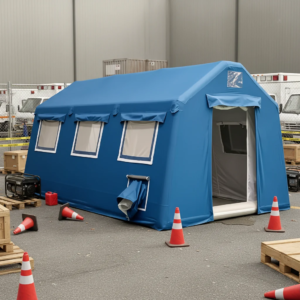
Outdoor Waterproof Inflatable Tent for Camping Portable Air Camping Tent Shelter
Read more -
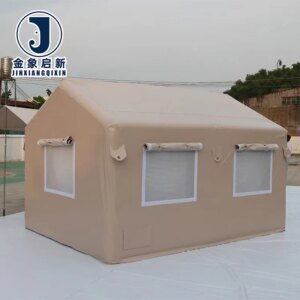
Inflatable Camping Tent PVC Waterproof Four-Season Outdoor Air Tent with Quick Automatic Opening for 3-4 Person
Read more