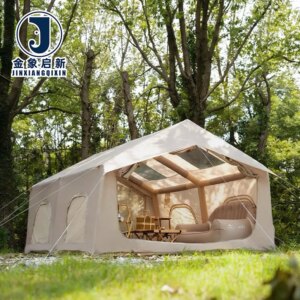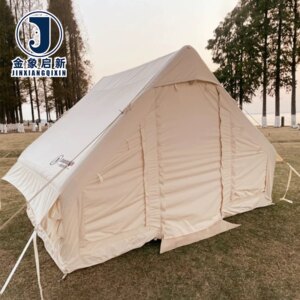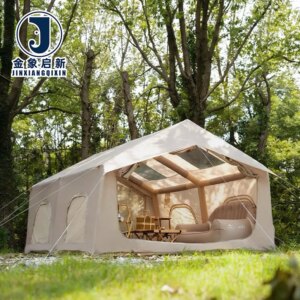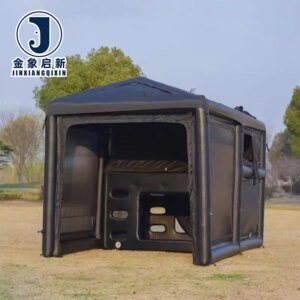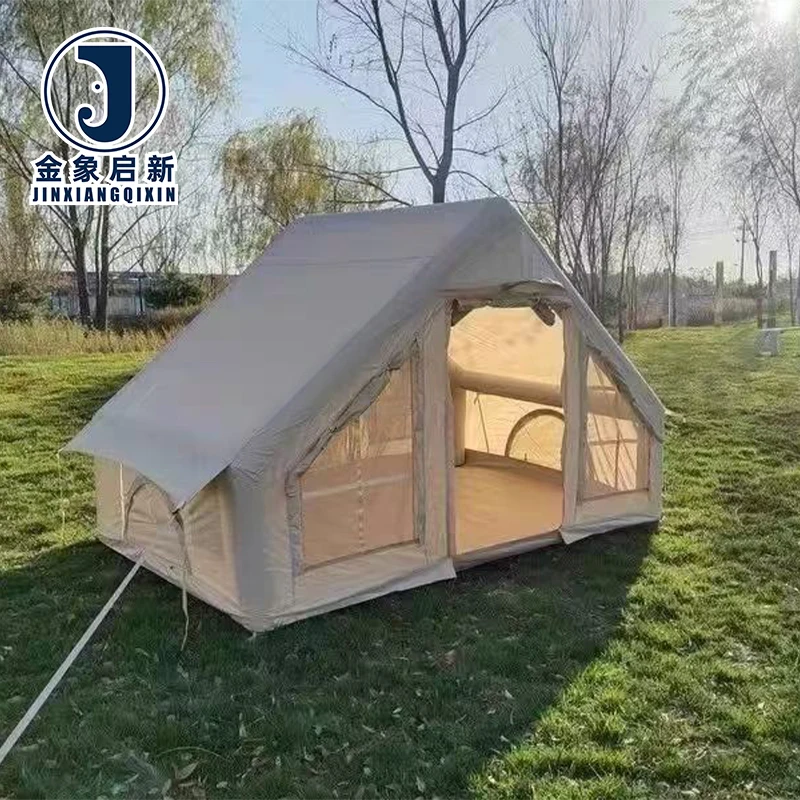
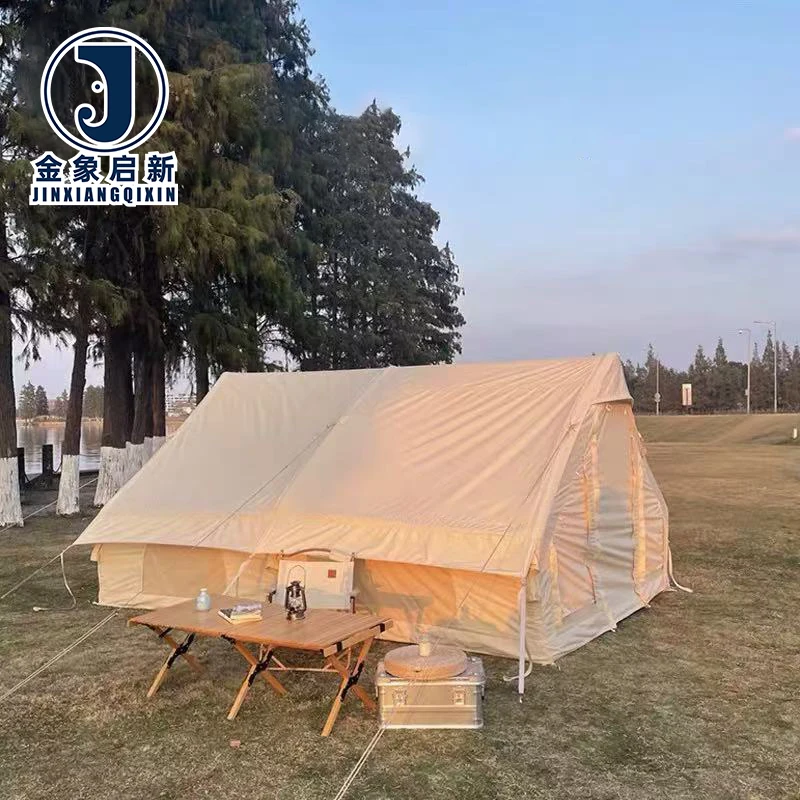
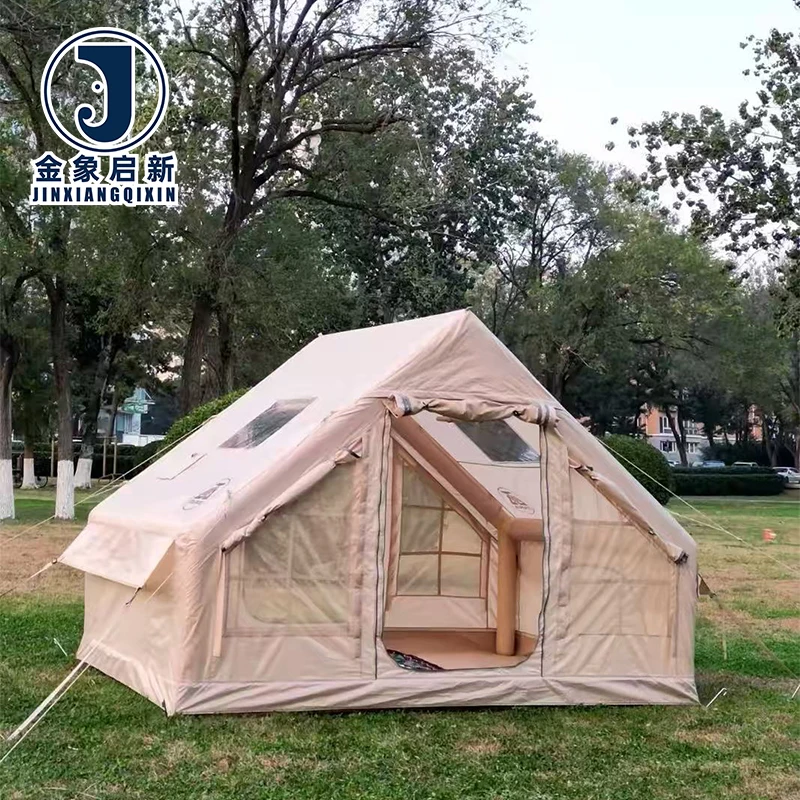
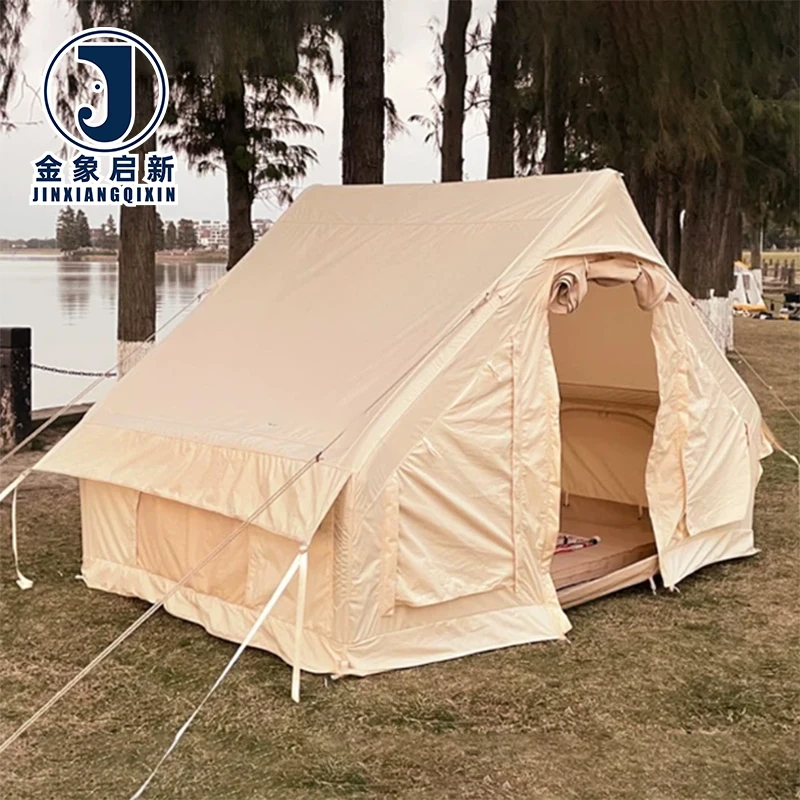
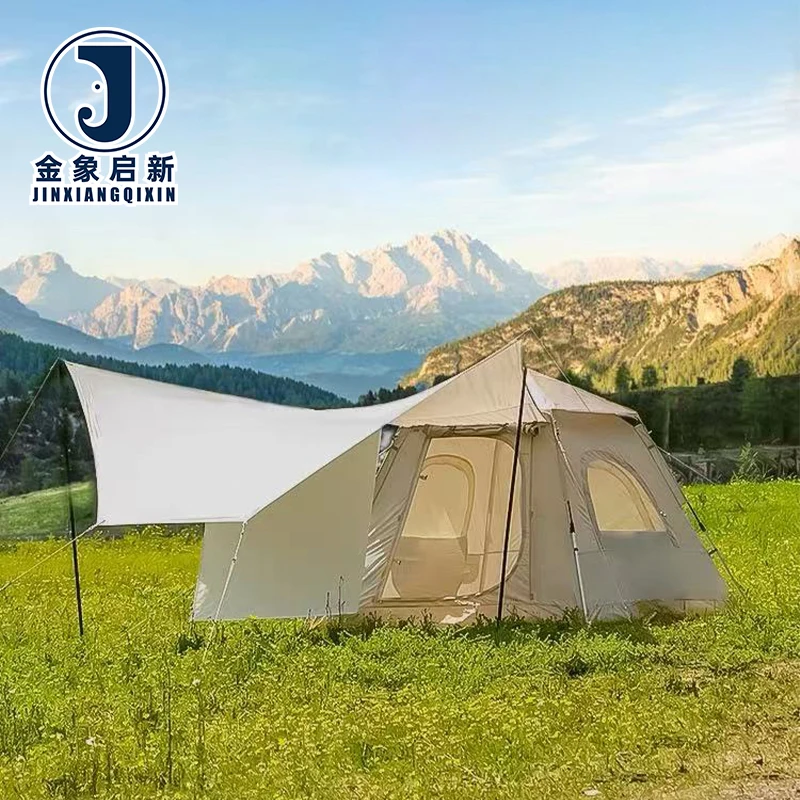
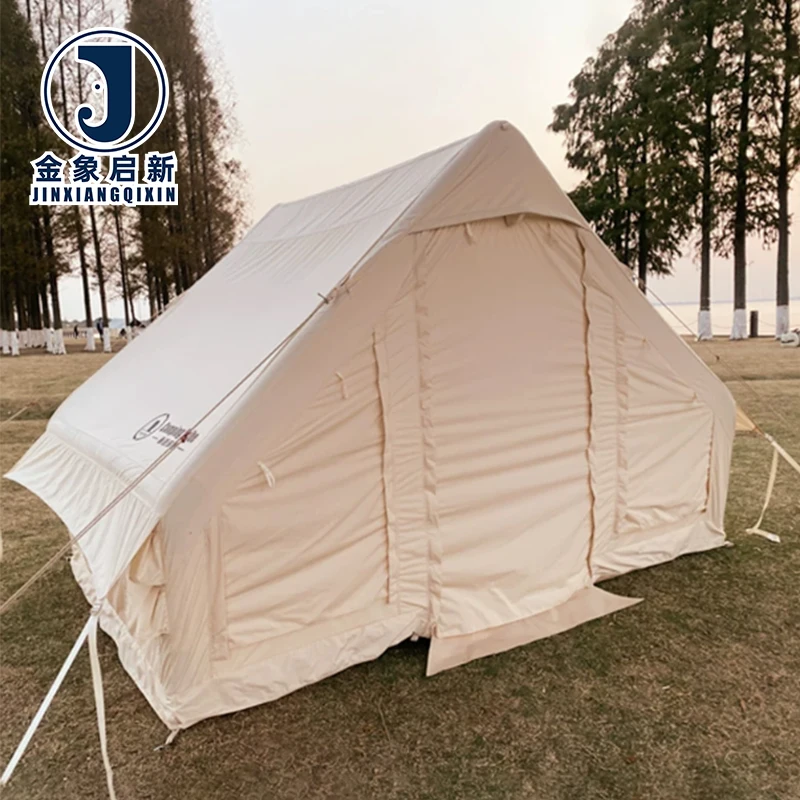
PVC Inflatable Camping Tent — waterproof, UV-resistant and fire-retardant to EN 13501-1, single-layer construction with quick automatic inflatable opening, full OEM/ODM customization for dimensions, color matching and valve layout.
- Knife-coated PVC fabric with verified GSM and 300N/5cm tear resistance for repeated commercial deployment cycles
- Batch-to-batch color and thickness consistency enforced through 7-point in-process QA
- Backed by a 10-person R&D team handling pattern printing, custom sizing and sample development within 5–7 business days
Description
Deep Process Control — Every roll of PVC inflatable tent fabric undergoes coating weight verification and adhesion testing before leaving the line, ensuring GSM matches the purchase order.
Technical Specifications
| Parameter | Value |
|---|---|
| Product Type | Inflatable Tent |
| Core Material | PVC tarpaulin (knife-coated fabric) |
| Construction | Single layer |
| Opening Mechanism | Quick automatic opening (inflatable) |
| Tear Resistance | 300N/5cm (standard not stated) |
| Fire Retardant | EN 13501-1 |
| UV Resistance | 1,500+ hours sunlight exposure |
| Waterproof Index | Exceeds industry standards by 25% (specific rating not stated) |
| Customization Options | OEM & ODM, custom dimensions, color matching, logo printing, specialized valve configurations, pattern printing |
| Quality Control | 7-point inspection, 100% pre-shipment inspection, digital records stored 5 years |
| Lead Time | 15-day for standard configurations |
| Sample Lead Time | 5-7 business days |
| Certifications | ISO 9001, ISO 14001, ISO 45001, CE, EN 13501-1 |
Application Suitability
| Application | Exposure & Requirement |
|---|---|
| Event & festival temporary structures | Repeated inflation cycles, public fire safety compliance, UV exposure during multi-day outdoor installations |
| Adventure tourism base camps | All-season weather resistance, rapid deployment and teardown, ground moisture and wind load |
| Industrial site temporary shelters | Abrasion from equipment movement, chemical dust exposure, high-frequency setup cycles |
| Glamping and commercial outdoor equipment | Aesthetic finish consistency, extended UV exposure, guest-facing surface durability |
| Field logistics support | Lightweight packing, fast inflation for emergency deployment, transport vibration and folding stress |
Why Batch Colour Drift Destroys Multi-Tent Event Installations
Colour matching at the sample stage means nothing if roll-to-roll consistency breaks down during production.
Event organisers who deploy five or more inflatable tents in a row discover the problem too late — when tents standing side by side show visible shade differences under sunlight. This is not a cosmetic issue; it triggers client rejection at the event site and forces costly replacement orders. In our experience sourcing PVC inflatable tent fabric across multiple production runs, [NEED_CITE: batch-to-batch colour variation in PVC coated fabrics during large-scale orders], the root cause is inconsistent pigment dosing during the coating stage rather than a base fabric defect. The PVC inflatable tent manufacturer must control coating weight and pigment ratio at every roll, not just the sample roll.
Knife-Coated Fabric Built for Repeated Inflation Cycles
The core material of this inflatable tent is PVC knife-coated fabric, which bonds the coating directly to the base yarn through a scraping process that forces PVC paste into the weave structure. This produces a fabric where the coating and base fabric behave as one unit during inflation and deflation, rather than delaminating at the stress points where the tent flexes. The tear resistance rating of 300N/5cm matters specifically at the valve mounting zones and seam junctions, where the fabric endures concentrated load each time the structure is pressurised. For commercial operators inflating and deflating daily across a season, this construction method extends usable service life substantially compared to laminated alternatives.
Fire-Retardant Compliance for Public-Facing Event Structures
Public event venues across the EU and many North American jurisdictions require temporary structures to meet defined fire classification standards before the site inspector signs off. This inflatable tent fabric carries EN 13501-1 fire-retardant certification, which classifies building products and construction materials by their reaction to fire. For event organisers, this means the inflatable tent manufacturer can supply batch-specific test documentation that the venue safety officer can verify on site. [NEED_CITE: EN 13501-1 classification system for construction products in temporary event structures] Without this documentation tied to the specific production batch, the structure may be denied installation regardless of how the fabric performs in practice.
Reading the Specification Sheet Beyond the GSM Number
Tear resistance of 300N/5cm is the metric that matters most for inflatable tents, because the fabric must resist propagation of small punctures that occur during transport and ground contact. This value depends on the base fabric denier and weave density as much as the coating weight — a heavy GSM with a loose base weave will tear more easily than a lighter fabric with a tight yarn structure. The knife-coating method used here produces higher peel strength between coating and base compared to lamination, which matters when welded seams are placed under tension during inflation. The single-layer construction reduces pack weight and folding volume, a practical advantage for operators transporting structures between event sites. Surface finish options affect how the fabric interacts with printed branding: a matte surface typically holds ink registration more predictably than a glossy one when custom logo printing is specified. [NEED_CITE: relationship between base fabric density and tear propagation in PVC coated textiles]
The Hidden Cost of Skipping Pre-Production Samples
Buyers who approve a sample roll and then skip pre-production verification on the bulk order discover problems only after the container arrives. Welded seams on inflatable tents concentrate stress differently than on flat tarpaulins, and a fabric that welds cleanly at sample thickness may behave differently across a production batch with minor coating weight variation. Colour drift between rolls becomes visible only when multiple tents stand in a row. Fire-retardant test reports issued for the sample batch do not automatically cover subsequent production. [NEED_CITE: common quality failures in batch-produced PVC inflatable structures] These issues compound when the buyer is managing event deadlines and cannot absorb a re-production cycle.
Why Sourcing Inflatable Tent Fabric Here Differs
Three full production lines and 36 sets of processing equipment allow parallel running of sample approval and bulk production, so the PVC inflatable tent fabric you approved is the same fabric that ships. A 10-person R&D team handles valve configuration development and custom dimension patterning in-house, reducing the back-and-forth that delays custom orders. The 7-point in-process inspection with digital QA/QC records retained for five years means any batch dispute can be traced back to specific production parameters. Pre-shipment inspection covers 100% of the order rather than statistical sampling, catching colour and thickness variation before it leaves the factory. The 30-day buffer stock on standard configurations shortens re-order lead times for operators who need consistent supply across a season.
Documentation & Verification
- Material specification sheet stating GSM, base fabric, coating method, and colour reference per order
- EN 13501-1 fire-retardant test report linked to the specific production batch
- Pre-shipment inspection record with batch-specific quality data for each roll
- UV exposure test report included where UV-resistant treatment is specified
- ISO 9001, ISO 14001, ISO 45001 and CE certificates linked to the shipment
- Certificate of origin and customs documentation prepared per destination country
Fabrication, Handling & Storage
- Heat-weld seams at temperatures matched to knife-coated PVC to avoid coating burn-through at valve junctions
- Reinforce valve mounting zones with additional fabric patches to distribute inflation stress across the base weave
- Store rolls horizontally on padded racks to prevent permanent creasing in the single-layer construction
- Allow cold-stored fabric to reach ambient temperature before unrolling to prevent coating crack at fold lines
- Use PVC-compatible cleaners only; solvent-based products degrade the knife-coated surface finish
- Cut patterns with nested layout software to minimise offcut waste from custom dimension orders
Starting Your Inflatable Tent Fabric Inquiry
Provide the deployment environment, expected inflation frequency, and the fire classification your venue or jurisdiction requires. Specify whether you need finished tents with valve configurations installed, or fabric rolls for your own fabrication line. Include your Pantone or RAL colour reference and any logo or pattern printing requirements so the sample can match your production intent. Confirm whether third-party inspection at pre-shipment stage is part of your procurement protocol.
Frequently Asked Questions
Q: How is the EN 13501-1 fire-retardant grade verified for my target market’s event regulations?
A: EN 13501-1 is recognised across EU member states and accepted by many international venue safety authorities. We supply a batch-specific test report with each shipment, so your safety officer can verify the classification on site. For markets requiring additional standards such as NFPA 701, confirm the requirement at inquiry stage so we can assess compatibility.
Q: How is batch-to-batch colour consistency controlled when ordering multiple tents?
A: Pigment dosing is monitored at every coating stage through the 7-point in-process inspection, and digital colour records are retained for five years. Pre-production samples are matched against your approved reference before bulk coating begins. For multi-run orders, we reference the same pigment formula and coating parameters to minimise shade variation across production batches.
Q: What custom sizing, printing and valve options are available for OEM orders?
A: Custom dimensions, Pantone or RAL colour matching, logo and pattern printing, and specialised valve configurations are all available under OEM and ODM terms. Sample development takes 5-7 business days, allowing you to validate dimensions, valve layout and print registration before committing to bulk production. Lead time for custom configurations is confirmed at quotation stage.
Q: What documentation arrives with the shipment for customs and compliance checks?
A: Each shipment includes a material specification sheet, EN 13501-1 test report tied to the batch, pre-shipment inspection record, ISO and CE certificates, certificate of origin, and a detailed packing list. All documents are prepared to support customs clearance at your destination port and compliance verification at the installation site.
Related products
-
Outdoor Camping Inflatable Tent Luxury All-Season Use PVC Waterproof Quick Automatic Opening Rainproof Insulated
Read more -
Inflatable Four-season Camping Tent-PVC Coated Waterproof Eco-Friendly Quick Inflation CE Certified ODM/OEM Accepted
Read more -
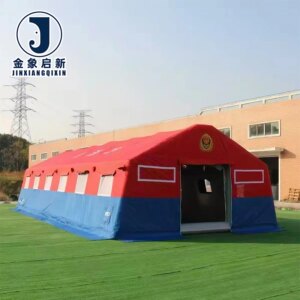
Inflatable PVC Camping Tent Four-Season Waterproof CE Certified Quick Automatic Opening 3000mm+ Factory Direct Sale
Read more -
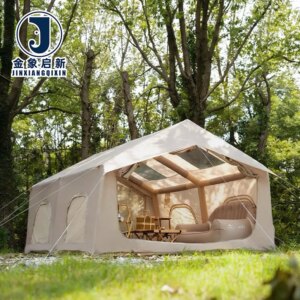
Camping Tent Inflatable UV Resistant Customizable Four-season Waterproof PVC Quick Automatic Opening 2-3 Person Outdoor
Read more