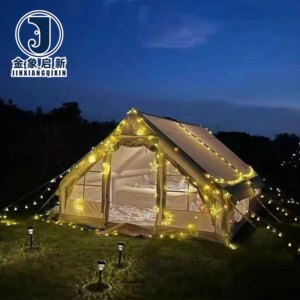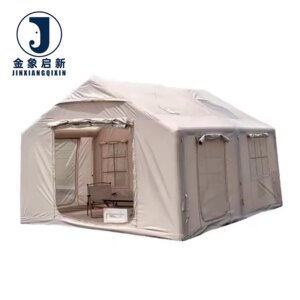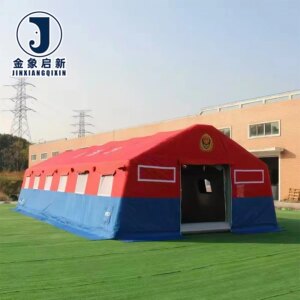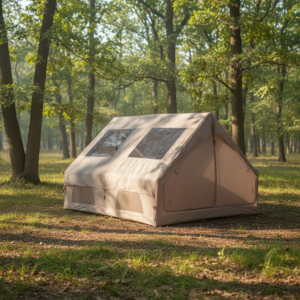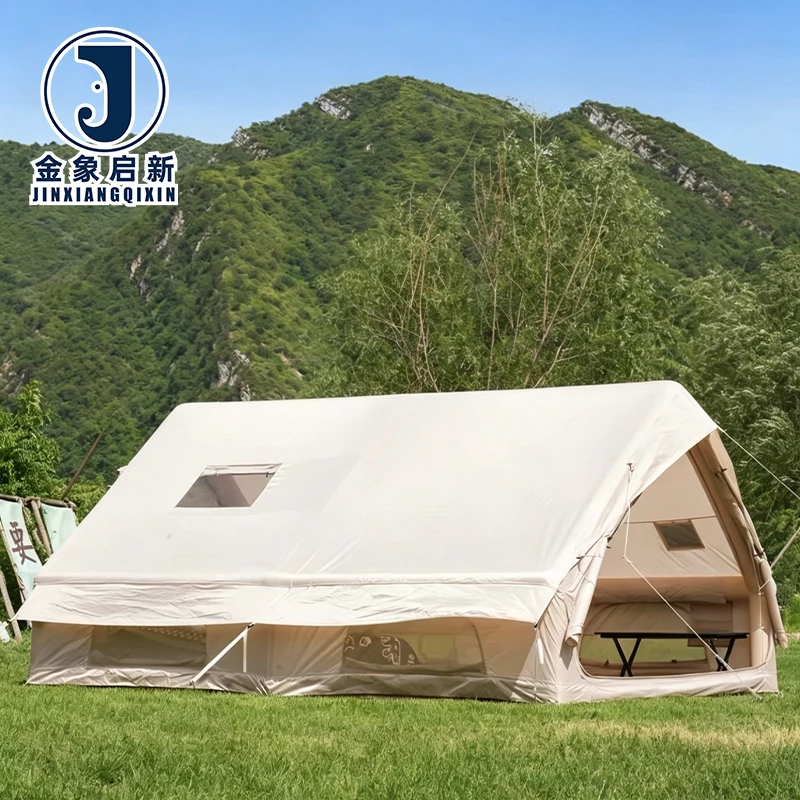
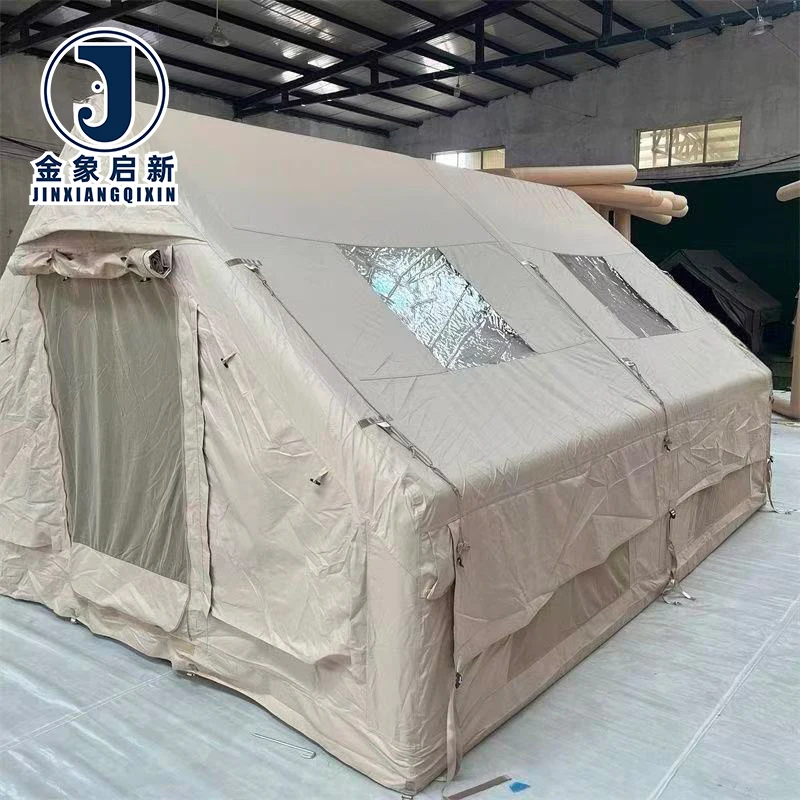
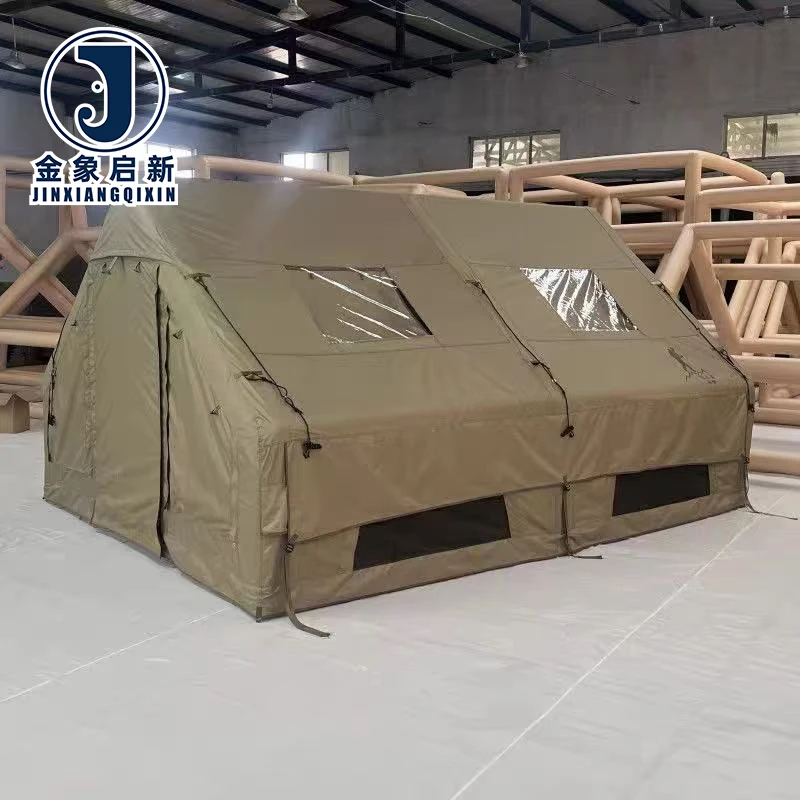
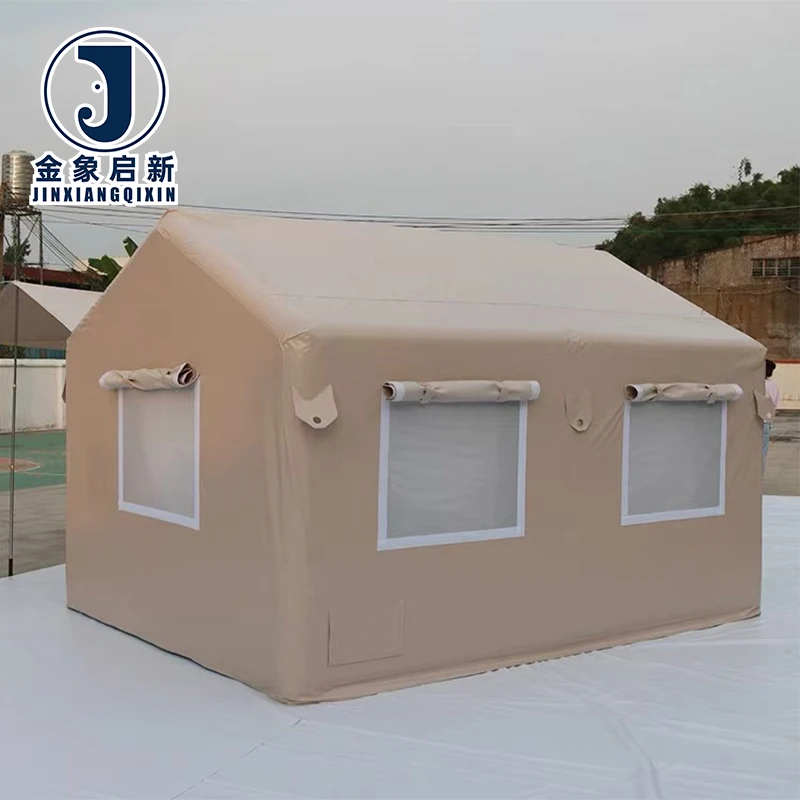
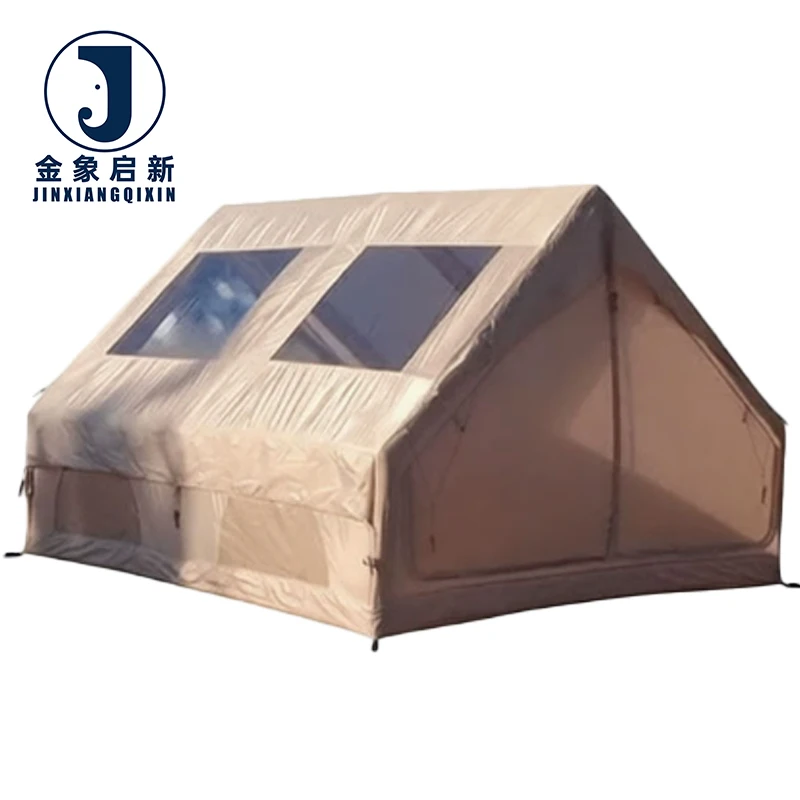
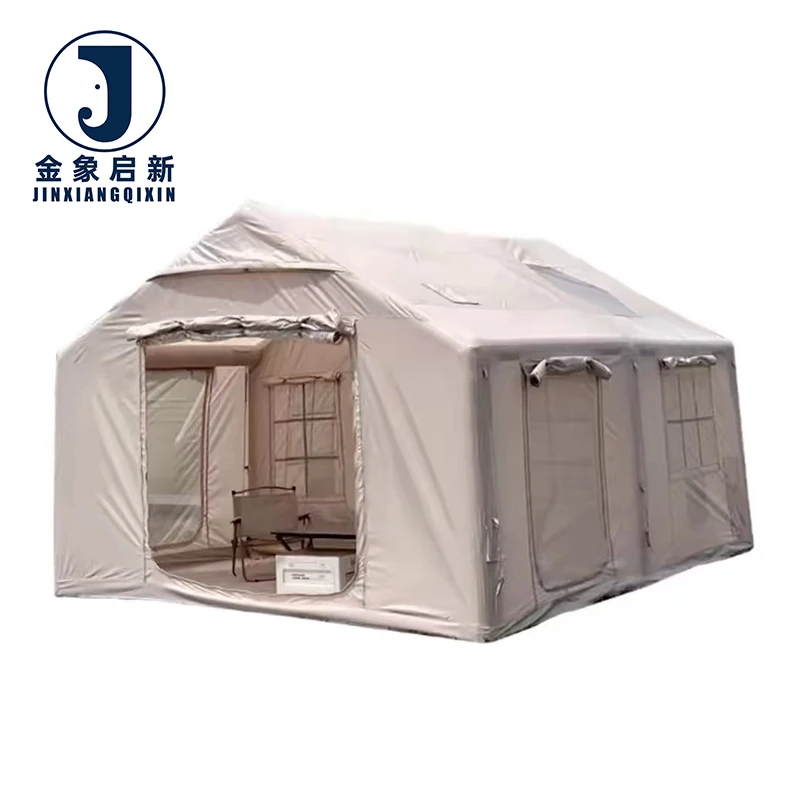
Large Inflatable Camping Tent — PVC tarpaulin construction, 8–10 person capacity, waterproof and UV-resistant fabric with tear-resistant performance for commercial outdoor deployment.
- Inflatable frame design enables rapid setup for time-critical event pavilions, industrial shelters, and mobile exhibition spaces
- Full OEM & ODM customization available including dimensions, pattern printing, and material selection by a 10-person R&D team
- Every unit undergoes strict full-process QA & QC inspection with 100% pre-shipment verification across 3 production lines
Description
In-House Coating Control — uniform adhesion and consistent weight across every roll of inflatable tent fabric, maintained through dedicated QA at each production stage.
Technical Specifications
| Parameter | Value |
|---|---|
| Product Type | PVC Inflatable Tent |
| Core Material | PVC tarpaulin |
| Key Performance | Waterproof, UV-resistant (test basis not stated in source), tear-resistant |
| Capacity | 8-10 Person |
| Certifications | ISO9001, ISO14001, ISO45001, CE |
| Production Facility | 9,180 m² |
| Production Lines | 3 full production lines |
| Processing Equipment | 36 sets |
| R&D Team | 10 technicians |
| Customization | OEM & ODM — sample customization, pattern printing |
| Quality Control | Full-process inspection with dedicated QA & QC staff |
Application Suitability
| Application | Exposure & Requirement |
|---|---|
| Temporary event pavilions | Continuous UV exposure, wind loading, rapid inflation cycles, crowd proximity |
| Industrial site shelters | Abrasive dust, equipment contact, chemical splash, long-term weathering |
| Mobile exhibition spaces | Frequent setup and teardown, transport abrasion, visual branding demands |
| Outdoor equipment storage | Moisture ingress prevention, UV degradation resistance, puncture from stored items |
| Temporary work areas | Worker safety compliance, ventilation integration, repeated inflation stress |
Why Batch Colour Consistency Matters More Than Price Per Square Metre
Inflatable tent fabric that arrives in mismatched shades forces a choice between accepting visible seams or rejecting the entire shipment.
When multiple rolls of inflatable tent fabric are fabricated into a single structure, even slight hue drift between rolls becomes obvious once panels sit side by side under natural light. We have seen commercial event operators reject full container loads because one roll shifted half a Pantone step from the rest — delaying installations and triggering contract penalties [NEED_CITE: batch colour variation in PVC coated fabric rolls]. The problem rarely originates at the dye house. It creeps in during coating, where temperature fluctuation across the oven zones or inconsistent additive dosing alters surface reflectance roll by roll.
How Coating Weight Uniformity Protects Structural Integrity
Every square metre of this PVC inflatable tent fabric receives a controlled coating application, ensuring the stated GSM is achieved consistently from core to edge. When coating weight drifts low on one side of the web, that panel stretches unevenly during inflation — creating stress concentrations at welded seams. For tent and inflatable structure manufacturers running continuous production lines, uniform coating weight eliminates the trial-and-error heat adjustment that slows fabrication throughput.
Pattern Printing and Custom Sizing for Brand-Critical Structures
The 10-technician R&D team develops material selections and pattern printing proofs before production begins, allowing brand owners to verify colour registration on the actual PVC substrate. OEM and ODM projects move from design brief to sample approval within days, supported by the 36 sets of professional processing equipment on site. This matters for exhibition builders who need logo placement to survive repeated inflation cycles without cracking at the ink-to-coating interface [NEED_CITE: ink adhesion testing on PVC tarpaulin surfaces].
Reading the Specification Sheet Beyond the GSM Number
GSM tells you how much material exists per square metre, but it does not describe how that weight is distributed between the base fabric and the coating layers. A PVC inflatable tent fabric with a dense polyester base fabric and moderate coating weight will resist tearing far better than a lighter base buried under thick coating — even if both read the same GSM on the label. The tear propagation behaviour depends on denier and weave density of the yarn, while the coating governs waterproofing, weldability, and surface cleanability. Specifiers who request the full material breakdown — base fabric construction, coating method, and total assembled weight — make better-informed decisions than those who compare GSM figures alone.
The Hidden Cost of Skipping Pre-Production Samples
Fabricators who approve a material data sheet without running a physical sample through their own welding equipment discover adhesion problems only after the first production batch is cut. Weld temperature windows shift between coating formulations, and a setting that works on one supplier’s PVC tarpaulin may scorch or under-bond on another [NEED_CITE: heat welding parameters for PVC coated fabrics per ISO standards]. For inflatable tent manufacturers, a failed seam at the air chamber means a deflated structure at the client’s event — a failure with reputational consequences far exceeding the material cost difference.
Why Fabricators Source Their Inflatable Tent Fabric Here
Nearly 30 years of focused coated fabric production means the coating formulation and application parameters for inflatable tent fabric have been refined through hundreds of production campaigns, not guessed from a datasheet. The three full production lines handle bulk volume while the 10-person R&D team develops custom widths, colours, and pattern prints without diverting mainline capacity. Every roll undergoes dedicated QA and QC inspection before dispatch — the pre-shipment inspection record documents actual measured values, not batch averages. ISO and CE certification underpins documentation for regulated markets, and the sample development process compresses the approval cycle so production can begin without extended material hold periods.
Documentation & Verification
- Material specification sheet stating PVC base fabric type, coating weight, and GSM per roll
- Colour reference card matched to production batch for visual verification on arrival
- Test report for UV-resistant treatment available — confirm the grade required for your market
- ISO and CE certificates supporting compliance documentation for export markets
- Pre-shipment inspection record with measured values logged per roll before dispatch
- Roll packing list detailing quantities, dimensions, and net weight per pallet
Fabrication, Handling & Storage
- Heat-weld PVC inflatable tent fabric within the supplier-recommended temperature window to avoid delamination at seam edges
- Store rolls upright on pallets to prevent flat-spot creasing that transfers into the finished inflatable chamber panels
- Use PVC-compatible plasticiser-safe cleaners on the coated surface to avoid softening the top coating layer
- Allow cold-stored rolls to acclimatise to workshop temperature before unrolling to prevent coating micro-cracking
- Plan cutting layouts around the roll width to minimise offcut waste on large tent panel geometries
What to Include in Your Enquiry
Provide the intended application environment — whether the inflatable tent will serve as a seasonal event pavilion, a semi-permanent industrial shelter, or a touring exhibition structure — along with the expected inflation frequency and climate exposure. Specify the target market so that the correct fire classification or UV treatment grade can be matched to local regulations. Indicate whether you require fabric by the roll for in-house fabrication or finished cut panels with pattern printing, and state your annual volume to support production planning.
Frequently Asked Questions
Q: How is batch colour consistency controlled across multiple rolls of inflatable tent fabric?
A: Each production run of PVC inflatable tent fabric is monitored through in-process QA checks that track coating temperature, additive dosing, and surface reflectance from first metre to last. Rolls from the same order are cross-referenced against the approved colour standard before packing, and the pre-shipment inspection record documents this verification so that fabricators receive panels that match when installed side by side.
Q: What UV treatment test basis is available for outdoor inflatable structure fabric?
A: UV-resistant treatment is available for this PVC inflatable tent fabric, and the test basis can be provided on request to match the exposure conditions of your target market. Specifiers should confirm the required UV performance standard — whether accelerated weathering or outdoor exposure testing — so that the correct additive package is selected during coating formulation.
Q: Which custom widths, lengths, and pattern printing options are supported?
A: The R&D team develops custom roll widths and lengths to match your fabrication equipment and cutting layout, reducing offcut waste. Pattern printing proofs are produced on the actual PVC substrate before mass production, allowing brand owners to verify colour registration and ink adhesion. Sample development is completed within days to accelerate the approval cycle.
Q: What certifications and documentation ship with each order?
A: Every shipment includes the material specification sheet, colour reference, ISO and CE certificates, pre-shipment inspection record, and roll packing list. Additional test reports for UV-resistant grades are supplied where applicable. Certificate of origin and customs documentation are prepared to support import clearance in your destination market.
Related products
-
خيمة فعاليات قابلة للنفخ لجميع الفصول، خارجية مقاومة للماء من مادة PVC، فتح تلقائي سريع، تتسع لـ 6-8 أشخاص، مع شعار مخصص
Read more -
Outdoor Waterproof Inflatable Tent for Camping Portable Air Camping Tent Shelter
Read more -
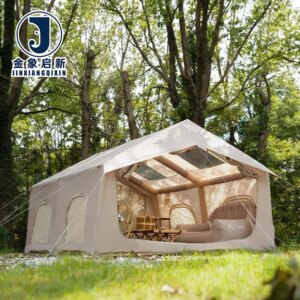
Camping Tent Inflatable UV Resistant Customizable Four-season Waterproof PVC Quick Automatic Opening 2-3 Person Outdoor
Read more -
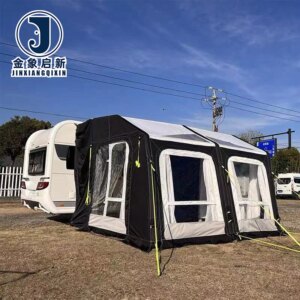
Outdoor Camping Inflatable Tent Luxury All-Season Use PVC Waterproof Quick Automatic Opening Rainproof Insulated
Read more