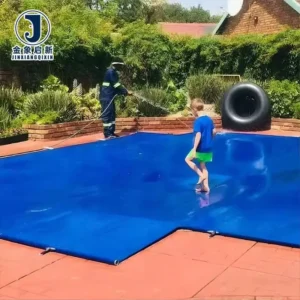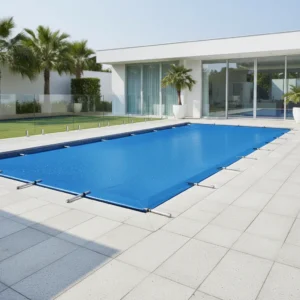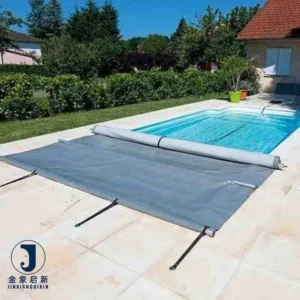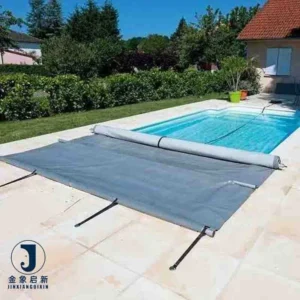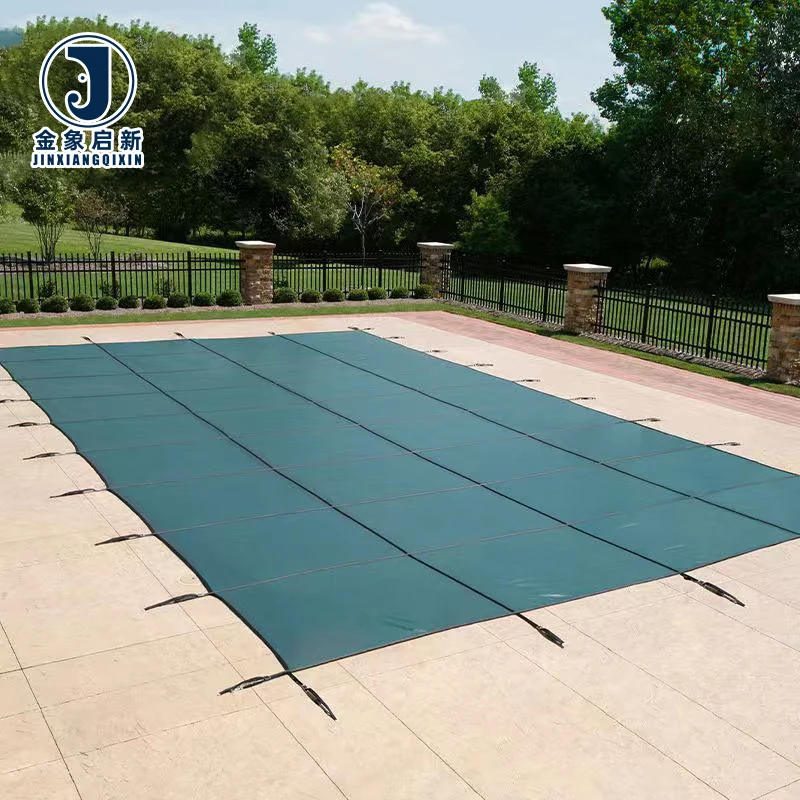
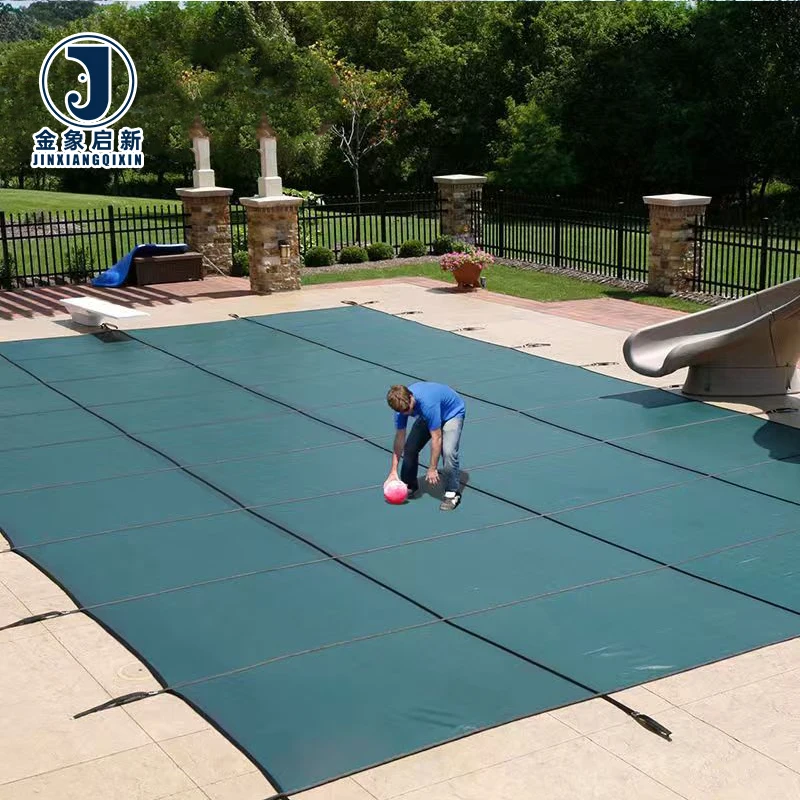
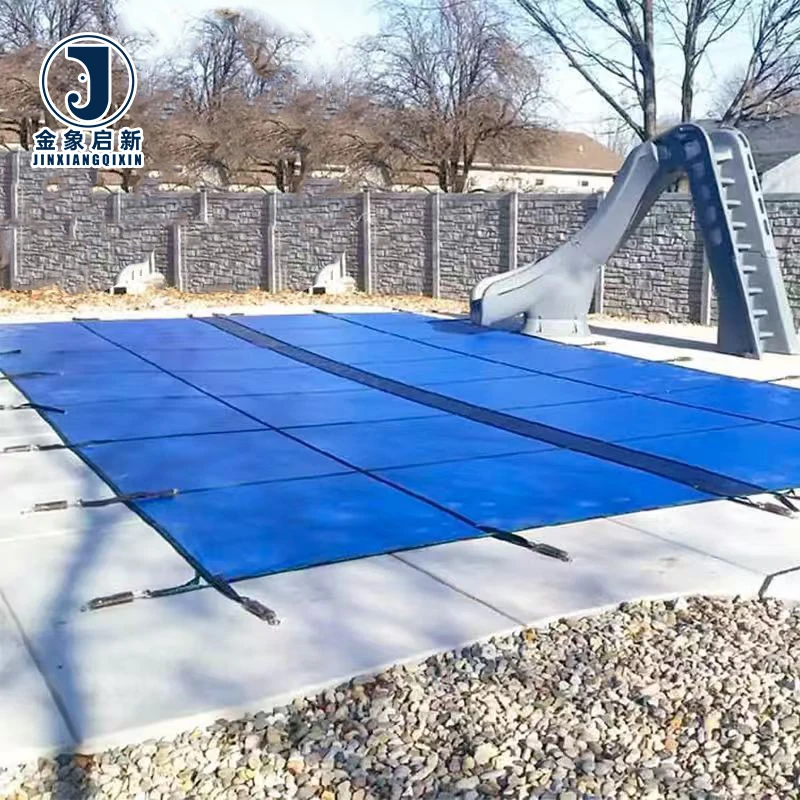
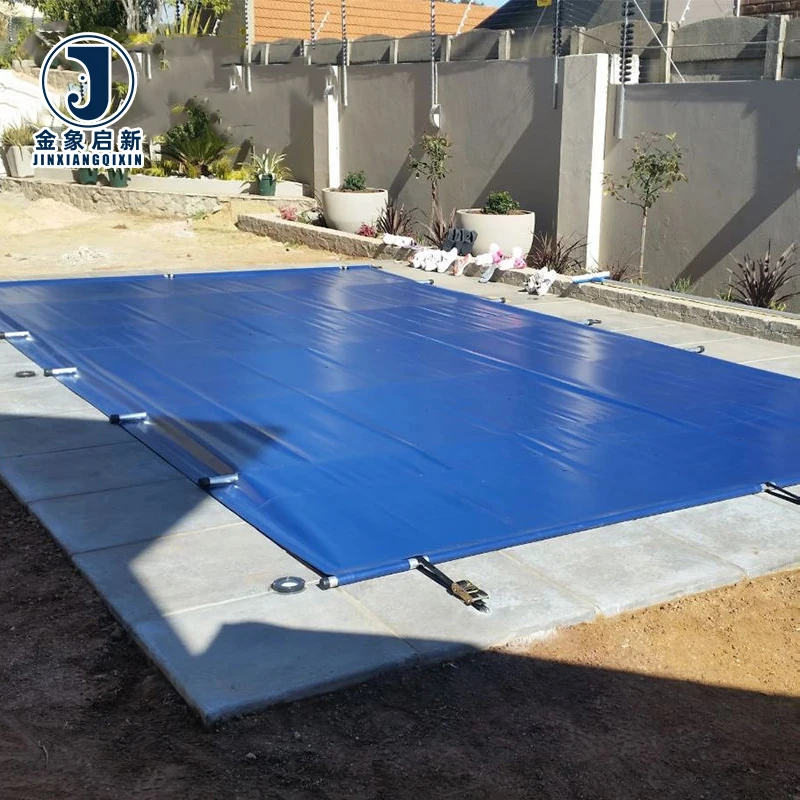
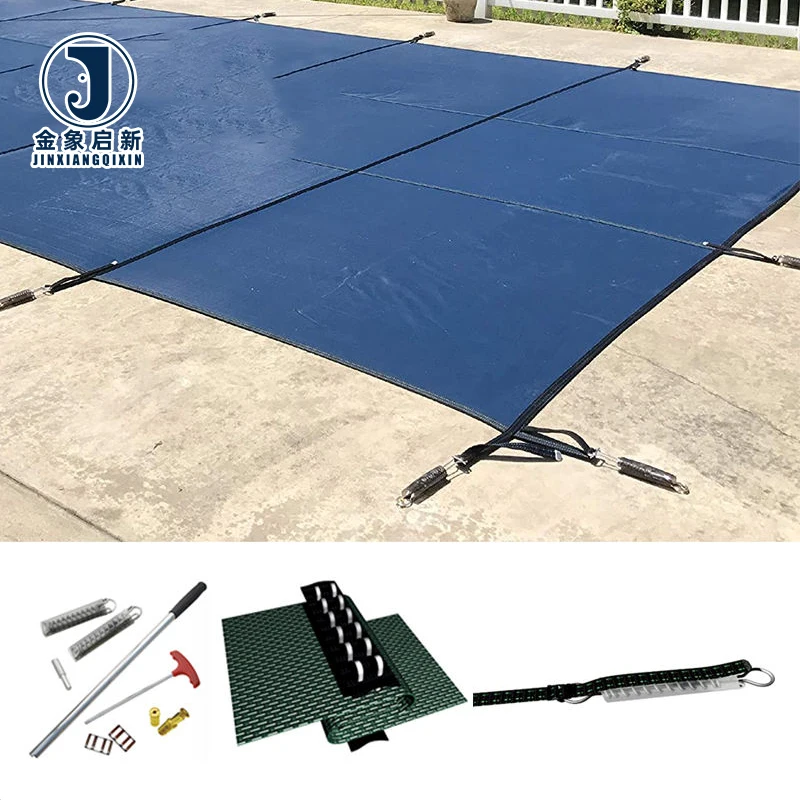
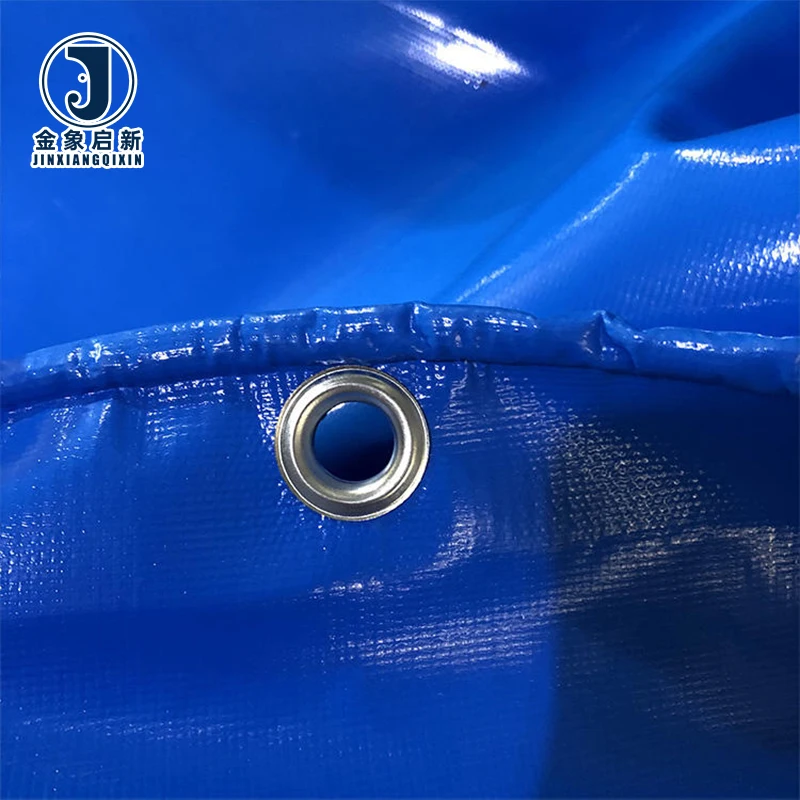
PVC Pool Cover 500gsm Blackout — complete engineered system with brass anchors, ratchet tensioning, and aluminium support poles.
Blackout PVC fabric blocks sunlight to suppress algae growth and reduce chemical use, while the six-point stainless steel attachment maintains safety load rating without damaging deck surfaces. Full hardware kit ships with the cover so fabric and fixings arrive matched and ready to install.
- Custom sized to pool dimensions and deck edge profile
- Manual or motorized winder operation available
- UV resistant, waterproof, and mildew proof for long-term outdoor exposure
Backed by nearly 30 years of coating process control and 100% pre-shipment inspection on every roll.
Description
Complete System Sourcing — Delivers engineered pool cover assemblies combining 500gsm blackout PVC fabric with matched hardware, eliminating multi-vendor fitment gaps and specification mismatches across the supply chain.
Technical Specifications
| Parameter | Value |
|---|---|
| Product Type | PVC Pool Cover |
| Material | PVC coated tarpaulin |
| Weight | 500gsm |
| Color | Blackout / Black |
| Hardware | Brass Anchor, Triangular Hook, Ratchet System, Aluminium Poles |
| Attachment Points | 6 points using self-sinking stainless steel connections |
| Operation | Manual or motorized winders |
| Key Features | Waterproof, UV resistant, tear resistant, mildew proof, anti-aging |
| Certification | ISO 9001, ISO 14001, ISO 45001, CE |
Application Suitability
| Application | Exposure & Requirement |
|---|---|
| Residential pool safety cover | Year-round UV exposure, standing water, snow load, child safety compliance |
| Commercial pool winter enclosure | Heavy debris accumulation, chemical splash, frequent deployment and retraction |
| Resort and hotel multi-pool systems | High-frequency operation, aesthetic consistency across units, staff-operated tensioning |
| New build pool construction integration | Deck anchor embedding during concrete pour, precise dimension coordination with contractor |
Why Sourcing Fabric and Hardware Separately Undermines Pool Cover Performance
A pool cover fails at the interface between fabric and hardware, not in the middle of the roll.
When buyers purchase PVC tarpaulin from one mill and brass anchors or ratchets from a general hardware trader, the attachment spacing, load distribution and edge reinforcement rarely align. I have inspected returned shipments where the grommet pitch did not match the anchor layout drilled into the deck, leaving the installer to improvise on site. The PVC pool cover aftermarket supplier who controls both fabric specification and hardware configuration eliminates this coordination gap entirely [NEED_CITE: field failure analysis of multi-source tarpaulin assemblies].
Single-Source Engineering Eliminates Deck-to-Fabric Misalignment
Sourcing the complete PVC pool cover system from one manufacturer means the attachment points are calculated against the actual fabric tensile behaviour under tension. The six-point stainless steel connection system is positioned where the 500gsm coated material can distribute load without tearing at the stress concentration point. When anchor spacing is designed independently of the fabric specification, localised overstress at the connection point becomes the most common failure origin [NEED_CITE: coated fabric stress concentration at mechanical fasteners].
Blackout Construction Reduces Ongoing Chemical and Maintenance Costs
The blackout PVC formulation blocks light transmission through the cover, directly limiting photosynthesis in the water below. Algae suppression reduces the chlorine or salt dosing required when the pool reopens, and the opaque surface prevents visible staining from organic debris settling on top. For commercial facilities managing multiple pools across a winter closure period, this translates into measurable reductions in chemical inventory and labour hours spent on spring recommissioning.
Hardware Compatibility with Existing Deck Materials
The brass anchor and aluminium pole system must interface with whatever deck substrate is already in place — poured concrete, pavers, natural stone or timber decking. Each substrate demands a different anchor embedment depth and pull-out resistance rating. Specifying the PVC pool cover aftermarket supplier who provides substrate-specific installation guidance prevents the common situation where anchors spin in soft paver bases or crack brittle concrete during tensioning.
Understanding How 500gsm Relates to Structural Performance
Weight alone does not define how a pool cover performs under load. The 500gsm figure represents the combined mass of the polyester base fabric and the PVC coating applied to both faces. What matters for snow load and debris accumulation is how that weight breaks down between base fabric denier, weave density and coating thickness. A 500gsm material built on a high-denier, open-weave base with thick coating will behave differently under point loads than one using a finer, tighter weave with thinner coating — even though both read 500gsm on the scale. The coating method also determines weld behaviour: knife-over-roll coating produces a more uniform film thickness suitable for consistent hot-air welding at the seam lines, while dip-coated variants may show thickness variation that complicates temperature settings on the welder [NEED_CITE: PVC coating weight measurement methods per ISO 3801].
The Cost of Underspecified Attachment Hardware
When hardware is sourced without reference to the specific fabric weight and pool dimensions, the consequences appear during the first winter storm. Undersized brass anchors pull through the deck under wind uplift. Aluminium poles that span too great a distance without intermediate support buckle under wet snow accumulation. Ratchet systems rated below the actual tension required to keep a large commercial pool cover taut simply strip their gears. These failures are not fabric defects — they are system integration failures that no amount of material testing on the roll would have predicted [NEED_CITE: wind uplift load calculations for horizontal membrane structures].
Why Buyers Consolidate Pool Cover Sourcing Here
The ten-person R&D team develops matched fabric and hardware configurations rather than treating the cover as a commodity tarpaulin cut to size. Three production lines with 36 sets of equipment handle both bulk roll stock and finished cover fabrication in the same facility, so colour consistency between replacement covers ordered seasons apart is maintained through batch record traceability. Dedicated QA inspection verifies GSM on every roll before it enters the fabrication stage — a control step that prevents the common complaint of covers arriving lighter than the quotation stated. Custom sizing is developed against actual pool dimension drawings, not generic size charts, and samples are produced within days for buyer approval before full production runs.
Documentation & Verification
- Material specification sheet stating 500gsm weight, base fabric construction and blackout coating formulation
- UV resistance and tensile strength test reports applicable to pool cover grade
- Pre-shipment GSM verification record per roll against quoted specification
- ISO 9001, ISO 14001, ISO 45001 and CE certificates covering production facility
- Hardware component list matched to pool dimensions with anchor embedment specifications
- Roll packing list and certificate of origin for import customs clearance
Fabrication, Handling & Storage
- Hot-air welding at calibrated temperature settings suited to 500gsm PVC coating thickness for seam integrity
- Stainless steel attachment points positioned at calculated intervals to distribute load across the blackout fabric
- Rolls stored vertically on pallets to prevent permanent creasing of the coated surface
- Motorized winder alignment checked against aluminium pole span to prevent uneven retraction stress
- Mild detergent cleaning only — solvent-based cleaners degrade the PVC coating plasticiser over time
What to Include in Your Pool Cover Enquiry
Provide the exact pool length, width and deck edge profile so the cover dimensions and anchor layout can be calculated against your specific geometry. Confirm whether the installation site has existing concrete, paver, timber or stone decking, as this determines the anchor type and embedment depth required. Specify whether you need manual crank operation or motorized winders, and indicate the quantity of covers if standardising across multiple pools at a single property or across a portfolio.
Frequently Asked Questions
Q: What pool measurements are required to quote a custom PVC pool cover?
A: We need the internal pool length and width, the deck width on all sides, and the deck material type. For irregular shapes, a dimensioned sketch or survey drawing ensures the cover overlaps correctly and anchor positions align with structural concrete rather than decorative paver edges.
Q: Can the 500gsm cover support snow load and debris accumulation?
A: The aluminium pole span and spacing are calculated against your pool width to provide structural support under anticipated loads. Confirm your local snow load requirement and typical debris volume so the pole configuration and ratchet tension range can be specified accordingly.
Q: How are brass anchors installed in an existing concrete deck?
A: Anchors are set into drilled holes using marine-grade epoxy or mechanical expansion sleeves depending on concrete condition. We provide embedment depth and pull-out rating data matched to the anchor model so your installer can verify suitability against the actual deck thickness and reinforcement.
Q: Is the cover available with motorized operation?
A: Both manual crank and motorized winder options are available. Motorized systems require power access at the pool edge and are specified based on cover weight and roll diameter. Confirm your preference at enquiry stage so the hardware kit includes the correct drive mechanism.
Related products
-
Custom PVC Pool Cover for In-ground Winter Safety – Manufacturer
Read more -
Custom PVC Pool Cover for Inground Pools – Full Range
Read more -
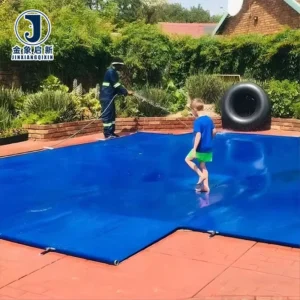
Custom PVC Pool Cover Tarpaulin – Waterproof Anti-UV
Read more -
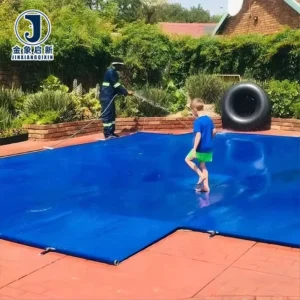
PVC Laminated Waterproof Breathable Anti-UV Blackout Organic Plain Weft Swimming Pool Covers Tarpaulin Coated
¥1.78 Select options This product has multiple variants. The options may be chosen on the product page