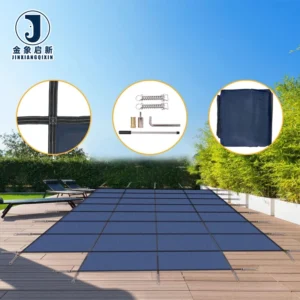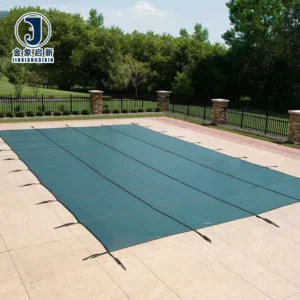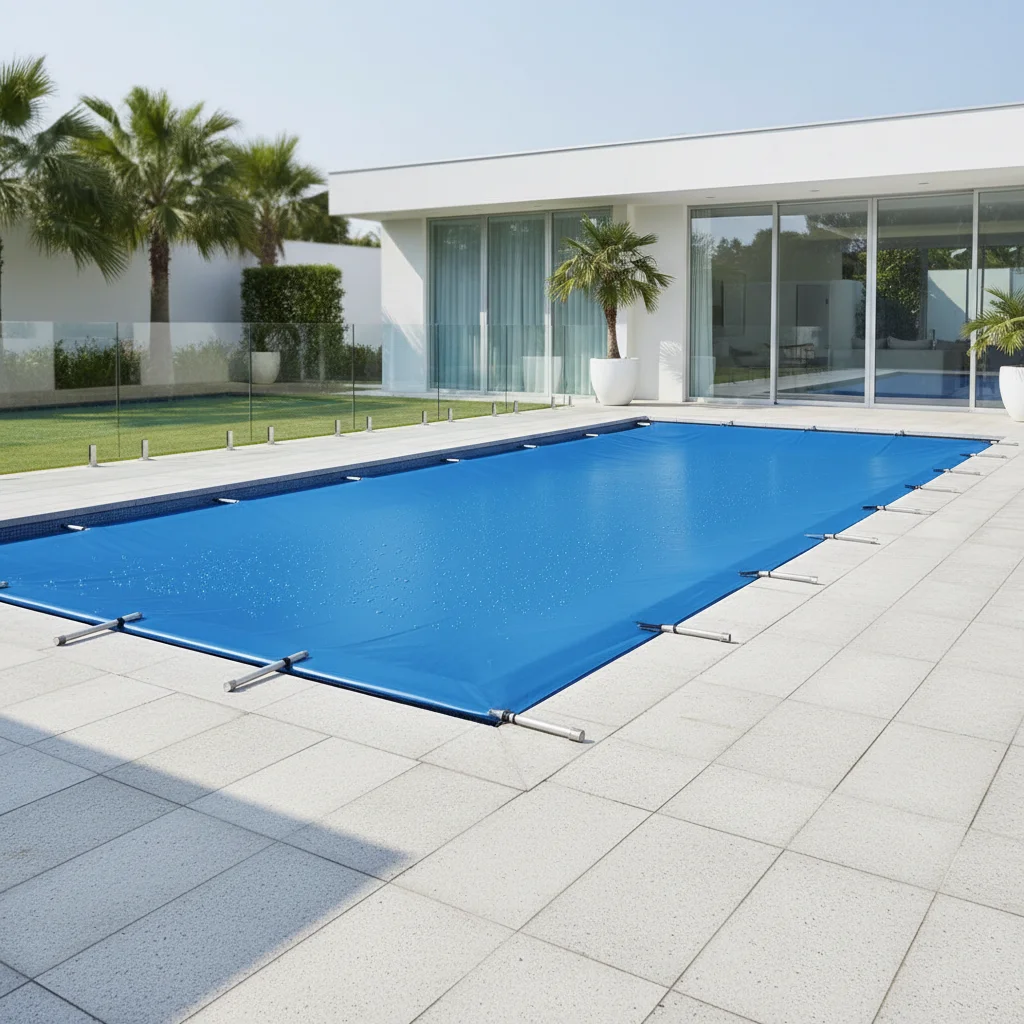
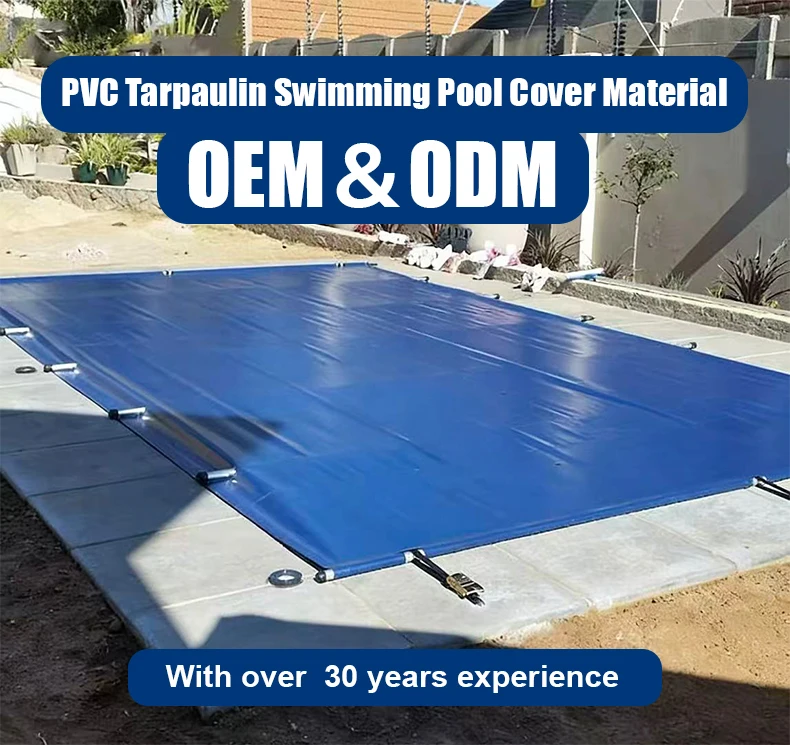
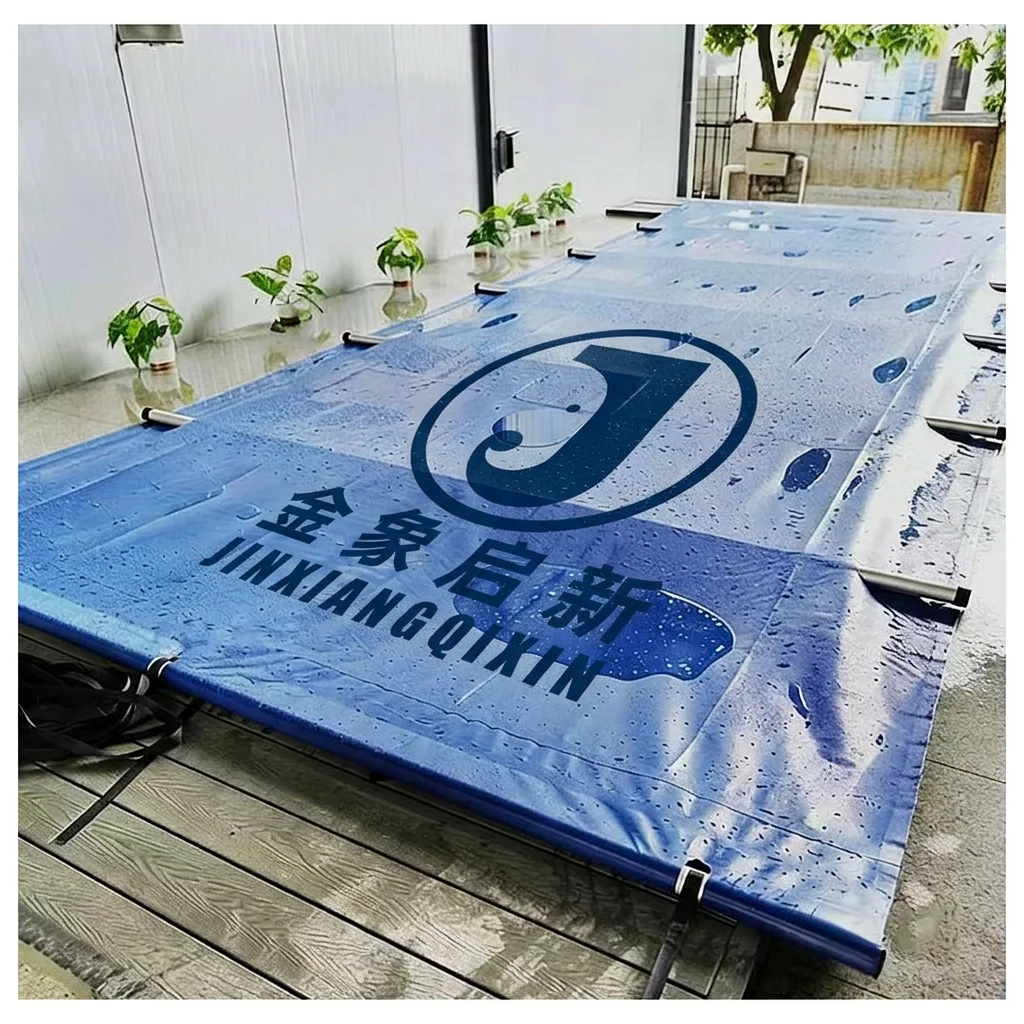
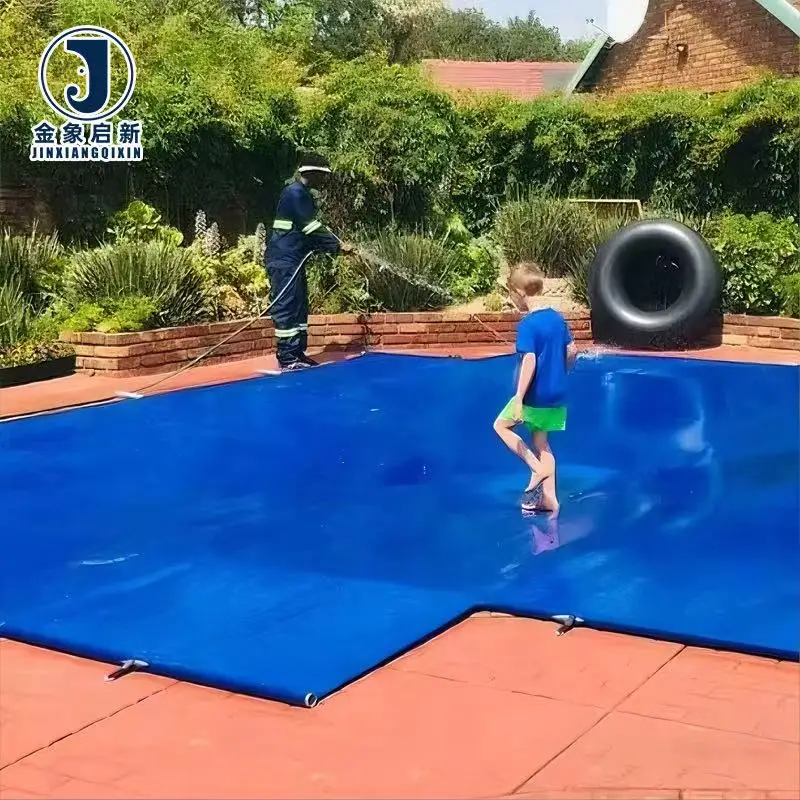
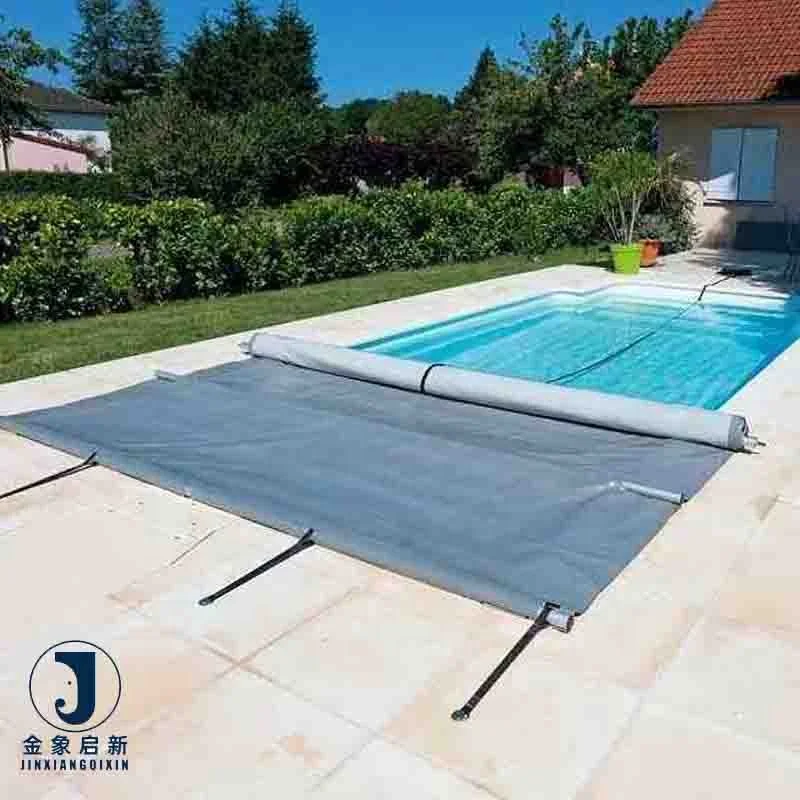
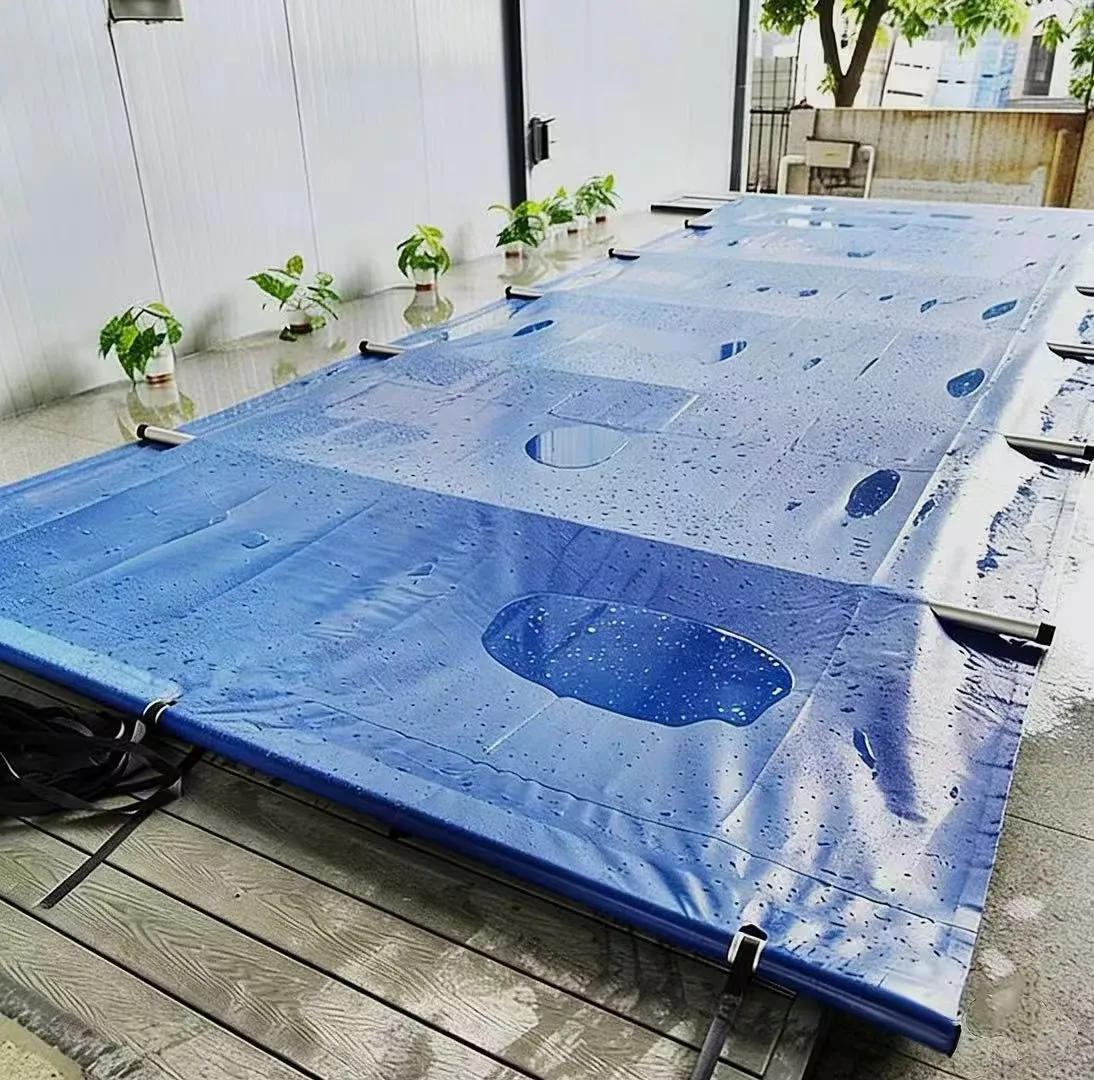
Three full production lines and 36 sets of equipment ensure your roll stock ships on schedule, whether you order a single trial roll or a full container load.
Description
Deep Process Control Over Coating Weight — Every roll of PVC pool cover tarpaulin is weighed and verified against the stated GSM before it leaves the production line, ensuring the material you receive matches the specification on your purchase order.
Technical Specifications
| Parameter | Value |
|---|---|
| Product Type | PVC Coated Tarpaulin |
| Material | PVC + High-strength polyester mesh fabric |
| Weight Options | 350gsm / 420gsm / 500gsm / 550gsm / 600gsm / 750gsm |
| Thickness Options | 0.32mm / 0.35mm / 0.4mm / 0.45mm / 0.5mm / 0.65mm |
| Roll Size | 2m width × 75m length / 2.1m width × 50m length |
| Color | Blue / Red / Yellow / Light Blue / Grey (Customizable) |
| Coating Technology | Laminated & Hot-melt Coating |
| Special Treatment Available | Flame retardant / Anti-static / Anti-cold / Anti-mildew — confirm the grade required for your market |
| Key Features | Cold crack resistance, anti-mildew, waterproof, sunproof, high tearing strength for welding, good color fastness |
| Standards | ISO / CE |
Application Suitability
| Application | Exposure & Requirement |
|---|---|
| Residential swimming pool covers | Continuous UV and water exposure, debris loading, chemical contact from pool treatment agents |
| Commercial and public pool covers | Heavy daily handling, frequent rolling and unrolling, compliance with local safety and fire codes |
| Fish tank and aquaculture covers | Permanent moisture contact, anti-mildew performance, resistance to algae and biological growth |
| Tent and awning fabrication | Tension loading, wind uplift, repeated folding, colour consistency across multiple panels |
| Cargo ship and truck awnings | Road salt, diesel fumes, abrasion at tie-down points, flex cracking at seams |
Why GSM Verification Matters More Than the Number on the Quote
When sourcing PVC pool cover tarpaulin for a full container load, the gap between quoted weight and delivered weight is where most supply failures begin. The only way to close that gap is 100% roll-by-roll weight verification before dispatch.
A shipment I tracked a few years back involved a batch of heavy-grade coated fabric destined for pool covers. The buyer specified a particular weight, but the rolls that arrived came in significantly lighter across the board. The entire container was rejected. The root cause was not a material failure — it was a process failure. The coating line had drifted, and nobody caught it before the rolls were packed. Since then, every roll on the line I oversee gets weighed individually, and the readings are logged against the order specification before any roll is cleared for shipment [NEED_CITE: coating weight verification methods for PVC tarpaulin per ISO standards]. A few grams of shortfall per square metre may look trivial on paper, but across a full container it adds up to missing material that the buyer has already paid for.
Coating Adhesion and the Hot-Melt Advantage
The PVC pool cover tarpaulin range uses both laminated and hot-melt coating technology. Hot-melt coating forces the PVC compound into the weave of the polyester mesh under heat and pressure, creating a bond that resists delamination even when the fabric is repeatedly folded or exposed to pool chemicals. Laminated construction layers the PVC film onto the base fabric, offering a smooth surface that sheds water and resists algae build-up. The choice between the two depends on your fabrication method and the end-use environment.
Colour Matching Across a Multi-Roll Order
Pool cover panels installed side by side must read as one continuous surface. When rolls in the same batch drift in shade, the seams become visible lines across the finished cover. Our PVC compound is mixed per order using controlled pigment ratios, and each roll is compared against the master colour standard under standardised lighting before it is approved for packing. This discipline is what keeps a twenty-roll order looking uniform once the fabricator lays the panels out on the pool deck [NEED_CITE: colour fastness testing for PVC coated fabrics under UV exposure].
Reading the Specification Sheet Correctly
Weight and thickness are linked but not interchangeable. A 550gsm fabric at 0.45mm thickness tells you the coating is dense relative to the base fabric, which generally means better waterproofing and chemical resistance. A 750gsm option at 0.65mm adds both coating mass and base fabric density, giving higher tensile and tear values suited to commercial pool covers that face daily handling and wind loading. The polyester mesh denier and weave count underneath the coating determine how the fabric resists tear propagation — a factor that matters more at the welded seams where the cover is anchored to the pool surround. Coating technology also plays a role: hot-melt coated fabric typically delivers stronger peel adhesion at the weld line, while laminated fabric offers a cleaner cut edge for high-frequency welding.
What Happens When the Spec Is Wrong
I have seen heavy-grade coated rolls fail at the weld line because the coating formulation was too stiff for the welding temperature the fabricator was using. The seam peeled apart before the fabric itself showed any sign of wear. Mismatched coating weight and welding parameters is one of the most common reasons pool covers fail in their first season. Colour inconsistency across a batch forces the fabricator to either reject rolls or install mismatched panels, both of which cost more than getting the specification right at the ordering stage [NEED_CITE: common causes of PVC tarpaulin weld failure in field applications]. Choosing a lighter weight than the application demands leads to premature cracking at fold lines, especially in cold weather where the PVC compound loses flexibility.
Why Source PVC Pool Cover Fabric Here
Three full production lines and 36 sets of professional equipment support bulk roll output with consistent coating quality across every batch. A 10-person R&D team handles custom colour matching, width adjustments, and sample development, typically turning around sample rolls within days so you can test weld parameters before committing to a full order. Dedicated QA and QC staff inspect every production stage, and a 100% pre-shipment inspection means the packing list you receive matches the rolls in the container. Deep process control over coating weight and adhesion has been refined over decades of focused production on coated fabric. ISO and CE certified systems underpin the entire workflow, and documentation packages travel with every shipment.
Documentation & Verification
- Material specification sheet stating GSM, base fabric denier, coating weight, and colour reference per roll
- UV and flame retardant test reports provided for grades where applicable
- Pre-shipment inspection record with individual roll weight readings logged
- Roll packing list with batch numbers for full traceability back to the coating line
- Certificate of origin and customs documentation prepared per destination market
Fabrication, Handling & Storage
- Hot-melt coated rolls accept high-frequency welding; adjust dwell time to coating thickness for clean peel-free seams
- Laminated PVC pool cover tarpaulin cuts cleanly on automated tables; seal edges to prevent moisture ingress at the mesh
- Store rolls upright on pallets in a shaded, ventilated area to avoid flat-spotting and surface blocking between layers
- In cold weather, allow rolls to acclimatise before unrolling to prevent crease cracking in anti-cold treated grades
- Clean finished covers with mild detergent only; avoid solvent-based cleaners that attack the plasticiser in the PVC coating
What to Include in Your Inquiry
Send us the pool dimensions or the roll width and length you need, along with your target GSM and any colour or printing requirements. If your market requires flame retardant or anti-static certification, specify the standard your local authority demands so we can match the treatment grade. Let us know whether you need roll stock for your own fabrication line or finished covers with reinforcement and eyelets, and we will prepare samples and a quotation with lead time.
Frequently Asked Questions
Q: How do I verify the GSM of the PVC pool cover tarpaulin I receive matches what was quoted?
A: Every roll is weighed on calibrated scales during pre-shipment inspection, and the readings are recorded against the order specification. You receive an inspection record showing the actual weight per roll alongside your packing list, so you can cross-check on arrival without needing your own test equipment.
Q: Can I order custom widths and colours, and what are the minimums?
A: Custom widths and colours are available across the PVC pool cover tarpaulin range. Our R&D team develops sample rolls within days for your approval before bulk production begins. Minimum order quantities vary by specification, so share your target dimensions and annual volume for a precise quotation.
Q: Are UV and flame retardant treatments supported by test certificates?
A: Where flame retardant or UV treatment is specified, we supply test reports confirming the grade achieved. Because requirements differ by market, confirm the standard your local authority or project specification demands so we can align the treatment and documentation accordingly.
Q: What is the difference between laminated and hot-melt coated PVC tarpaulin?
A: Laminated construction bonds a PVC film layer to the polyester mesh, producing a smooth surface suited to clean cutting and printing. Hot-melt coating forces PVC compound into the mesh weave under heat, delivering stronger peel adhesion at welded seams — important for pool covers under constant tension.
Q: How do you ensure colour consistency across multiple rolls in one order?
A: PVC compound is mixed per order using controlled pigment ratios. Each roll is checked against the master colour standard under standardised lighting before packing. This process keeps shade variation within tight limits across an entire container load.
Related products
-
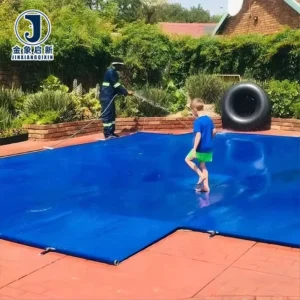
PVC Laminated Waterproof Breathable Anti-UV Blackout Organic Plain Weft Swimming Pool Covers Tarpaulin Coated
¥1.78 Select options This product has multiple variants. The options may be chosen on the product page -
JX PVC Laminated Waterproof Breathable Anti-UV Blackout Organic Plain Weft Swimming Pool Covers Tarpaulin Coated
¥1.78 Select options This product has multiple variants. The options may be chosen on the product page -
PVC Laminated Waterproof Breathable Anti-UV Blackout Organic Plain Weft Swimming Pool Covers Tarpaulin Coated
¥1.78 Select options This product has multiple variants. The options may be chosen on the product page -
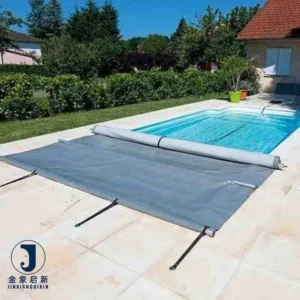
Custom PVC Pool Cover Tarpaulin for Pools – Manufacturer
Read more