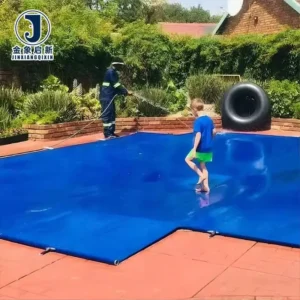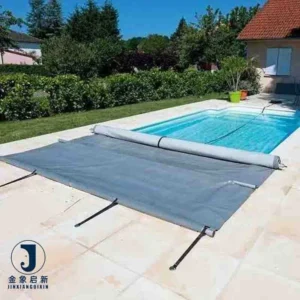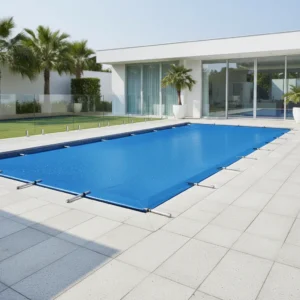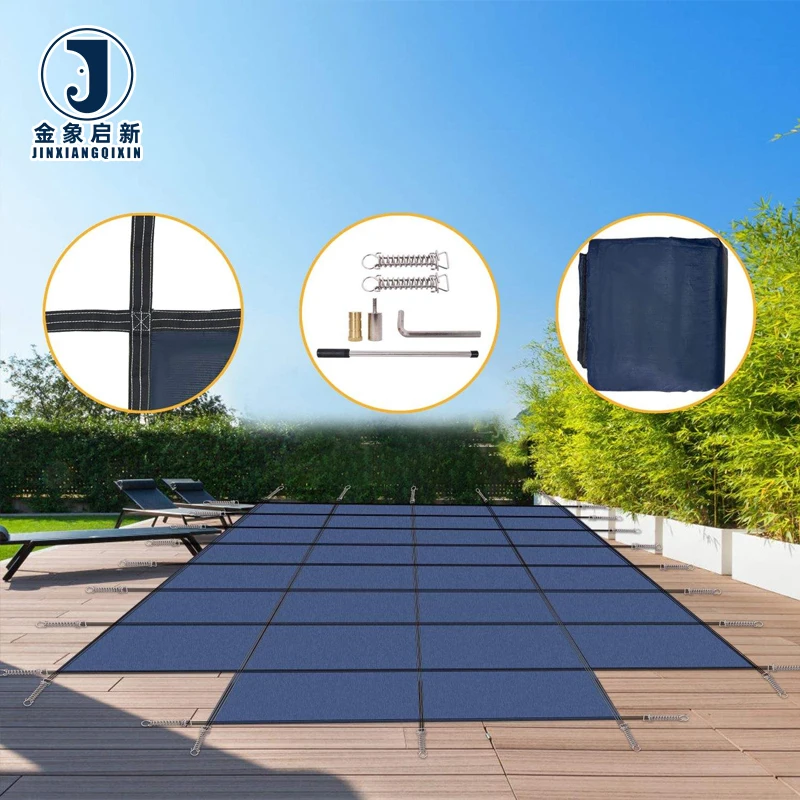
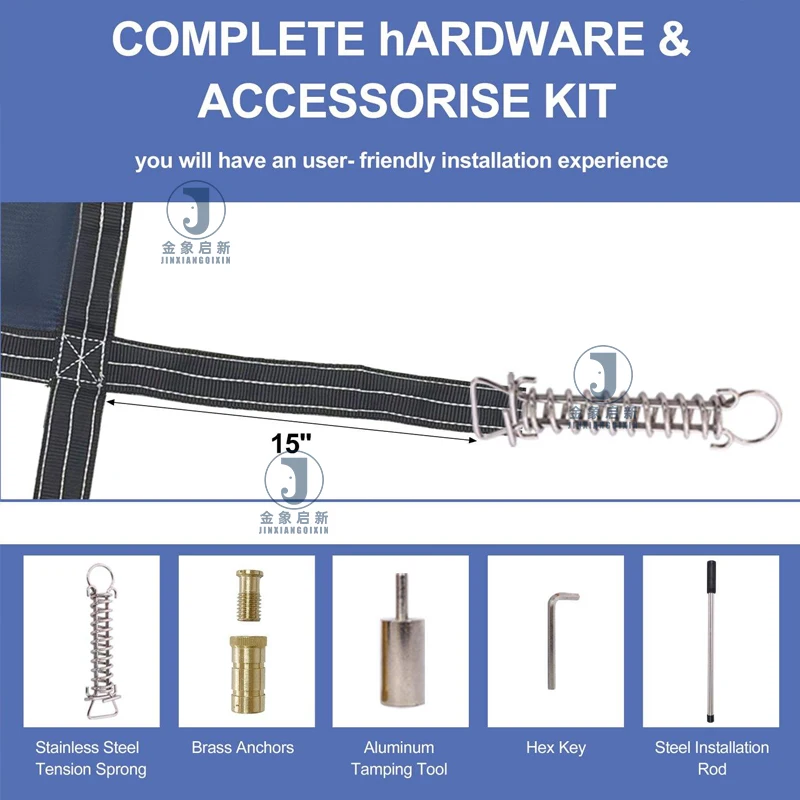
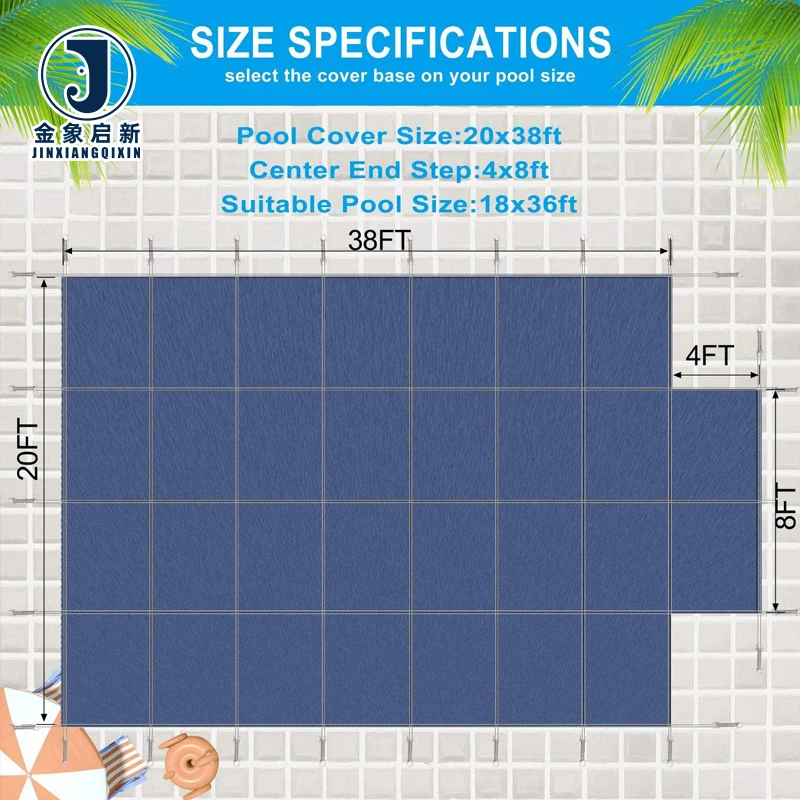
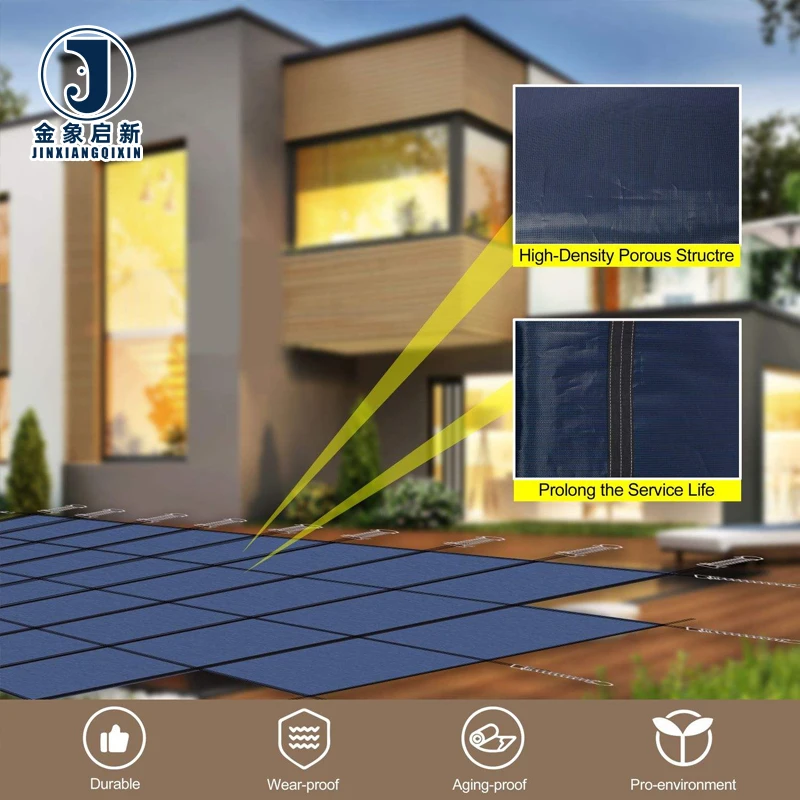
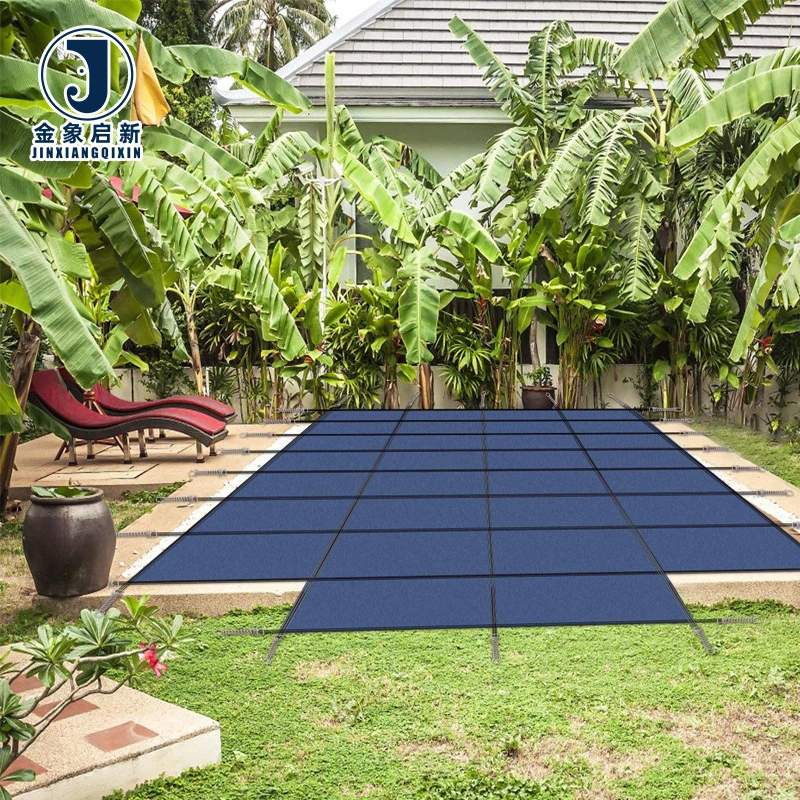
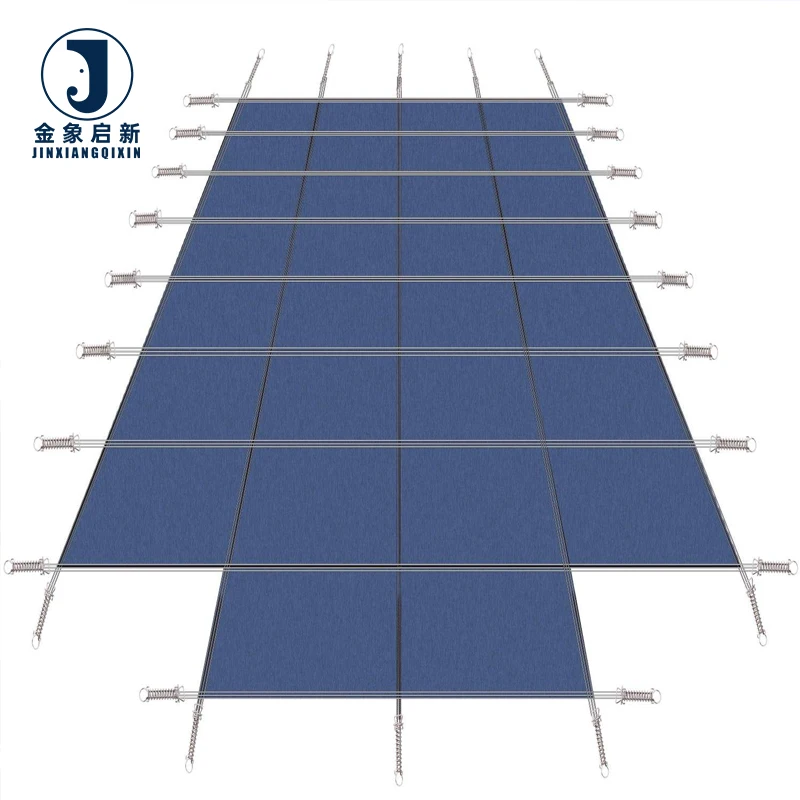
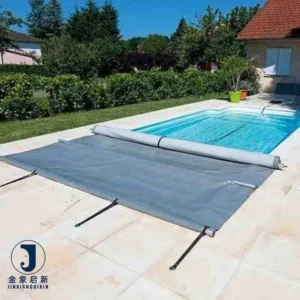
PVC Pool Cover Rectangular Inground, 350–750 GSM, PVC + High-Strength Polyester Mesh — hot-melt coated and laminated for superior peel strength and reliable heat-welded seams. Available in 2m×75m and 2.1m×50m rolls with cold crack resistance, anti-mildew and anti-UV treatment verified by test documentation.
- Custom width, colour and finished size developed within days
- 100% pre-shipment inspection with material spec sheet and roll packing list for every order
Description
Verified Coating Weight — every roll of PVC pool cover fabric leaves our facility with GSM matching the specification sheet, backed by in-process coating control across three full production lines.
Technical Specifications
| Parameter | Value |
|---|---|
| Product Type | PVC Pool Cover |
| Material | PVC + High-strength polyester mesh fabric |
| Coating Technology | Laminated & Hot-melt Coating |
| Weight Options | 350gsm / 420gsm / 500gsm / 550gsm / 600gsm / 750gsm |
| Thickness Options | 0.32mm / 0.35mm / 0.4mm / 0.45mm / 0.5mm / 0.65mm |
| Roll Size | 2m × 75m / 2.1m × 50m |
| Finished Product Size | Customized or sold by inventory |
| Color Options | Blue / Red / Yellow / Light blue / Grey (Customized) |
| Key Features | Cold Crack Resistance, Anti-Mildew, Anti-Static, Waterproof, UV Resistant, Flame Retardant (optional) |
| Service Life | 3-7 years under normal conditions |
| Standards | ISO, CE |
Application Suitability
| Application | Exposure & Requirement |
|---|---|
| Inground pool winter safety cover | Snow load, standing water, UV exposure, anchor point tension at corners and straps |
| Garden and hotel pool cover | Frequent removal and reinstallation, chlorinated water splash, fold creasing |
| Pond and reservoir liner | Permanent water immersion, soil chemistry, puncture risk from substrate |
| Fish tank cover | Humidity, condensation, light block requirement, chemical resistance to water treatments |
| Tarpaulin distributor roll stock | Batch colour consistency across rolls, weld strength for local fabrication into finished covers |
Why Stated GSM Is Not the Whole Story for PVC Pool Cover Fabric
Coating adhesion and base fabric denier determine real-world performance far more than weight alone.
When buyers specify a PVC pool cover aftermarket supplier, the conversation often stops at grams per square metre. A heavier number feels safer. Yet two rolls at identical GSM can perform completely differently if the base polyester mesh has a loose weave or if the hot-melt coating fails to penetrate the yarn interstices. The result is delamination under tension, typically showing up at the anchor points where the cover is strapped down [NEED_CITE: tensile and tear test methods for coated fabrics per ISO 1421]. We have seen installations where the fabric itself held, but the coating separated from the mesh at the hem line, leaving the structural layer exposed to water ingress and UV degradation.
Full Custom Capability From Design Through Dispatch
Sourcing PVC pool cover material means balancing colour consistency, weight verification, and fabrication requirements in one shipment. Our ten-person R&D team develops sample swatches within days, allowing you to confirm hand feel, weld behaviour, and colour accuracy before committing to bulk production. This is critical for distributors who fabricate finished covers locally and need roll-to-roll consistency across a container load.
What Custom Sizing Actually Requires on the Production Floor
Custom width and length runs demand more than just adjusting the slitting machine. The coating line speed, oven temperature, and tension control must all be recalibrated to maintain uniform GSM across non-standard widths [NEED_CITE: coating weight uniformity across variable web widths]. When a buyer orders a specific colour for a hotel pool project, the pigment batch must be mixed in a single run to avoid shade variation between rolls — a defect that only becomes visible once the covers are installed side by side on site.
Reading the Specification Sheet Beyond the Weight Column
The relationship between GSM and actual strength is governed by the polyester base fabric denier and weave density. A 500gsm fabric with a high-denier, tight-weave base will outperform a 600gsm fabric built on a loose mesh because the yarn structure resists tear propagation more effectively. Hot-melt coating technology creates a mechanical bond that penetrates the mesh, delivering higher peel strength than simple laminated constructions. This matters directly for pool safety covers where welded seams carry the load at strap attachment points. Available flame retardant grades should be confirmed against the test standard required by your local jurisdiction — specify the grade needed for your market before production begins. Cold crack resistance ensures the PVC remains flexible when winter temperatures drop, preventing brittle fractures at fold lines.
The Hidden Cost of Specifying on Weight Alone
Choosing a PVC pool cover aftermarket supplier based purely on the lowest GSM that meets the minimum threshold leads to predictable failures. Covers that are under-coated on one side develop pinholes that allow water through to the pool during winter, defeating the purpose of the cover entirely. Batch colour inconsistency across a multi-roll order forces the distributor to sort and match rolls manually, delaying installation schedules and generating waste. Weld seams on lightweight stock fail before the fabric body does, because there is insufficient coating material to form a strong thermal bond [NEED_CITE: peel strength requirements for heat-welded PVC tarpaulin seams]. These are not manufacturing defects — they are specification errors that only surface in the field.
Why Buyers Source Pool Cover Fabric Through This Facility
Deep process control over coating weight and adhesion means the GSM on the quotation matches the GSM on the pre-shipment inspection record. Three full production lines with dedicated equipment allow bulk roll stock orders to run without competing for capacity with other product families. The in-house R&D team handles pattern printing, custom sizing, and sample development, reducing the lead time from initial inquiry to approved sample. QA checkpoints at every production stage catch coating weight deviations before they reach the slitting line. A dedicated documentation package travels with every shipment, giving the buyer full traceability from raw material to finished roll.
Documentation & Verification
- Material specification sheet listing exact GSM, base fabric construction, and coating type for each roll
- UV and flame retardant test reports matched to the specific production batch
- Pre-shipment inspection record confirming weight and colour against approved sample
- Roll packing list with individual roll weights and dimensions for warehouse receiving
- Certificate of origin and customs documentation for cross-border shipment
Fabrication, Handling & Storage
- Hot-melt coated PVC requires weld temperature profiling per GSM grade to prevent seam delamination
- Reinforced hems on 550gsm and above grades distribute anchor strap tension across multiple yarn rows
- Store rolls upright on pallets to prevent flat-spot deformation on the coating surface
- Unroll laminated fabric at ambient temperature to avoid cracking the PVC layer in cold conditions
- Clean with mild detergent only; solvents will attack the plasticiser in the PVC coating
- Cut pieces should be welded within days of cutting to prevent edge curl on the mesh base
Requesting a Specification That Fits Your Project
Provide your pool dimensions, anchor system type, and the environmental conditions the cover will face — including typical winter temperature range and UV exposure level. If your market requires a specific flame retardant classification, state the standard and grade so we can match the formulation. Confirm whether you need finished cut-to-size covers with welded hems and eyelets, or roll stock for local fabrication.
Frequently Asked Questions
Q: How do you verify GSM matches the quoted specification?
A: Every production run includes in-process coating weight checks at multiple points across the web width. The pre-shipment inspection record documents the actual measured GSM for each roll, compared against the value stated on the material specification sheet. Rolls that fall outside the agreed tolerance are held before dispatch.
Q: Can you supply test reports for UV resistance and flame retardancy?
A: Yes. When UV or flame retardant treatment is specified, third-party test reports are generated for the production batch and included in the shipment documentation package. We match the report to the specific formulation used, not a generic datasheet.
Q: What is the sample development process for a custom pool cover specification?
A: Submit your target GSM, colour reference, and treatment requirements. The R&D team produces sample swatches for approval before bulk production begins. This allows you to verify hand feel, weld compatibility, and colour accuracy on your fabrication equipment.
Q: Do you supply finished cut-to-size covers or roll stock only?
A: Both. We produce roll stock in standard widths for distributors who fabricate locally, and we also deliver finished covers cut to project dimensions with welded hems, reinforcement patches, and hardware installed per your drawing.
Q: How do you handle colour consistency across a multi-roll order?
A: Pigment batches are mixed in a single run for the entire order volume. Rolls are produced sequentially on the same coating line without interruption, and the QA team checks colour against the approved reference swatch at each roll change before packing.
Related products
-
JX PVC Tarpaulin Swimming Pool Cover Material Knife Coated Fabric Waterproof UV-Resistant Windproof
¥13.00 Select options This product has multiple variants. The options may be chosen on the product page -
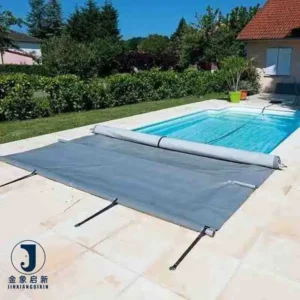
JX PVC Tarpaulin Swimming Pool Cover Material Knife Coated Fabric Waterproof UV-Resistant Windproof
¥13.00 Select options This product has multiple variants. The options may be chosen on the product page -
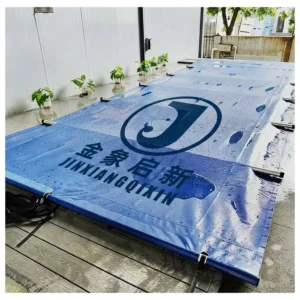
JX PVC Tarpaulin Swimming Pool Cover Material Knife Coated Fabric Waterproof UV-Resistant Windproof
¥13.00 Select options This product has multiple variants. The options may be chosen on the product page -
Custom PVC Pool Cover Tarpaulin for Pools – Manufacturer
Read more