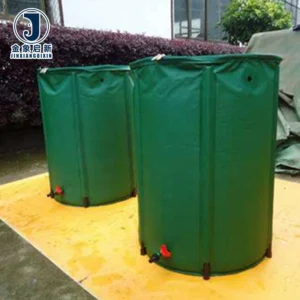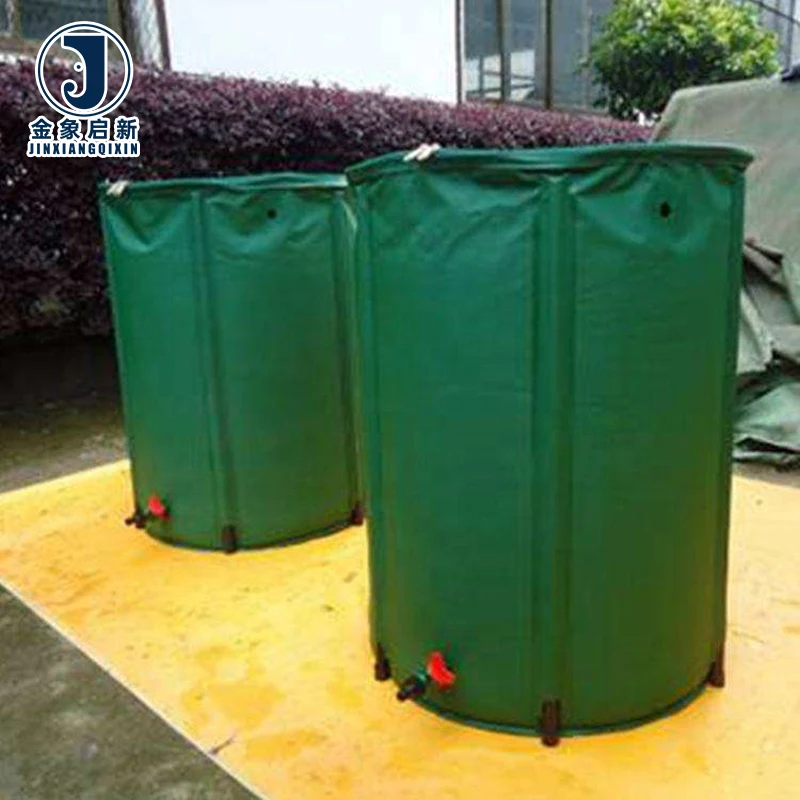
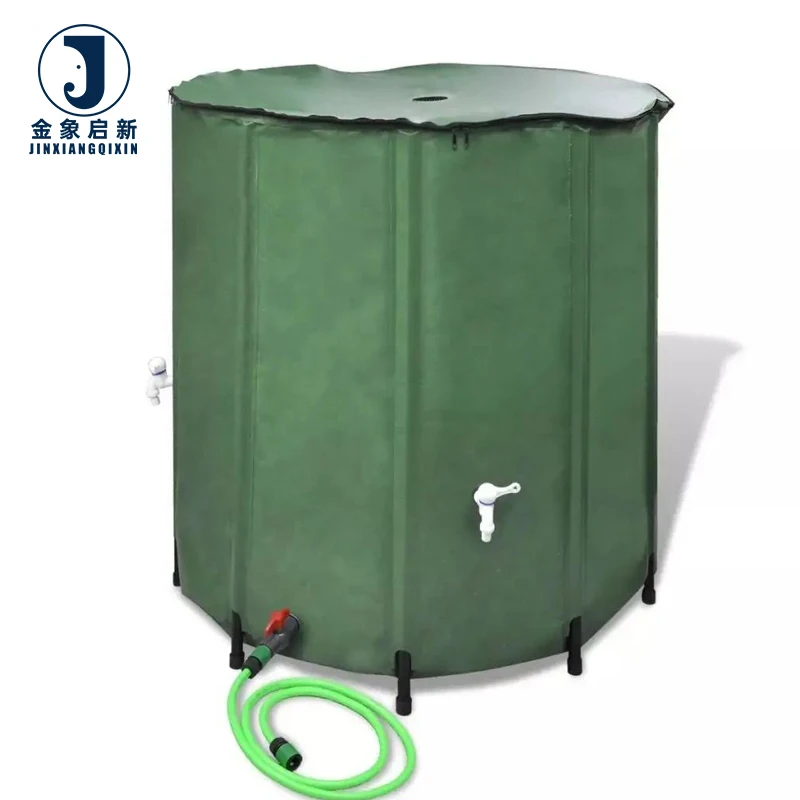
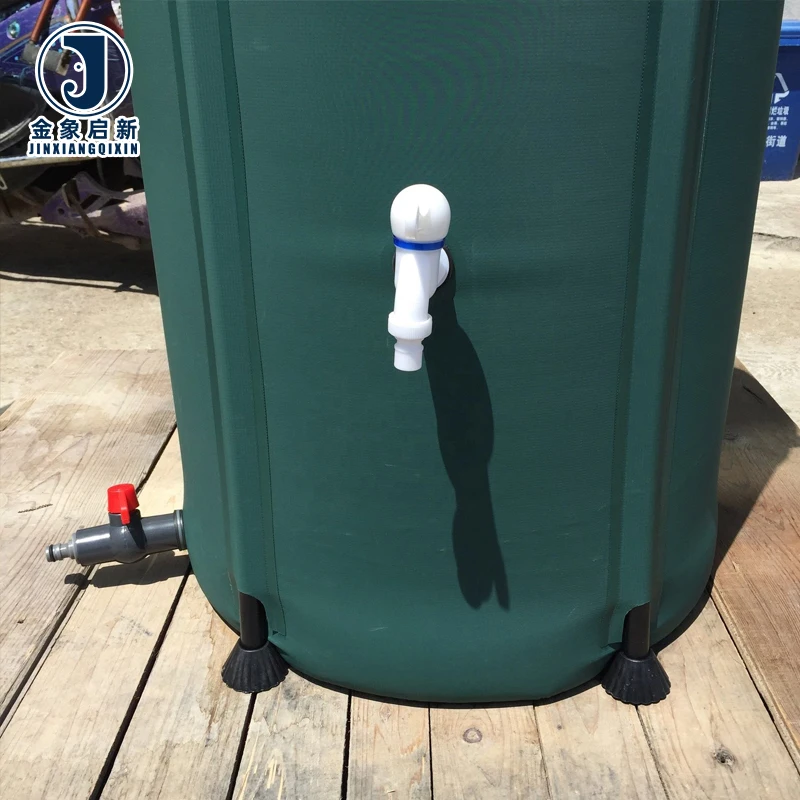
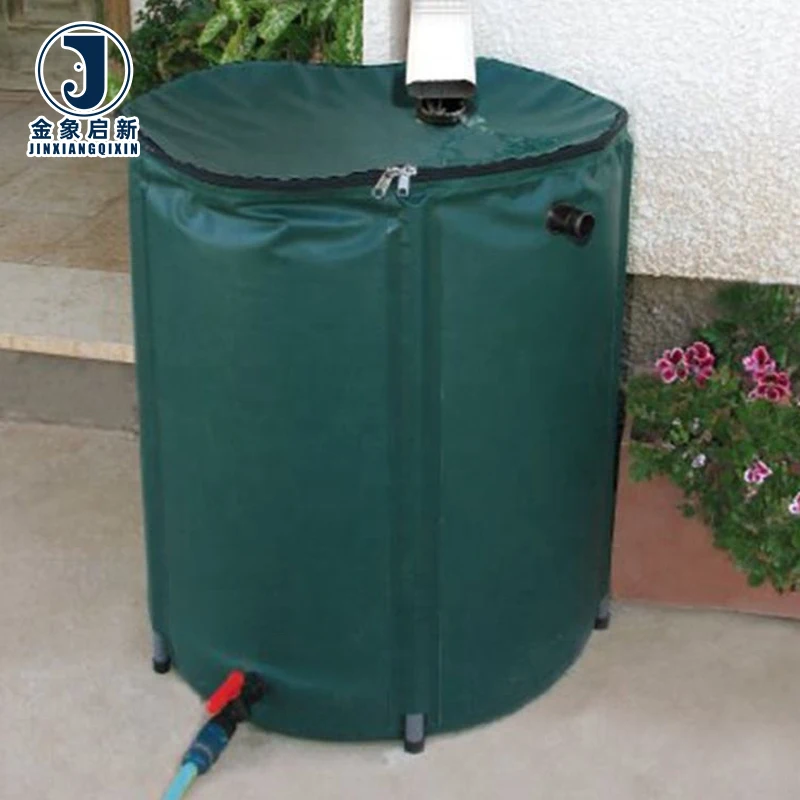
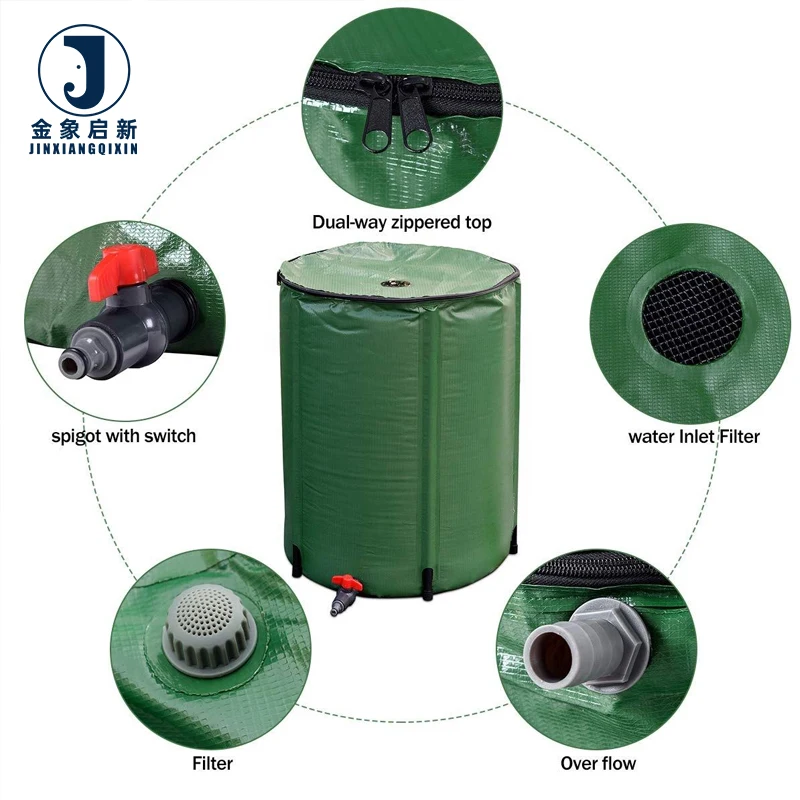
Flexible Collapsible PVC Tarpaulin Rain Water Storage Tank 750L, Waterproof & UV-Resistant — collapsible design with heat-welded seams and reinforced tie-down eyelets for reliable outdoor water containment.
- Engineered base fabric denier and PVC coating weight resist hydrostatic pressure at seams and flex points
- Anti-UV and mildew-proof treatment verified on production samples for long-term sun exposure
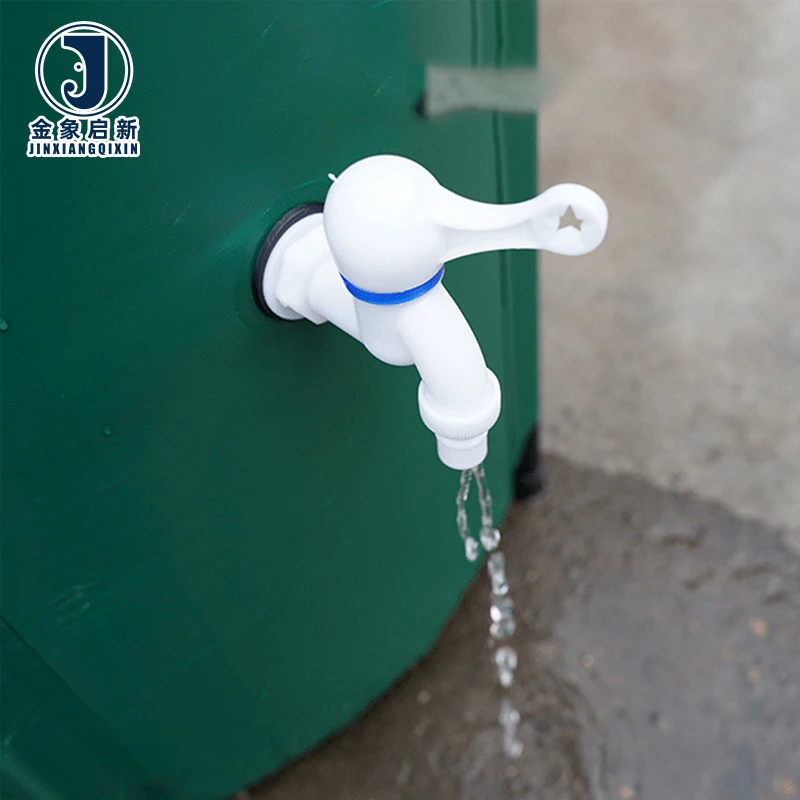
- Custom port placement, sizing, and fitting configuration available per project
Backed by 30 years of coated fabric process control, dedicated QA at every production stage, and a 10-person R&D team handling full customization from sample to bulk dispatch.
Description
Process Control Over Coated Fabric — Nearly 30 years focused on PVC tarpaulin manufacturing, with dedicated QA/QC at every production stage applied to flexible water storage bladder fabrication, ensuring weld integrity and coating adhesion from raw material to finished tank.
Technical Specifications
| Parameter | Value |
|---|---|
| Product Type | PVC Tarpaulin Water Storage Tank |
| Capacity | 750L |
| Material | PVC Coated Tarpaulin |
| Form Factor | Flexible, Collapsible |
| Key Features | Waterproof, UV-Resistant (test basis not stated), Mildew-Proof |
Application Suitability
| Application | Exposure & Requirement |
|---|---|
| Garden Rainwater Harvesting & Irrigation | Continuous outdoor sun exposure, seasonal temperature fluctuation, UV and mildew resistance required for long-term water contact |
| Hydroponic Water Reservoir | Indoor or greenhouse environment, clean water containment, chemical exposure from nutrient solutions |
| Outdoor Portable Water Storage | Physical handling, transport flexing, field deployment and collapse, abrasion from ground contact |
| Industrial Liquid Containment | Heavy-duty hydrostatic pressure, potential chemical contact, requirement for robust seam integrity under load |
Why Seam Engineering Matters More Than Fabric Weight for Water Storage
Welded seams on collapsible water tanks fail before the fabric does when hydrostatic pressure concentrates at flex points.
When a 750L tank is full, the water load creates constant stress at every seam, particularly where the tank base meets the sidewalls and around inlet/outlet fittings. Generic fabrication often relies on standard heat-welding parameters that do not account for the specific PVC grade, coating weight, or the dynamic load of liquid containment. The result is a seam that peels or splits under the weight of the water, rendering the entire tank unusable regardless of how durable the parent fabr*ufacturer requires verifying their seam engineering protocol and pre-shipment leak testing, not just the GSM of the tarpaulin [NEED_CITE: heat-welded seam strength testing for liquid containment bladders].
Coating Weight and Hydrostatic Pressure Resistance
The PVC coating weight directly determines the tank’s ability to resist hydrostatic pressure without weeping or delaminating. A heavier coating provides a thicker barrier that withstands the outward pressure exerted by hundreds of litres of stored water, particularly at the base and lower sidewalls where pressure is greatest. Our coating process controls the adhesion between the PVC layer and the base fabric, preventing the coating from separating under sustained water load. When sourcing a Flexible PVC Water Storage Tank, confirming the coating weight relative to the stated capacity is essential for predicting long-term containment integrity.
Heat-Welded Seams Engineered for Liquid Containment
The seams on a collapsible water bladder must match or exceed the tensile strength of the parent PVC tarpaulin. Our heat-welding process is calibrated to the specific coating formulation, ensuring full fusion at the weld line without burning through or creating weak spots. Each seam is engineered to resist the flexing that occurs as the tank fills, empties, and is collapsed for transport. This is critical for a Flexible PVC Water Storage Tank manufacturer to control, as seam failure under full load represents the most common failure mode in field deployment [NEED_CITE: welded seam tensile testing per ISO 1421 for coated fabrics].
Base Fabric Denier and Weave for Tear Propagation Resistance
The base fabric’s denier and weave pattern determine how the tank resists puncture and limits tear propagation if the surface is damaged during handling or deployment. A higher denier yarn in a tight weave provides a structural skeleton that contains any local damage, preventing a small puncture from developing into a full-length split. This is particularly important for portable water tanks that are repeatedly deployed, collapsed, and transported across rough ground or construction sites. The base fabric specification should be matched to the expected handling frequency and deployment environment.
The Consequence of Specifying on Price Rather Than Seam Integrity
A tank that splits at the seam within the first season of use represents a total loss, regardless of how competitive the initial purchase price was. Buyers who specify flexible water tanks without verifying the manufacturer’s weld protocol and pre-shipment inspection record frequently encounter failures at the most inconvenient point — when the tank is full and the stored water is needed for irrigation or site operations. The cost of replacement, downtime, and lost water far exceeds the marginal savings from selecting a supplier based on quotation alone. Specifying a verified Flexible PVC Water Storage Tank manufacturer with documented seam testing prevents this predictable failure [NEED_CITE: pre-shipment inspection protocols for flexible liquid containment].
Why Fabrication Capability Defines Tank Reliability
Our 10-person R&D team handles material selection, pattern design, and sample development for non-standard tank capacities and fitting configurations. Three full production lines and 36 sets of professional equipment support bulk fabrication with consistent weld quality across every unit. Every tank undergoes 100% pre-shipment inspection, with seam integrity and leak testing verified before packing. Custom capacities are developed within days, with samples provided for buyer approval before production begins. Deep process control over PVC coating weight and adhesion is applied to every bladder, ensuring the fabric and seams perform as a unified system under full hydrostatic load.
Documentation & Verification
- Material specification sheet stating base fabric denier, PVC coating weight, and tarpaulin grade
- UV-resistance and mildew-proof test report for the specific fabric grade supplied
- 100% pre-shipment inspection record covering weld seam integrity and leak test results
- ISO and CE certificates verifying quality management and product compliance standards
- Roll and fitting packing list with customs documentation and certificate of origin
Fabrication, Handling & Storage
- Heat-weld all seams using parameters matched to the specific PVC tarpaulin coating weight for full fusion
- Reinforce inlet and outlet port areas with additional PVC patches to distribute fitting load
- Store collapsed tanks flat, avoiding sharp folds that create permanent crease lines in the coated fabric
- Clean with mild detergent only; avoid solvents that degrade the PVC coating and mildew-proof treatment
- Deploy on cleared ground free of sharp stones or debris to prevent puncture of the tank base
What to Specify When Requesting a Quotation
Provide the required capacity, deployment environment (indoor greenhouse, outdoor agricultural, construction site), and expected UV exposure duration. Specify the inlet, outlet, and overflow fitting types and sizes needed for your system. Confirm whether standard 750L capacity meets your requirement or if a custom dimension is needed, and indicate your target order volume and delivery timeline. Request a material sample with fitting mock-up before confirming bulk production.
Frequently Asked Questions
Q: What seam welding method is used and how is leak integrity verified before shipment?
A: We use calibrated heat welding matched to the specific PVC tarpaulin grade, ensuring full fusion at every weld line. Each tank undergoes 100% pre-shipment inspection, which includes visual seam inspection and leak testing under simulated load conditions. A documented inspection record covering seam integrity is provided with every shipment.
Q: How is the PVC tarpaulin grade selected to match UV exposure and expected service conditions?
A: The PVC grade and UV treatment level are matched to the deployment environment and expected sun exposure duration. We provide a UV-resistance test report for the specific fabric grade supplied. For applications with extreme or continuous outdoor exposure, we recommend requesting a sample for field evaluation before confirming bulk order quantities.
Q: What capacity range and fitting configurations can be customised?
A: Capacities beyond the standard 750L are available through our R&D team, who develop pattern designs and samples for non-standard sizes within days. Inlet, outlet, and overflow fittings can be specified by type, size, and placement. Port locations are reinforced with additional PVC patches to distribute mechanical load and prevent tearing around the fitting.
Q: How is the tank packed for shipping and what is the collapsed footprint?
A: Each tank is individually folded and packed for efficient container loading. The collapsible design allows flat-pack shipping, significantly reducing freight volume compared to rigid tanks. We provide a detailed packing list with unit count and carton dimensions, along with all customs documentation and certificate of origin required for international shipment.
Related products
-
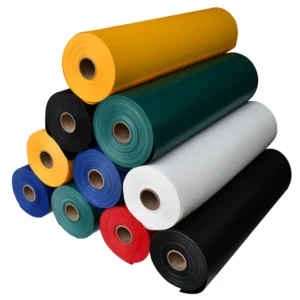
PVC Coated Tarpaulin Fabric for Awning and Tents – Custom Made
Read more -
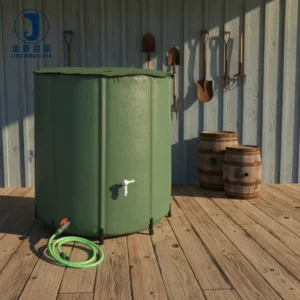
Collapsible PVC Rain Water Tank for Garden – Custom Made
Read more -
Waterproof Woven PVC Coated Medium Weight PVC Tarpaulin Fabric for Awning and Tents UV Resistant Plain Style 62/63 Width
¥1.13 Select options This product has multiple variants. The options may be chosen on the product page -
Custom Made PVC Coated Tarpaulin Fabric for Awning and Tents – 62/63 Width
Read more