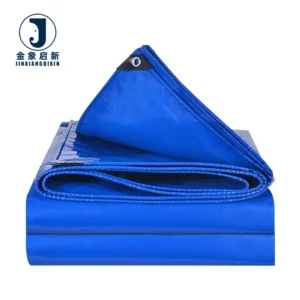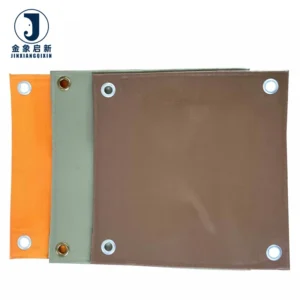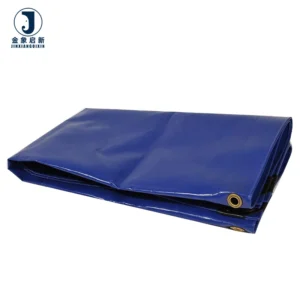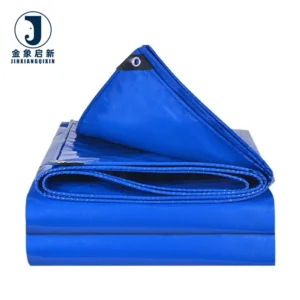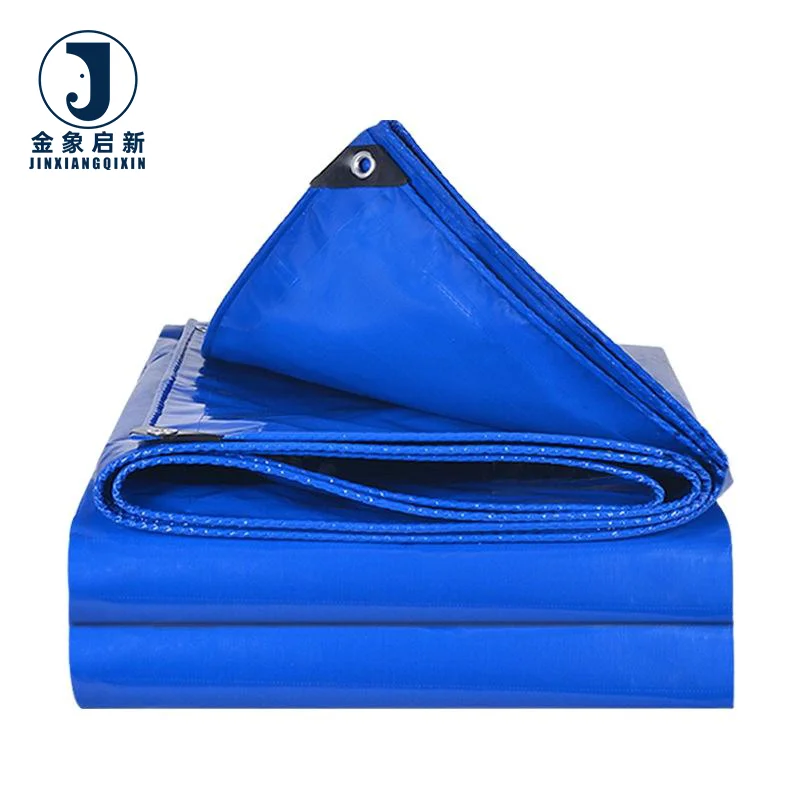
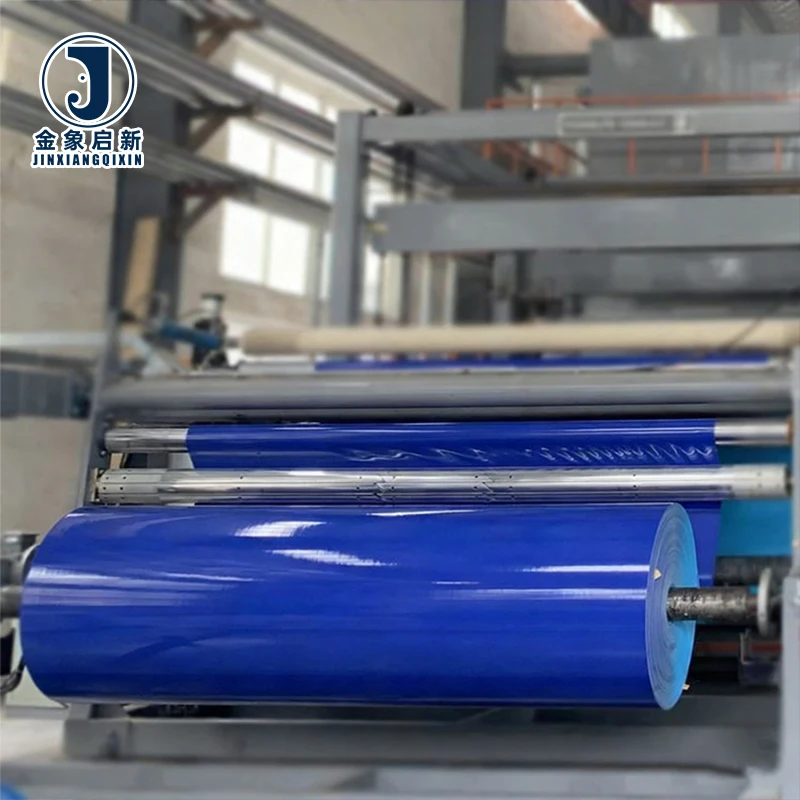
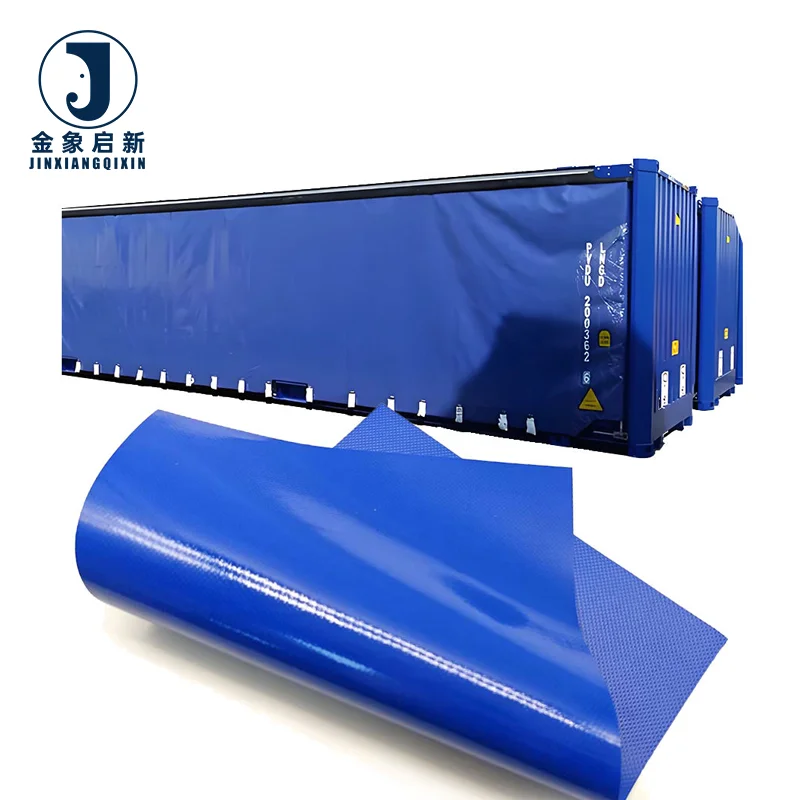
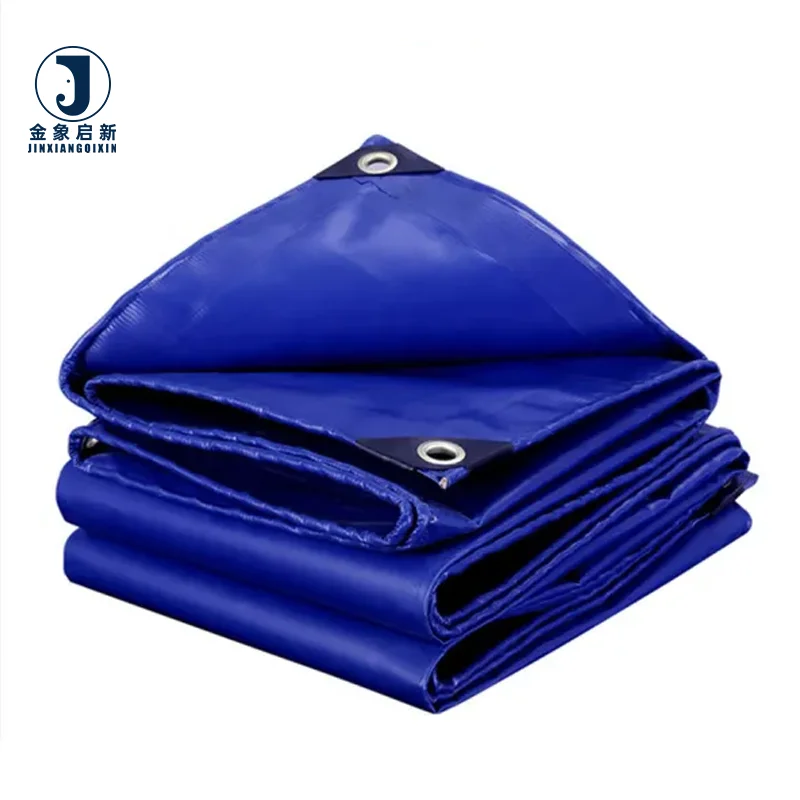
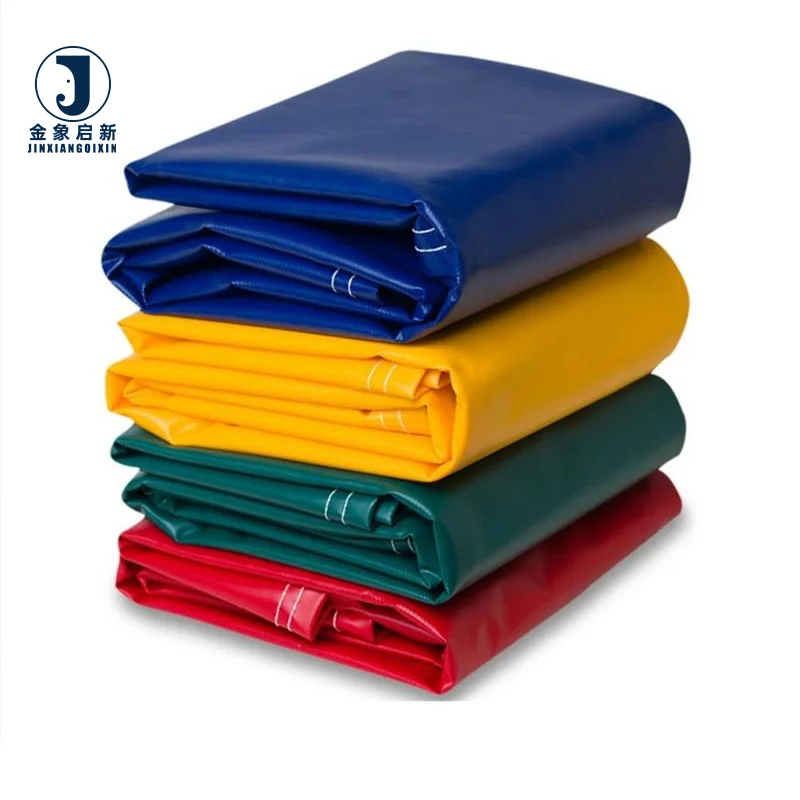
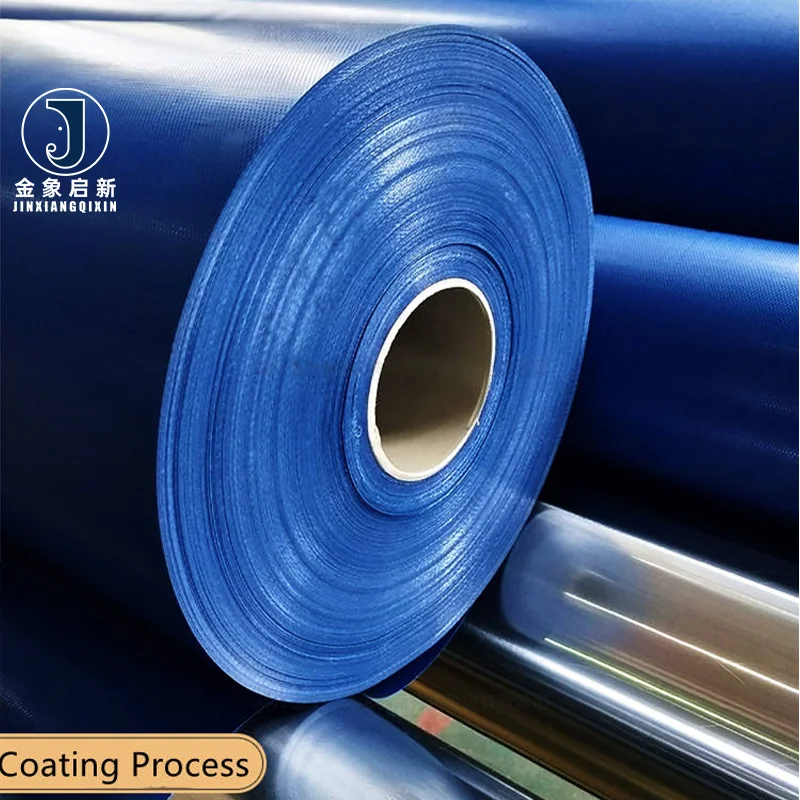
Custom PVC Coated Poultry Curtain Tarpaulin available in 350gsm to 750gsm with high-strength polyester mesh base, hot-melt coated for strong adhesion and reliable heat-welded seam performance. Multiple roll widths up to 2.1m support efficient coop curtain fabrication with fewer joins.
- Backed by nearly 30 years of PVC coating expertise and 100% pre-shipment inspection on every roll.
Description
Precision Weight Control — every roll of PVC coated poultry curtain tarpaulin ships with a verified material spec sheet matching quoted GSM to delivered weight, backed by dedicated QA/QC at every coating stage.
Technical Specifications
| Parameter | Value |
|---|---|
| Product Type | PVC Coated Tarpaulin |
| Material | PVC + High-strength polyester mesh fabric |
| Coating Technology | Laminated technology & Hot-melt coating technology |
| GSM Options | 350gsm / 420gsm / 500gsm / 550gsm / 600gsm / 750gsm |
| Thickness Options | 0.32mm / 0.35mm / 0.4mm / 0.45mm / 0.5mm / 0.65mm |
| Roll Width | 2m / 2.1m |
| Roll Length | 75m (2m width) / 50m (2.1m width) |
| Surface Finish | Glossy or Matt |
| Key Features | Cold crack resistance, anti-mildew, waterproof, sunproof |
| Anti-Static Treatment | Available — confirm the grade required for your market |
| Flame Retardant | Available in flame retardant grades — confirm the grade required for your market |
| Color Options | Blue / Red / Yellow / Light Blue / Grey (Customizable) |
| Finish Product Size | Custom sizes as per customer requirements or sold by inventory |
| Certifications | ISO / CE |
Application Suitability
| Application | Exposure & Requirement |
|---|---|
| Poultry coop curtains | Constant flexing from ventilation adjustment, humidity, ammonia atmosphere, frequent washdown |
| Agricultural and livestock covers | Sun exposure, wind load, moisture ingress, dust and debris accumulation |
| Construction site enclosure | Wind-driven rain, scaffold contact abrasion, UV exposure, temporary structural tension |
| Equipment and machinery covers | Static outdoor storage, UV and precipitation, occasional handling and repositioning |
| Tent and awning fabric | Folding and unfolding cycles, UV and weather exposure, seam welding integrity |
| Truck awning and cargo cover | Road-induced flexing, abrasion at tie-down points, weather and UV during transit |
Why GSM Alone Does Not Define Curtain Durability
GSM on the quotation but lighter fabric on arrival is a recurring problem in coated fabric procurement. Verified coating weight per roll, documented before dispatch, is the only reliable way to confirm you received what you paid for.
When poultry curtain tarpaulin arrives underweight, the entire ventilation control system is compromised — thinner coating means reduced abrasion resistance during daily roll-up cycles and faster degradation from ammonia and moisture inside the coop. A PVC coated tarpaulin manufacturer who controls coating weight in-process and documents it at inspection eliminates this failure mode before the roll ever leaves the factory.
The problem compounds when multiple rolls in the same order vary from one another. Installed side by side as coop curtains, even slight weight differences translate into visible stiffness variation and uneven drape, making the ventilation system harder to balance [NEED_CITE: coating weight variance and its effect on fabric stiffness in agricultural curtain systems].
Coating Technology and Adhesion Integrity
This PVC coated tarpaulin is produced using both laminated and hot-melt coating technology on high-strength polyester mesh fabric. The choice of coating method directly affects how well the PVC layer bonds to the base yarns, which in turn determines whether the coating delaminates at fold lines and weld seams during repeated curtain operation.
Laminated technology bonds a pre-formed PVC film to the mesh under heat and pressure, producing consistent thickness across the roll. Hot-melt coating drives liquid PVC into the mesh interstices, creating a mechanical lock that can improve adhesion strength at the cost of slightly different surface characteristics. Both methods are available across the GSM range from 350gsm through 750gsm, allowing specification matching to the mechanical demands of your particular curtain track and roll-up system.
Roll Consistency Across the Full Order
Batch-to-batch colour and weight consistency matters when curtains are installed in rows across a single poultry house or across multiple buildings on the same farm. A PVC coated tarpaulin manufacturer running three full production lines with dedicated QA/QC at each stage controls this consistency through calibrated coating heads and in-line weight measurement [NEED_CITE: in-process quality control methods for PVC coated fabric production].
Rolls destined for the same installation are produced in a single campaign wherever possible, with colour referenced against the confirmed sample. The pre-shipment inspection record documents weight and visual appearance per roll, giving you traceability from the production line to the installed curtain.
Decoding the Specification Sheet for Curtain Applications
The relationship between GSM and total thickness is not linear — a 550gsm fabric may have a thicker coating but a lighter base mesh than a 500gsm fabric with a denser weave. For poultry curtains that flex multiple times daily, the base fabric construction matters as much as the coating weight because it is the polyester yarns that resist the tensile load at the roll-up bar.
The laminated and hot-melt coating methods both deliver fully waterproof construction, but they respond differently to thermal welding. Hot-melt coated fabric tends to weld at slightly lower temperatures because the PVC penetrates the mesh, while laminated fabric may require more precise heat control to achieve a seam that matches the parent material strength.
Cold crack resistance is specified as a feature across the range, meaning the PVC formulation resists embrittlement at reduced temperatures — relevant for poultry houses in colder climates where curtain fabric must remain flexible during winter ventilation cycles. The glossy or matt surface option affects how easily the curtain sheds dust, moisture and organic matter during routine cleaning, with glossy finishes generally offering faster washdown.
The Hidden Cost of Choosing the Wrong Grade
Selecting a lower GSM grade to save on material cost often creates downstream failures that outweigh the initial savings. In poultry curtain applications, a lighter coating reaches its abrasion limit sooner where the fabric passes over guide rollers and contact points inside the track system.
When flame retardant or anti-static treatment is specified but arrives without supporting test documentation, the entire installation may fail site inspection — particularly in markets with strict agricultural building codes [NEED_CITE: fire safety requirements for agricultural building materials in European and North American markets]. Replacing curtains after a failed inspection means double the material cost plus unplanned downtime during the changeover.
Colour variation between rolls from different production batches forces either selective installation (matching rolls to the same building wall) or complete rejection of mismatched sections, both of which delay project completion and increase waste.
Sourcing Directly From the Coating Line
Deep process control over coating weight and adhesion is maintained across all three production lines, meaning the GSM stated on your material specification sheet is the GSM measured on the roll before it ships.
A 10-person R&D team handles colour matching, custom width slitting and sample development, typically turning around confirmation samples within days so you can verify weight, hand feel and colour before authorizing bulk production.
Dedicated QA/QC operates at every production stage — from base fabric inspection through coating application to final roll winding — with 100% pre-shipment inspection documented in a record that accompanies your shipment.
Custom sizing, eyelet placement and hem reinforcement are handled in-house, reducing the number of handling points between coating production and finished curtain delivery.
Documentation & Verification
- Material specification sheet stating exact GSM, base fabric denier and coating type for every roll
- Test report for flame retardant and anti-static grades confirming the standard met, where applicable
- Pre-shipment inspection record with per-roll weight verification and colour reference
- Roll packing list with batch traceability codes matching production records
- ISO and CE certificates covering the manufacturing facility and processes
- Certificate of origin and customs documentation for international shipment
Fabrication, Handling & Storage
- Thermal weld parameters should be adjusted to coating technology — hot-melt and laminated grades respond differently to heat at the seam
- Store rolls upright on pallets in a dry, shaded area to prevent flat-spot deformation on the coating surface
- Cold crack resistant formulation allows winter transport, but rolls should acclimatise before unrolling in heated environments
- Glossy surface finishes wipe clean with mild detergent; avoid solvent-based cleaners that may soften the PVC coating layer
- Custom width rolls minimise offcut waste when cutting panels for specific curtain track dimensions
- Reinforce hem and eyelet zones with additional PVC strip welding to distribute load across the polyester mesh base
What We Need to Quote Your Curtain Fabric
To provide an accurate specification and lead time, share the target GSM or thickness, the total linear meters required and whether you need rolls at standard 2m or 2.1m width or custom slit sizes.
Confirm whether your market requires flame retardant or anti-static certification and which standard applies, so the correct treatment grade is built into the production run from the start.
If colour matching to an existing installation or brand reference is required, send a physical sample or Pantone reference with your inquiry so a confirmation swatch can be produced before bulk coating begins.
Frequently Asked Questions
Q: How do you verify that the GSM on the delivered roll matches the quotation?
A: Every roll undergoes weight verification during the pre-shipment inspection. The measured GSM is recorded on the material specification sheet and the inspection report that ships with your order. Our in-process QA/QC monitors coating weight at each production stage, not just at final check, so deviations are corrected before the roll is wound.
Q: Can you supply a test report for anti-static or flame retardant treatment?
A: Anti-static and flame retardant treatments are available across the PVC coated tarpaulin range. When your inquiry specifies the required standard for your market, the production run is formulated to that grade and a corresponding test report is included in your documentation package. Confirm the specific standard needed so we match the correct treatment chemistry.
Q: Will the colour be consistent across all rolls in a single bulk order?
A: Rolls for one order are scheduled in a single production campaign wherever possible. Colour is referenced against your approved sample, and each roll is checked visually during pre-shipment inspection. The inspection record documents the colour reference per roll, giving you full traceability and batch consistency across the shipment.
Q: What lead time applies to custom width or colour orders?
A: Custom width slitting and colour matching require sample approval before bulk production. Once the sample is confirmed, typical multi-week lead times apply depending on order volume and current line scheduling. Providing your colour reference and width requirements at inquiry stage allows us to develop the sample in parallel with other preparation steps.
Q: How do welded seams perform at curtain flex points compared to stitched seams?
A: Thermal welding fuses the PVC coating across the seam, creating a continuous bond that resists moisture ingress and delamination at fold lines. Both laminated and hot-melt coating technologies produce weldable surfaces, though parameters differ. Welded seams avoid the needle holes created by stitching, which can become failure initiation points under repeated flexing in curtain track systems.
Related products
-
Heavy Duty Waterproof PVC Tarpaulin Roll Cover for Truck Tent Outdoor Storage and Industrial Use
¥1.48 Add to cart -
Hotsale Custom China Supplier Super Strength Industrial Grade 680GSM RIPSTOP PVC Tarpaulin for Builders Roof Tarp and Sheeting
¥2.80 Add to cart -
PVC Fabric Material Woven Tarpaulin Waterproof Woven Fabric Tarpaulin
¥0.50 Add to cart -
Wholesale Pvc Tarpaulin Wear-resistant Waterproof Multi-purpose Heat-resistant Tarpaulin
¥2.00 Add to cart