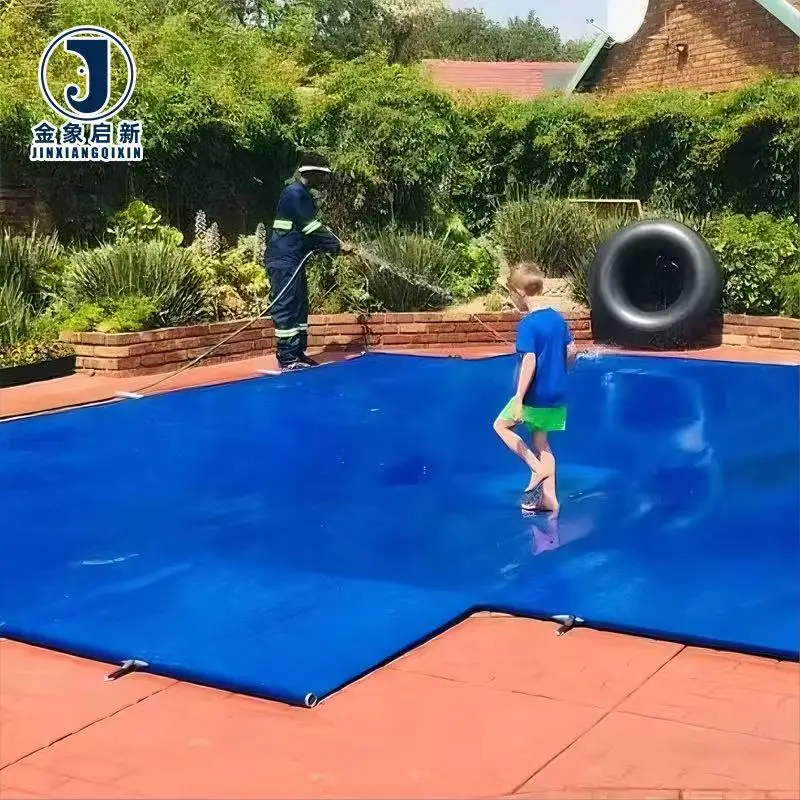
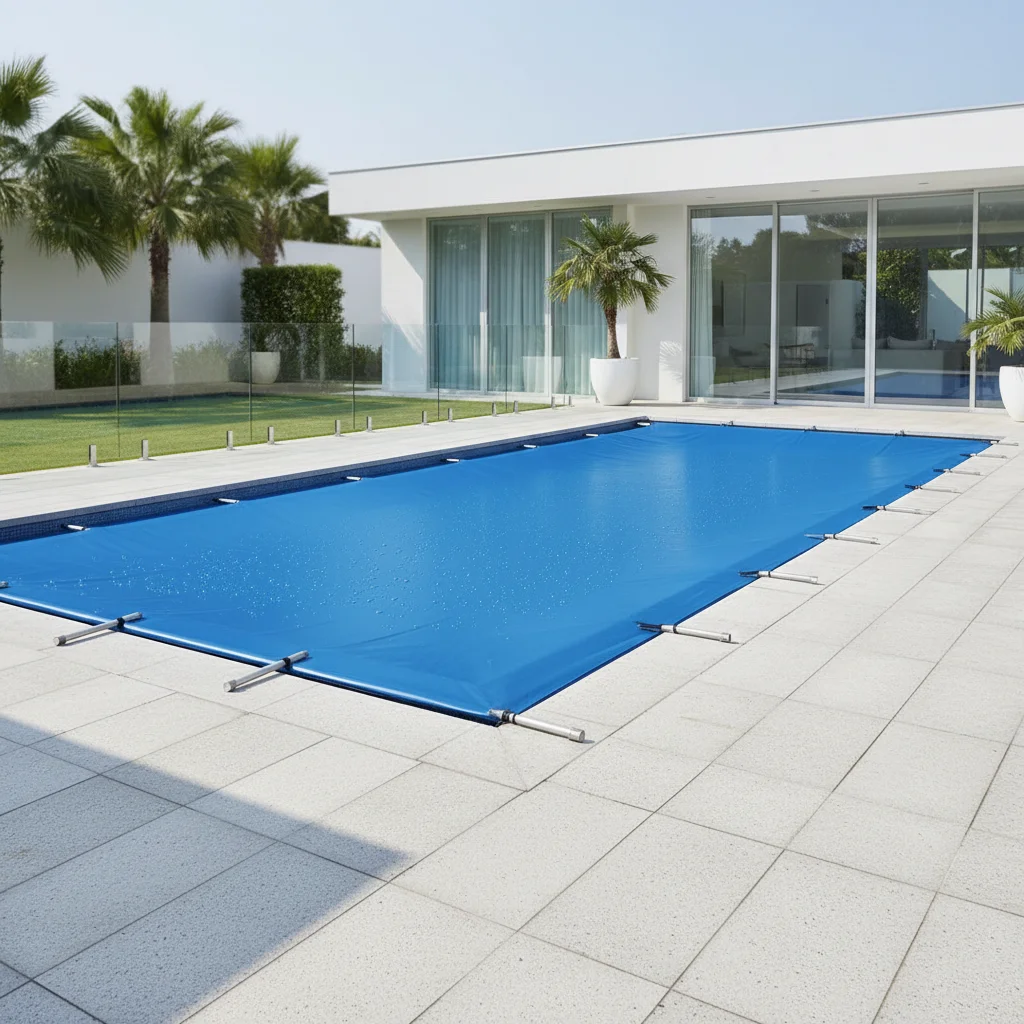
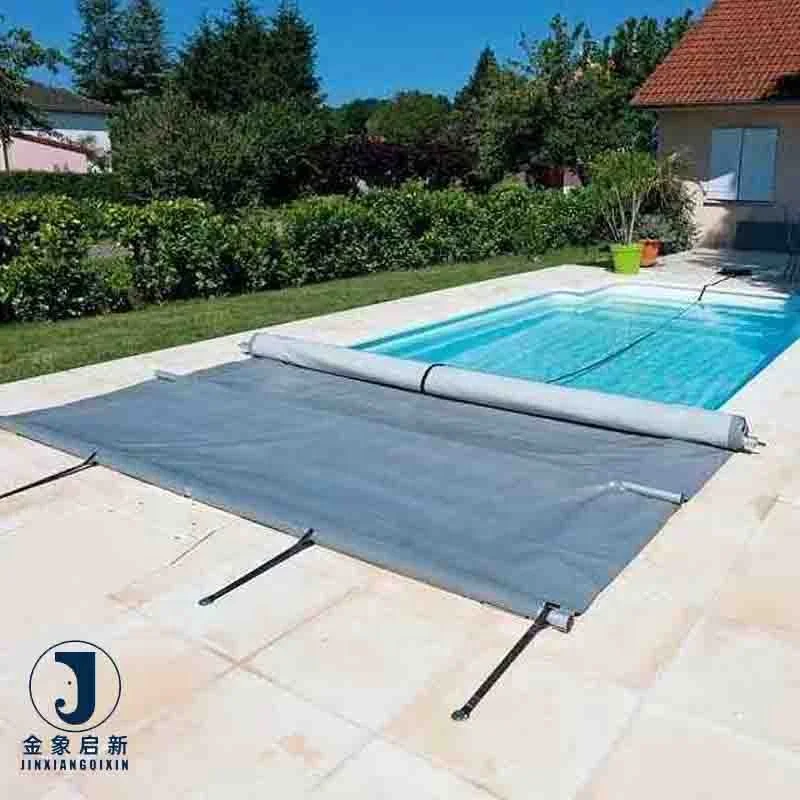
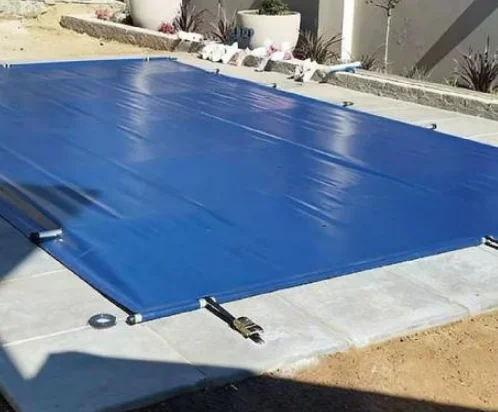
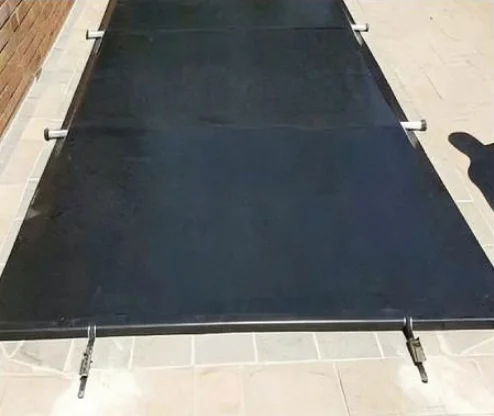
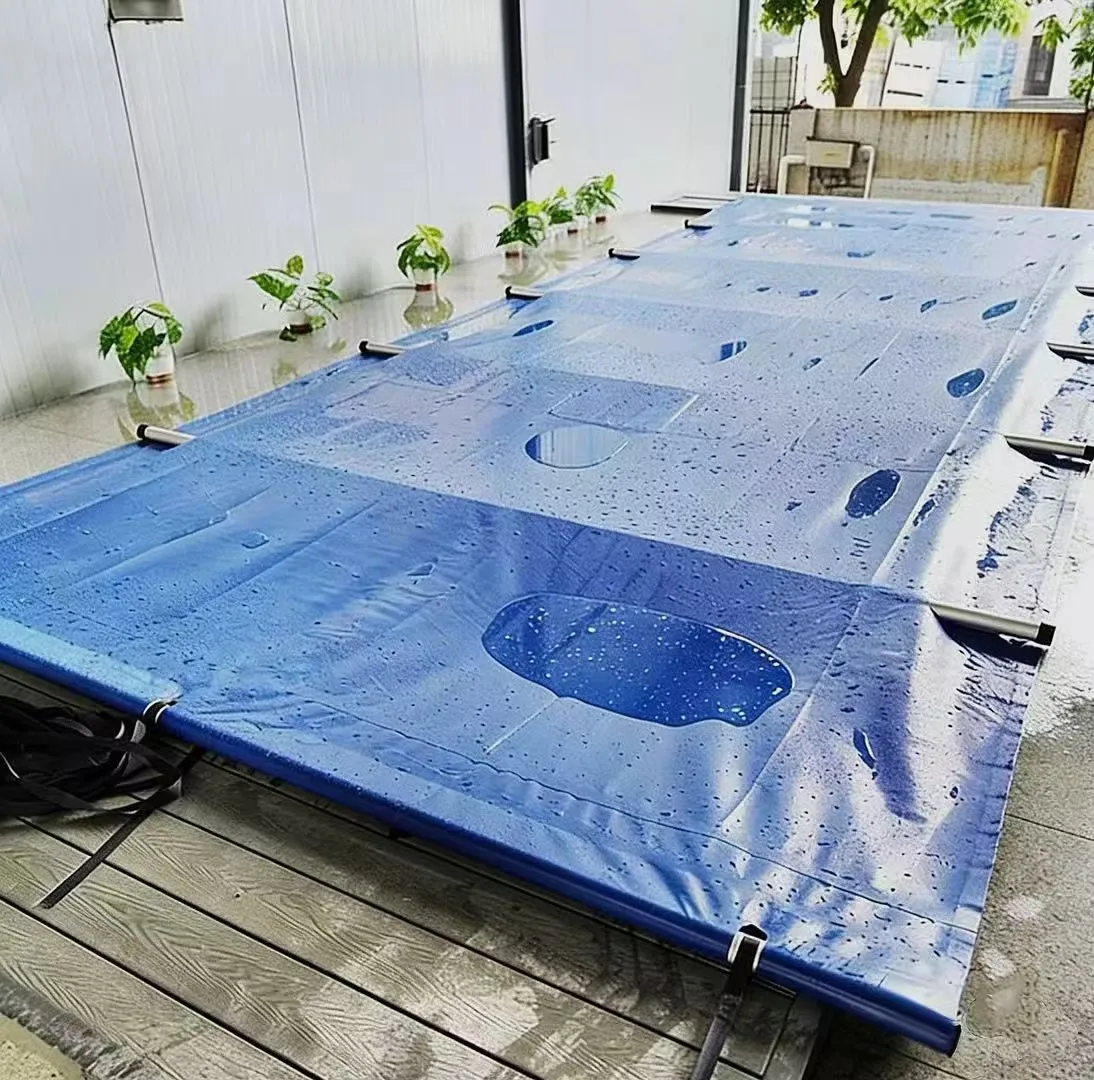
Custom PVC Pool Cover Tarpaulin, 350–750 gsm, Laminated & Hot-Melt Coated — engineered for rectangular and irregular swimming pools, reservoirs and fish tanks. High-tenacity polyester mesh base with PVC coating delivers strong tearing strength at welded seams, preventing joint failure under flex load. Multiple GSM grades let buyers balance tensile performance with handling weight. Cold-crack, anti-mildew and waterproof treatments available to match site climate. Backed by 100% pre-shipment inspection, dedicated QA at every stage, and ISO/CE documentation supplied with each dispatch.
- Laminated and hot-melt coating for reliable adhesion
- Custom widths, colours and sizes with sample support
Description
Deep Process Control — coating weight and adhesion verified at every production stage, ensuring the PVC Swimming Pool Cover Tarpaulin you specify is the fabric you receive on site.
Technical Specifications
| Parameter | Value |
|---|---|
| Product Type | PVC Tarpaulin |
| Base Fabric | High-strength polyester mesh |
| Coating Technology | Laminated & Hot-melt Coating |
| Available Weight | 350 gsm, 420 gsm, 500 gsm, 550 gsm, 600 gsm, 750 gsm |
| Available Thickness | 0.32 mm, 0.35 mm, 0.4 mm, 0.45 mm, 0.5 mm, 0.65 mm |
| Standard Roll Size | 2m x 75m, 2.1m x 50m |
| Finish Product Size | Custom cut sizes or inventory rolls |
| Finish Options | Glossy or matte (grade dependent) |
| Key Features | Waterproof, cold crack resistant, anti-mildew, anti-static treatment (grade not stated) |
| Special Treatments | Flame retardant, anti-static, anti-cold, anti-mildew, 3P (grades not stated — confirm requirement) |
| Standards | ISO, CE |
Application Suitability
| Application | Exposure & Requirement |
|---|---|
| Swimming Pool Covers | Constant UV exposure, water contact, chemical splash, wind load, seasonal folding |
| Fish Tank & Pond Liners | Permanent water immersion, soil chemistry, puncture risk from substrate |
| Reservoir Liners | Long-term hydrostatic pressure, ground settlement stress, environmental compliance |
| Tent & Awning Fabric | UV degradation, wind-induced flex, repeated erection and teardown |
| Inflatable Structure Fabric | Internal air pressure, seam stress, abrasion at anchor points |
Why Weld Strength Matters More Than GSM Alone for Pool Covers
A 750 gsm fabric is useless if the seam tears before the body does.
When buyers specify a PVC Swimming Pool Cover Tarpaulin, they often fixate on weight. But most field failures occur at the welded seams, not across the fabric body. A heavy cover on an irregularly shaped pool flexes at every corner weld, and if the hot-melt coating does not bond through the full mesh layer, the seam peels under tension [NEED_CITE: tensile and tear test methods for coated fabrics per ISO 1421]. I have seen heavy-grade coated rolls fail at the weld line simply because the laminated layers delaminated under pool-edge stress. The coating technology — laminated versus hot-melt — determines whether the weld fuses with the base yarn or just sits on the surface.
Coating Method Defines the Weld Integrity
The PVC Swimming Pool Cover Tarpaulin range uses both laminated and hot-melt coating technologies. Hot-melt coating penetrates the polyester mesh, creating a mechanical bond that holds during thermal welding. Laminated coating sandwiches the mesh between PVC films, which can delaminate if the weld temperature exceeds the adhesive softening point. For pool covers that see repeated folding at edges, hot-melt coated grades maintain seam cohesion through more cycles.
Matching Weight to the Actual Load Path
Pool covers carry load differently than truck tarps. Water pooling on the surface creates hydrostatic pressure that concentrates at tie-down points and corner welds. A 350 gsm grade suits lightweight seasonal covers, while 750 gsm handles permanent installations with snow or debris load. The high-strength polyester mesh base distributes stress across the weave, but only if the GSM matches the span between supports. Underspecifying forces the welds to absorb energy the fabric should carry.
Thickness, Denier, and Tear Propagation
The available thickness range from 0.32 mm to 0.65 mm reflects different base fabric densities. Thicker coatings resist puncture from pool deck hardware, while denser mesh weaves stop a small cut from propagating into a full-width tear [NEED_CITE: DIN 53354 tear resistance testing for coated textiles]. When a pool cover is dragged across concrete during installation, the outer coating takes the abrasion; when wind lifts a corner, the mesh takes the tension. Both layers must be proportioned correctly — a thick coat over a sparse mesh will crack without the yarn to hold it together.
The Hidden Cost of Ignoring Batch Consistency
A buyer once received a full container of pool cover rolls where three were visibly lighter in shade than the rest. Installed side by side on adjacent resort pools, the colour difference was obvious to guests. This happens when coating batches are mixed across production runs without pigment calibration. Colour variation between rolls in the same shipment signals inconsistent coating weight as well — the same pigment load that shifts colour also shifts UV absorption [NEED_CITE: color fastness and UV exposure standards for architectural PVC]. Rejecting a container at destination costs far more than verifying batch consistency before loading.
Why Source PVC Swimming Pool Cover Tarpaulin Here
Three full production lines and 36 sets of professional equipment handle both bulk roll orders and custom cut sizes without bottleneck. A dedicated 10-person R&D team develops samples within days, matching your pool dimensions and colour references before production locks in. QA/QC runs at every coating and lamination stage, with 100% pre-shipment inspection catching GSM drift and colour deviation before the container seals. Hot-melt and laminated coating options let you select the bond strength that fits your welding setup. Full documentation — from material spec sheets to test reports for requested treatments — ships with every order.
Documentation & Verification
- Material specification sheet stating exact GSM, base fabric mesh count, and coating type
- Weight verification per roll measured against stated GSM before dispatch
- UV and flame retardant test reports provided for specified treatment grades
- Pre-shipment inspection record covering colour consistency and weld sample checks
- ISO and CE certificates plus certificate of origin included with customs documentation
Fabrication, Handling & Storage
- Set hot-melt coated grades to higher weld temperature than laminated to achieve full mesh penetration
- Reinforce corner welds on 550 gsm and above grades where hydrostatic load concentrates
- Store rolls vertically on pallets to prevent flat spots that show through on pool installation
- Unroll 750 gsm grades in warm conditions — cold-stiff coating cracks if forced open below freezing
- Clean with mild detergent; avoid solvents that soften the PVC coating surface layer
- Cut oversized panels from 2.1m wide rolls to minimize transverse welds across the pool span
What to Specify When Requesting a Quote
Send us the pool dimensions or reservoir span, the local climate exposure including snow load or UV intensity, and whether you need flame retardant or anti-static certification for your market. Indicate if you require inventory rolls or custom cut-to-size panels with edge reinforcement. Provide Pantone or RAL references for colour matching, and confirm whether you need samples before bulk production.
Frequently Asked Questions
Q: How do I measure an irregularly shaped pool for a custom cover?
A: Measure the maximum length and width at the outer coping edge, then note any curves or cutouts with offset dimensions from the corners. Our R&D team uses these measurements to create a cutting template, adding overlap allowance for anchor points. We send a dimensional drawing for your approval before any fabric is cut.
Q: How can I verify the anti-UV or flame retardant treatment claim?
A: Request the specific test report for the grade you are ordering. Our documentation includes third-party lab results tied to the batch number, showing the treatment standard met. If your market requires a particular classification, state it in your inquiry so we match the correct formulation.
Q: Will different rolls in one order have visible colour differences?
A: We control pigment dosing per production batch and inspect every roll before packing. Rolls cut from the same coating run are grouped together in your shipment. If your project demands panels installed side by side, flag this at the inquiry stage so we allocate a single batch.
Q: What is the MOQ and lead time for custom widths or colours?
A: Minimums vary by whether you need a stock GSM in a non-standard width or a fully custom colour and treatment combination. Typical production runs require multi-week lead times. Send your volume requirement and target delivery date, and we quote with the exact threshold and schedule.
Q: Do welded seams last as long as the fabric body?
A: Hot-melt coated grades produce welds that fuse through the mesh, giving seam strength comparable to the fabric body. Laminated grades require precise temperature control to avoid delamination at the bond line. We recommend sending us your welder settings so we can confirm the coating type best suited to your equipment.
Related products
-
JX PVC Tarpaulin Swimming Pool Cover Material Knife Coated Fabric Waterproof UV-Resistant Windproof
¥13.00 Select options This product has multiple variants. The options may be chosen on the product page -
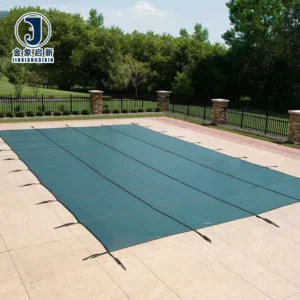
JX China Manufacturer Organic Blackout 500gsm Heavy Duty PVC Coated Tarpaulin Swimming Pool Cover
¥1.78 Select options This product has multiple variants. The options may be chosen on the product page -
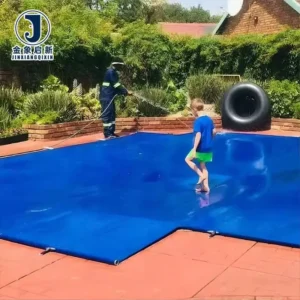
JX PVC Laminated Waterproof Breathable Anti-UV Blackout Organic Plain Weft Swimming Pool Covers Tarpaulin Coated
¥1.78 Select options This product has multiple variants. The options may be chosen on the product page -
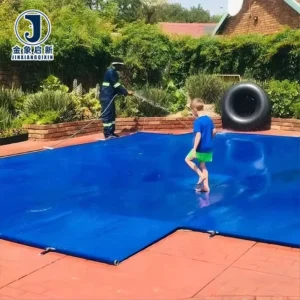
PVC Laminated Waterproof Breathable Anti-UV Blackout Organic Plain Weft Swimming Pool Covers Tarpaulin Coated
¥1.78 Select options This product has multiple variants. The options may be chosen on the product page