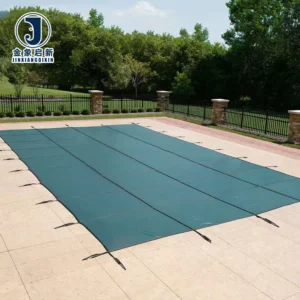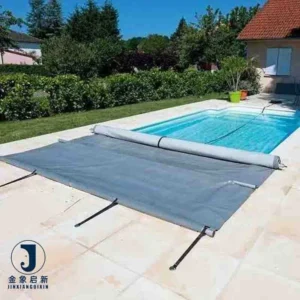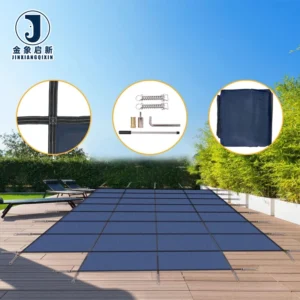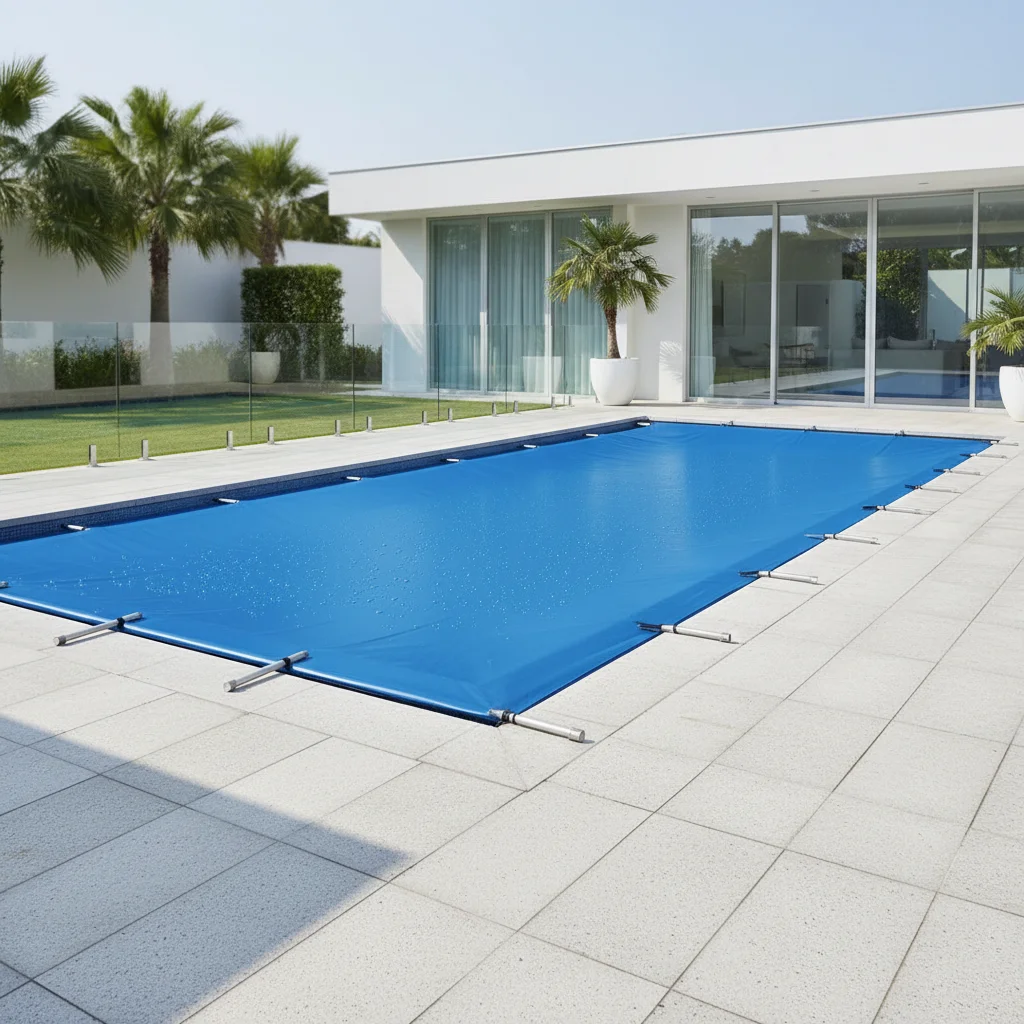
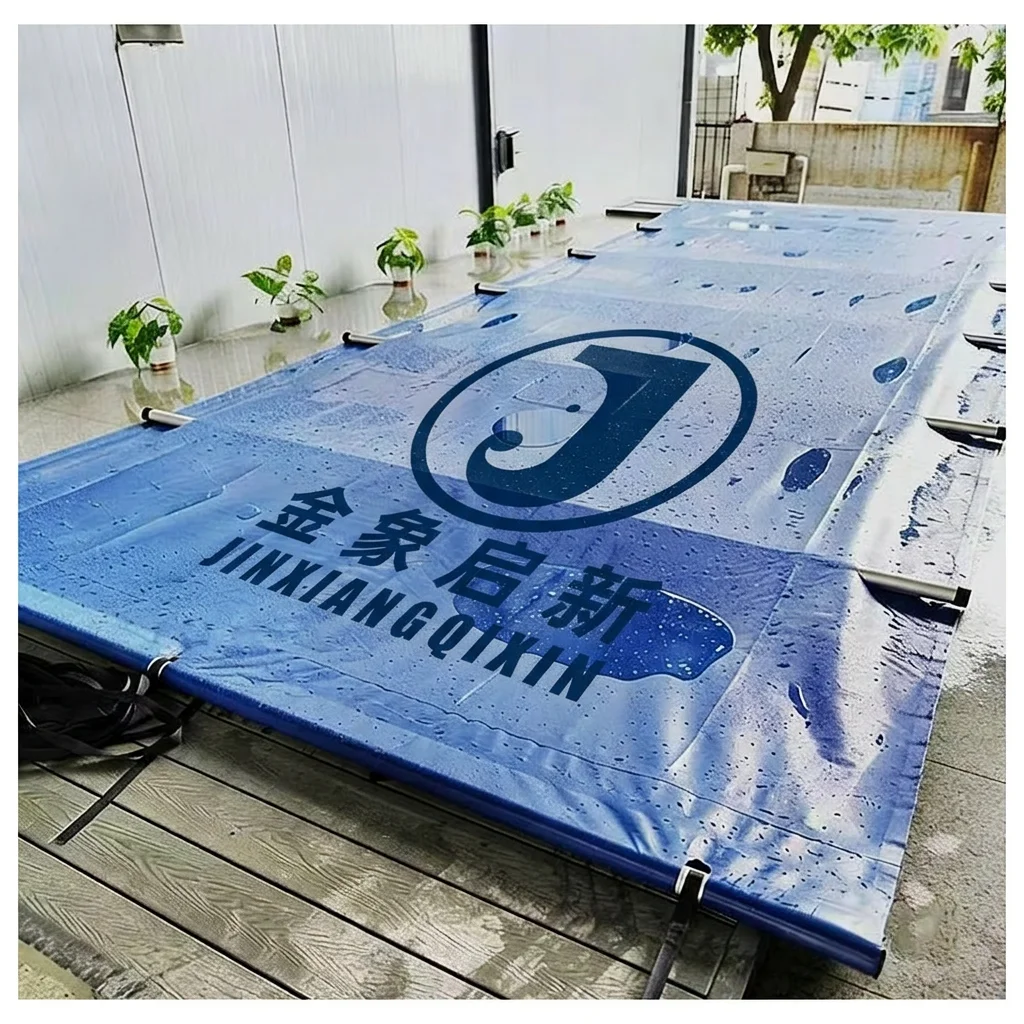
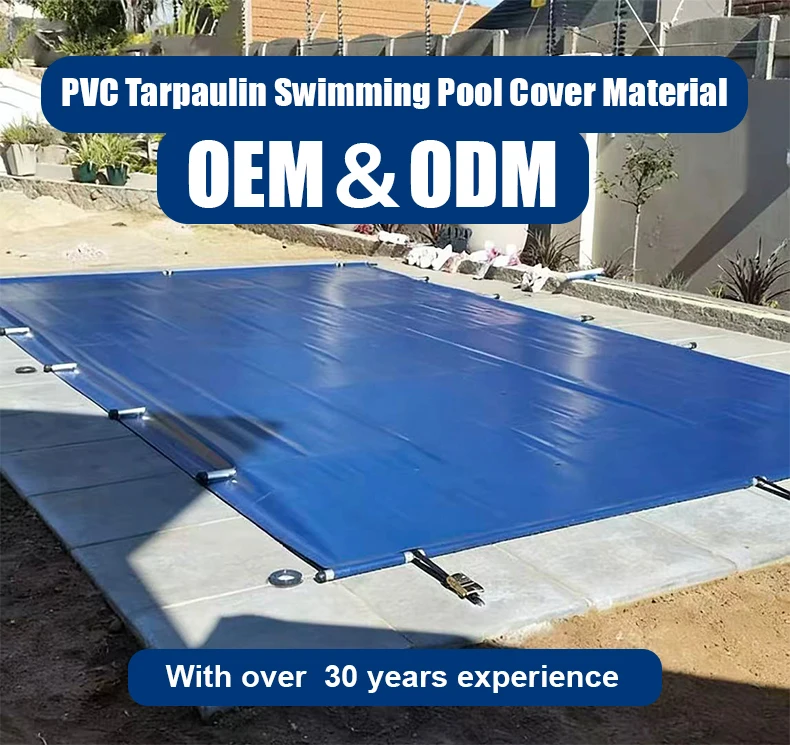
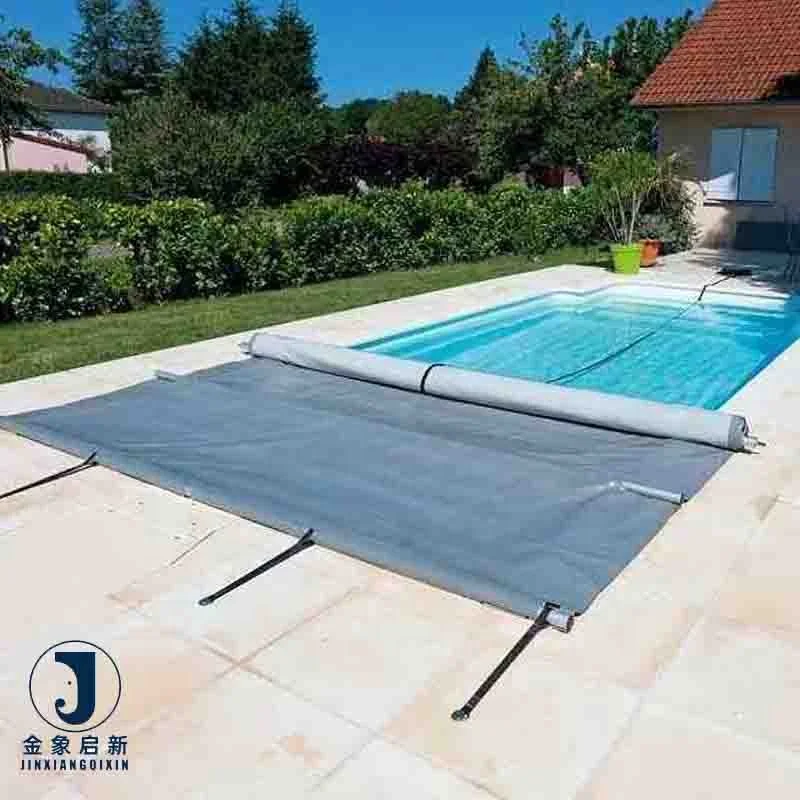
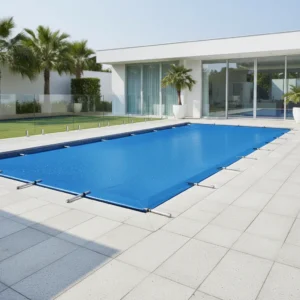
PVC Pool Cover — PVC coated tarpaulin, waterproof, anti-UV, medium weight for outdoor pool protection and shade structures.
- Custom sizing with reinforced hems and eyelets for secure anchoring
- Welded seam construction at flex points for long-term durability
- Multiple GSM grades from lightweight to heavy-duty
- Anti-UV treatment with test documentation available
Backed by nearly 30 years of coated fabric process control, every roll undergoes 100% pre-shipment inspection to verify GSM weight, coating adhesion and colour consistency before dispatch
Description
Process Control Over Coating Weight — every roll of PVC pool cover fabric undergoes documented GSM verification at multiple production stages, so the weight on your specification sheet matches the material you receive on site.
Technical Specifications
| Parameter | Value |
|---|---|
| Product Type | PVC Coated Tarpaulin Pool Cover |
| Coating Material | PVC |
| Waterproof Construction | Yes |
| UV Treatment | Anti-UV (test basis not stated in source) |
| Weight Class | Medium Weight |
| Application Form | Outdoor pool cover, awning, shade sail, canopy |
| Certification | ISO, CE |
Application Suitability
| Application | Exposure & Requirement |
|---|---|
| Outdoor swimming pool cover | Continuous UV exposure, standing water, chemical splash from pool treatment |
| Residential awning and shade sail | Sunload and wind uplift, colour consistency across panels, seasonal deployment |
| Commercial canopy structure | Sustained weather exposure, tensioned installation, public safety compliance |
| Pet shelter and enclosure cover | Abrasion from contact, rain ingress prevention, repeated handling and folding |
Why a Pool Cover Spec Sheet Without Test Data Is Just a Promise
A PVC coated tarpaulin pool cover is only as reliable as the documentation behind it.
I have watched buyers compare two quotation sheets side by side, both claiming anti-UV protection, both listing the same medium weight class, and both priced within a narrow band. The difference only appears after a season of sun exposure — one cover still holds tension and colour, the other sags and chalks at the surface. The missing piece at the quoting stage was a test report tying the UV claim to a recognised method. Without it, the specification is an assertion, not a commitment. [NEED_CITE: test methods for UV degradation of coated fabrics]
Sizing, Reinforcement and Fitment for Pool Environments
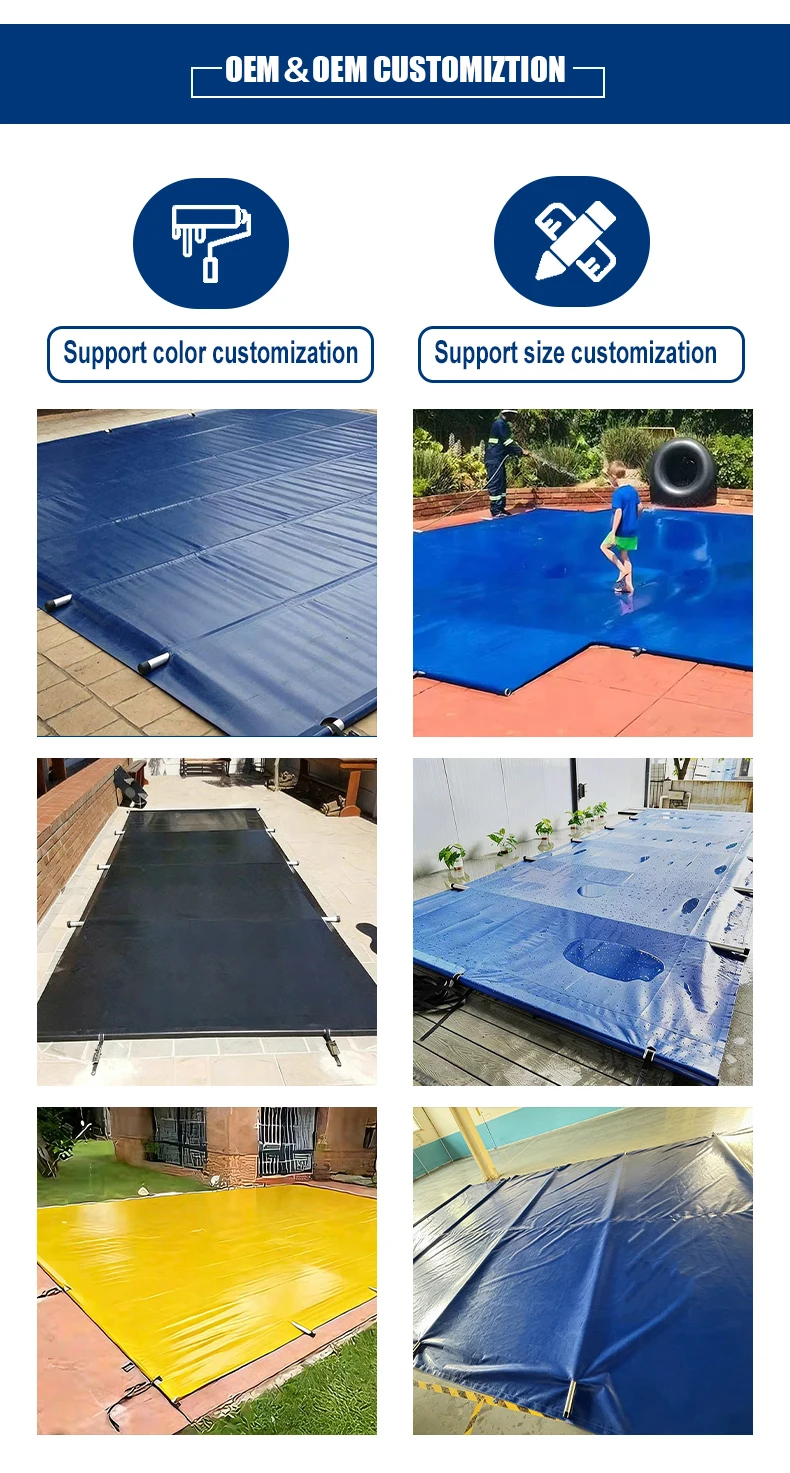
A pool cover that is cut to generic dimensions will leave gaps at the coping or pull too tight at the anchor points, concentrating stress on the hem. Jinxiang cuts PVC coated tarpaulin pool covers to the dimensions you supply, with reinforced hems and heat-welded seams at the stress concentrations where the fabric folds over the pool edge. Custom sizing eliminates the need for on-site trimming, which exposes uncoated base fabric and invites water ingress into the weave.
Colour and Finish Consistency Across Panels
When a commercial pool facility orders multiple cover panels, even a slight shade variation between rolls becomes visible once they are installed side by side. The 10-person R&D team matches colour references before production begins and monitors coating consistency across the full run. Available in glossy or matte finish, the surface is selected not just for appearance but for how it sheds water, resists dirt adhesion and responds to routine cleaning with pool-grade chemicals.
Reading Between the GSM and the Base Fabric
Coating weight alone does not determine how a pool cover performs under load. The base fabric denier and weave density govern tensile and tear behaviour, while the PVC coating contributes waterproofing, UV screening and surface durability. A medium weight PVC coated tarpaulin balances these properties for seasonal pool covers that are deployed, tensioned and removed repeatedly. Coating adhesion — the bond between the PVC layer and the base fabric — determines whether the material delaminates at the fold lines after repeated handling. Knife-coated construction typically delivers higher peel strength than laminated alternatives, which matters when the cover is folded and stored between seasons. [NEED_CITE: peel strength test methods for coated fabrics per ISO 2411]
The Hidden Cost of Undocumented Specifications
A cover specified as anti-UV without a supporting test report may pass visual inspection on arrival but fail within a single summer season, chalking and losing tensile strength at the surface. Similarly, a GSM figure quoted without a pre-shipment weight verification record leaves the buyer with no recourse when the material arrives lighter than agreed. Welded seams on a pool cover carry the full tension load at anchor points; if the heat-weld parameters are set for a different coating formulation, the seam fails before the fabric does. These failures are not random — they trace back to gaps in specification and documentation at the ordering stage. [NEED_CITE: common failure modes in coated fabric pool covers]
What the Production Line Brings to Your Pool Cover Order
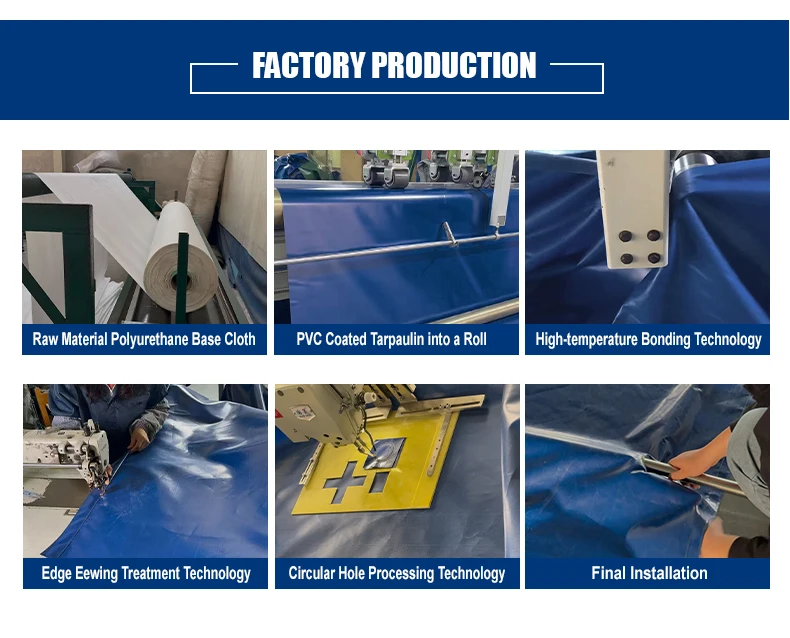
Three full production lines and 36 sets of professional equipment handle PVC coated tarpaulin pool cover orders at volume without sacrificing coating consistency. Dedicated QA at every production stage means coating weight, colour match and weld integrity are checked in-process, not just at final inspection. The 10-person R&D team develops samples for custom colour, sizing and finish within days, allowing you to confirm the material before committing to a full production run. Nearly 30 years of focused coated fabric production translates to process parameters that are dialed in for PVC, not borrowed from a general-purpose line. Full pre-shipment inspection with documented records ensures the specification you approved is the specification that ships.
Documentation & Verification
- Material specification sheet stating exact coating type, base fabric and weight class with every pool cover order
- Anti-UV test report documentation available on request to substantiate treatment claims
- Pre-shipment inspection record with weight verification against the quoted specification before dispatch
- Certificate of origin and customs documentation package for international pool cover shipments
- Roll packing list detailing dimensions and quantity for container loading verification
Fabrication, Handling & Storage
- Heat-weld seams using temperature and dwell settings matched to the PVC coating formulation for consistent peel strength
- Reinforce anchor points and hem folds where the medium weight fabric concentrates stress during tensioned installation
- Store rolls upright on a flat surface to prevent permanent creasing through the PVC coating layer
- Allow cold-stored covers to reach ambient temperature before unfolding to avoid coating crack at fold lines
- Clean with mild detergent only; avoid solvent-based chemicals that attack the PVC coating surface
- Patch field damage with compatible PVC adhesive and a scrap of the same coating weight for seamless repair
What to Include in Your Pool Cover Enquiry
To move from a general enquiry to a firm specification, share the pool dimensions and the cover deployment method — whether it is tensioned over a frame, draped and anchored at the coping, or rolled on a mechanical reel. Specify the UV exposure conditions at the installation site and whether your market requires any fire classification for permanently installed covers. Confirm whether you need finished panels with hems and reinforcement, or roll stock for your own fabrication line. If colour matching to an existing structure is required, provide a reference sample or RAL code so the R&D team can develop a swatch for your approval before production.
Frequently Asked Questions
Q: How is the coating weight verified before my pool cover order ships?
A: Every roll undergoes documented GSM verification during pre-shipment inspection. The weight recorded on the inspection record is compared against the specification sheet you approved at the order stage. You receive this inspection record with your shipping documentation, giving you a traceable weight confirmation for every roll in your pool cover consignment.
Q: Can I obtain a test report for the anti-UV treatment on my pool cover?
A: Anti-UV test report documentation is available on request. Specify the test method or performance level your market requires when you place your enquiry, and the R&D team will confirm which UV treatment grade matches your climate conditions and provide the supporting test data with your order documentation.
Q: How does batch-to-batch colour consistency work across multiple pool cover panels?
A: Colour references are matched and locked before production begins. The coating line monitors pigment dispersion and coating weight throughout the run. If your pool cover order spans multiple rolls or panels, all material is produced within the same batch to ensure consistent shade when installed side by side.
Q: What finishing options are available for custom-sized pool covers?
A: Pool covers are cut to your exact dimensions with reinforced hems and heat-welded seams at stress points. Anchor reinforcement is added at tie-down locations. Confirm the hem style, reinforcement layout and any edge finishing requirements during the sample approval stage so the production specification matches your installation method.
Q: How quickly can I get a sample for a custom colour or finish?
A: The R&D team develops samples for custom colour, finish and sizing within days. Submit your colour reference, preferred surface finish and panel dimensions with your enquiry. The sample is sent for your approval before full production begins, ensuring the final pool cover material matches your project specification.
Related products
-
18oz 610gsm PVC Swimming Pool Cover Tarpaulin Fabric – Custom Made
Read more -
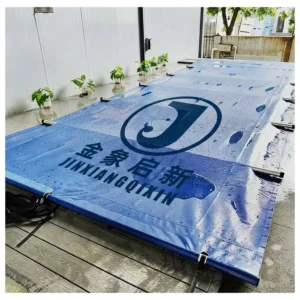
JX PVC Tarpaulin Swimming Pool Cover Material Knife Coated Fabric Waterproof UV-Resistant Windproof
¥13.00 Select options This product has multiple variants. The options may be chosen on the product page -
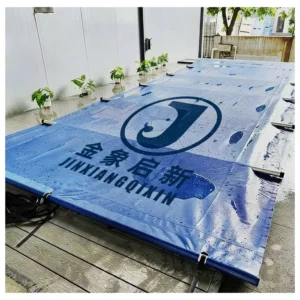
Automatic Retractable PC PVC Pool Cover Custom Size for Inground Pool. UV Protection Waterproof 110V-240V Safety Pool Cover
¥2.00 Select options This product has multiple variants. The options may be chosen on the product page -
JX PVC Laminated Waterproof Breathable Anti-UV Blackout Organic Plain Weft Swimming Pool Covers Tarpaulin Coated
¥1.78 Select options This product has multiple variants. The options may be chosen on the product page