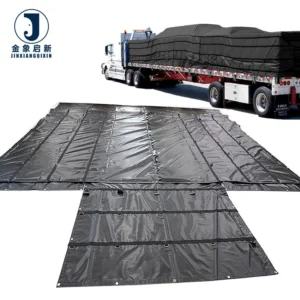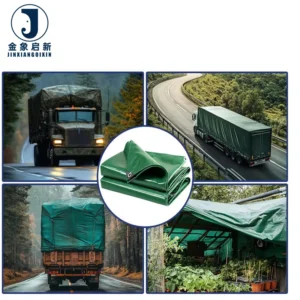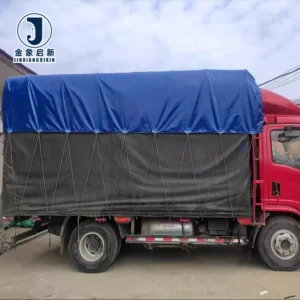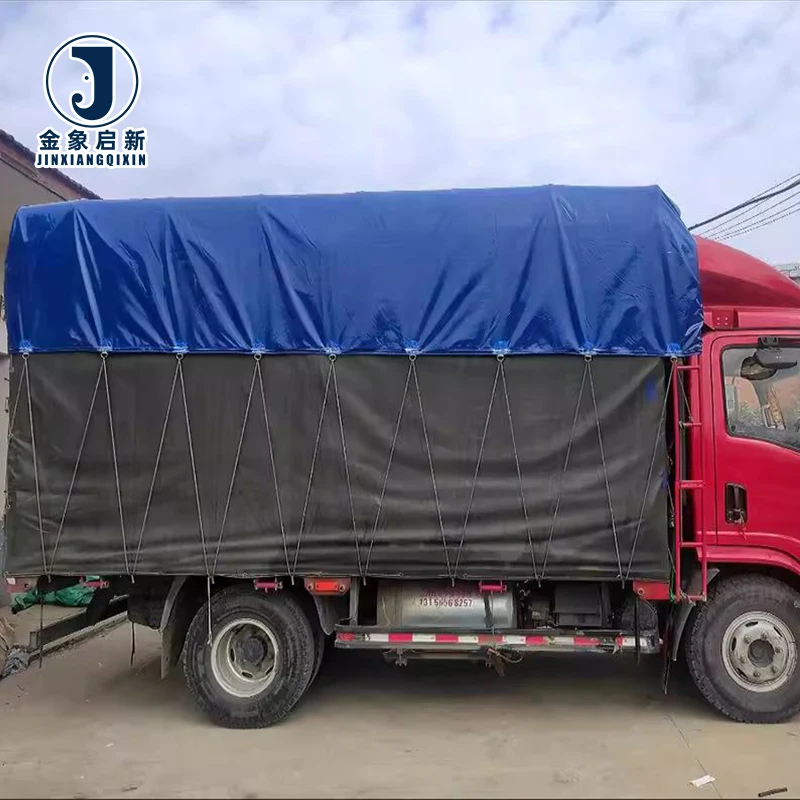
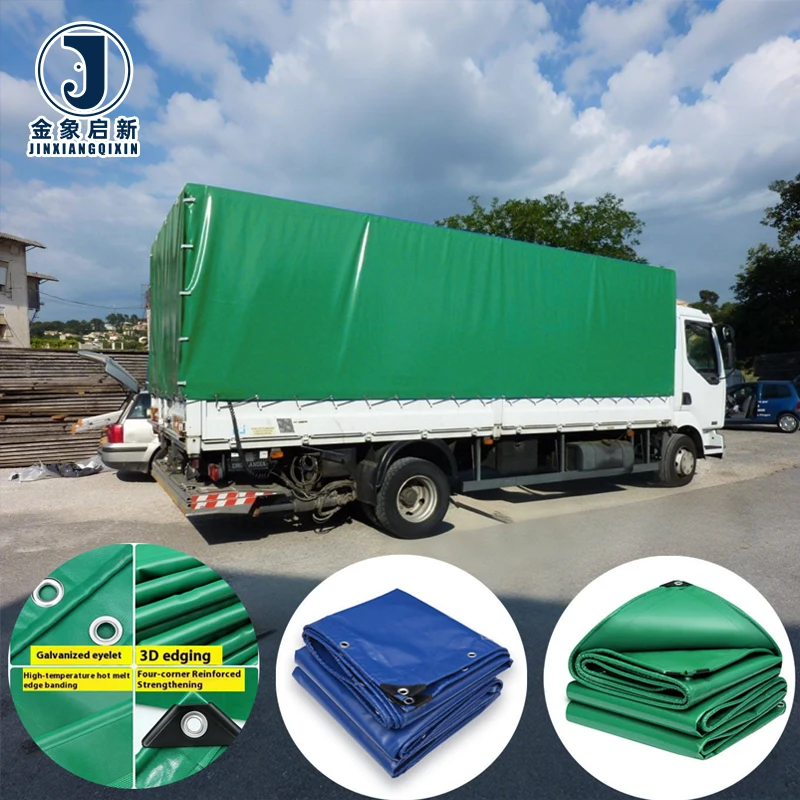
PVC Truck Cover — waterproof, anti-UV treated, flame-retardant vinyl canvas with double-faced construction. Engineered for side curtain and roof panels on articulated trailers, where welded seam integrity at flex zones determines service life. Coating weight and base fabric density together govern tensile behaviour at eyelet and tie-down stress points, not GSM alone. Available in roll stock or cut-to-size with reinforced hems and custom branding, backed by 100% pre-shipment inspection and batch-level test documentation.
Description
Proven Coating Control — Nearly 30 years of PVC formulation oversight ensures the coating weight and adhesion you specify on the order is what arrives at your loading bay.
Technical Specifications
| Parameter | Value |
|---|---|
| Product Type | PVC Truck Cover |
| Material | PVC / Laminated Sheet / Vinyl Canvas |
| Construction | Double-faced |
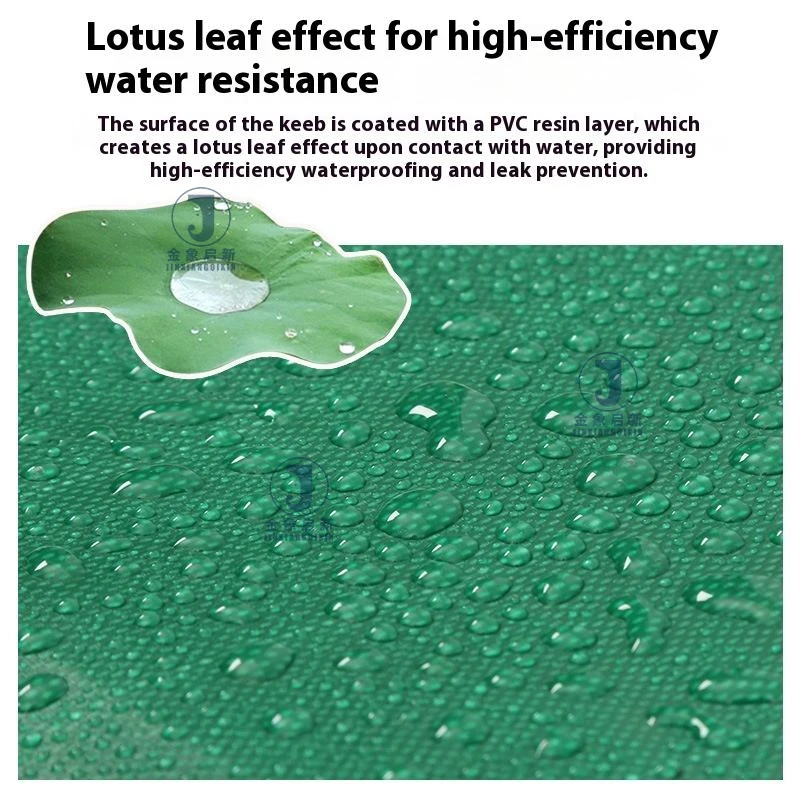
| Water Resistance | Water and mildew resistant |
| UV Protection | Anti-UV treatment available — confirm the grade required for your market |
| Flame Retardant | Available in flame retardant grades — confirm the grade required for your market |
| Color Options | Multiple colors available |
Application Suitability
| Application | Exposure & Requirement |
|---|---|
| Truck and trailer side curtain | Constant flexing, road debris abrasion, UV exposure, weld seam integrity at load-bearing zones |
| Trailer top roof cover | Standing water, thermal cycling, UV degradation, tension from tie-down systems |
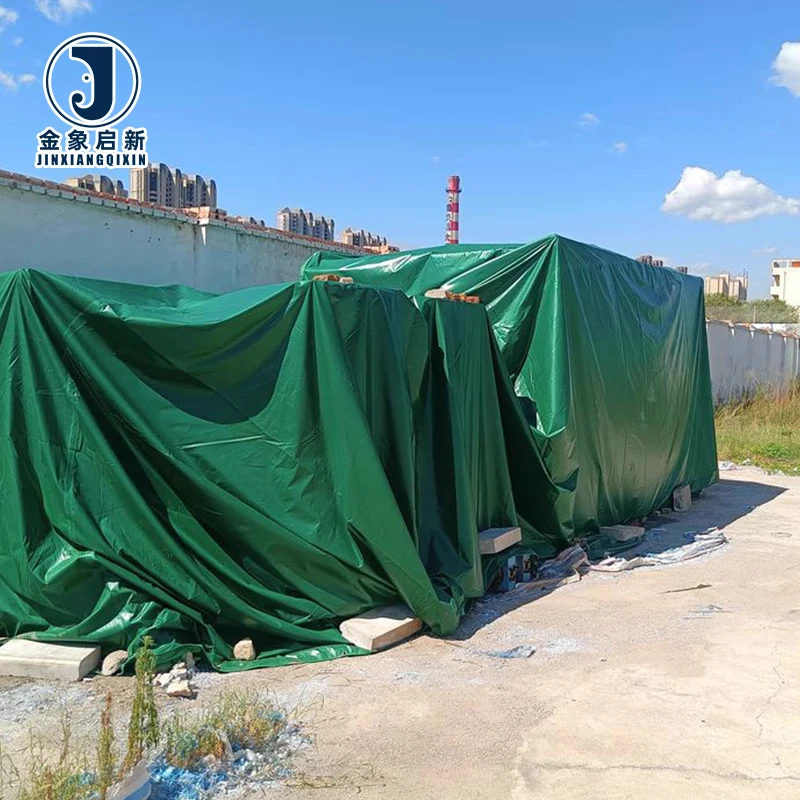
| Pallet and equipment cover | Stacking abrasion, outdoor weathering, mildew in humid storage |
| Outdoor event tent and awning | UV and rain exposure, repeated assembly and teardown, crease resistance |
| Inflatable castle and carriage tent | Air pressure stress, seam strength, frequent folding and transport |
Why a Generic PVC Truck Cover Fails Before the Fabric Does
A truck cover that fits the trailer model matters; a fabric that holds its welded seams at the flex point matters more.
Early in my career I cut a batch of trailer covers to a universal template for a European fleet operator. The dimensions looked right on paper, but the corner panels pulled tight across different trailer profiles. Within weeks the welded seams split right where the load flexes most — not because the PVC truck cover fabric was weak, but because the stress concentrated at points the generic cut never accounted for. The entire order came back. [NEED_CITE: weld seam failure distribution in coated fabric assemblies]
Since then I insist on the exact trailer model before any cutting begins. Every heat-weld parameter gets adjusted per vehicle, because a side curtain on an articulated trailer flexes differently than a flatbed top cover. The material itself was never the problem; the cut and the weld were.
Cut-to-Model Sizing Over Universal Templates
A PVC truck cover cut to a specific trailer model distributes tension evenly across the panel, so the welded seams carry load the way they were designed to. Generic templates leave high-stress zones unsupported, and the first failure always appears at the flex point where the load shifts during transit. This is where model-specific cutting pays for itself.
Double-Faced Construction and Panel Consistency
When panels sit side by side on the same vehicle, colour variation between rolls becomes immediately visible. Double-faced PVC truck cover construction keeps the appearance uniform from both the road-facing side and the cargo-facing interior. Consistent colour across the order means no panel stands out once the cover is installed and tensioned.
Specification Interpretation for Transport Exposure
The base fabric denier and weave density work together with the PVC coating weight to determine how the material behaves at tie-down points and eyelet zones. A higher denier yarn resists tear propagation when a strap pulls hard against the hem, while the coating weight governs surface abrasion resistance against road debris. Coating method — whether laminated sheet or knife-over-roll — influences peel strength at welded seams, which is the single most common failure point on a PVC truck cover in long-haul service. [NEED_CITE: tensile and tear test methods for coated fabrics per ISO 1421]
Surface finish also plays a role: glossy finishes shed dirt and water more readily, while matte surfaces reduce glare and can improve ink adhesion for printed fleet branding. The choice depends on whether the cover will carry logos or operate in environments where frequent washing is part of the maintenance routine.
The Cost of Overlooking Weld Zone Behaviour
I have seen heavy-grade coated rolls perform well in every test except the one that mattered — the welded seam at the corner gusset. When the heat-weld temperature does not match the specific coating formulation and thickness, the seam becomes brittle or remains under-cured. Either way, it fails before the surrounding fabric shows any sign of wear. This is not a material defect; it is a process mismatch that no GSM figure on a quotation will warn you about. [NEED_CITE: DIN 4102 fire classification for building materials]
Batch colour inconsistency is another hidden cost. If two rolls in the same PVC truck cover order show visible shade differences once installed, the entire vehicle looks patched together — and the fleet operator bears the reputational cost, not the supplier.
Why Source This PVC Truck Cover Here
Three full production lines and 36 sets of professional equipment give this facility the capacity to run bulk roll orders without pushing delivery dates. The 10-person R&D team handles material selection, pattern printing and custom sizing in-house, so sample development does not depend on an external converter.
Dedicated QA and QC at every production stage means each roll is checked for coating adhesion, colour consistency and surface defects before it reaches the packing area. ISO and CE certification provides the documentation framework your import compliance team needs, and the pre-shipment inspection record covers the specific parameters that matter for transport covers — weld strength, eyelet placement, and GSM verification against the quoted specification.
Documentation & Verification
- Material specification sheet confirming GSM, base fabric type and coating composition per roll
- UV and flame retardant test reports supplied for applicable grades with each batch
- Pre-shipment inspection record covering colour match, weld integrity and dimensional accuracy
- Roll packing list with net weight and roll count for container loading verification
- Certificate of origin and customs documentation for cross-border shipment
Fabrication, Handling & Storage
- Heat-weld temperature and dwell time must be calibrated to the specific PVC coating weight before production runs
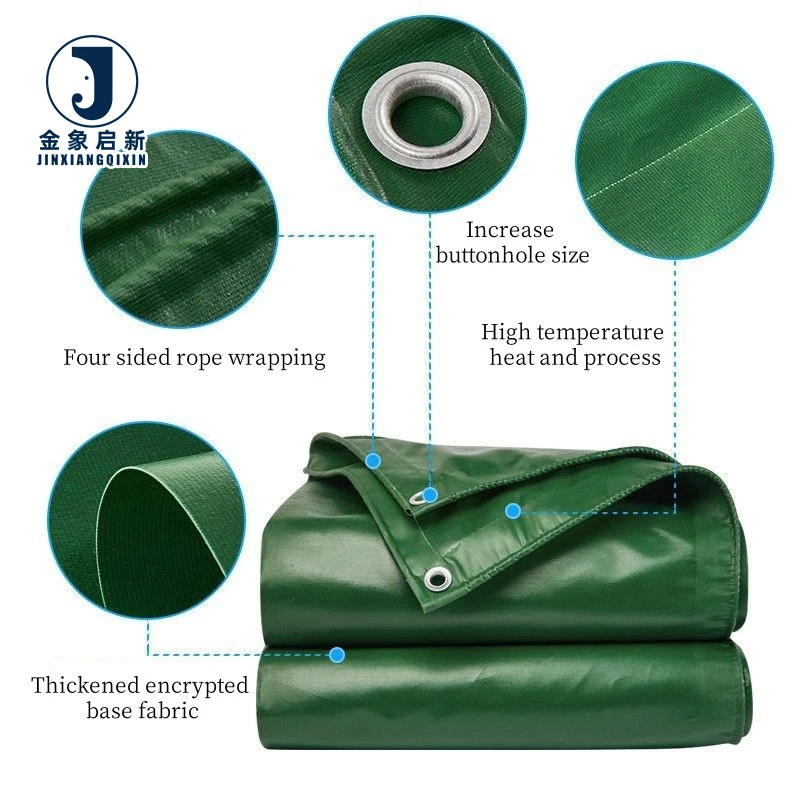
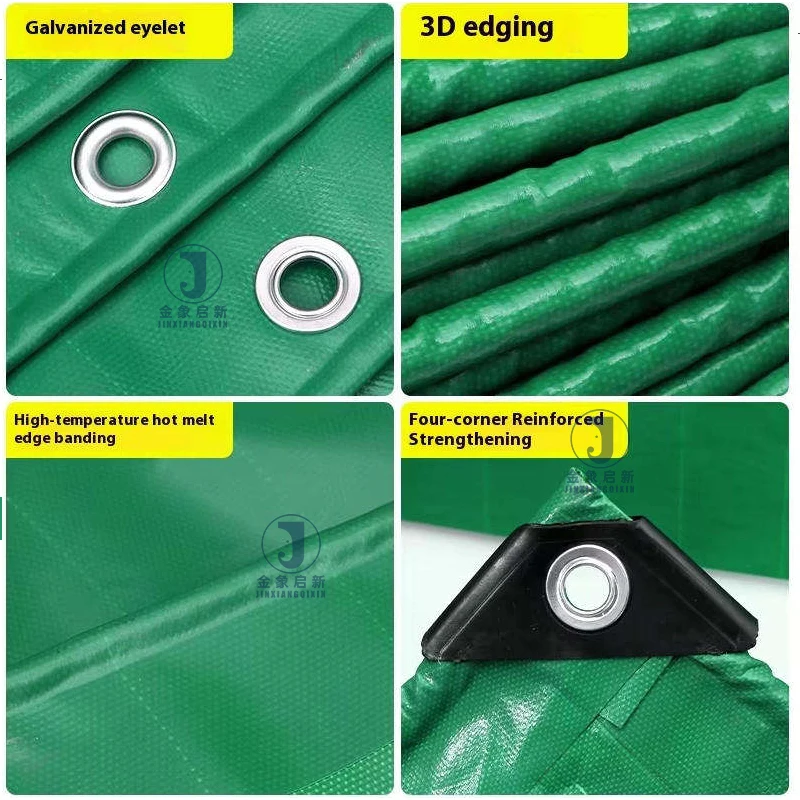
- Reinforced hems at eyelet zones distribute tie-down load and prevent tear initiation in double-faced vinyl canvas
- Store rolls upright on pallets to avoid flat-spot deformation that affects lay-flat behaviour during fabrication
- Allow cold-stored rolls to reach ambient temperature before unrolling to prevent coating surface cracking
- Use mild detergent for cleaning; solvent-based cleaners may degrade the PVC surface treatment layer
- Field repairs with PVC-compatible adhesive patches maintain waterproof continuity at minor puncture sites
What to Include in Your Enquiry
To specify the right PVC truck cover, provide the exact trailer model or dimensions, the exposure conditions the cover will face in service, and whether you need roll stock or finished cut-to-size panels. If your market requires a specific flame retardant grade or UV treatment level, state the standard so the correct formulation is selected. Confirm whether colour matching to a Pantone or RAL reference is needed, and whether printed branding will be applied to the finished panels.
Frequently Asked Questions
Q: How is GSM verified when the rolls arrive, and what documentation comes with the shipment?
A: Every roll is weighed and measured before dispatch, and the pre-shipment inspection record confirms GSM against the quoted specification. The shipment includes a material specification sheet, test reports for any treated grades, a roll packing list, and certificate of origin.
Q: Can the truck cover be cut to my exact trailer model dimensions with reinforced hems and eyelets?
A: Yes. Provide the trailer model and dimensions, and the cover is cut and welded to match. Hems are reinforced at stress zones and eyelets are placed to your spacing requirements, with heat-weld parameters adjusted per panel.
Q: Are UV and flame-retardant grades supported by test reports or just stated on the quotation?
A: Treated grades ship with test reports for each batch. Confirm the specific UV or flame retardant standard required for your market at enquiry stage so the correct formulation is produced and documented.
Q: What is the lead time and minimum order for custom width, colour or printed branding?
A: Custom specifications are handled in-house with samples developed for approval before bulk production. Lead times depend on the level of customisation and order volume; confirm at enquiry for a production schedule.
Q: How is colour consistency maintained across multiple rolls in the same order?
A: All rolls in a single order are produced from the same coating batch, and QA checks colour against the reference standard before packing. The pre-shipment inspection record documents colour consistency across the shipment.
Related products
-
Custom PVC Truck Cover for Transport Fleets – Manufacturer
Read more -
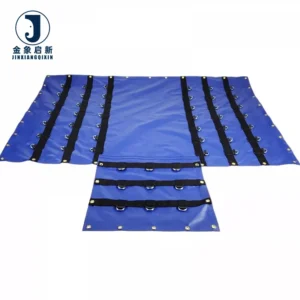
PVC Lumber Tarpaulin 24′ X 27′ with 8ft Drop – Custom Made
Read more -
Heavy Duty 24′ X 27′ PVC Lumber Tarpaulin Waterproof 8ft. Drop with 3 Rows of D-Rings Coated and Woven Flatbed Tarps
¥190.00 Add to cart -
Custom Made PVC Lumber Tarpaulin 24′ x 27′ with D-Rings
Read more